You can turn a tiny closet into a calm, useful space by measuring first, decluttering what you don’t wear, and setting two clear goals: one for function and one for comfort. Add vertical solutions like adjustable shelves, shelf risers, and a double rod to double hanging space, and use over‑door pockets or pegboards for accessories. Pick modular pieces so you can change things later, then rotate seasonal items and build simple habits. Keep going to find practical layouts and tools that fit your life.
Closet Highlights
- Measure your closet and create a tailored plan prioritizing frequently worn and seasonal items for efficient long-term use.
- Install adjustable shelving, double hanging rods, and tall slim organizers to maximize vertical space and adapt as needs change.
- Use clear bins, labeled baskets, and shelf risers for visibility and easy retrieval of higher or stacked items.
- Mount over-the-door organizers, pegboards, or slim racks for accessories and daily essentials within easy reach.
- Establish seasonal maintenance routines and daily habits—swap, declutter, and standardize hanger orientation to sustain organization.
Smart First Steps: Measure, Purge, and Set Goals for Your Small Closet
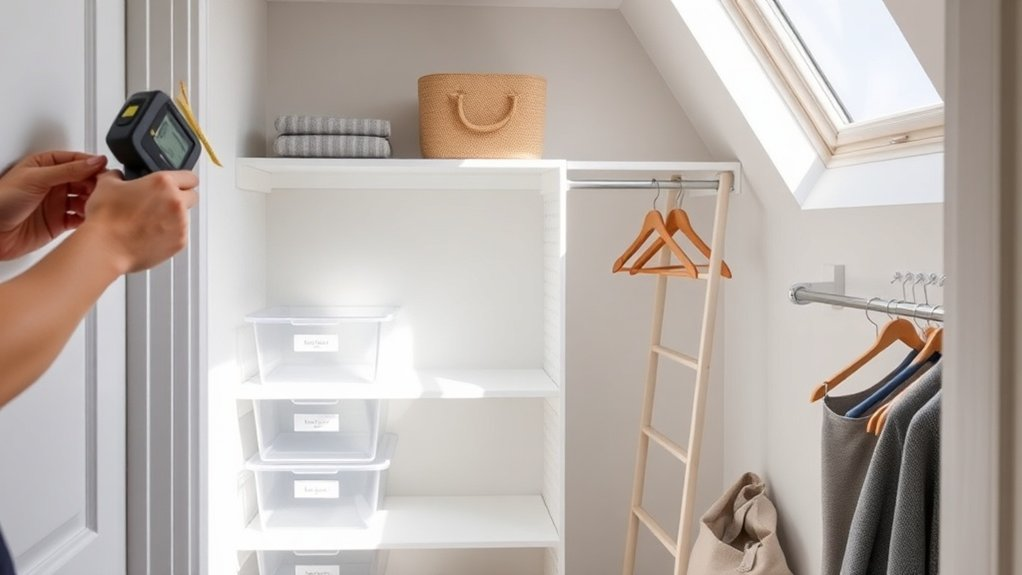
Start by measuring your space—length, depth, and height—because knowing the exact numbers will change how you think about what’s possible in your small closet.
Once you’ve got measurements, clear everything out and sort items into keep, donate, and toss piles. You’ll feel lighter as you make decisions, and that energy helps you set realistic goals for how the closet should work.
Ask yourself what you wear most, what you need seasonally, and how you want mornings to feel. Write down two clear goals: one for function, one for comfort.
When you plan with purpose, small changes add up fast. You’ll stay motivated, avoid clutter creep, and enjoy a closet that actually serves you. Consider adding vertical solutions like over-the-door organizers to maximize space in small closets.
Also consider adding a vertical garment rack to expand hanging capacity without sacrificing floor space. Consider incorporating modular storage to customize configurations and make the most of vertical space.
Use Vertical Space: Shelves, Risers, and Double Rods That Add Usable Inches
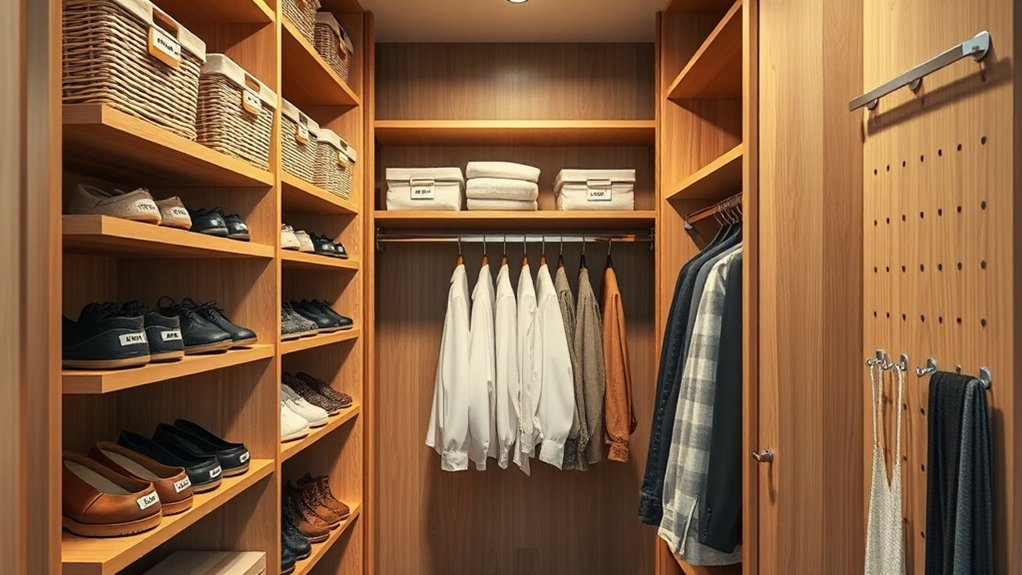
You can reclaim surprising amounts of space by thinking up instead of out—vertical inches are your secret weapon in a small closet.
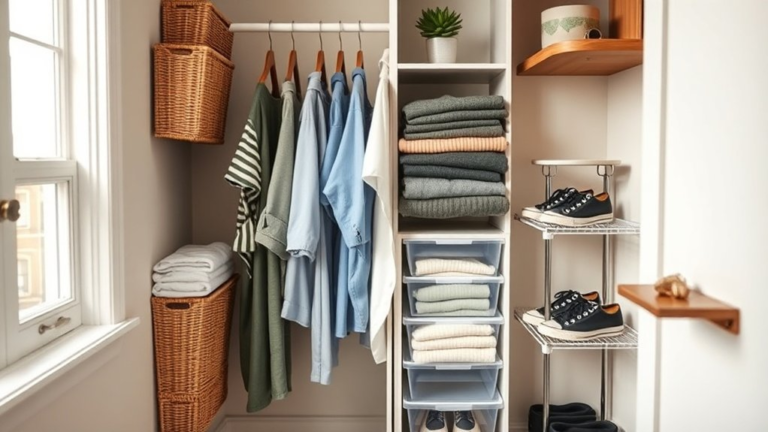
Add adjustable shelves to use awkward upper space for sneakers, boxes, or seasonal items you don’t need every day. Consider modular systems with adjustable shelves so you can reconfigure storage as needs change.
Add adjustable shelves to reclaim upper space for sneakers, boxes, and seasonal items you only need occasionally.
Shelf risers double stacking room on a single shelf, making sweaters and bags neat and visible.
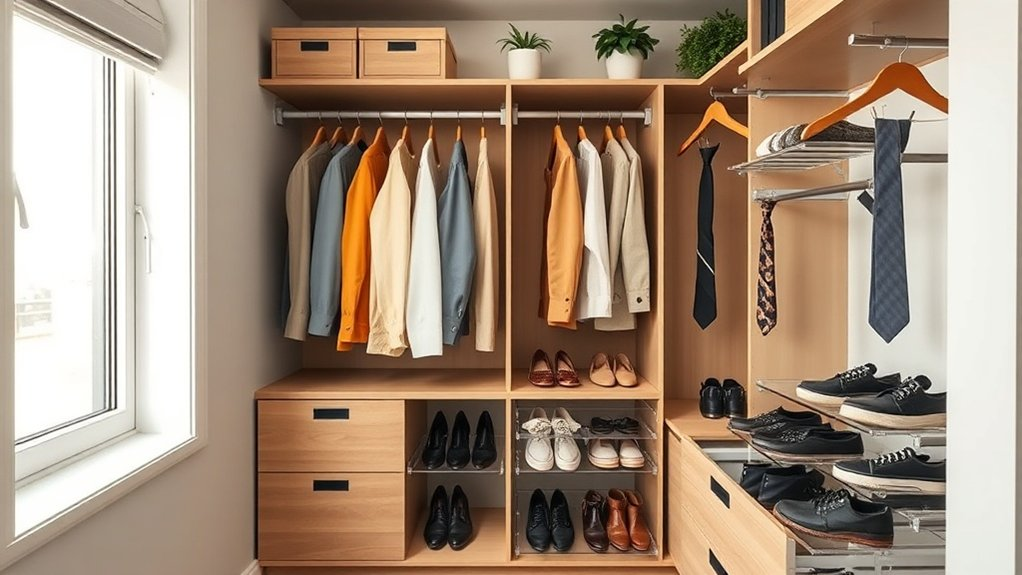
Install a double rod to split hanging space—one high for dresses and coats, one low for shirts and pants—so nothing gets buried.
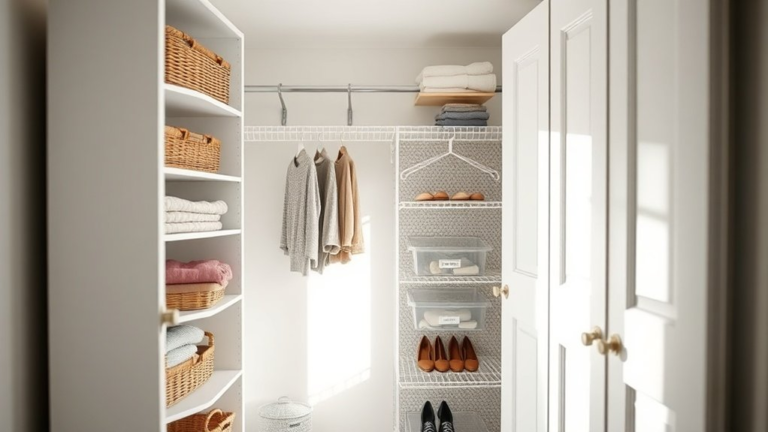
Use clear bins or labeled baskets on higher shelves so you can grab what you need without climbing a step stool every time.
Small changes like these make your closet feel larger, work harder, and invite you to keep things tidy.
Consider adding a tall, slim organizer like a 10-15 inch shoe or shelf unit to maximize vertical storage in narrow spaces.
Choose durable materials like stainless steel or high-quality plastics to ensure organizers hold up over time and resist deformation.
Door- and Wall-Mounted Organizers That Keep Everyday Items Reachable
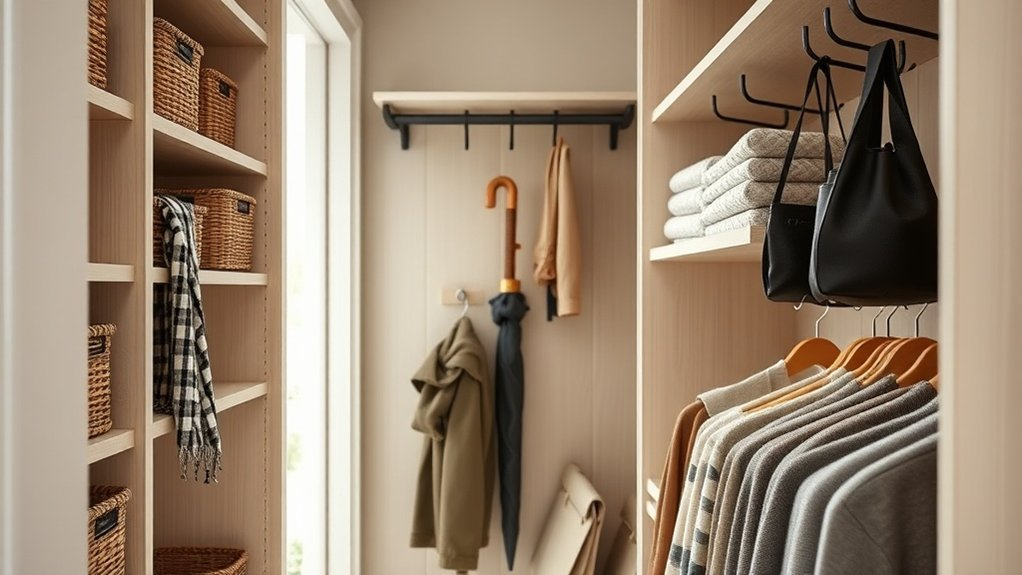
When you open the closet door, think of that inner surface as prime real estate rather than dead space—it’s an instant shortcut to the items you use every day.
Hang an over-the-door shoe or pocket organizer for scarves, belts, and masks so you can grab them in seconds.
Mount slim racks or pegboards on the wall to hold hats, bags, or jewelry, keeping small things visible and tangle-free. Consider adding stackable organizers to make the most of vertical wall space while keeping items accessible.
Use clear pouches or labeled bins on hooks to store chargers, sunglasses, or travel-size toiletries. You’ll save time and reduce morning stress.
Want more ease? Reserve the eye-level pockets for daily essentials and lower ones for seasonal gear.
Small changes, big payoff—reach for calm every day. Consider adding stackable closet storage to maximize vertical space and keep similar items grouped together. Add durable collapsible storage options to make seasonal rotation and compact storage under beds easier.
Modular Systems and Low-Cost Upgrades That Adapt as Your Needs Change
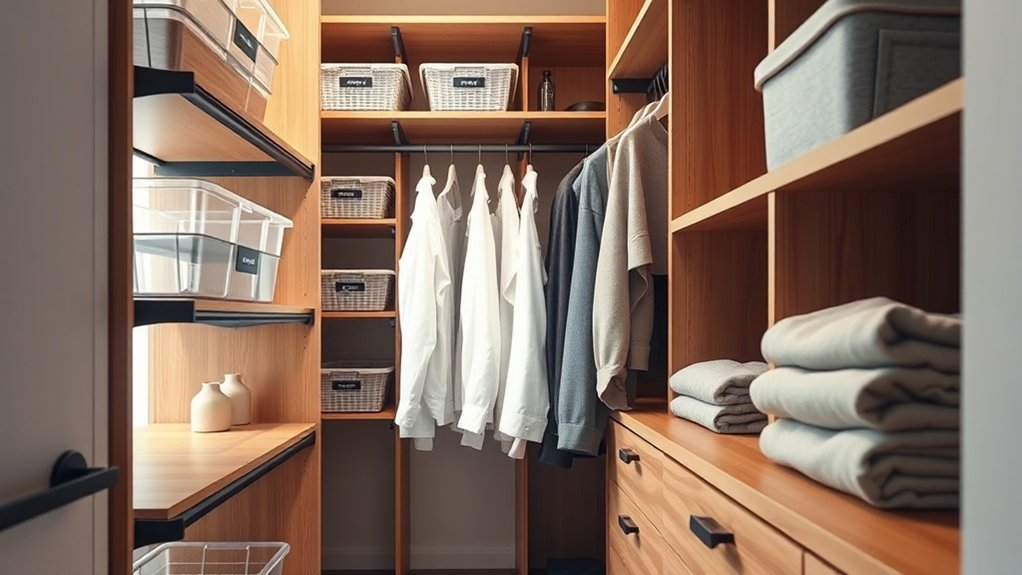
You’ve just learned how door and wall solutions make everyday items easy to grab; now imagine a closet that grows and shifts with you.
Think modular shelving, stackable bins, and clip-in rods you can move without tools. Start with a basic frame, add baskets for shoes, drawer units for small items, and open cubes for folded sweaters. Consider choosing stackable designs to maximize vertical space and accessibility. Add adjustable shelving and hanging solutions to create a modular system that adapts to different garment types and sizes.
Choose neutral pieces so new parts blend, and pick affordable hardware that’s easy to swap. Want a hanging section today and drawers next month? No problem.
These systems save space and money, because you change only what you need. Ready to experiment? Try one small swap, see how it feels, then adapt again.
Your closet can evolve—just like your life does. Consider adding stackable fabric bins for vertical storage to make the most of unused shelf space.
Seasonal Rotation and Simple Habits to Keep Your Closet Organized Long-Term
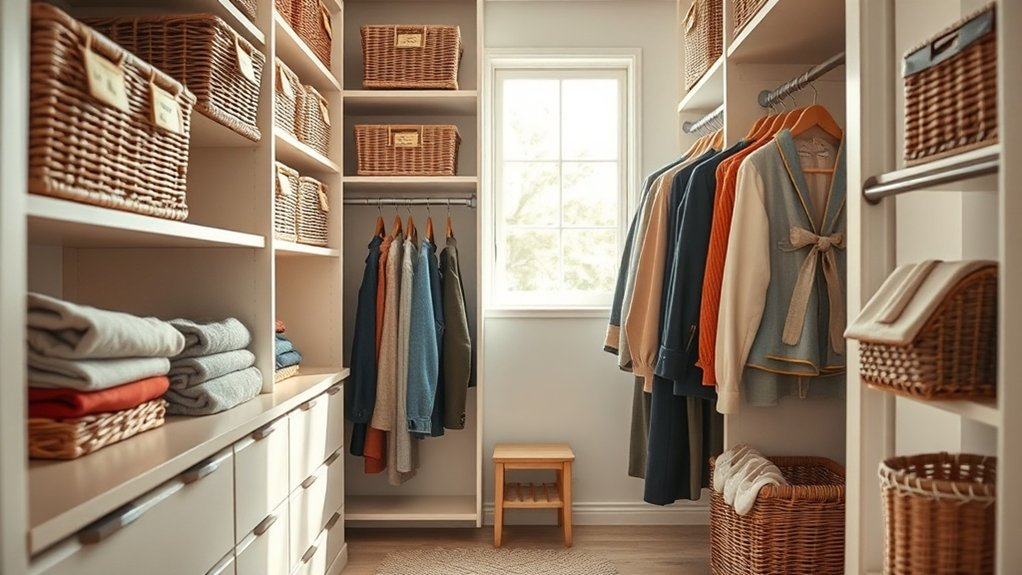
Even if life feels busy, a simple seasonal rotation and a few steady habits can keep your closet calm and useful all year long.
Start by removing out-of-season items and storing them in labeled bins or under-bed bags; you’ll free space and see what you actually wear.
Remove out-of-season clothes, store them in labeled bins or under-bed bags, and reclaim closet space.
Pick one weekend each season to swap clothes, check for repairs, and donate what hasn’t been worn.
Hang similar items together and face hangers the same way to spot gaps quickly.
Adopt small daily habits: put things back, limit new purchases, and do a five-minute tidy before bed.
Why not make this a family ritual or a solo reset you look forward to?
Small routines create lasting order, and you’ll thank yourself later.
Consider adding stackable storage to maximize space and keep seasonal items tidy. Also consider compact units with multiple hanging rods and shelves to make the most of vertical space.
To further maximize efficiency, use modular cube organizers for customizable layouts that adapt as your needs change.
Frequently Asked Questions
Can I Install Shelving in a Rental Without Damaging Walls?
Yes — you can install shelving without damaging walls by using tension rods, freestanding units, adhesive-mounted shelves, or damage-free hanging systems; you’ll avoid drills and patching, keep deposits safe, and still create sturdy, organized storage.
How Do I Prevent Moths and Pests in a Small Closet?
You’ll prevent moths and pests by cleaning regularly, sealing entry points, storing clothes in airtight bins or garment bags, using cedar or lavender, laundering fabrics before storage, rotating items, and checking occasionally for signs so problems stay small.
What’s the Best Lighting Solution for a Dark Closet?
Use battery-powered LED strip lights or stick-on puck lights with motion sensors; they’re bright, energy-efficient, don’t need wiring, and’ll turn on automatically. You’ll avoid shadows, preserve clothes, and install or replace them quickly and cleanly.
Can I Store Heavy Items Safely on Higher Shelves?
Absolutely — but don’t: secure heavy items lower, not higher; you’ll prevent accidents and strain. Use sturdy shelving, wall anchors, and labeled bins with handles; ask for help lifting and rotate loads to keep things safe.
How Do I Organize a Closet Shared by Two People?
Designate zones for each person, use double rods and clear bins, label everything, rotate seasonal items, share a neutral section for common items, and agree on maintenance routines so you’ll both keep the closet tidy and functional long-term.
Conclusion
You’ve turned a tiny, chaotic nook into a calm, useful space that almost feels like magic—seriously, your closet could star in a home-makeover show. Keep measuring, purging, and tweaking the shelves and hooks; your future self will high-five you daily. Try a new rack or rotate seasons once, then enjoy the payoff: quick mornings, less stress, and a small space that works big-time. Ready to open the door and smile every day?