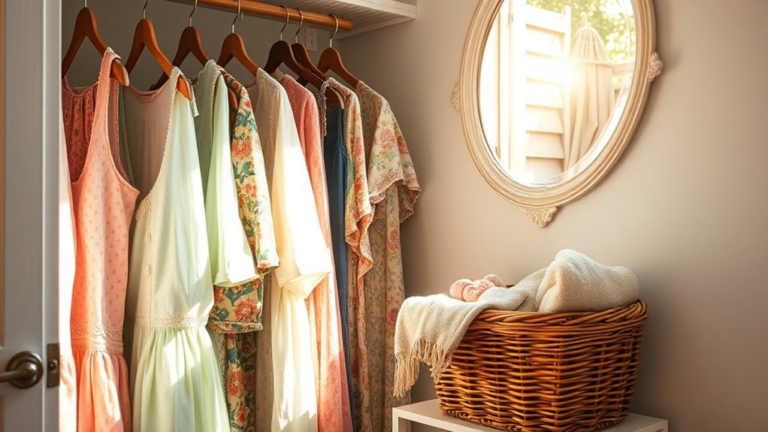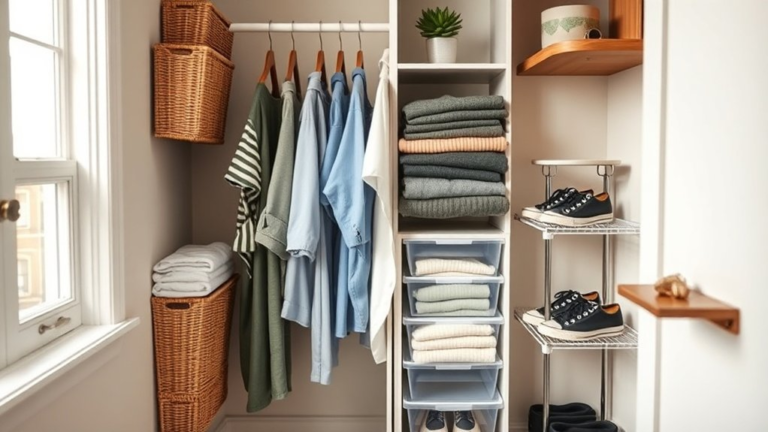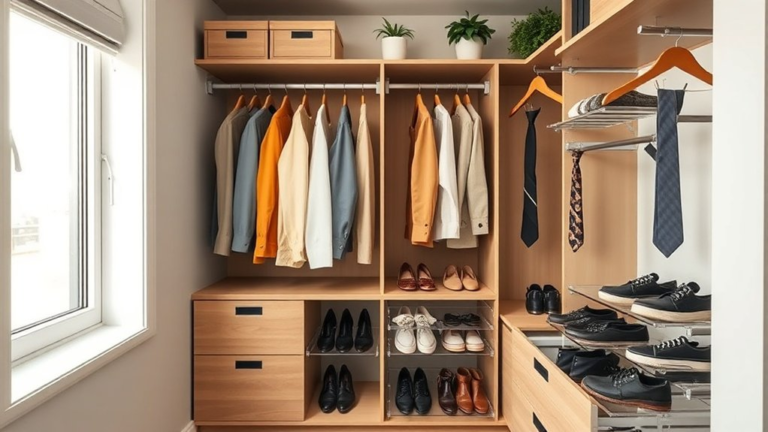
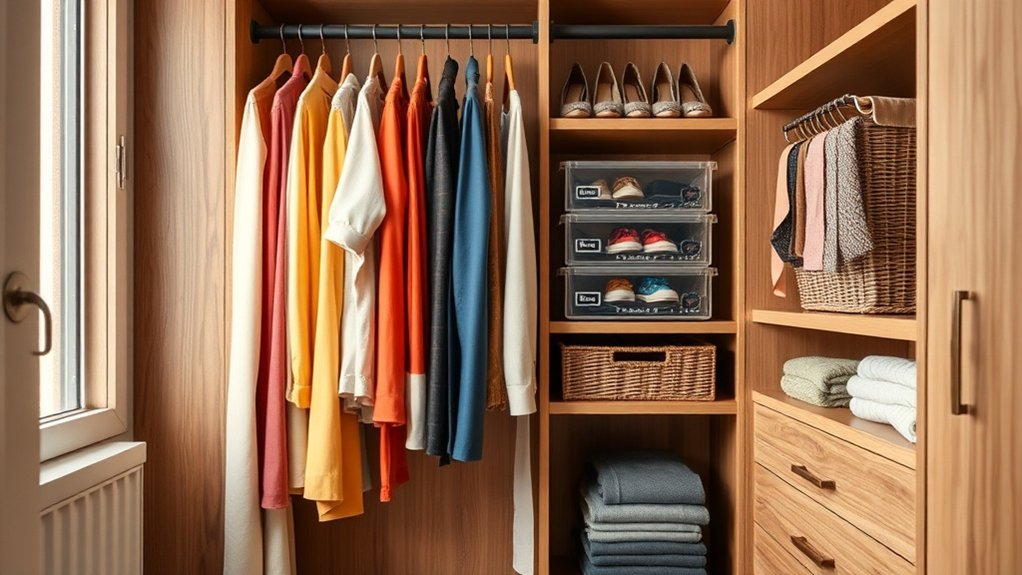
Start by pulling everything out, then keep pieces that fit your life and spark confidence; donate what’s good, toss what’s ruined. Measure width, depth, and height so you can plan double rods, slim hangers, and stacked shelves that use vertical space. Use clear shoe boxes, over-the-door racks, and labeled bins for off-season items. Hang belts and bags, use divided trays for jewelry, add motion-sensor light, and tidy weekly. Want simple projects and product picks to finish the job?
Closet Highlights
- Declutter and seasonal-swap: remove unworn items and store off-season pieces in labeled bins twice a year.
- Measure and plan: record closet dimensions and hanging/folding needs before buying organizers.
- Maximize vertical space: install double rods, adjustable shelves, and stackable clear bins.
- Use slim hangers and cascading or multi-tier organizers to increase hanging capacity.
- Organize shoes and accessories with clear boxes, over-the-door racks, divided trays, and labeled zones.
Start by Decluttering: What to Keep, Donate, or Toss
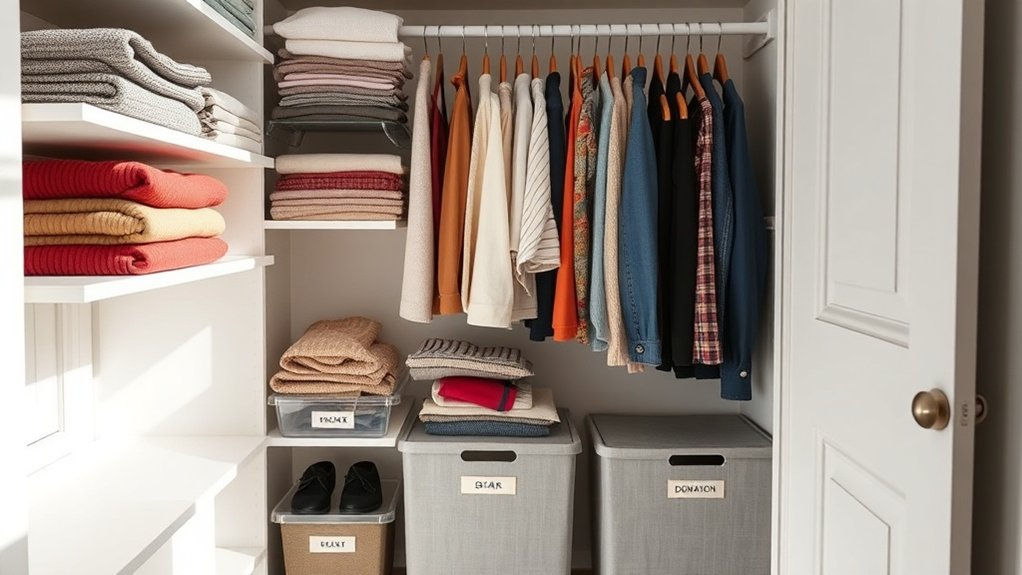
Before you bring anything new into your small closet, clear out what’s already there so the space can actually breathe and serve you.
Start by pulling everything out and touching each piece. Ask yourself: have I worn this in a year? Does it fit how I live now?
Keep items that make you feel confident and that match your routine. Donate anything in good condition that you love less or that no longer suits your life. Toss stained, torn, or permanently misshapen things without guilt.
Sort shoes by season and comfort; keep duplicates only if they truly earn space. For accessories, keep favorites visible and donate or recycle the rest. Consider using space-saving shoe racks to keep footwear organized and accessible.
You’ll feel lighter, and your closet will begin working for you. Consider creating a simple maintenance plan with regular check-ins to prevent clutter from creeping back in.
Also consider using space-saving solutions like slim hangers, shelf dividers, and over-the-door organizers to maximize every inch of a small closet.
Measure and Map Your Closet for a Custom Plan
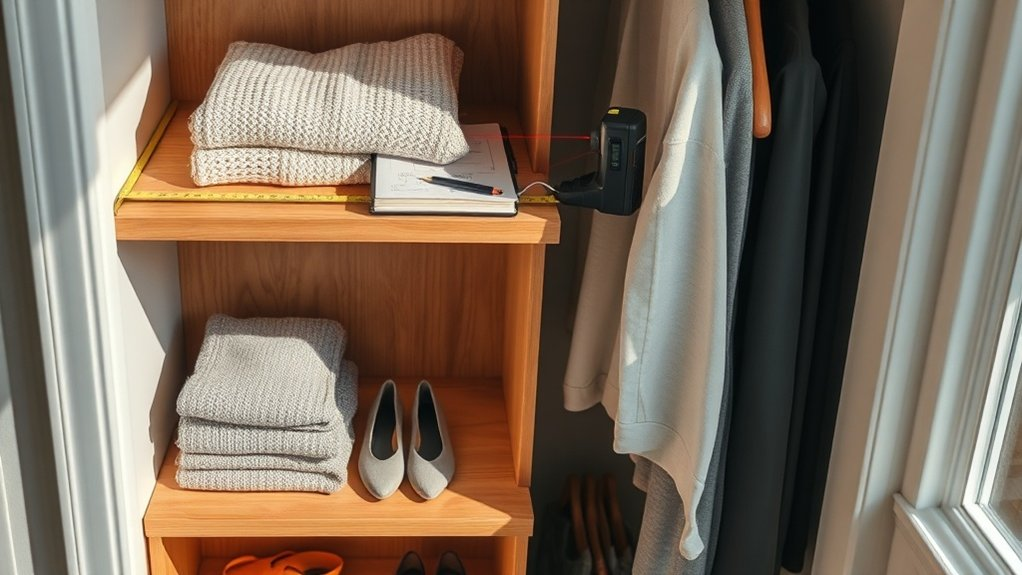
Think of this step as drawing the blueprint for a closet that actually works for you: measure every wall, shelf, rod, and nook so you can see what you have to work with and where changes will make the biggest difference.
Grab a tape measure, paper, and pencil, then note width, depth, and height at several points—closets aren’t always perfect rectangles.
Grab a tape measure, paper, and pencil—record width, depth, and height in multiple spots; closets aren’t perfect.
Sketch a simple floor plan, mark doors, vents, and light switches, and list existing storage pieces you’ll keep.
Measure shoes, folded stacks, and hanging lengths for different garments so you plan zones that match real needs.
Will you need more shoe space or better accessory organization?
This clear map makes choices easier and helps you avoid wasted time and ill-fitting solutions.
Consider including a note about weight limits for shelving and organizers, especially when planning for modular units like the AWTATOS 12 Cube Organizer, so you choose systems that match your storage needs.
Also remember to account for the weight capacity of hangers and shelves when deciding where to place heavier items.
Look for durable materials like carbon steel and reinforced stitching when selecting organizers to ensure long-term stability and easy maintenance.
Maximize Vertical Space With Double Rods and Shelves
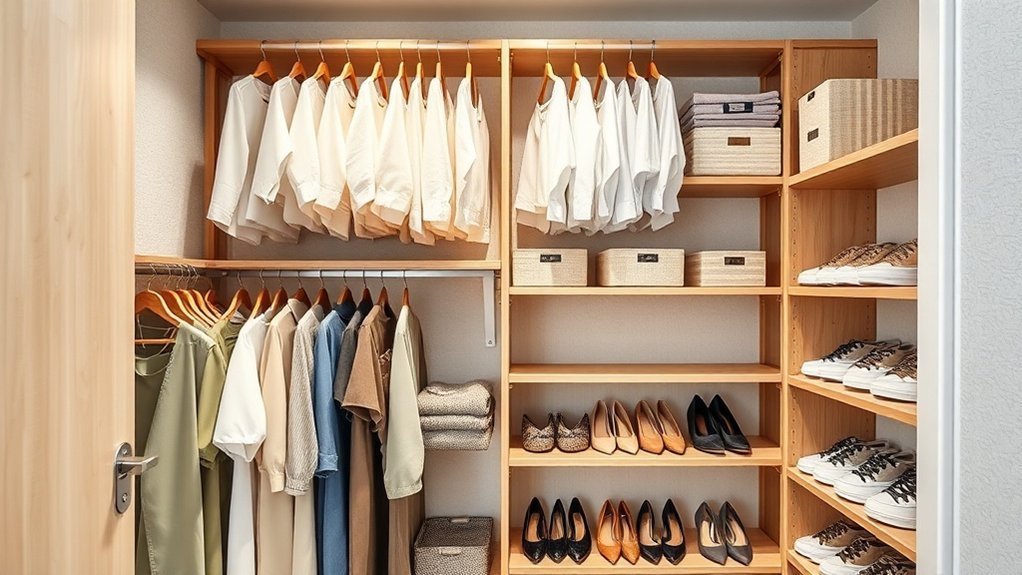
You’ve mapped your closet and now you can see the empty vertical real estate waiting to be used.
Install a double rod system to split hanging space into two levels: one for shirts and blouses, another for pants or shorter items. You’ll instantly double hanging capacity without crowding.
Add sturdy shelves above the top rod for boxes, seasonal items, or bags you don’t use daily. Use adjustable brackets so shelves move as your needs change. Consider modular shelving like the adjustable shelving from versatile closet systems to customize heights as needs evolve. Choose durable materials for shelves and supports to prevent sagging over time.
Stack clear bins on higher shelves so you can spot contents without climbing. Leave a tall section for dresses or long coats, then fill the remaining height with cubbies or shoe shelves.
Ready to reclaim that vertical space? Small changes bring big impact. Consider adding stackable, transparent storage bins to maximize visibility and vertical capacity.
Use Slim Hangers and Space-Saving Hanging Organizers
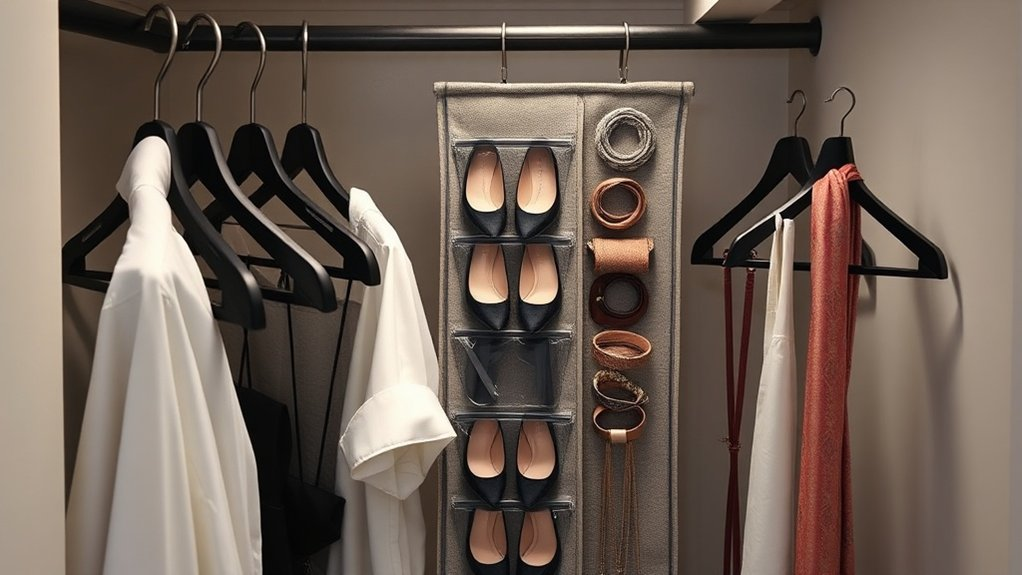
You can instantly free up dozens of inches of hanging space by switching to slim, non-slip hangers that tuck clothes closer together.
Pair them with hanging organizers that group items by category—shirts, scarves, shoes—so you can see everything at a glance and grab what you need. Many organizers work especially well when combined with adjustable shelves to create layered storage tailored to your needs. Consider multi-tier pants hangers like the 6-Tier Pants Hangers to maximize capacity in narrow closets.
Ready to make your closet feel bigger and more peaceful with just a few smart swaps?
Consider cascading hangers like the Wonder Hanger Max to maximize vertical space and store more garments in the same footprint.
Maximize Hanging Space
One small swap can make your closet feel twice as roomy: slim, non-slip hangers free up inches on every rod while space-saving hanging organizers turn wasted vertical space into neat storage.
You’ll notice the difference immediately when shirts, jackets, and dresses sit side by side without crowding, making outfits easier to find. Consider adding a 6-shelf organizer to maximize vertical storage and keep items sorted.
Add a second rod where possible, or use cascading hooks to double hanging capacity without cutting accessibility.
Choose organizers with clear pockets or labeled shelves so you still see what’s inside.
Rotate seasonal items higher and everyday pieces at eye level.
How much calmer would your mornings be with a tidy, visible wardrobe?
Take action now: replace bulky hangers and hang smart, and enjoy a more peaceful, useful closet.
Consider choosing organizers made from transparent acrylic to enhance visibility and strength.
Also consider adding stackable organizers to make better use of vertical space and keep folded items accessible.
Organize By Category
When you group clothes by category—shirts, pants, jackets, dresses—you’ll cut the time you spend digging through a crowded closet and make outfit choices feel effortless.
Use slim hangers to keep everything neat and maximize rail space, so more fits without crowding. Hang similar items together, then use space-saving hanging organizers for sweaters, shoes, or accessories you don’t wear daily. This keeps seasonal pieces accessible and daily outfits visible. Stackable bins and double-sided hangers can further maximize vertical space and organization for accessories. Consider adding space-saving hangers to multiply your hanging capacity without expanding your closet footprint.
- Use matching slim hangers to save space and create visual calm.
- Reserve a section for work clothes, another for casual, one for outerwear, and one for dresses.
- Add a hanging organizer for folded items, scarves, or shoes.
- Rotate seasonally so your daily choices stay fresh and simple.
Isn’t getting dressed easier this way? Durable materials like steel and premium wood improve longevity and support heavier loads, making them a smart choice for material durability.
Smart Shoe Storage Ideas for Tiny Closets
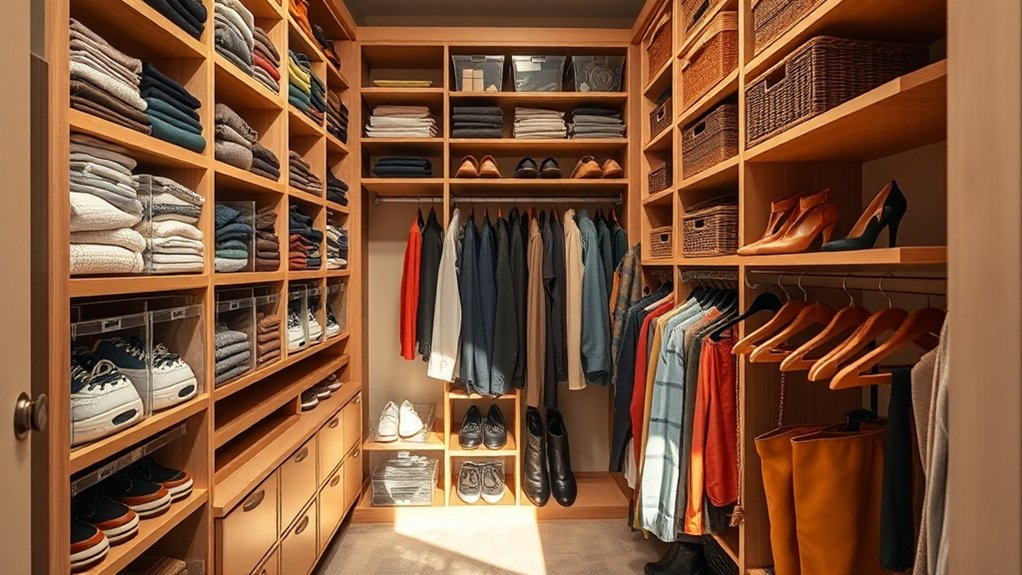
If floor space feels precious, smart shoe storage can turn chaos into calm and make your tiny closet feel bigger than it is.
Start by using vertical space: clear shoe boxes, hanging organizers, or slim cubbies stack shoes without hiding them, so you’ll see pairs at a glance. Many people also use stackable bins to maximize vertical storage while keeping shoes visible.
Try over-the-door racks for flats and sandals, and angled shelves for heels that keep toes visible and heels secure. Over-the-door designs like these are especially useful when you need a space-saving solution that doesn’t require drilling.
Use under-shelf baskets for off-season shoes, and labeled bins for kids’ sizes.
Rotate seasonally to free room for current favorites.
Want something sleek? Slim pull-out drawers give a boutique feel and protect shoes from dust.
With a bit of planning, your shoes become tidy, accessible, and part of a calm, functional closet you actually enjoy using.
For eco-friendly and durable options, consider furniture made from bamboo materials to combine sustainability with style.
Accessorize Efficiently: Belts, Scarves, Jewelry, and Bags
Although small closets can feel limiting, you can make accessories shine by giving each type a clear, smart home and routine, and you’ll enjoy getting dressed more. Consider maximizing vertical space with stackable organizers to keep items accessible and save floor area.
Treat belts, scarves, jewelry, and bags as members of a team: give each one a consistent place and a simple way to see it. Use hooks, shallow bins, clear pouches, and small trays to keep things tidy and tangle-free. Rotate seasonally so favorites stay visible. Ask yourself: which pieces do you reach for most?
- Hang belts on a slim rack to preserve shape.
- Fold scarves by color in shallow drawers.
- Store jewelry in divided trays to prevent tangles.
- Hang bags by strap to keep form and access easy.
These steps make daily choices calm and joyful. Consider adding stackable waterproof bins with reinforced seams for lightweight accessories to maximize space and protect items in damp areas, such as a closet corner or under-shelf storage, especially when using waterproof PP plastic. Adding a stackable storage unit with a sturdy top can also double as a display surface or nightstand in tight spaces.
Add Lighting and Labels to Improve Visibility and Access
Make your small closet feel brighter and more welcoming by adding energy-efficient fixtures that light every corner without hiking up your bills.
Label zones for shoes, seasonal items, and daily outfits so you can grab what you need in seconds—wouldn’t that save you time each morning?
Install motion-sensor lights for hands-free convenience, and enjoy the simple pleasure of a clear, well-lit space.
Consider installing motion sensors to activate lights only when needed, saving energy and extending bulb life.
Add stackable organizers to maximize vertical space and keep items accessible with multi-tiered storage. Also consider using stackable baskets to further optimize vertical organization and make the most of limited closet height.
Bright, Energy-Efficient Fixtures
When you brighten a small closet with energy-efficient fixtures, it instantly feels larger, more inviting, and easier to use, so you’ll reach for what you need without fumbling in the dark.
Choose LED puck lights, strip lights, or motion-sensor units to save energy and add clarity. Think about warmth and placement so colors pop and shadows vanish. You’ll appreciate fixtures that last, use less power, and make tidy habits stick. Consider pairing lighting with stackable storage to maximize vertical space and visibility. Many homeowners pair lighting with adjustable shelving to create flexible, well-lit layouts that adapt to changing storage needs.
- Pick daylight or warm LEDs to match your wardrobe.
- Use motion sensors for hands-free convenience.
- Install under-shelf strips to light shoe rows.
- Favor low-heat fixtures near fabric and labels.
Isn’t a bright, efficient closet more joyful to open? Consider adding stackable clear bins to pair with better lighting for maximum visibility and organization.
Zone Labels For Quick Access
If you want to grab what you need in seconds, labeling zones in your closet turns guesswork into easy habit, and adding clear lighting makes those labels pop.
Start by dividing the space into simple areas: tops, bottoms, shoes, accessories, and seasonal items. Use durable labels you can read at a glance — printed tags, chalkboard labels, or adhesive tabs work well.
Position labels near eye level or on shelf edges, and aim lights so they illuminate labels without glare. You’ll save time and reduce stress, especially on busy mornings.
Want to feel calmer and more in control? Try a quick weekend refresh: relabel, tweak the lighting, and watch your closet become a calm, efficient system you actually enjoy using.
Motion Sensors For Convenience
You’ve already made labels and lights work together to speed up your mornings, so let’s take that convenience one step further with motion sensors that turn on lights the moment you open the door.
You’ll love how effortless this feels: no fumbling for switches, instant visibility, and fewer missed pairs. Install sensor strips near shelves and shoe racks, or use battery puck lights for a renter-friendly option. They’re affordable, easy to place, and save energy by shutting off automatically.
- Choose warm LED tones for true color of clothes.
- Place sensors where motion is clear, not blocked.
- Pair sensors with labels for quick, hands-free findability.
- Test and adjust sensitivity to avoid accidental triggers.
Affordable Products and DIY Upgrades That Save Space
Because smart changes don’t have to cost a lot, you can turn even the smallest closet into a tidy, useful space without breaking the bank.
Look for slim hangers, tension rods, and clear shoe bins that fit neatly and make everything visible. Add adhesive hooks for bags and belts, and try over-the-door racks to reclaim wasted vertical space.
Want a custom look? Paint a plywood shelf, cut it to size, and add simple brackets—instant personality and storage.
Repurpose small crates or baskets for scarves and seasonal hats. Labeling keeps things honest, so you grab what you need fast.
These affordable products and small DIY upgrades give you more room, less stress, and a closet that feels like it finally works for you.
Maintenance Routine: Seasonal Swaps and Weekly Tidy Habits
While a little upkeep goes a long way, keeping your closet in shape becomes simple when you build a straightforward routine you actually enjoy following.
Set seasonal swaps as milestones: rotate heavy coats and boots out, bring in lighter pieces, and store off-season items in labeled bins.
Make weekly tidying a five- to ten-minute habit so clutter never piles up. Ask yourself what you wore and what you didn’t; that insight guides future edits and donations.
- Schedule seasonal swaps twice a year to refresh space.
- Use clear bins and labels for easy access.
- Do a weekly five-minute tidy: refold, rehang, and sort.
- Donate unloved items to keep things meaningful.
Small routines protect your time and joy.
Frequently Asked Questions
How Do I Store Sentimental Clothing I Can’t Wear but Won’t Part With?
Store sentimental clothing in acid-free tissue and boxes or breathable garment bags, label contents and dates, use cedar or silica packs to deter pests and moisture, and rotate keepsakes into display frames so you won’t feel overwhelmed.
Can I Convert a Closet Into a Tiny Wardrobe Closet for Renters?
Absolutely—you can convert a closet into a tiny wardrobe closet for renters! It’ll feel like a mansion of organization. Use removable shelving, tension rods, over-door organizers, modular hangers, and clear bins so you won’t damage walls or lease terms.
What’s the Best Way to Prevent Moths and Moisture in Small Closets?
Use airtight storage and breathable garment bags, hang cedar or lavender sachets, run a small dehumidifier or silica packs, keep airflow with a door vent or occasional open door, and inspect clothing regularly to catch problems early.
How Can I Organize Clothes for Frequent Outfit Changes or Shift Work?
You’ll zone outfits by shift, hang daily pieces where you can grab them, use labeled bins for extras, rotate weekend or backup clothes, keep shoes visible, and prep tomorrow’s full outfit each evening to save time and stress.
Are There Space-Saving Methods for Storing Seasonal Outerwear Year-Round?
Imagine a folded map tucked in a drawer—yes, you can store seasonal outerwear year-round: vacuum bags, rolling trunks, high shelves with labeled bins, garment bags on slim hangers, and a rotating system so you’ll always grab the right layer.
Conclusion
You’ve cleared the clutter, measured, and built a plan—now enjoy the calm. Like finding a favorite book on a tidy shelf, you’ll open your closet and feel relief, even a small thrill. Keep rotating seasons, label bins, and tweak as you go. Will a morning of peace be worth a bit of effort? Definitely. With these simple steps, your small closet becomes a smart, inviting space that makes getting dressed easier and brighter.