Measure your space, clear out what you don’t wear, and set simple goals for hanging, shoes, and seasonals so your tiny closet works for you. Add adjustable shelves, slim velvet hangers, wall hooks, and clear slim bins to use vertical space and keep things visible. Install motion LED lights for quick finds, swap bulky hardware for sleek pieces, and spend 15 minutes monthly to maintain order. Want practical layouts and product picks to get started?
Closet Highlights
- Measure your closet and set clear goals for hanging, shelves, and seasonal rotation before reorganizing.
- Swap bulky hangers for slim, non-slip and multi-tier hangers to dramatically increase hanging capacity.
- Add adjustable shelving, wall hooks, and over-the-door organizers to use vertical space effectively.
- Use clear, labeled stackable bins and angled or cubby shoe storage to keep items visible and accessible.
- Install high-CRI LED strip or motion-activated puck lights and perform a 15-minute monthly maintenance check.
Plan Your Small Closet: Measure, Declutter, and Set Goals
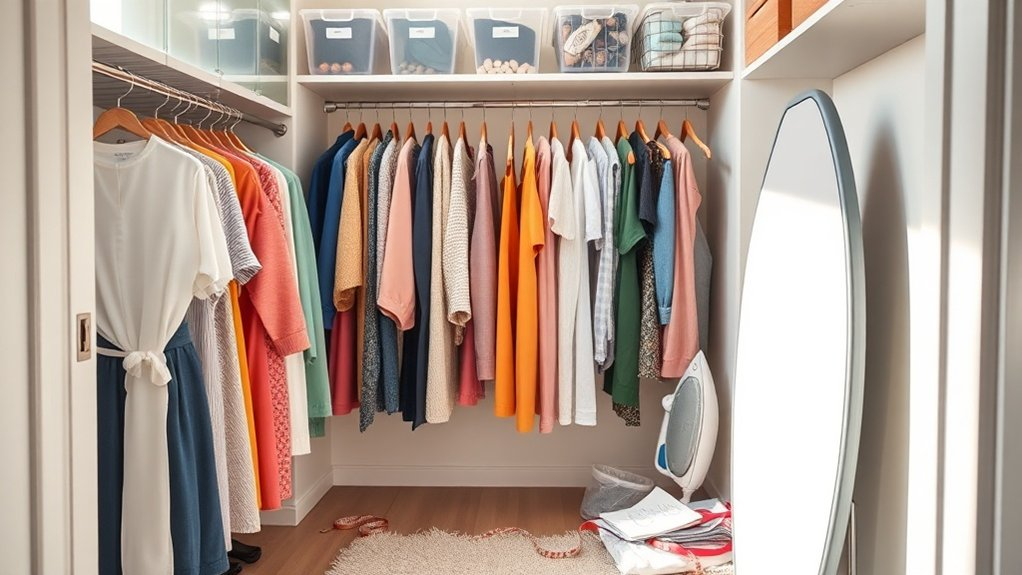
Start by taking a clear look at what you have and what you need: measure the depth, width, and height of your closet, then open the doors and sort through every item.
As you handle each piece, ask yourself what makes you smile, what fits, and what you haven’t worn in a year. Decide which items deserve space and which can go to donation or storage. Consider using stackable fabric bins to keep seasonal items accessible and dust-free. You can also prioritize shoes and small accessories by adding a compact shoe organizer to free up floor space.
As you touch each item, note what sparks joy, what fits, and what hasn’t been worn in a year.
Write down clear goals: more hanging room, fewer shoes on the floor, or a tidy seasonal rotation. Measure again after decluttering so your goals match reality.
Set a simple timeline—an afternoon, a weekend—and commit. Small, steady steps change your daily routine, and you’ll feel lighter, organized, and ready to enjoy your space. Consider adding modular organizers like the AWTATOS 12 Cube Organizer for flexible storage and easy customization 12 Cube Organizer.
Use Vertical Space: Shelves, Wall Hooks, and Over-the-Door Storage
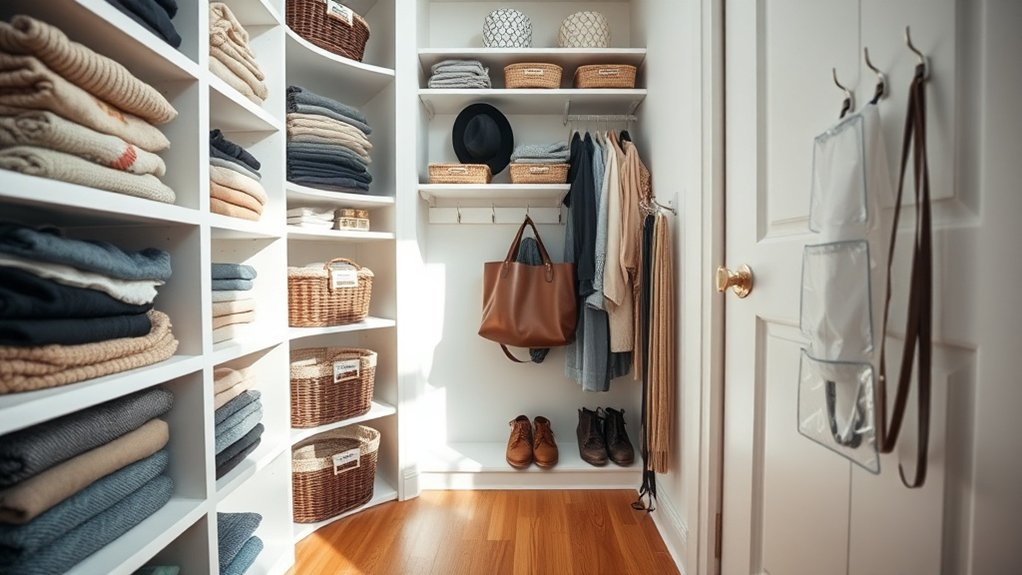
Shelves and hooks are your closet’s best friends when floor space is tight, so think upward and imagine what could live above eye level.
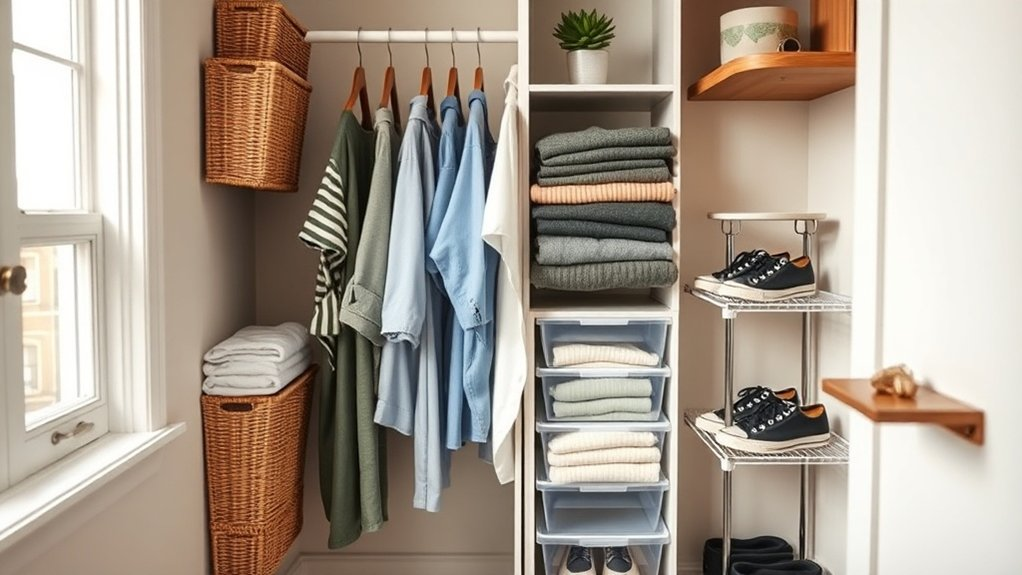
Add shallow, adjustable shelves to store shoes, boxes, or folded sweaters, and you’ll reclaim floor space instantly. Use wall hooks for bags, scarves, belts, and hats; they keep items visible and easy to grab. Consider combining hooks with a versatile hanging solution to maximize vertical storage and adaptability.
Over-the-door organizers are perfect for small items like accessories, toiletries, or cleaning supplies, and they install without major changes. Consider products made from rust-resistant materials to ensure longevity in humid areas.
Mix open shelving with closed bins to reduce visual clutter and protect delicate things. Don’t forget a high shelf for seasonal gear you don’t need now.
What could you lift up to make daily routines smoother? Start small, stack smart, and enjoy the extra room. Consider adding stackable bins like stackable bins to maximize vertical storage in small closets.
Maximize Hanging Capacity With Slim and Multi‑Tier Hangers
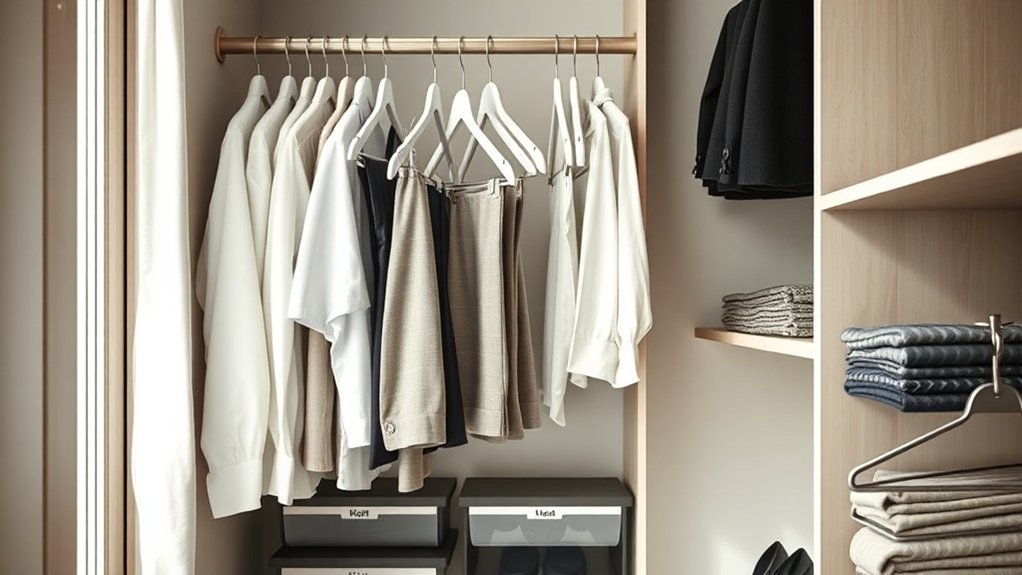
Closet magic happens when you swap bulky hangers for slim, space-saving ones and add a few multi-tier hangers to the mix; you’ll be amazed how many more outfits you can fit without cramming.
Start by replacing thick plastic or wooden hangers with velvet-lined, slim-profile versions that keep garments from slipping and take up far less room. Many slim velvet hangers also support heavier items, with some models holding up to 11 pounds for added durability. Consider the available space before buying to ensure taller or multi-tier solutions fit without blocking doors or shelves.
Then introduce multi-tier hangers for pants, skirts, or several shirts stacked vertically — they multiply hanging space instantly.
Hang by outfit, color, or function to simplify mornings. You’ll notice a calmer, more organized closet and quicker outfit choices.
Want to maximize every inch? Mix single slim hangers with a couple of tiered pieces, and adjust spacing until it feels just right.
Many slim velvet hangers feature a non-slip surface that helps prevent garments from sliding off and saves space.
Smart Shoe Storage for Tiny Closets
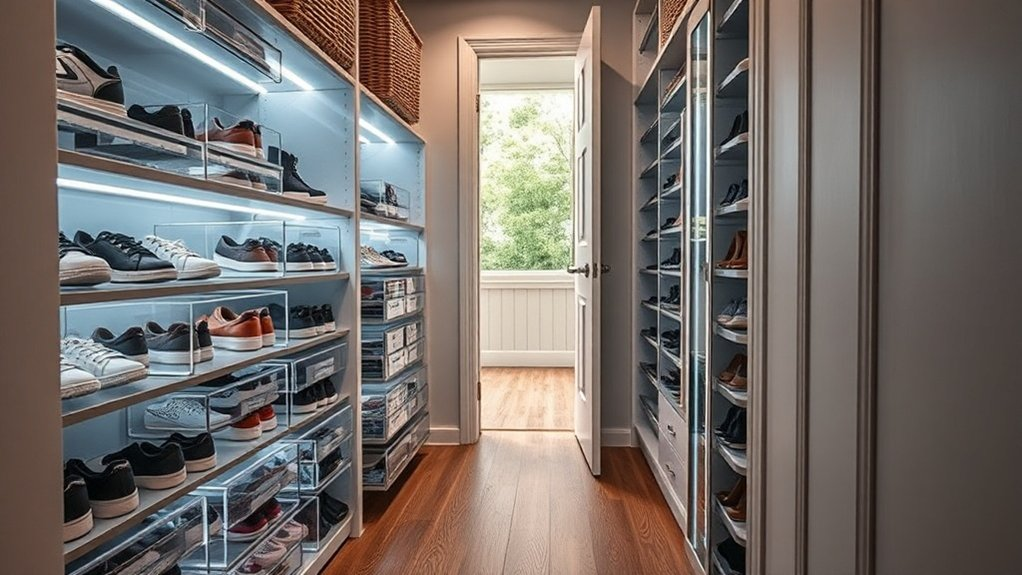
If you want to free up floor space and make your shoes easy to find, rethink how you store them and get creative with vertical and behind-the-door options.
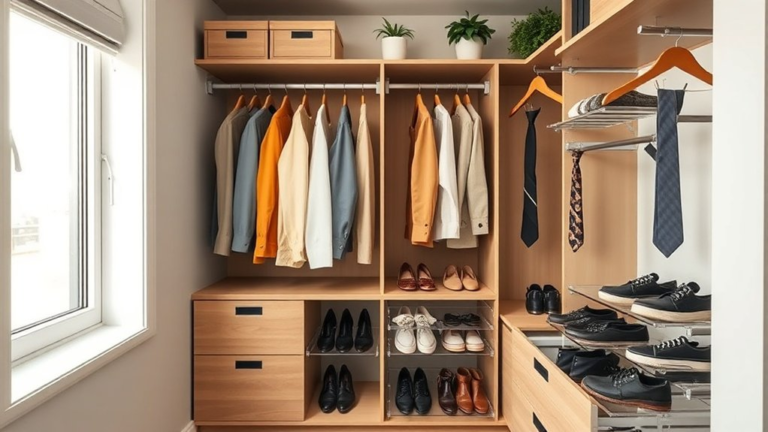
You can use slim, tiered racks that fit on narrow walls, stacking shoes without crowding. Try over-the-door organizers with clear pockets so each pair stays visible, or hang a shoe shelf from a closet rod to lift footwear off the floor.
Don’t forget angled cubbies or shallow shelves for everyday pairs, making selection quick and neat. Rotate seasonal shoes to higher shelves so current favorites stay within reach. Consider using collapsible baskets on higher shelves to store off-season shoes and save space.
Want a tidy, calm closet that still holds your whole collection? Small changes, like labeled spots and consistent habits, make shoe storage feel effortless and even a little joyful. Consider adding stackable clear boxes for visibility and space-saving transparent storage.
Also consider using space-saving multi-layer hangers to free up room for shoes and other items, as cascading hangers can multiply vertical capacity without bulk.
Slim Bins and Clear Containers for Seasonal and Small Items
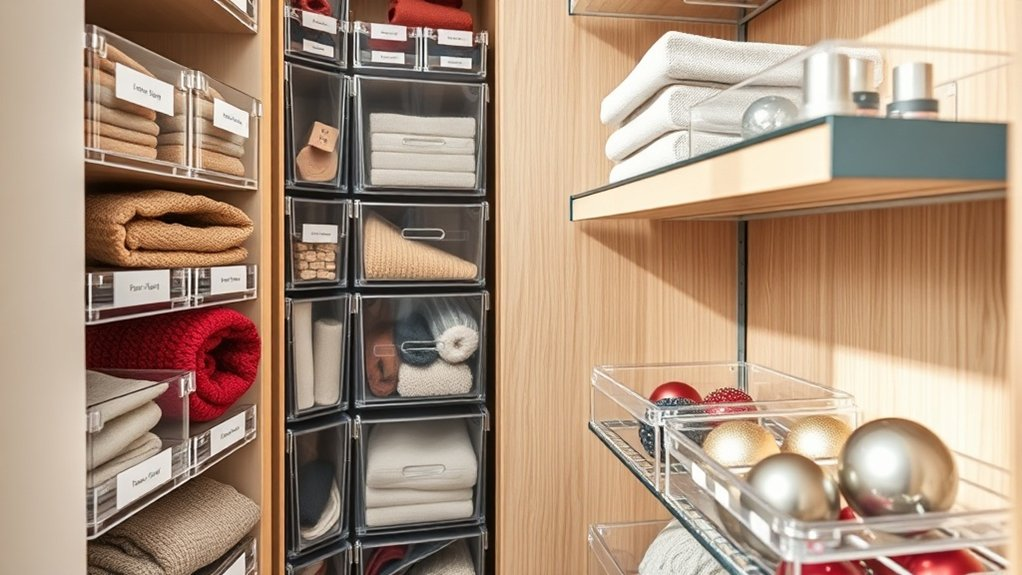
One or two slim bins can change how you use every inch of your small closet, making seasonal gear and tiny items easy to grab and put away.
You’ll love clear containers for seeing what’s inside without digging, so scarves, hats, gloves, and holiday bits stay neat and ready.
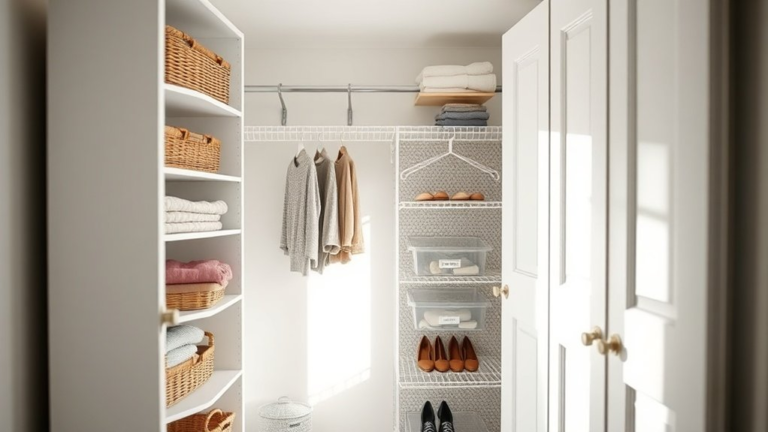
Stack slim bins on narrow shelves, slide them under low hanging clothes, or tuck them beside shoe racks to use vertical space.
Label the front with a simple sticky tab or marker, and you’ll know where things live at a glance.
Want fast swaps each season? Rotate bins to the front, and tuck off-season boxes higher up.
You’ll gain calm, order, and more usable space—small changes, big relief.
Consider adding a slim clear storage bin to maximize visibility and stackability in tight spaces.
Also consider stackable designs to maximize vertical space without sacrificing accessibility.
Consider pairing slim bins with collapsible organizers to save space when boxes are not in use.
Lighting and Visibility Tricks to Find Things Fast
When you can see everything at a glance, getting dressed and finding storage pieces feels effortless, so good lighting is worth a small investment. You’ll feel calmer when shelves, hooks, and cubbies are clearly lit; it reduces the frantic rummage and makes choices quicker.
Good lighting makes dressing effortless—clearly lit shelves and cubbies reduce rummaging and speed decisions.
Think about layering light: an overhead fixture for general brightness, strip LEDs under shelves to highlight shoes and bins, and motion-sensor lights for instant access. Choose soft white bulbs to keep colors true, and aim lights where shadows hide things. Consider fixtures with high CRI for truer color rendering when choosing bulbs. Adding a few well-placed LED strip lights can also double as low-heat display lighting for delicate fabrics.
- Use adjustable strip lights to spotlight dark corners and label fronts.
- Install battery-powered puck lights or motion strips for no-wiring ease.
- Keep bulbs cool and diffused to avoid glare and preserve fabrics.
Adding modular systems like the Rubbermaid Configurations can help you reconfigure lighting and storage as needs change.
Low‑Cost Upgrades and a Simple Maintenance Routine
You can make a big difference in your small closet with a few affordable hardware swaps, like new hooks, slim hangers, or a tension rod that fits your space.
Start by decluttering cheaply—box up items to donate, use clear bins for things you keep, and set aside anything you haven’t worn in a year; it’ll make upgrades feel more powerful. Consider adding modular cube organizers to sort items efficiently. Adding adjustable shelving can further increase flexibility and adapt to changing storage needs, especially in tight spaces with varied item sizes modular systems.
Then commit to a quick monthly maintenance check, fifteen minutes to tidy and reassess, and you’ll keep your closet working for you instead of against you.
Consider adding clear acrylic shelf dividers to maximize vertical space and keep items visible and accessible for everyday use, which also helps maintain a serene environment.
Affordable Hardware Swaps
Because small changes can make a big difference, swapping out a few budget-friendly hardware pieces is an easy way to refresh your closet without a full renovation.
You’ll see impact instantly when you change knobs, hooks, and hangers to match your style and needs. Choose sturdy, affordable options that fit your storage goals, and you’ll avoid costly replacements later. Consider adding space-saving hangers like multi-tier or specialty hangers to maximize capacity without extra shelving. Metal or high-quality ABS options can improve longevity and resist wear, especially for heavier items like coats and bags durable materials.
Simple swaps help you organize better, feel happier using the space, and protect delicate items. Want an easy maintenance habit? Tighten screws monthly, wipe metal parts, and replace worn pieces before they fail.
The routine is quick, satisfying, and keeps your closet functioning smoothly, so small investments pay off every day.
- Replace mismatched knobs to unify the look
- Add slim hooks for instant hanging space
- Swap bulky hangers for slim, non-slip ones
Using multi-tier or space-saving hangers can dramatically increase how much you store in the same footprint.
Declutter Inexpensively First
Although it might seem small, clearing out clutter before you buy anything new makes the biggest difference in a tiny closet—and it’s easier than you think.
Start by pulling everything out and sorting into keep, donate, toss. Be honest; ask yourself, “Have I used this in a year?” If not, let it go.
Use inexpensive bins or repurposed boxes to group like items—shoes, scarves, cleaning supplies—so you can see what you really own. Consider adding a slim hanging organizer with detachable bins to make seasonal swaps and small-item storage easier.
Add a slim hanging organizer for seasonal rotation; they’re cheap and transform space fast. Consider incorporating stackable baskets to make better use of vertical space.
Label containers with masking tape and a marker to avoid future mess.
You’ll feel lighter, find things faster, and delay costly upgrades. Small choices now pay off every day. Consider adding stackable organizers with a wood top to maximize vertical space while keeping a clean aesthetic.
Quick Monthly Maintenance
If you want your small closet to stay useful instead of sliding back into chaos, set aside a short monthly ritual that costs almost nothing but changes everything.
You’ll be surprised how a fifteen-minute check keeps order and saves time each morning. Swap out seasonal items, wipe shelves, and rehang anything crooked. Add a cheap tension rod or an over-the-door hook if you spot dead space; small upgrades make a big difference. Consider installing simple shelf dividers to keep stacks tidy and visible, which helps maintain visual order. Many apartments benefit from adding an over-the-door organizer to maximize vertical storage without permanent installation.
- Look for one thing to donate, so your closet breathes.
- Fix or replace one hanger, so clothes sit neatly.
- Brighten a shelf with a low-cost liner, so items feel cared for.
Isn’t a tiny habit worth the calm it brings? Consider adding space-saving hangers to maximize usable room.
Frequently Asked Questions
Can I Convert a Small Closet Into a Pantry or Office?
Yes — you can convert a small closet into a pantry or office. Maximize vertical shelving, add task lighting, use slim storage bins or a fold‑down desk, and keep ventilation and accessibility in mind for comfort and safety.
How Do I Childproof Closet Storage?
You childproof closet storage by installing magnetic or keyed locks, securing shelves and heavy items to walls, using lidded bins, keeping small objects out of reach, covering outlet and cord access, and teaching safe boundaries while checking regularly.
What’s the Best Humidity Control for Closets?
The best humidity control for closets is using a small, rechargeable dehumidifier with a hygrometer; you’ll set it to 40–50% RH, monitor levels, and add moisture absorbers or a vent if needed to keep clothes safe.
Can I Install a Closet Rod Without Drilling?
Yes — you can: think of a bridge that rests, not roots. You’ll use tension rods, adjustable no-drill brackets, or freestanding garment racks; they’ll span the gap securely, hold clothes, and avoid wall holes or damage.
How Do I Store Delicate Heirloom Clothing Long-Term?
You should clean garments, wrap each in acid-free tissue, use breathable cotton storage boxes or muslin sacks, avoid plastic, store flat or padded on wide hangers, add silica packets and rotate items occasionally to prevent damage.
Conclusion
You’ll look into that tiny closet and laugh—because the pile of chaos you feared is now a calm, clever corner that actually works for you. You’ll measure, trim, hang, and tuck, turning wasted nooks into smart storage. Isn’t it satisfying when small choices make big change? Start with one shelf or one bin today; you’ll feel lighter, more organized, and strangely proud every time the door closes.