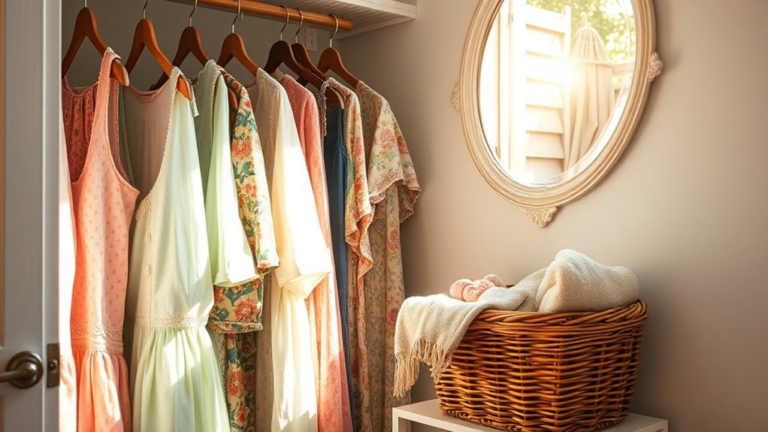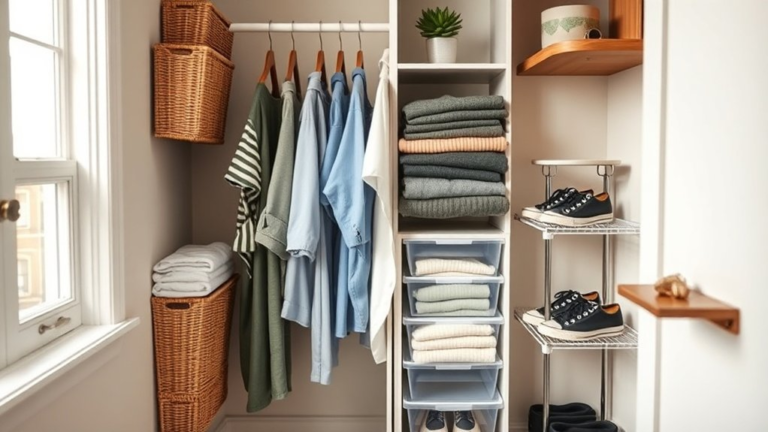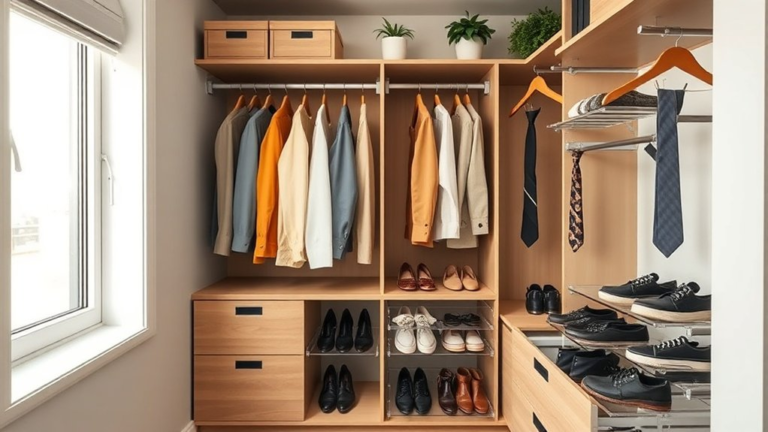
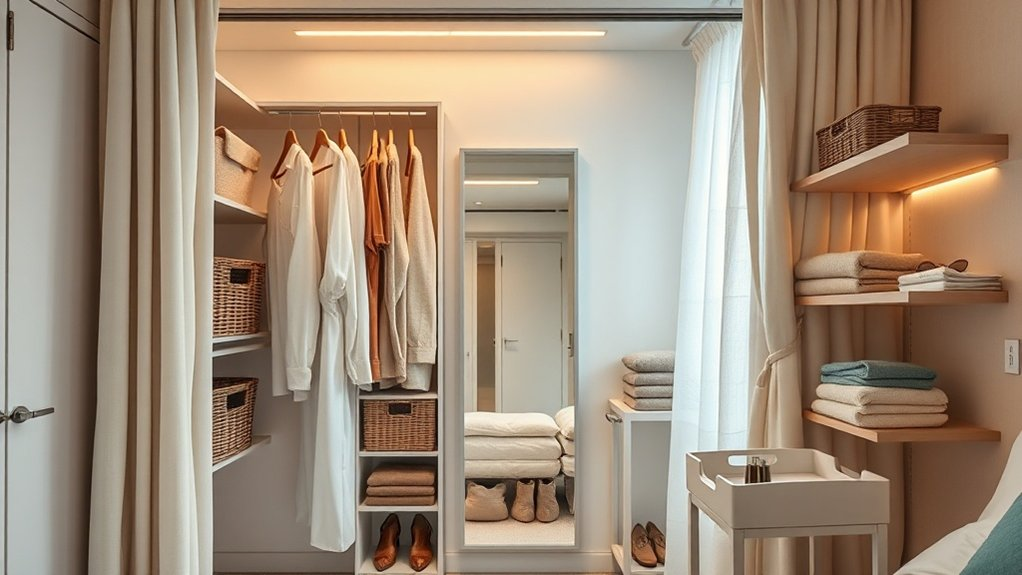
You can make a tiny closet feel calm and roomy by editing what you keep, then stacking up not out—add a second hanging tier, slim non‑slip hangers, and adjustable shelves or cubbies for bags and folded items. Use clear bins, over‑door hooks, and pegboards to free the floor, add bright strip lights and a mirror to boost light and depth, and rotate seasonal pieces into labeled boxes. Try these easy swaps, and you’ll find even more simple tricks ahead.
Closet Highlights
- Edit your wardrobe: declutter by sorting into keep, donate, repair, and maybe piles to free immediate space.
- Use vertical space: add a second hanging rod, adjustable shelves, and cubbies to double storage without expanding footprint.
- Swap to slim, non-slip hangers and hanger connectors to reclaim width and reduce visual bulk.
- Install lighting and a mirror to brighten, enlarge perceived space, and make items easier to find.
- Add flexible storage—clear bins, stackable boxes, pegboards, and over‑door organizers—for accessible, adaptable organization.
What This Guide Helps You Solve (Quick Wins for Tiny Closets)
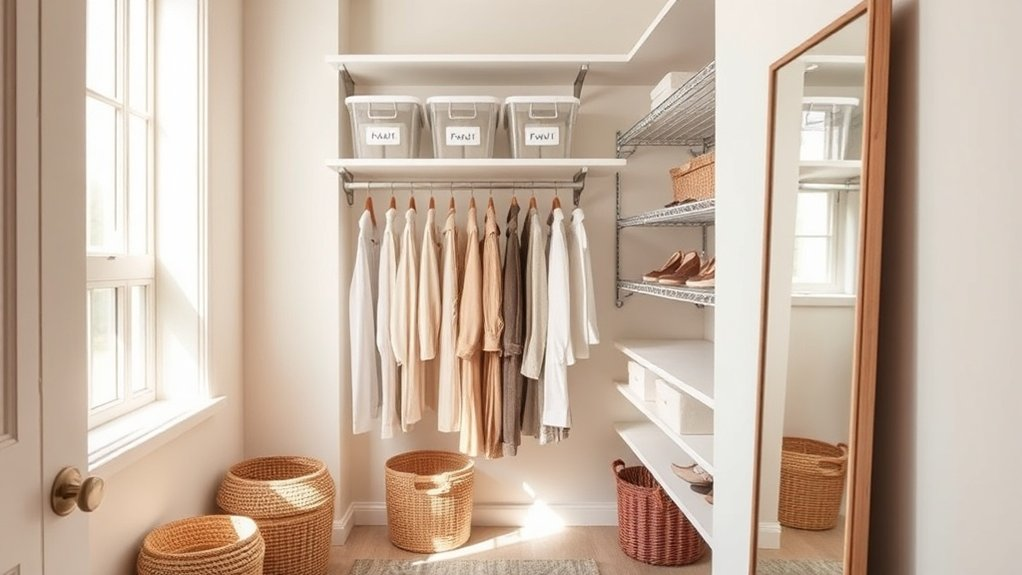
Even if your closet feels impossibly small, you can make big, useful changes fast—this guide shows you how.
You’ll learn simple fixes that expand usable space, calm visual clutter, and make daily routines smoother. Imagine finding outfits quickly, enjoying clear floors, and having breathing room for accessories — small shifts create that feeling.
Learn simple fixes to expand space, reduce visual clutter, and streamline routines—small shifts for quicker outfits and calmer closets.
You’ll get quick wins: smarter hanging strategies, vertical storage ideas, better lighting, and easy shoe solutions that don’t cost a lot. Consider adding modular storage to adapt configurations as your needs change. Many people start with stackable storage to maximize vertical space without major renovations.
You’ll also spot common pain points to avoid, so you won’t swap one mess for another.
Ready to feel less overwhelmed and more in control? Follow these step-by-step tips, try one or two changes at a time, and notice the big difference. You can also use stackable baskets to optimize vertical space and keep items tidy.
Prep First: Edit Wardrobe and Declutter Basics
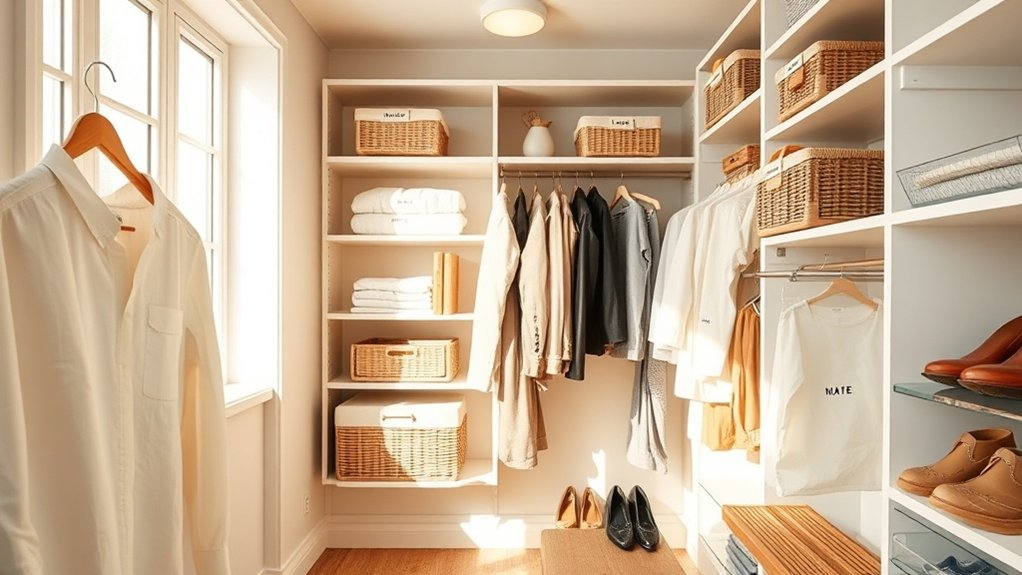
Before you start moving hangers and boxes around, take a moment to edit what you actually own so your closet works for your life—not the other way around.
Begin by pulling everything out or working in small sections, then sort into keep, donate, repair, and maybe piles. Ask yourself: have I worn this in a year? Does it fit my current lifestyle? Consider using stackable bins for sorted items to keep categories tidy while you work. For items that need short-term holding, consider clear plastic storage bins so you can see contents at a glance.
Be honest, but kind. Keep pieces that make you feel confident and let go of guilt-held items. Repair or tailor favorites so they serve you better.
Label donation bags and schedule drop-offs so decluttering finishes, not stalls. When you start with a lean, intentional collection, every hanger counts and your closet breathes easier.
Consider implementing space-saving strategies from closet organization experts to maximize every inch.
Use Vertical Space: Shelves, Cubbies, and Hanging Tiers
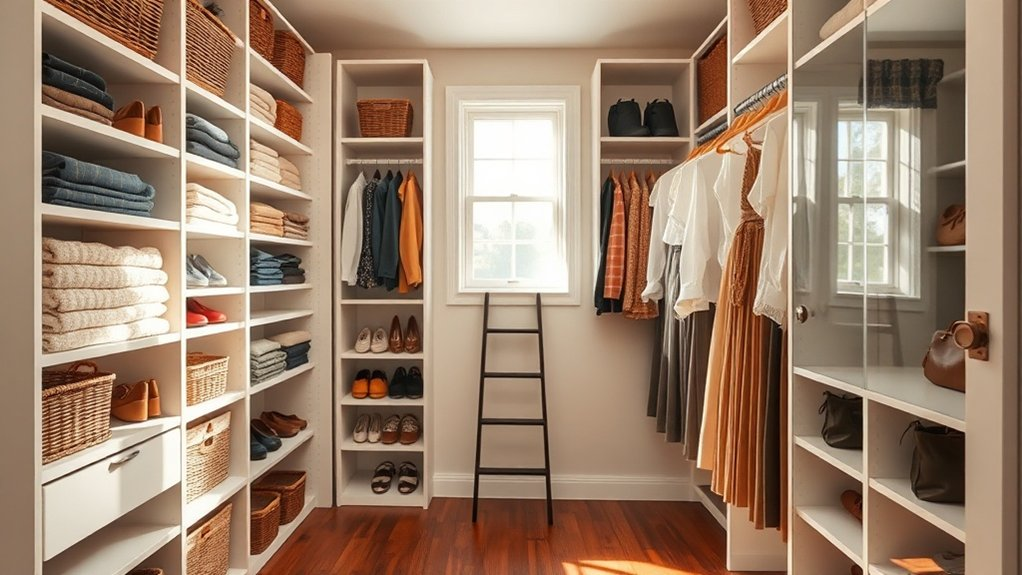
Now that you’ve edited down to what truly belongs in your closet, it’s time to look up: vertical space will multiply your storage without crowding the floor.
Add adjustable shelves to hold sweaters, baskets, and shoes, so items stay visible and tidy. Cubbies create neat homes for bags, hats, or folded jeans, giving each thing its own place. Consider stackable units with anti-tip features for safer vertical storage and added stability.
Install a second, lower hanging tier for shirts or skirts, doubling usable hanging area without squeezing items together. Use clear bins or labeled baskets on higher shelves so you can grab what you need without a ladder.
Don’t forget an over-the-door rack or slim wall-mounted shelf for scarves and belts. When you build upward, your closet feels calmer and more spacious. Consider modular organizers with vertical storage capabilities to maximize space and adaptability. Additionally, choosing durable materials like sturdy iron mesh can help your shelves and organizers maintain shape and last longer.
Choose Slim Hangers and Smart Rods to Free Width
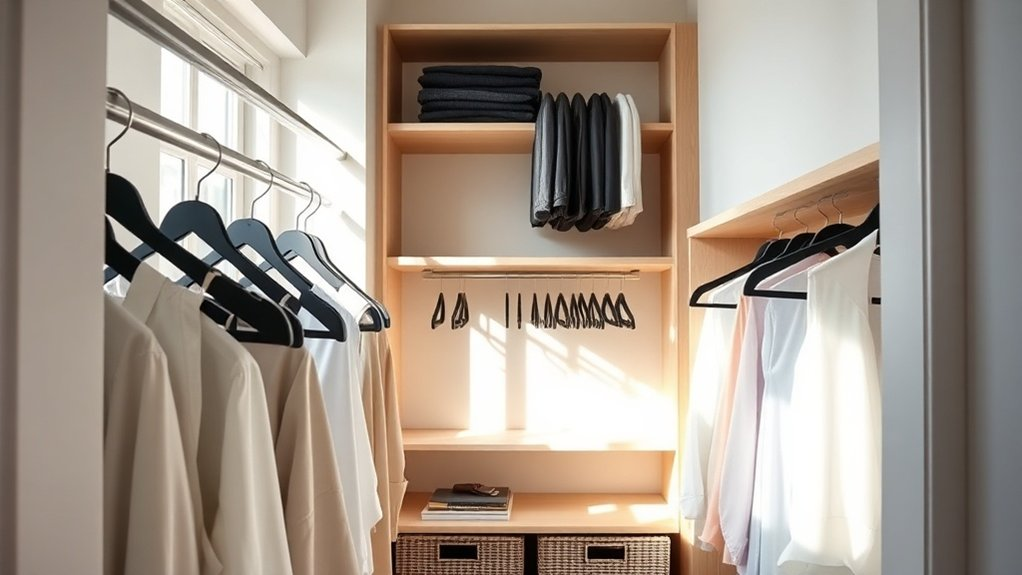
You can reclaim inches of closet width simply by swapping to slim, non-slip hangers that keep things neat without bulking up.
Add a smart double rod and you’ll multiply hanging capacity, giving you two layers of easy access for shirts and pants.
Ready to try a streamlined system that feels tidy and makes getting dressed faster?
Consider also maximizing vertical space with taller organizers like multi-functional organizers to further reduce clutter and improve storage efficiency.
For small spaces, adding a compact rolling clothes rack can provide extra hanging and shelf space without permanent installation.
Many people also save significant room by using space-saving hanger connectors to link multiple garments on a single hanger and reduce horizontal clutter.
Slim Hangers, More Space
One simple swap can make your closet feel twice as roomy: switch to slim hangers and add smart rods where you need them.
When you replace bulky plastic or wooden hangers with slim velvet or metal versions, you instantly gain inches across the whole rack. You’ll see more gaps, items slide less, and getting shirts or dresses out becomes effortless.
Smart rods—adjustable, extendable, or low-profile designs—let you position hanging space precisely, reclaiming awkward nooks. These rods often pair well with adjustable shelving to maximize vertical space and versatility. Consider also using adjustable organizers to accommodate changing shoe and accessory needs without wasting space.
Want to fit more without crowding? Spread garments evenly, group by type, and leave breathing room for each piece. You’ll enjoy a calmer, neater closet every morning.
Ready to swap them out and feel that immediate lift in space and mood?
Durable materials like velvet organizers protect delicate items and help maintain their shape and longevity.
Double Rods Multiply Capacity
Try adding a second hanging rod and watch your closet transform: doubling vertical space can make mornings feel easier and your clothes breathe again.
You’ll instantly create two tiers for shirts, skirts, and folded pants, so everything has a spot and nothing gets crushed. Choose slim, sturdy hangers to keep the new rows neat, and pick a smart rod system that mounts securely without eating into side clearance.
Measure before you install, so sleeves don’t tangle and longer items still have room. You’ll love seeing more visible outfits at a glance, and grabbing what you need will be faster.
Want a simple weekend upgrade that changes daily routines? A second rod might be exactly that small, joyful win. Additional space-saving gains can come from pairing a second rod with space-saving hangers to maximize capacity. Installing a double rod system can be especially effective in closets between 2 to 8 feet wide to make the most of vertical space. Consider also adding velvet hangers to increase hanging density while preventing slipping.
Non-Slip Streamlined Options
After adding that second rod, freeing up side-to-side space becomes the next smart move—slim, non-slip hangers and low-profile rod systems help you keep more garments visible without the bulk.
You’ll notice instant calm when bulky plastic gives way to slim velvet or thin wooden hangers that cradle clothes without slipping. Low-profile rods tuck closer to the wall, creating extra width so shirts don’t brush shoulders.
Choose hangers with textured grips for delicate blouses, and look for rods with clean brackets that don’t eat into space. Small changes feel big in a tiny closet.
Which piece would make getting dressed easier for you tomorrow?
- a row of velvet-coated slim hangers, neatly aligned
- thin wooden hangers with contoured shoulders
- low-profile metal rod hugging the wall
- textured grips holding silk blouses
- tidy gaps between garments for easy viewing
Consider adding stackable organizers to maximize vertical space and keep frequently used items within reach. Adding space-saving hangers like multi-tier or cascading hooks can free up to 80% of your closet space.
You can also incorporate clear storage bins to keep seasonal items visible and dust-free.
Underutilized Storage: Floor Baskets, Boots, and Boxes
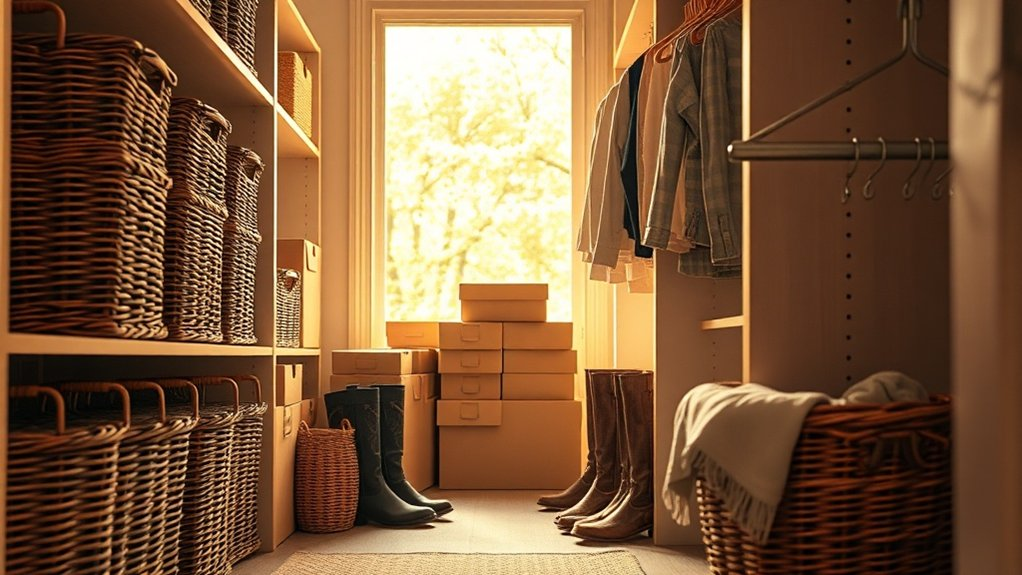
Three simple containers can change how your closet feels and works: floor baskets, boot shapers, and stackable boxes.
You’ll reclaim the floor by placing baskets under hanging clothes, keeping scarves, workout gear, or totes tidy and easy to grab. Try combining baskets with a stackable storage drawer to further organize small items. Many 2026 storage solutions emphasize stackable features to maximize vertical space and organization.
Boot shapers stand boots upright, saving space and preventing creases, so your favorite pair stays ready.
Boot shapers keep boots upright and crease-free, saving space so your favorite pair is always ready.
Stackable boxes use vertical height, turning unused lower space into neat zones for seasonal items or keepsakes.
You’ll find things faster, and the closet will look calmer, not crowded.
Want to try this tonight? Start with one basket and a pair of shapers, then add boxes as you see the difference.
Small steps bring big relief, and you’ll enjoy opening that door again.
Consider using stackable options to maximize vertical space and keep everything accessible.
Shelf Dividers, Under-Shelf Baskets, and Clear Bins for Visibility
You can reclaim every inch of shelf space by adding dividers and under-shelf baskets that let you stack items neatly and use the vertical room you’re not using now. Consider choosing durable, waterproof materials like hard PP plastic for long-lasting organizers.
Clear bins make it easy to spot what you need at a glance, so you’ll stop digging through piles and feel more in control.
Ready to try a few simple pieces that keep things separated, visible, and tidy? Consider adding stackable clear bins for easy visibility and maximum vertical use with clear plastic. Adding stackable designs also helps maximize vertical space while keeping items reachable.
Maximize Vertical Space
Think of your closet like a small room with tall walls—using the height changes everything. You’ll add shelf dividers to stack sweaters without toppling piles, and slip under-shelf baskets in to catch scarves and belts.
Clear bins sit up high so you can glance and grab, no ladder search. When you build up instead of out, floor clutter disappears and breathing room appears. Can you picture shelves filled but calm?
- A column of clear bins labeled by season
- Neat stacks split by slim wooden dividers
- Under-shelf baskets holding rolled scarves
- A top shelf with labeled boxes lined up like books
- A vertical shoe rack using every inch
You’ll feel lighter, organized, and delighted. Consider durable materials like stainless steel for racks and organizers to ensure long-lasting, rust-resistant performance. Adding multi-tiered shelving can further maximize vertical storage without expanding your closet footprint. Also consider stackable storage to increase capacity while keeping items accessible.
Improve Item Visibility
If you want to spot what you need in seconds, visibility is the secret that turns a messy shelf into a calm, useful space. Use clear bins so you see contents at a glance, no rummaging needed, and label the front for quick checks.
Slide under-shelf baskets into wasted gaps to hang scarves, belts, or small items, keeping them visible and off crowded surfaces. Add shelf dividers to stop stacks from leaning and to create tidy zones for accessories or folded tees.
Can you imagine grabbing what you need without stress? These simple tools brighten the shelf, save time, and help you keep order. Start with one shelf, test what works, and enjoy the small wins.
Separate And Stack Neatly
Now that you can spot items in seconds, it’s time to make those items behave—separate and stack neatly so every shelf looks calm and works harder.
You’ll love how simple tools turn chaos into order: shelf dividers keep piles upright, under-shelf baskets add hidden tiered storage, and clear bins let you find things without rummaging.
Think about grouping by use, then stacking similar heights for a tidy silhouette. Want quick access? Label the fronts. Need more space? Slide baskets under a stack.
When everything has a place, the closet feels bigger and kinder to your morning routine.
- crisp folded sweaters held by wooden dividers
- clear bins showing scarves and belts
- wire under-shelf basket sliding out
- neat stacks separated by thin acrylic panels
- labeled fronts for fast grabs
Door and Wall Solutions: Hooks, Over-the-Door Organizers, and Pegboards
Doors and walls are some of the most underused storage spaces in your home, and with a few smart additions you can turn them into instant organizers that make life easier.
Add sturdy hooks at varying heights for bags, scarves, hats, and frequently used coats so you grab what you need without digging.
Hang sturdy hooks at different heights for bags, scarves, hats, and daily coats—no more digging.
Over-the-door organizers give you pockets for shoes, accessories, or cleaning supplies, using vertical space you’d otherwise ignore.
Install a pegboard for flexible storage — hang baskets, shelves, and pegs, then rearrange as your needs change.
These solutions keep floors clear and items visible.
Want a quick win? Start with three hooks and one pocket organizer; you’ll notice the difference immediately and feel encouraged to do more.
Lighting and Visual Tricks That Make Closets Feel Bigger
You can make your closet feel much larger just by changing the light and adding reflective surfaces.
Start with bright, layered lighting—overhead fixtures, motion-sensor strip lights, and a warm task light—to erase dark corners and highlight what you own.
And don’t forget mirrors or glossy panels; they bounce light and create the impression of extra space, so why not try one and see how it opens up your closet?
Bright Layered Lighting
When you layer light in a closet, small spaces suddenly feel open, organized, and welcoming, as if they’ve been given room to breathe.
You’ll want a mix of overhead, task, and accent lighting that works together: bright enough to see everything, soft enough to feel calm.
Install flush ceiling LEDs for general glow, add strip lights under shelves for focused visibility, and place puck lights inside darker corners.
Warm white bulbs keep clothes true to color and cozy. Dimmer switches give control, so mornings feel bright and evenings stay gentle.
Ready to make your closet feel larger and friendlier?
- Soft overhead LED panel washing the space
- Slim under-shelf strips highlighting rows of shirts
- Puck lights in shadowy cubbies
- Directional track light pointing at shoe racks
- Subtle dimmer for mood and function
Mirror And Reflective Surfaces
Because mirrors and glossy surfaces reflect light and depth, they can instantly make a small closet feel airy and twice its size. You’ll be surprised how simple changes deliver big results.
Add a tall mirror on the back of the door or inside a sliding panel to double visual space, and choose a slim frame so it doesn’t crowd shelves.
Install mirrored drawer fronts or a glossy paint on one wall to bounce light from fixtures, making colors pop and corners recede. Even small, removable adhesive mirrors work on a budget.
Think about placement: opposite a light source or near brighter clothing.
Want instant impact? Swap matte knobs for metallic ones.
These reflective touches are simple, affordable, and they’ll change how your closet feels every day.
Multi-Use Items and Seasonal Rotation to Reduce Crowding
Though it may seem easier to stuff every shelf and hanger, choosing multi-use pieces and rotating seasonally will free up space and calm your closet, making it easier to find what you love.
You can keep fewer items and still feel ready for anything when you pick versatile garments—a blazer that dresses up jeans or a dress, shoes that suit work and weekends, scarves that shift mood.
Each season, pack away what you won’t wear and bring forward what supports your current life. That simple cycle reduces visual clutter and makes mornings smoother.
Rotate your wardrobe each season: tuck away what’s unused and foreground pieces that fit your current life for calmer mornings.
Ready to try it? Picture how a pared-down rack will look:
- A neutral blazer over a casual tee
- Boots tucked with sandals in a labeled box
- Lightweight sweater folded neatly
- Color-coordinated hangers aligned
- A rolling tote for off-season storage
Layout Templates and Quick Setups for Common Closet Types
Start with one clear plan and you’ll feel the difference: pick a layout that fits your closet type—reach-in, walk-in, wardrobe, or alcove—and adapt it with a few smart moves so every outfit has a place.
For a reach-in, use double rods and narrow shelves to double hanging space and keep shoes tidy.
In a walk-in, carve zones: daily wear at eye level, seasonal up high, and accessories in cubes.
A freestanding wardrobe benefits from slim hangers and a top shelf basket for extras.
Alcoves work well with adjustable brackets and a mix of hooks and small drawers.
Can you see how one template makes decisions easier?
Try a quick setup, tweak it for you, and enjoy a calmer, roomier closet.
Frequently Asked Questions
How Do I Prevent Mold in a Small, Poorly Ventilated Closet?
You prevent mold by controlling moisture: use a compact dehumidifier or moisture absorbers, keep items dry, leave the door or a vent slightly ajar, run a fan periodically, and inspect regularly so you catch problems early.
Can I Use a Closet as a Laundry Folding Station?
Yes — you can convert a closet into a laundry folding station. Add a sturdy pull-out shelf or hinged tabletop, install bright LED lighting, use slim storage bins for supplies, and guarantee ventilation to prevent dampness and odors.
What Are Pet-Proof Storage Options for Closet Bottoms?
You can use sealed plastic bins, elevated shelving, metal drawers, or pet-proof baskets; if you worry about smells, choose airtight or washable options, and you’ll keep bedding, toys, and supplies protected and easy to access.
Are There Eco-Friendly Materials for Closet Organizers?
Yes — you can choose eco-friendly closet organizers made from bamboo, reclaimed wood, FSC-certified plywood, recycled plastic, or organic cotton and hemp bins. You’ll reduce impact, support sustainable forestry, and keep toxins out of your storage.
How Do I Protect Delicate Fabrics When Using Tight Vertical Storage?
You can—first, pause and feel the fabric—wrap delicates in acid-free tissue, use padded hangers or soft garment bags, avoid overpacking, rotate items, and air them occasionally so fibers breathe and won’t get crushed or snagged.
Conclusion
You’ve learned simple, doable ways to make a small closet breathe—edit first, go vertical, and pick slim, smart storage that fits your life. Try one change this weekend: swap hangers, add a shelf, or hang a hook. Imagine opening your closet and feeling calm instead of crowded—what would that do for your day? Little shifts add up fast, and you’ll enjoy a tidier, more useful space you actually love.