

You can reset your seasonal closet in just 15 minutes so mornings feel calmer, not stressful. Start with a clear goal and timer, pull out obvious off‑season pieces, and sort into keep, store, or let go piles. Touch each item, ask if you wore it last year and if it makes you feel confident. Mend favorites, box off‑season items in clear bins, and stash a donate bag by the door. Keep quick habits and you’ll sustain the change—learn simple next steps here.
Closet Highlights
- Start with a 15-minute “quick reset”: remove unworn seasonal items, straighten hangers, and tidy one shelf.
- Use the fit-and-wear test: kept if it fits, flatters, and was worn in the past year.
- Sort into Keep, Donate, and Unsure piles; revisit Unsure with a two-question test.
- Store off-season pieces in labeled, breathable clear bins and use slim hangers to save space.
- Maintain habit cues: weekly 10-minute tidy, quarterly audits, and a “one in, one out” rule.
Quick 15‑Minute Closet Reset to Start Today
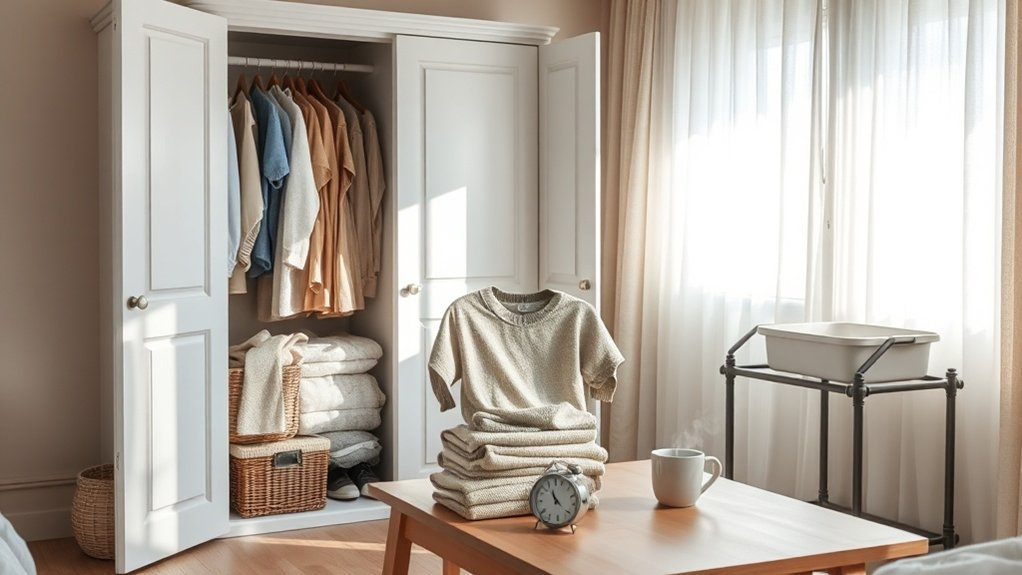
Give yourself just 15 minutes and watch your closet feel lighter and more welcoming.
Start by opening the door, taking a deep breath, and spotting what greets you first. Pull out anything you haven’t worn in a season and hold it up—does it spark ease or hesitation? If it causes doubt, set it aside. Consider following a clear, phased approach to make decisions faster and less stressful by using a step-by-step method. Try incorporating a few stackable bins to corral smaller items quickly and save space.
Open the door, take a breath, and pull out anything unworn—if it gives doubt, set it aside.
Straighten hangers, align shoes, and fold one messy shelf; small order lifts the whole space. Remove a few items that don’t fit your life now, and notice how much room appears.
Keep a donate bag nearby so decisions move quickly. When time’s up, step back and admire the change. You’ll feel calmer, clearer, and ready to build a seasonal wardrobe that actually serves you. Add a simple storage habit like a weekly 5‑minute tidy to maintain that organized closet feeling.
Set a Simple Goal and Time Limit

You just cleared a little space and felt that instant lift—now let’s keep that energy going by setting a simple goal and a firm time limit for the rest of your reset.
Pick one clear aim: make room for summer outfits, donate items you haven’t worn in a year, or create a capsule of favorites. Write it down so it feels real. Consider using stackable bins to keep sorted items organized as you work. Using clear bins and dividers can also speed decisions by improving visibility of what you own.
Then set a timer—30, 45, or 60 minutes—whatever fits your schedule and attention span. Working with a limit keeps you focused and makes decisions easier.
You’ll be surprised how much progress you make when you’re intentional. Ready to see results fast? Start the timer, stick to your goal, and enjoy the momentum as your closet transforms, one deliberate choice at a time. Also, using iron mesh organizers can help maximize vertical space and keep items breathable.
Create a Keep / Store / Let Go Decision Rule

Decide now what stays in your daily rotation by asking if an item fits, flatters, and feels useful—if it does, keep it.
If something’s seasonal or sentimental but still loved, label a clear storage spot and note when you’ll reevaluate it.
If it’s worn out, unused for over a year, or doesn’t spark joy, let it go to make room for what truly matters.
Aim for a simple system you can maintain year-round to prevent clutter from creeping back, like a keep / store / let go rule. Add a quick seasonal audit each quarter to stay on top of changes and reinforce the closet organization habit. Consider implementing closet zones to make finding and returning items faster.
Criteria For Keeping
Start with three simple questions to guide every choice: have I worn this in the past year, does it fit and flatter my current shape, and does it spark some kind of joy or usefulness for my season?
Use those answers to place items into keep, store, or let-go piles. Keep pieces that feel like you, fit well, and earn regular wear — basics, favorites, and anything that boosts your confidence.
If something works but won’t suit the next few months, consider storing it thoughtfully. Remember to use vertical solutions like closet door organizers to maximize space when storing seasonal items. A quick audit of space and items each season can streamline future resets by revealing high-impact changes you can make.
Let go of items that are uncomfortable, outdated, or rarely worn, even if they were once special.
Trust your instincts, but be honest. A clear, consistent rule makes decisions faster and kinder to your closet and your calm.
A seasonal reset also benefits from decluttering routines to maintain order between deep cleans.
Clear Storage Guidelines
Although it can feel intimidating, creating clear storage guidelines makes seasonal swaps simple and satisfying, and you’ll thank yourself next time you stand in front of the closet. You’ll set a few helpful rules so decisions don’t drag on. Consider using stackable organizers to make the most of vertical space and keep swaps quick.
Decide what you wear often, what fits and flatters, and what’s sentimental value worth saving. Label boxes and use clear bins so you can peek without opening every lid. Make a bright “seasonal” list to remind yourself which pieces rotate back in. Consider adding collapsible bins to maximize shelf flexibility when not in use.
- Keep: items you love, wear monthly, and that fit well.
- Store: off-season pieces in labeled, breathable containers.
- Let go: damaged, unworn over a year, or no longer you.
- Reassess: revisit stored items each swap, honestly.
Consider using waterproof PP plastic storage bins with reinforced seams for more durable seasonal storage.
Triage: What to Do With Off‑Season Clothes Now
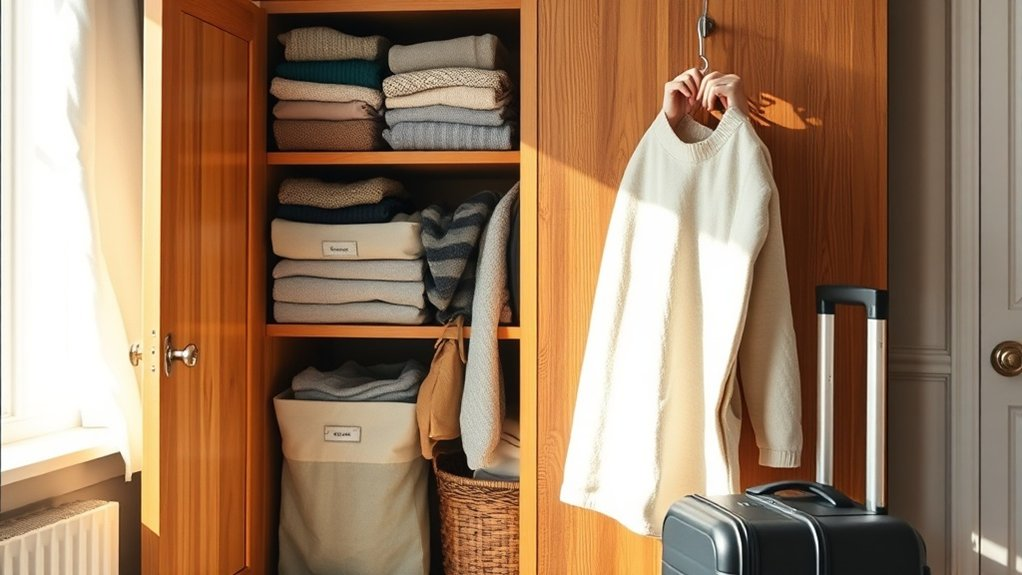
Now’s a great time for a quick seasonal sort: pull out your off‑season pieces and give each one a fast, honest look.
Ask yourself which items you’ll keep for next year and which ones could brighten someone else’s day if you donate them.
You’ll feel lighter and more organized once you’ve made those choices, so start with one small pile and watch momentum build. Consider using clear drawer organizers to make sorting and finding items easier.
Consider creating a simple labeling system for donated and stored items to keep things organized.
If you’re short on time, try a 15‑minute declutter session focused on one category, like coats or sweaters, to make progress without stress and build good habits.
Quick Seasonal Sort
Slide through your closet with purpose and a timer—this quick seasonal sort will clear space and calm your mind without taking the whole day.
You’ll work in short bursts, decide fast, and set aside items that don’t belong in the season ahead. Start by grouping pieces: daily wear, occasional, and clearly off-season.
Keep movement steady, trust your instincts, and remember this is triage, not a workshop. Consider choosing appropriately sized storage containers to fit shelves and maximize efficiency.
- Pull out obvious off-season items into one pile.
- Create a “maybe” pile for things you’ll revisit quickly.
- Label boxes or bags for storage, with season and month.
- Leave a small visible set for changeover days.
You’ll finish energized, with a clearer closet and a lighter headspace. Consider using clear storage solutions like clear garment bags to keep items visible and protected. Also consider using stackable organizers to maximize vertical space and keep labeled items accessible.
Decide Keep Or Donate
You’ve cleared out the obvious off-season pieces and a “maybe” pile—now it’s time to decide what stays and what goes.
Start by touching each item: does it fit? Do you wear it at least once a season? If not, let it go. Be honest about memories versus real use.
Separate items into Keep, Donate, and Unsure piles, then tackle Unsure with a two-question test: have you worn it in a year, and does it make you feel confident? If both answers are no, donate.
Choose a local charity or clothing swap that feels right, and bag donations promptly so they don’t drift back into your closet.
You’ll feel lighter, more organized, and ready for the next season. Small choices, big relief.
A simple seasonal reset can create lasting calm in your daily routine by keeping your closet aligned with what you actually wear. Consider adopting decluttering routines from closet-organizing resources to maintain your reset over time.
Routine maintenance like a quarterly tidy-up can prevent clutter from accumulating and make future resets faster, especially when you follow storage best practices.
How to Quickly Spot Items That Never Get Worn

Ever wonder why some pieces in your closet feel ignored no matter how many times you open the door? You can learn to spot the unworn items fast, so you’ll free space and calm without drama.
First, do a quick pull: anything you haven’t worn in a year is a candidate. Check comfort, fit, and how it makes you feel—if it’s itchy, tight, or makes you hesitate, it won’t get love.
Look for duplicates that blur into the same outfit. Finally, notice items with tags still attached; they rarely become favorites.
- Hasn’t been worn in 12 months
- Causes hesitation when you reach for it
- Feels uncomfortable or doesn’t fit right
- Still has tags or looks unused
A seasonal reset also benefits from focusing on closet organization principles to keep results long-lasting. A tidy, well-planned layout follows basic organization principles that make maintaining your closet easier over time. Adding simple closet layout strategies from Transform Your Closet can help you keep the space functional year-round.
Storage Options That Save Space and Sanity
When you rethink where and how things live, your closet can feel like a calm, spacious room instead of a cluttered catchall.
Start by choosing clear bins for seasonal items so you see what’s inside without digging, and label them for quick grabs.
Choose clear, labeled bins for seasonal items so you can quickly spot and grab what you need.
Use slim, non-slip hangers to free up rod space and keep outfits looking neat.
Add a shoe rack that stacks vertically, or use hanging shoe organizers to reclaim floor area.
Over-the-door pockets are perfect for scarves, belts, or small accessories.
Fold bulky sweaters into breathable boxes to prevent sagging on hangers.
Want easier mornings? Place everyday items at eye level and seasonal pieces higher up.
Small changes make a big difference, and you’ll feel relief every time you open the door.
Consider stackable clear storage bins for visibility and maximized vertical space to make the most of your closet height.
A quick purge of items you no longer wear can make organizing and maintenance much easier, especially when you separate donations into dedicated donation bags.
Also consider durable, stackable clear organizers to protect items while maximizing vertical storage.
Easy Ways to Mend, Tailor, or Refresh Favorites
If you want your favorite pieces to keep feeling like new, a little mending and tailoring go a long way, and you don’t need a closet full of tools to do it.
You can tackle small fixes—loose buttons, tiny tears, or hems that’ve come loose—with a basic sewing kit and a bit of patience. Simple alterations, like shortening sleeves or nipping a waist, make garments fit like they were made for you.
Refresh fabrics with a gentle wash, fabric spray, or by removing pilling. These steps keep clothes wearable and meaningful, so you’ll reach for them more often.
- Reinforce loose seams with quick stitches
- Replace mismatched buttons for instant polish
- Use a handheld steamer to revive shape
- Trim pills with a fabric shaver
Donate, Sell, or Recycle : Choose the Right Exit
Take a good, honest look at each piece and ask yourself if it’s truly wearable or worth fixing, because that first check makes the rest of the process so much easier.
If something’s in great shape, consider selling for a little cash or donating to a local charity where it can brighten someone else’s day; if it’s stained or torn beyond repair, recycling keeps it out of landfill.
Which option feels right for you today, and how fast do you want that cleared-out space to feel like yours again?
Honest Condition Check
Although sorting through your clothes can feel like a big task, you’re about to make room for pieces that truly serve you; start by holding each item up and asking whether it fits, feels good, and matches your life right now.
Check seams, zippers, stains, and fabric wear honestly. If a tear is simple to fix and you love the piece, plan a quick repair. If fading or permanent damage ruins the look, let it go.
Remember, keeping worn-out items clutters your choices and your mood.
- Look for holes, pilling, and loose buttons.
- Test stretch and shape on clothes that should hold form.
- Smell for lingering odors after a wash.
- Assess whether repairs are worth the time and cost.
Best Rehoming Option
Because your closet deserves thoughtful exits, let’s choose the right path for each piece so it can do good elsewhere or be turned into something new.
Start by asking: does this still fit your style, or could it make someone else smile?
Donate items in good condition to local charities or shelters; you’ll brighten someone’s day and clear space fast.
Sell higher-quality pieces online or at consignment for extra cash; take clear photos and write honest descriptions.
For stained, torn, or worn-out textiles, recycle them through fabric programs or turn them into rags, quilts, or craft projects.
If something has sentimental value but no use, photograph it and then let it go.
You’ll feel lighter, purposeful, and ready for the season ahead.
Build a Capsule‑Friendly Layout for Daily Ease
Start by picturing your ideal morning: a calm, quick routine where everything you want is easy to see and grab.
You’ll design a capsule-friendly layout that highlights versatility, groups matching pieces, and keeps daily choices effortless. Place frequently worn items at eye level, seasonal extras higher or lower, and create a small “today” shelf for outfit ready-to-go.
Use uniform hangers and clear bins so pieces look cohesive and you don’t waste time searching. This setup reduces decision fatigue and makes dressing feel like a small joy, not a chore.
- Keep classics front and center
- Reserve one shelf for shoes and one for accessories
- Fold sweaters to prevent stretching
- Label bins for quick swaps
Isn’t it nicer to start your day that way?
Small Habits to Keep Your Closet Reset From Backsliding
A few small habits can keep your refreshed closet working for you all season, so you don’t drift back into cluttered mornings.
Start with a ten-minute tidy at week’s end: rehang mislaid items, fold anything crumpled, and put shoes back where they belong.
Make “one in, one out” a gentle rule when shopping or receiving gifts, so your wardrobe stays balanced.
Try a quick outfit check each night—does everything still fit your life and mood?
Use clear storage and labels so you never hunt for basics, and keep a donation bag near the door for things you no longer wear.
These tiny rituals save time, reduce stress, and help you feel confident every morning.
Ready to try them?
Frequently Asked Questions
How Do I Handle Sentimental Clothing I Can’t Wear but Can’t Bear to Toss?
You can honor those pieces by repurposing or preserving them: photograph items, turn fabric into a quilt or pillow, store a curated memory box, or donate with a note—these let you keep the memory without cluttering your closet.
What Should I Do With Specialty Items Like Formalwear or Uniforms?
Keep formalwear and uniforms stored properly: clean them, use breathable garment bags or acid-free boxes, label clearly, and tuck in cedar or silica packs. You’ll rotate seasonal pieces yearly and donate or sell anything you haven’t worn in two years.
How Often Should I Reassess My Seasonal Wardrobe Beyond This Reset?
Think of your wardrobe like a garden; you should reassess it every season, plus a quick check mid-season. You’ll spot wear, gaps, or trends, and you’ll keep things functional, fresh, and delightfully effortless.
Can I Involve Family Members Without Taking on Their Closets Too?
Yes — you can involve family by setting clear boundaries: invite them to sort shared items, supervise kids’ choices, offer guidance, and organize a swap station, but don’t take on their closets or make decisions for them.
What Eco-Friendly Options Exist for Disposing of Non-Sellable Fabrics?
You can compost natural fibers, drop synthetic scraps at textile recycling bins, donate usable pieces to rags programs, upcycle into cleaning cloths or crafts, or use municipal textile collection services—check local centers for specific eco options.
Conclusion
You’ve set a short goal, sorted with clear rules, and given pieces new purpose — now notice how small choices add up. Science suggests habits form with tiny cues and consistent practice, so a 15‑minute reset can really change your closet rhythm. Keep tweaking what works, let go without guilt, and celebrate the calm you create. Ready to try this weekly? You might be surprised how quickly order feels natural.