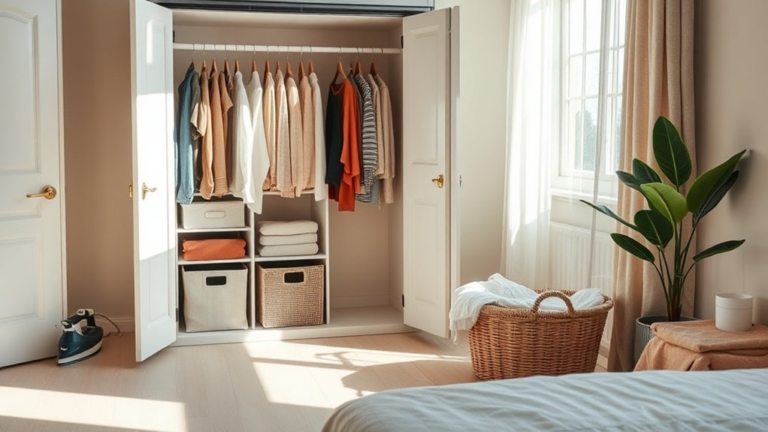
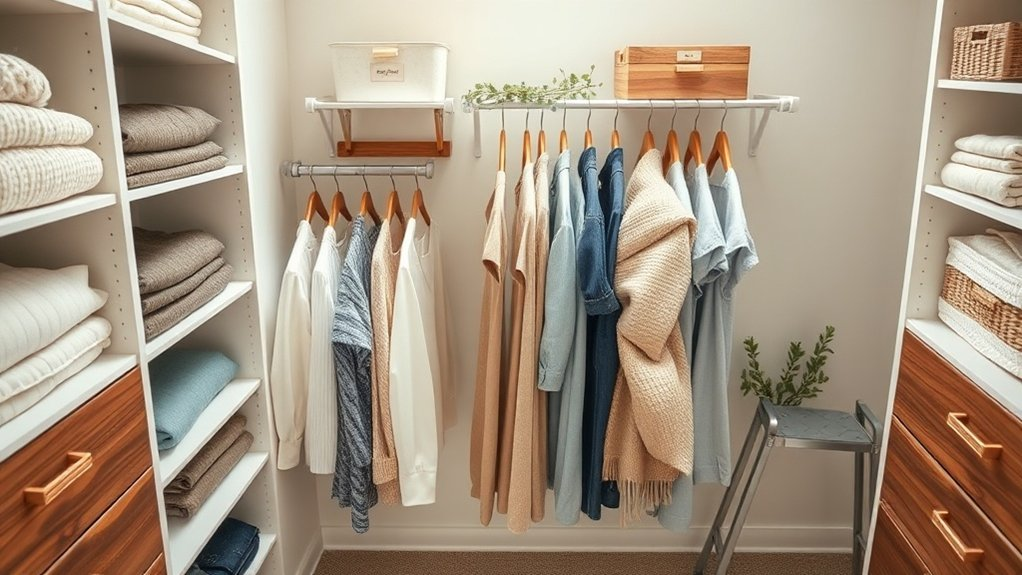
Ready for a seasonal closet reset? Start by pulling out a small corner, sort things into keep, donate, or repair piles, and clean or mend items before packing. Use breathable, stackable bins or cotton bags, add cedar or lavender to deter pests, and label outfits by fabric and frequency of use for easy mornings. Rotate and air pieces every few weeks to stay fresh. Follow these steps and you’ll find smarter storage and less morning stress—keep going to see how.
Closet Highlights
- Empty a small section, evaluate items by wear, fit, and joy, and sort into keep, donate, or repair piles.
- Launder or dry-clean garments and mend tears, missing buttons, or hems before storing.
- Use breathable, stackable containers or cotton garment bags with acid-free tissue for delicate items.
- Add cedar blocks or lavender sachets and silica gel packets to deter pests and control moisture.
- Label bins, group outfits or fabric types, and schedule periodic airing and inspections every 4–6 weeks.
Decide What to Keep, Donate, or Repair
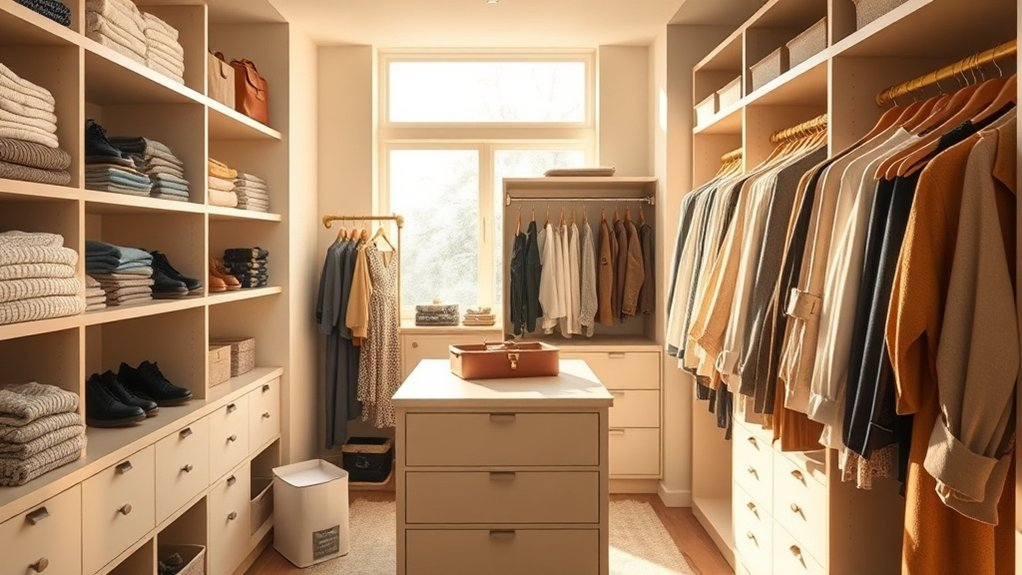
Where do you start when your closet looks like a season’s worth of memories and mismatched plans? You begin by picking a small corner and pulling everything out, feeling each item as you go.
Ask: have I worn this in a year? Does it still fit, flatter, or spark joy? Try pieces on if you’re unsure.
Ask: have I worn this in a year? Does it fit, flatter, or spark joy—try it on and decide.
Set three piles: keep, donate, repair. Be honest but gentle with yourself; you’re making room for what matters.
Fold or hang keepers neatly so you can see them later. Bag donations promptly and schedule a drop-off, so good clothes find new homes.
Note repairs and book a quick fix session. You’ll finish lighter, calmer, and ready for the season ahead. A well-organized closet can save time and reduce stress by making items easier to find and maintain, especially when you practice seasonal rotation. Add labeled storage and a simple inventory list to support an ongoing closet organization system. Consider using clear bins and uniform hangers to maximize visibility and create a cohesive look, which helps maintain space efficiency.
Clean and Prep Clothes for Storage
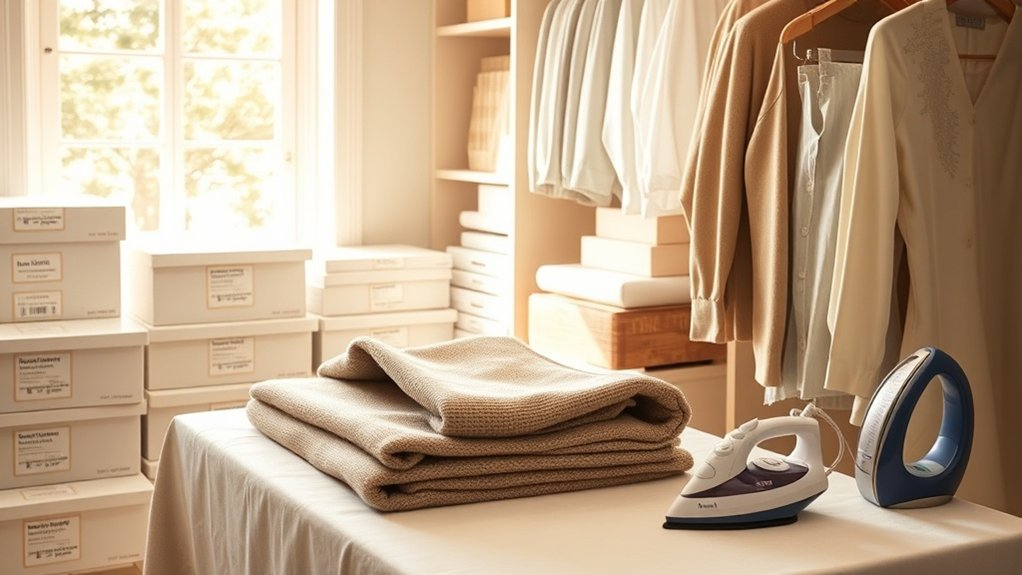
You’ve sorted what stays, what goes, and what needs mending, so now treat those keepers with the care they deserve before packing them away.
First, launder or dry-clean each item according to its label; oils, stains, and body soils attract pests and can set over time.
Repair small tears, replace missing buttons, and sew loose hems now so you won’t face surprises later.
For delicate fabrics, use acid-free tissue between folds to prevent creasing; hang structured coats on wide, padded hangers to keep shape. Consider storing folded items in stackable bins to maximize space and protect fabrics during long-term storage. Consider using breathable 90L capacity bags for bulky items like comforters and blankets to keep them ventilated and preserved.
Make sure everything is completely dry to avoid mildew.
Add gentle cedar or lavender sachets to deter moths, but don’t let oils touch fabrics.
Finally, label bundles with contents and cleaning dates so you’ll know exactly what’s inside when the season returns.
Consider using adjustable, no-drill hanging solutions to maximize storage efficiency in your closet and protect garments from crowding, especially when storing bulky items on extended rods like no-drill closet rod extenders.
Pick the Right Storage Containers for Your Space
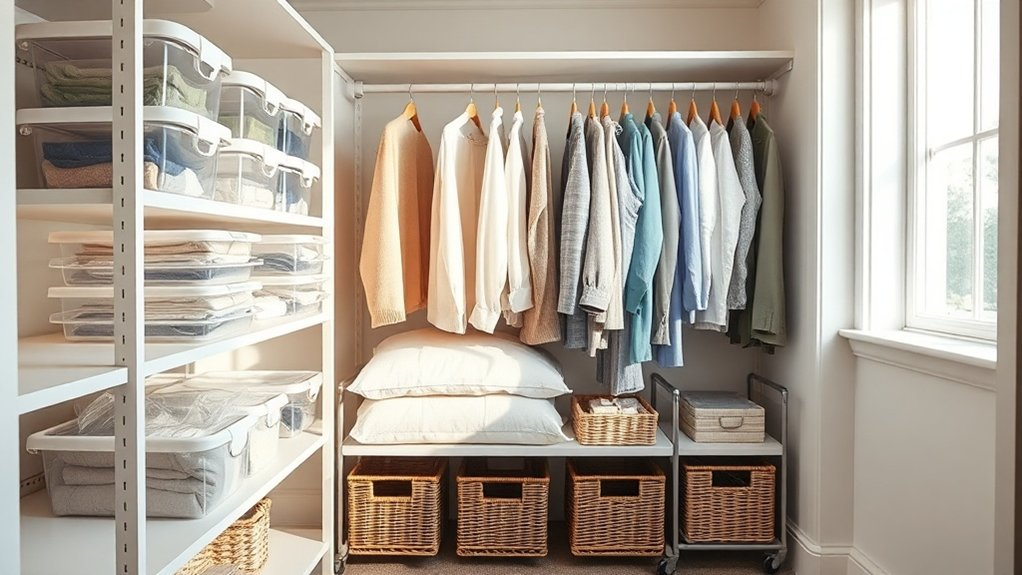
Start by measuring your available space so you know what’ll actually fit, then pick containers that use every inch without crowding your closet.
Choose breathable materials like cotton or mesh for fabrics you’ll store long-term, so everything stays fresh and mold-free. Consider using stackable designs to maximize vertical space and keep bulky items like comforters organized. Many stackable options, such as wire or plastic organizers, offer foldable and breathable materials for versatile long-term storage.
Look for stackable designs that save floor space and make seasonal swaps quick and satisfying — what could be easier than a tidy, accessible closet you love?
IRIS USA 20-Pack clear bins are ideal for maximizing vertical space with their flat, stackable lids and clear sides for easy identification of contents, so consider them when organizing stackable storage.
Measure Your Available Space
Before you buy a single box, take a clear look and measure the space you’ve got—shelves, floor area, and any odd corners—so your storage choices actually fit and work for you.
Pull a tape measure and note height, width, and depth of each shelf, then jot down the floor footprint and door swing. Think about stacked bins, slim garment bags, or rolling tubs—what will actually slide in and out? Measure twice if you’re unsure. Also consider the available space and clearances needed for organizers so you don’t end up with items that won’t fit or obstruct doors.
Do you need room to reach coats or fold sweaters easily? Small gaps can host slim organizers; tall spaces might take clear bins or a hanging rod. Consider adding stackable drawers to maximize vertical storage without increasing your floor footprint.
When you match container sizes to real dimensions, everything looks neater and you’ll use your space with confidence. Consider space-saving tools like vertical hangers that can triple closet space when you need to maximize hanging capacity.
Choose Breathable Materials
Now that you know the exact dimensions you’re working with, think about what those containers will actually do for your clothes over time. Choose breathable materials that let air circulate, like cotton totes, canvas bins, or woven baskets. These options reduce trapped moisture, mildew, and musty smells, so your sweaters and coats stay fresh between seasons. Would you rather open a box that smells clean or one that smells stale? Look for natural fibers and avoid airtight plastic for long-term storage of delicate fabrics. Mesh bags work for shoes and lighter items, letting you peek inside without undoing everything. Label each container, tuck in a sachet of lavender or cedar, and check periodically—your future self will thank you. Consider also using stackable bins to maximize vertical space and keep items organized. Additionally, choose materials with moisture-resistant properties when storing in humid areas to protect fabrics. For closets with limited shelving, opt for compact sizes like the 13.7 x 9.8 x 9.8 small collapsible bins to make the most of every inch.
Prioritize Stackable Designs
Because you’ll be stacking things up for months, pick containers that lock together or have flat, sturdy lids so everything stays neat and safe, even when space is tight.
You want boxes that fit your shelves and stack without wobbling, so measure before you buy. Clear plastic makes it easy to spot sweaters or boots at a glance, but labeled opaque bins look tidy and feel calm. Consider choosing stackable designs that distribute weight evenly to avoid sagging and improve stability.
Consider slim, under-bed bins for extra shoes, and cube-style crates for scarves and hats. Think about handles for carrying and lids that seal against dust and pests.
Will you access these often or only seasonally? Pack heavier items low, lighter ones high, and keep daily items within easy reach. Small choices now save you time later. Choose stackable, clear plastic bins when visibility matters to quickly identify stored items.
Also consider baskets with a sturdy metal frame to support heavier loads and prevent sagging over time.
Fold, Roll, and Pack to Save Space and Prevent Creases
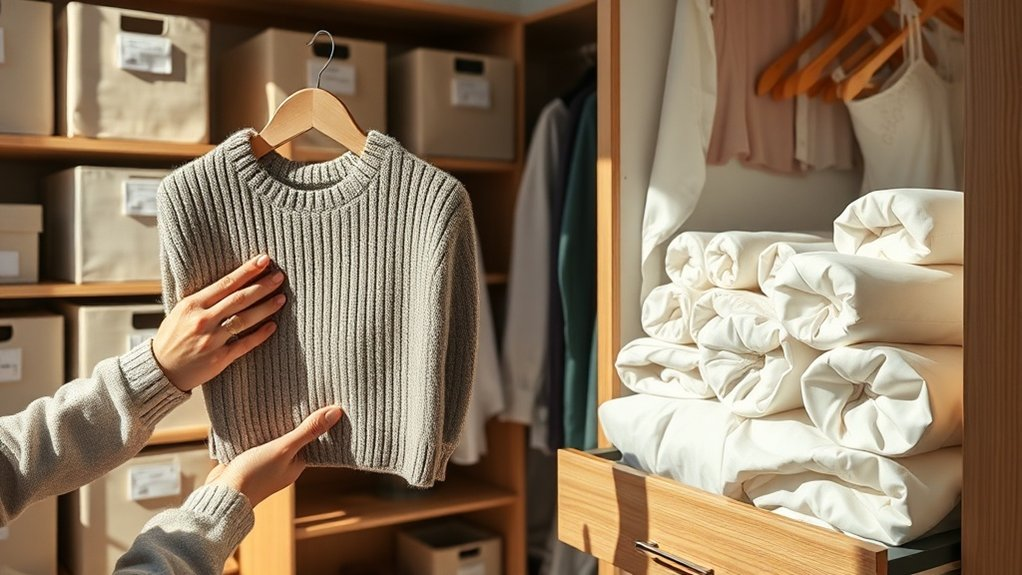
Tackle your closet with a few simple folding and rolling techniques that will instantly free up space and keep your clothes looking crisp.
You’ll start by folding sweaters flat, smoothing sleeves inward to avoid bulk, then stack them vertically so you can see each piece at a glance.
Roll t-shirts and casual tops tightly; they take up less room and resist deep creases.
Roll tees and casual tops tightly to save space and prevent deep creases—compact, neat, and ready to wear.
Use tissue paper between delicate layers, or roll silk items inside breathable fabric pouches to protect fibers.
Pack shoes in boxes or cloth bags, stuffing toes with socks to preserve shape.
Label containers clearly, and place heavier items at the bottom, lighter ones on top.
Ready to make room and reduce wrinkles? Small choices yield big results, fast.
Store by Outfit, Fabric, and Frequency of Use
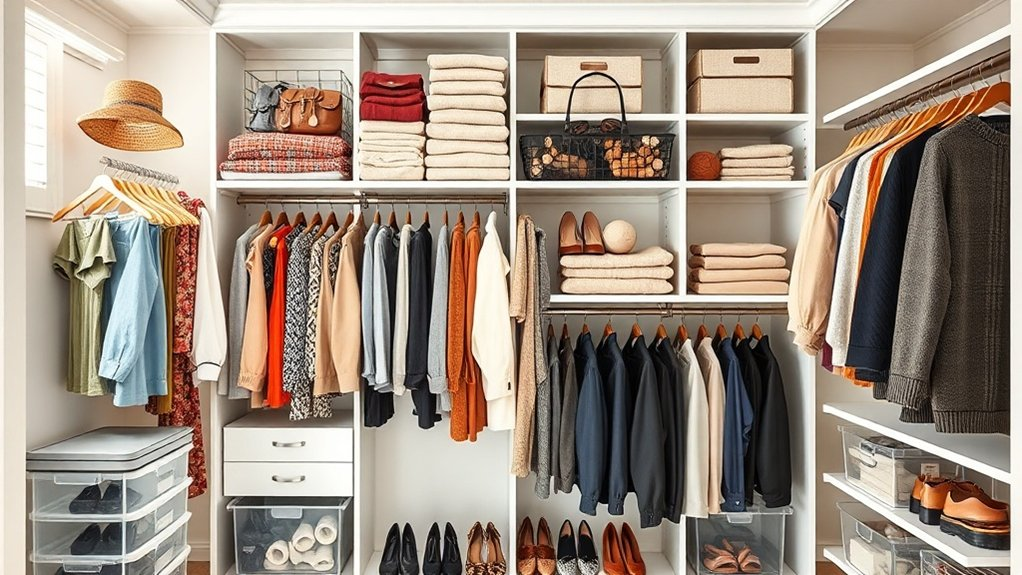
You’ve cleared space and protected your garments, so now it’s time to organize what’s left with purpose: store by outfit, fabric, and how often you wear each piece.
Begin by grouping complete outfits—tops with matching bottoms or layers—so grabbing a coordinated look is effortless when the season returns. A clear inventory of outfits can help prevent duplicates and streamline choices outfit inventory. Consider using vertical storage solutions from your organizer setup to keep outfits accessible and maximize space.
Next, separate items by fabric: cotton, wool, synthetics, and delicate blends need different handling and storage locations.
Finally, sort by frequency: everyday favorites go in easy-to-reach bins, occasional pieces tuck toward the back, and sentimental items get labeled and set aside.
Ask yourself which pieces lift your mood and which you rarely wear.
This simple system saves time, protects fabrics, and keeps your wardrobe ready for whatever the season brings.
Consider creating a personalized plan with a maintenance plan to keep your closet clutter-free year-round.
Protect Clothes From Pests, Moisture, and Odors
When you tuck away seasonal clothes, take a few thoughtful steps to keep them safe from pests, moisture, and lingering smells so they come back fresh and ready to wear.
Start by cleaning every item—stains and body oils attract pests and lock in odors. Also consider using breathable storage options like cotton bags or acid-free boxes to prevent mildew.
Use breathable storage: cotton bags or acid-free boxes let fabrics breathe, reducing mildew risk.
Add natural moth deterrents like cedar blocks or lavender sachets, and refresh them periodically.
Place silica gel packets or moisture absorbers in containers to control humidity.
Avoid plastic bags for long-term storage; they trap moisture and odors.
Label containers and store them off the floor in a cool, dry spot.
Want clothes that feel brand-new next season? These steps make it happen.
For stacking and visibility, consider using clear storage bins like the Sterilite 66 Quart Latch Box to keep items dust-free and easy to identify.
Consider adding over-the-door organizers to maximize closet space and keep frequently used items accessible while seasonal pieces are stored.
Seasonal Maintenance: Rotate, Inspect, and Refresh Regularly
Now that your clothes are cleaned, stored, and protected, make a plan to keep them new all season long by routinely rotating, inspecting, and revitalizing what’s in your closet.
Set a simple schedule—monthly or every six weeks—to pull a few items from storage, shake them out, and let them breathe. Consider using stackable bins to make rotation easier and maximize vertical space. Use space-saving hangers to free up room and keep seasonal pieces organized and accessible.
Check seams, buttons, and zippers for wear, and mend small issues before they become big problems.
Rotate pieces so fabrics age evenly and you rediscover forgotten favorites.
Refresh garments with a light steam, fabric spray, or a quick wash when needed, and replace sachets or desiccants to maintain freshness.
What small step will you take this month to keep your wardrobe ready and joyful?
Take it—your future self will thank you.
Also consider using clear containers so you can easily see contents and avoid rummaging.
Frequently Asked Questions
Can I Store Leather and Suede Garments Long-Term Without Professional Help?
Yes — you can store leather and suede long-term without pros. Clean, condition leather; brush suede, avoid water. Use breathable garment bags, acid-free tissue, cedar or silica packs, and store flat or hung in a cool, dark, ventilated spot.
How Do I Store Accessories Like Belts, Hats, and Scarves?
About 72% of people report clearer closets after organizing, so you should: hang belts on a rack, store hats on breathable hatboxes or stands, roll scarves into drawer organizers, and use silica packs to keep everything dry and mold-free.
Can I Use Vacuum Bags for Wool and Cashmere?
You shouldn’t use vacuum bags for wool and cashmere; they’ll crush fibers and reduce loft. Instead, you should gently fold, wrap in breathable cotton or linen, add cedar or lavender for moth protection, and store in breathable containers.
How Should I Pack Sentimental or Heirloom Clothing?
Think of your grandmother’s wedding shawl: you’ll wrap each heirloom in acid-free tissue, place it in a breathable archival box, add silica packs, label contents, and store flat in a cool, dark spot to prevent damage.
What Temperature Range Is Ideal for Stored Clothing?
Aim for 50–70°F (10–21°C) with 30–50% relative humidity; you’ll avoid mold, pests, and fabric damage. Use breathable containers, desiccants cautiously, and check storage periodically to maintain stable conditions for your garments.
Conclusion
You’ve given your closet a gentle spring cleaning, tucking away seasonal pieces like sunlit memories in neat crates. Keep what lifts you, mend what whispers for another wear, and let go of what’s grown quiet. Pack smartly, label clearly, and guard against damp and pests—so each garment wakes fresh when its season returns. Will you make this reset a ritual? Little acts now mean calmer mornings and a wardrobe that feels like home.