
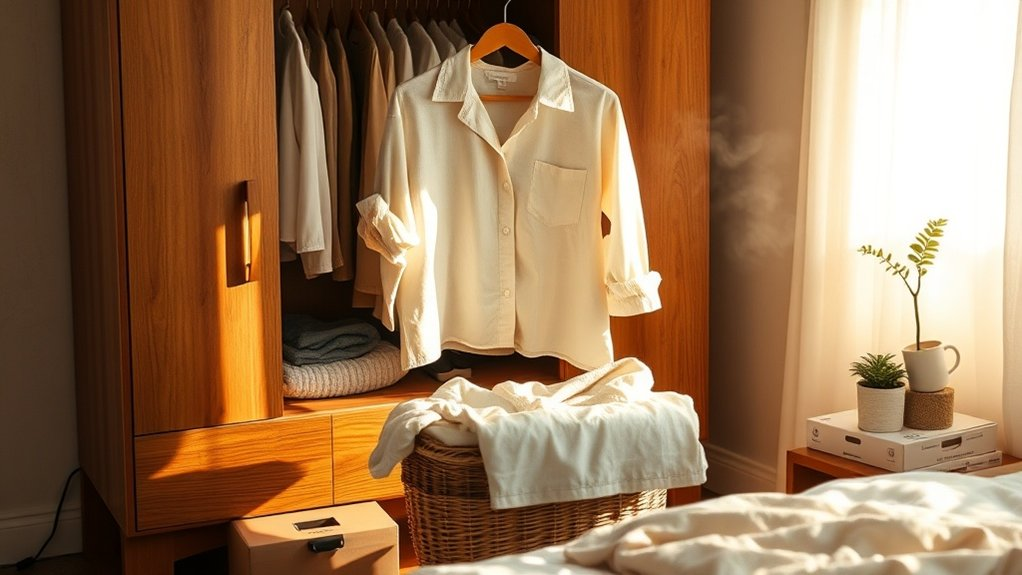
Choose a reset that fits your time and energy—full closet, seasonal swap, or a capsule edit—and set a calm, time-boxed plan so you won’t get overwhelmed. Touch each piece, ask quick questions about fit, joy, and last wear, then sort into keep, mend, donate, sell, or store. Do easy fixes yourself, label bins for rotation, and honor a few sentimental items with photos or keepsake boxes. Keep habits small and steady, and you’ll learn smart, gentle steps next.
Closet Highlights
- Choose a reset scope (full, seasonal, or capsule) based on time, energy, and decisiveness to prevent overwhelm.
- Time-box sessions to 30–90 minutes, break tasks into pull, try, decide, and sort steps for steady progress.
- Touch every item and sort into keep, mend, donate, sell, or store to make compassionate, practical choices.
- Use labeled, stackable bins and clear zones for seasonal rotation, keeping frequently used pieces accessible.
- Photograph or repurpose sentimental items, donate wearable pieces ethically, and store treasures in breathable boxes.
Decide Your Reset Scope: Full Closet, Seasonal Swap, or Capsule Edit
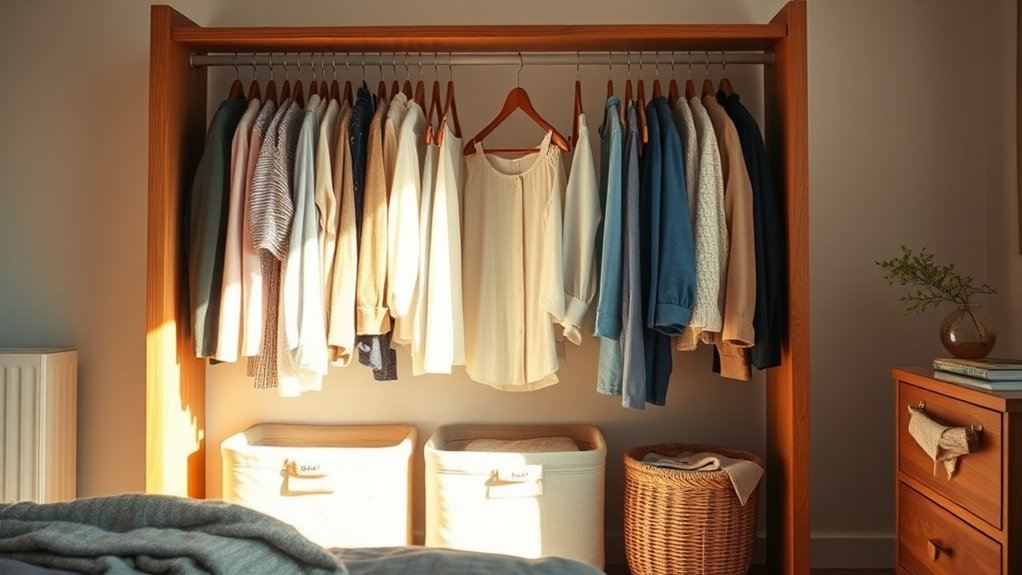
Wondering how big you want this closet refresh to be? You can choose a full closet reset, a seasonal swap, or a capsule edit, and each fits a different goal.
A full reset means pulling everything out, trying things on, and deciding what truly sparks joy — it’s thorough and freeing. Consider assessing your space and item sizes to plan shelves or bins that fit vertical space. A clear, phased approach with personalized plans can make the process less overwhelming.
Pull everything out, try it on, and keep only what truly sparks joy — thorough, freeing, and transformative.
A seasonal swap keeps you focused: rotate summer and winter pieces, clean what returns to storage, and spot gaps before you buy.
A capsule edit pares things down to versatile favorites for a set period, which simplifies dressing and reveals your style.
Which sounds right? Think about your time, energy, and how decisive you feel.
Pick the scope that feels doable, then commit; you’ll thank yourself later.
A thoughtfully organized wardrobe can transform daily routines and reduce decision fatigue by highlighting versatile favorites.
Set a Calm, Time-Boxed Plan You’ll Actually Finish
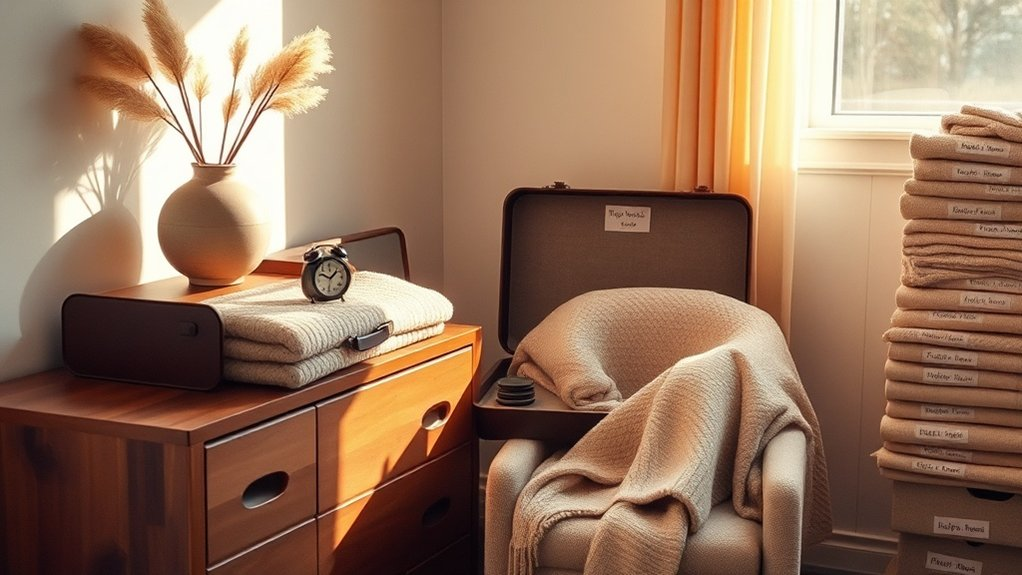
You’ve picked the scope—great choice—now set a calm, time-boxed plan so you actually finish the job without burning out.
Begin by blocking a realistic window: 30 to 90 minutes feels doable, depending on scope. Use a timer, and promise yourself one clear break when it dings.
Break the task into small steps—pull, try, decide, sort—so each moment feels purposeful. Limit decisions per session; pick a number of items to evaluate or a single shelf to conquer. Consider adding an over-the-door organizer to maximize vertical space for smaller items.
Invite a friend or play gentle music to keep energy steady, if that helps.
End with a short tidy-up and a winning ritual: a cup of tea, a five-minute walk, or a photo of your progress.
Small wins build momentum—you’re closer than you think. Consider adopting a simple closet organization approach to maintain those gains. A basic storage zoning method—grouping items by use or season—can make future resets faster and less stressful.
Gather Tools: What to Have on Hand for Sorting and Mending
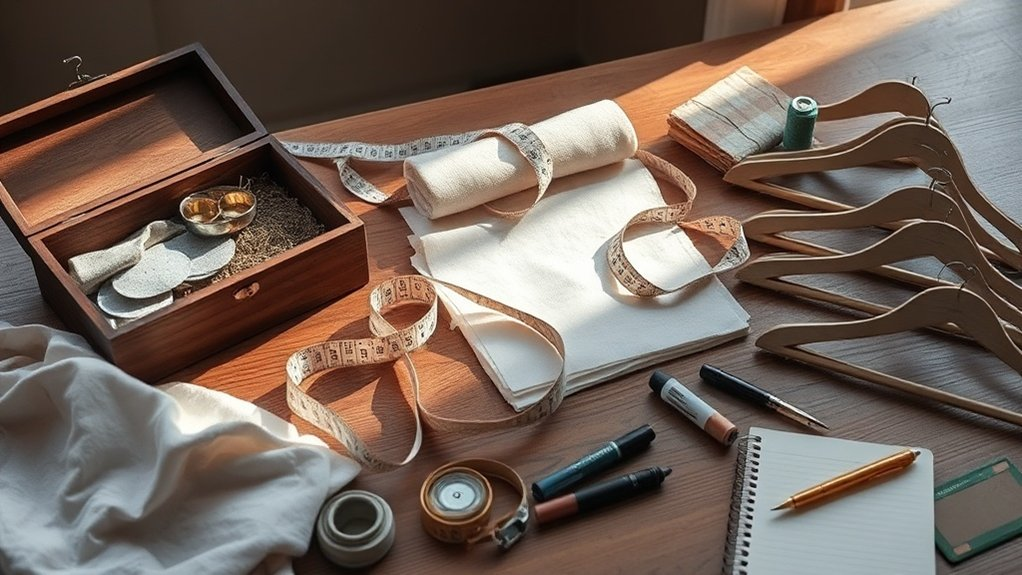
Set aside a clear sorting space where you can spread out clothes, see what you have, and move items into keep, donate, or repair piles.
You’ll want an essential repair kit—needles, thread in basic colors, safety pins, a small sewing kit, and a lint roller—so small fixes don’t keep you from wearing favorites. Durable materials like thickened panels or waterproof hard PP protect folded items and make storage more reliable.
Don’t forget comfy seating, good lighting, a trash bag, and snacks to keep you going; ready to get started?
Consider adding a modular storage solution for vertical and horizontal organization to make seasonal swaps easier. Adding adjustable shelving or hanging organizers can help maximize space and adapt as your wardrobe changes; consider systems with adjustable shelving to fit different closet sizes.
Clear Sorting Space
Clear a nice patch of floor or a table where you can spread out everything, because having room to see and touch your clothes will make the whole process smoother and more satisfying.
Start by clearing clutter and giving yourself at least a few feet of space so pieces don’t pile up. Bring in boxes or bins for keep, mend, donate, and recycle, and label them so decisions feel simple.
Good light matters — natural light if possible, or a bright lamp so colors and stains show clearly. Put a mirror nearby to try things on quickly.
Play music, sip a drink, and set a timer to keep momentum.
How will this space change how you choose what stays?
Consider incorporating clear bins and dividers like clear bins to improve visibility and make retrieving items easier. Also consider using stackable storage to maximize vertical space and accommodate seasonal items efficiently.
Adding a few durable stackable baskets can help group similar items and keep the floor area tidy while you sort.
Essential Repair Kit
When you’re ready to tackle mending while you sort, having a small, well-stocked repair kit makes decisions faster and keeps you motivated.
Start with basics: a small sewing kit, assorted thread colors, spare buttons, a few safety pins, and a needle threader.
Add fabric glue for quick fixes and clear nail polish to stop snags from running.
Include a lint roller, small sharp scissors, and a measuring tape so you can judge whether a repair will work or if it’s time to let go.
Keep everything in a labeled pouch near your sorting area.
Will repairing one thing save it from being tossed? Often, yes — and that little win nudges you to keep going, gently and confidently.
Also consider waterproof PP plastic storage bins to hold your repair supplies neatly and protect them from spills. Also keep a compact accessory organizer nearby so small replacement parts stay visible and easy to find.
To keep seasonal items organized and visible, store bulky items in 90L storage bags that offer ventilation and a clear window for quick identification.
Comfort And Supplies
Before you begin sorting, make sure you’ve created a comfortable spot where you can work without rushing, because the right surroundings make decisions easier and the whole process more pleasant.
Set up a soft chair or cushion, good lighting, and a small table for tools so you won’t get tired or distracted. You’ll feel calmer, think clearer, and make kinder choices about what to keep or let go.
Have a light playlist or mug of tea nearby if that soothes you. Gather simple supplies within reach so mending and labeling don’t become excuses to stop.
What small comforts help you bring patience to the task?
- A sewing kit, fabric glue, and safety pins
- Sturdy storage bins, labels, and a marker
- A trash bag, donation box, and lint roller
Consider adding a labeling system to make returning items to their place effortless. Also consider choosing organizers that maximize vertical space to keep frequently used items accessible and your floor area clear. Consider using stackable baskets to optimize storage by taking advantage of vertical space and improving accessibility.
Quick Pre-Check: Ask These 5 Questions About Every Item
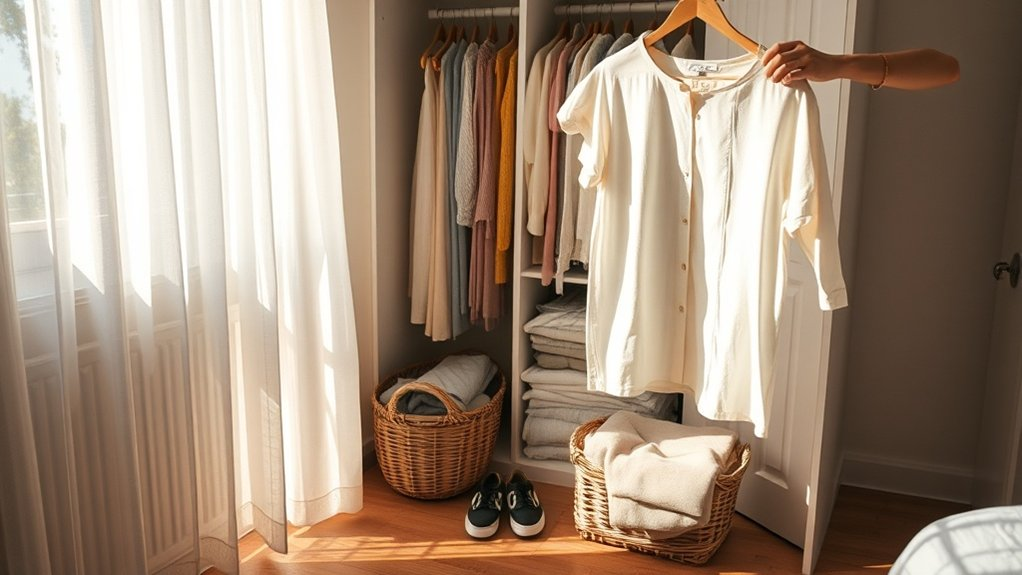
Before you start sorting, ask yourself five quick questions to make each choice clear and simple.
Do you wear it, does it fit, and does it spark joy or serve a useful purpose?
Take a moment with each piece—your future self will thank you. A well-planned system can make maintenance effortless by grouping items into functional zones that reflect your daily routines. Many experts recommend using seasonal rotation to reduce closet clutter and keep only what you need within reach. Consider creating a simple storage plan to streamline rotations and make transitions between seasons easier.
Do I Wear It?
Curious whether that faded blouse still belongs in your closet? Ask yourself if you actually reach for it—this is the clearest sign.
Hold the item up, picture getting ready for work or a weekend outing, and notice your honest reaction. If you hesitate, it probably won’t make your regular rotation.
Think about when you last wore it, how it made you feel, and whether it fits your current life.
Don’t overthink sentimental stories; they can live in a photo, not a drawer. Be kind but honest.
- A dress you wore last month, easy to style and still loved.
- A sweater you grab for chilly mornings, cozy and reliable.
- A top you avoid, despite pretty fabric and good memories.
Consider storing seasonal pieces in stackable designs to maximize closet space and make seasonal swaps easier.
Does It Fit?
How does it feel when you slip it on—snug and confident, or tight and tugging at every seam?
Check the fit honestly: does it sit right at the shoulders, hang smoothly, and allow you to move without adjusting all day?
Zip it, button it, sit down; real life reveals true comfort.
Look for stretched fabric, gaping closures, or pants that pinch at the waist.
Consider layers you’ll wear this season—will it fit over sweaters or under coats?
If alterations would fix it, decide if the cost and effort match how often you’ll wear it.
Keep pieces that make you stand taller and reach for them first.
Let go of items that cause fuss or doubt; your closet should make dressing simple and joyful.
Also consider whether storing the piece in stackable boxes or using space-saving organizers will keep it accessible and in good condition.
If you plan to reorganize, think about adding stackable storage to maximize vertical space and visibility.
An annual seasonal reset helps you reassess what truly belongs in your closet and keeps clutter from accumulating.
Spark Joy Or Use?
Want to keep only what lifts your mood and serves your life? Ask, “Does this spark joy, or will I actually use it?” as you hold each piece.
You’ll notice feelings rise fast—warmth, indifference, or a small pinch of dread—and that emotional cue matters. If joy bubbles up, keep it with confidence. If practical use wins, be honest about frequency and purpose. If neither shows up, it’s kind to let it go.
Ask these quick questions for every item:
- Will I reach for this more than twice this season, and does it make me feel good?
- Does it match things I already love, or will it sit lonely in the back?
- Is it repairable or replaceable without regret?
Sort With Compassion: Keep, Mend, Donate, Sell, or Store
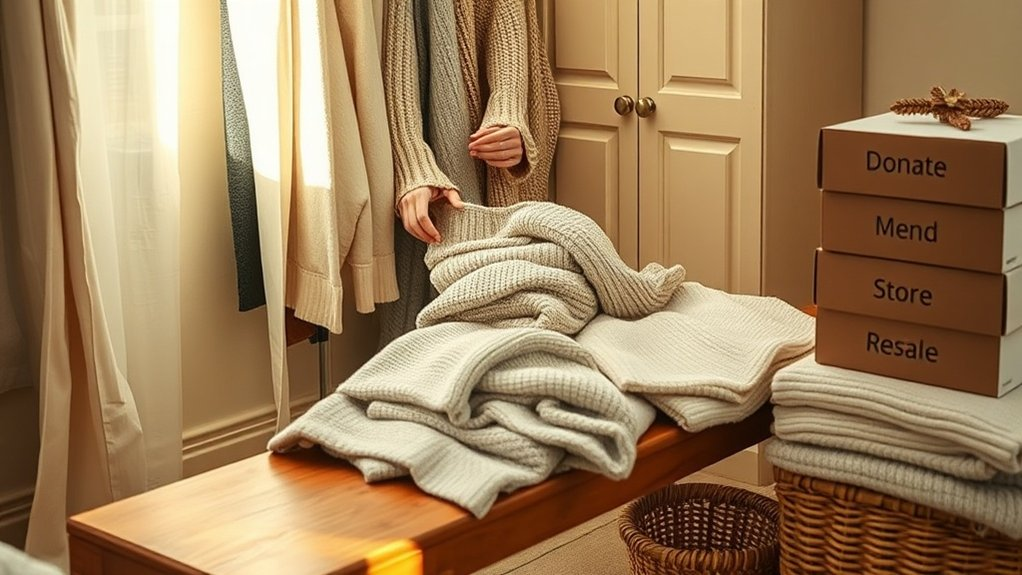
While sorting, remember you’re not just moving clothes—you’re choosing how each piece will serve you next, and that makes this step important and kind.
Touch each item, ask if it fits your life now, and sort into five clear piles: keep, mend, donate, sell, or store.
Touch each piece, ask if it serves you now, and sort with care: keep, mend, donate, sell, or store.
Keep what you wear and love; place favorites where you’ll reach them. Mend what’s repairable—small fixes return big joy.
Donate items in good condition; someone will benefit. Sell higher-quality pieces you no longer need, and set aside time to list them.
Store truly seasonal or sentimental things in labeled bins, not forgotten boxes. Move gently and decide with compassion, not guilt.
How would you feel opening your refreshed closet tomorrow?
Transforming your closet can be a chance to create a more organized, functional space and embrace a fresh start. A seasonal reset also helps you focus on closet organization principles that make daily dressing easier. Consider scheduling a closet reset to maintain these improvements over time.
Rotate Seasonally Without Losing Pieces: Simple Tagging and Zones
If you want your closet to feel effortless each season, set up simple tagging and clear zones now so nothing gets lost in the shuffle.
You can rotate pieces without panic by labeling storage bins, hanging a seasonal tag on seldom-worn jackets, and carving out dedicated zones for activewear, work clothes, and special occasions.
When you touch items, decide quickly: keep for this season, store for later, or let go.
Use lightweight tags and clear bins so you can see what’s inside, and keep a small cart or shelf for changes.
Ready to try it? A little structure makes choices kinder, faster, and more joyful.
Consider adding stackable storage baskets to maximize vertical space and keep rotated items organized.
Clear plastic bins offer visibility and durability, making them a reliable option for seasonal rotation and long-term storage with stackable design.
Fix, Alter, or Refresh: Easy Mends and When to Send to a Tailor
You can often fix small snags, loose buttons, or dropped hems at home with a needle, some thread, and a little patience, saving pieces you love.
If a garment needs reshaping, complex alterations, or precise fitting, that’s when it’s smart to send it to a tailor who can make it feel custom.
Which items are worth your time to mend yourself, and which deserve professional care?
Quick At-Home Repairs
Three small fixes can make your favorite sweater feel new again, and you’re closer to doing them than you think.
You don’t need fancy tools to tackle quick at-home repairs; a few simple steps will stretch the life of clothes you love and help you avoid waste.
When you spot a loose seam, a missing button, or a snag, act gently and confidently. These fixes are satisfying, fast, and kinder to your wallet.
Ready to try one now?
- Smooth out pilling with a sweater comb or gentle razor, working in short strokes to avoid holes.
- Reinforce loose hems with quick hand stitches, using matching thread and small, even tacks.
- Replace lost buttons with similar ones, sewing them tightly and securing with a knot.
When To Tailor
You’ve already handled the little fixes that keep favorites wearable, and sometimes a small mend isn’t enough to make a piece feel truly yours again.
When should you send something to a tailor? If fit issues keep you from wearing it—baggy shoulders, gapping waist, sleeves that swallow your hands—bring it in.
Tailors reshape garments so they flatter your body and boost your confidence. Choose tailoring for costly items, sentimental pieces, or structured clothes like blazers and coats that need precise alterations.
Don’t tailor items that are low-cost or worn thin; that’s money better spent elsewhere. Ask for a clear quote and timeline, and try alterations one change at a time.
Want to know what helps most? Start with fit, then consider style tweaks.
Let Go Ethically: Donate, Sell, Recycle, and Local Options
Because letting go can feel heavy, take a moment to imagine each item finding a new home where it’s wanted and useful.
You can choose paths that respect the planet and people: donate clean, wearable pieces to shelters or community closets; sell high-quality items online or at consignment so they keep being loved; recycle worn textiles through local programs so fibers are reused.
Think about local options too — neighborhood swaps, school drives, or repair cafes that extend an item’s life.
Which choice feels right for this piece? Pack items clearly, label bags, and check local guidelines so your generosity actually helps.
Small steps add up, and your thoughtful choices make a real difference for others and the Earth.
- Shelters accepting coats and clean basics
- Consignment stores or online marketplaces
- Textile recycling bins and community swaps
Honor Sentimental Pieces Without Cluttering Your Closet
Letting go thoughtfully makes room not just for space, but for the things you truly love. Now it’s time to give special attention to items that carry memories.
You don’t have to keep everything; you can honor what matters without filling your closet. Choose a small, defined number of sentimental pieces that genuinely spark joy or tell a story.
Photograph items you’re unsure about, then create a digital album to revisit anytime. Consider transforming fabric keepsakes into quilts, patches, or framed art so memories live differently.
Store a few treasured pieces in breathable boxes, labeled and rotated seasonally. Ask yourself which items support who you’re now.
Let sentiment guide choices, not clutter, and you’ll feel lighter and more connected.
Maintain Momentum: Small Weekly Habits to Prevent Future Overwhelm
If you want to keep the calm you’ve created, build tiny rituals into your week that make maintenance feel easy instead of exhausting. You’ll stay connected to your closet without turning upkeep into a chore.
Pick brief, regular actions—five minutes after laundry, a ten-minute Sunday tidy—that prevent clutter from sneaking back. These small habits become habits because they’re simple and satisfying, not punitive.
Want to try something manageable that actually sticks?
- Spend five minutes each evening returning stray items to their homes, smoothing fabrics, and evaluating wear.
- Do a quick seasonal swap checklist on Sundays: one shelf, one box, one decision.
- Donate one item each week that you didn’t wear, keeping momentum and gratitude in balance.
Frequently Asked Questions
How Do I Store Seasonal Items Long-Term Without Pests or Mildew?
You’ll clean and fully dry items, pack them in breathable cotton bags or plastic bins with tight lids, add cedar or silica gel, store off the floor in a cool, dark spot, and check periodically for pests or moisture.
Can I Include Workout Gear and Pajamas in a Capsule Wardrobe?
Yes — you can include workout gear and pajamas in a capsule wardrobe; don’t worry about ruining the minimalist vibe. You’ll pick versatile, quality pieces, limit quantities, and rotate wearable sets so everything feels intentional and tidy.
What if I Want to Keep Items for Future Sizing Changes?
You can keep a few pieces for future sizing changes, but limit them to a small, labeled storage box; rotate reviews every six months, donate anything unused, and prioritize versatile, classic items that’ll still suit your style when they fit again.
How Do I Handle Duplicates of Nearly Identical Pieces?
Think of wardrobe feng shui: keep the one that fits, flatters, and you reach for; donate or sell the rest. If duplicates serve distinct seasons or outfits, keep two, but don’t hoard multiples you never wear.
Can I Reset My Closet While Living With a Partner Who Disagrees?
Yes — you can. Set boundaries, schedule a quick joint session, explain benefits, and keep shared spaces separate. You’ll respect their choices, donate or store items without pressure, and you’ll make steady progress while staying considerate.
Conclusion
You’ve got this: start small, stay kind to yourself, and enjoy the clarity that comes with a calmer closet. Did you know the average person wears just 20% of their wardrobe most of the time? That means letting go can free real space and time. Take one box, one drawer, one habit at a time—keep, mend, donate, or store with compassion. You’ll feel lighter, more intentional, and ready for what’s next.