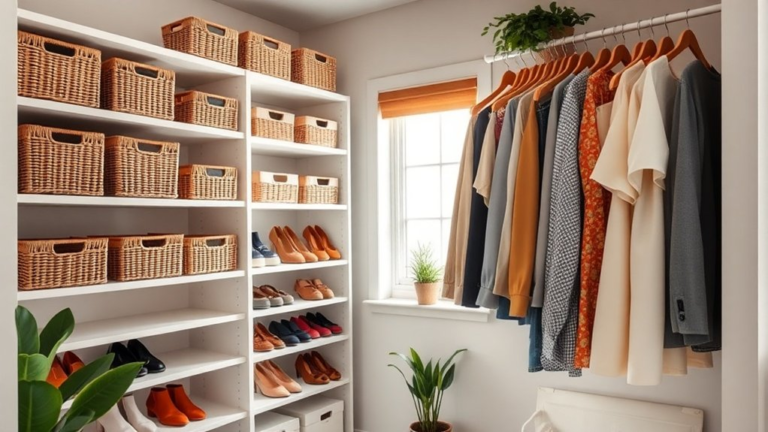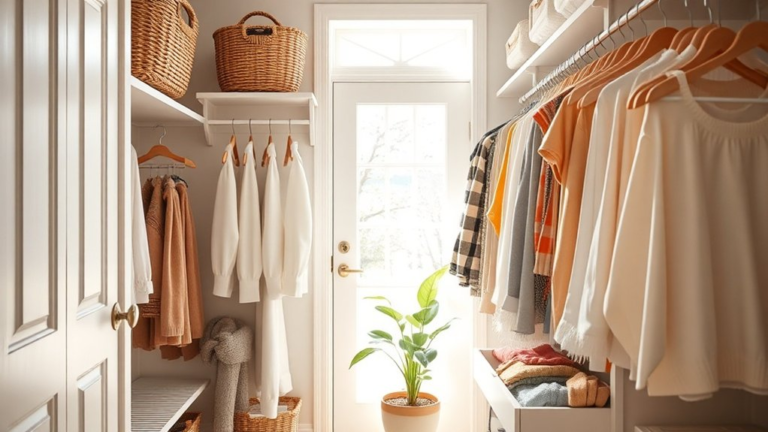
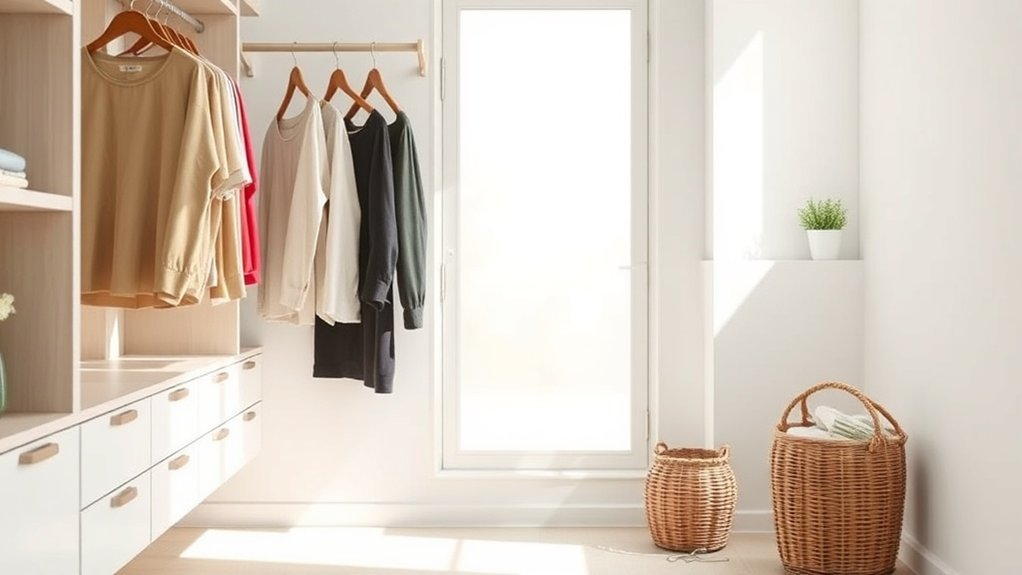
Ready to transform your closet? Minimalist decluttering can breathe fresh air into your space, making it easier to find and love your favorite outfits. Start by evaluating what you wear often and what truly brings you joy. Use a “Maybe” box for uncertain pieces, and don’t hesitate to explore new organizational methods. Embrace the emotional journey—it’s okay to feel attached, but focus on what serves you now. Soon, you’ll discover a streamlined wardrobe filled with only the essentials. Curious to learn more?
Closet Highlights
- Evaluate clothing based on fit, comfort, and frequency of wear to identify keepers and discarders.
- Create a “Maybe” box for uncertain items, limiting its size to manage overflow effectively.
- Focus on emotional happiness and recognize when attachments are more nostalgic than functional.
- Organize your closet by categorizing items and implementing seasonal rotations for better visibility.
- Practice self-compassion when letting go of items, acknowledging emotions without guilt while celebrating your decluttering progress.
Understanding the Benefits of Minimalist Closet Decluttering
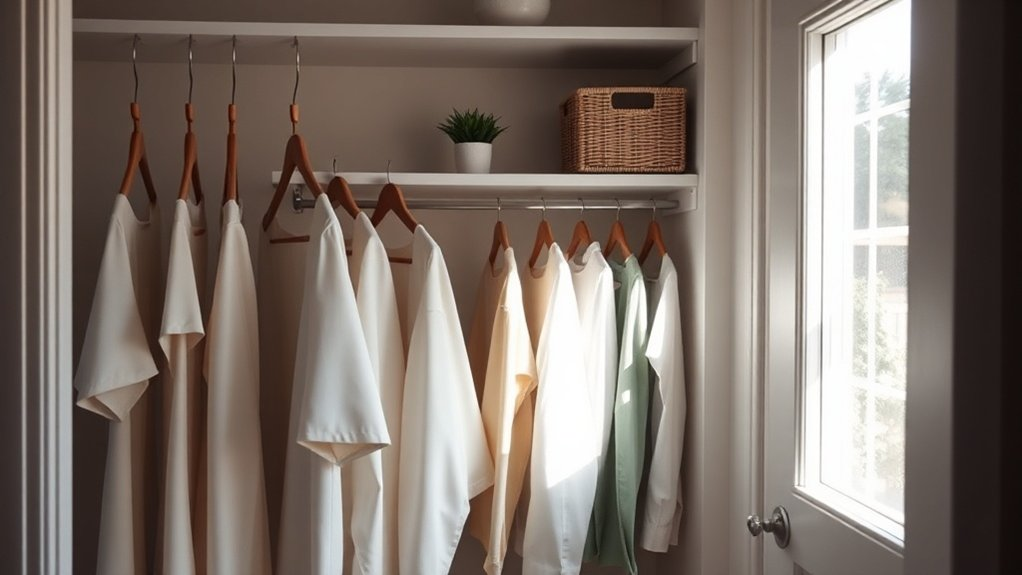
When you take a moment to declutter your closet, you might be surprised at the positive changes it can bring to your life. Embracing a decluttering mindset helps you recognize the benefits awareness that comes from letting go of items you no longer need.
You’ll find more space, not just physically, but mentally too. Imagine walking into a neat closet where each piece inspires confidence and joy.
By simplifying your wardrobe, you reduce decision fatigue, making mornings easier and less stressful. Plus, you might discover new outfits you forgot you had!
Simplifying your wardrobe eases decision fatigue, making mornings smoother and revealing outfits you had forgotten about.
This process encourages you to focus on what truly matters, creating a sense of calm. Why not start today and experience the transformation for yourself? Transforming your closet can be a first step toward a more organized home and lifestyle, with practical organization tips drawn from closet-focused resources. You can begin by implementing space-saving systems to maximize usability and keep things tidy.
How to Identify What to Keep and What to Let Go?
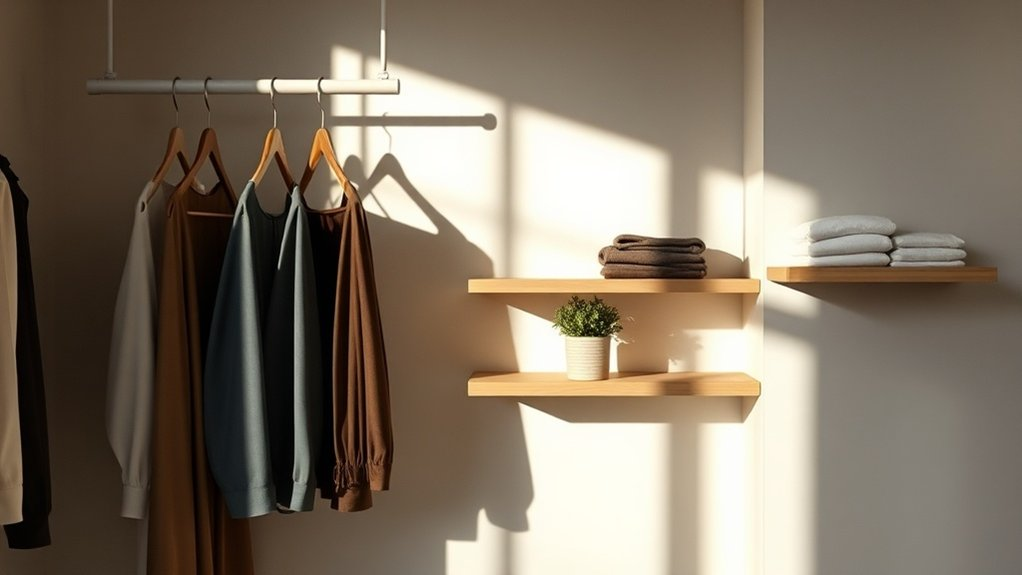
How do you decide what stays and what goes in your closet? It’s all about using effective decision-making strategies.
Start by evaluating each item with these simple questions:
- Does it fit well and feel comfortable?
- Have you worn it in the last year?
- Is it a wardrobe essential you can’t live without?
- Does it align with your current style?
- Do you feel happy when you wear it?
A minimalist approach often recommends keeping multifunctional pieces to maximize space and versatility, which can reduce clutter and simplify daily choices closet organization. Consider using vertical solutions like over-the-door organizers to make the most of limited space space-saving.
Creative Strategies for Guilt-Free Decluttering
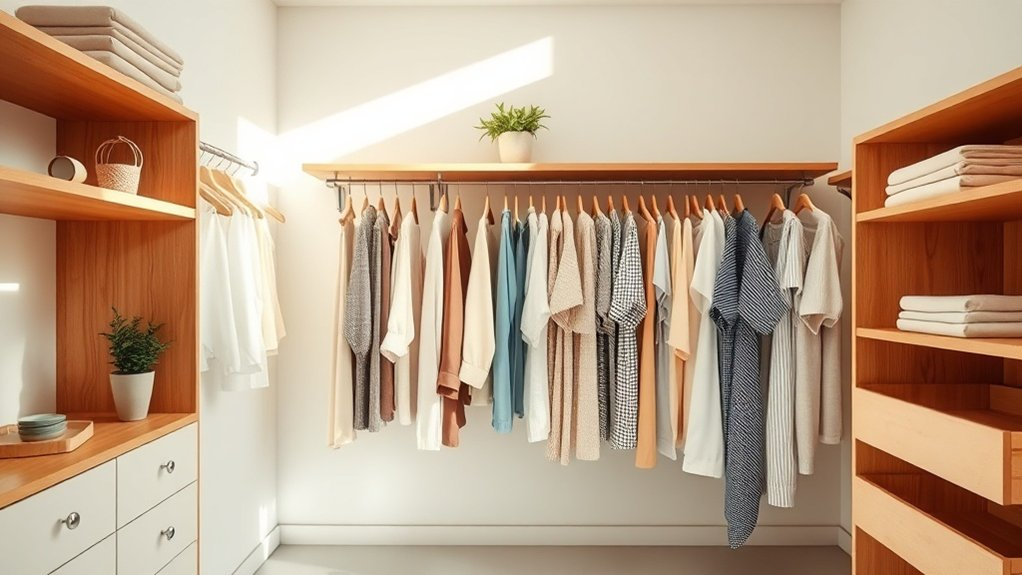
When it comes to decluttering your closet, finding guilt-free ways to let go of items can make all the difference.
Have you ever tried using a “Maybe” box to hold onto pieces you’re unsure about? By setting clear intentions and scheduling regular check-ins, you can create a space that truly reflects your style and needs, all while feeling good about your choices. Consider incorporating stackable storage to maximize space and keep items organized without adding clutter. Many organizers recommend using stackable bins rated for lightweight clothing to ensure safe, efficient storage.
Embrace the “Maybe” Box
One simple yet powerful tool for decluttering your closet is the “Maybe” box. This temporary storage solution acts as an emotional buffer, helping you avoid decision fatigue. Instead of feeling guilty about parting with items, you can set them aside for future consideration.
Here’s how to make the most of your maybe box:
- Create flexible criteria for what goes in
- Limit the box’s size to avoid overflow
- Set a timeline for reevaluation
- Use it for items tied to special memories
- Make mindful choices about what to keep
Embracing the maybe box fosters a guilt-free mindset. You’ll have space to breathe and reflect, allowing you to make thoughtful decisions about your closet’s contents. For overall closet improvement, consider exploring general tips on organizing your closet to complement the maybe box strategy. You can also maximize results by incorporating vertical space solutions like adjustable shelves and hanging organizers into your decluttering plan.
Set Clear Intentions
Setting clear intentions can transform your decluttering journey, making it feel less like a chore and more like an exciting opportunity. By defining your personal goals, you create a roadmap for purpose-driven decluttering.
Think about what truly matters to you—this is where mindful consumption comes in. Are your choices aligned with your lifestyle? Consider each item’s value assessment; does it spark joy or serve a clear purpose?
Focused decision-making becomes easier when you have clear priorities. Aim for intentional choices that reflect your values and aspirations.
This way, decluttering isn’t just about removing items; it’s about making space for what enhances your life. So, are you ready to embrace this fresh start? Consider incorporating clear acrylic shelf dividers to maximize vertical space and keep folded items orderly.
Schedule Regular Check-Ins
To keep your minimalist closet journey on track, scheduling regular check-ins can be incredibly beneficial. By setting a check-in frequency that works for you, you’ll stay motivated and focused.
Consider involving accountability partners for extra support. They can help you celebrate your progress and keep you honest.
Here are some creative strategies for your check-ins:
- Set a monthly reminder to review your closet.
- Share your goals with a friend or family member.
- Create a fun checklist to track your decluttering tasks.
- Celebrate small victories, like donating clothes.
- Reflect on your emotional connection to items you’re letting go.
Regular check-ins can turn decluttering into an enjoyable journey rather than a chore. Embrace the process, and watch your closet transform! Transforming your closet is part of broader closet organization strategies that can simplify daily routines and make spaces more functional. Using foldable organizers can help keep your space tidy between check-ins.
The Role of Emotional Attachment in Decluttering

When it comes to decluttering, emotional attachment can be a tricky hurdle. You might find yourself holding onto items that bring back memories, but is that really serving you?
Let’s explore how to identify those sentimental pieces and tackle the guilt that often keeps us stuck. Consider focusing on how space efficiency can help you keep meaningful items without letting them overwhelm your closet. You can also apply storage systems to maximize usable space while preserving cherished belongings.
Understanding Emotional Attachment
Emotional attachment can be a powerful force, especially when it comes to decluttering your closet. Understanding this attachment helps you build emotional resilience and navigate guilt triggers.
Here are some key points to reflect on:
- Attachment Theory: Recognize how your past shapes your feelings about items.
- Sentimental Value: Not everything needs to hold significant meaning.
- Nostalgia Impact: Reflect on whether these memories support your personal growth.
- Memory Associations: Acknowledge that items can hold memories without cluttering your space.
- Decision Fatigue: Simplify choices to avoid feeling overwhelmed.
Consider assessing your items by category and storage needs, such as using vertical storage solutions to keep frequently used pieces visible and accessible. Also consider creating a maintenance plan to prevent clutter recurrence and reinforce your progress.
Identifying Sentimental Items
How can you tell which items in your closet truly hold sentimental value? Start by considering the emotional connections you have with each piece.
Think about the memory triggers they evoke. Do they remind you of a loved one, a special event, or a significant moment in your personal history?
Assess the attachment levels you feel; some items might spark nostalgia more than others.
Use a keepsake evaluation approach: ask yourself if these possessions still hold meaningful significance in your life.
Focus on what brings you joy and warmth rather than guilt.
Overcoming Guilt Factors
Letting go of items in your closet can stir up feelings of guilt, especially when those pieces are tied to memories or people you care about.
To overcome these guilt triggers, embrace the process with self-compassion. Remember, it’s okay to feel emotional; it’s part of the journey. Using vertical organizers can help you make the most of space while deciding what to keep.
Consider these steps for emotional release:
- Reflect on the memories associated with the item.
- Acknowledge your feelings without judgment.
- Practice forgiveness for keeping items too long.
- Focus on what you truly need and love.
- Celebrate your progress, no matter how small.
Using adjustable organizers like adjustable shelving can help you create a functional space that supports letting go.
Organizing Your Minimalist Closet for Easy Access
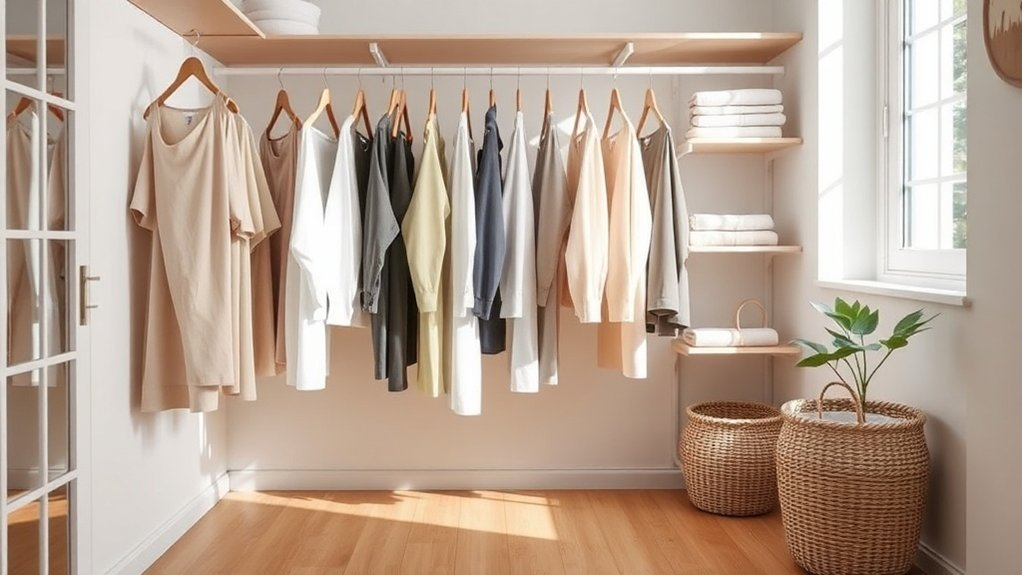
A well-organized closet can feel like a revitalizing change, transforming your daily routine. By enhancing wardrobe accessibility, you make getting dressed a breeze.
Start with space optimization: use vertical space and clever storage solutions to fit everything neatly. Group your clothing into categories, such as work, casual, and special occasions.
Optimize your closet by utilizing vertical space and categorizing your clothing for a neat, organized look.
Consider a seasonal rotation to keep your capsule wardrobe in focus. This allows for easy retrieval of your favorite pieces. Outfit planning becomes simpler when you can see everything clearly.
Imagine grabbing what you need without frustration! With a little effort, your minimalist closet can turn into a joyful space, making every morning feel like a fresh start. Using stackable organizers can help maximize vertical space while keeping items accessible.
Ready to jump in? Let’s create that organized haven together! Including stackable and transparent storage options can help you maximize space and visibility.
Tips for Maintaining a Minimalist Wardrobe Long-Term
While it might seem challenging to keep your minimalist wardrobe in check, maintaining it can actually be a joyful journey. Embracing wardrobe sustainability and style versatility can make your outfits feel fresh and exciting.
Here are some tips to help you stay on track:
- Regularly assess your pieces: Check if they still fit your lifestyle.
- Set a seasonal review: Swap out items that don’t serve you anymore.
- Invest in quality: Choose durable pieces that stand the test of time.
- Mix and match: Experiment with layering for new looks.
- Create a “one in, one out” rule: Keep your collection balanced.
Consider incorporating space-saving hangers to maximize closet capacity while preserving garment shape. A simple addition like vertical hanging can dramatically increase usable space and help keep items organized.
Conclusion
Embracing a minimalist closet can feel like shedding a heavy coat on a sunny day—refreshing and freeing. As you let go of what no longer serves you, remember that each item you keep can spark joy and reflect who you truly are. Take action today! Start small, and watch how a decluttered space can inspire a clearer mind. You deserve a wardrobe that brings you happiness and ease, so go ahead and make it happen!