You can create a calm, functional closet by keeping only pieces you actually wear and love, repairing favorites, and donating or recycling the rest. Start with a quick audit: pull items worn in the last month, try things on, and tag keep/maybe/donate. Build a small capsule around versatile neutrals, store off-season items, and set simple rotation days. Want fewer decisions and more joy each morning? Keep going to learn practical steps and tools.
Closet Highlights
- Audit your closet by pulling items worn in the last month and categorize into keep, maybe, donate.
- Build a capsule wardrobe of versatile, quality neutrals with a few accent pieces for easy mixing.
- Implement seasonal rotation: store off-season items in labeled breathable bins and revisit yearly.
- Repair, sell, donate, or recycle responsibly—prioritize mending before discarding and research local charities.
- Create a “ready-to-go” zone and use matching hangers and organizers to streamline daily dressing.
Define Minimal Closet Living and the Intent Behind Decluttering
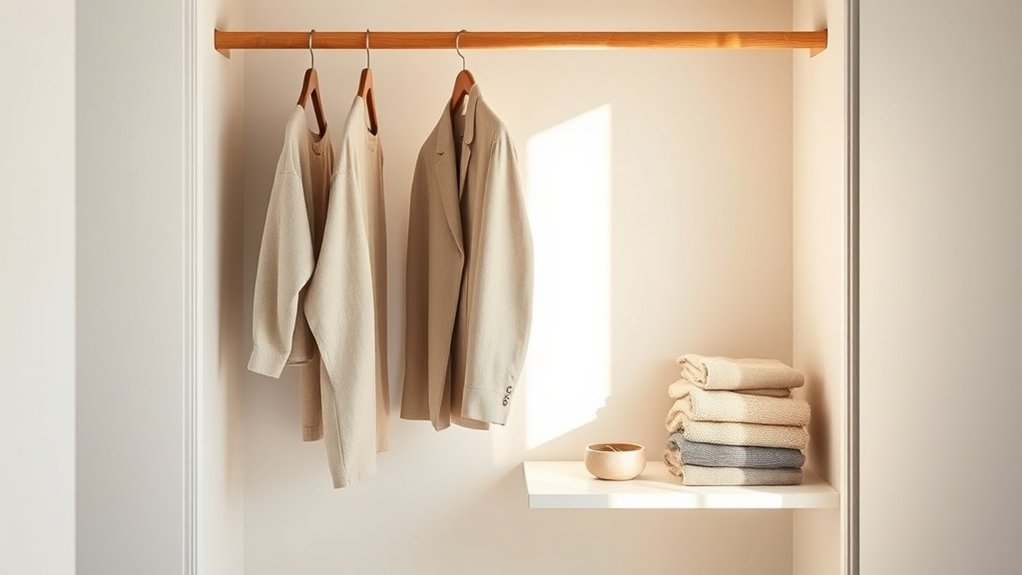
Clarity starts with your closet: minimal closet living means keeping only the clothes and accessories that serve a purpose or spark real joy, so your wardrobe feels useful and true to who you are.
You’ll aim for pieces that fit your life, represent your style, and reduce decision fatigue each morning. Intent matters more than numbers; it’s about choosing items that support work, leisure, and rest, not following trends that don’t suit you. Consider using stackable organizers to make the most of vertical space. Using compact stackable bins can significantly increase usable storage without overcrowding.
Ask yourself what you want your closet to do: simplify mornings, save time, reduce waste?
When you declutter with purpose, you create space for confidence and ease. You’ll find freedom in fewer choices and more clarity about what really matters.
Consider adding durable organizers like stainless steel hangers to maximize space and longevity.
Start With a Quick Closet Audit to Reveal What You Actually Wear

Start by doing a quick wear assessment: pull out what’s been worn in the last month and set aside what’s been ignored.
Focus on frequency over favorites—what you reach for regularly matters more than what you love but never wear.
Don’t forget a seasonal rotation check, because swapping out off-season items often shows you what truly earns space in your closet.
A simple organizing framework like Transform Your Closet can help you make those decisions with purpose. Consider building a maintenance plan to keep your progress consistent over time.
Consider scheduling a regular declutter session to maintain order and review your storage habits.
Quick Wear Assessment
Wondering which pieces in your closet actually make your life easier? Begin by trying on outfits you wore in the last month, then note how each piece felt and how often you reached for it. Use a simple tag: keep, maybe, donate.
Be honest—if something causes friction, it’s not serving you. Pay attention to comfort, fit, and how a garment pairs with several items; versatility matters, but don’t confuse it with guilt-driven saving.
Try a one-week wear test: if an item doesn’t get picked, let it go. Photograph outfits you love to build a visual guide for future decisions.
This quick assessment clears mental clutter, boosts your daily choices, and helps you shape a wardrobe that truly supports your life. Transforming your closet into an organized space can simplify mornings and reduce decision fatigue, making closet organization an essential part of minimal living. Consider scheduling a seasonal edit to maintain progress and reinforce wardrobe habits. A focused approach like a closet audit helps you make consistent, intentional choices.
Frequency Over Favorites
Often, the clothes you reach for most tell a clearer story about your life than the pieces you say are your “favorites.”
Start a quick closet audit by pulling out everything you’ve worn in the last month and laying it where you can see it—this reveals patterns fast: colors, fits, and items that actually get used.
See what shows up repeatedly. Which shirts, jeans, or shoes return week after week? Those are your anchors.
Ask yourself why you choose them — comfort, confidence, convenience?
Keep what serves you, and let go of what lives only in memory.
This practice helps you build a wardrobe that fits your daily rhythm, not an ideal.
Small edits now save time and calm later.
Consider adding organizers that maximize storage capacity to keep those frequently worn pieces easy to access.
A simple shelving plan and proper hangers can transform clutter into a functional system. Consider modular systems with stackable organizers to optimize vertical space and adaptability.
Seasonal Rotation Check
Why not begin by doing a quick closet audit to see what you actually wear each season?
Set a simple timer for 30 minutes and pull everything out for the current season.
Try items on, notice how often you reach for each piece, and set aside anything that doesn’t fit your daily life or spark a positive feeling.
Label piles: keep, store, repair, donate.
As you rotate items into storage, tuck them in breathable bins and note what returns next year.
You’ll learn patterns — colors, cuts, fabrics you favor — and make smarter choices when shopping.
This small habit keeps your wardrobe lean, useful, and joyful. Consider using stackable storage to make seasonal rotation more efficient and protect items while stored.
Ready to rotate consciously and reclaim your space?
Minimal closet living is rooted in intentional simplicity, focusing on keeping only what serves your lifestyle.
Try pairing this routine with 90L capacity storage options to handle bulky items like comforters and winter coats.
Use the “Wear, Repair, Donate” Decision Framework
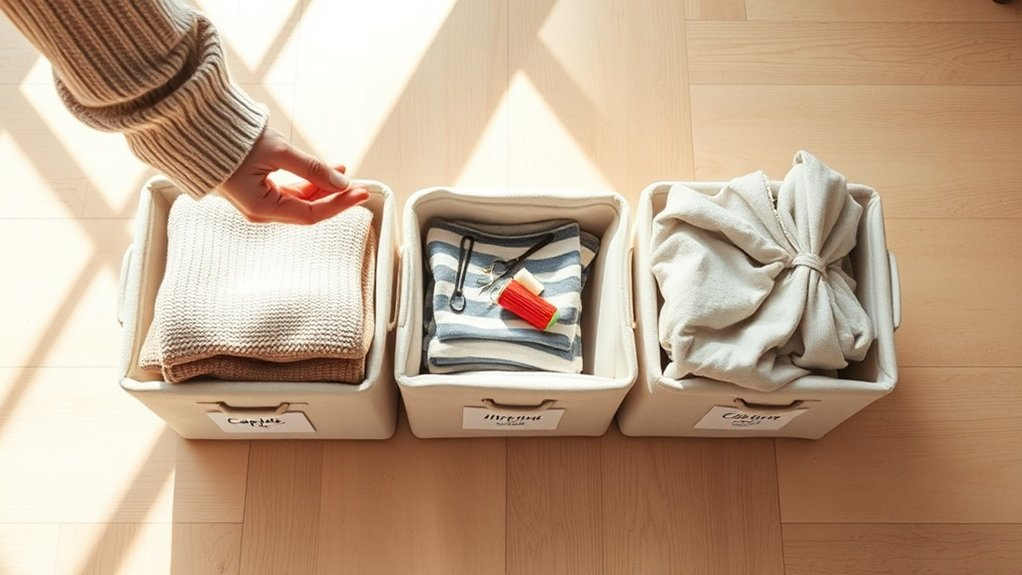
You can make quick, thoughtful choices by using the simple Wear, Repair, Donate framework to keep only what truly serves you.
Ask yourself: do you wear this often, can it be easily fixed, or would someone else get more use from it?
Take action—repair what’s worth saving, donate with purpose, and wear the rest with confidence.
Consider using vertical storage solutions like hanging organizers to keep donated and repaired items accessible and visible.
A well-organized closet supports a transform your closet mindset and makes maintaining minimal living easier.
Implementing regular refreshes — like seasonal edits or a quarterly purge — helps sustain a clutter-free wardrobe and encourages minimal closet living habits.
Wear It Often
Because a smaller closet means each piece needs to pull its weight, adopt the “Wear, Repair, Donate” framework to keep only what truly serves you.
Wear it often: choose clothes you love and actually reach for, not items saved for a someday that never comes. Ask yourself, does this spark confidence when I put it on? If yes, rotate it into regular use; if not, it may belong elsewhere.
Practice a 30-wear rule — if you can’t imagine wearing it thirty times, reconsider. Set weekly outfit plans so favorites get airtime, and mix older pieces with new ones to revive them.
This habit sharpens your taste, reduces decision fatigue, and makes your closet a helpful, joyful place.
Transforming your closet can also improve daily routines and reduce stress by creating a more organized, efficient space for getting ready, which aligns with principles from Transform Your Closet: Tips for Ultimate Organization. Note that an efficiently organized wardrobe often relies on strategic storage to maximize space and accessibility.
An organized system also benefits from space-saving techniques such as vertical shelving and uniform hangers to make the most of limited square footage.
Repair Before Tossing
If a favorite shirt has a loose button or a stubborn hem, don’t toss it out just yet—repair it and give it new life. You can fix small problems quickly, and that simple act keeps pieces you love in rotation. Consider keeping a compact repair kit in a nearby drawer so quick fixes are always possible.
Learn a few basic stitches, carry a tiny repair kit, or book a local tailor for trickier mends. When you repair, you save money, reduce waste, and strengthen your bond with clothes that feel like you. Consider storing lightweight items in stackable bins to free space for repaired pieces.
Ask yourself: will a seam, zipper, or hem fix make this item wearable again? If yes, prioritize repair over replacement. Celebrate the satisfaction of restoring something useful.
Little repairs add up, and they help your closet stay intentional, pared down, and full of garments you actually enjoy wearing. Consider adding compact over-the-door organizers to store your repair kit and mending supplies within easy reach.
Donate With Purpose
Repairing a beloved piece is satisfying, and knowing what to do next keeps your closet purposeful. When you use the “Wear, Repair, Donate” framework, you make clear choices and honor each garment.
Ask: have I worn this in a year? If yes, keep. If not, can a small repair bring it back to life? If not, donate with purpose. Consider using stackable storage bins to keep donations organized and space-efficient during the sorting process.
Sort donations by type, quality, and season, so recipients get useful items, not clutter. Research local charities or specialized programs that accept workwear, coats, or children’s clothes.
Include clean, functional pieces and let go of anything stained or beyond repair. You’ll feel lighter, and your donations will actually help someone. That’s thoughtful decluttering. Consider organizing donated items into stackable bins to maximize transport and storage efficiency. Add a simple inventory list to each bin to streamline drop-off and tracking closet organization.
Build a Compact Capsule Wardrobe Based on Your Lifestyle
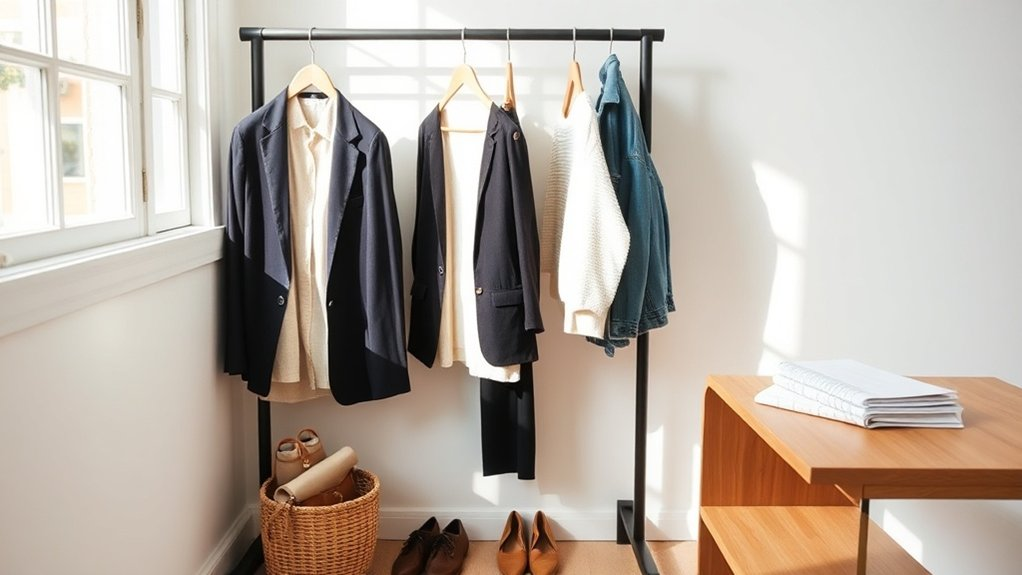
Someone who dresses for real life—work, weekend, workouts, and the occasional night out—will find it much easier to build a compact capsule wardrobe that actually works.
Start by listing the roles you play each week, then choose versatile pieces that serve more than one purpose. Pick a neutral color base, add a few accent tones you love, and limit pattern pieces so outfits mix easily. Consider adding modular storage like the 12 Cube Organizer to keep folded items visible and accessible. Consider using clear stackable bins for easy visibility and vertical space savings when storing seasonal items.
List your weekly roles, pick versatile neutrals with a few accent tones, and limit patterns for easy mixing.
Keep quality over quantity; a few well-made items feel better and last longer. Choose comfortable fits that make you feel confident, not trendy items you’ll toss next season.
How many items do you really reach for? Edit toward that number. With intention, your closet becomes calmer, dressing becomes quicker, and you enjoy what you wear more.
Consider incorporating vertical storage solutions from capsule closet organizers to maximize space and accessibility.
Arrange Clothes for Effortless Outfit Choices (Storage and Layout)
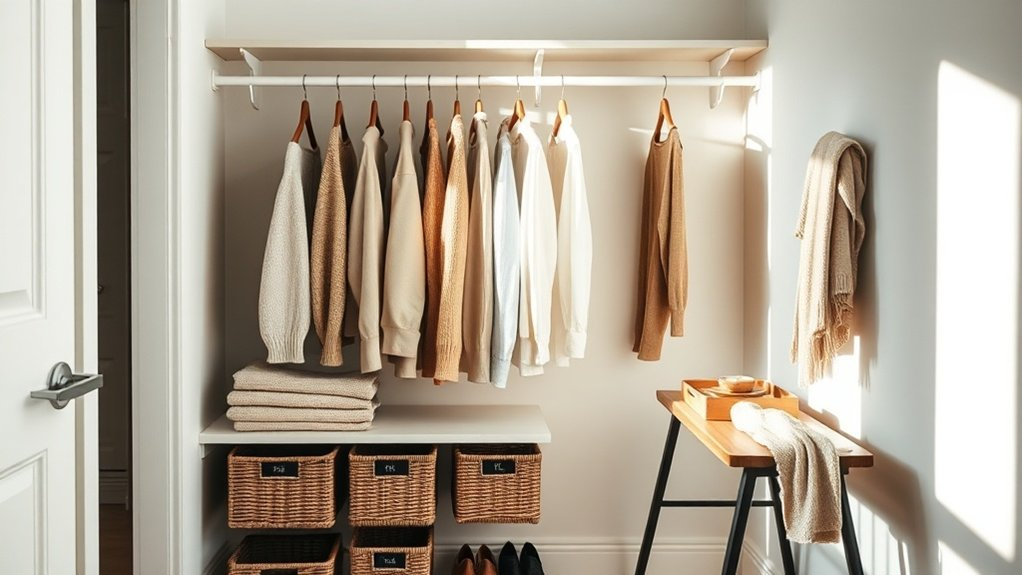
When you arrange your clothes with intention, getting dressed becomes simple and even kind of enjoyable, like choosing from a small menu of reliable favorites.
Start by grouping items by category—tops, bottoms, layers—and place what you wear most at eye level so choices feel immediate. Use matching hangers for a tidy look and slim profiles to save space.
Fold bulky sweaters on shelves, and store shoes in clear bins or on a low rack so mornings stay smooth.
Create a small “ready-to-go” zone with complete outfits or pieces you’ll reach for during busy days.
Rotate seasonally, keeping off-season items boxed and labeled.
Isn’t it nice when your closet helps you instead of hiding decisions?
Select Versatile Pieces and Neutral Color Anchors
A small, well-chosen wardrobe lets you get dressed faster and feel more confident every day, so start by picking versatile pieces that work hard for you.
Choose timeless items—a well-fitting blazer, quality jeans, a neutral coat—that dress up or down, mix easily, and suit different seasons.
Lean on neutral color anchors like black, navy, gray, beige, and white to simplify matching and reduce decision fatigue.
Add a few accent pieces in colors or patterns you love, but keep the palette limited so outfits come together instantly.
Ask yourself: will this item pair with at least three others I already own? If the answer is yes, it earns a place.
Over time, your closet will feel calmer and more intentional.
Create Simple Habits to Prevent Future Clutter
You’ve already set up a wardrobe that makes getting dressed easier, so now let’s build habits that keep it that way.
Start small: commit to a five-minute tidy each evening where you return stray items and hang a couple garments straight.
Ask yourself before buying, “Do I love this and will I wear it?” That single question stops impulse clutter.
Adopt one-in, one-out for new pieces, and put donation bags where you’ll see them—out of sight is out of mind.
Store accessories where you can reach them, and fold or hang items the same way so choices stay simple.
Celebrate consistency; small daily actions add up.
Stick with these habits, and your closet will stay calm, useful, and joyful.
Seasonal Rotation and Maintenance Routines That Save Time
Because your closet should work for you, not against you, seasonal rotation is about smart moves that save time and keep daily dressing joyful.
Set a simple routine: twice a year, pull out the upcoming season’s core pieces, check for repairs, and store off-season items in breathable bins. You’ll feel lighter each morning.
Ask yourself which pieces spark ease and which cause stress. Create a clear system so you don’t overthink outfits.
- Sort: keep, mend, or store.
- Label: use visible tags for quick grabs.
- Schedule: add rotation days to your calendar.
Stick to these steps, and maintenance becomes effortless. You’ll reclaim minutes, reduce clutter, and enjoy dressing with calm confidence every day.
Where to Donate, Sell, or Recycle Clothes Responsibly
When you’re clearing out your closet, think of each item as a chance to do good rather than just get rid of stuff.
Start by sorting into donate, sell, and recycle piles, asking: who could use this more than I do?
Donate gently worn pieces to local shelters, community centers, or faith groups; they often need seasonal layers and work clothes.
Sell higher-quality or name-brand items online, at consignment shops, or at local clothing swaps to earn a bit and keep things circulating.
For stained or worn textiles, find textile recycling programs or municipal drop-off points; some brands and stores offer take-back bins.
Label bags clearly, wash items before handing them over, and schedule drop-offs so your closet clears responsibly and your choices help others.
Frequently Asked Questions
How Do I Handle Sentimental Items Without Cluttering My Closet?
You keep sentimental items selectively: pick true favorites, photograph or digitize others, set a small memory box, rotate displays, and gift or repurpose pieces you won’t wear. You’ll honor memories without letting clutter take over.
Can Minimal Closet Living Work With an Irregular Work Wardrobe?
Yes — you can. You’ll prioritize versatile pieces, rotate specialty items seasonally, set outfit formulas for different duties, keep duplicates minimal, and store rare/formal garments separately so your irregular work wardrobe stays functional without overwhelming your closet.
What if I Have Limited Storage Outside the Closet?
You can still make it work: prioritize versatile pieces, rotate seasonally, use vertical space and slim hangers, add under-bed bins or over-door organizers, and commit to regular edits so every item earns its spot and purpose.
How Do I Manage Shared Closets With a Partner or Roommate?
Set clear zones, agree on priorities, and schedule regular purges together; you’ll label sections, compromise on communal items, rotate seasonal storage, and respect each other’s space so the closet stays functional, tidy, and fair.
When Should I Replace Versus Mend a Damaged Garment?
Imagine a favorite shirt with a small stitch undone—repair it if it still fits, feels good, and costs less than replacing; replace it if damage affects shape, safety, or costs more than a sensible, lasting fix.
Conclusion
You’ll feel lighter—and studies show people who own fewer than 100 clothing items report greater life satisfaction—when you clear closets with care. Start small, use the “Wear, Repair, Donate” filter, and build a capsule that fits your days. Arrange pieces so choices feel easy, rotate seasons simply, and make tiny habits to stop clutter coming back. Ready to try one drawer today? Small steps add up fast, and you’ll love the freedom.