You can cut morning stress by defining clear closet goals and keeping only what fits your life and sparks joy. Do a quick audit—keep, donate, repair—and build a capsule of versatile staples that mix easily. Zone outfits for work, casual, and active use, use open-facing storage and stackable organizers, and set a weekly outfit rotation. Tweak looks with accessories, sync laundry with your plan, and do monthly reviews. Want simple steps to make it effortless?
Closet Highlights
- Build a capsule wardrobe of versatile neutrals and two statement pieces to simplify choices.
- Create three to five outfit formulas (work, casual, active) and rotate them weekly for automatic decisions.
- Zone your closet by outfit type and place most-used items at eye level for instant access.
- Use open-facing storage, stackable organizers, and consistent hangers for visibility and fast selection.
- Conduct quick monthly audits and immediately repair or donate items that no longer fit your routine.
Identify Your Closet Goals and Daily Dress Needs
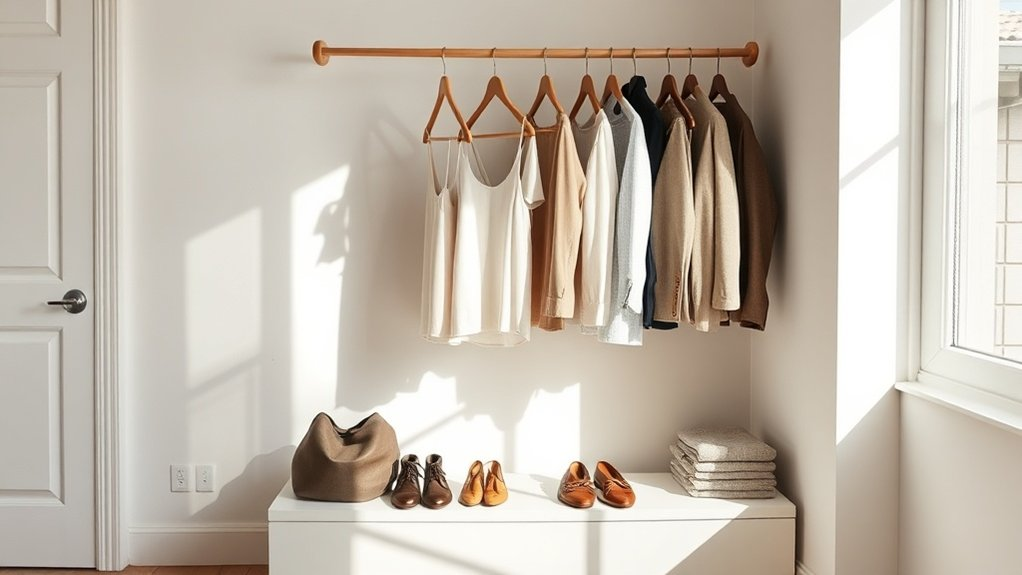
How do you want your mornings to feel when you open your closet? Picture calm, clarity, and clothes that make you smile.
Start by naming what you need: work, casual, active, and special occasions. Think about how often you wear each piece and what items help you feel confident. Consider creating a personalized organization plan to align your wardrobe with your goals. Consider using stackable organizers to maximize space for different types of clothing.
Set simple goals—fewer choices, easier outfits, fewer mismatches.
Consider your routine: quick breakfasts, commute time, or kids to dress—match your wardrobe to real life.
Choose versatile colors and fabrics that mix well, so outfits come together fast.
Keep a short list of essentials you wear weekly, and note occasional pieces for events.
With clear goals, getting dressed becomes simple, joyful, and stress-free. Consider incorporating closet door organizers to maximize vertical space and keep frequently used items accessible.
Quick Audit: What to Keep, Donate, or Repair
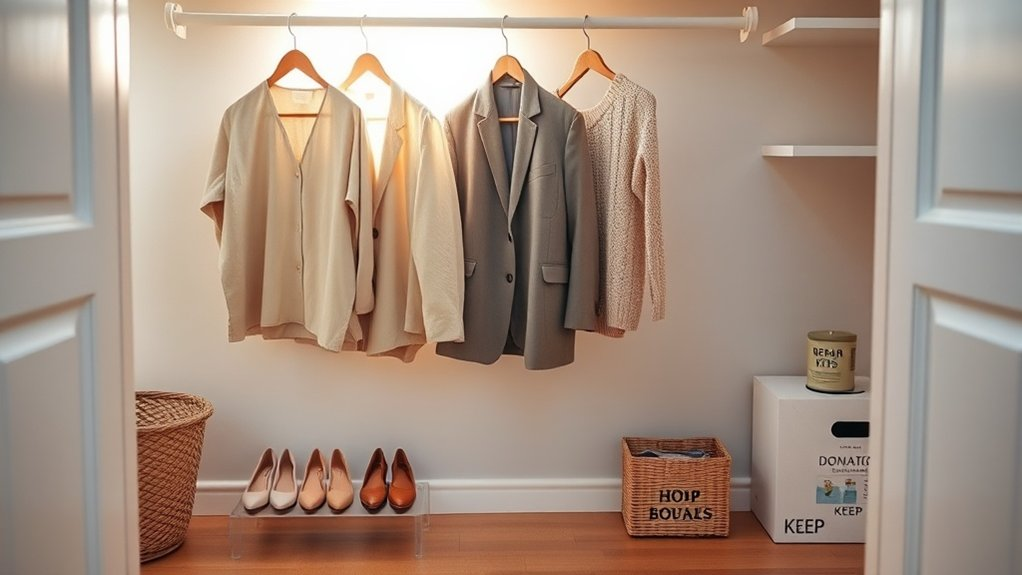
Once you decide to tackle your closet, a quick audit will get you from overwhelmed to organized in under an hour. Start by pulling everything out and touching each item—do you wear it this month, this season, or ever?
Create three piles: keep, donate, repair. Be honest: if something doesn’t fit your life or make you feel good, let it go.
For repairs, note which are simple fixes you’ll actually do, like sewing a button or replacing a zipper; schedule them immediately. Label the donate pile and bag it right away, so it leaves your space.
Ask yourself, which pieces make daily choices easier? That answer will guide your keep pile. Finish by returning only what supports your goals, neat and intentional. A website about organizing your closet offers helpful organization tips to maintain these habits going forward. Consider using capsule wardrobe principles to further simplify choices and reduce clutter. Also consider adopting minimal closet practices to keep decision-making fast and intentional.
Build a Capsule Wardrobe Around Versatile Staples
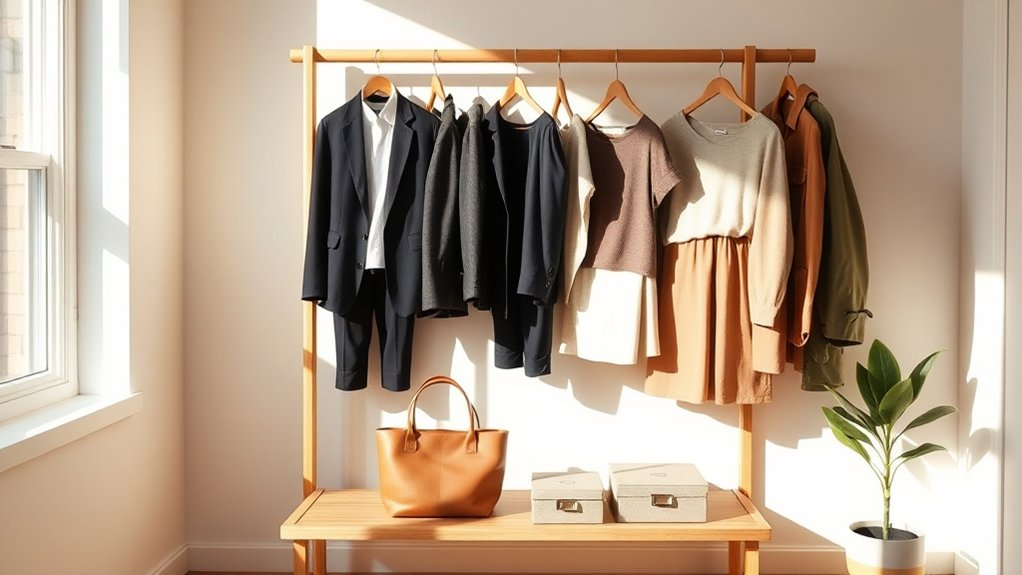
What would your mornings look like if every outfit felt easy and put-together?
Imagine building a small wardrobe of versatile staples that mix and match without stress. Start with neutral basics: a tailored jacket, a clean white tee, dark jeans, and a simple dress. Consider incorporating a capsule wardrobe built around modular pieces to streamline choices and storage. Many people find that pairing these staples with adjustable shelving can make accessing and storing items simpler.
Add two statement pieces—a patterned scarf or a colored sweater—to bring personality without clutter. Choose quality fabrics that hold shape, so items feel reliable day after day.
Limit shoes to three functional pairs: casual, work, and dress. When you buy, ask if each piece works with at least three others already in your closet.
Rotate seasonally, but keep the core steady. You’ll save time, reduce choices, and enjoy dressing again. Consider adding space-saving organizers like over the door pockets to keep frequently used items accessible and visible.
Organize for Visibility: Layouts and Storage Tricks
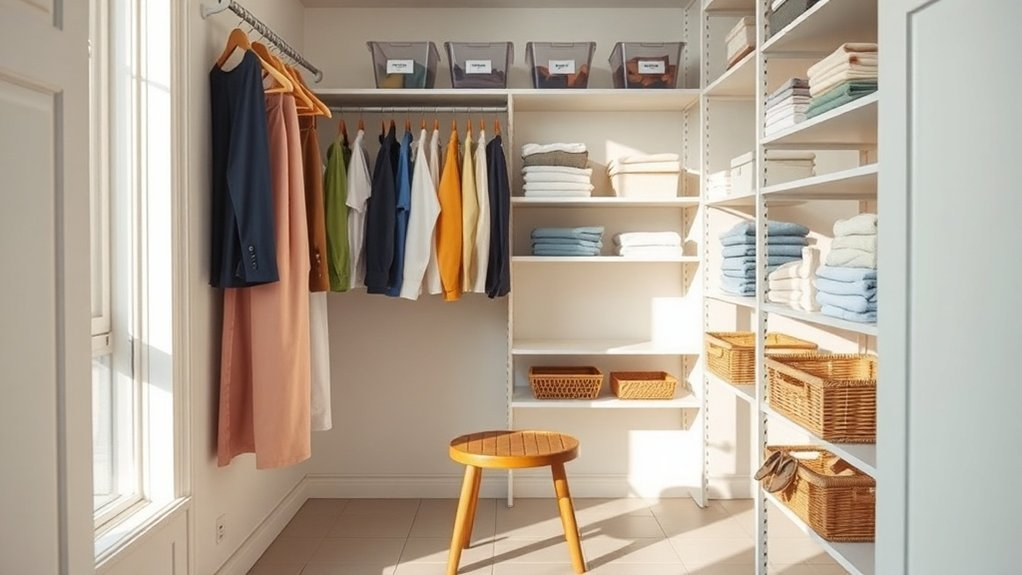
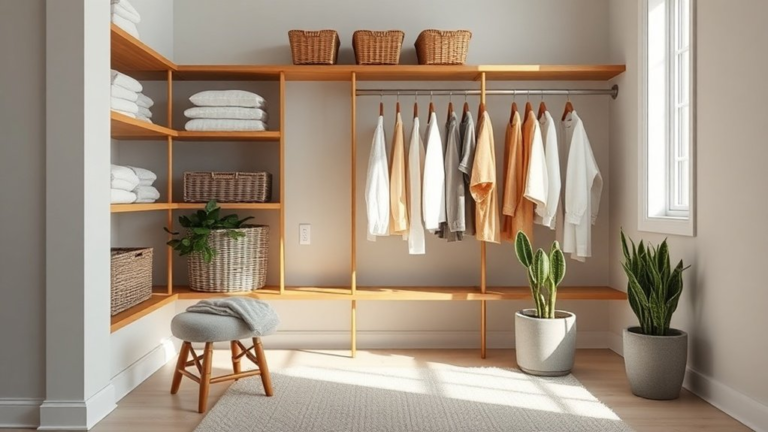
You can make your closet feel larger and calmer by using open-facing storage so everything’s easy to see and reach.
Group items by outfit type—work, casual, active—so you grab a full look without hunting. Consider using specialty hangers to keep similar items together and easily visible.
Ready to try switching a shelf to open bins or adding labeled zones to your hanging space?
Consider maximizing vertical space with stackable organizers for more storage in less floor area and easier visibility of items stackable baskets. You can also add a tall bamboo shoe rack to increase capacity while keeping a natural aesthetic.
Maximize Open-Facing Storage
Three simple shifts can make open-facing storage feel calm, clear, and wonderfully usable: group like with like, keep frequently worn items at eye level, and use consistent containers to reduce visual clutter.
When you arrange shelves and cubbies this way, outfits become easier to spot and decisions get faster. Choose low-profile bins, matching hangers, and shallow baskets so everything reads as a single, peaceful plane. Consider using stackable bins to maximize vertical space without crowding the floor.
Fold sweaters or stack tees uniformly; uneven piles scream chaos. Leave some breathing room between stacks and hangers so pieces aren’t jostled when you reach in.
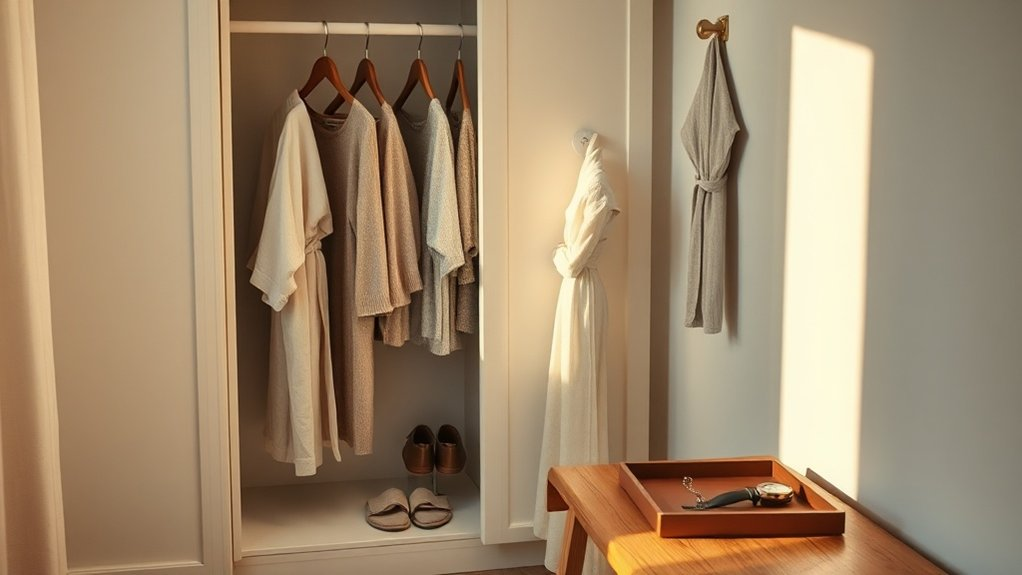
Add a small tray for keys or accessories, and a labeled shelf for seasonal swaps. Don’t overfill — restraint keeps choices simple and mornings kinder.
Ready to make your closet a joyful, usable space? Consider adopting open-facing storage as a core approach to minimize visual clutter and speed decision-making. Also consider implementing capsule wardrobe principles to keep your selection intentionally small and easier to manage.
Zone By Outfit Type
Now that your open-facing storage feels calm and readable, organize the closet by outfit type to make getting dressed effortless.
Split sections into categories you actually wear: work, casual, active, and special occasions. Place the most-used zone at eye level so choices are instant, and keep less-used items higher or lower.
Use consistent hangers and labeled bins to keep each zone tidy, so your eyes find what you need without hunting. Consider adding space-saving hangers to maximize capacity while maintaining visibility.
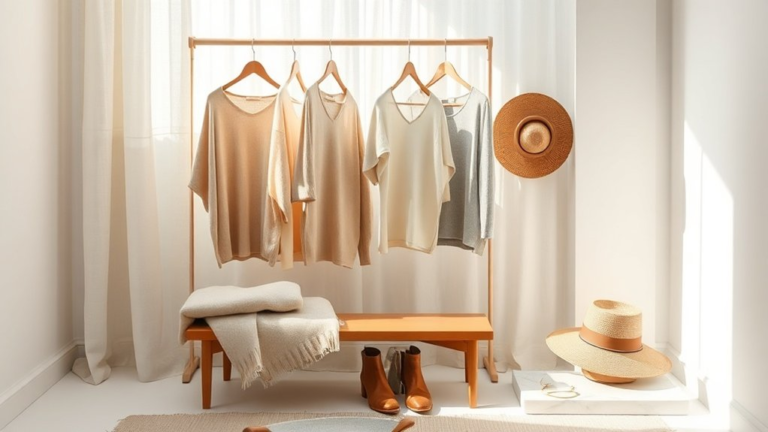
Consider a capsule approach: limit each zone to a set number of versatile pieces that mix and match.
Ask yourself, which outfits make mornings peaceful? Rotate seasonal pieces out to a separate bin, and maintain one quick-edit spot for tomorrow’s outfit.
Small routines, clear zones—big relief. A simple open-facing storage layout helps keep everything visible and reduces time spent searching. A minimal wardrobe also cuts down on decision fatigue by reducing options and emphasizing versatile staples.
Create Simple Outfit Formulas and Weekly Rotations
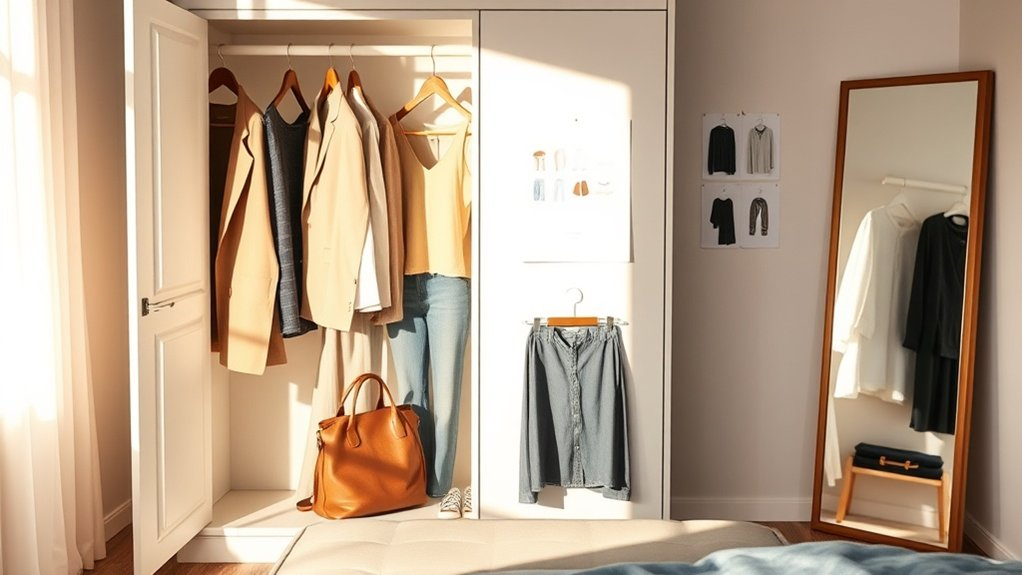
Looking for a way to get dressed faster and feel put together every day? Start by creating three to five simple outfit formulas you love — for work, errands, casual evenings, and active days.
Pick reliable bottoms, tops, and one or two layers that mix easily. Write them down or photograph a few combos so you’ll stop guessing each morning. Consider arranging pieces by shelf type to make your outfit choices more visible and accessible. Using clear categories helps maintain a streamlined closet system.
Then set a weekly rotation: choose outfits for each weekday based on activities, weather, and comfort. Rotations cut decision time and keep your favorites in frequent use.
Plan a weekly outfit rotation—pick looks by day for activities, weather, and comfort to save time and wear favorites.
When something feels off, tweak one element — swap shoes or add a scarf — rather than inventing a new look. Small, repeatable systems free mental space and build a calmer, more confident routine.
Organizing your wardrobe around garment types and outfit formulas can make maintaining your closet simpler and more efficient, especially when you focus on closet organization basics.
Maintain Momentum: Laundry, Replacements, and Review Rituals
If you want your simplified closet to keep working for you, build easy rhythms around laundry, replacements, and a quick monthly review so things don’t pile up or surprise you.
Start by syncing laundry with your outfit rotation: wash only what you need, group similar items, and put everything back where it belongs so you can reach for outfits without thinking. Consider using vertical storage like space-saving hangers to maximize what you can store on each hanger. Use taller organizers to make the most of vertical space and reduce overcrowding with vertical storage.
Keep a replacement list on your phone for basics that wear out—socks, tees, a favorite tee that’s lost its shape—so you replace deliberately, not impulsively.
Once a month, glance through your hangers: remove anything stained, stretched, or joyless. Ask yourself, does this serve my routine?
Small, steady steps keep your closet calm and your mornings easier, and you’ll feel lighter each day. Consider adding simple organizers like drawer dividers to optimize space and visibility for everyday items, referencing clear compartments to make finding things faster.
Frequently Asked Questions
How Do I Handle Sentimental Items Without Cluttering My Closet?
Decide what truly matters, keep a few meaningful pieces, and box the rest for storage or photos. You’ll set limits, rotate displays, and let memories live in curated spaces instead of crowding your closet or overwhelming daily choices.
What if My Job Requires a Wide Variety of Outfits?
About 68% of people report decision fatigue; you’ll streamline by categorizing wardrobes by role, keeping versatile staples, rotating specialty pieces seasonally, using clear labels and outfit templates, and outsourcing storage for rarely used specialty garments you don’t need daily.
Can Minimal Closet Principles Work for Plus-Size Wardrobes?
Yes — they can. You’ll focus on fit, quality, and versatile silhouettes, purge items that don’t flatter, build a capsule of reliable staples, and rotate statement pieces so you’ll feel confident, comfortable, and ready every day.
How Do I Maintain Seasonally Rotating Storage Efficiently?
You’ll streamline seasonal rotations by auditing pieces, labeling clear bins, storing off-season items vacuum-sealed, keeping a capsule of changing garments accessible, tracking inventory with a simple list, and scheduling quarterly swaps to stay intentional and uncluttered.
How Often Should I Reassess My Capsule Wardrobe Pieces?
You should reassess your capsule wardrobe every season, so about four times a year; but also check mid-season for wear, fit, or style changes, and anytime life events or climate shifts make items less useful.
Conclusion
You’ve simplified more than a closet; you’ve cleared mental clutter so getting dressed feels easy and calm. Trust your capsule pieces, use clear systems, and rotate outfits like a gentle rhythm that keeps mornings smooth. Ask yourself: does this item serve my day? Keep what helps, let go of what doesn’t. With small rituals—laundry, repairs, reviews—you’ll keep momentum. It’s a tiny home change that frees big chunks of time and peace.