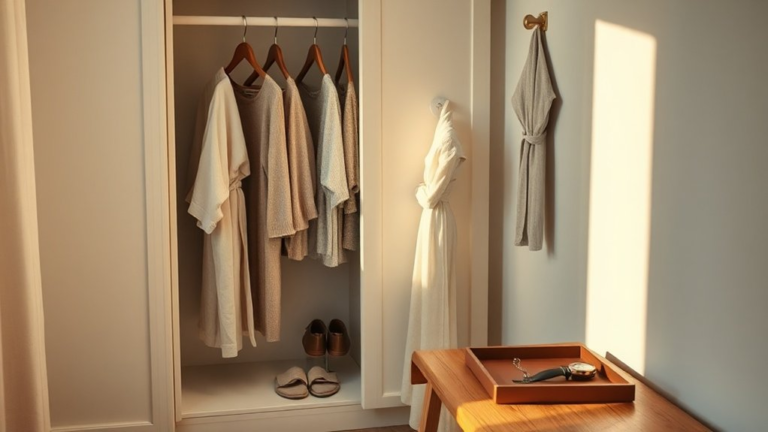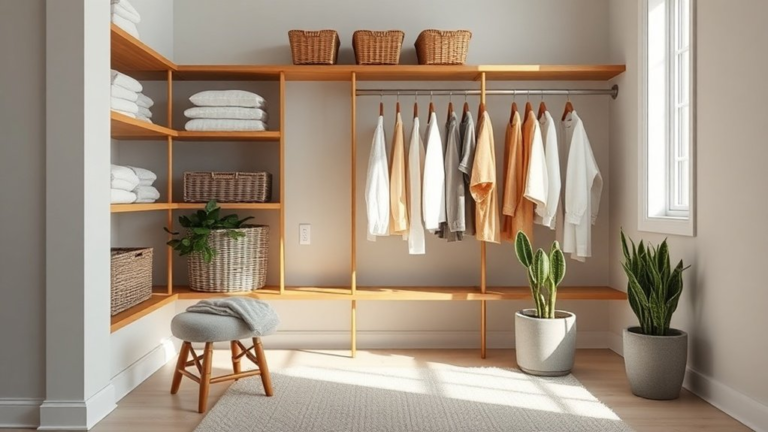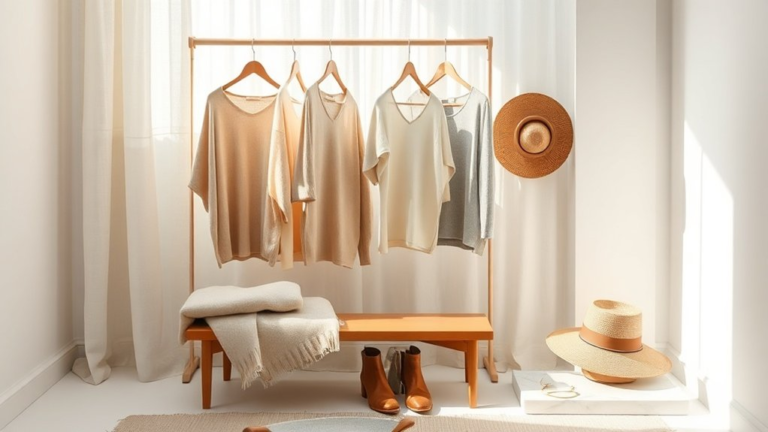
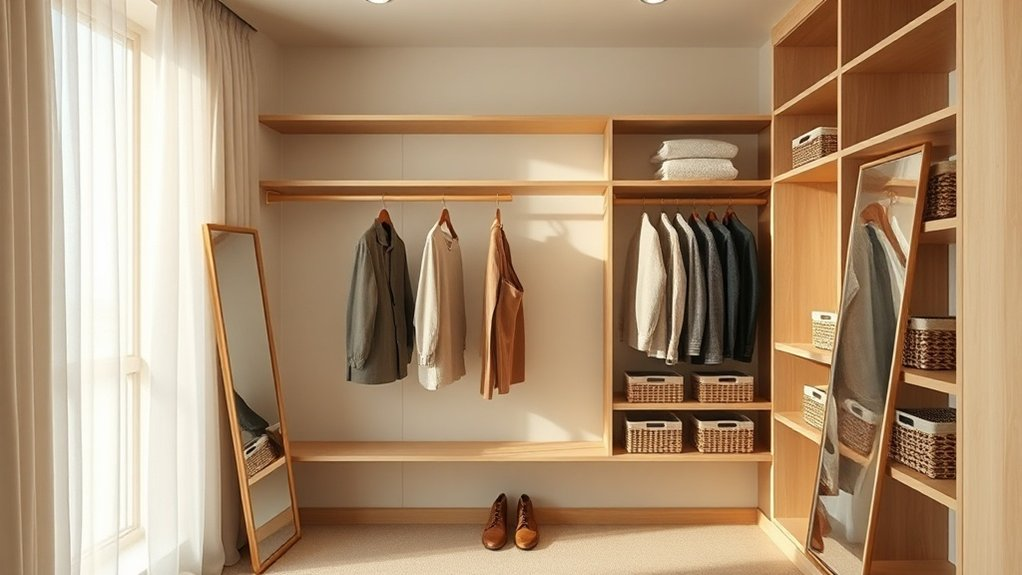
Clear your closet in small steps, focusing on one shelf or fifteen minutes at a time, and keep a donate box handy. Edit by wear, fit, and confidence—make keep, donate, maybe piles and limit the maybe stack. Build a simple capsule with two to three neutrals and one accent, measure your space before buying organizers, add a second rod or slim hangers, and label zones by routine. Want more practical swaps and layout fixes to simplify daily dressing?
Closet Highlights
- Declutter by zone using a short timed clear-out, sorting into keep, donate, and repair piles.
- Build a capsule wardrobe with 2–3 neutrals and 1–2 accents for effortless mixing and fewer pieces.
- Measure closet dimensions and hanging lengths before buying organizers to maximize usable space.
- Add versatile storage: slim hangers, a second rod, clear bins, and adjustable shelves for flexible organization.
- Implement simple visual rules and a seasonal rotation plan to maintain clarity and reduce decision fatigue.
Start With a Closet Clear-Out Plan
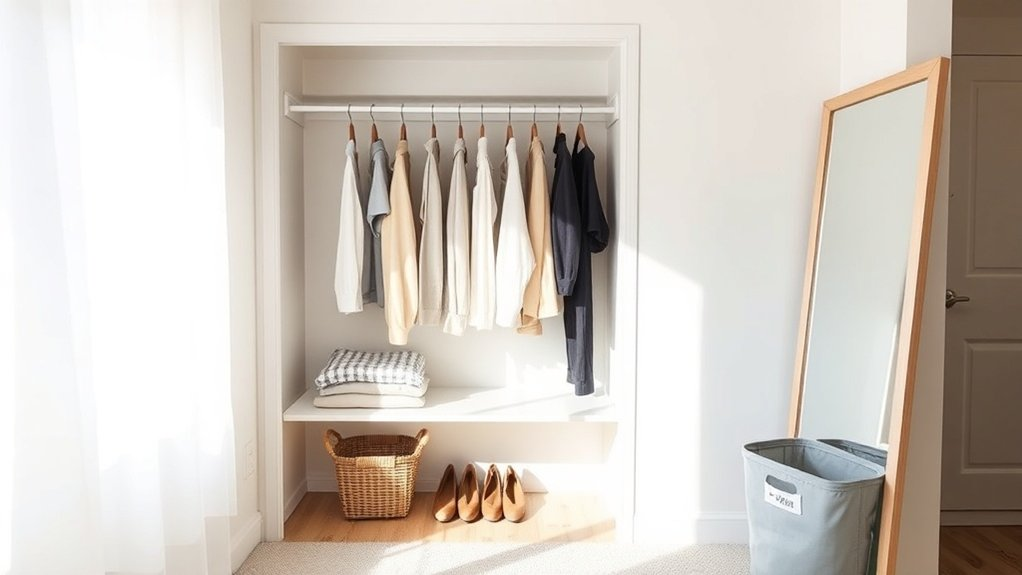
Before you plunge in, take a breath and make a simple plan so you don’t get overwhelmed. You’ll set a realistic timeline, pick a few focused zones—like shoes, jackets, or shelves—and decide whether you’re sorting by item, season, or mood.
Give yourself small goals, like one shelf or fifteen minutes, so progress feels steady and doable. Ask: what would make mornings easier, or bring you joy when you open the door?
Set tiny goals—one shelf or fifteen minutes—so progress feels steady; ask what eases mornings or sparks joy.
Keep a donation box and a repair pile nearby, and label spaces so decisions stay clear. Invite a friend if you want company, or put on music and savor the process alone.
With a calm plan, you’ll move from chaos to clarity, step by thoughtful step. Consider using a maintenance plan to keep your closet clutter-free over time. Consider adding adjustable shelving to maximize vertical space and adapt as your wardrobe changes. Also consider incorporating stackable organizers to boost vertical storage and make the most of small closets.
Decide What to Keep: A Simple Editing Checklist
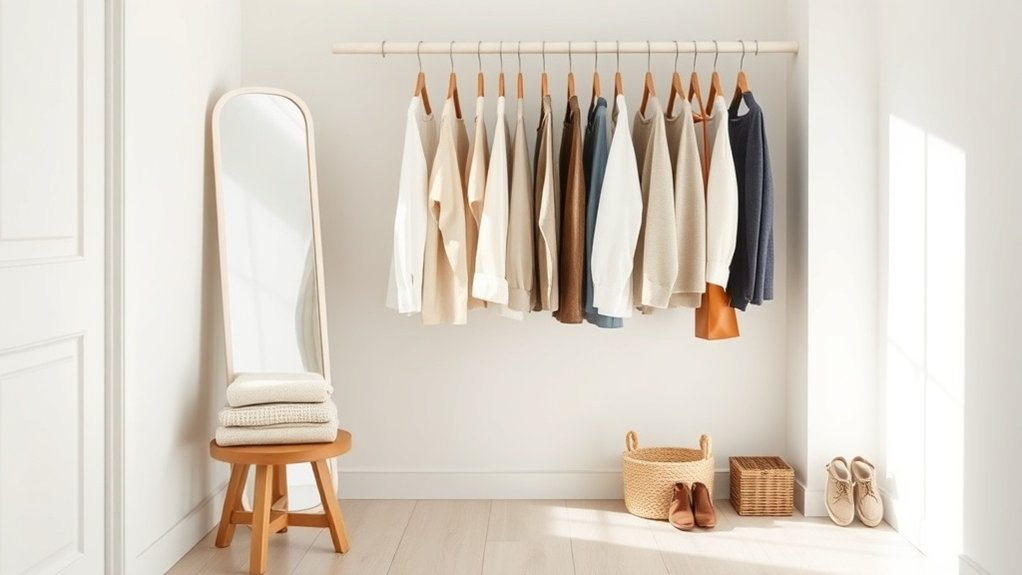
Now that you’ve got a plan and a donation box ready, you can start deciding what actually stays in your closet.
Begin by asking practical questions: have you worn this in the last year, does it fit well, and does it make you feel confident? Consider how durable the item is and whether it suits your daily routines, as durable materials often make for longer-lasting wardrobe staples durable materials. Use sturdy organizers like chrome-plated metal for heavier accessories to keep things accessible and preserved.
Hold each item up, try it on if needed, and be honest with yourself.
Create three piles: keep, donate, and maybe.
Limit the maybe pile—set a timer for decisions.
For items you love but rarely wear, consider seasonal storage instead of clutter.
If something needs repair and you won’t fix it soon, let it go.
Aim for pieces that match your life and make dressing simple.
Small choices add up to a calmer, clearer closet.
Transforming your space can boost daily ease and reduce decision fatigue.
Build a Capsule Wardrobe for Everyday Ease
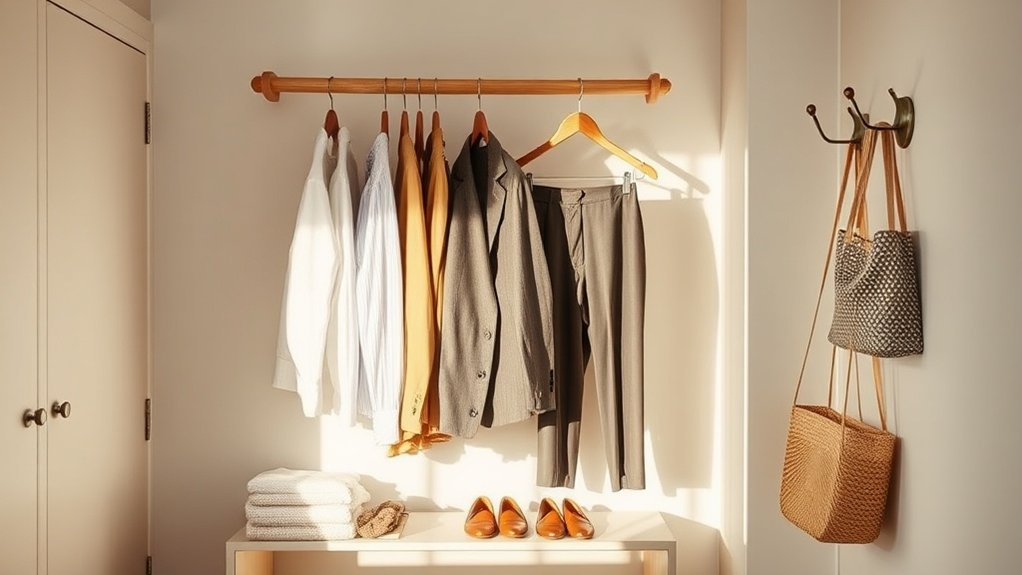
Think about the few reliable pieces you wear again and again—those are your core, and they should fit well and feel like you. Consider choosing items in durable fabrics and versatile cuts to extend wear and simplify care, like pieces made from thick polyester for longevity. Keep your palette simple and limit loud patterns so outfits mix and match easily, then rotate items seasonally to keep things fresh without clutter. Ready to try a smaller, happier closet that actually makes getting dressed easier? Consider adding space-saving organizers like stackable baskets to maximize vertical storage and keep things tidy. Additionally, choose rust-resistant materials for any storage used in moisture-prone areas to ensure longevity and reduce maintenance.
Define Your Core Pieces
A well-chosen capsule wardrobe makes mornings feel effortless and gives you a clear sense of style, so start by defining the core pieces you’ll reach for every day.
Think of staples that support your life: a reliable pair of trousers, a comfortable dress or skirt, a fitted jacket, and a few versatile tops. Choose items that fit well, feel like you, and hold up to regular wear. Consider incorporating modular storage pieces to keep these staples organized and easy to access.
Ask yourself which garments you pull out without thinking, which make you feel confident, and which work for most occasions.
Keep quality, comfort, and purpose in mind, but don’t overcomplicate choices.
When your core pieces are clear, dressing becomes quicker, choices feel smarter, and your closet finally serves you.
Consider using vertical storage solutions from capsule closet organizers to maximize space and accessibility.
Limit Colors And Patterns
Once you’ve picked your go-to pieces, narrow the palette so everything works together and dressing feels effortless. Choose two to three neutrals—think black, navy, gray, beige—that form the backbone of your wardrobe.
Add one or two accent colors that make you smile, then limit bold patterns to a single statement piece, like a scarf or top. When colors and patterns coordinate, outfits pop without stress, and you’ll waste less time matching.
Ask yourself: does this color mix with most of my pieces? If not, let it go. Stick to fabrics and finishes that read similarly; matte with matte, subtle sheen with subtle sheen.
This approach keeps your closet calm, boosts confidence, and makes daily choices joyful and simple. Consider pairing this capsule approach with space-saving solutions to make the most of a small closet. Using stackable, collapsible storage boxes like stackable bins can help maximize vertical space and keep your capsule wardrobe tidy. Additionally, incorporating foldable organizers can make seasonal rotation and storage easier.
Rotate Seasonally Only
Start with a small, well-chosen collection you actually wear, and rotate seasonally only so your closet feels calm and useful all year.
Choose pieces that mix and match, then store off-season items neatly so you can see everything at a glance. Consider using over-the-door organizers to maximize vertical space for accessories and lightweight items.
When fall arrives, swap lightweight tops for cozy sweaters; when spring comes, bring back lighter layers. This keeps decision fatigue low and mornings easier.
How would it feel to open a tidy closet that reflects the season and your life? You’ll save time, avoid impulse buys, and maintain clothes longer because you treat them with care.
Keep a few versatile extras for unexpected events, but resist overcrowding.
Rotate thoughtfully, and your wardrobe will serve you, not the other way around. Consider adopting a capsule wardrobe approach to simplify choices and maximize outfit combinations.
A thoughtfully edited closet also supports ultimate organization by making it easier to find what you need.
Measure Smart: Map Your Closet’s Usable Space
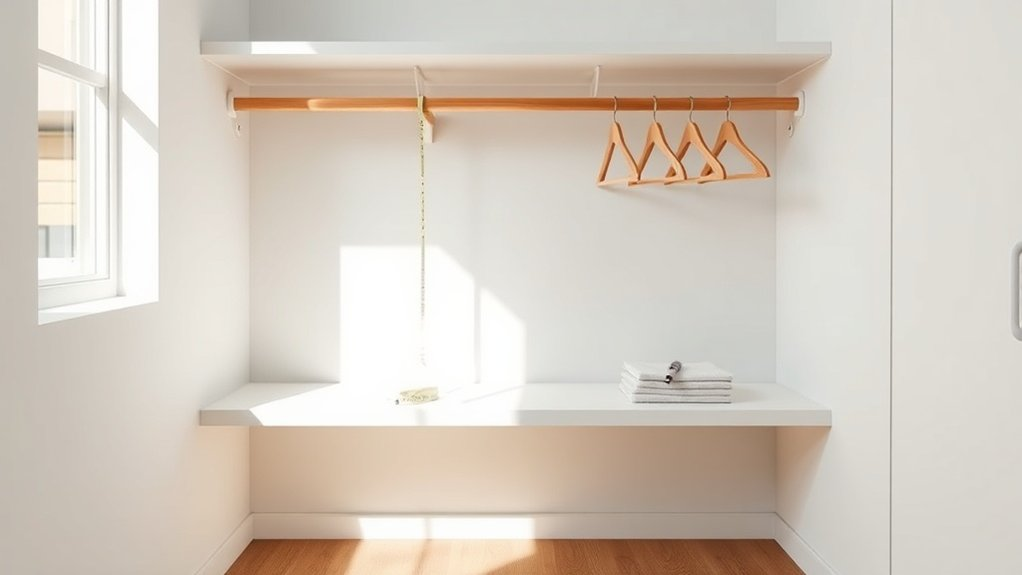
Because a well-measured closet feels like a small miracle, you’ll want to map its usable space before buying organizers or deciding what to keep, toss, or store elsewhere.
Take a tape measure, a notepad, and patience, then note width, depth, and height, including shelves, rods, and floor space. Measure around obstructions like vents and light switches. Consider choosing adjustable hanging solutions to make the most of varying spans. Also think about installing stackable storage to use vertical space more efficiently.
Sketch a simple floor plan to see what truly fits. How much hanging vs. folded space do you actually need?
- Measure width, depth, and height of each section
- Mark fixed features: shelves, rods, vents, doors
- Note awkward spots and low clearances
- Calculate hanging lengths for shirts, pants, dresses
- Reserve floor space for shoes or bins
This map helps you make choices that feel right. Consider choosing systems with vinyl-coated steel shelving if you need durable, eco-friendly wire options.
Choose Versatile Storage That Fits Your Layout
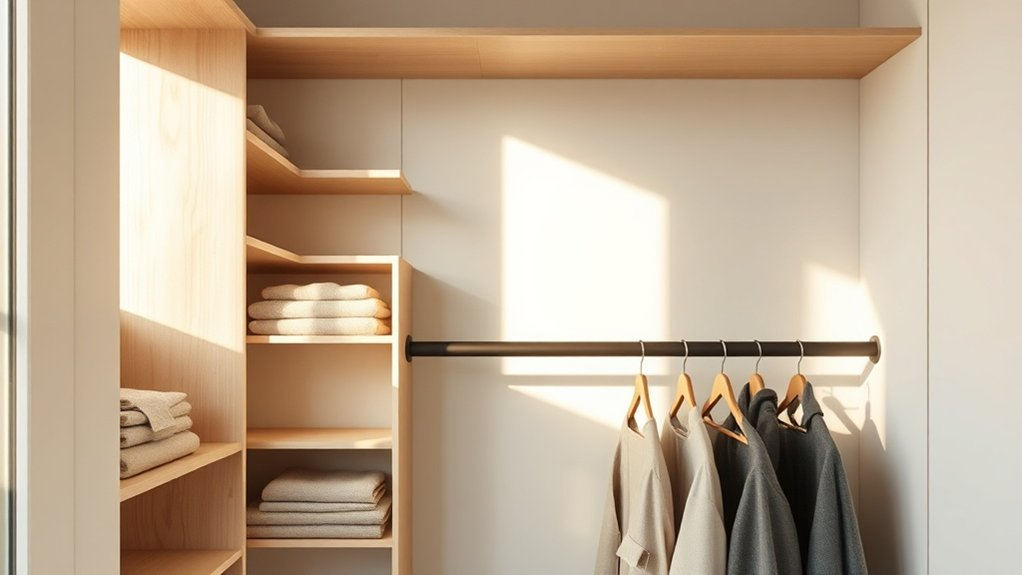
Before you buy anything, measure your shelves, hanging space, and floor so new pieces actually fit and feel right.
Choose multiuse items—like a bench with storage or adjustable shelving—that let you switch things up without buying more.
What parts of your closet would feel calmer with the right-scale solution? Consider systems with adjustable rods and shelves to match varying heights and loads, especially when supporting heavier items with proper weight limits. Use stackable organizers to make the most of vertical space without major renovations. Also think about choosing durable materials so organizers resist deformation and last longer.
Measure Before You Buy
Think of your closet like a small room with big potential—you’ll want to measure every wall, shelf, and odd corner so your storage choices actually fit and work for you.
You’ll check height, depth, and width, note door swings, and mark any obstacles like vents or light switches. Measuring first saves time, money, and frustration, and it helps you choose flexible pieces that suit real space, not wishful thinking. Many organizers benefit from knowing weight limits, so factor in weight capacity when planning what to store.
Ready to map it out?
- Measure wall widths and note where studs are
- Check shelf depths and hanging rod heights
- Account for doors, drawers, and clearances
- Sketch a simple floor plan with dimensions
- Measure bulky items you want to store
These steps make buying precise, practical, and joyful. Consider choosing versatile organizers like stackable bins to maximize vertical space and adaptability. Consider designs with adjustable shelves so your storage adapts as your needs change.
Opt For Multiuse Pieces
Now that you’ve measured and mapped your space, you can pick pieces that do more than hold things—they multiply what your closet can do.
Choose shelving units with adjustable heights, baskets that stack or slide, and rods that convert from single to double. Pick a bench with hidden storage, hooks that serve as display and grab-and-go spots, and clear bins that let you see what’s inside at a glance. Consider adding stackable clear plastic boxes for high shelves to maximize visibility and vertical space with stackable storage. These choices save time, reduce clutter, and make daily dressing calmer. How would it feel to open a door and find order that adapts to your week?
Start small: swap one single-use item for a versatile piece, notice the difference, then build from there. You’ll love the freedom. Durable materials like steel or premium wood also ensure your versatile pieces last longer and support heavier loads, improving long-term functionality and material durability. Add stackable organizers that hold up to 40 lbs to make sure heavier items don’t bend or sag over time.
Match Scale To Space
Pick pieces that feel like they were made for your closet, not your Pinterest board. You want storage that fits your actual space, so everything looks calm and works harder.
Think about height, depth, and how you move in front of shelves—small tweaks make a big difference. Choose versatile bins, slim hangers, and narrow shelves that match your proportions, and don’t be afraid to measure twice.
- Slim, stackable bins for folded sweaters
- Low-profile shoe racks that slide under shelves
- Narrow shelving for jeans and tees
- Adjustable rods to change hanging height
- Clear, labeled boxes for seasonal swaps
How would these changes help your daily routine? Start small, try one swap, and notice how lighter and more usable your closet feels. Consider adding adjustable shelving to maximize flexibility as your needs change.
Arrange Your Closet by Routine, Not Category
Because you get dressed the same way every morning, arranging your closet by routine instead of by category can change how smoothly your day starts.
Think about the steps you take: underwear, base layer, outfit, shoes, accessories. Place those items in the order you use them, so your hands move naturally from one section to the next.
Group complete outfit options together—tops with matching bottoms and shoes—so decision fatigue melts away. Keep frequently worn pieces at eye level and quick-grab accessories nearby.
Want to speed things more? Create a small “ready” zone for yesterday’s yet-clean items. This setup helps you stay calm, save time, and leave the house confident.
Try it for a week and notice how your mornings shift.
Use Visual Rules to Maintain a Minimal System
When you give your closet clear visual rules—like a color, label, or simple icon for each zone—you make good habits almost automatic, so maintaining a minimal system feels easy instead of like a chore.
You’ll spot what belongs where at a glance, and decisions get faster. Choose one simple cue per zone, keep it consistent, and teach everyone in the household the meaning.
Small, visible signals remove friction and keep clutter from creeping back.
- Color-code sections (e.g., blue = work, green = casual)
- Use simple icons for quick recognition
- Label shelves with short, clear words
- Keep one rule per zone, no overlaps
- Update cues when routines change
Low-Cost Upgrades That Boost Functionality
If you want your closet to feel smarter without spending much, small upgrades can make a big difference and spark daily joy.
You can add tension rods to create extra hanging tiers for shirts and skirts, or install adhesive hooks for bags, belts, and scarves so items stay visible and off the floor.
Swap dull bulbs for brighter, warm LED stick-on lights to make choices easier, and use slim, non-slip hangers to save space and keep shape.
Clear shoe boxes or labeled bins show contents at a glance.
Want a folding spot? A narrow shelf or a drop-down board gives you a tidy surface.
These changes are cheap, quick, and they help your closet work for you every day.
Troubleshoot Common Closet Layout Problems
Although a crowded or awkward closet can feel like a daily frustration, you can tackle its layout problems with small, thoughtful fixes that make a big difference.
Start by evaluating what you use daily, what’s seasonal, and what’s truly worth keeping. Ask yourself: does this arrangement save time or cause stress? Then make targeted changes that feel manageable.
- Remove items you haven’t worn in a year
- Group clothing by function and color
- Add slim, matching hangers for space
- Use clear bins for accessories and labels
- Install a second rod or shelf where possible
Those simple steps reduce overwhelm, improve visibility, and create calm. You’ll feel lighter each time you open the door, and staying organized becomes easier.
Frequently Asked Questions
How Do I Store Sentimental Items Without Cluttering the Closet?
You store sentimental items by curating and limiting what you keep, using labeled memory boxes, rotating displays, digitizing photos and documents, and dedicating a small, organized shelf or bin. You’ll reduce clutter while honoring memories.
Can Minimal Closet Principles Work for Shared Closets?
Absolutely — they’ll revolutionize your shared closet, nearly eliminating chaos so you both breathe easier. You’ll agree on zones, purge ruthlessly, adopt matching systems, label shelves, and negotiate rotation rules so everything feels fair, calm, and perfectly organized.
What’s the Best Way to Rotate Seasonal Items Efficiently?
Store current-season items at eye level, then swap seasonal pieces into accessible spots. Use clear bins, labeled vacuum bags, and a slim rolling rack. You’ll plan rotations monthly, purge seldom-used items, and keep inventory notes.
How Do I Prevent Moths and Odors in a Minimal Closet?
Of course moths love your closet—so you’ll outsmart them: keep fabrics clean, use cedar or lavender sachets, seal gaps, rotate items, store off-season in airtight bins, and air everything regularly to prevent odors and pests.
Are There Eco-Friendly Organizers and Where to Find Them?
Yes — you can buy eco-friendly organizers made from bamboo, recycled PET, organic cotton, and upcycled wood; check local zero‑waste shops, Etsy, Patagonia Worn Wear, The Container Store’s sustainable line, and thrift stores for affordable finds.
Conclusion
Imagine opening your closet to a calm, sunlit space where every piece has purpose and breathing room. You’ll feel lighter, choices faster, mornings calmer. Start small—clear, measure, keep what serves you—and build a compact wardrobe that fits your life. Try one change this week and notice the ease it brings. Isn’t it worth a little editing to gain daily peace? Your simplified closet can quiet the clutter and brighten your day.