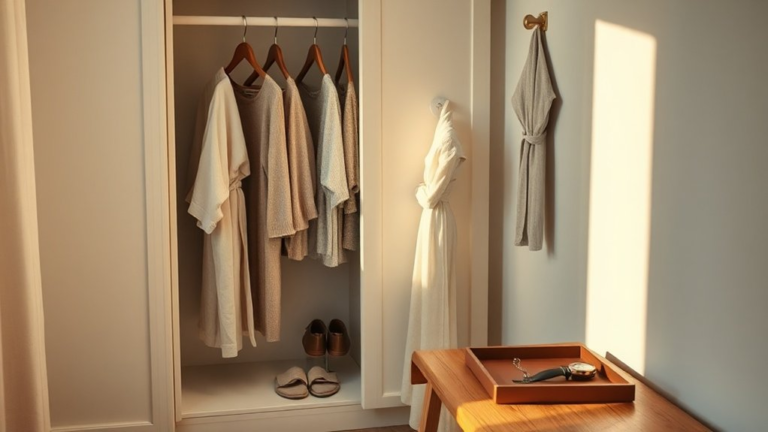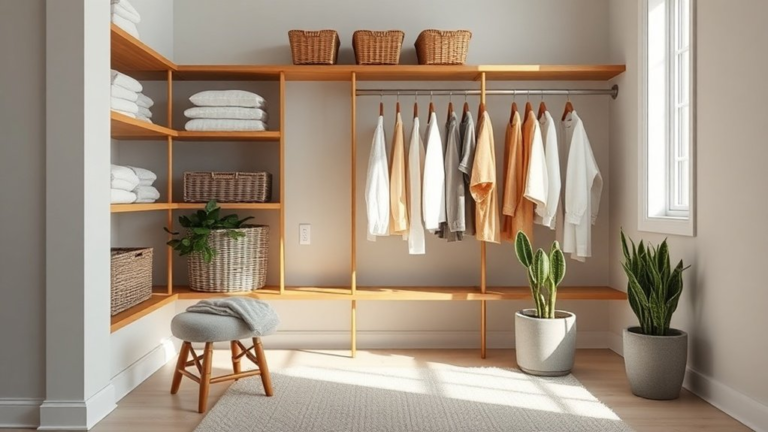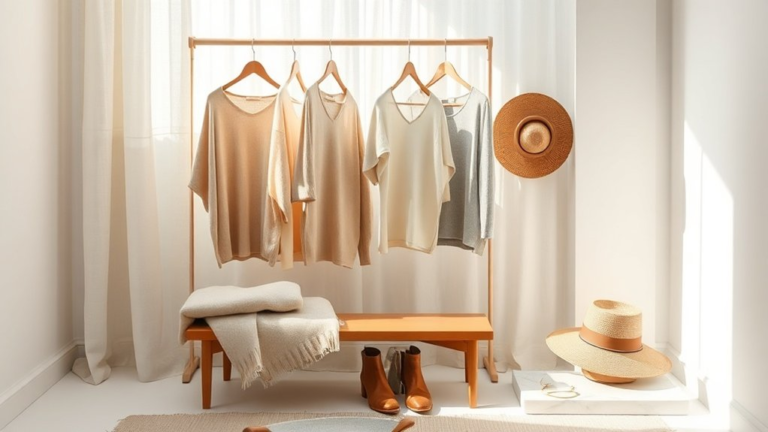
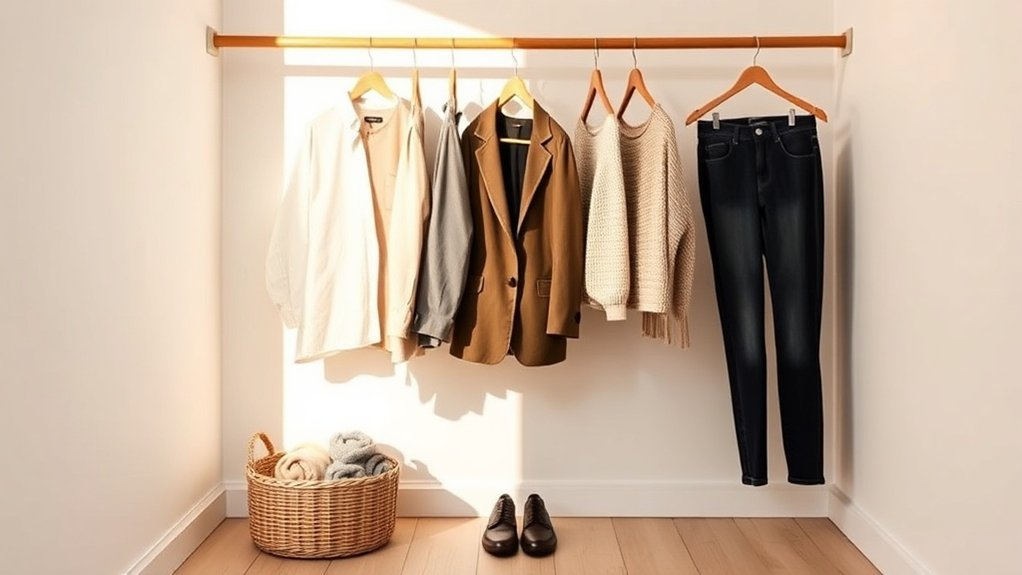
You can create a calm, useful closet by picking a tight color palette and 10–30 versatile pieces that mix easily. Declutter fast with keep/maybe/donate bins, group tops, bottoms, and layers, and keep daily favorites at eye level. Choose natural fabrics, mend instead of toss, and use simple outfit templates to cut morning stress. Shop with a 48-hour rule and rotate seasons in labeled bins. Want practical steps and layouts to get started?
Closet Highlights
- Choose a cohesive three-to-four color palette to maximize mixing and matching across all outfits.
- Keep a compact set of versatile core pieces: tops, bottoms, one dress/jumpsuit, a lightweight layer, and two shoes.
- Declutter using a keep/maybe/donate system and remove items not worn or not matching the capsule.
- Implement one-in, one-out shopping and a 48-hour wait for nonessential purchases to prevent impulse additions.
- Schedule monthly maintenance, quick repairs, and seasonal rotation using labeled bins to keep the closet functional.
Build a 10–30‑Piece Capsule: Choose Your Colors and Core Items
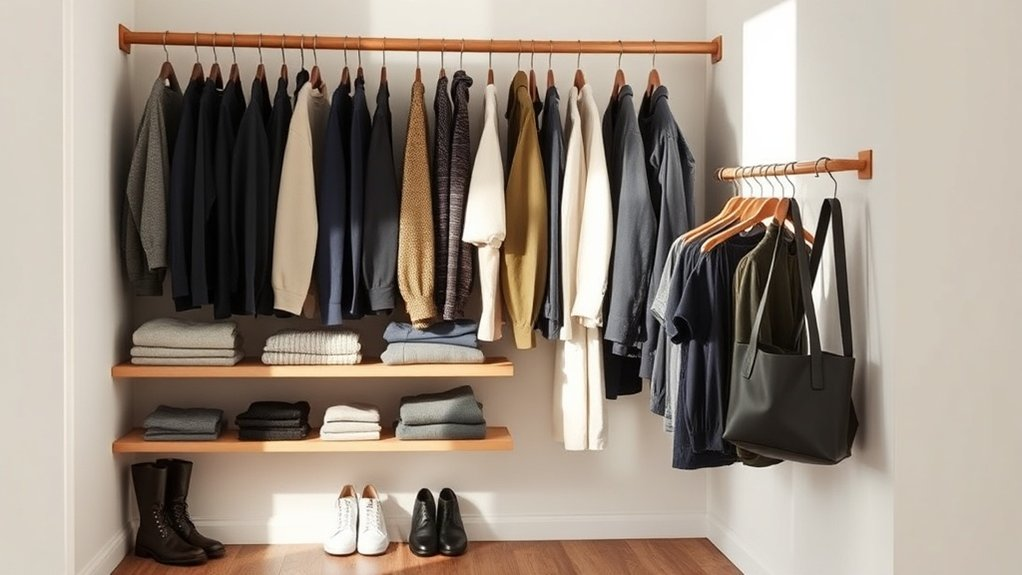
Start by choosing a color palette you love—three to four shades that mix and match easily—and then pick the core pieces that will carry you through most days.
You’ll want versatile tops, a couple of bottoms, one dress or jumpsuit, a lightweight layer, and two shoes that suit work and weekends. Consider adding modular organizers like multi-purpose organizers to keep these pieces accessible and tidy. Consider compact, vertical solutions like over-the-door organizers to maximize limited closet space.
Think quality over quantity, fabrics that feel good and hold up, and silhouettes that flatter your daily life.
Choose quality over quantity: durable, comfortable fabrics and flattering silhouettes that suit your everyday life.
Ask yourself: which items make you feel confident?
Limit patterns, let neutrals anchor the set, and add one or two accent pieces for personality.
Plan outfits in your head, try combinations, and keep pieces that earn their place.
You’ll create calm, useful choices that simplify mornings. Consider adding space-saving hangers like Kalimdor Space Saving Pants Hangers to maximize closet room.
Declutter Fast: A Simple Edit Method to Decide What Stays
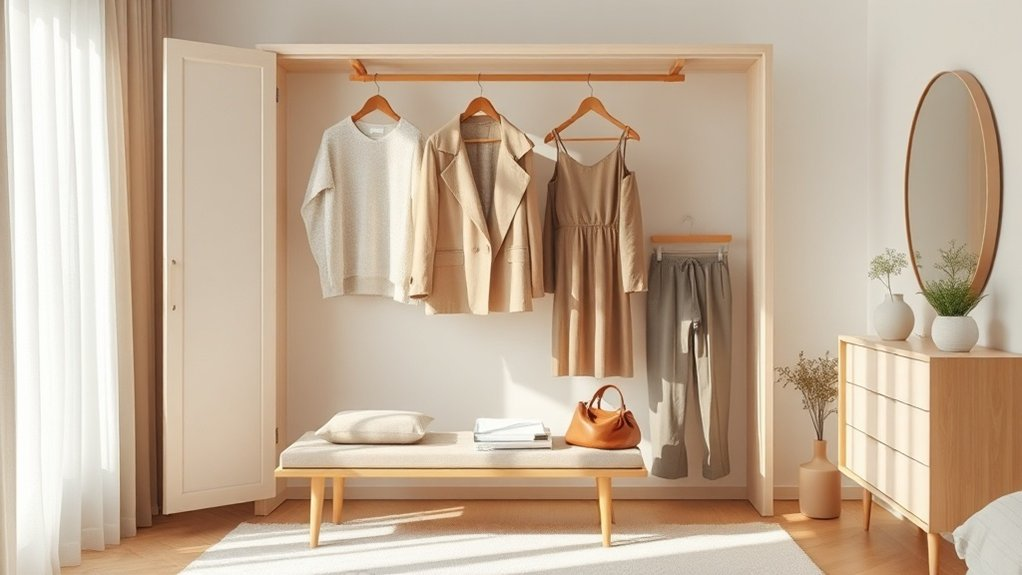
You’ve picked the palette and the pieces that will form your capsule, and now it’s time to clear out what doesn’t belong so your choices feel obvious each morning.
Start with a quick three-bin system: keep, maybe, donate/sell.
Pull every item from one category—tops, say—and ask three simple questions: have I worn this in six months, does it match my capsule, and does it make me feel confident?
If you can’t answer yes to at least two, move it out.
Reserve the maybe bin for sentimental or seasonal pieces, revisit it after two weeks, and be honest.
The faster you decide, the less second-guessing you’ll face.
You’ll create space, calm, and a wardrobe that truly works for you.
A step-by-step approach with personalized organization helps you maintain the capsule long-term.
Consider adding versatile organizers like a hanging shelf or a five-tier design to maximize space while keeping items visible.
Arrange Your Closet for Easy Mixing and Matching
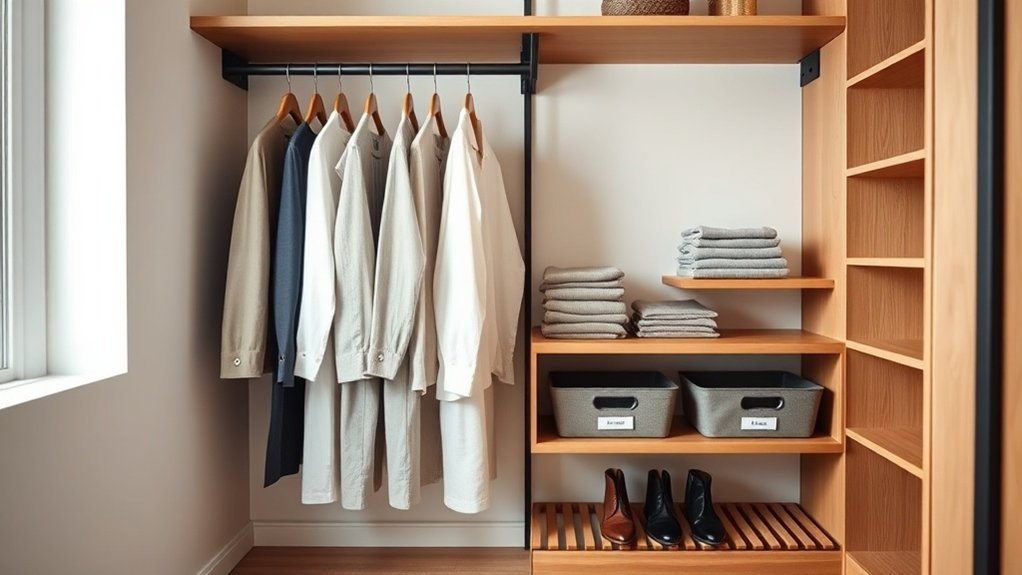
Once you’ve cleared out the extras, arrange your closet so mixing and matching feels effortless every morning.
You’ll want clear zones: one for tops, one for bottoms, and a section for layers and accessories. Group items by color and silhouette so you can scan options quickly, and keep frequently worn pieces at eye level. Consider using principles from capsule wardrobes to limit choices and prioritize versatile pieces. Many organizing websites recommend measuring your space and planning zones before you buy storage to maximize efficiency and avoid clutter space planning.
Use consistent hangers to create visual calm, and fold sweaters on shelves to avoid stretching.
Want a quick outfit loop? Try this simple system:
- Pick three neutrals you love together.
- Add one accent piece to brighten the combo.
- Finish with a repeatable layer for warmth or polish.
This setup saves time, reduces stress, and helps you dress with confidence, every day. Consider adding stackable storage bins to make the most of vertical space and keep lightweight items neatly contained.
Choose Versatile Fabrics and Quality Pieces That Last
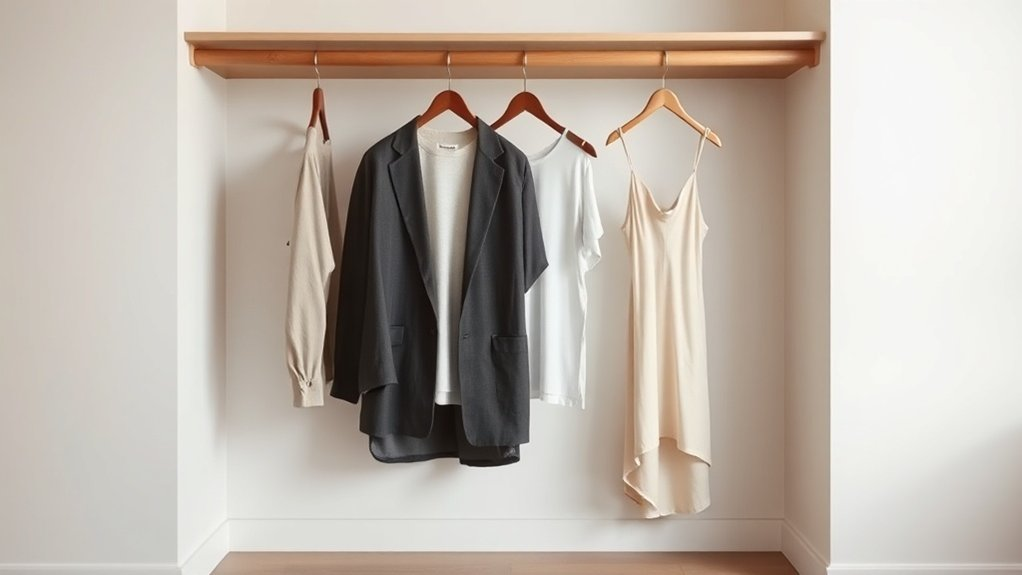
Think about choosing natural fibers like cotton, linen, and wool that feel good on your skin and wear well over time.
Pick timeless staples—a crisp white shirt, a tailored blazer, or a simple coat—that you’ll reach for again and again.
Will you focus on durability and quality now so your closet stays calm and useful for years?
Stackable and modular organizers can help maintain that order by maximizing space and adapting as your capsule wardrobe evolves, especially when you choose stackable storage solutions.
Consider adding clear or fabric storage bins to keep seasonal items visible and protected.
Also, opt for breathable materials in storage solutions to prevent moisture buildup and keep garments fresh.
Prioritize Natural Fibers
While synthetic blends can feel convenient, choosing natural fibers brings a clearer kind of value to a smaller wardrobe: they breathe, wear longer, and look better over time.
You’ll notice cotton, linen, wool, and silk feel nicer against your skin, need less frequent washing, and age with character instead of pilling. Consider pairing these with modular closet systems to keep garments accessible and well-ventilated.
When you shop, think about touch and care—will this piece become more comfortable after a few wears? Also consider modular systems like closet organizer towers to adapt storage as your wardrobe evolves.
- Pick breathable fabrics for daily comfort, like cotton tees and linen shirts.
- Choose wool or silk for pieces that drape well and resist odor.
- Favor denser weaves and natural dyes for durability and timeless color.
Isn’t it worth investing in items that serve you, season after season?
Also, consider storage choices that preserve fabric quality, like using stackable closet organizers and breathable bins to prevent crushing and moisture buildup.
Invest Timeless Staples
Natural fibers give you a better base, and now you can build on that by choosing a few timeless staples that really earn their place in a small closet.
Pick classic shapes—a well-cut blazer, a neutral sweater, straight-leg trousers, a simple dress, and a clean white shirt—that mix and match easily. Choose fabrics that drape and breathe, so pieces feel good all day. Consider lightweight, breathable non-woven fabric for accessories and organizers to keep items fresh and protected.
Opt for colors that blend, like navy, gray, beige, and black, then add one accent you love. Buy styles that won’t date quickly; think proportion and fit over trends.
Ask yourself which items you’ll reach for every week. When a garment makes you feel confident and comfortable, it’s doing its job. Keep it intentional. Consider adding stackable organizers to maximize vertical space and keep your small closet orderly. Use stackable storage baskets to make the most of vertical space and keep seasonal items accessible.
Focus On Durability
Because your closet is small, every piece should earn its spot—so choose fabrics and construction that hold up to daily life and many wears.
You want items that feel as good on day 200 as day one, so focus on natural fibers, sturdy seams, and classic cuts that bend with your routine.
Think long-term—will this top survive repeated washes? Will the jacket still look sharp after travel? Consider investing in garments with reinforced stitching and durable materials to reduce replacements over time.
- Choose cotton, wool, linen blends, and quality synthetics for durability and ease.
- Look for reinforced stitching, solid zippers, and lined garments that resist wear.
- Repair, tailor, and care: small fixes extend life and keep pieces useful.
Which item will you invest in first? Consider starting with a durable construction piece that offers versatility and long-term wear. Also plan storage around your needs by measuring available space so organizers and garments fit efficiently.
Create Daily Outfit Formulas to Eliminate Decision Fatigue
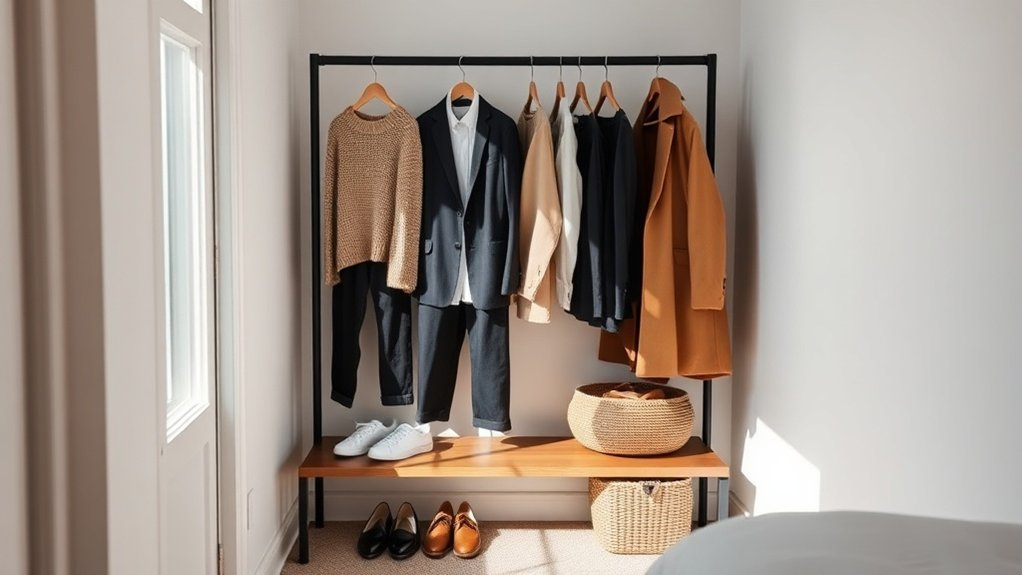
Make a few core outfit templates you can reach for every morning—like jeans + tee + blazer or a skirt + knit + ankle boots—so you stop wasting energy on choices. Stackable solutions like stackable storage baskets can help keep those go-to pieces visible and easy to grab. Consider using stackable fabric bins to maximize vertical closet space and keep seasonal pieces organized.
Pick swap-ready color palettes that mix easily, and keep one or two accessory anchors, like a watch or a scarf, to finish looks fast and feel like you. Which formula would make your mornings simpler, and what accessory would you never skip?
Also consider streamlining your space with seasonal rotation to keep only current items visible and maintain a capsule-friendly closet.
Core Outfit Templates
Start with three core outfit templates you wear on repeat—one casual, one work-ready, and one dressy—so mornings stop feeling like a test.
You’ll feel calmer when you’ve practiced and refined a few go-to looks that fit your life and mood. Organizing by outfit type can also make it easier to maintain closet organization over time. Learn basic principles of decluttering and layout to make those templates quicker to assemble with a closet system.
Which one will you reach for today?
- Casual: jeans or chinos, a comfy tee or knit, and low-profile sneakers or loafers for errands and relaxed weekends.
- Work-ready: tailored trousers or a pencil skirt, a structured top or blouse, and a blazer with sensible shoes to keep you confident.
- Dressy: a simple dress or coordinated separates, statement shoes, and one accessory to elevate the look for evenings or events.
Repeat, tweak, and enjoy the freedom of fewer choices. Consider pairing these templates with drawer organizers to keep each outfit’s components visible and easy to access.
Swap-Ready Color Palettes
If you pick two or three swap-ready color palettes for your wardrobe, getting dressed will suddenly feel simple and intentional.
Choose one neutral palette—think navy, camel, white—and one accent palette—olive, rust, or soft blue. Limit each palette to three core colors plus one pattern or texture you love. Many people find that planning outfits weekly reduces morning stress and speeds routines weekly planning. Consider storing each palette’s pieces in clearly labeled stackable bins so you can quickly locate and swap items.
Arrange garments so pieces from different palettes can swap into the same outfit formula without clashing. Lay out morning options that mix a neutral base with a single accent, or reverse it when you want a pop.
This reduces choices, so you’ll move faster and feel calmer. Want to feel polished or playful today? Your palettes answer that for you, making stylish decisions automatic and joyful. Add stackable organizers to keep each palette’s pieces accessible and visible for quicker outfit assembly stackable organizers.
Accessory Anchors
Accessories are your outfit’s secret system, and when you anchor daily looks around a few go-to pieces, getting dressed becomes almost effortless.
You’ll feel confident knowing each morning has a simple formula: pick a base, add texture, finish with a standout accessory. That small routine cuts decision fatigue and makes your capsule wardrobe feel larger.
- Choose one signature necklace or watch that lifts neutral tops instantly.
- Keep a reliable pair of shoes that suits most outfits, from casual to smart.
- Have a versatile belt or scarf to change silhouettes and add polish.
Which anchor will you pick first?
Try one for a week, notice the ease, then build your ritual. Consider pairing your anchors with space-saving hangers to maximize closet efficiency.
Shop Intentionally: What to Buy, When, and How to Avoid Impulse Buys
Why buy that extra blouse when you can build a closet that truly serves your life and makes getting dressed joyful?
Start by listing needs: work, weekends, special events, and comfort. When shopping, choose pieces that match your color palette and fit your lifestyle—versatile items save space and stress.
Set a simple rule: wait 48 hours before purchasing nonessentials; it stops impulse buys and reveals true desire.
Try one-in, one-out for clothing that never earns its keep. Look for quality over trendiness; a well-made staple lifts everything else.
Keep a small wish list so you shop with purpose, not boredom. You’ll feel calmer, confident, and excited to wear what you own.
Seasonal Rotation and Storage Hacks for a Small Wardrobe
When the seasons shift, you can treat your closet like a living system that adapts instead of a static pile of clothes you have to wrestle with. A simple rotation routine will save you time, space, and decision fatigue.
When seasons change, let your closet adapt—rotate intentionally to save time, space, and decision fatigue.
Pack away off-season pieces in breathable bins, label them, and keep only current items within reach. Rotate items monthly or by weather windows so you notice what you love and what collects dust. Ask yourself: does this spark ease?
- Store sweaters folded in vacuum bags to free hanging space.
- Use clear bins and a photo on the lid to find things fast.
- Hang a slim rail for interim pieces you’ll wear next week.
These small habits make daily dressing calmer, smarter, and more joyful.
Maintain and Adapt Your Capsule: Mending, Swaps, and Periodic Reviews
As you live in your capsule wardrobe, small care rituals keep it feeling fresh and truly yours. So set aside a regular slot each month to mend, swap, and reassess what’s hanging up.
Check seams, buttons, and hems; a quick stitch can save a favorite piece. Swap items with friends or within your own rotation to test new combos and keep outfits exciting.
Ask yourself which pieces spark joy, which feel practical, and which you haven’t worn in weeks. Make small edits: donate one item, repair another, and try a different accessory.
Keep a simple repair kit and a list of tailors or swap groups. These gentle practices help your capsule evolve, stay useful, and reflect who you’re right now.
Frequently Asked Questions
How Do I Travel With a 10–30‑Piece Capsule Wardrobe?
Pack versatile neutrals, mix-and-match tops, layered pieces, and two shoe options; roll to save space, use packing cubes, plan outfits per day, limit accessories, and wash locally so you’re flexible and don’t overpack.
Can a Capsule Wardrobe Work for Shift Work or Uniforms?
Yes — you can adapt a capsule wardrobe for shift work or uniforms. You’ll prioritize durable basics, repeatable layers, and a small rotation for off-duty days, so you’ll simplify choices while meeting dress codes and laundering needs.
How Do I Handle Sentimental Items I Don’t Wear Often?
Keep a small, labeled memory box for sentimental pieces you rarely wear, rotate a display item occasionally, photograph items for digital keepsakes, and set a limit so you’re keeping meaningful pieces without cluttering everyday wardrobe space.
What About Kids’ Clothing and Family Laundry Logistics?
You’ll streamline kids’ clothing by sizing bins, rotating seasonally, and donating extras; assign laundry days, use labeled baskets per person, simplify routines with capsule-like basics, and involve kids in sorting so everyone’s responsible and overwhelmed less often.
Can I Maintain a Capsule While Living With a Partner Who Hoards?
Can you stay true to your capsule when your partner hoards? Yes—you’ll set clear boundaries, create dedicated storage, curate your pieces, negotiate shared spaces, offer gentle support, and keep routines consistent so your capsule remains functional and peaceful.
Conclusion
You’re ready to live with less and love what you wear. Choose thoughtful colors, keep trusted pieces, and arrange your closet so mixing and matching feels easy. Edit without guilt, mend instead of replace, and rotate seasonally to keep things fresh. Shop with purpose, avoid impulse buys, and review your capsule often. Will you try a smaller, smarter wardrobe? You might find freedom, confidence, and daily ease in every outfit.