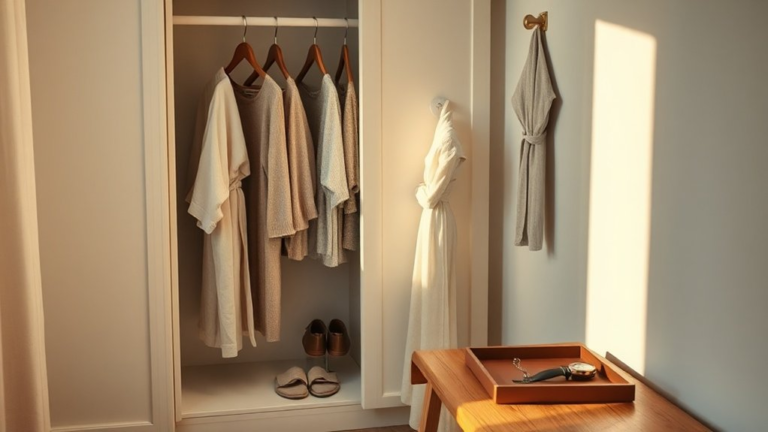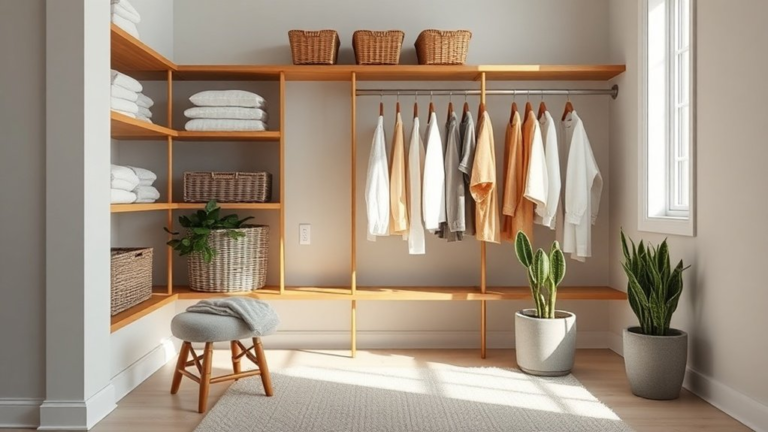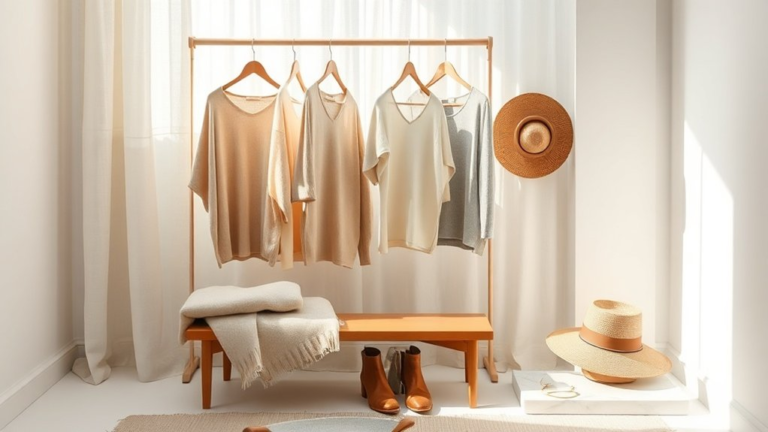

You can create a calm, confident closet by choosing pieces that match your daily life and boost how you feel, not just what’s trendy. Set a 30–60 minute audit to sort keep, donate, or mend, then build a 20–40 piece capsule of reliable basics plus a few statement items. Use uniform hangers, clear bins, and outfit zones to simplify mornings. Follow simple shopping rules and seasonal refreshes to stay focused — keep going to learn practical steps next.
Closet Highlights
- Define your wardrobe purpose and keep only items that fit your lifestyle and boost confidence.
- Do a 30–60 minute closet audit, sorting garments into keep, donate, or mend piles.
- Build a 20–40 piece capsule of neutral basics plus a few accent and statement items.
- Establish nightly outfit routines, uniform hangers, and designated zones for easy dressing.
- Perform short seasonal refreshes, repair or store items intentionally, and follow mindful shopping rules.
Define Your Wardrobe Purpose: What to Keep Based on Lifestyle and Confidence

Why do you reach for certain pieces every morning?
Think about where you spend time—work, school, errands, evenings out—and let that guide what you keep. Choose items that match your daily rhythm, that make you feel confident and comfortable, not just pretty in photos.
Keep pieces that fit well, suit your activities, and lift your mood when you wear them. Include a few reliable basics, plus a couple of statement items that express who you are. Consider adding small stackable bins for lightweight items to keep lesser-used pieces tidy and accessible stackable bins.
Keep items that fit, support your activities, and lift your mood—reliable basics plus a few expressive statement pieces.
Ask yourself: does this serve my life, or just my wish list? If it supports your routine and boosts your confidence, it stays. If it doesn’t, let it go later.
This focused approach makes dressing easier and your closet calmer, one thoughtful choice at a time. Consider adding versatile, durable organizers like vertical storage to keep those decisions simple and maintain a tidy closet. A streamlined wardrobe centered on everyday essentials reduces decision fatigue and speeds up your mornings.
Quick Closet Audit: Decide What Stays, Donates, or Mends in 30–60 Minutes

Now that you’ve thought about what your wardrobe is really for, you can move from theory to action with a quick closet audit that takes just 30–60 minutes.
Set a timer for focused momentum, then pull everything into view so choices feel real. Hold each item and ask: have I worn this in a year, does it fit my life, does it make me feel confident? This process works best when you follow clear, step-by-step phases to avoid overwhelm.
Make three piles: keep, donate, mend. Be honest—if it’s sentimental but unused, consider a photo instead.
For mending, estimate time and cost; schedule fixes or let them go. Consider using durable non-woven fabric organizers for lightweight items that need a home.
Donate items that are in good shape, not “someday” pieces.
Finish by rehanging keeps intentionally, creating a calmer, more useful wardrobe you’ll actually enjoy. Consider maximizing vertical space with adjustable shelves to keep that calmer wardrobe organized for the long term.
Build a Capsule Foundation: 20–40 Versatile Pieces That Cover Your Week

Pick 20 to 40 pieces that work together, and you’ll be amazed how often you reach for something you love without the morning scramble.
Start with reliable basics you feel good in, then add a few special pieces that lift outfits instantly. Choose neutral colors and a couple of accent hues so everything mixes easily, and aim for fabrics that tolerate wear and washing. Consider adding stackable organizers to create zones in your closet for different garment types.
Build your wardrobe from reliable basics, add a few standout pieces, and choose neutrals plus accent hues for easy mixing.
Think about layers that adapt to weather, and one dress or suit that feels polished for meetings or nights out.
- A trusted coat or jacket for most days
- Two pairs of pants or skirts you actually wear
- Three tops that shift from day to night
- One go-to dress or blazer that makes you feel ready
Now pick, keep, and wear with intention. Consider using stackable fabric bins to keep items accessible and maximize closet space.
Daily Routines and Storage Hacks to Simplify Getting Dressed

After you’ve pared your wardrobe to those 20–40 pieces, the next move is to make getting dressed effortless, so your mornings feel calm instead of chaotic.
Start by creating simple routines: pick tomorrow’s outfit each night, lay accessories together, and limit decision points to one or two.
Use uniform hangers and group items by outfit, not color, so matching is instant.
Store shoes in clear boxes or on low shelves for quick reach.
Keep daily essentials—underwear, socks, a preferred tee—in designated drawers with dividers.
Try a capsule-ready capsule: one ready-to-wear outfit rack for busy days.
Small habits save time and soothe stress.
What could you simplify tonight to make tomorrow smoother?
Take one tiny step and see the calm grow.
Transforming your space into a dedicated organized closet can make these routines stick.
An efficient closet layout with clear zones for clothing, shoes, and accessories makes maintenance easier and supports minimal closet living.
Maintain the Calm: Seasonal Refreshes, Shopping Rules, and Dealing With Setbacks
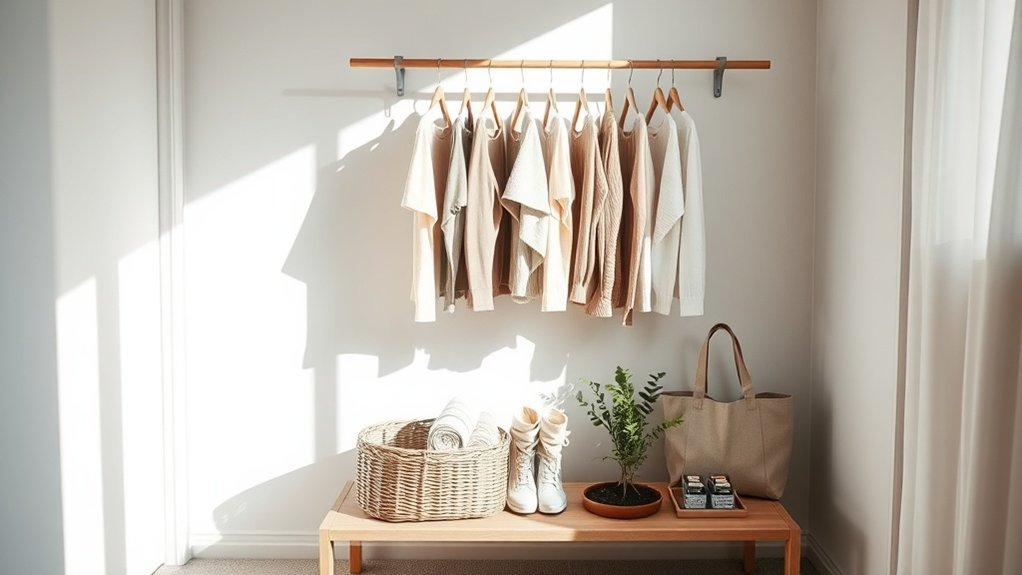
When seasons shift, take a gentle, planned moment to refresh your pared-down wardrobe so the calm you’ve built stays steady. A quick seasonal sweep keeps only what fits your life and sparks joy. You’ll sort, repair, and store with intention, asking: does this still reflect me? Consider using clear, stackable storage to maximize vertical space and visibility with stackable clear bins. Stackable options maximize vertical space and help keep off-season items organized.
When seasons change, pause gently to refresh your pared-down wardrobe—keep only what fits, sparks joy, and still reflects you.
Set simple shopping rules—buy quality, replace thoughtfully, and wait 48 hours before a nonessential purchase. Treat setbacks kindly; if clutter creeps back, pause, reassess habits, and return to your core pieces.
- Schedule two short seasonal reviews, focused and doable.
- Create a small “replace” fund to avoid impulse buys.
- Use clear bins and labels for off-season items.
- When overwhelm hits, pick one drawer and finish it.
These steps keep your closet calm, usable, and true to you. Consider maximizing vertical space with stacking storage to keep everything accessible and tidy.
Frequently Asked Questions
How Do I Handle Sentimental Items Without Cluttering My Closet?
You keep sentimental items out of your closet by picking a few meaningful pieces, photographing or digitizing others, storing treasures in a labeled box or memory binder, and routinely reassessing so belongings stay intentional and clutter-free.
Can Minimal Wardrobe Principles Work for Professional Uniforms?
Yes — you can apply minimal wardrobe principles to professional uniforms by standardizing essentials, choosing versatile, high-quality pieces, rotating replacements, and limiting extras; you’ll streamline choices, reduce stress, and maintain a polished, consistent professional image.
How Do I Transition a Minimalist Closet During Pregnancy?
You’ll prioritize comfort, keep versatile pieces, and edit ruthlessly; swap in stretchy basics, borrow or buy a few maternity staples, repurpose belts and layers, and plan postpartum with adaptable, neutral items you’ll actually wear.
What to Do With Clothes That Fit but Clash With My Style?
You’ll sort those clothes by mood and purpose, keep what you actually wear, alter or restyle pieces that can work, donate or sell the rest, and set rules to avoid future mismatches so your closet stays intentional.
How Often Should I Reassess My Wardrobe Pieces?
Every six months is ideal; you’ll notice seasons changing and outfits suddenly clashing, so use those moments to audit. Keep items that spark joy or versatility, donate what drains you, and tweak your core capsule.
Conclusion
You’ve already taken brave steps toward calm—keep what fits your life and your heart, like a trusty pocket watch in a modern bag. Spend 30–60 minutes clearing the clutter, then build a 20–40 piece capsule that makes mornings easy. Use simple routines and smart storage, refresh each season, and set shopping rules that protect your peace. When setbacks happen, be kind, adjust, and try again—you deserve a closet that makes getting dressed joyful.