Transform your kids’ closet into an organized haven that makes mornings easier and less stressful. When everything has its place, your little ones can quickly pick their outfits, sparking independence and creativity. Use fun labels and clear bins for easy access, while involving them in the process to boost their confidence. Regular check-ins keep things tidy and teach responsibility. Ready to create routines that work for everyone? Learn how to maximize your space and maintain that organized feel!
Closet Highlights
- Implement seasonal rotations to keep current clothing accessible, promoting regular wardrobe management and reducing clutter.
- Use color coding to help kids quickly locate outfits, supporting smoother and faster dressing routines.
- Involve kids in sorting clothes, fostering a sense of responsibility while making the organization process engaging and fun.
- Establish checklists for regular closet maintenance, encouraging kids to take ownership of their space and routines.
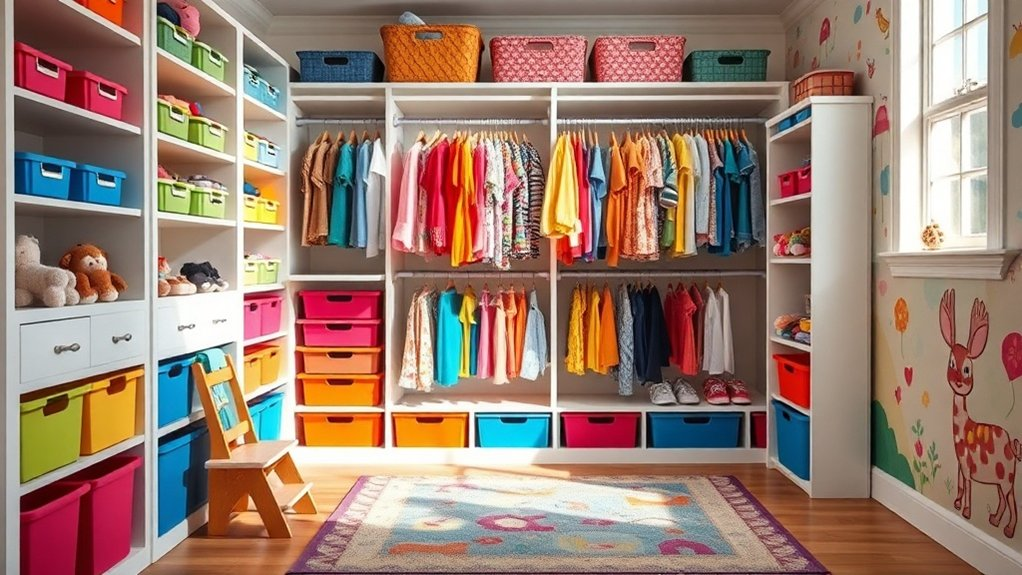
- Utilize clear bins and labeled sections for easy visibility, making daily outfit selection straightforward and stress-free.
The Benefits of an Organized Kids’ Closet
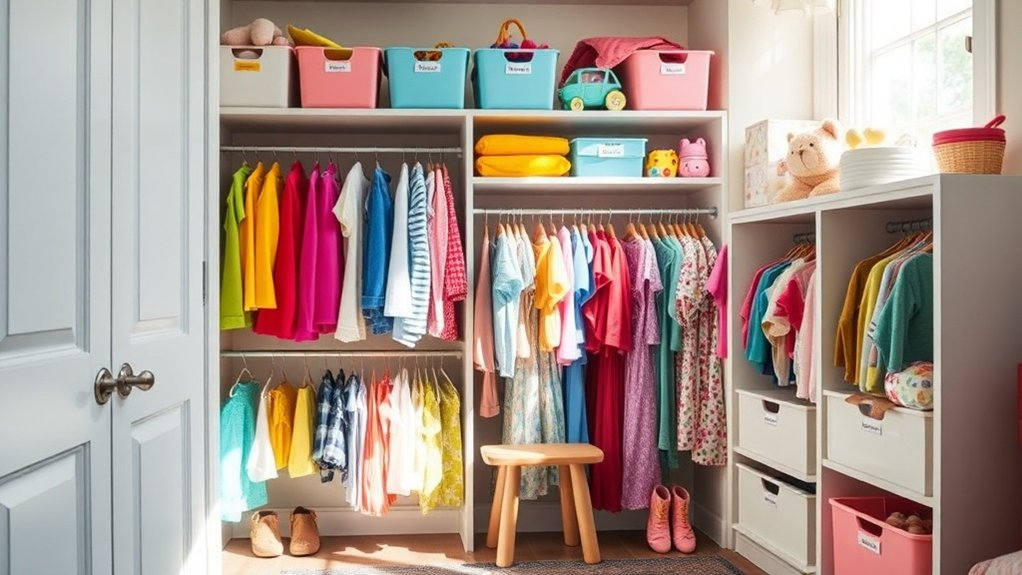
When you step into an organized kids’ closet, it’s like opening the door to a world of possibilities. You’ll find that everything has its place, which boosts clothing longevity.
By optimizing space, you create room for growth and new favorites. Imagine how much easier mornings become! With everything neatly organized, you save precious time that once slipped away in chaotic searches.
Optimizing space opens doors for new favorites and simplifies mornings, saving you valuable time and reducing chaos.
Plus, a clutter-free environment leads to stress reduction for both you and your kids. You can breathe easier knowing everything is in order.
Isn’t it amazing how a simple closet transformation can create a ripple effect in your daily routine? You’ll enjoy the calm that comes with an organized space, making each day a little brighter. Adding compact, stackable designs can maximize vertical space and keep small rooms tidy. Use adjustable racks to customize storage as your child grows.
Essential Tools for Effective Closet Organization
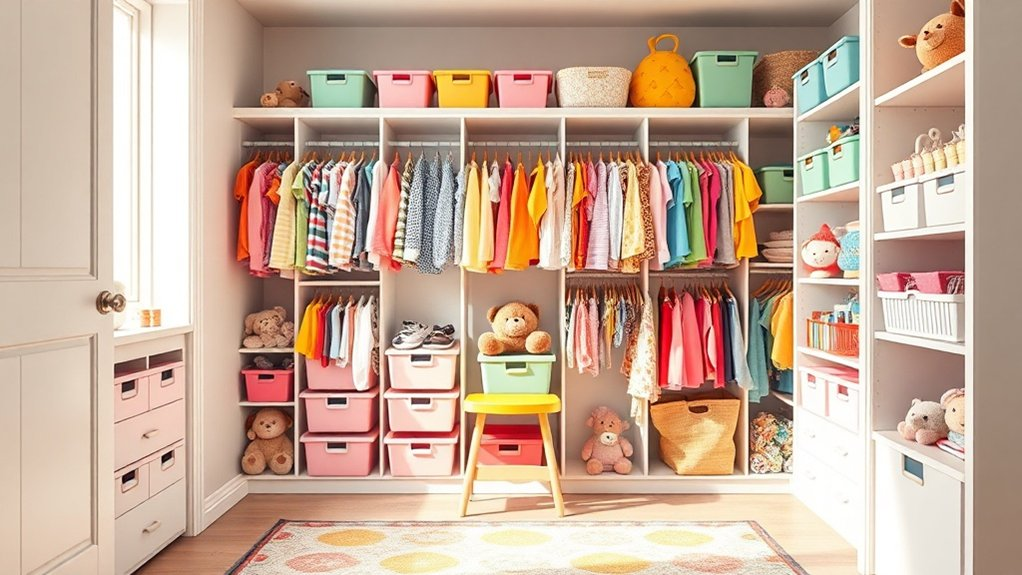
Transforming a kids’ closet into an organized haven doesn’t require a magic wand—just a few essential tools!
Start with hanging organizers to maximize vertical space and keep clothes visible. Add storage bins for toys and accessories; they’re perfect for seasonal rotation and make it easy to switch things up. Consider adding clear stackable drawers for easy visibility and vertical space savings clear stackable drawers.
Drawer dividers are a game-changer, helping separate socks from shirts, so kids can find what they need quickly. Don’t forget a labeling system; it not only makes everything easy to access but also teaches kids responsibility.
With these tools, you’ll create a clutter-free zone that encourages routine and independence.
Ready to jump in? Your child’s organized closet awaits! Consider using color-coded labels to help kids learn days of the week and make outfit selection easier.
Strategies for Categorizing Clothing and Accessories
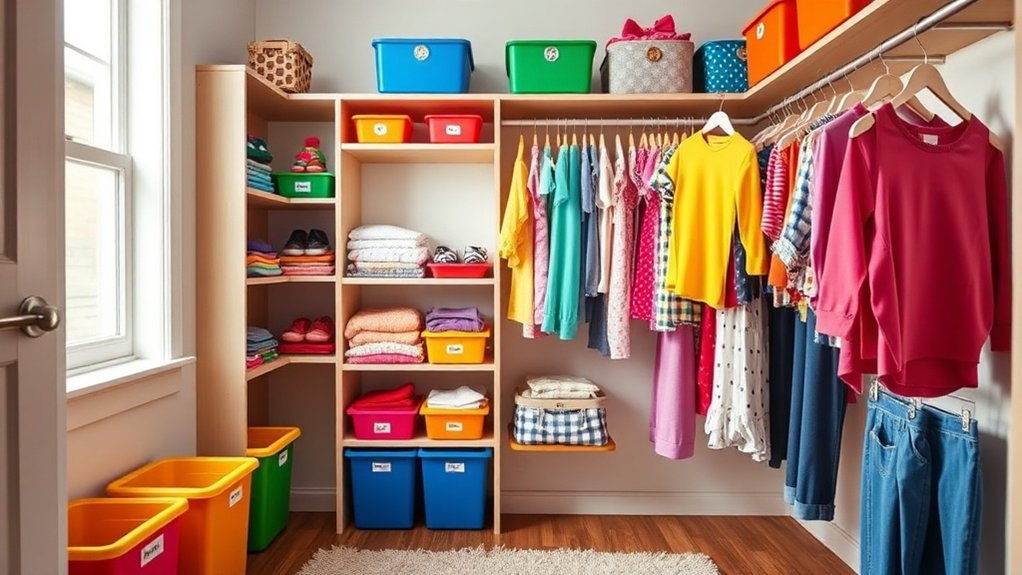
Organizing your child’s clothing and accessories can feel like a fun adventure, and breaking it down into clear categories makes the process much easier.
Start by implementing a seasonal rotation—store off-season clothes in bins to free up space. Next, try color coding; it not only looks appealing but also helps your child find what they need quickly. Consider using stackable storage baskets to maximize space in small closets.
Implement a seasonal rotation and color-code clothing to create an organized, appealing space that helps your child find items easily.
Group items by type, such as shirts, pants, and outerwear, within each color category. Consider adding labels to bins or shelves for extra clarity.
This approach not only simplifies dressing but also encourages responsibility. As you tackle this project, remember: a well-organized closet makes getting ready a breeze and can even spark your child’s creativity.
Consider choosing a compact closet system with adjustable shelves and rods to maximize space for growing wardrobes and small rooms, such as a compact closet solution that fits 2 to 4 feet wide.
Tips for Involving Kids in the Organization Process
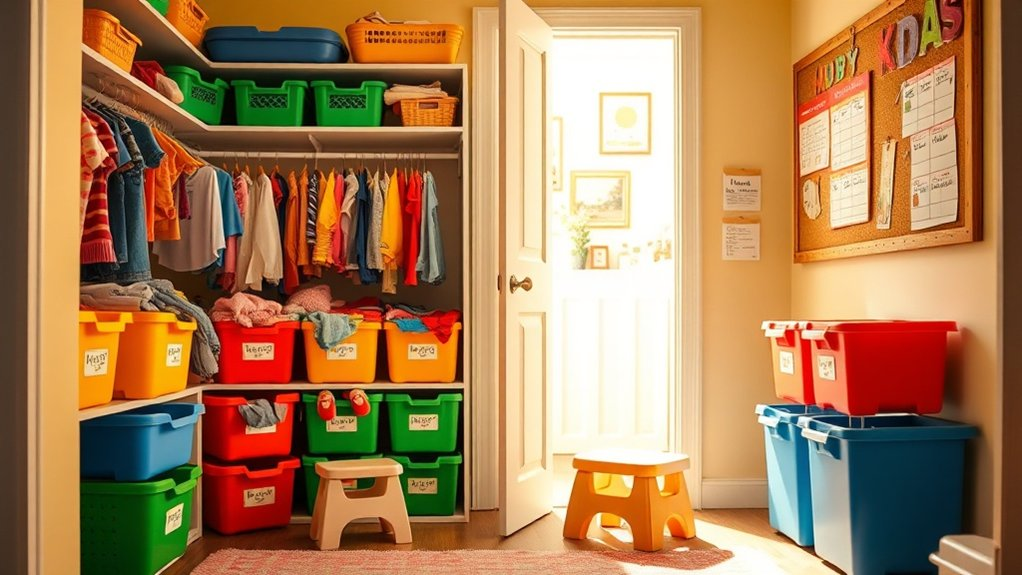
Getting your kids involved in the organization process can turn a chore into a bonding experience. Start with interactive sorting—let them decide which clothes to keep, donate, or toss. This helps build their decision-making skills and teaches them about ownership responsibility. Consider using clear bins and open shelves so items are visible and accessible for children.
Add some fun labeling; let your kids create colorful tags for their storage bins. This not only personalizes their space but also sparks their creativity. Use creative storage solutions like clear bins or baskets, making it easy for them to find their things.
As they engage, they’ll feel more connected to their space, making tidying up less of a hassle. Isn’t it rewarding to see them take pride in their organized closet? Consider incorporating a weekly outfit system with labeled cubbies to make mornings smoother.
Maintaining a Tidy Closet: Routines and Checklists
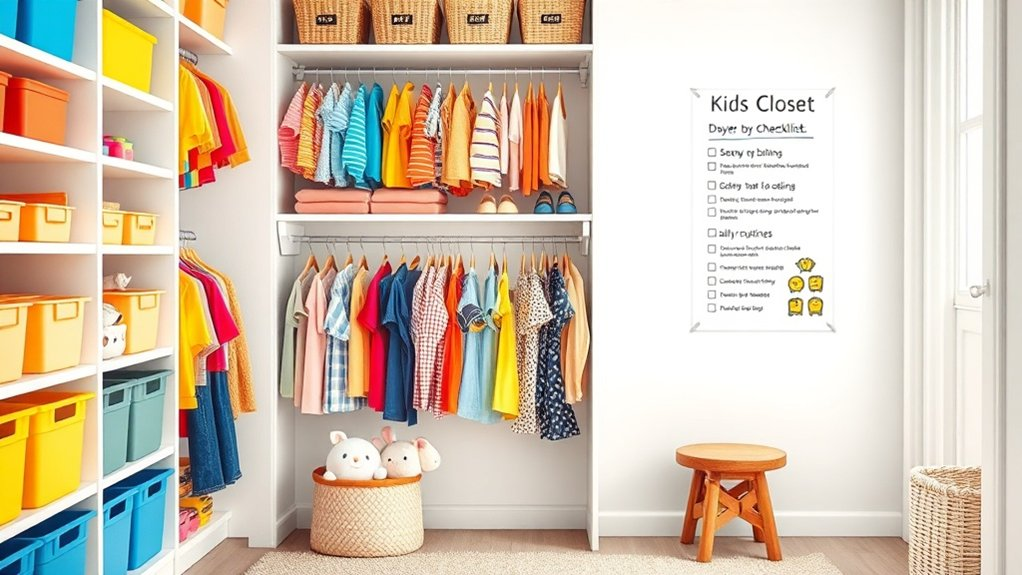
While it might seem challenging to keep a closet tidy, establishing simple routines can make a world of difference. Start by implementing clothing rotation; encourage your kids to place out-of-season clothes in bins or storage. This not only frees up space but also teaches them organization skills.
Next, introduce seasonal sorting. At the start of each season, have a fun check-in where you sift through clothes together. Ask questions like, “What do you love wearing?” or “Is there anything you’ve outgrown?”
Create a checklist to guide these activities, making them engaging and purposeful. By turning these tasks into regular routines, you’ll foster a sense of responsibility and pride in maintaining their space. A tidy closet can truly support their daily routine! Consider adding a closet door organizer to utilize vertical space for smaller items and improve accessibility. Adding a compact shoe rack can help keep footwear organized and free up floor space.
Conclusion
With a well-organized closet, kids can cultivate confidence and independence. Imagine the joy of discovering their favorite outfits easily, sparking smiles and style! By implementing simple systems and sharing the sorting task, you’re not just tidying up; you’re teaching valuable life skills. So, why not start today? Embrace the excitement of an efficient closet that supports your child’s routine and creativity. Together, you can create a cheerful, charming space that inspires daily adventures!