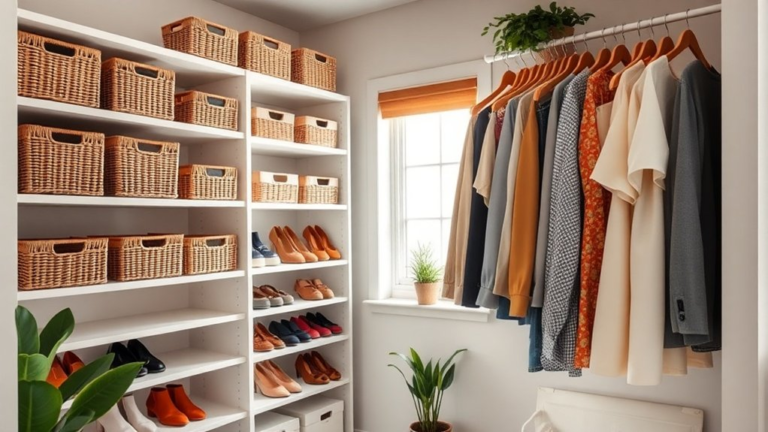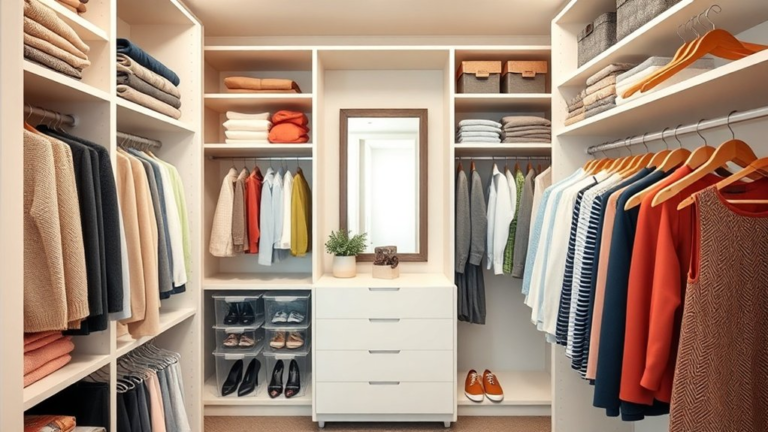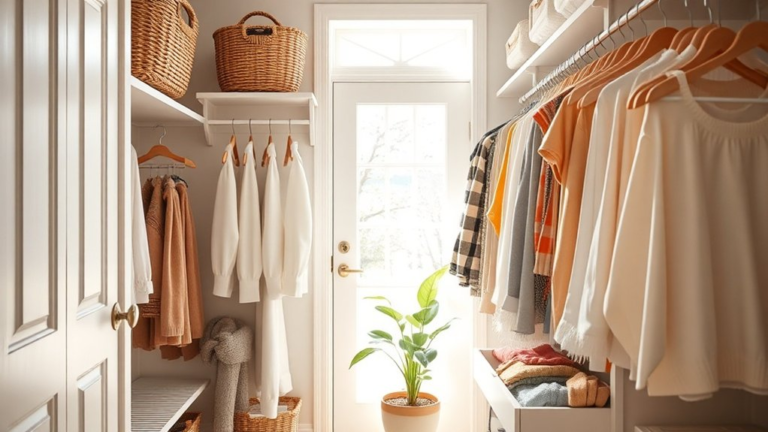
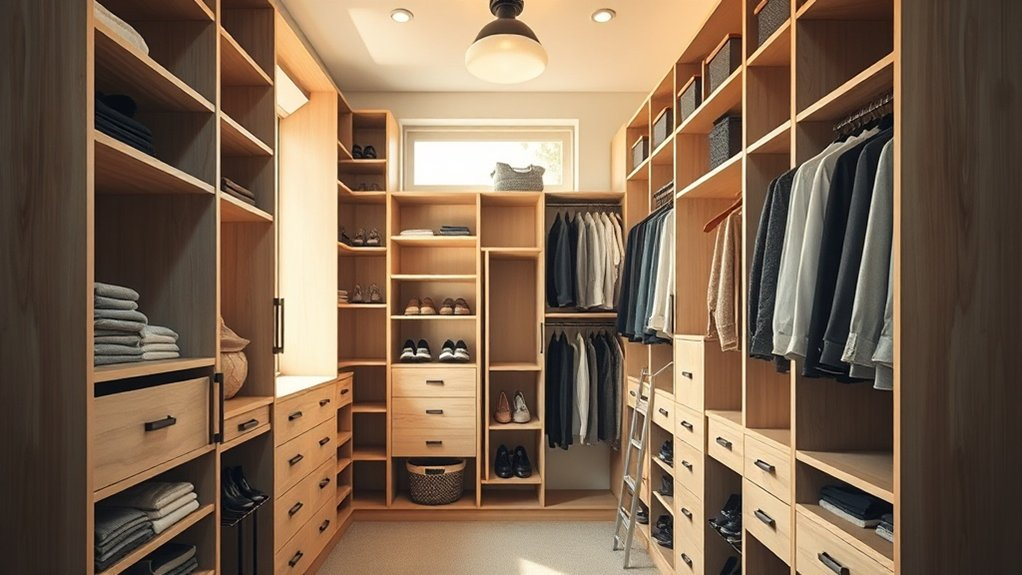
A closet can be a blank canvas, waiting to become a calm, efficient room that reflects how you live. Picture fitting every shoe, sweater, and keepsake into a space that feels roomy, not crowded. You’ll learn how to set clear goals, map measurements, and pick systems that suit your needs—built‑in, modular, or DIY. Ready to turn chaos into calm and make every inch matter?
Closet Highlights
- Measure walls, ceiling height, and door clearances to plan a tailored, space-maximizing layout.
- Use floor-to-ceiling shelving, stacked double rods, and slim towers to exploit vertical space.
- Choose modular or built-in systems based on flexibility needs, budget, and desired finish.
- Add smart accessories—pull-out drawers, hooks, hanging organizers, and shoe towers—for visibility and easy access.
- Budget for materials, hardware, labor, and a 10–20% contingency when comparing DIY versus professional installation.
Decide Your Goal: Measure and Map the Closet Space
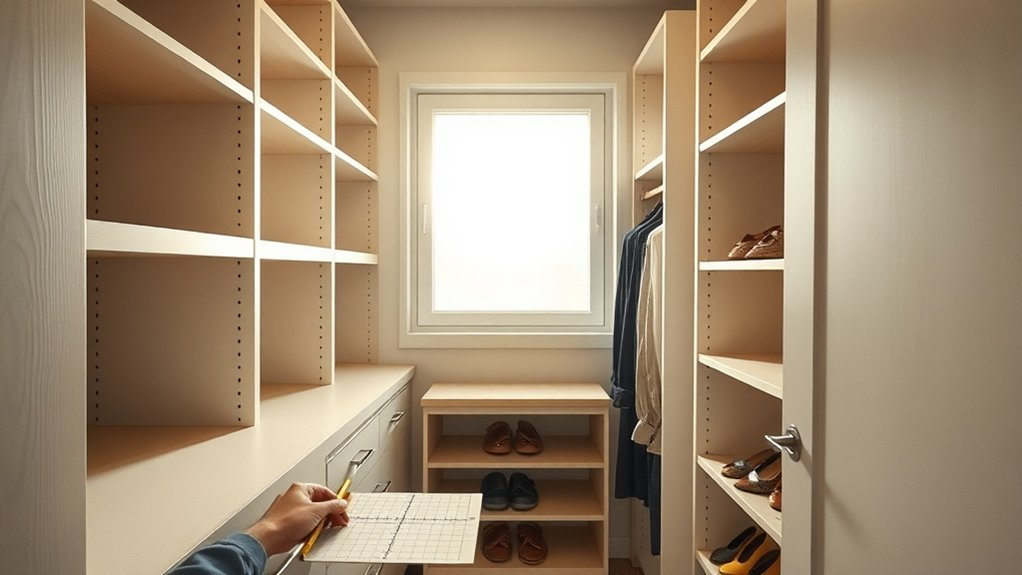
Before you buy shelves or hang another hanger, take a moment to decide what you want your closet to do for you and then measure it carefully so the plan fits reality.
You’ll start by listing design goals: more hanging space, seasonal storage, shoes, or a tidy work nook. Measure wall widths, ceiling height, and door clearances, jotting them on a simple sketch.
Think about who uses the closet and how often you reach certain items. That helps prioritize space utilization and keeps choices practical. Imagine mornings when everything’s within reach — that feeling guides decisions.
Now you’ve got data and intent, you’ll avoid wasted buys and confusion. Ready to turn that sketch into a plan that really works? Consider incorporating durable, versatile organizers like drawer organizers to optimize the space and ensure longevity. Also consider adding vertical storage solutions to make full use of available height.
You can also plan for adjustable shelving so your setup can change as your wardrobe and storage needs evolve.
Choose a System Type: Built‑In, Modular, or DIY Solutions
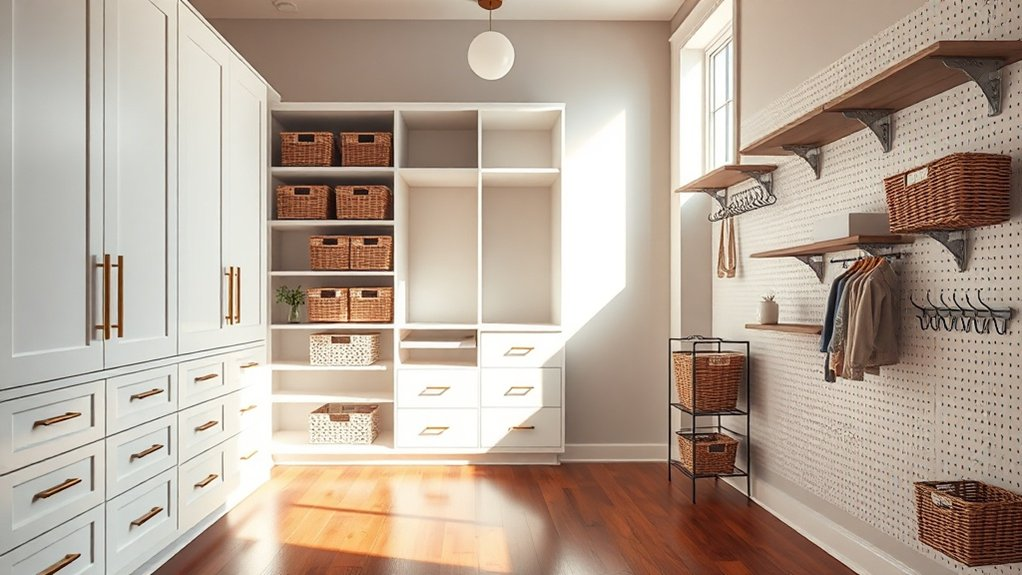
Which closet setup will make your mornings feel effortless? You’ll weigh built in benefits like seamless looks, permanent storage, and tailored fit that boosts space efficiency.
If you want easy updates and rearranging, consider modular flexibility—components snap together, shift, or expand as your needs change. Modular systems often offer vertical storage options that maximize floor space and improve accessibility. Many modular kits include adjustable shelves and rods to fit spaces from 2 to 8 feet wide, making them ideal for varied closet dimensions and customization.
Love hands-on projects? DIY creativity lets you personalize every shelf, hook, and finish on a budget, and gives proud ownership of the result.
Think about lifestyle, budget, and how long you’ll stay in your home. Do you prefer a polished, lasting upgrade or something adaptable?
Consider your lifestyle, budget, and tenure—do you want a refined, lasting upgrade or flexible adaptability?
Measure carefully, plan zones for daily routines, and choose materials that hold up.
Pick a path that makes getting dressed simple, joyful, and organized every day. A well-organized closet can save up to 30 minutes daily and noticeably improve morning efficiency.
Maximize Vertical Space With Double Rods, Shelves, and Towers
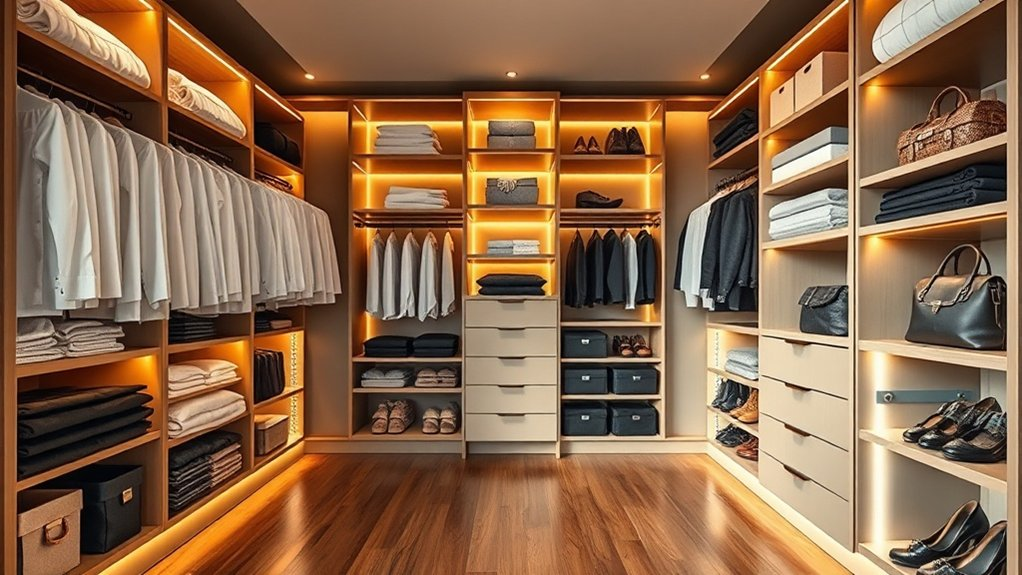
Think about swapping a single high rod for double hanging rods so you can store shirts above and below, instantly freeing up roomy floor space.
Add floor-to-ceiling shelves or a slim tower to hold shoes, boxes, and seasonal items, and you’ll see how much more you can fit without clutter. Consider using stackable organizers to build vertical storage that fits changing needs. Many people pair these with heavy-duty shelves to safely store bulkier items and maximize capacity.
Ready to reimagine your vertical space and make every inch work for you?
Consider adding multi-tiered organizers to maximize vertical storage while keeping items accessible.
Double Hanging For Shirts
If you want to make the most of every inch in your closet, double hanging for shirts is one of the smartest moves you can make. You’ll install two rods, one above the other, and suddenly that empty vertical space works for you.
Shirt organization becomes effortless when short items live above and below, so you can see everything at a glance. Choose sturdy rods and leave enough clearance for sleeves, then mix in shallow shelves or narrow towers for folded tees and accessories without blocking the rods.
You’ll save floor space and keep shirts crisp and accessible. It’s also wise to check available space before installation to ensure proper clearances and fit. Doesn’t it feel good to open a closet that’s tidy, efficient, and ready for your day?
Consider pairing double rods with space-efficient dividers to create tidy, customizable cubbies and make the most of vertical space. Adding adjustable shelving can further increase flexibility and accommodate changing storage needs.
Floor-To-Ceiling Shelving
Five simple changes can turn a cramped closet into a calm, ultra-organized space you actually enjoy using: fit rods, shelves, and narrow towers from floor to ceiling to capture every inch of vertical real estate.
You’ll want double rods for shirts and blouses, stacked so nothing wrinkles and every hanger is reachable. Install adjustable shelves and slim towers for shoes, bags, and folded sweaters, choosing shelving materials that match your budget and hold weight confidently. Consider adding stackable storage baskets to maximize vertical space for lightweight items.
Think through design aesthetics: clean white for a bright feel, warm wood for cozy vibes, or metal for modern edges. Can you picture the relief of seeing everything at a glance?
Start with a plan, then add hooks, baskets, and labels. You’ll love the result. Consider modular units like adjustable shelves to customize spacing and maximize capacity. Also consider incorporating door organizers to utilize the often-overlooked back of the door for added vertical storage.
Use Smart Accessories: Pull‑Outs, Dividers, Hooks, and Vertical Organizers
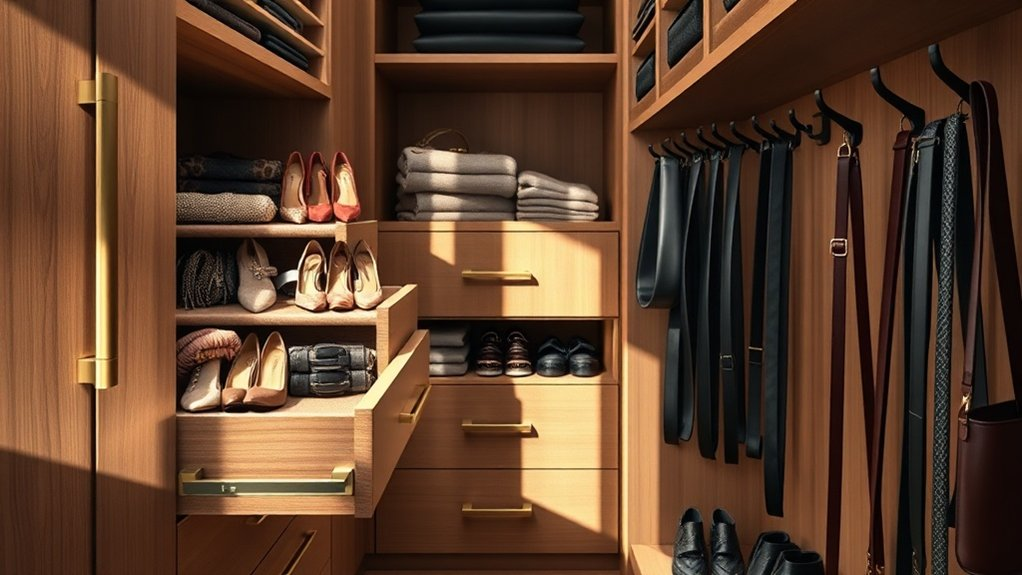
Smart accessories like pull‑outs, dividers, hooks, and vertical organizers can turn a messy closet into a calm, efficient space you’ll actually enjoy using.
Smart accessories—pull‑outs, dividers, hooks, vertical organizers—transform a messy closet into a calm, efficient space you’ll love.
You can add pull out drawers for shoes or small items and hanging organizers for sweaters, belts, or scarves, making everything reachable and visible. A clear layout plan with measured zones helps allocate storage where it’s needed most closet planning.
Think about how a simple hook keeps a daily bag ready, or a vertical organizer stores folded tees without crowding shelves. Stackable designs are especially useful when you need to maximize vertical space.
You’ll save time and feel lighter each morning.
- Add pull out drawers to access shoes and accessories without bending.
- Use dividers to separate linens, socks, and seasonal items.
- Install sturdy hooks for bags, hats, and robes at eye level.
- Fit vertical organizers for folded clothes and slim storage.
Closet organization websites often recommend starting with a clear plan and measuring your space to choose the right system for maximum efficiency; see Transform Your Closet for guidance.
Solve Corners and Odd Angles With Custom Shelves and Lazy Susans
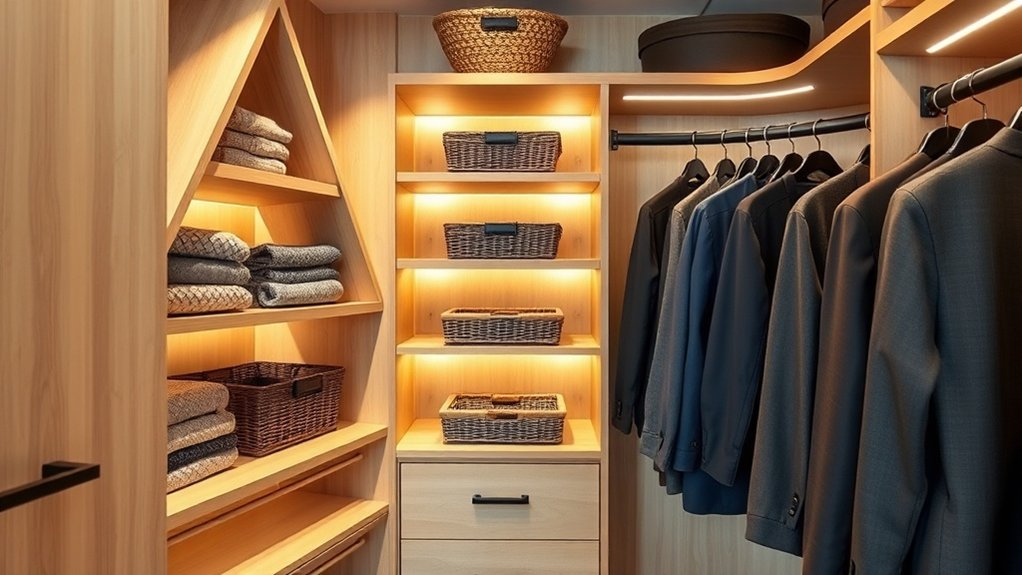
Corners and odd angles don’t have to be closet dead zones—you can turn them into clever, useful pockets of storage that make your life easier.
When you face awkward corners, think corner solutions: quarter-round shelves, triangular cubbies, or rotating lazy Susans that pull everything into reach. Stackable storage options can be incorporated into these layouts for extra vertical capacity. Custom designs let you match height, depth, and finish so the space feels intentional, not patched together.
You’ll save time searching and keep items visible, from handbags to bins. Want to store shoes, accessories, or folded sweaters? A tailored shelf layout handles it.
Consider adding a lazy Susan for deep, hard-to-reach spots; it spins, reveals, and keeps clutter at bay. Small changes, big impact—try one and feel the difference.
Many modular systems include adjustable shelves so you can tailor vertical space for shoes, bins, or taller items. Adding stackable bins can further maximize vertical storage and keep lighter items organized.
Budgeting and Installation: Cost, Tools, and When to Hire a Pro
You can get a clear picture of what a functional closet will cost by breaking expenses into categories like materials, hardware, and labor, so you’ll know where to save and where to invest. Consider investing in reinforced materials like steel pipes for long-term durability.
Decide whether a DIY install fits your skills and schedule—simple shelf kits and basic tools can keep costs low, but complex layouts or heavy cabinetry might be worth hiring a pro.
What level of time, tools, and stress are you willing to take on to get the closet you want? Consider incorporating stackable designs to maximize vertical space and reduce the need for additional shelving. Also consider adding clear storage bins for visibility and efficient use of vertical space.
Estimated Costs Breakdown
A clear budget makes the closet you want feel within reach, not like a distant dream. You’ll use cost comparisons and review material options to set realistic expectations, balancing quality and price.
Think about shelves, rods, hardware, and accessories; small changes add up, but clever choices stretch dollars further. Will you prioritize durability or style? That answer guides spending. Consider choosing waterproof PP plastic for areas prone to moisture to extend longevity without large expense. Consider adding stackable bins to maximize vertical space in shallow closets.
- Basic systems: affordable materials, lower upfront cost, good for short-term plans.
- Mid-range: better finishes, sturdier hardware, great value for long-term use.
- Premium/custom: highest cost, tailored fit, strongest materials, lasting investment.
- Hidden costs: shipping, finishing, minor tools, unexpected fixes.
Plan a 10–20% contingency. Track expenses, adjust priorities, and stay excited about the result. Consider investing in space-saving hangers to maximize capacity without major renovations.
DIY vs Pro Installation
Now that you’ve mapped out costs and priorities, it’s time to decide who’s putting the system together. You’ll weigh DIY Benefits like lower labor fees and hands-on satisfaction against Professional Expertise that speeds work and handles tricky Installation Techniques. Consider whether your space suits modular products like adjustable shelving for future changes. Prioritize high-traffic areas to get immediate impact from your new layout.
Think about Cost Considerations: materials, tools, and possible mistakes that raise bills. Consider Time Investment too — do you have weekends to spare, or do you need it done fast?
Ask about Project Complexity and whether your layout calls for custom cuts, wiring, or wall reinforcement. Explore Customization Options with a pro if you want built-ins that fit just right.
Professionals offer Quality Assurance and warranties, which ease stress. Ready to take it on, or call someone who’ll guarantee the finish? Consider systems that use stainless steel for durability and low maintenance when choosing materials.
Conclusion
You’ve got the plan and the tools to turn clutter into calm, using every inch with purpose. Whether you pick built‑in polish, modular flexibility, or a DIY refresh, small choices—double rods, pull‑outs, custom corners—make big gains. Ready to reclaim your space and simplify daily life? Start with a clear goal, measure carefully, and pick the solutions that match your routine and budget. You’ll love how much easier mornings feel.