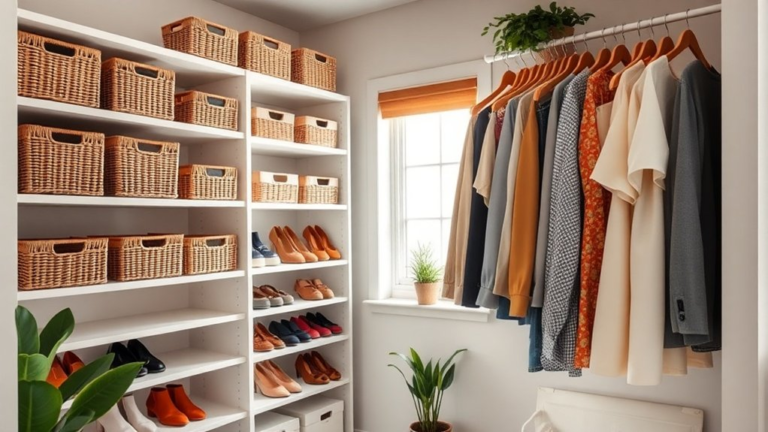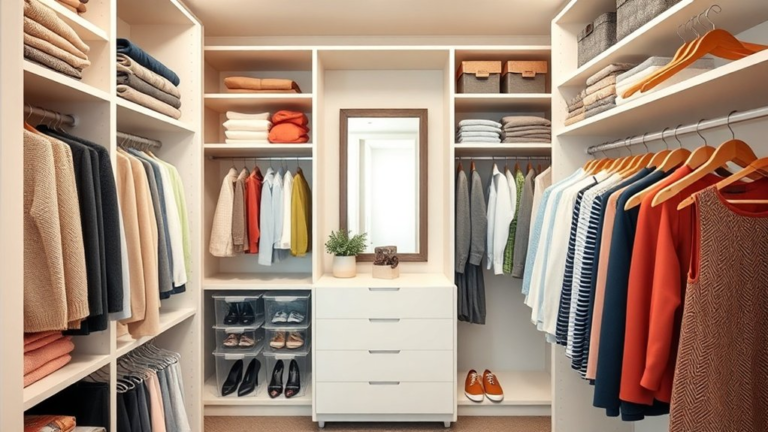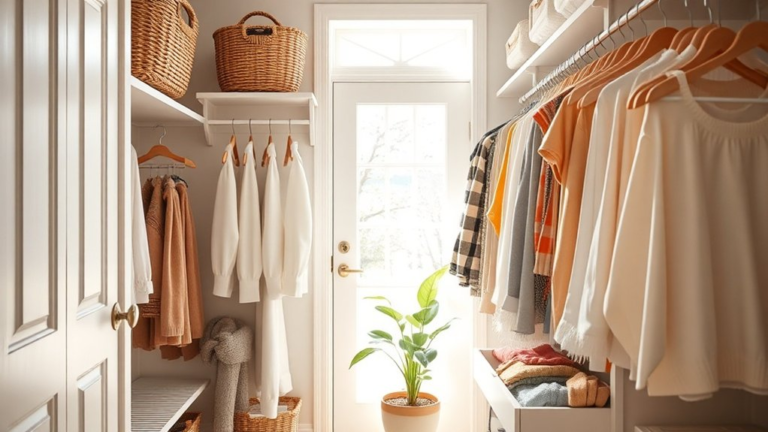
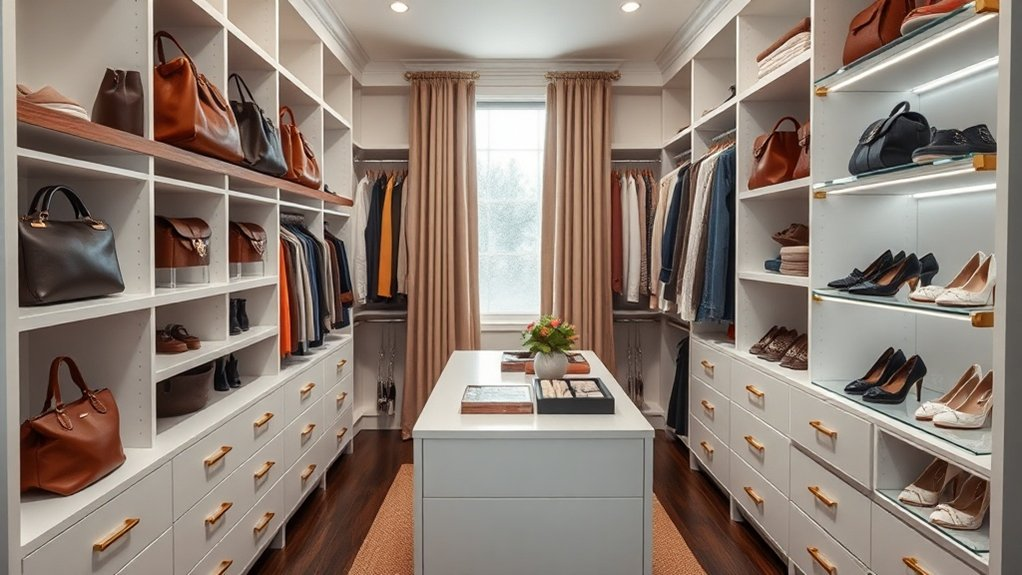
Most people don’t realize that a few inches of extra shelf or a shifted rod can double your usable closet space, and that small change sparks big daily relief. You’ll find simple measuring tricks, layouts that match how you live, and modular pieces that grow with you. Want a system that makes mornings calmer and keeps every shoe and accessory visible? Let’s map your priorities and build a plan that fits.
Closet Highlights
- Measure height, width, and depth at multiple points, and note doors, vents, and switches before planning layout.
- Prioritize zones: hanging for daily wear, shelves/drawers for folded items, visible shelves for shoes, and trays/hooks for accessories.
- Use vertical solutions—double rods, taller organizers, and adjustable shelves—to maximize capacity and accessibility.
- Choose modular components (adjustable rods, shelf inserts, anti-tip kits) for flexible, stable organization.
- Maintain weekly tidies, seasonal rotations, and regular hardware checks to prevent damage and preserve function.
How to Measure Your Closet for a Functional System
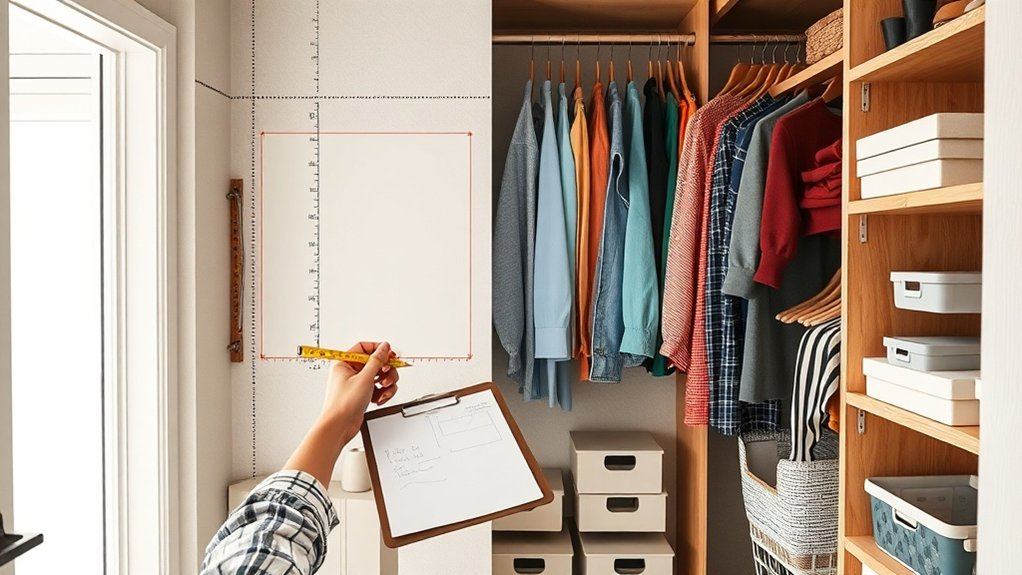
Before you buy a system, take a moment to really measure your space so the pieces you choose fit and work the way you want them to. You’ll want a tape measure, level, and pencil among your measuring tools, plus a notepad or phone to record closet dimensions.
Start by measuring height, width, and depth at several spots, since walls and floors aren’t always perfectly straight. Note doors, vents, and light switches so nothing blocks access. Measure existing rods and shelves if you plan to reuse them. Consider measuring for adjustable shelving to ensure future flexibility. Using accurate measurements also helps you choose the right organizers, such as drawer organizers or shelf dividers, that will actually fit and perform as expected.
Measure height, width, and depth in multiple spots; note doors, vents, switches, and any existing rods or shelves.
Sketch a simple floor plan and mark where you’d like adjustable shelving or hanging space to go.
How would having precise measurements change your shopping and installation? It makes planning faster, decisions clearer, and results more satisfying.
Also consider choosing no-drill components when possible to simplify installation and avoid wall damage.
Decide Your Storage Priorities: Clothes, Shoes, or Accessories
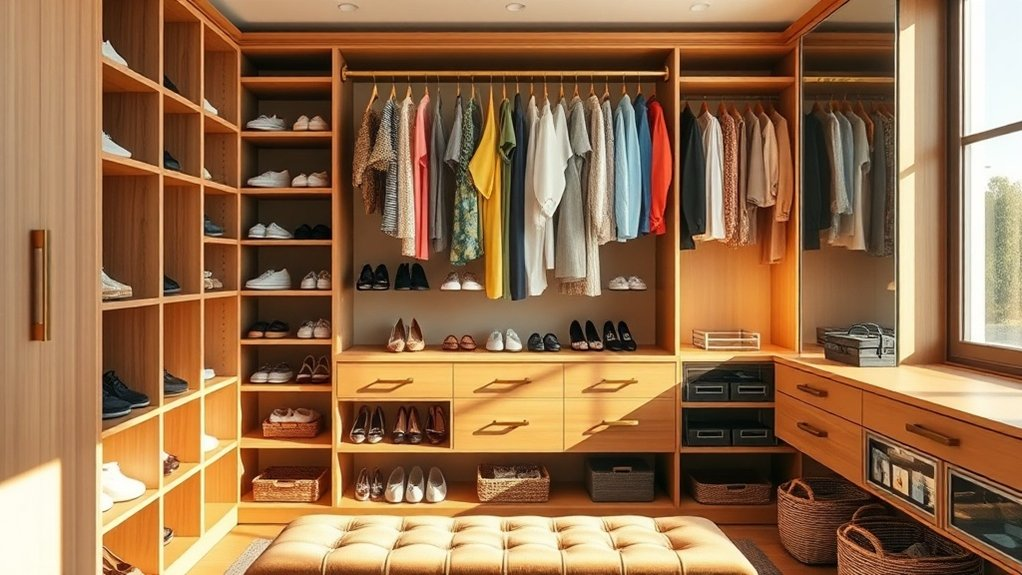
Who do you want your closet to serve most—your daily outfits, a growing shoe collection, or the little things that make getting ready easier?
Decide by listing how you use the space each day. If clothes dominate, prioritize hanging and folded zones; if shoes spark joy, add visible shelving; if accessories finish your look, invest in drawers, trays, and hooks. Consider vertical storage options like tiered organizers to free up floor space and keep essentials accessible.
Set clear storage priorities so every inch earns its keep. Consider modular, stackable options like stackable bins to maximize vertical space and adapt as your needs change.
Think about ease: what do you reach for first each morning? Use simple organization strategies like grouping items by frequency and function, labeling bins, and keeping daily essentials at eye level.
Start small, adjust as you live with it, and celebrate the calm that thoughtful choices bring.
Consider choosing modular systems that maximize vertical and horizontal space to make the most of your closet.
Choose the Right Closet Layout for Your Space
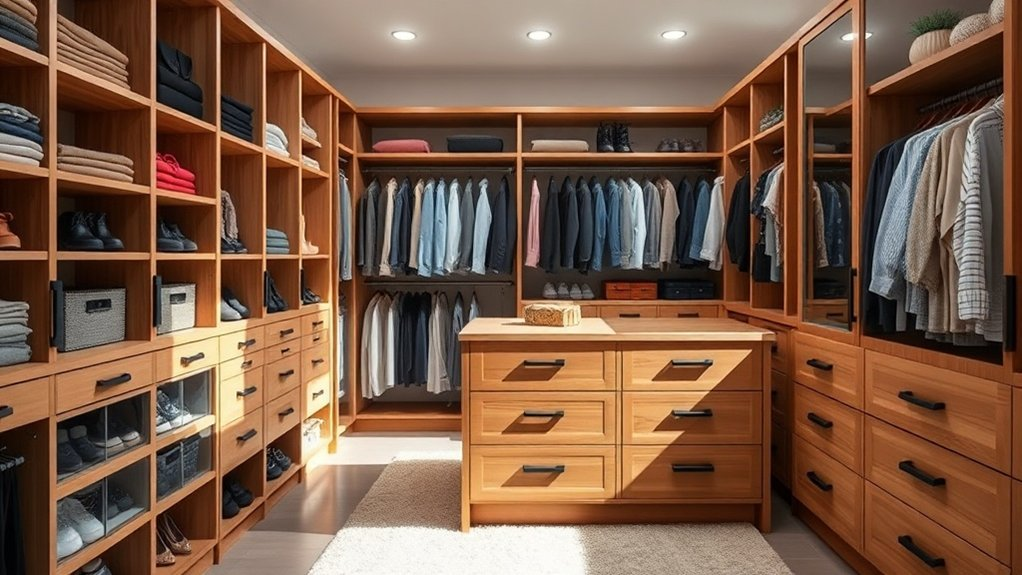
Start by measuring your available space so you know exactly what you’re working with, then picture how people will move around the closet to avoid awkward jams.
From there, plan clear storage zones for hanging clothes, shoes, and accessories so everything has a home and feels easy to reach. Consider grouping items by frequency of use and using vertical organizers to maximize capacity.
What small change could make your daily routine smoother?
Consider adding taller organizers to maximize vertical space and keep items accessible, especially when storing multiple types of items like shoes and accessories with adjustable features. Adding space-saving hangers can instantly increase hanging capacity without a major remodel.
Measure Your Available Space
One clear measurement can change how your whole closet looks and feels, so grab a tape measure and a notepad and get ready to map your space.
Start by recording closet dimensions: width, depth, and height, plus door swing and any built-ins. Measure from floor to ceiling and note obstacles like vents or light switches. Consider including stackable storage bins in your measurements to ensure they fit existing shelves and utilize vertical space.
Sketch a simple floor plan, mark shelves, rods, and outlets, then think about how you use the space. Which items need hanging vs. folding? How many shoes do you own? Those answers guide smart space utilization. Consider adding stackable storage baskets to make the most of vertical space when sketching your layout.
When you measure carefully, you avoid wasted space and costly mistakes.
Ready to design a closet that fits your life? Accurate measurements make that possible.
Consider also using stackable storage to maximize vertical space and keep smaller items organized.
Assess Traffic Flow
How do people move through this space, and where do you want them to pause? Think about traffic patterns so you can shape a closet that feels easy and calm.
Walk the room and note where someone naturally turns, stops to pick an outfit, or reaches for shoes. Imagine your typical user flow — a quick grab in the morning, or a relaxed browse on weekends — and design pathways that support both. Consider adding vertical storage to make the most of unused height and keep pathways clear.
Keep main aisles clear, allow elbow room near drawers, and place frequently used items along the smoothest routes. Small changes, like shifting a hanging rod or narrowing a shelf, can open movement and reduce frustration.
You’ll create a closet that invites use, feels efficient, and makes daily dressing a pleasure. Consider incorporating functional closet systems to organize clothes, shoes, and accessories for maximum efficiency. Add adjustable shelving and modular components for custom storage that adapts as your needs change.
Plan Storage Zones
Now that you’ve watched how people move through the closet, think about arranging the space into clear zones so everything has a logical place.
Start by grouping items by use: daily wear near the door, seasonal pieces higher or tucked away, and accessories in easy-to-see spots. Consider adding stackable storage bins for lightweight items to keep small accessories and off-season pieces tidy and visible. Add a low-profile 3 Tier Bamboo rack near the floor to keep frequently worn shoes organized and accessible.
You’ll want shoe storage by the floor, hanging clothes at eye level, and drawers for folded items.
This storage organization keeps morning routines smooth and reduces decision fatigue.
Consider sight lines and reach, so nothing requires a ladder or awkward stretching.
A functional design balances accessibility with neatness, and it feels calming every time you open the door.
What small change could make your closet work better for you right now?
Multi-layer and cascading hanger systems can free significant vertical space and simplify outfit selection, especially when you use space-saving hangers to group similar items.
Essential Modular Components for Clothes, Shoes, and Accessories
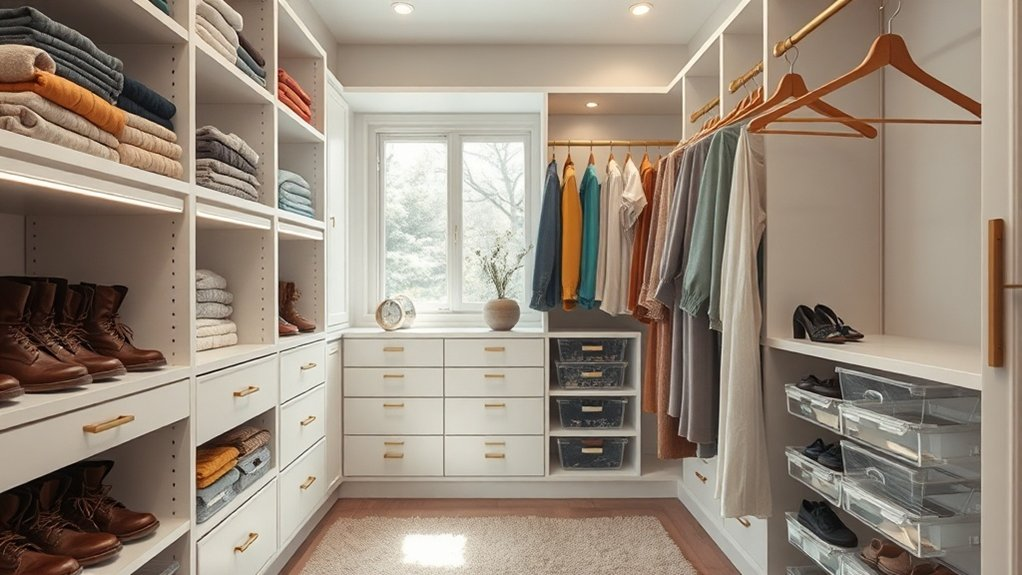
Think about how modular hanging rods can make your everyday outfits easier to organize and reach, giving you flexible zones for shirts, jackets, and seasonal pieces.
Pair those rods with adjustable shelf inserts and you’ll create tidy stacks for sweaters, bins for accessories, and clear sightlines for shoes, all sized to fit your needs. Consider systems that include anti-tip kits to keep taller units stable and safe.
Ready to pick components that grow with you and make getting dressed a little bit joyful? Consider systems with adjustable shelves to match changing storage needs over time. Durable options like steel construction help ensure long-lasting support and resistance to wear.
Modular Hanging Rods
Modular hanging rods are the backbone of a functional closet, giving you flexible, sturdy places to hang clothes, shoes, and accessories so everything stays visible and within reach.
You’ll love how modular designs let you mix heights and lengths to fit dresses, shirts, and scarves without wasting space. These hanging solutions make switching layouts simple, so you can adapt as your wardrobe changes.
Install double rods for more short items, or create a long rod for gowns and coats. Choose strong materials and secure brackets to keep things steady. Many people pair rods with adjustable shelves to maximize vertical storage and organization.
Want easier mornings and less clutter? This is how you get them. Try different configurations, and enjoy a closet that feels calm, smart, and truly yours. Consider using reinforced plastic or metal components for enhanced durability and weight capacity. Newer systems often include customizable options to tailor layouts precisely to your space and needs.
Adjustable Shelf Inserts
If you’ve set up hanging rods that make outfits easy to find, adding adjustable shelf inserts will bring the same freedom to folded clothes, shoes, and accessories.
You’ll love how adjustable height options let you customize spacing for sweaters, sneakers, or handbags, so everything has a proper place. Choose shelf materials that match your style and needs—wood for warmth, laminate for easy cleaning, or wire for airflow.
Inserts slide in and out, making seasonal shifts simple, and you can mix drawer fronts or baskets for small items. Want quick access to a favorite pair of shoes? Move a shelf down.
Want more shoe stacks? Raise another. These inserts invite you to engage, adapt, and keep your closet tidy and joyful. Durable options like waterproof plastics and premium finishes can extend longevity and style, especially when paired with stackable bins for vertical space optimization. Adding adjustable organizers can help maximize vertical space and accommodate different shoe styles and sizes. You can also pair them with over-the-door organizers to expand storage without taking up floor or shelf space.
Adjustable Shelving and Hanging Solutions That Save Space
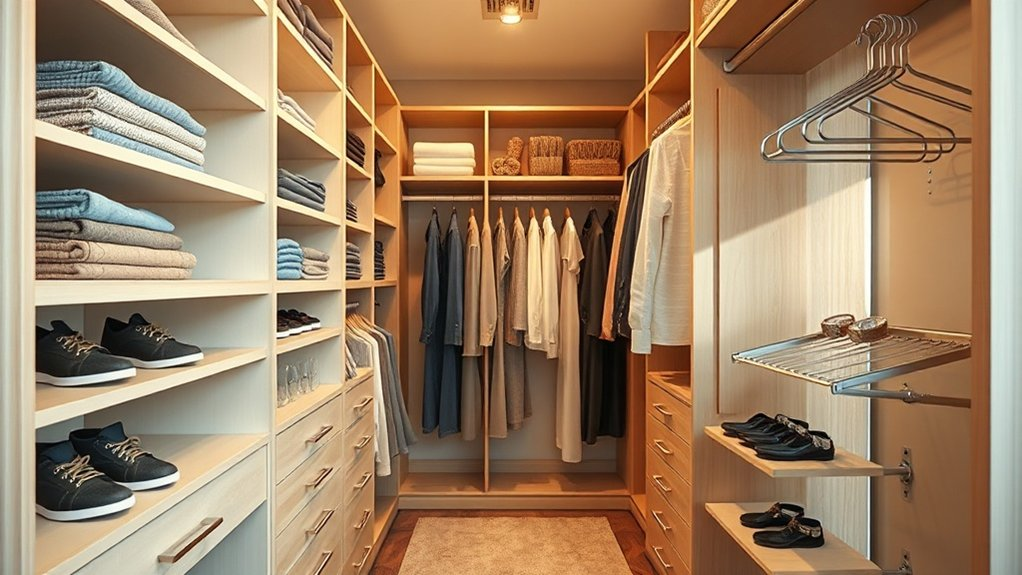
A few smart tweaks to your closet—like adjustable shelves and clever hanging options—can instantly free up space and make every item easier to find.
You’ll love how space saving solutions and flexible configurations turn clutter into calm: move shelf heights for stacks of sweaters, add pull-out rods for outfit planning, and install double-hang sections for shirts and pants. Consider adding a freestanding rack with adjustable shelves to expand storage without built-in construction. Many people also combine these with stackable clear bins to maximize vertical space and keep smaller items organized.
Use slim, sturdy hangers and cascading hooks to fit more without crushing fabrics.
Think vertical: tall cubbies, adjustable baskets, and a sliding rail make use of high walls.
Want easier access? Try swing-out rods or removable shelves you can reposition in minutes.
These upgrades feel manageable, cost-effective, and they invite you to keep your closet tidy and joyful every day.
Consider adding a hanging organizer with multiple compartments to separate shoes, accessories, and folded clothes for faster retrieval.
Smart Shoe Storage Options for Small and Large Collections
Though shoe clutter can sneak up on anyone, you can reclaim your floors and your peace of mind with smart storage choices that fit both tiny and massive collections.
You’ll find shoe rack innovations that adapt to changing needs, from stackable cubes to slim, rotating carousels that save floor space. For small wardrobes, clear pull-out drawers and over-the-door pockets keep favorites visible and ready.
For larger collections, think vertical storage solutions like tall, adjustable shelving or wall-mounted slots that display pairs without chaos. Many of these options include adjustable shelving to accommodate different shoe heights and maximize space. Want easy access? Slide-out trays and labeled shelves make mornings smoother.
Mix open and enclosed options to protect delicate pairs while showcasing everyday shoes. Which setup would make your routine calmer and your closet happier? A compact solution like a 10-Tier Shoe Rack can maximize vertical space in tight entryways.
Accessory Organizers That Keep Jewelry, Belts, and Bags Visible
You’ve tamed shoe chaos, now bring that same clarity to the smaller pieces that finish an outfit: jewelry, belts, and bags deserve a home that keeps them visible and useable.
Start with jewelry trays and drawer organizers so necklaces and rings don’t tangle, and you can grab what you need in seconds.
Mount belt hooks or a slim multi tier hanger for scarves and belts, keeping lines neat and accessible.
Bag racks and wall mounted storage show purses at eye level, saving shelf digging and honoring favorite pieces.
Add display stands for statement jewelry that doubles as decor.
Keep a few travel cases ready so accessories stay protected when you head out.
Which items would you reach for first when everything is on display?
Budget-Friendly Upgrades and DIY Tweaks That Make a Big Difference
When you’re working with a tight budget, small changes can make your closet feel like new without breaking the bank.
You’ll find that a few thoughtful budget hacks and simple DIY solutions lift function and mood, so you’ll enjoy getting dressed each day.
Try low-cost swaps and hands-on tweaks that don’t need special skills, just a little time and creativity.
No special skills required — just small, low-cost swaps and a bit of creativity to refresh your closet.
Ready to make a change?
- Add tension rods for extra hanging space and shoe shelves.
- Repurpose baskets and boxes for visible, tidy storage.
- Install peel-and-stick hooks for bags and scarves.
- Paint or wallpaper the back wall for an instant refresh.
- Create scented sachets to keep things fresh and inviting.
Each idea’s quick, affordable, and rewarding—what will you try first?
Care and Maintenance Tips to Keep Your Closet Working Longer
Because a well-cared-for closet saves you time and stress, spending a little regular attention on it pays off big, fast.
Set simple cleaning schedules—weekly quick tidies and a deeper monthly sweep—to keep dust and mildew away. Use product recommendations like microfiber cloths, gentle cleaners, and cedar blocks for scent and pests.
Keep storage organization consistent: label bins, group like items, and leave space to breathe. Plan a seasonal rotation so heavy coats and sandals swap places smoothly, reducing wear.
For damage prevention, check hardware, tighten screws, and avoid overloading shelves. Learn basic material care for wood, metal, and fabric so each piece lasts.
Want a closet that feels fresh and reliable every day? Make these small rituals yours.
Conclusion
You’ll enjoy a closet that works for you when you measure, prioritize, and pick modular pieces that adapt as life changes. Studies show people spend about 12 minutes a day deciding what to wear—imagine reclaiming that time with clear zones for clothes, shoes, and accessories. Start small: add adjustable shelves or a shoe solution, then tweak. Will you feel calmer each morning with a tidy, functional closet? You’ll know quickly.