You can tame a kid’s closet by zoning it for reach, routine, and ease: keep daily outfits at kid height, shoes and bins low, and seasonal items up high. Use low hooks, double rods, stackable baskets, and clear labels so your child can choose and return things independently. Set a short daily tidy and a monthly swap for size or season changes. Want simple setups for tiny reach-ins, walk-ins, or teen wardrobes? Learn more practical layouts next.
Closet Highlights
- Map reach zones (easy grab, stretch, out-of-sight) and store daily items at child height for independence.
- Use double rods, low hooks, and stackable bins to maximize vertical space in single-door reach-ins.
- Create a weekly grab-and-go outfit stack and label bins for seasonal rotation and quick decisions.
- For toddlers use low rods, chunky hangers, and picture labels; for school-age kids use morning-ready zones and adjustable shelving.
- Implement a five-minute daily tidy plus monthly seasonal resets to maintain order and manage outgrown clothing.
Primary Intent and Format: Quick How-To Guide for Organizing Kids’ Closets
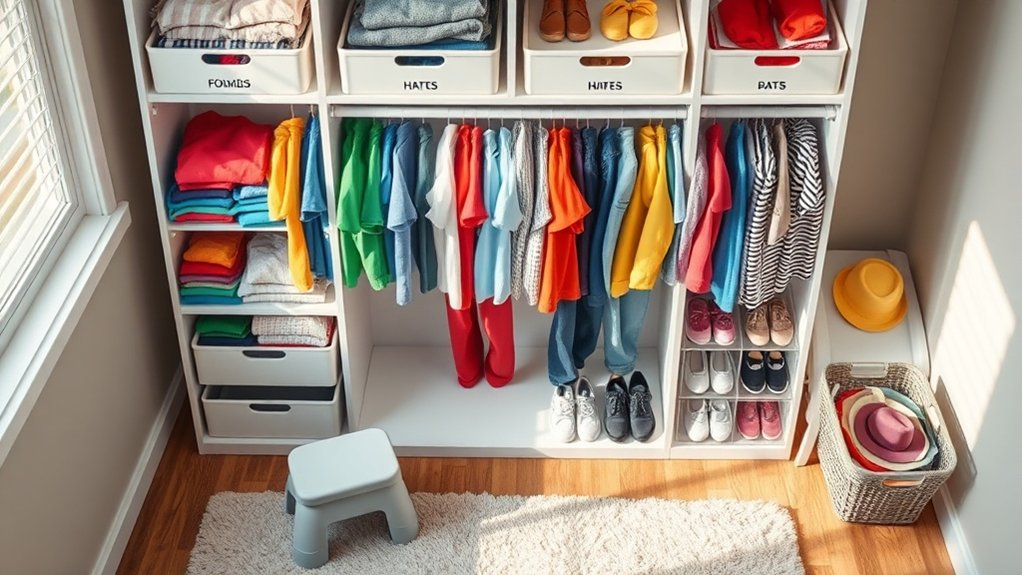
Ready to make your child’s closet work for you? You’ll find this quick how-to guide focuses on purpose and simple format, so you can act fast and feel confident.
It’s meant to help you create a system that your child can follow, not a perfect design you’ll never use. You’ll get clear steps: sort, assign spots, add easy labels, and set routines. Consider using stackable baskets to maximize vertical space and keep frequently used items accessible.
Each step is short, practical, and repeatable, so you’re not overwhelmed. Think about what you want the closet to do daily — give easy access, reduce decisions, and encourage tidy habits.
Keep steps short, practical, and repeatable so kids aren’t overwhelmed — aim for easy access, fewer choices, and tidy habits.
Ready to try one small change that makes mornings calmer? Start with a single shelf or bin, and build from there. Consider including adjustable options like removable bins to help the closet grow with your child. You can also incorporate vertical storage solutions to make the most of limited space.
How to Assess a Closet Fast: Reach, Capacity, and Kid Needs
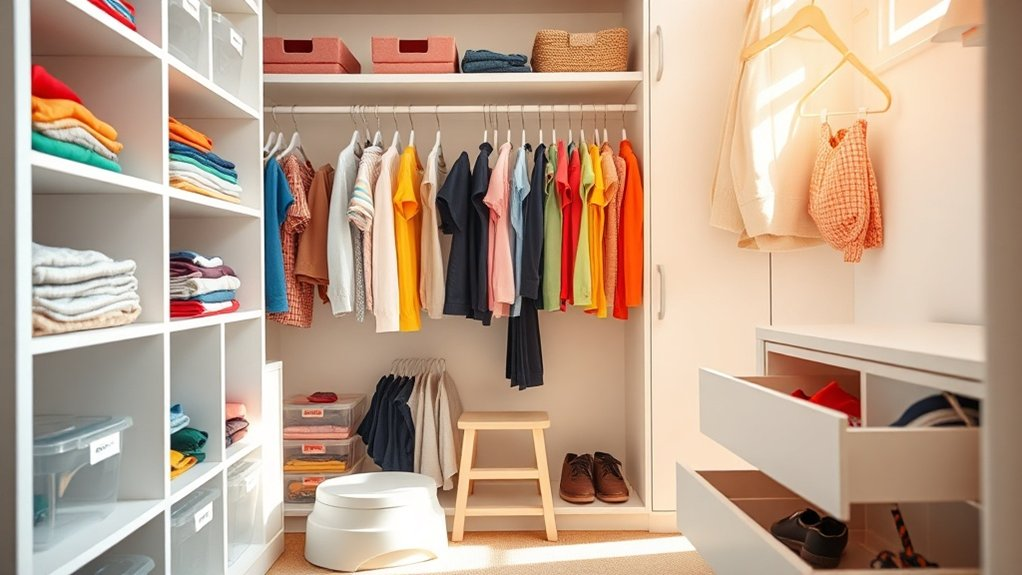
Start by mapping the reach zones in your child’s closet—what’s within easy grab, what’s a stretch, and what’s out of sight—and ask yourself which items should live in each.
Compare the space you actually have to what your child needs day to day, remembering that shoes, everyday tops, and favorite toys should be most accessible.
With that quick snapshot, you’ll know where to move things, add bins, or lower a rod so your kid can dress with confidence.
Consider adding a Kids Clothes Organizer with color-coded shelves to make daily outfit choices easier.
Also consider using stackable storage to maximize vertical space for toys and seasonal items.
Reach Zones Defined
Think of reach zones as the map to a kid’s closet—you’ll use them to decide what goes where so everything’s easy for your child to find and put away.
Start by standing in front of the closet and noting eye level, knee level, and high shelves you can reach. Ask yourself what your child grabs most, and place daily items within easy reach. Use labels and consistent spots so habits form fast. Consider incorporating modular systems to adapt storage as your child grows. Consider adding stackable organizers to make the most of vertical space and keep items sorted by use.
- Top zone: rarely used, seasonal items
- Eye level: favorites, jackets, frequently worn tops
- Lower level: shoes, bins for toys or socks
- Floor level: bulky items, play baskets
This simple system saves time, builds independence, and reduces stress for everyone. Consider adding vertical solutions like over-the-door organizers to maximize space in small closets.
Capacity Versus Needs
Because every child’s wardrobe and routines are different, you’ll want to match the closet’s real capacity to your kid’s actual needs before you start moving things around.
Take a quick inventory: count daily outfits, sweaters, shoes, and seasonal extras. Measure hanging space and shelf depth, then compare that to what your child actually wears. Consider adding space-saving hangers or tiered organizers to maximize what you already have. Adding a 6-tier organizer can instantly increase accessible shelf space without major renovations.
Can they reach jackets? Is there room for school uniforms and play clothes without crushing hangers? Think about laundry frequency, growth spurts, and hand-me-down influx.
You don’t need perfection, just honest limits. When capacity and needs align, mornings become smoother and choices feel manageable.
Ready to adjust shelves, add bins, or shift rods? Small changes make a big, calming difference for your child—and for you. Consider consulting closet organization principles to guide efficient, lasting changes.
Tiny Closets & Shared Spaces: Space-Saving Stacking and Rotation
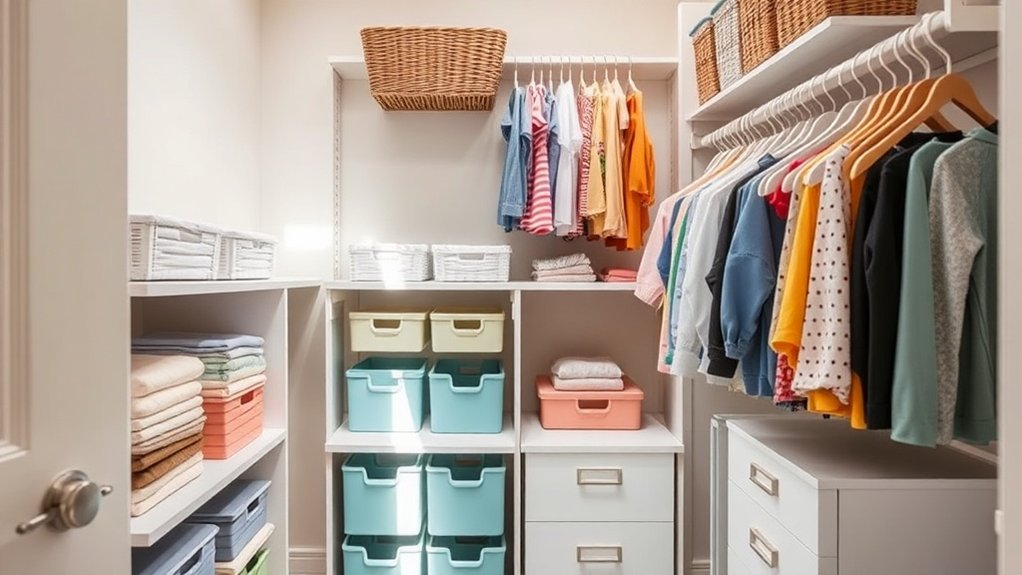
One clever trick for tiny closets and shared rooms is stacking and rotating outfits so everything fits and nothing gets wasted. You’ll save space and keep mornings calm by grouping clothes by size, season, or activity, then stacking them neatly on shelves or in clear bins. Consider adding modular storage to mix hanging and bins for maximum flexibility and sturdiness. Using stackable bins made from waterproof PP plastic with reinforced seams can keep rotated items protected and easy to access.
Rotation keeps favorites accessible and outgrown pieces out of the way. Want a simple system you’ll actually use?
- Stack folded sets by category and label the front
- Use clear bins for rotated seasonal items
- Create a weekly grab-and-go stack for clothes you’ll wear soon
- Swap and donate every month to free space
You’ll find the routine comforting, efficient, and flexible, and your kids will learn how to care for their things. Consider pairing this approach with space-saving hangers to maximize vertical storage in very small closets.
Single-Door Reach-In Closets: Low-Cost Hooks, Double Rods, and Cubbies
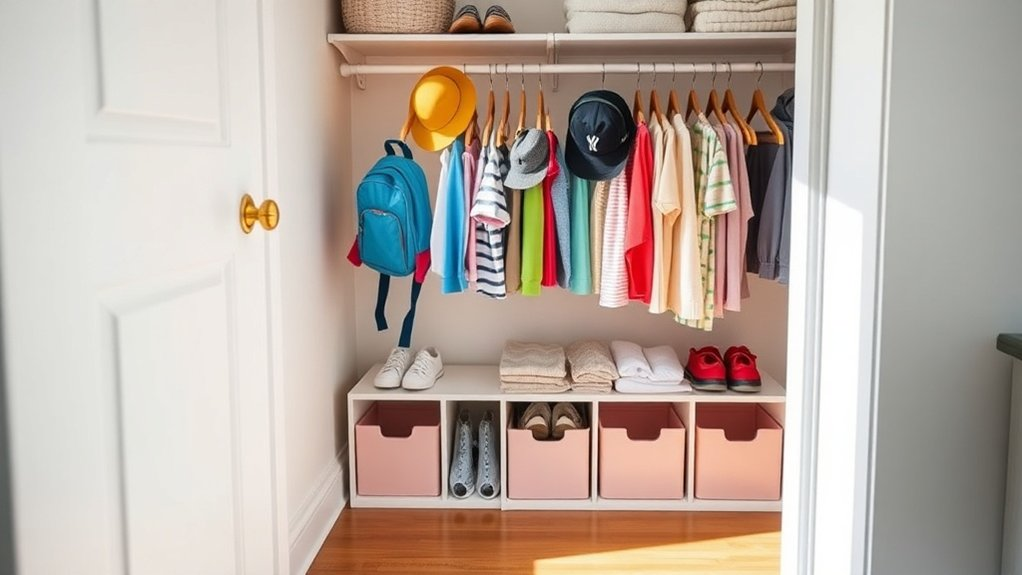
A single-door reach-in closet can feel tight, but with a few smart, low-cost tweaks you’ll turn it into a tidy, usable nook that makes mornings smoother.
Start by adding a low hook at kid height for backpacks and a few higher hooks for jackets; hooks are cheap, easy to install, and teach responsibility.
Install a double rod so you get two hanging tiers—shorter shirts and lower pants—keeping outfits visible and reachable.
Add cubbies or stackable bins for shoes, hats, and small toys; label them with words or pictures to speed decision-making.
Keep a slim basket for dirty clothes and rotate seasonal items to the back.
Small changes, big payoff: your child’ll find things faster, and you’ll enjoy calmer mornings.
Consider maximizing vertical space with stackable or multi-tier organizers to make the most of every inch.
Also think about choosing organizers made from durable materials so they hold up to frequent use by kids.
Consider painting the back wall a bright color to create an inviting space and highlight organized zones.
Small Walk-In Closets: Zoning for Daily Outfits vs. Seasonal Storage
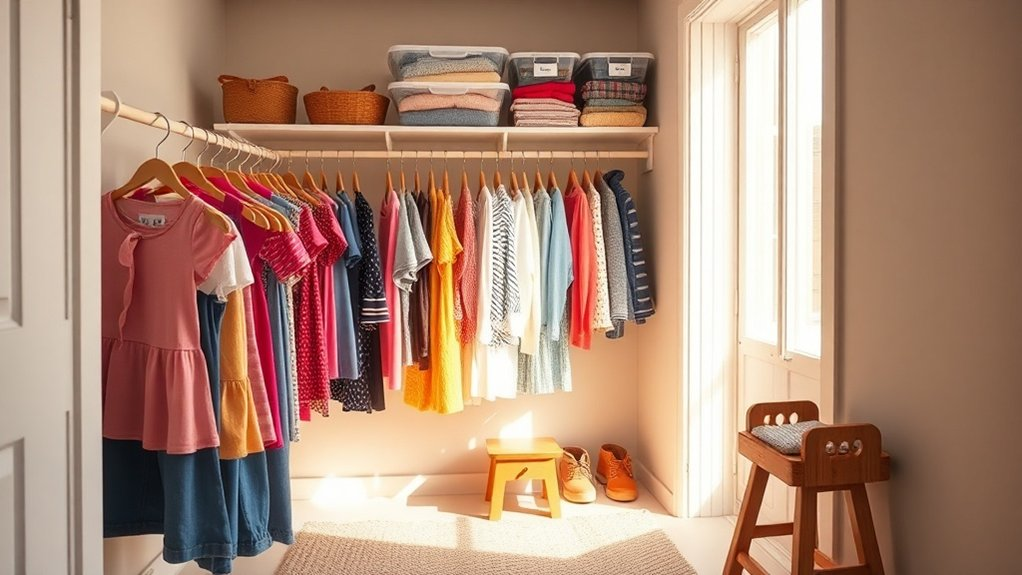
Many small walk-in closets can feel cluttered fast, but with simple zones you’ll turn that tight space into an organized launchpad for every day and every season.
You’ll want a clear separation between daily outfits and seasonal storage so mornings are calm and changes are easy. Create reachable, visible spots for what kids wear now, and tuck away extras where they won’t become a mess.
Think about how often you open each area; put favorites at eye level and rotate seasonal bins higher up. Consider using clear acrylic organizers for visibility and lightweight storage stackable bins to keep things tidy.
- Daily outfits: hanging rod at kid height, open shelf for sneakers
- School-week zone: labeled hooks, quick-access drawer
- Seasonal storage: clear bins on top shelves, vacuum bags for bulky coats
- Rotation routine: swap monthly, involve your child in choices
Which zone will you start with?
Consider adding stackable fabric drawers with a sturdy wooden top to maximize vertical space and keep things tidy.
Also consider using a simple phased approach with a step-by-step guide to make the process less overwhelming and more sustainable.
Roomy Walk-Ins and Built-Ins: Child-Friendly Shelving and Labeled Zones
If you loved carving out clear zones in a small walk-in, you’ll find roomy walk-ins and built-ins even more fun to personalize for kids.
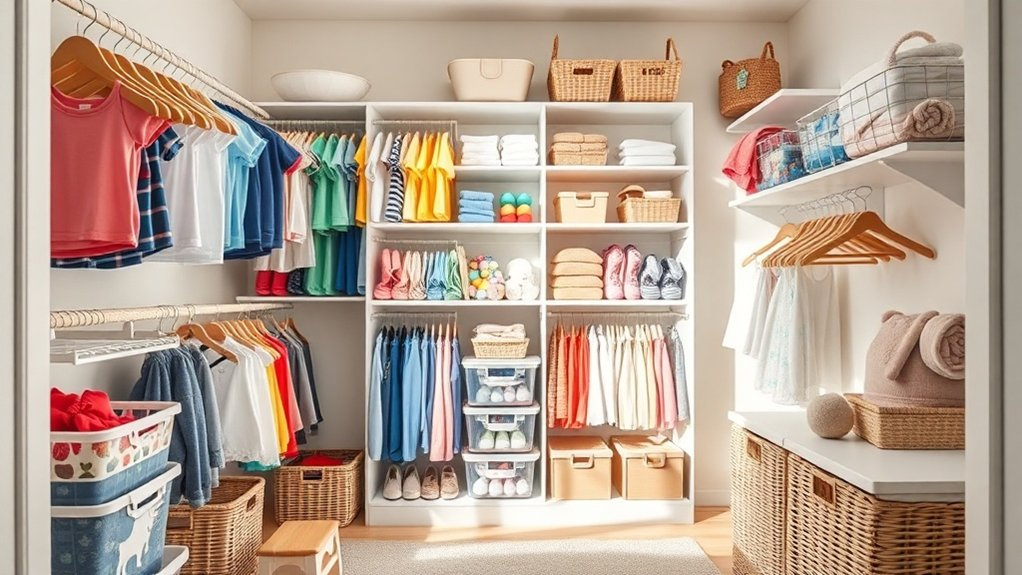
You can create dedicated shelves for shoes, baskets for art supplies, and low hooks for backpacks, all within easy reach. Label each zone with simple words or pictures so children can find and return items independently.
Add a cozy cubby or reading nook to make the closet feel special, and use adjustable shelving so it grows with them. Consider adding stackable baskets to maximize vertical space and keep things accessible. Choosing foldable fabric bins can save space and make seasonal swaps easier.
Want colors that spark joy? Pick a palette together.
Encourage responsibility by making cleanup part of the routine: a labeled spot for everything, and praise when they use it.
It’s neat, cheerful, and truly theirs. Consider adding stackable storage to maximize vertical space and keep things accessible.
Closets for Toddlers: Eye-Level Storage, Baskets, and Safe Hangers
When you design a closet for a toddler, think about what they can reach and do on their own so you can build independence from day one. You’ll want low rods, open baskets, and safe hangers that let small hands choose outfits without help. Bright labels, pictures, or simple colors guide them, and consistent zones teach routine. Isn’t it rewarding to watch them try?
- Place a low hanging rod for daily clothes
- Use open baskets for socks, pajamas, and toys
- Choose chunky, non-slip hangers sized for kids
- Label shelves with pictures and words
Keep pathways clear, avoid sharp corners, and celebrate small wins. With thoughtful design, you’ll make dressing easier, safer, and more joyful for both of you. Consider adding stackable organizers to optimize storage and accessibility for little ones. Also consider under-shelf baskets like the Whitmor basket to add extra reachable storage without reducing shelf space.
Closets for School-Age Kids and Teens: Wardrobe Workflow and Decision Spots
As kids grow, their closets should shift from simple storage to a smart workflow that supports quick decisions and growing independence.
You’ll want zones that match how they actually get dressed and plan their week. Create a morning-ready area with outfits hung together or clipped into complete looks, and a homework/after-school shelf for backpacks, sneakers, and jackets you grab on the go. Consider using adjustable shelves and hanging organizers to maximize vertical space and keep frequently used items at eye level. Adding stackable organizers can free floor space and keep shoes and gear tidy in small closets stackable design.
Add a decision spot with a small mirror and a hook for “maybe” items to reduce morning stalls. Use labeled bins for sports, uniforms, and accessories so choices stay obvious.
Invite your child to curate what lives in each zone, teaching them to choose and return items.
What small change could make mornings easier tomorrow? Consider adding a weekly outfit organizer to simplify planning and build routine outfit planning.
Simple Routines and Maintenance: 10-Minute Tidy Habits and Seasonal Reset
You can keep your child’s closet feeling fresh with a quick five-minute tidy each day—grab misplaced socks, rehang a jacket, and straighten shoes to prevent clutter from piling up.
Once a season, set aside a focused reset: sort outgrown items, rotate seasonal clothes, and make donation or repair piles so everything fits and functions.
Want a plan you’ll actually stick to?
Stacking storage can maximize vertical space and keep items accessible with stackable designs.
Quick Daily Five-Minute Tidy
Carve out five minutes each day to do a quick tidy, and you’ll be amazed at how calm the closet feels.
You can make this a simple, joyful ritual that keeps clutter from piling up and teaches your child small habits. Set a timer, invite your kid to join, and turn routine into teamwork — it’s fast, focused, and oddly satisfying.
What could be easier than five focused minutes?
- Remove one outgrown item and place it in a donation bag.
- Rehang any dropped hangers and straighten the rows.
- Fold or toss stray toys and put shoes in their bin.
- Wipe a shelf or sweep the floor if you spot crumbs.
Do this daily, and the closet will stay inviting.
Seasonal Closet Reset Routine
After those five-minute tidies become habit, set aside a slightly longer block each season to refresh the whole closet and keep things working for the months ahead.
Start by pulling everything out: clothes, shoes, and bins. Hold items up and ask, “Does this still fit? Is it in good shape? Will we wear it this season?”
Donate or store what’s outgrown or worn, and rotate seasonal pieces to the front. Wipe shelves, vacuum the floor, and check labels and hooks—small fixes now save frustration later.
Reassess systems: does the current bin or hanger setup still make sense? Make one tweak.
Celebrate the result with your child; involve them in decisions, give them a task, and enjoy a tidy, ready-to-use closet.
Frequently Asked Questions
How Do I Childproof Closet Doors and Hardware Safely?
You’ll use childproof locks, door knob covers, and top-mounted latches; install anti-tip brackets for shelving, secure sliding doors with a track lock, cover sharp hardware, and keep small items out of reach to prevent choking and injury.
What’s the Best Way to Store Shoes to Prevent Odor?
You should store shoes in breathable containers, use moisture absorbers or charcoal sachets, rotate pairs, air them out after use, and keep liners or cedar inserts. Don’t seal damp shoes; they’ll trap odor and mildew.
How Can I Organize Costumes and Play Clothes Separately?
Keep costumes and play clothes separate by giving costumes labeled bins or garment bags and play clothes accessible bins or low drawers. You’ll rotate seasonal items, use clear labels, and teach your child to return items to their designated spots.
When Should I Involve My Child in Decluttering Decisions?
You should involve your child as soon as they can understand choice—typically ages 2–3 for simple decisions and 5–7 for more sorting. Let them help regularly, especially before seasonal switches or when items overflow.
How Do I Manage Closets for Kids With Sensory Sensitivities?
Imagine a soft blanket fort: you’ll create calm zones, use textured bins and labels, keep lighting adjustable, prioritize favorite fabrics, and involve your child in choices so their space feels safe, predictable, and sensory-friendly.
Conclusion
You’re ready to turn chaos into calm, like planting a little garden where clothes grow order instead of mess. Pick what your child reaches for, make space for what’s coming, and build tiny routines that stick. Try a swap, hang a hook, label a bin—small choices add up fast. Want a closet that actually works for your family? Start with one shelf today and watch confidence bloom.