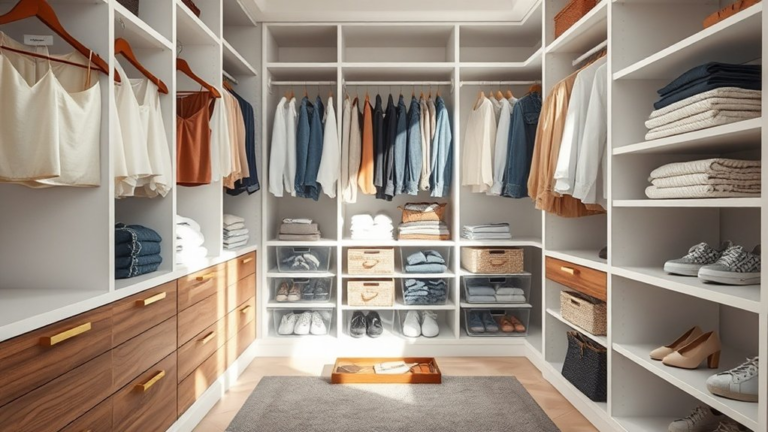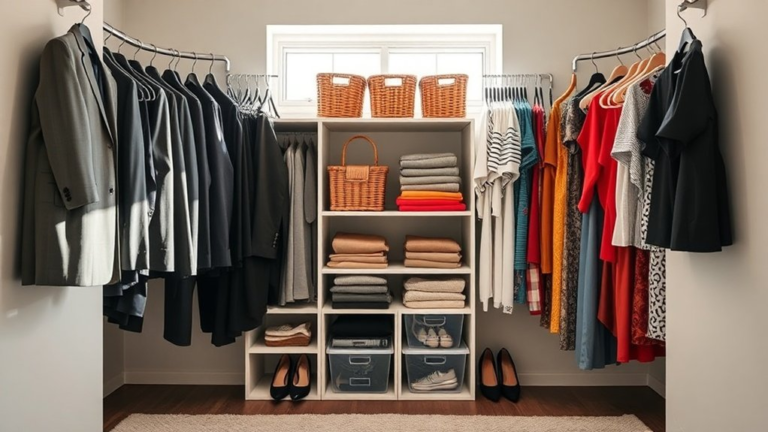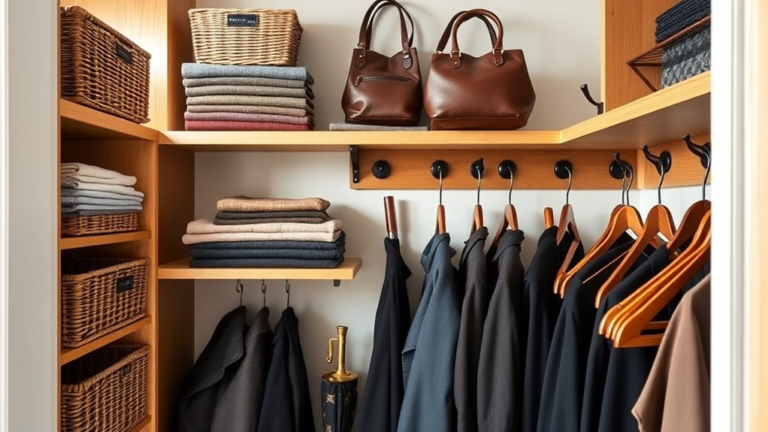
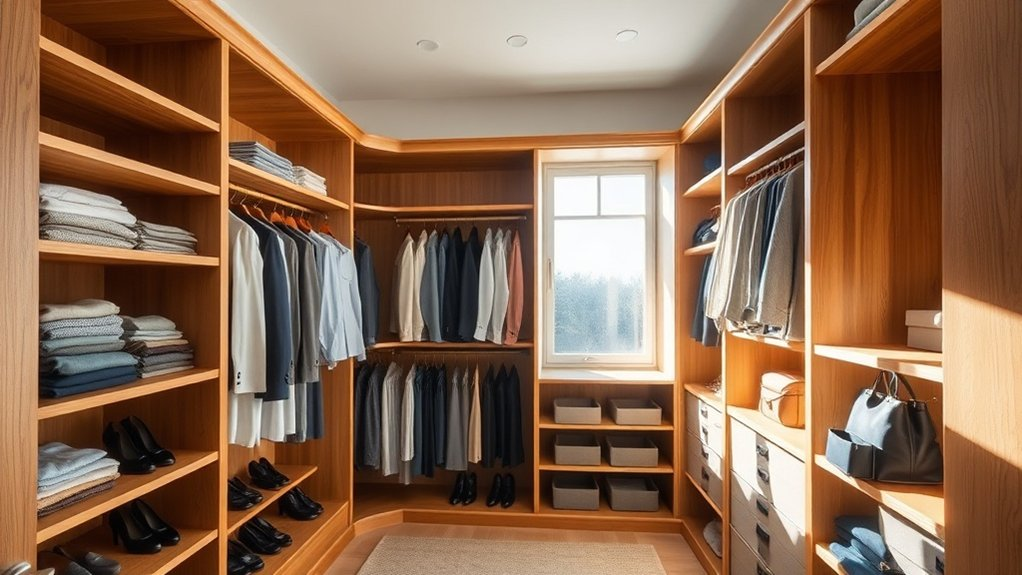
Measure your space, list what you wear, and set clear goals so mornings feel calm and fast. For walk-ins, build zones—work, casual, shoes—and use double hanging plus open shelves. For reach-ins, add a second rod, slim hangers, and stackable bins. For built-ins, choose adjustable shelves, thoughtful drawers, and dividers for accessories. Use vertical shoe racks, labeled bins for seasonal rotation, and quick daily habits to stay tidy. Keep going to learn specific layouts and swaps.
Closet Highlights
- Measure the closet and sketch zones to plan hanging, shelving, and drawer placement for your master closet layout.
- Categorize wardrobe items (work, casual, formal, shoes, accessories) and assign dedicated, labeled zones.
- Use double hanging, slim non-slip hangers, and adjustable shelving to maximize vertical space and capacity.
- Install custom built-ins or modular units with drawers, dividers, and open shelves for folded items, jewelry, and bags.
- Implement seasonal rotation with labeled bins, maintain with daily two-minute tidies and a weekly five-minute sweep.
Prep: Measure, Inventory, and Set Goals for Your Master Closet
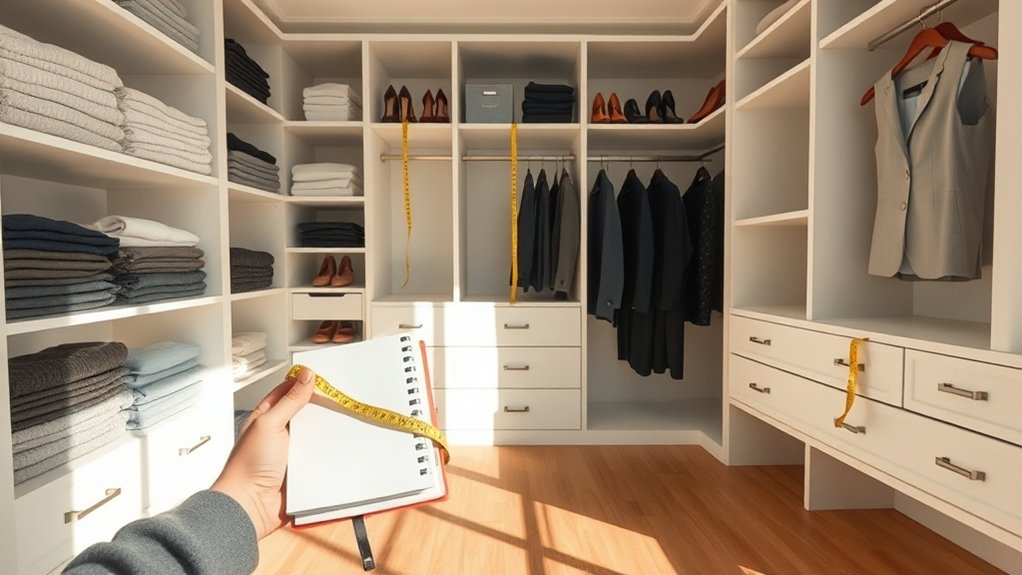
Before you plunge into bins and baskets, take a breath and map things out—measure the space, count what you own, and decide what you want your closet to do for you.
Start by measuring height, width, and depth, then sketch a simple layout. Inventory everything: daily wear, special pieces, shoes, accessories. Consider adding vertical storage like multi-tiered organizers to free up floor space and keep essentials accessible. Choose modular designs that let you expand or reconfigure storage as your needs change.
Measure height, width, depth, sketch a layout, then inventory daily wear, special pieces, shoes, and accessories.
Hold each item and ask, “Do I love this? Do I wear it?” That helps you choose what stays. Set clear goals: easier mornings, more visible shoes, less clutter.
Prioritize by frequency of use and season. Make a list of must-haves like hanging space or drawer room.
When you plan first, you’ll save time, money, and stress, and your closet will finally work for you. Consider adding multi-tiered organizers to make the most of vertical space.
Organizing a Walk-In Closet: Zoning, Double Hanging, and Open Shelving
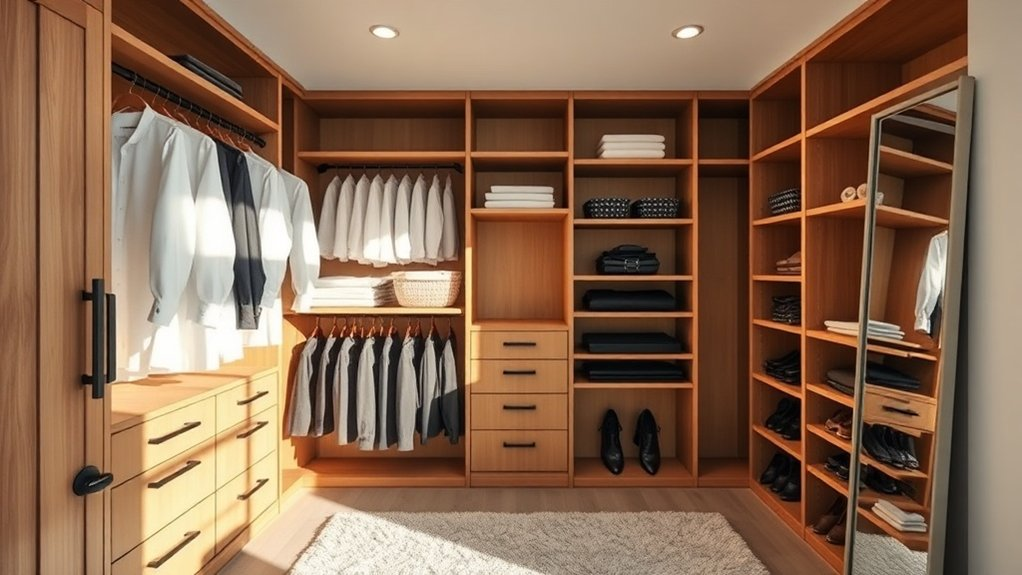
When you step into your walk-in closet, think of it like a tiny boutique where everything has a purpose and a place—you’ll get dressed faster and enjoy the space more.
Begin by zoning: create areas for work clothes, casual wear, shoes, and accessories so you know exactly where to look. Consider placing compact units like a portable closet in corners to extend your zoning without crowding the room.
Use double hanging to maximize vertical space — shorter items above and below keep things visible and tidy. Consider adding double-tiered hangers to increase capacity without overcrowding.
Add open shelving for folded sweaters, bags, and baskets; seeing items helps you decide faster.
Keep a small bench or mirror nearby to make dressing easy and pleasant.
Can you imagine mornings with less stress?
With clear zones, smart hanging, and open shelves, your walk-in becomes calm, efficient, and genuinely inviting.
Consider integrating space-saving hangers to further compactly store garments and reduce clutter.
Organizing a Reach-In Closet: Space-Saving Rods, Slim Hangers, and Shelf Hacks
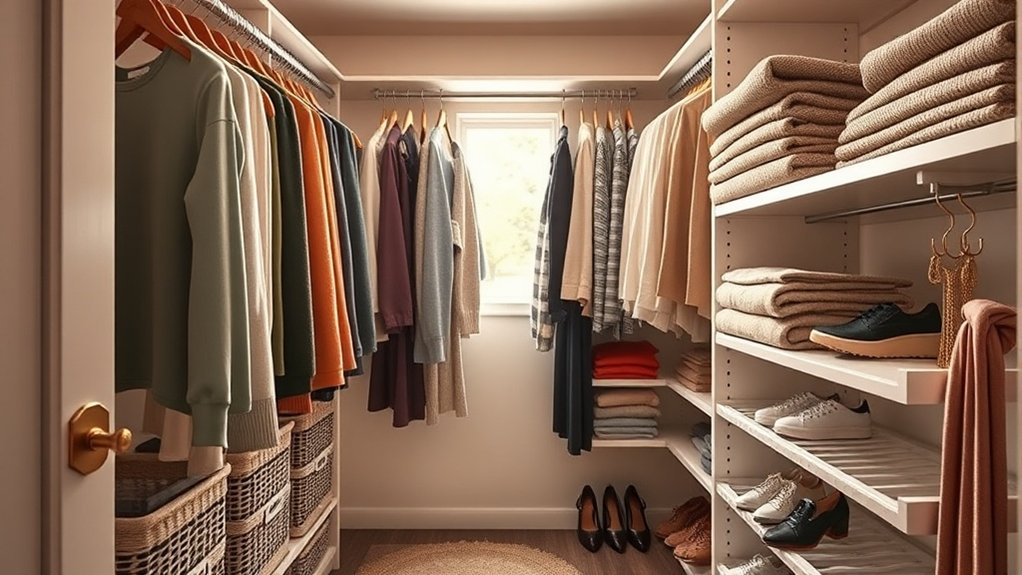
You can reclaim vertical space in a reach-in closet by adding a second rod or a staggered rod system, so shirts, pants, and seasonal items each get their own level. Swap bulky hangers for slim, non-slip hangers to fit more clothes on each rod and keep everything visible. Many slim velvet hangers feature a non-slip surface and notched shoulders to prevent garments from slipping. Want a quick win that makes your mornings calmer and your closet feel twice as big? Add modular storage like detachable bins and cascading hangers to maximize vertical space and vertical space utilization. Adjustable shelving can further increase capacity and adapt as your needs change.
Maximize Vertical Rod Space
Because every inch counts in a reach-in closet, maximizing vertical rod space can make your wardrobe feel like it doubled overnight. You can add a second rod below the main one to separate shirts from pants, or install a staggered system that lets longer garments hang without touching the floor. You can also incorporate stackable organizers beneath the lower rod to store folded items or accessories without losing hanging space. Consider adding space-saving hangers to multiply hanger capacity and reduce bulk on the rod.
Use adjustable rods that slide into place so you can change heights as seasons shift, and consider a pull-down rod for hard-to-reach spots.
- Visualize stacked layers: short tops above, pants or skirts below.
- Picture a pull-down rod bringing high shirts to eye level with one hand.
- Imagine a taller corner zone for dresses, freeing central rods for daily wear.
Consider adding slim hangers to reduce bulk and increase hanger capacity.
What small change will you try first?
Slim Hangers For Efficiency
Pairing smart rod layouts with slim hangers makes your closet feel instantly larger and more orderly, so let’s take that next step.
Slim hangers free up precious inches, letting you fit more garments without cramming. You’ll notice a cleaner line across the rod, less fabric snagging, and easier visibility of outfits. They also pair well with stackable storage solutions to keep seasonal items neatly stored.
Choose velvet or thin wooden styles with non-slip shoulders to keep blouses and dresses in place. Color-code or label sections—work, casual, seasonal—to speed morning decisions.
Want shoes and accessories to stay tidy too? Use slim hangers with clips for skirts and scarf loops for ties.
Swap over time: replace bulky hangers as items wear out, and you’ll transform daily dressing from stressful to calm and enjoyable.
Also consider using velvet organizers for delicate accessories to prevent snagging and extend their lifespan. Consider adding adjustable shelving to maximize vertical space and pair with slim hangers for an even more efficient layout.
Organizing Custom Built-Ins: Drawer Layouts, Adjustable Shelving, and Hardware Choices
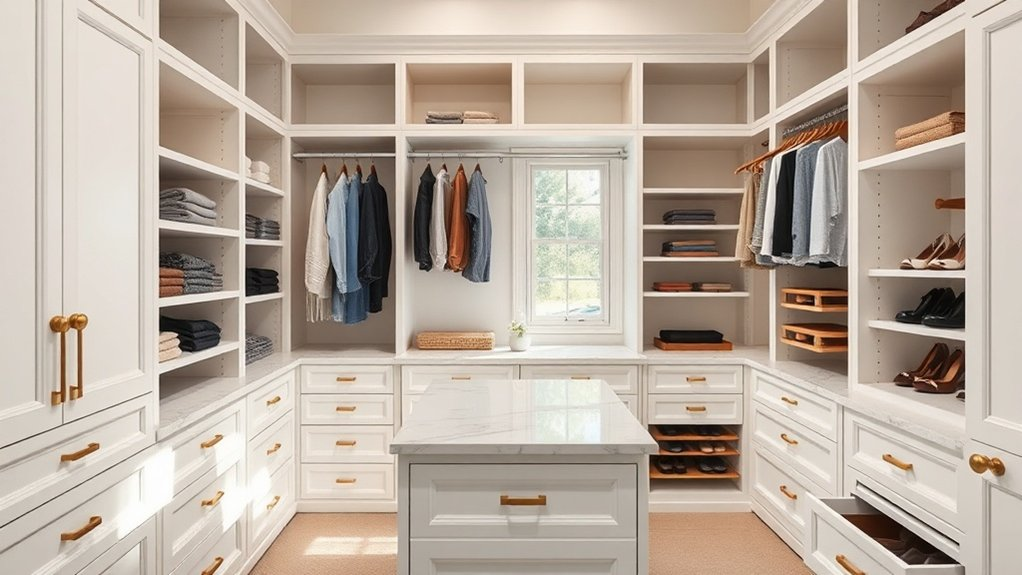
When you design custom built-ins for your closet, thoughtful drawer layouts, adjustable shelving, and the right hardware turn clutter into calm and daily routines into little pleasures.
You’ll love how well-placed drawers keep small items tidy, and how adjustable shelves adapt as your wardrobe changes.
Pick soft-close drawers for quiet mornings, dividers for jewelry and belts, and deeper drawers for folded sweaters. Consider using adjustable shelving to maximize vertical space and accommodate changing storage needs.
Choose soft-close drawers for quiet mornings, add dividers for jewelry and belts, and deeper drawers for folded sweaters.
Choose pulls and knobs that feel good in your hand; they should match your style and stand up to daily use.
Do you want a look that’s sleek or a bit more classic? Imagining the finished space helps you choose.
- A row of shallow drawers with velvet-lined trays.
- Taller drawers for bulky knits.
- Adjustable shelves with clear spacing markers.
A well-organized closet can truly transform your daily routine with ultimate organization. A practical option to consider is using stackable storage to maximize vertical space and keep frequently used items accessible.
Maximizing Vertical Space: Shoe Racks, Hooks, and Stacked Storage Solutions
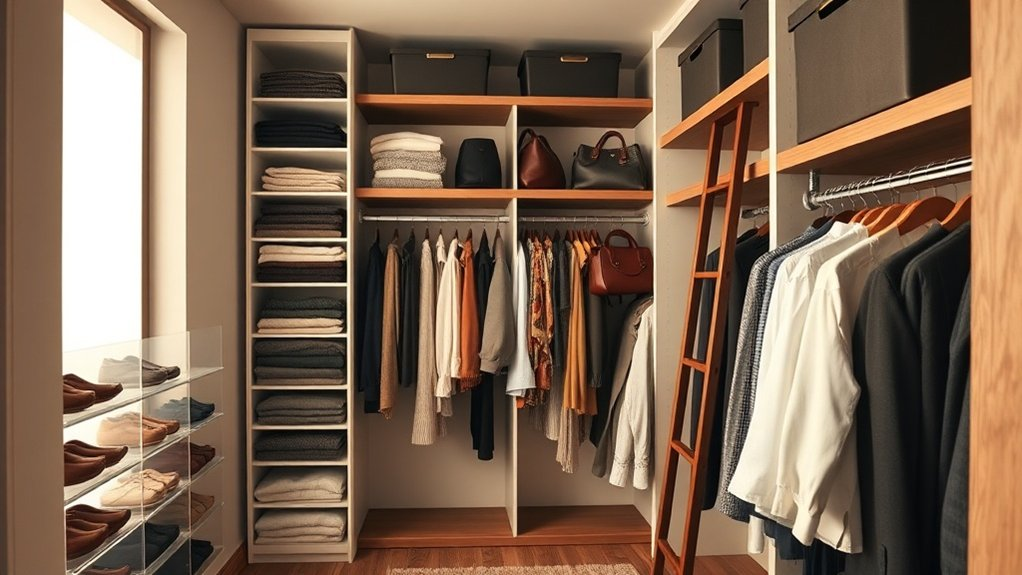
Think of your closet walls as untapped real estate, ready to hold shoes, scarves, and those seasonal items you only need now and then. You can use vertical space to transform clutter into calm: install tiered shoe racks that fit higher up, hang sturdy hooks for hats and light outerwear, and stack clear bins to keep pairs visible and dust-free. Consider using modular shelving units with adjustable shelves to adapt as your collection grows. Stackable storage boxes like stackable bins can increase capacity without sacrificing accessibility.
Mix open shelving with cubbies so boots stand upright and flats slide in neatly. Add a slim ladder or step stool that tucks away for reach.
Will you feel lighter when every pair has a place? Yes. These small changes free floor space, speed your morning routine, and make your closet feel intentional.
Start with one wall and build from there. Consider adding adjustable organizers like adjustable organizers to grow with your collection and maximize space.
Smart Systems for Accessories: Belts, Bags, Jewelry, and Seasonal Rotation
Create clear zones for your belts, bags, and jewelry so each piece has a home and you can grab what you need without searching.
Plan a simple seasonal rotation—store off-season items in labeled bins or higher shelves and bring favorites forward as the weather changes—to keep the closet feeling fresh and useful. Consider using 90L storage bags for bulky seasonal items like comforters and heavy linens. Adding 6-shelf organizers can help keep seasonal bins and frequently used items neatly separated and easy to access.
How would it feel to open your closet and find everything right where it belongs?
Consider adding stackable storage options to maximize vertical space and keep items accessible.
Dedicated Accessory Zones
Pick a single spot in your closet to be the hub for every accessory—belts, bags, jewelry, and even seasonal pieces—and you’ll instantly make getting dressed feel easier and more joyful.
Designate clear zones: a shallow shelf with dividers for handbags, a row of hooks or a pull-out rack for belts, and a small tray or velvet-lined drawer for daily jewelry. Consider using stackable organizers to maximize vertical space when shelving is limited. Closet organization systems can help you plan zones that fit the dimensions and flow of your master closet.
Label each zone so your eyes land on the right place, and keep frequently used items at eye level.
Think about texture, color, and shape as you arrange things; a neat display invites you to reach for pieces you love.
Ready to simplify mornings and honor your accessories? Start small, stay consistent, and enjoy the calm.
- Handbag shelf with dividers
- Belt hooks or pull-out racks
- Jewelry tray or lined drawer
Create these zones to transform your space into a true organized closet.
Seasonal Rotation Plan
While your closet already holds the pieces you love, switching them each season can make mornings feel fresh and effortless. A simple rotation plan keeps accessories useful and visible.
Start by grouping belts, bags, and jewelry into “in-season” and “off-season” bins, labeling each clearly. Store off-season items in breathable boxes or drawers, tucked away but easy to reach.
Every three months, swap the groups; you’ll rediscover forgotten favorites and prevent clutter. For special pieces, create a keepsake section with padding and silica packs to protect them.
Want to make the swap quicker? Use clear containers and a checklist. This small, steady habit brings joy and ease to daily dressing, and you’ll feel more organized, intentional, and excited each morning. Consider using stackable bins rated for lightweight storage to keep off-season items accessible and neatly contained. Also consider durable options like acrylic dividers to keep items visible and neatly separated during rotation.
Storage for Shoes and Bulky Items: Best Practices by Closet Type
When you plan shoe and bulky-item storage by closet type, you’ll make daily routines smoother and keep your space feeling calm and tidy.
Think about how you use the closet: walk-in closets get low open shelves for baskets and angled shoe racks so you can see pairs at a glance.
Reach-in closets benefit from stackable clear bins and a single over-the-door rack, and wardrobe closets work best with slim boot trays and under-hanging storage for hats and scarves.
Match containers to item size and weight, label clearly, and leave a bit of breathing room so items don’t get crushed.
Which setup feels most joyful to you?
- Walk-in: open shelving, angled racks, woven baskets
- Reach-in: stackable clear bins, over-door rack, slim trays
- Wardrobe: boot trays, hanging pouches, shelf dividers
Consider adding clear stackable drawers to reach-in closets to maximize vertical storage without losing visibility.
Maintenance Routines and Quick Daily Habits to Keep Your Master Closet Organized
Because a little daily care keeps big messes away, establishing simple maintenance routines will make your master closet feel peaceful and ready every day.
Start with a two-minute tidy: return items to their spots, hang garments fresh, and place shoes back on racks.
Do a five-minute weekly sweep: check hangers, fold any stray sweaters, and rotate seasonal pieces to a visible spot.
Spot-clean spills right away and use scented sachets or a fabric freshener to keep things pleasant.
Ask yourself, what single habit would save me time each morning?
Make it easy: keep a small basket for items that don’t belong and empty it nightly.
These tiny actions build lasting order, reduce stress, and help your closet stay beautiful without heavy effort.
Frequently Asked Questions
How Do I Budget for a Full Closet Remodel Versus DIY Upgrades?
You should compare total contractor bids to DIY material costs, add permits, hardware, and contingency (15–20%), estimate your time value, and prioritize structural or electrical work for pros while tackling cosmetic upgrades yourself to save money.
Can I Convert a Closet Into a Multi-Purpose Space (Office, Nursery)?
Yes — 70% of homeowners repurpose rooms, and you can too: prioritize soundproofing, flexible furniture, storage solutions, and safety for a nursery; plan layout, lighting, and ventilation to keep both functions comfortable and functional.
What Climate-Control Options Prevent Mold in Humid Regions?
Use a dehumidifier, run air conditioning, and install exhaust or ventilation fans; you’ll seal leaks, use moisture-resistant materials, add a hygrometer, and maintain 45–55% RH to prevent mold in humid regions.
Are There Eco-Friendly Materials and Finishes for Closet Builds?
You might worry eco options cost more, but you’ll find affordable choices: reclaimed wood, bamboo, FSC-certified plywood, low-VOC paints, water-based finishes, and recycled metal or plastic hardware, all lasting well and reducing environmental impact.
How Do I Childproof a Master Closet Without Reducing Accessibility?
Use childproof locks, magnetic catches, and sliding door stops where needed, but keep lower open shelving and labeled bins for kids’ items. You’ll install finger guards, soft-close hardware, and secured anchors to maintain full accessibility.
Conclusion
You’ve planned and pared, then built systems that feel both calm and clever — pared down, yet packed with purpose. Imagine opening your closet and seeing order instead of chaos; that’s daily joy, not a weekend chore. Will you keep it simple or keep improving? Both work. Start small, stick with quick habits, and let those thoughtful choices turn a hectic morning into a quiet ritual you actually look forward to.