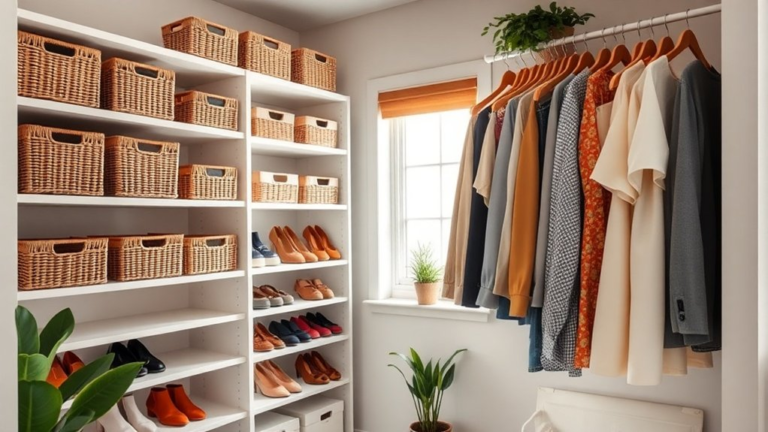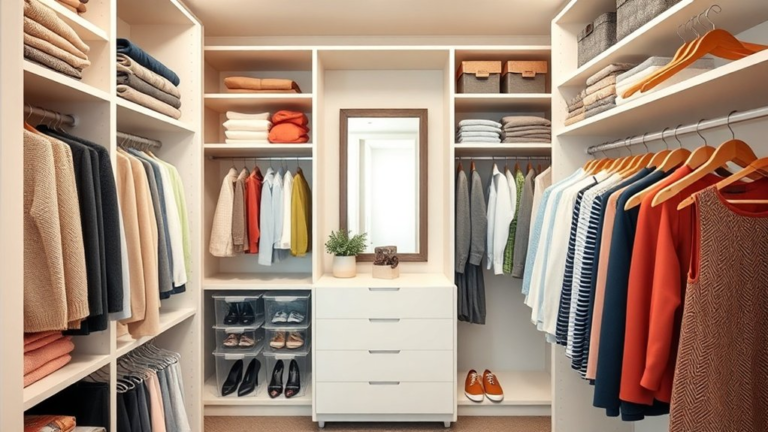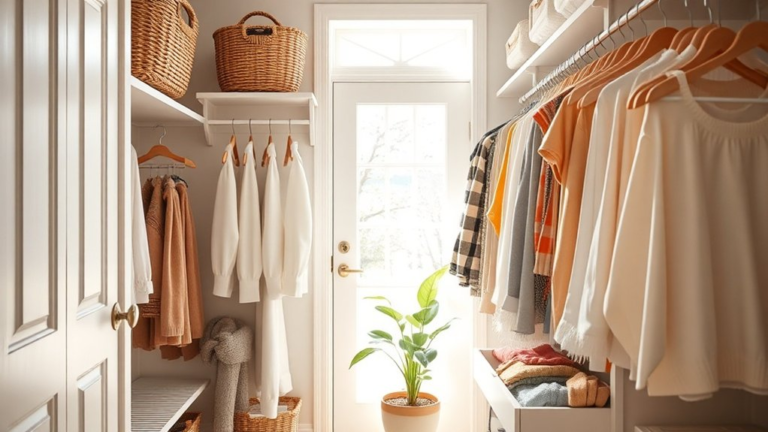
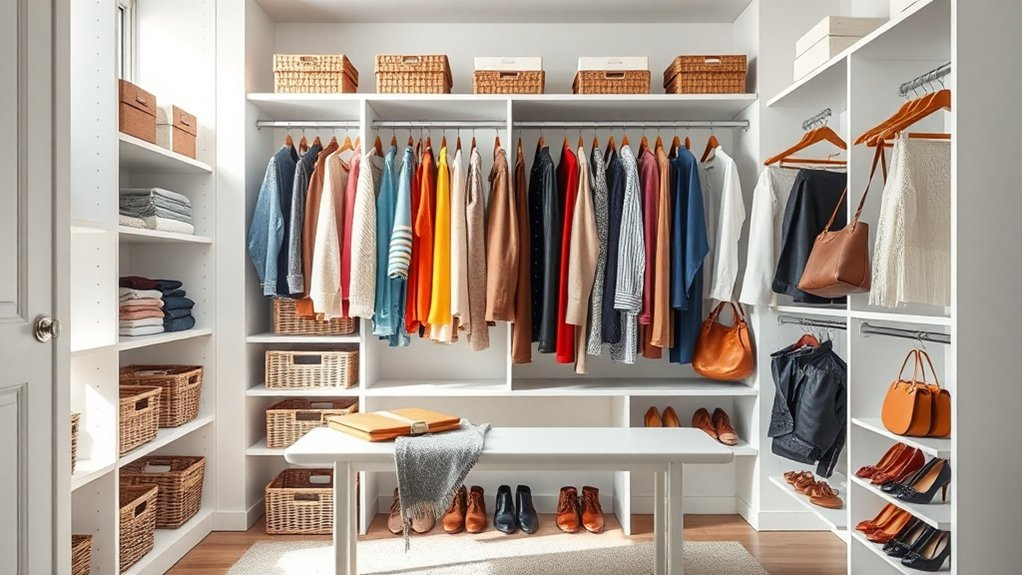
You might not realize that simple storage pieces can free up most of your closet without major renovations. You can create calm, usable space with clear bins for seasons, shelf dividers for neat stacks, and hanging organizers that use vertical real estate. Picture mornings where choices are quick and visible—no digging, no panic. Ready to sort what you keep, what you store, and what can go?
Closet Highlights
- Sort everything out, decide keep/donate/repair/toss, and limit items not worn in a year.
- Use clear plastic bins and labeled lids to store seasonal items for visibility and easy swaps.
- Add shelf dividers and uniform bins to create tidy stacks and maximize vertical space.
- Install hanging organizers, tension rods, or pegboards for accessories, bags, and vertical storage.
- Adopt a weekly five-minute tidy-up and seasonal declutter routine to maintain the system long-term.
Quick Checklist to Prep Your Closet Before Organizing
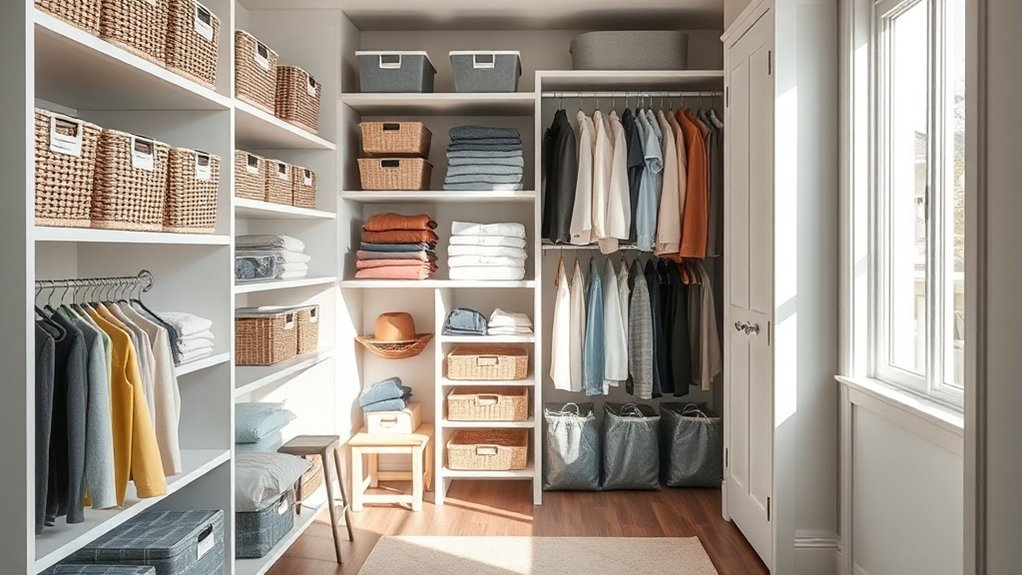
Before you plunge into it, take a few minutes to get everything ready so the actual organizing feels smooth and satisfying.
Start by clearing a flat surface nearby for sorting, and set out boxes labeled Keep, Donate, Repair, and Toss.
Pull everything out so you can see what you own; seeing it all helps your declutter strategy become obvious.
Empty your closet and spread it out—seeing everything makes decision-making and decluttering so much clearer.
Make quick decisions—if you haven’t worn it in a year, consider letting it go.
Plan seasonal swaps now by labeling storage for off-season items, so you won’t wrestle with winter coats in July.
Keep a donation bag visible to stay motivated.
Choose simple storage systems that match your space, and breathe; you’re creating a closet that works for you, one thoughtful step at a time.
Consider adding modular organizers like stacking storage to maximize vertical space and keep items accessible.
Also consider the 15 lb capacity of cube-style organizers when deciding what to store in each compartment.
Consider adding clear storage bins for visibility and easy access when organizing items.
Use Shelf Dividers to Keep Stacks Neat and Visible
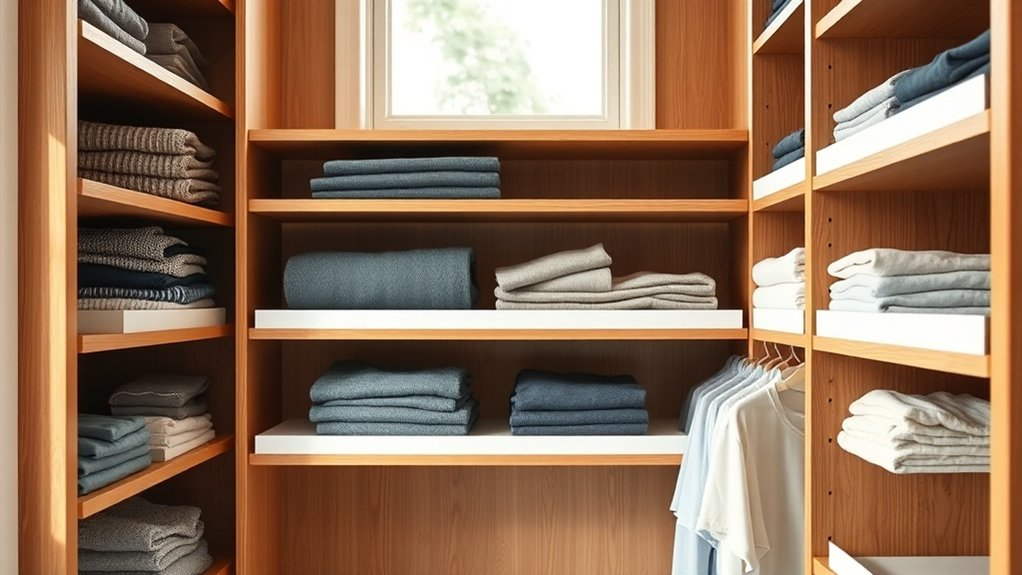
A few simple shelf dividers can transform a messy pile of sweaters into a calm, easy-to-navigate stack that actually stays put.
You’ll love how little effort yields big results: pick dividers that match your shelf styles and the look you want, then slide them into place to create tidy bays for each category.
Use consistent stacking techniques—fold the same way, stack similar weights together—and label the front edge so you know what’s inside at a glance.
Dividers keep items visible and prevent the avalanche when you reach for one piece.
Want a quick win? Start with frequently used shelves, experiment with divider spacing, and adjust until the stacks feel balanced.
It’s satisfying, quick, and makes daily routines smoother.
Choose dividers made from durable materials like high-grade plastic or reinforced fabric to ensure long-term stacking efficiency and stability.
For maximizing vertical space in closets, consider pairing dividers with stackable clear bins like clear stackable containers to keep items organized and visible.
Consider also using waterproof PP storage bins for lightweight items to protect contents and simplify maintenance.
Clear Plastic Bins for Seasonal Rotation and Small Items
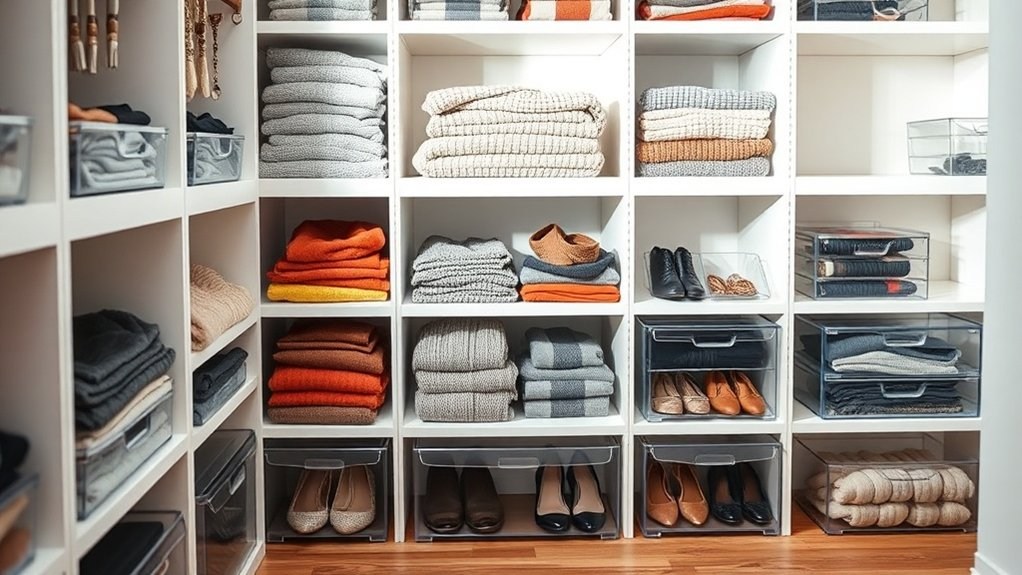
Once your sweaters and stacks are behaving with dividers, clear plastic bins make the next step simple and satisfying: they keep seasonal items and small things grouped, visible, and ready when you need them.
You’ll love how clear bins let you spot holiday decor, scarves, or spare socks at a glance, turning seasonal storage from chaos into calm. Label lids or fronts so you don’t have to hunt, and use uniform sizes to maximize shelf space. Using stackable designs helps maximize vertical space and keeps everything orderly. Many clear bins are made from high-grade plastic that is waterproof to protect belongings from moisture damage.
For small item organization, sort by type—gloves, belts, batteries—and tuck extras into smaller clear containers inside larger bins.
Can you imagine grabbing exactly what you need without digging? It feels freeing, and it keeps your closet tidy all year, one clear bin at a time.
Consider pairing clear bins with stackable plastic boxes to maximize vertical space and keep items secure.
Hanging Organizers That Multiply Vertical Space
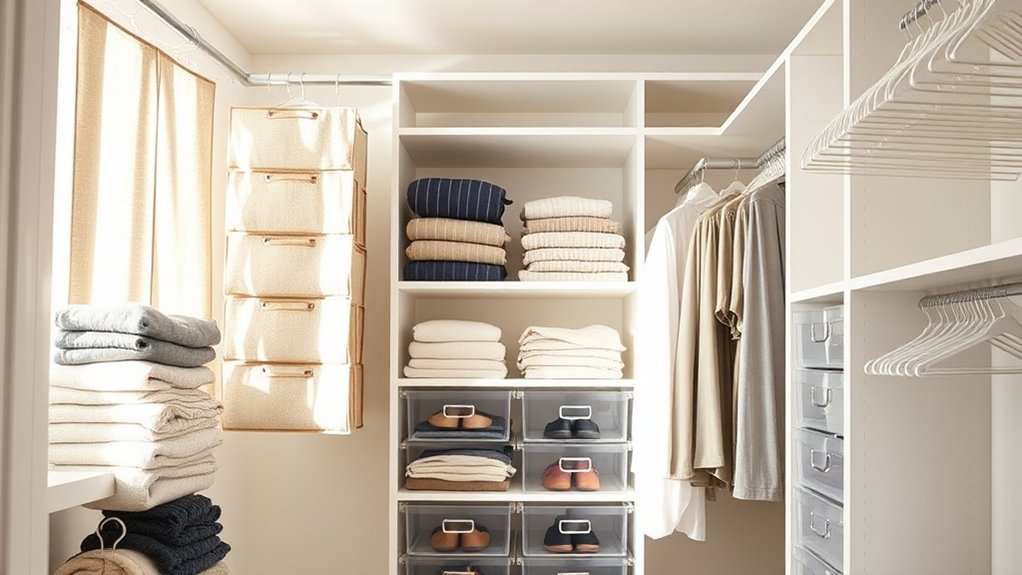
When you add hanging organizers, you instantly reveal storage that would otherwise sit unused above and below your clothes, letting you stack shoes, sweaters, and accessories without crowding the rod. You’ll love how hanging shelves and vertical racks make every inch count, turning a cramped closet into a calm, useful space. Clip adjustable hooks to closet rods for instant tiers, then layer multi pocket organizers for scarves, belts, and jewelry. Use fabric bins and storage bags on lower shelves for seasonal items, and reserve clear pockets for quick visibility. You can choose from options with varying weight capacities to suit heavier items like sweaters and shoes. Can you imagine mornings with less digging and more ease? These space savers feel simple to install, and you’ll enjoy the tidy, peaceful closet they create every day. Measure your closet’s height, width, and depth before buying hanging systems to ensure they fit and maximize vertical space with available space considerations. Durable materials like steel and wood also help support heavier loads and extend the life of your hanging organizers.
Modular Cube Systems for Shoes, Bags, and Folded Clothes
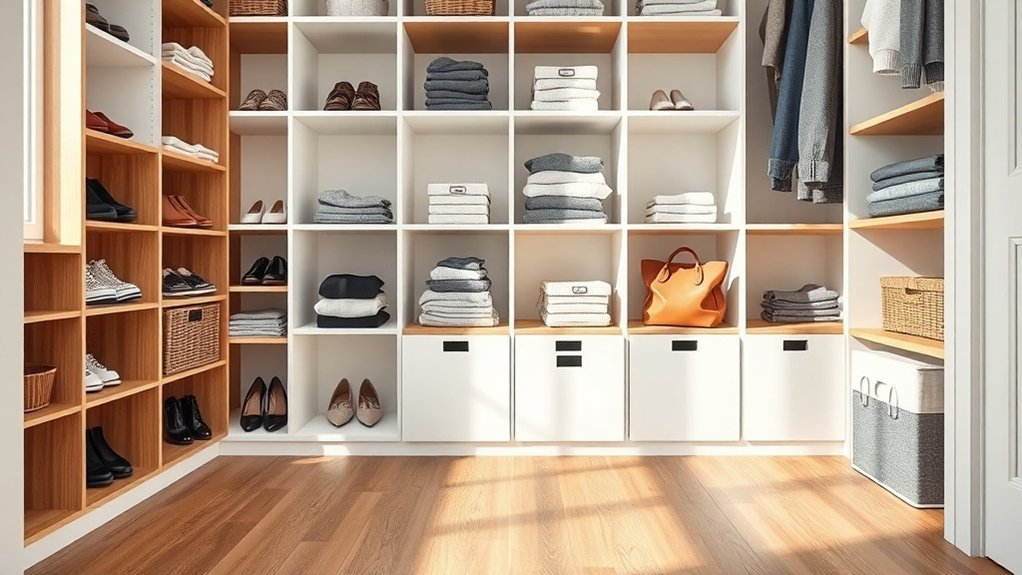
If you liked how hanging organizers opened up vertical space, modular cube systems will make the rest of your closet feel equally smart and calm.
You’ll love modular designs because they let you mix and match cubes for shoe storage, bag organization, and folded clothes in ways that suit your routine. Want sneakers visible and boots tucked away? Do it. Many modular cube options are designed to fit 2 to 8 feet of closet width for flexible layouts.
These systems offer versatile configurations, so you can stack, stagger, or create open shelves where you need them most. The look adds aesthetic appeal, turning clutter into a tidy display you’ll enjoy. Many modular cube options feature adjustable shelving so you can tailor cubby sizes as your needs change.
Space efficiency improves instantly, and items stay accessible. With easy access to everything, you’ll save time getting ready and feel proud every time you open the door. Many modular cubes pair well with clear acrylic dividers to customize cubby sizes and keep items separated.
Over-the-Door and Wall-Mounted Solutions for Accessories
Because they use often-overlooked vertical real estate, over-the-door and wall-mounted solutions can transform your closet from cramped to clever without a full renovation.
You can hang over the door hooks for scarves, belts, and lightweight bags, then add wall mounted racks for hats or jewelry.
Install hanging shelves to hold folded items or shoes, and tuck accessory trays on a narrow wall shelf for watches and rings. Consider choosing adjustable dividers to maximize vertical space and adaptability.
Use decorative bins to hide clutter while keeping things accessible, and try command strip solutions when you want damage-free placement.
Pegboard displays let you rearrange tools, baskets, and hooks as needs change.
Even tension rod organizers work wonders for handbags or clutches.
Which small change will make your mornings easier?
Consider adding an over-the-door organizer with mesh pockets to keep small items like keys and cosmetics visible and accessible. Add a lightweight over-the-door organizer to maximize storage without drilling into walls.
Labeling and Transparency Tricks for Fast Morning Decisions
You’ll save time every morning by creating clear labeling zones for shoes, accessories, and seasonal pieces so you always know where to look.
Choose see-through bins and hanging organizers, which let you spot what you need without opening every container. Large fabric baskets and foldable storage bins can also be stacked or collapsed to maximize space. Consider using modular systems with adjustable shelving to make the most of vertical space and adapt as your needs change.
Want to feel calmer and more confident as you get dressed?
Transforming your closet with modular shelving and bins creates adaptable storage that grows with your needs and supports simple storage systems.
Clear Labeling Zones
Start with three clear zones in your closet—work, casual, and special occasions—to make mornings feel effortless and calm.
You’ll use labeling strategies and zone organization to guide choices, pairing color coding with category labels so each section speaks at a glance.
Add visual cues like icons for shoes, shirts, and accessories, and include size specifications when items vary, so nothing slows you down.
Thoughtful label placement keeps tags readable without cluttering clothes, and seasonal tags help you rotate pieces as weather changes.
You’ll enjoy the calm that comes from seeing everything at once. What could feel better than a closet that helps you choose quickly and confidently, every single morning?
A well-organized closet can transform daily routines and improve efficiency by reducing decision fatigue, especially when you adopt simple storage systems.
Consider grouping items by frequency of use to prioritize accessibility and reduce time searching for essentials, a method supported by closet zoning. Additionally, using organized zones encourages consistent upkeep and makes maintenance simpler over time.
See-Through Storage Choices
Having your closet sorted into work, casual, and special-occasion zones makes choosing outfits faster, and see-through storage takes that speed up another notch.
You’ll love clear storage benefits when you can spot a scarf, shoe, or sweater without digging, so mornings feel calm instead of chaotic. Use clear bins, hanging organizers with windows, and labeled drawers to keep items visible and reachable. Stackable clear bins can also maximize vertical space when floor area is limited, making them ideal for small closets stackable storage. Consider combining clear, stackable bins with sturdy PP plastic options to ensure durability and easy maintenance.
A tidy visual inventory helps you plan outfits, spot missing pieces, and rotate seasonal items before they get forgotten.
Want to save time and stress? Try grouping by color or function inside clear containers, and use simple labels for quick scans.
Small changes add up, and you’ll feel more confident facing the day. Consider adding multi-tier or space-saving hangers to maximize vertical storage and keep garments organized.
How to Choose Sizes and Quantities of Storage for Your Closet
Start by measuring the width, depth, and height of your closet so you know exactly what’ll fit and where.
Then match storage sizes to the items you own—longer hanging for dresses, shallow bins for scarves, deeper shelves for sweaters—so nothing feels squeezed or wasted.
Finally, plan how many of each category you need by counting items and leaving a little extra room for new finds; what could feel better than a closet that actually grows with you?
Also consider adopting simple storage systems to make arranging and maintaining your closet easier over time. Using organizers that maximize vertical space helps you make the most of every inch. Consider including adjustable shelves and modular components like a closet organizer tower so your setup can evolve as your wardrobe changes.
Measure Closet Dimensions
Measure the full height, width, and depth of your closet before you buy a single shelf or bin—this simple step will save you time, money, and frustration.
Use basic measuring tools—a tape measure, level, and pencil—and note where walls, doors, and light switches sit.
Sketch the space, labeling dimensions and any odd closet shapes, like alcoves or slanted ceilings.
Measure shelf clearance from floor to hanging rod, and record usable depth after door swings.
Think about clearance needed for baskets and slide-out drawers.
Jot down the measurements clearly, so you can compare storage options without guessing.
With accurate numbers, you’ll choose sizes and quantities confidently, avoid returns, and create a layout that feels organized and calm. Consider vertical stackable storage to maximize space without adding furniture.
Ready to measure?
Consider adding a 6-tier organizer if you need vertical storage to maximize space without bulky furniture.
Match Storage To Items
Once you know what you own and the exact closet measurements, match storage to items so every piece has a clear place and you stop digging for things.
Start by grouping item categories—seasonal items, daily wear, and accessories—then pick sizing options that fit each group.
Think about essential tools like hooks and dividers, and choose durable materials that hold up to use.
Add accessibility features for things you need often, and tuck seldom-used boxes higher or deeper.
Balance storage aesthetics with functionality focus; you want systems that work and look good.
Use color coding or labels to speed retrieval and encourage neat habits.
How would your mornings change with everything in its place?
Style integration makes it feel personal.
Plan Quantity Per Category
Think about your closet like a small store where every item needs the right shelf—how many shelves, bins, or hangers will each category realistically need?
Start by listing your clothing categories: tops, bottoms, dresses, outerwear, accessories, shoes. Count what you own and note how often you wear each group. That tells you storage capacity needs: deep bins for bulky sweaters, shallow trays for scarves, more hangers for daily tops.
Pick sizes that match volume, then set quantities so things breathe, and you can find items fast. Leave room for seasonal shifts and small growth.
Tidy systems feel calming, and planning this way makes maintenance easy. Ready to measure and buy what truly fits your life?
Budget-Friendly Shopping and DIY Alternatives
Because you don’t need to spend a fortune to make your closet feel fresh and functional, let’s explore smart, budget-friendly shopping tips and DIY alternatives that actually work.
You don’t need to spend a fortune—smart, budget-friendly finds and simple DIYs make your closet fresh and functional.
You can hunt for thrift store finds like baskets, small shelving units, and hangers that only need a little cleaning or a fresh coat of paint. Look for clearance bins, online marketplaces, and dollar-store containers that you can upgrade with labels or fabric liners.
Try simple DIY storage projects: turn wooden crates into stackable shelves, add tension rods for scarves, or repurpose magazine holders for belts.
Want to personalize your space? Paint, contact paper, and inexpensive knobs go a long way.
Small changes add up, and you’ll enjoy a neater closet without overspending.
Troubleshooting Common Problems and Keeping Your System Working
When things start slipping — a shelf sagging, clothes piling up, or labels fading — you’ll want to spot the source quickly so fixes don’t turn into big projects.
Make simple checks part of your routine, like tightening screws, rotating seasonal items, and sweeping shelves, and you’ll keep the system humming.
Want to make it even easier? Set a monthly 15-minute check-in and celebrate the small wins.
Identify Problem Sources
If your closet feels cluttered again despite your best efforts, it helps to pause and look for the root causes rather than just rearranging things.
Start by spotting clutter sources: do shopping habits, seasonal overflow, or items without a home keep creeping back?
Consider time constraints—are you rushing mornings and tossing things in, or skipping upkeep because evenings are busy?
Look for design flaws: is hanging space awkward, are shelves too deep, or do small items vanish in the back?
Think about lifestyle changes too; new hobbies, work routines, or family growth shift what you need.
Ask yourself: what part of the system isn’t serving you?
Identifying causes makes fixes simple and lasting.
Routine Maintenance Habits
Start by making upkeep feel easy instead of like a chore, and you’ll actually stick with it. You can set small, pleasant rituals—five-minute tidy-ups each evening, a weekly check-in on shelves, or a seasonal decluttering routine—to keep things running smoothly.
Use habit tracking, like a simple checklist or an app reminder, to celebrate progress and spot patterns before clutter builds up. When something goes wrong, ask: what triggered this backslide? Fix the root, not just the mess.
Rotate items, re-evaluate storage needs, and adjust labels so everything has a clear home. You’ll feel lighter when your system supports your life. Keep it simple, stay consistent, and enjoy the calm that follows.
Conclusion
You’ve got this — with shelf dividers, clear bins, and hanging organizers, your closet can feel like a calm, efficient oasis (no more avalanche-level chaos!). Start small, label clearly, and pick modular pieces that grow with you. Ask yourself what you reach for daily and make that easy to find. Keep a donation bag in sight, reassess each season, and enjoy the relief of a space that actually works for your life.