You can reclaim wasted closet space fast by doing a ten-minute audit, adding a double rod, and using vertical shelves and clear bins to stack seasonal items. Hang shoe and accessory organizers on doors or walls, add dividers and rolling trays in drawers, and group clothes by type and height for easy access. Use labeled boxes and under-bed bins for off-season pieces. Ready to explore simple layouts and low-cost habits that keep it working longer?
Closet Highlights
- Add a double hanging rod and staggered sections to double hanging capacity and separate garment types.
- Install adjustable shelves and clear labeled bins to stack seasonal items vertically and improve visibility.
- Use door-mounted or wall organizers (shoe pockets, pegboards, hooks) to free floor and shelf space.
- Employ drawer dividers, shelf risers, and rolling trays to create dedicated spots and easier access to small items.
- Store off-season clothes in labeled vacuum-sealed bins or under-bed containers to reclaim prime closet real estate.
Quick Closet Audit: Find Wasted Space in 10 Minutes
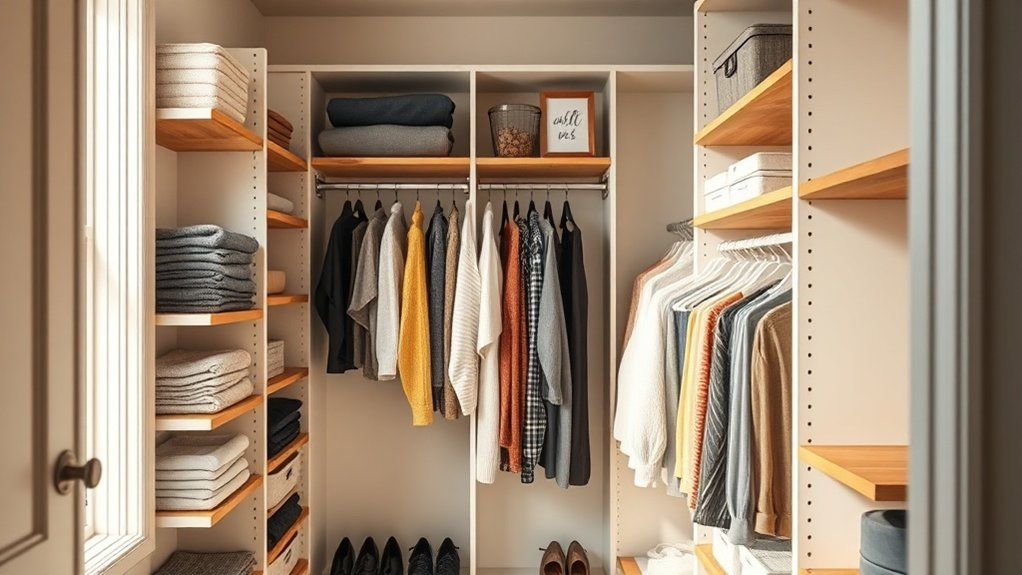
Set a timer for ten minutes and let’s find the spaces your closet is wasting—because small changes now can make your mornings feel easier tomorrow.
Start by standing back and scanning shelves, rods, and floor space. What’s empty or underused? Notice high shelves you never reach, a gap above shoes, or a lonely corner that could hold baskets. Consider whether vertical space could be used for extra shelves or a second rod.
Pull out everything briefly, grouping like items as you go, then step back again. Can you tuck seasonal pieces higher, move daily items within arm’s reach, or add simple bins for loose accessories?
Make quick decisions: keep, donate, or relocate. When the timer dings, you’ll have a clear map of wasted spots and one small plan to reclaim them.
Closet organization is about more than tidiness—it’s a practical system that maximizes storage and simplifies daily routines by using space efficiently. Consider adding storage bins to keep small items contained and easy to find.
Rehang Smarter: Double Rods, Staggered Heights, and Grouping
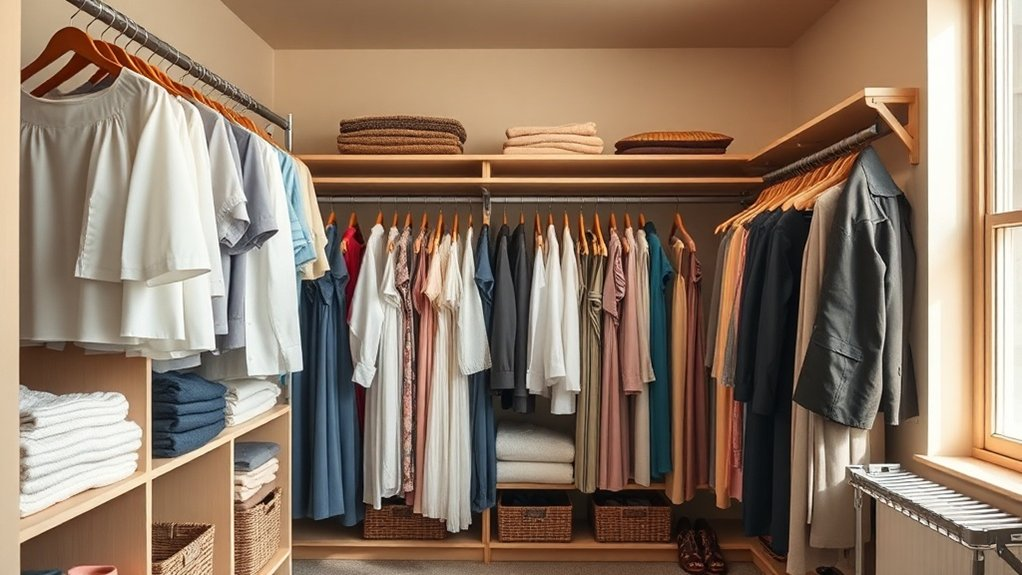
You can get twice the hanging space by installing a double rod, which makes shirts and pants easier to see and reach.
Try staggered-height sections so long dresses and shorter tops each have their own zone, and you’ll reduce wrinkling and clutter.
What would change if every item had a proper place—more calm in the morning, less time hunting for outfits?
A thoughtfully organized closet can transform daily routines and boost efficiency by using space more efficiently. Consider adding adjustable shelving or modular systems to tailor storage to your needs and maximize versatility with adjustable shelving.
Consider also incorporating drawer organizers to keep small items like socks and accessories neatly sorted.
Double Rod Installation
Think about doubling your hanging space without doubling the closet’s footprint—double rods make that possible, and they’re easier to install than you might expect.
You can fit twice as many shirts and folded pants by adding a second rod below the first, and you’ll reclaim a sense of calm when everything has a clear spot. Consider pairing double rods with stackable bins nearby to keep smaller items sorted and visible. Many people also combine double rods with vertical organizers to maximize both horizontal and vertical storage.
Measure your items, pick rods rated for the load, and choose brackets that anchor into studs or use strong wall anchors.
Cut the rod to length or buy adjustable models, then mount the top rod at a height that clears long garments you’ll keep on single hang, leaving about 38–42 inches for the lower rod.
Small changes, big payoff. Ready to get started?
Consider also using stackable storage nearby to maximize vertical space and keep folded items accessible.
Staggered Height Sections
Now that you’ve doubled your hanging capacity with an extra rod, rearranging heights can make everything easier to find and keep tidy.
Staggered height sections let you fit long dresses, medium-length shirts, and short jackets without wasted space. You’ll place a higher rod for dresses, a middle one for shirts and blouses, and a lower one for pants or kids’ clothes. Consider adding stackable closet storage to maximize vertical space and keep items separated.
Group similar items together so mornings are calmer and outfit choices quicker. Think about how you reach and what you wear most; don’t be afraid to tweak positions after living with them for a week.
Small changes yield big relief. Ready to measure and move things around? You’ll love how orderly your closet feels. Consider incorporating stackable organizers to make the most of vertical space and keep items neatly separated. A simple plan that maps items by use and frequency can create efficient storage and save time every day.
Use Vertical Space: Shelving, Stackable Bins, and Hanging Organizers
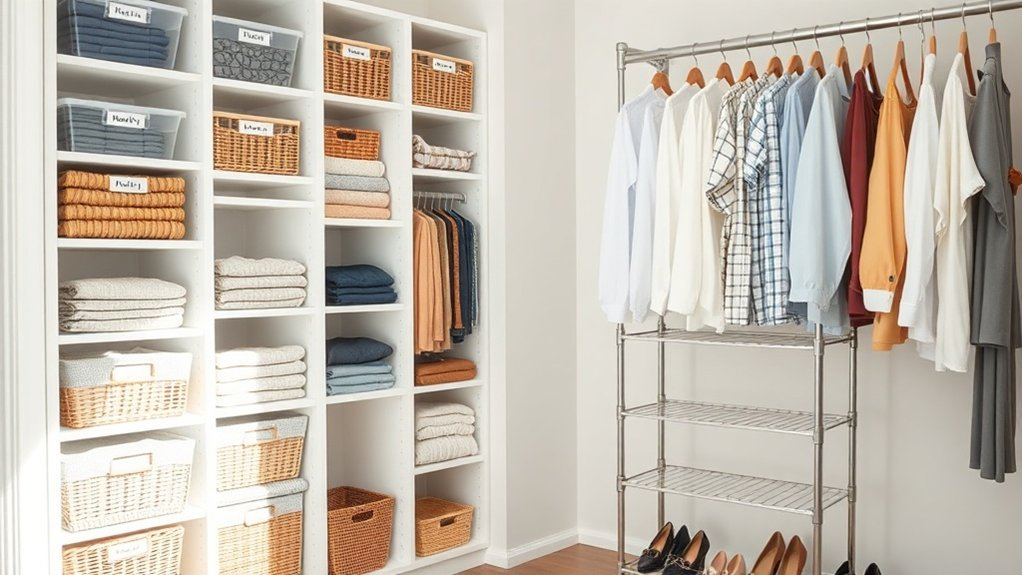
When closets feel cramped, reach upward and reclaim the room above your head with shelves, stackable bins, and hanging organizers that work together, not against each other.
Think about installing adjustable shelves to hold sweaters, boxes, and baskets—you’re creating layers of storage that keep things visible and reachable. Use clear or labeled stackable bins so seasonal items stay neat and you don’t waste time searching.
Install adjustable shelves and clear, labeled bins—create layered, visible storage so seasonal items stay neat and easy to find.
Add hanging organizers for shoes, scarves, or accessories to free up floor space and keep outfits ready to grab. Consider adding stackable bins to maximize vertical space and simplify seasonal rotation.
Can you picture how much calmer mornings would feel with everything in its spot?
Start small: one shelf, one set of bins, one hanging pocket, and build from there. You’ll feel proud every time you open the door. Consider combining these with modular systems to maximize flexibility and adapt as your storage needs change. Try pairing those with foldable bins to save space when items aren’t in use.
Maximize Doors and Walls With Over-The-Door and Peg Solutions
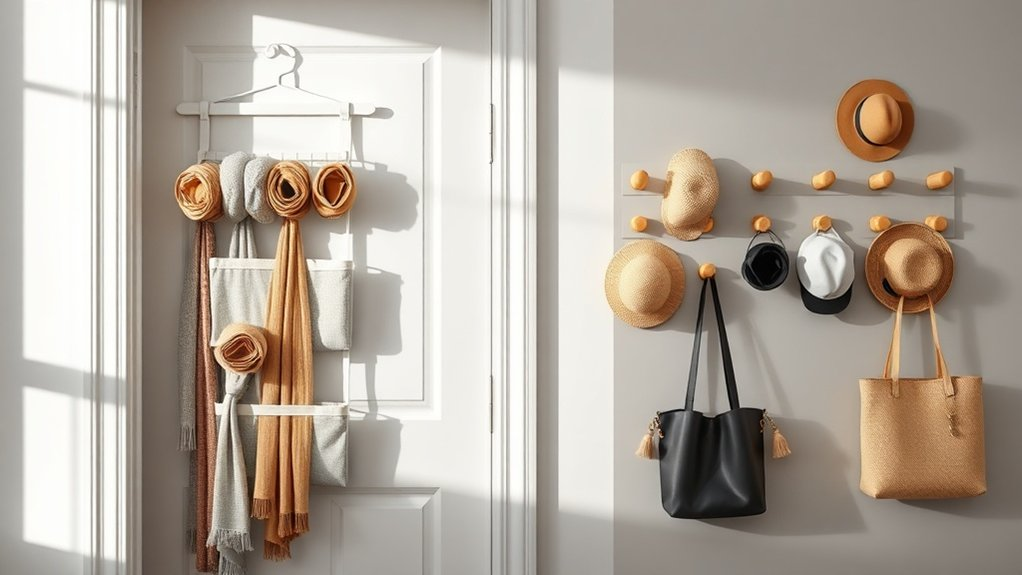
You can make the most of every inch by turning doors and walls into hardworking storage spots.
Try over-the-door shoe organizers for quick access, mount a pegboard to keep accessories tidy and visible, and add hooks or racks for bags, hats, and scarves—what would you free up if you tried just one of these? Consider organizers with mesh pockets to keep small items visible and breathable. Consider also adding multi-tier hangers to maximize vertical hanging capacity in narrow spaces.
Start small, pick one solution, and you’ll feel the difference right away.
Consider adding a stackable storage solution with reinforced panels to maximize vertical space and stability.
Over-the-Door Shoe Storage
If you’re feeling cramped by shoes scattered across the floor, an over-the-door solution can instantly reclaim that lost space and bring calm to your mornings.
You’ll love how clear sightlines make outfit choices faster and decision-making less stressful. Choose a clear pocket organizer for quick visibility, or a sturdy metal rack for heavier boots and sneakers.
Install it at eye level so shoes are easy to grab, and group pairs by type—daily, exercise, formal—to speed your routine. Consider adding a slim, multi-tiered rack to increase capacity without bulk and emulate the efficiency of vertical hanging solutions.
Consider slim designs that won’t slam doors shut, and use adjustable pockets for sandals or flats.
Ready for a small project that pays off every day? Hang one tonight and enjoy a tidier closet and smoother mornings. This simple swap can free up floor space similar to how reinforced shelves increase usable closet capacity.
Pegboard Accessory Organization
After you reclaim floor space with an over-the-door shoe organizer, the same vertical real estate can work wonders for smaller accessories.
You can install a pegboard on the inside of the closet door or a free wall, then customize it with hooks, baskets, and small shelves to hold jewelry, belts, scarves, and sunglasses.
Pegboards let you move pieces around as your needs change, so you’ll stay organized without buying new storage.
Want a quick visual of everything you own? Use clear bins or labeled baskets.
Need to grab a necklace in a hurry? Keep everyday items at eye level.
Pegboard setups are affordable, simple to mount, and surprisingly stylish when you choose finishes that match your space.
Why not try one this weekend?
Modular pegboard systems offer customizable configurations that make them ideal for evolving storage needs.
Consider using multi-tiered organizers to maximize vertical space and keep frequently used items within reach.
Modular designs are a great choice when you need flexible storage to adapt to changing wardrobes and seasonal items.
Hanging Hook and Rack
Three simple hooks or a full over-the-door rack can turn an overlooked door or empty wall into instant storage you’ll actually use. You’ll reclaim space by hanging coats, scarves, handbags, or belts where they’re easy to grab, keeping the floor and shelves clear.
Choose slim racks for small doors, wide multi-hook systems for households with lots of outerwear, or modular peg solutions that adapt as needs change. Pegs let you mix baskets, hooks, and shelves in playful layouts, so everything has a place. Consider installing heavy-duty hooks in high-use areas to support heavier items without damage.
Want seasonal rotation? Swap items in seconds. Want a tidy entryway? Add a small tray or mail holder below.
These choices are affordable, quick to install, and surprisingly satisfying—try one and feel the calm of a neater closet. Consider choosing organizers made from durable materials to ensure long-lasting use. Adding stackable designs can multiply your storage capacity by using vertical space efficiently.
Drawer and Shelf Hacks: Dividers, Rolling Trays, and Shelf Risers
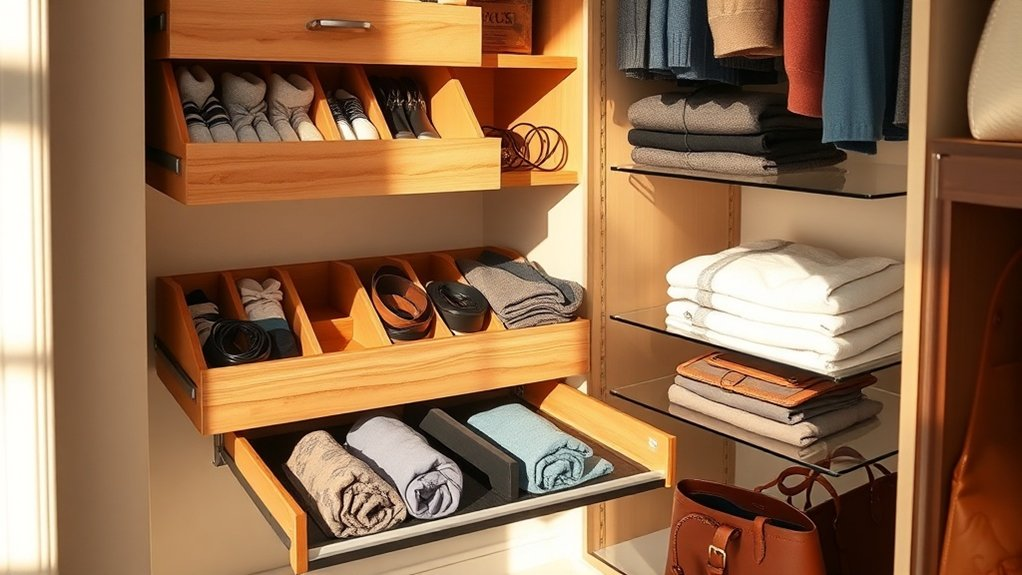
When you open a drawer or reach onto a shelf, do you want to find everything neatly in its place instead of rummaging through a jumble?
Use dividers to create dedicated spots for socks, tees, and small items so each thing has a home.
Give each item a home—use dividers to separate socks, tees, and small pieces for easy finding.
Rolling trays let you slide stacks forward, making deeper shelves accessible without unpacking everything.
Shelf risers double vertical space, so folded sweaters don’t get crushed and you can see items at a glance. Consider adding adjustable shelving to maximize flexible storage and fit varied items adjustable shelving. Many adjustable systems support heavy loads and can be tailored to closet widths from 2 to 4 feet or more for maximum efficiency adjustable metal shelving.
Mix materials—clear acrylic for visibility, woven bins for softness—to suit your style.
Label edges so you’ll return items to their proper spot.
These simple hacks save time, reduce stress, and make your closet feel calm and welcoming.
Try one change today. Add a stackable drawer or fabric dresser with a sturdy metal frame to maximize vertical storage and durability.
Shoes and Accessories: Compact Racks, Clear Boxes, and Labeled Storage
You’ve already made drawers and shelves feel calm, so let’s give your shoes and accessories the same thoughtful treatment.
You want easy access, visible choices, and a system that keeps items tidy without extra fuss.
Try these simple strategies that invite use and minimize clutter:
- Use compact vertical racks or over-the-door organizers to free floor space and show pairs at a glance.
- Store seasonal or less-used shoes in clear stackable boxes, labeled on the front, so you can pull exactly what you need without opening every box.
- Group small accessories—belts, scarves, jewelry—in labeled bins or divided trays, so mornings are smoother and items last longer.
Which change will you make first?
Start small, enjoy quick wins, and build momentum.
Small-Closet Plans: Layout Templates for Tiny Reach-Ins and Alcoves
If your closet feels like a tight squeeze, you can still create a layout that feels open and efficient by thinking vertically and purposefully about every inch.
Start by sketching your reach-in or alcove, noting depth, height, and door swing. Fit a tall rod-and-shelf combo along one side for hanging, add a narrow stacked shelf unit for folded items, and use the back wall for hooks or slim shoe pockets.
Consider a double-hang section for shirts and a single-hang area for dresses. Keep frequently used things at eye level, seasonal items higher, and bins lower.
Want to try a template? Measure, tape out zones on the floor, and tweak until movement feels natural. Small choices make a big difference.
Low-Cost Maintenance: Daily Habits and Seasonal Swaps to Keep It Efficient
While a big overhaul can wait for another weekend, small daily habits and a few seasonal swaps will keep your closet feeling tidy and useful every day.
You’ll notice big benefits from tiny routines that take minutes, and seasonal swaps that refresh what’s visible.
Try these simple actions to stay on top of clutter and keep things working for you:
- Rotate seasonally: swap heavy coats for lighter layers, move off-season bins to the top shelf, and donate items you didn’t wear last season.
- Daily five-minute tidy: return items, rehang clothes, and fold or toss anything out of place before bed.
- Visibility checks: keep frequently used items front and center, label shelves, and adjust hooks for easy reach.
Frequently Asked Questions
How Do I Measure for Custom Closet Systems Accurately?
You measure for custom closet systems by measuring wall width, height, and depth at multiple points, noting obstructions, door swings, and ceiling slope, recording precise measurements, and double-checking before ordering so your fit won’t be off.
Can I Retrofit Built-Ins Without Professionals?
Yes—you can retrofit built-ins yourself if you’re comfortable with basic carpentry, measuring, cutting, and securing units; plan carefully, use quality anchors, level everything, and don’t hesitate to rent tools or ask for help with heavy or complex sections.
What Materials Resist Mold/Mildew in Humid Climates?
Use materials like stainless steel, aluminum, powder-coated metal, PVC/vinyl, marine-grade plywood, cement board, and closed-cell foam; they resist mold in humid climates, and you’ll prefer finishes and paints with mildewcide additives.
How Do I Childproof Closet Organization Components?
Like a fortress gate, you’ll secure closet components with childproof locks, magnetic catches, and anchored shelving; cover sharp edges, use cord shorteners or clips, keep small items high, and regularly inspect fasteners so nothing becomes a hazard.
What Is the Best Way to Organize Sentimental Items?
Sort by importance, keep only what truly matters, and store items in clearly labeled acid-free boxes or breathable fabric bins. You’ll photograph, digitize, and display a few favorites while rotating keepsakes to avoid clutter.
Conclusion
Think of your closet as a tiny lighthouse guiding your day; when you tidy its beam, dressing becomes calmer and clearer. You can spot wasted space, rehang smarter, and stack toward the ceiling so every item has purpose. Try one small swap today—double rods, a shelf riser, or a door organizer—and notice the relief. What difference would five uncluttered minutes make each morning? Keep it simple, stay curious, and let order light your way.