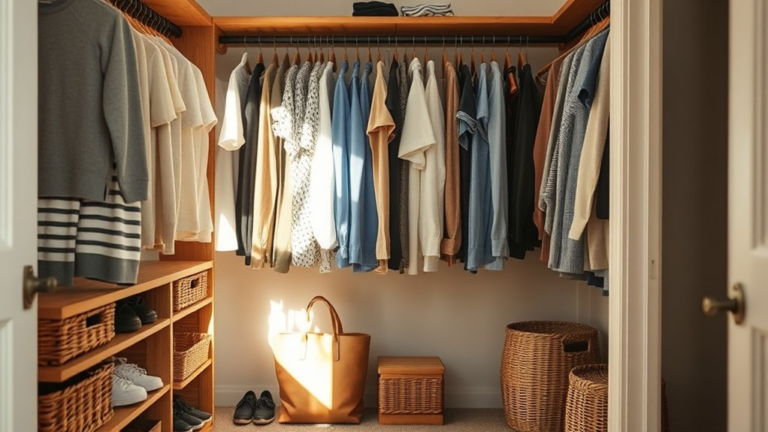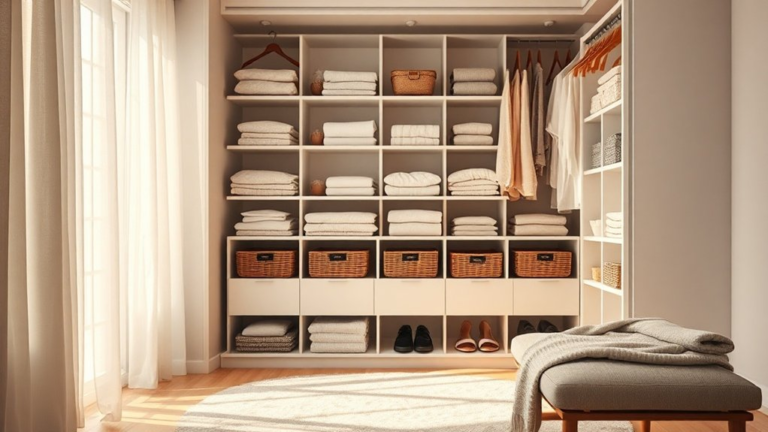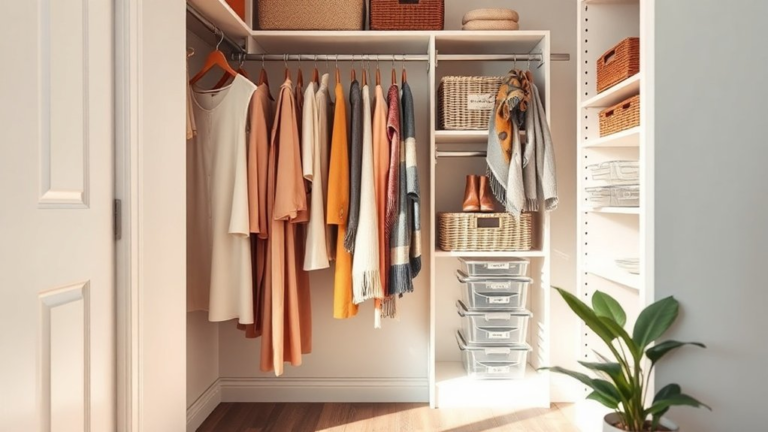
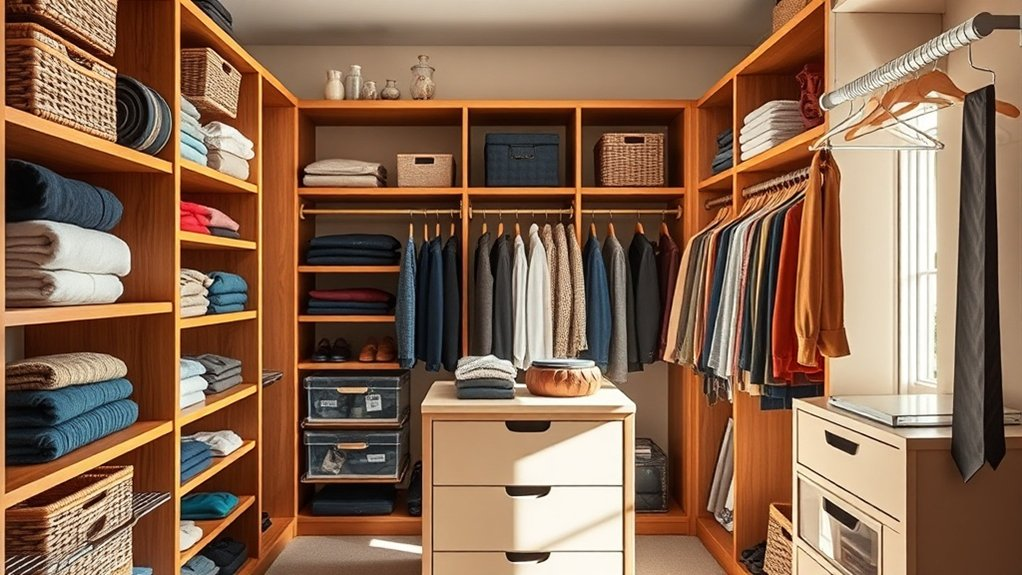
You can turn a chaotic closet into a calm, usable space with bins, baskets, and the right hangers—start by measuring shelves and sorting items into daily, seasonal, and donate piles. Use clear or labeled bins for visibility, breathable baskets for linens, and slim non-slip hangers to save rod space and protect clothes. Create zones for shoes, workwear, and accessories, add hooks or over-the-door racks, and set tiny routines to keep it tidy; keep going to learn smart layouts and quick upgrades.
Closet Highlights
- Sort items by frequency and season, then assign bins or baskets so daily items stay accessible and seasonal items are stored away.
- Measure shelves and choose stackable, labeled bins (clear for visibility, breathable for linens) to maximize vertical space.
- Replace mismatched hangers with slim, non-slip or velvet hangers to increase rod capacity and prevent slipping.
- Use shallow open baskets and drawer dividers for accessories, rotating seasonally and positioning frequently used pieces at eye level.
- Create zones (workwear, casual, shoes, accessories) with labeled containers and a nightly five-minute tidy to maintain order.
How to Assess Your Closet Before Adding Bins, Baskets, or Hangers
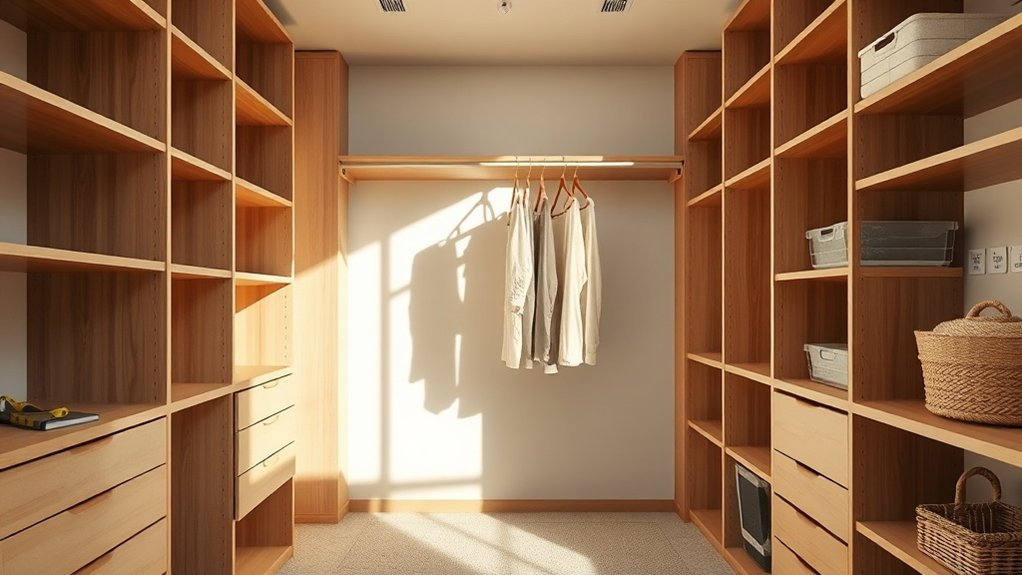
Wondering where to begin? Start by opening every door and drawer, and look with fresh eyes.
Notice what you wear often, what’s been ignored, and what’s worn out. Touch items to decide if they spark usefulness or just take space.
Measure the width, height, and depth of shelves and hanging areas so you’ll know limits later. Note awkward corners, low ceilings, or narrow gaps that could become smart storage. Also check for durable materials like clear acrylic or metal wire when planning new organizers to ensure longevity. Consider choosing organizers made from waterproof materials to maintain hygiene in humid spaces.
Count the types of items you own—shoes, sweaters, accessories—so sorting will be easier. Take a quick photo to track progress and stay honest.
Set a small goal for this session: clear out five things, or reorganize one shelf. You’ll feel lighter and more ready for bins and baskets.
For larger overviews, consider creating a simple inventory list to track what you own and identify excess storage categories.
Choose the Right Bins: Sizes, Materials, and Uses
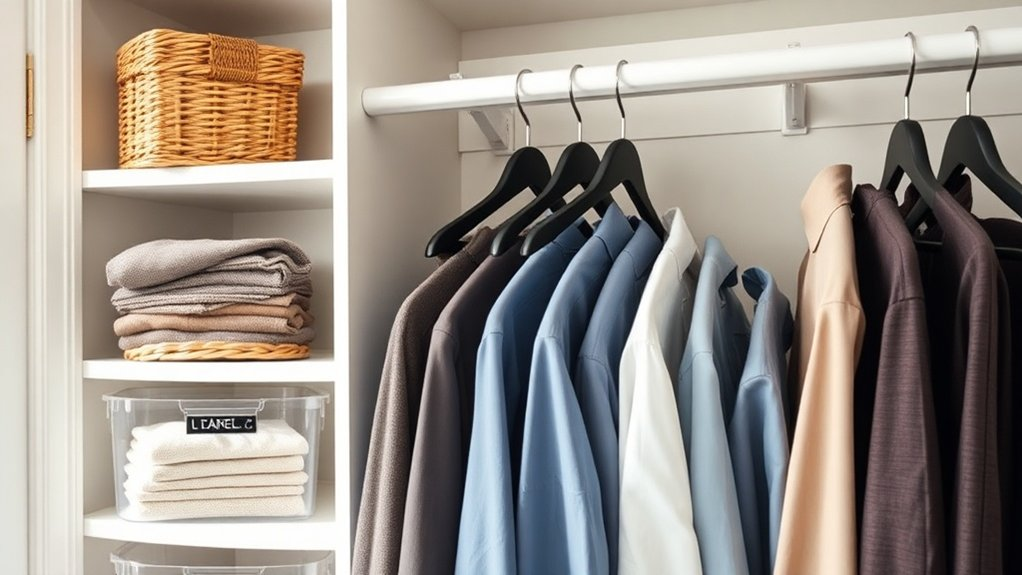
Before you pick anything, measure your shelves and bins so nothing ends up too big or too small—wouldn’t you rather buy once and have it fit?
Choose materials that match the job: breathable fabric for scarves and seasonal clothes, clear plastic for small items you need to find quickly, and sturdy wicker for heavier things. Consider durable options like PP plastic for long-lasting clear bins that resist cracking.
Look for stackable, space-saving designs that let you use every inch of your closet, and imagine the calm you’ll feel when everything has its place. These stackable baskets can maximize vertical space and reduce clutter.
Also consider clear plastic or fabric bins with transparent windows so you can identify contents at a glance without unstacking them.
Measure Before You Buy
Measure your space first — a few quick measurements can save you from buying bins that don’t fit or leave wasted gaps. Start with width, depth, and height for each shelf or cubby, and note any obstructions like brackets or doors. Also consider the available space for taller organizers to maximize vertical storage. Consider using stackable designs to make the most of vertical height while keeping items accessible.
Sketch a simple layout, jotting sizes next to each area, so you can compare bin dimensions without guessing. Think about how you’ll pull items out; leave a little front clearance for handles.
Consider stacking height if you plan to layer bins, but don’t overdo it—stability matters. Take measurements to the store or keep them on your phone while shopping online.
Ready to shop smarter? Small effort now means a neater, happier closet later. Storage options range from fabric and linen to heavy-duty plastic, so choose materials that match your needs and decor, like stackable fabric bins for easy vertical use.
Match Material To Purpose
You’ve already measured every shelf and cubby, so now think about matching materials and sizes to how you’ll actually use those spaces.
Choose clear or labeled bins for seasonal items so you can spot what’s inside without digging, and pick breathable baskets for scarves, hats, or linens to prevent mustiness.
Use sturdy plastic or wire for heavy items like boots or tools, and light wicker or fabric for soft clothes and accessories.
Match bin depth to shelf height; shallow trays work well for jewelry or belts, while deeper containers suit bulky sweaters.
Consider handles for easy pull-out, and lids if you need dust protection.
What’ll make daily routines simpler?
Pick materials that fit the use, and your closet will feel calm and ready. Maximize vertical space with modular designs to store more items without clutter. Add hanging organizers like multi-shelf or 6-shelf hanging organizers to take full advantage of vertical height in narrow wardrobes. Also consider durable options made from rust-resistant metal when storing heavier items to ensure long-term strength and stability.
Stackable And Space-Saving
Think of stackable bins as small building blocks that turn wasted vertical space into instant storage—so you can see more, reach less, and keep things tidy without a forklift.
Choose sizes that match the shelf height and the items you’ll store: shallow for socks and belts, medium for t-shirts, deep for bulky sweaters.
Clear plastic shows contents at a glance; woven or fabric bins add warmth and hide clutter. Durable materials matter—sturdy plastic resists moisture, metal stays rigid, and breathable fabric keeps things fresh.
Look for bins with lids to protect seasonal items, or open fronts for daily access. Mix and match heights to maximize every shelf.
Want an easy win? Start by labeling fronts so everything finds a home, fast.
For heavy items or garage-adjacent storage, consider heavy-duty metal shelving that supports very high weight capacities like 1,000 lbs to prevent sagging and wobble. Consider adding under-shelf wire baskets like the Under Shelf Baskets to reclaim unused space beneath shelves.
Also consider organizers with reinforced shelves to prevent collapse and extend the life of your storage system.
Pick Baskets That Keep Accessories Visible and Tidy
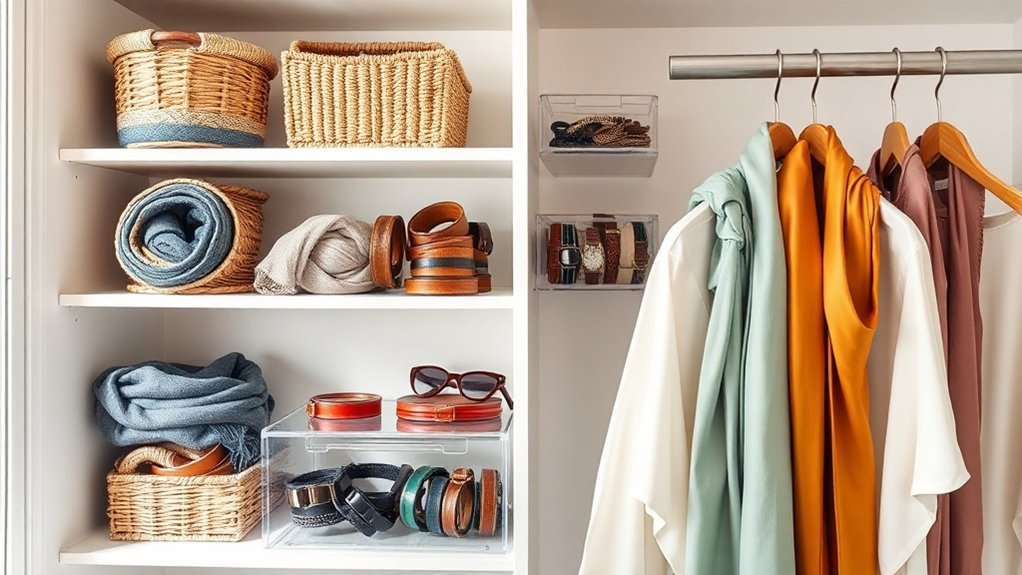
A few well-chosen baskets can transform a jumble of scarves, belts, and small bags into a calm, usable corner of your closet, and you’ll love how much easier it makes getting dressed.
Choose shallow, open-top baskets so you can see contents at a glance; that quick view saves time and prevents forgotten favorites.
Mix materials—wire for structure, woven for softness—to match your closet’s feel while keeping items neat.
Label edges or use clear liners to guide daily choices, and rotate baskets seasonally to keep clutter down.
Want easy access? Place frequently used accessories at eye level.
Small changes make a big difference, and you’ll feel proud each morning.
- Shallow open baskets for visibility
- Mixed materials for function and style
- Labels and seasonal rotation for order
Consider pairing baskets with durable organizers like drawer organizers to maximize space and longevity. Adding stackable storage can further increase vertical space and improve accessibility.
A simple plan for sorting and categorizing items into designated bins supports efficient use of closet space.
Select Hangers That Save Space and Protect Clothes
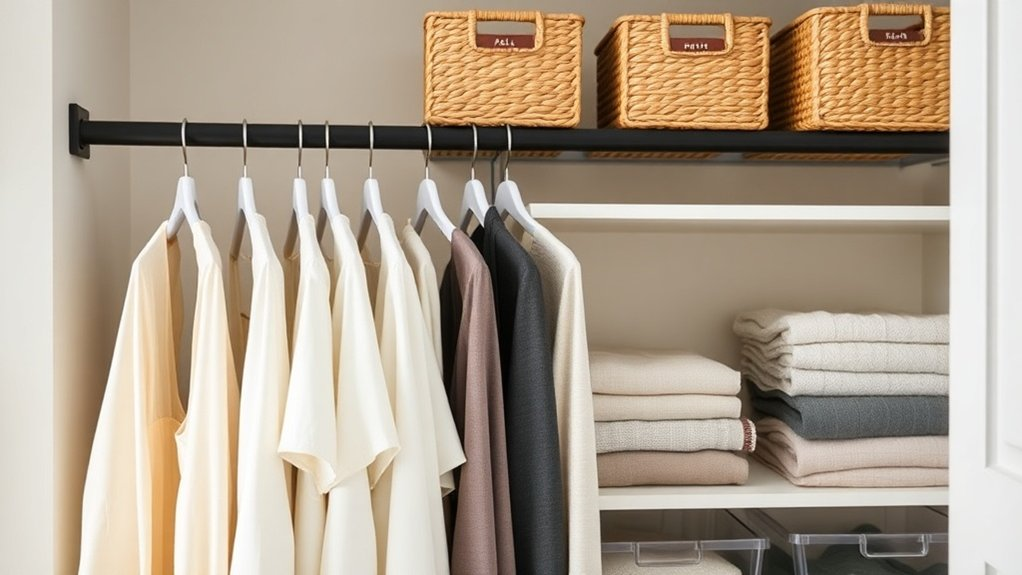
Now that your accessories live in neat, visible baskets, your clothes deserve the same thoughtful treatment—selecting the right hangers will save space and protect the pieces you reach for every day.
Choose slim, non-slip hangers for shirts and blouses to maximize rod space and stop items from sliding to the floor. Use velvet or felt finishes to cradle delicate fabrics, and padded hangers for sweaters and dresses to keep shoulders shaped. Consider durable materials like premium wood or aluminum for long-lasting hangers that also elevate the closet’s look with premium finishes. Metal hangers with a chrome finish also resist corrosion and maintain their appearance over time.
Slim, non-slip hangers save space and protect clothes—velvet for delicates, padded for sweaters and dresses.
Metal multi-tiered hangers work great for pants and scarves, consolidating many items on one hook. Match hanger types to garment needs, and replace mismatched, warped hangers that stretch fabric.
Can you picture a tidy row of matching hangers that makes outfit choices quicker and kinder to your clothes? Take the small step today.
Multi-tier metal hangers with non-slip clips are especially useful for maximizing vertical storage and preventing wrinkles.
Layout Options: Small, Reach-In, Walk-In, and Wardrobe Closets
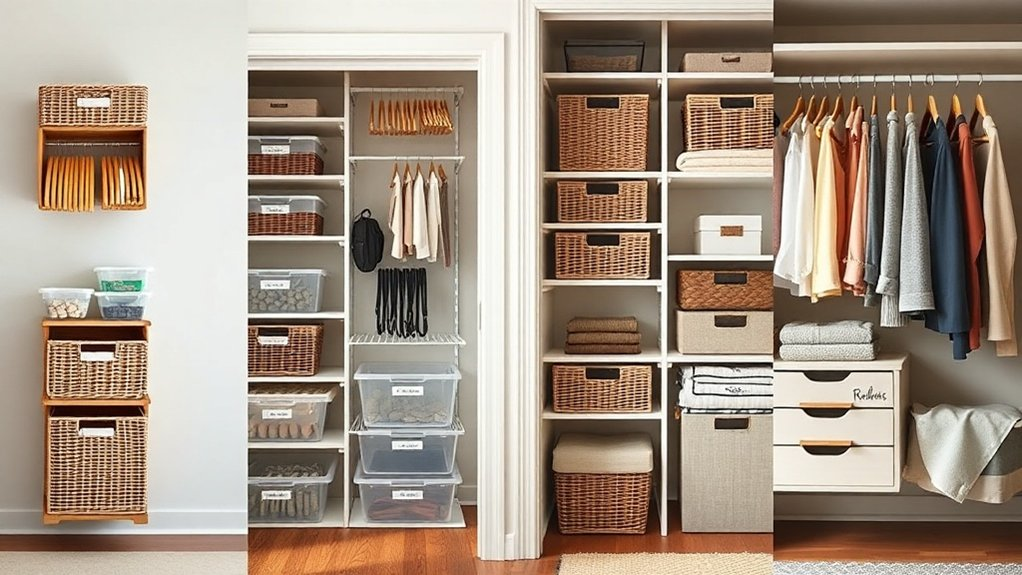
Think about how you can stack shelves and hanging rods to maximize vertical space, so every inch of your small or walk-in closet works harder for you. Consider adding adjustable rods and shelves from modular closet systems to adapt as your storage needs change. You can also add 6-tier organizers to increase storage without widening the footprint.
Zone by function—keep shoes, work clothes, and seasonal items in clear sections—so you spend less time searching and more time enjoying your outfits.
Mix in adjustable storage layers like movable shelves and modular cubes, and you’ll have a flexible system that grows with your needs; what would you change first?
Consider adding clear acrylic shelf dividers to enhance visibility and protect garments while keeping everything neatly separated.
Maximize Vertical Space
Because vertical space is one of the easiest ways to access storage, you’ll feel the difference the moment you start stacking smartly in any closet type. You can lift items off the floor and into clear sight, turning wasted height into simple order.
In small closets, add a second rod or slim shelf; in reach-ins, use hanging organizers that step up storage; in walk-ins, go floor-to-ceiling with labeled bins; wardrobes welcome tiered hangers and top shelves. You’ll save time, see more, and enjoy a calmer routine. Consider adding over-the-door organizers to free up shelf space and make frequently used items more accessible. Many no-drill options like adjustable closet rod extenders let you add extra hanging space without tools or damage.
- Use clear or labeled bins on high shelves for seasonal items.
- Install adjustable shelving and staggered rods.
- Choose slim hangers and vertical baskets to keep lines tidy.
Isn’t it satisfying to reclaim space? Consider stackable and anti-tip organizers like stackable closet organizers to safely maximize vertical storage.
Zone By Function
When you organize by function, your closet stops being a jumble and starts working for you, with every item living where it makes the most sense.
Start by grouping; hang daily outfits together, keep seasonal items in labeled bins, and store shoes by activity.
In a small closet, use slim hangers and a single shelf basket for extras. Consider choosing quality materials like chrome-plated metal or sturdy wood for any added organizers to ensure longevity.
For a reach-in, add clear bins at eye level and baskets below for scarves or belts.
In a walk-in, create zones: workwear, casual, and active, each with dedicated hangers and baskets.
A wardrobe closet benefits from stacked baskets and a designated shoe area.
Can you see how each zone speeds your routine and reduces stress?
Try it, and feel the calm.
High-quality materials like chrome-plated metal and sturdy wood can enhance durability and aesthetic appeal.
Consider investing in durable hangers to protect garments and maintain shape.
Adjustable Storage Layers
Now that you’ve grouped items by function, you can layer your storage to fit the shape and size of your space, making every inch work harder for you.
Think about small, reach-in, walk-in, and wardrobe closets as different canvases — each needs adjustable layers that move with your life. You’ll mix hanging tiers, adjustable shelving, and stackable bins so seasonal items sit higher, daily pieces stay at eye level, and small accessories live in clear baskets.
- For small closets, use slim hangers, a double rod, and narrow bins to maximize height.
- In reach-in closets, pull-out baskets and adjustable shelves give quick access.
- Walk-ins and wardrobes benefit from modular shelving, labeled baskets, and flexible hanger heights.
Which layout will solve your daily routine?
Storage Zone Ideas: Seasonal, Everyday, Shoes, and Linens
Think about dividing your closet into clear zones—seasonal, everyday, shoes, and linens—to make getting dressed and finding items feel effortless.
Set the everyday zone at eye level, where you grab tops, pants, and jackets you wear most; use uniform hangers and a shallow basket for accessories so mornings move quickly.
Reserve a high shelf or rare-access bin for seasonal items, labeled and rotated each change of season, so clutter doesn’t creep in.
Dedicate lower shelves or a cubby to shoes, assigning pairs to individual slots or clear boxes to protect and display them.
Keep linens in a cool, dry corner, folded neatly in breathable baskets, with spare sets grouped together.
Which zone could you refine first to simplify daily life?
Quick DIY and Low-Cost Upgrades With Bins and Baskets
Grab a few affordable bins and baskets and watch your closet transform—fast. You’ll be surprised how small swaps lift the whole space: swap mismatched boxes for uniform bins, add a shallow basket for scarves, or repurpose muffin tins for jewelry. These moves are cheap, satisfying, and quick to do.
- Paint or wrap cheap bins to match your decor, giving a polished look without breaking the bank.
- Use drawer dividers or small baskets inside shelves to keep basics tidy and visible.
- Stack labeled baskets for linens, seasonal items, or overflow, creating neat, reachable piles.
Which corner of your closet will you tackle first? Start simple, enjoy the progress, and build momentum with each small, effective upgrade.
Labeling, Grouping, and Maintenance Routines That Stick
When you give your closet a clear system—labels for where things live, groups for what you wear, and a simple routine to keep it that way—you’ll save time and feel less stressed every morning.
Start by grouping items by use: workwear, casual, seasonal, and accessories. Use clear, consistent labels on bins and baskets so you and anyone who helps knows where things go.
Create a maintenance routine: a five-minute nightly tidy and a 15-minute weekly check to refold, rehang, and return stray items. Put donation and repair bins within reach to prevent pileups.
Want this to stick? Make the routine tiny and make it visible. Small habits, repeated, keep your closet calm and your mornings easier.
Troubleshooting: Fixing Common Closet Clutter Problems
Clutter happens to everyone, and you can fix most problems with a few smart moves and a patient plan. You’ll feel lighter when you tackle hotspots: overflowing shelves, mismatched hangers, and piles that never seem to leave.
Clutter’s normal — tackle hotspots with simple swaps and a weekly 10-minute tidy to reclaim calm.
Start by spotting the cause, then choose simple fixes that fit your habits and space.
- Create clear zones so items have one home, reducing the “where does this go?” panic.
- Swap bulky storage for slim baskets and labeled bins to reclaim shelf space and visibility.
- Rotate seasonal items and set a 10-minute weekly tidy to stop small messes from growing.
You’ll build momentum fast.
Which small change will you try first to make your closet calmer and more useful?
Frequently Asked Questions
Can I Use Clear Bins for Privacy-Sensitive Items Like Underwear?
You shouldn’t use clear bins for privacy-sensitive items like underwear; they’ll expose contents. Instead, choose opaque bins, cloth drawers, or add fabric liners and labels. You’ll keep items discreet while still maintaining easy access and organized storage.
How Do I Store Delicate Items to Prevent Snagging in Baskets?
You should line baskets with soft fabric or tissue, fold items gently, use dividers or small pouches, avoid metal hardware, and store fragile pieces separately; this’ll minimize friction, prevent snags, and keep delicates protected.
Are There Eco-Friendly Bin and Basket Material Options?
Imagine a friend switched to recycled plastic bins and seagrass baskets for a coastal rental. Yes — you can choose recycled plastic, seagrass, bamboo, organic cotton, or cork; they’re durable, biodegradable or recyclable, and stylish too.
Can I Mix Hanger Types on the Same Rod Without Sliding?
Yes — you can mix hanger types on one rod, but you’ll need slim, non-slip hangers or add grippers to prevent sliding; balance weight distribution, group similar fabrics together, and alternate textures to reduce shifting and overcrowding.
Will Bins or Baskets Affect Closet Humidity or Mold Risk?
Yes — bins or baskets can trap moisture and raise mold risk if they’re non-breathable. Picture a damp blanket sealed in a box; you’ll want breathable materials, airflow, and occasional airing to keep things dry and mold-free.
Conclusion
Imagine opening your closet and feeling like you’ve stepped into a calm little shop where everything has a place—bins, baskets, and hangers working like a cheerful team. You’ll save minutes every morning, and maybe even a little peace. Ready to try one small change? Start with one shelf or bin, label it, and notice how quickly order spreads. Can you picture that ease? Go ahead—your future, organized self will thank you.