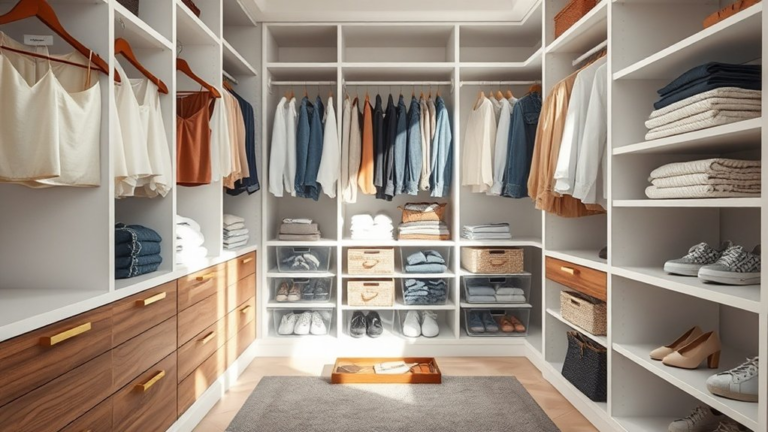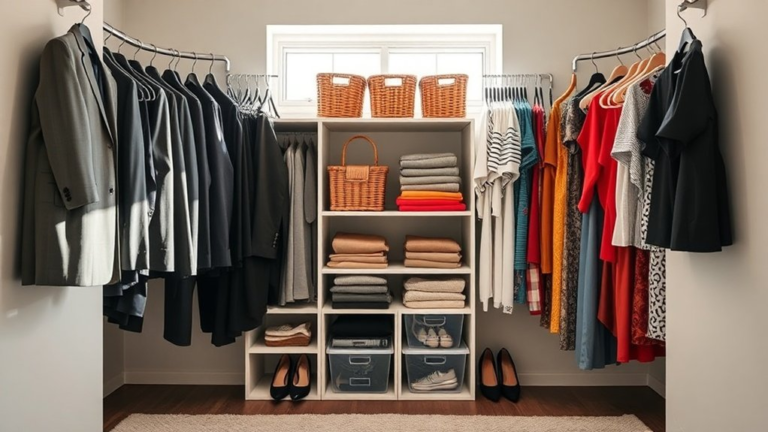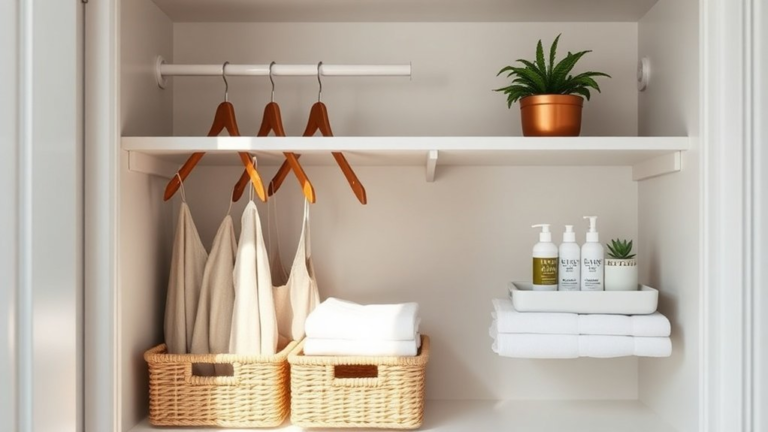
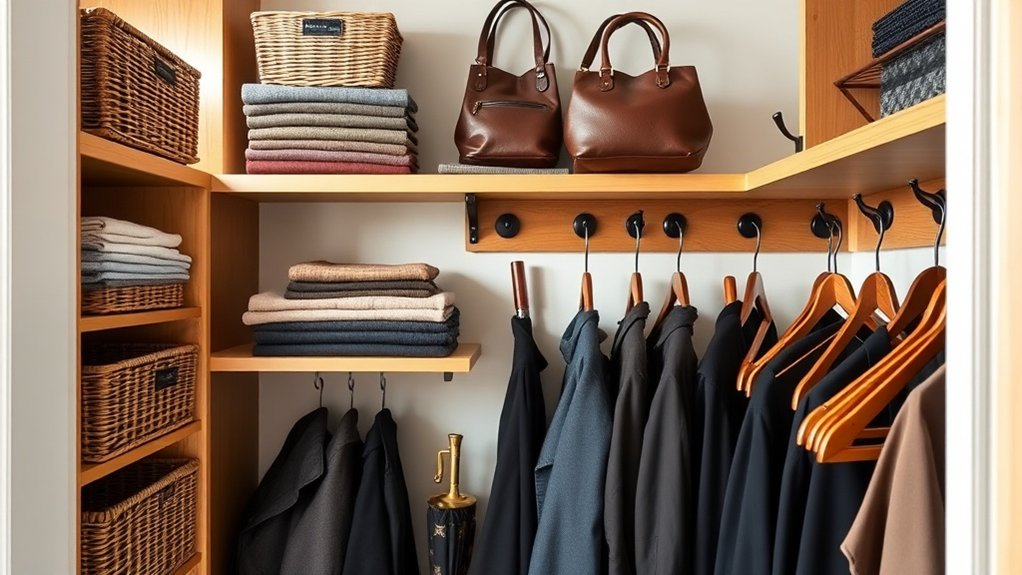
Start by measuring your hall closet and noting what you use daily—coats, shoes, linens, or cleaning tools—and who needs access. Zone the space: hang everyday coats near the door, store shoes low, keep linens folded and labeled, and add clear bins or hooks for gear. Use vertical shelves, over‑door organizers, and uniform hangers to save space. Tidy weekly, rotate seasonal bins, and you’ll find things faster and stress less; learn simple layouts and product picks next.
Closet Highlights
- Measure closet dimensions and note door type, shelf placement, and items you need to store before planning layout.
- Zone the closet by function (coats, shoes, linens, gear) and assign consistent, labeled spots for each category.
- Use vertical solutions—extra shelves, hanging organizers, and slim shoe racks—to maximize full-height storage.
- Store frequently used items at eye level, hazardous or seasonal items on high shelves, and bulk items in clear labeled bins.
- Maintain with weekly quick resets, declutter seasonal items, and rotate bins to keep the closet efficient and accessible.
How to Assess Your Hall Closet Type and Needs
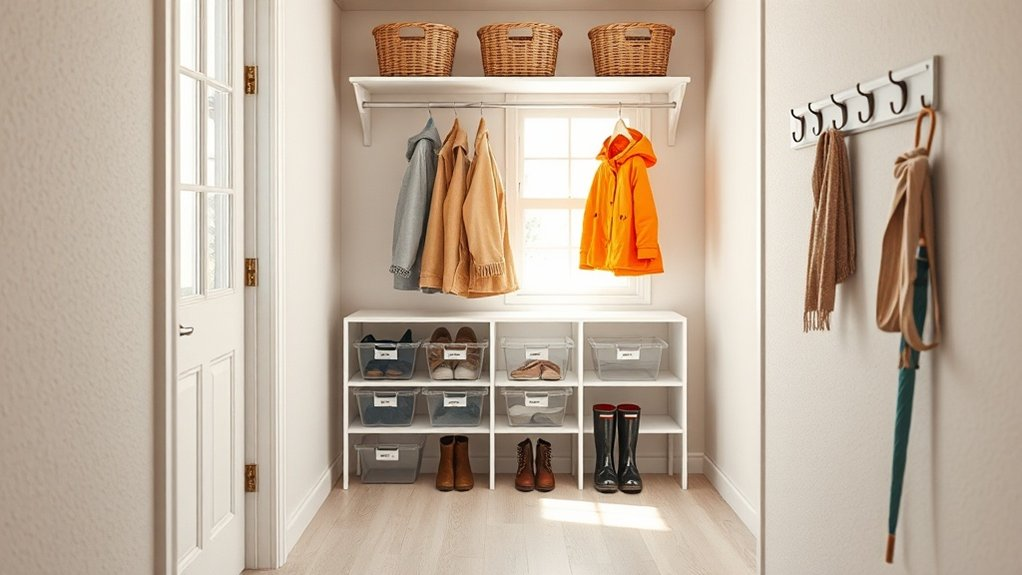
Wondering where to start with that hall closet? You’ll begin by looking closely: note its size, shelving, and door type. Is it a shallow coat closet, a deep storage nook, or a narrow broom closet? Measure width, depth, and height, then jot down what you store now and what you want to keep. Ask yourself who uses it, how often, and which items must be easy to grab. Notice lighting, hooks, and any dead space above or below shelves. Picture daily routines and traffic flow—does the closet help or hinder them? This clear snapshot shows practical needs and emotional goals: ease, calm, and order. With that insight, you’ll plan solutions that actually fit your life. Consider adding stackable designs to maximize vertical space and storage capacity. Adding durable adjustable shelving can help customize the space as needs change. Consider also installing over-the-door organizers to free up shelf and floor space for bulkier items.
Quick Wins: 10 Fixes for Any Small Hall Closet
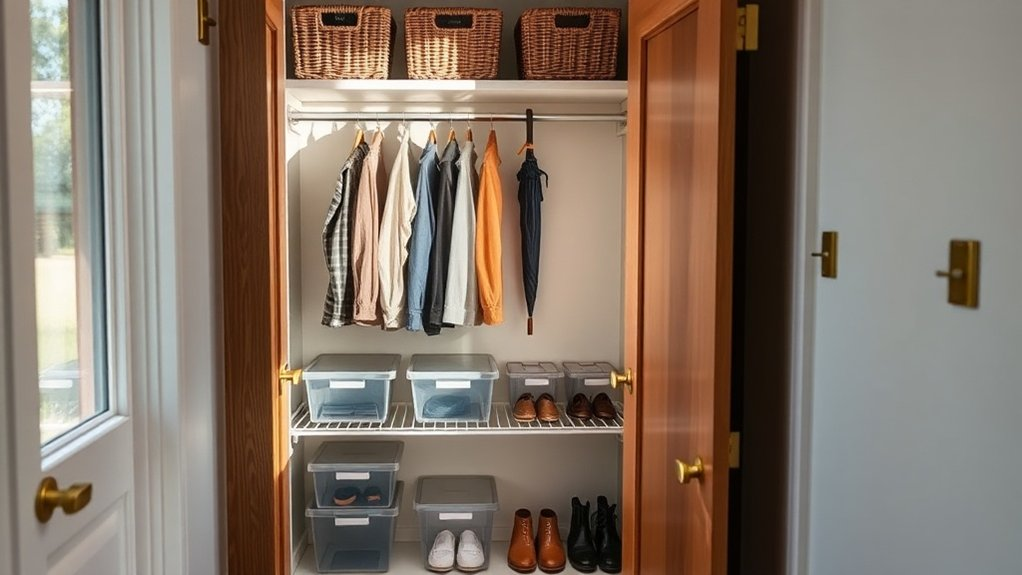
You can make a small hall closet feel much bigger and more useful with a few simple changes that don’t take long.
Start by using the full height of the space with extra shelves or a hanging organizer. Consider installing modular or multi-tier organizers to maximize vertical space and increase capacity without major renovations. Try adding stackable baskets to make the most of vertical storage without reducing accessibility.
Switch to clear containers so you can spot what you need at a glance, and add multiuse hooks for bags, scarves, and keys.
Which of these quick fixes can you try today to bring order and ease to your daily routine?
Don’t forget to consider maximizing vertical space to get the most out of every inch.
Maximize Vertical Space
Think of the empty height above your shoes and coats as free real estate—filled correctly, it can transform a cramped hall closet into a powerhouse of organization.
Start by adding a second hanging rod or staggered shelving so you can double storage without crowding floor space. Use tall, slim shelving for baskets or bins that fit snugly from floor to ceiling, and install hooks on the inside door for scarves, bags, or umbrellas.
A narrow top shelf holds items you only need seasonally. Don’t forget a slim shoe rack that tucks vertically, freeing floor area. Small step stools that clip inside let you reach high spots safely.
These changes feel simple, but they make your closet work harder, leaving you calm and in control every time you open the door. Consider incorporating space-saving hangers to multiply hanging capacity while keeping garments accessible. Adding a vertical storage strategy like this mirrors core closet-organizing principles from Transform Your Closet: Tips for Effortless Organization. To complete the makeover, include a decluttering routine so you only store what you actually use.
Use Clear Containers
After you’ve stretched every inch of vertical space, clear containers will make that effort pay off by letting you see what’s stored at a glance.
When you use clear bins, baskets, and boxes, you cut hunting time and reduce closet chaos. Group like items—seasonal hats, scarves, pet supplies—in labeled clear tubs so you can pull the right one without opening every container. Many people pair clear tubs with stackable fabric bins to combine visibility with neat stacking. Consider choosing containers with reinforced panels for better stability when stacking and long-term durability.
Choose stackable shapes to keep things tidy and maximize shelf space, and pick sizes that match your shelves so nothing overhangs. Clear containers also motivate you to keep contents neat, since everything’s visible.
Don’t forget small clear trays for keys, sunglasses, and loose odds and ends.
Ready to swap mystery boxes for clarity? You’ll thank yourself every time. Consider using stackable designs to maximize vertical space and maintain an organized appearance.
Add Multiuse Hooks
A handful of well-placed multiuse hooks can transform a crowded hall closet into a tidy, grab-and-go station that actually makes your mornings easier.
Hang a row at eye level for coats and sweaters, and add lower hooks for kids’ backpacks and reusable bags so everything has a clear home.
Use sturdy, spaced hooks to prevent items from bunching, and mix single hooks with double hooks for versatility.
Want to keep scarves, dog leashes, or umbrellas visible? Assign each item its own hook.
Labels help family members stick to the system. You’ll love how quick it’s to grab essentials and head out the door.
Small change, big payoff — try three to six hooks and see the difference.
Consider choosing rust-proof stainless steel hooks for long-lasting durability and low maintenance stainless steel.
For added durability and easy cleaning, consider pairing hooks with waterproof PP plastic storage bins nearby to catch gloves or hats.
Consider pairing hooks with under-shelf wire baskets like the Whitmor White Wire Shelf to add quick, accessible storage for hats and small items.
Organizing a Coat Closet: Layouts, Hooks, and Hanging Tips
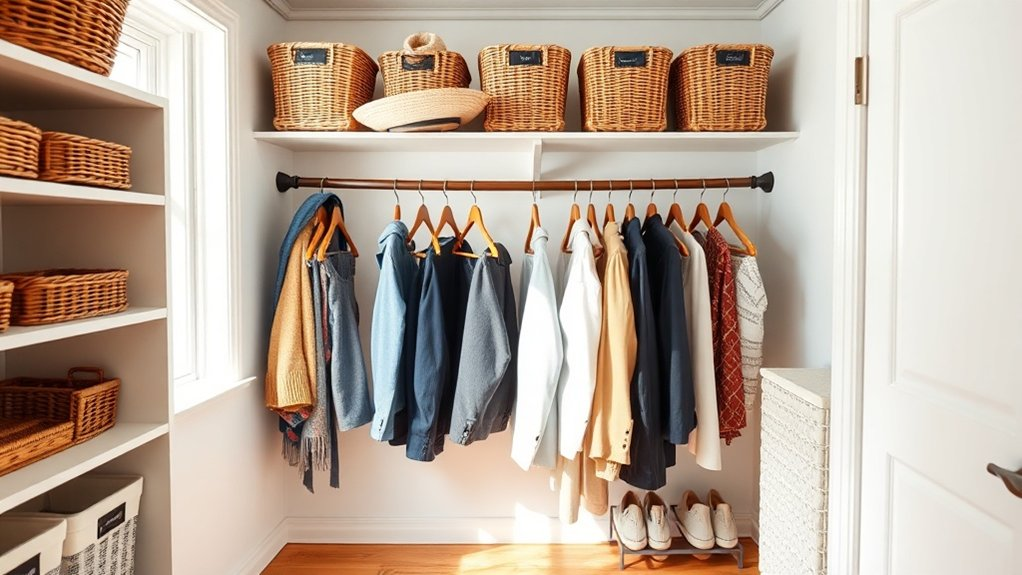
If you want your coat closet to feel like a helpful ally instead of a chaotic catchall, a smart layout and the right hooks will make all the difference.
Start by zoning: designate a long rod for everyday coats, a lower rod or row of hooks for kids’ jackets, and a small shelf for hats and gloves. Consider using stackable organizers to maximize vertical space for seasonal items.
Choose sturdy hooks near the door for quick grabs, and mix single and double hooks to hold layers without crowding.
Use slim, non-slip hangers to save space and keep shapes intact.
Hang heavier coats toward the back, lighter pieces in front.
Want quicker mornings? Keep a designated spot for keys and an umbrella.
Little systems make a big, calming change.
Consider adding stackable bins or foldable organizers for space-saving storage to keep seasonal items and accessories tidy. Also consider organizers with anti-tip features for safer vertical stacking.
Setting Up a Utility Closet: Shelves, Bins, and Safe Storage
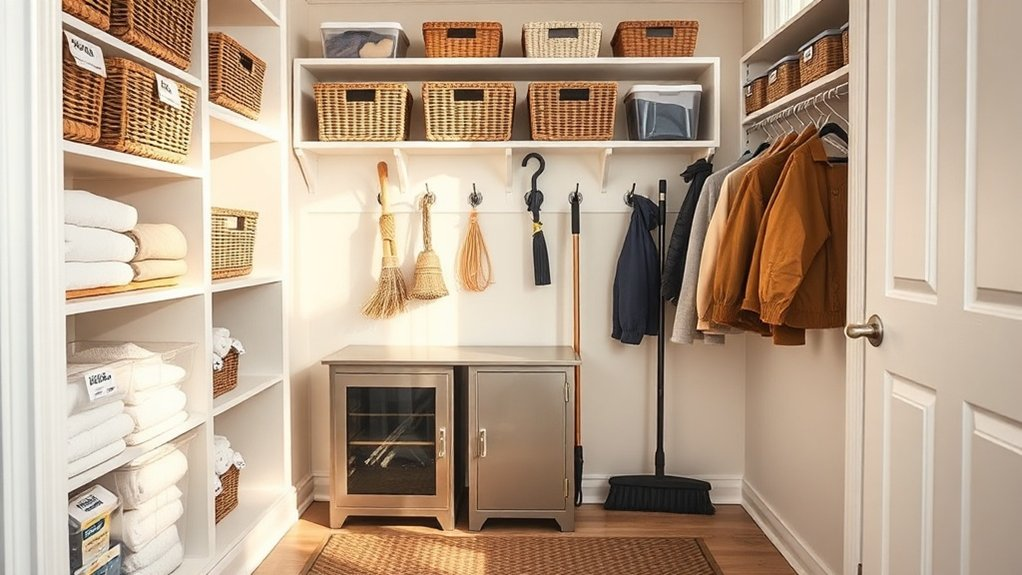
You’ve organized coats so mornings feel calmer. Now give that same care to your utility closet so tools, cleaning supplies, and seasonal items work for you instead of against you.
Start by clearing everything, then sort into keep, donate, and toss piles. Install adjustable shelving to fit tall items and small bottles alike; you’ll appreciate the flexibility.
Use clear bins with labels so you can grab what you need without digging. Store hazardous materials on a higher shelf, out of reach of children and pets, and keep a small spill kit nearby.
Want quick access? Reserve a middle shelf for daily essentials.
- Adjustable shelves for varied heights
- Clear, labeled bins for visibility
- High, locked shelf for hazardous items
- Spill kit and easy-access essentials
Consider stackable clear storage boxes with flat lids to maximize vertical space and visibility, such as clear stackable bins that let you see contents at a glance.
Linen Closet Strategies: Folding, Labeling, and Airflow
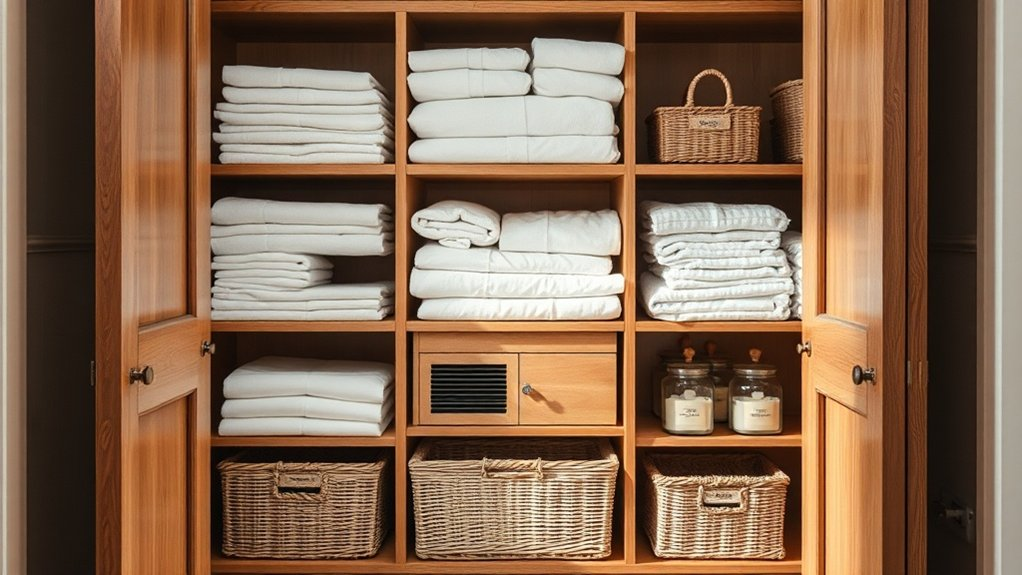
While neatly folded stacks can look tidy, thinking about how you use the linens will make the closet truly work for you, not against you.
Start by grouping items by function — sheets, towels, extra pillowcases — and fold them to fit the shelf depth so you can pull what you need without disturbing the rest. Consider using stackable designs to maximize vertical space without overcrowding shelves. Consider adding adjustable dividers to create customizable cubbies that keep stacks stable and easy to access.
Label shelves with simple tags so family members return things to the right spot. Leave a bit of breathing room between stacks, and store bulky items lower to keep top shelves airy.
Consider a small moisture-absorbing sachet or a vented basket to keep airflow moving and prevent mustiness.
What would make grabbing fresh linens effortless for you? Take one small step today to try it.
For extra organization, consider adding clear stackable storage drawers to maximize vertical space while keeping contents visible and accessible.
Multipurpose Hall Closets: Zoning for Shoes, Gear, and Supplies
Think about carving your hall closet into clear zones so shoes, sports gear, and household supplies each have a home that’s easy to reach.
Start with a low shoe storage zone for daily pairs and a taller section for boots, then set aside cubbies or labeled bins for gear like backpacks and umbrellas, plus a shelf for supplies. Consider adding a slim vertical shoe rack to maximize narrow spaces and keep pairs visible.
Which zone would make your mornings smoother — the one that corrals shoes or the one that tames your gear?
Consider using stackable bins that hold up to 6.6 lbs each for lightweight items and easy access to frequently used gear, like stackable bins. Add a dedicated labeled cubbies area to improve visibility and speed when grabbing items.
Shoe Storage Zone
Start by carving out a clear shoe storage zone near the door so shoes stop piling up and your hall feels welcoming the moment you walk in.
You’ll want something that matches your routine: quick access for daily shoes, neat spots for guests, and a place to stash seasonal pairs.
Think practical, attractive, and easy to maintain; you’ll notice the calm right away. Consider using space-saving hangers nearby to free up closet room and keep seasonal items organized.
- Slim bench with cubbies underneath for slippers and kids’ shoes, plus a cushion to make mornings gentler.
- Tiered shoe rack for daily sneakers, keeping pairs visible and off the floor.
- Wall-mounted shelves for folded boots or shoe boxes, freeing floor space.
- A small tray or mat for wet shoes, protecting your floor and cutting cleanup time.
Consider a tall narrow shoe rack to maximize vertical space in a small hall closet. Add a compact rolling rack with adjustable shelves for flexible storage that moves when you need it.
Gear And Supply Areas
A single, well-planned zone for gear and supplies makes your hall closet work harder and feel calmer, so you can grab what you need and go.
Divide the space into clear spots: hooks for jackets and leashes, bins for sports balls and gloves, and shelves for first-aid kits, flashlights, and charging cords.
Label everything so you and your family know where things belong. Use clear bins or open baskets to see contents at a glance.
Want a quick grab-and-go system? Keep masks, sanitizer, and reusable bags near the door.
Rotate seasonal items so clutter doesn’t build up. When you touch something, decide to keep, toss, or relocate.
Small habits, smart zones—your closet will be tidy and ready, every day. Consider implementing zoning principles to make each area functional and easy to maintain.
A consistent organization system across closets in your home helps maintain order and reduces decision fatigue when storing and retrieving items.
Budget-Friendly Storage Solutions and Space-Saving Products
When you’re working with a tight budget but big goals for your hall closet, smart choices can make the space feel twice as useful without costing much. Clever, low-cost tools like adjustable shelving, clear bins, and over-the-door pockets stretch what you already have and keep things visible and easy to grab.
You’ll want items that save floor space and reduce visual clutter, so you can find what you need fast. Think vertical, think transparent, think modular. Small investments pay off every day.
- Slim stacking shelves — add levels without deep drilling.
- Clear plastic bins with labels — see contents at a glance.
- Over-the-door organizers — hold shoes, gloves, mail.
- Tension rods and hooks — create hanging space instantly.
Common Problems and How to Maintain an Organized Hall Closet
You’ve picked smart, low-cost tools, and now you’ll want to keep that momentum by spotting the small problems that quietly undo order: crowded shelves that become a jumble, mislabeled bins that hide what you need, and overstuffed hangers that make coats wrinkle.
Check your closet weekly for overflow, pull out items that don’t belong, and toss or donate things you haven’t used in a year. Reinforce labeling with clear tags and swap vague names for specific ones.
Use uniform hangers to save space, and rotate seasonal items into labeled bins.
Want to avoid repeat clutter? Create quick drop zones and a simple reset routine—five minutes at the end of each day keeps your hall closet calm and ready.
Frequently Asked Questions
How Do I Childproof a Hall Closet With Hazardous Items?
Lock it and store hazardous items up high in locked bins; label contents and keep keys separate. Use childproof cabinet locks, safety latches, and opaque containers. Teach kids not to open the closet and check locks regularly.
Can I Convert a Hall Closet Into a Mini Home Office?
Yes — you absolutely can convert a hall closet into a mini home office, and it’ll feel like you’ve gained a secret command center. You’ll fold in a slim desk, smart lighting, storage, ventilation, and power.
What’s the Best Way to Control Pests in a Hall Closet?
Seal gaps, vacuum regularly, and store fabrics in airtight bins so you don’t attract pests. Use natural repellents like cedar or lavender, set traps for insects or rodents, and inspect periodically to catch infestations early.
How Do I Store Seasonal Decorations Long-Term in a Hall Closet?
You might worry about damage, but you can protect decorations by using clear, labeled plastic bins with silica gel packs and sturdy shelving; rotate items seasonally, wrap fragile pieces in acid-free tissue, and keep inventory on your phone for easy access.
Can I Install Electrical Outlets or Lighting Inside a Hall Closet?
Yes — you can, but you’ll need to follow code, hire a licensed electrician, and guarantee proper clearance, GFCI or switched circuits as required. You’ll also want adequate ventilation and fixture-rated bulbs to avoid heat buildup and fire hazards.
Conclusion
You’ll find that organizing your hall closet is more than neat shelves—it’s a small act that keeps your day running. As you sort coats, linens, and tools, you’ll notice how easy choices create calm. Could one labeled bin save a frantic search? Yes. Little zones, hooks placed just so, and a pulse on maintenance will keep things working. Start small, enjoy the order, and let this tidy corner quietly shape smoother mornings.