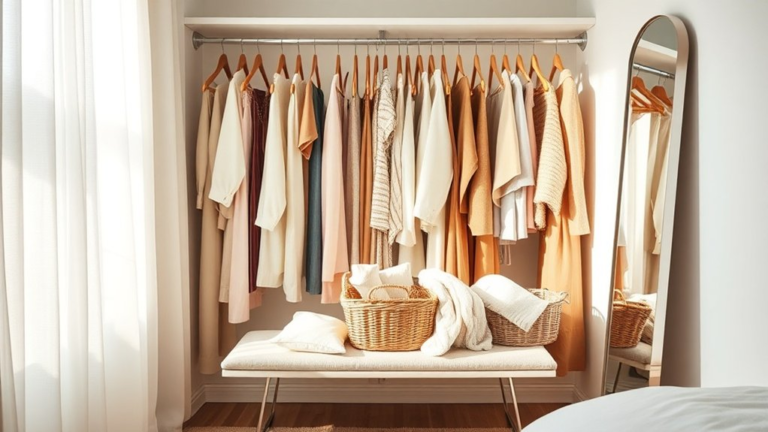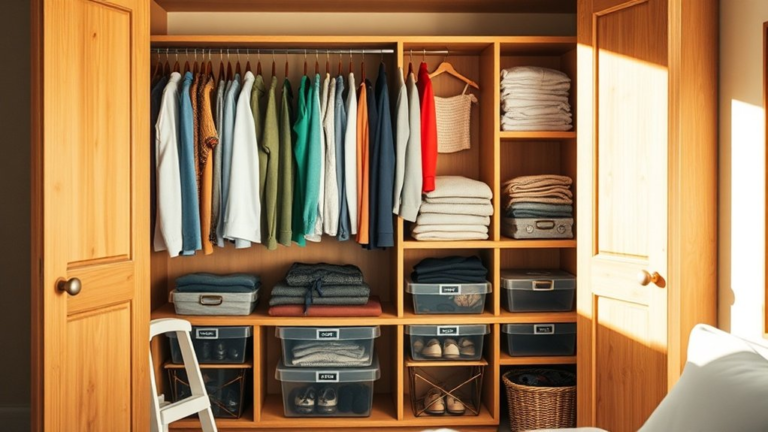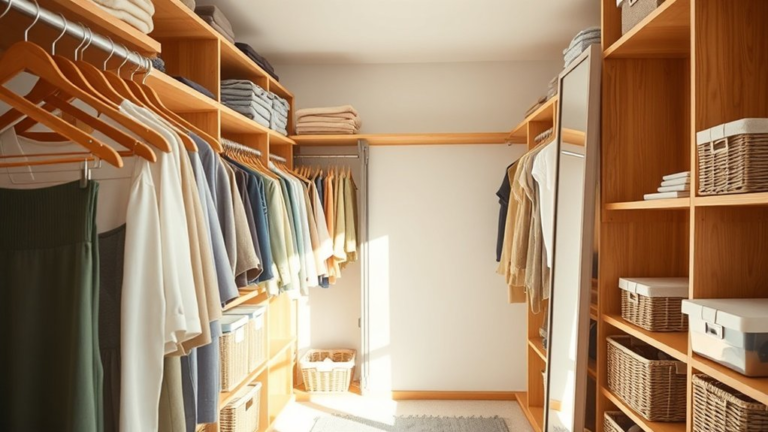
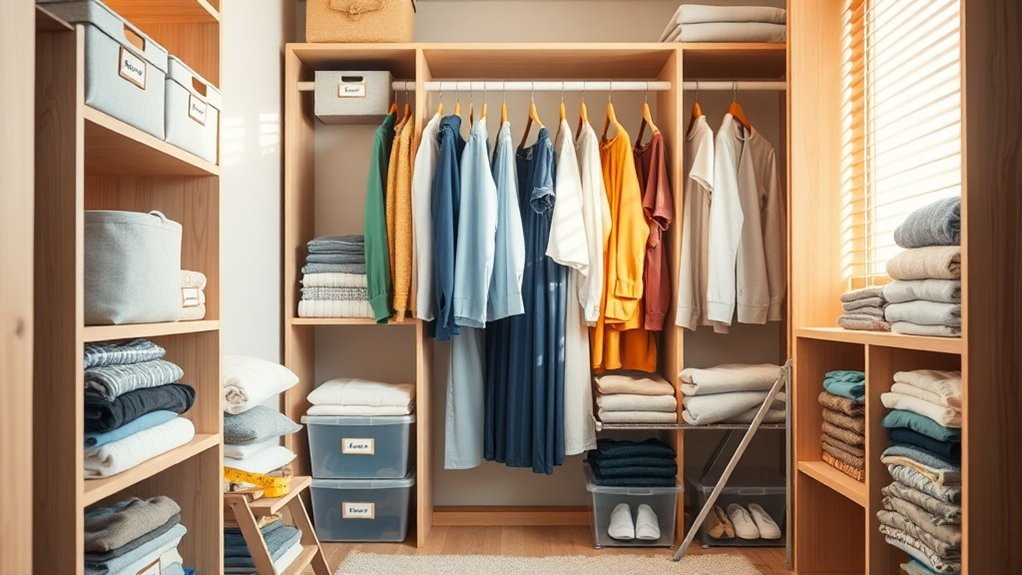
You can turn a messy closet into a calm, useful space by starting small: declutter into keep, donate, repair, or toss piles, then take inventory so you know what you actually own. Sort clothes by daily use, season, and outfit combos, and choose storage that fits your reach-in or walk-in layout. Add double rods, clear bins, and a daily essentials tray. Want quick maintenance tips and space-saving hacks to keep it that way?
Closet Highlights
- Start by decluttering into keep, donate, repair, and toss piles to clear space and reduce decision fatigue.
- Take a quick inventory by category and measure hanging, shelf, and floor space to guide storage choices.
- Organize by usage and season—daily items front and center, occasional and seasonal higher or in labeled bins.
- Maximize vertical space with double rods, high shelves, hooks, and stackable clear bins for visibility and capacity.
- Establish simple maintenance: five-minute weekly resets and seasonal deep-cleans to sustain organization.
Declutter First: Decide What to Keep, Donate, Repair, or Toss
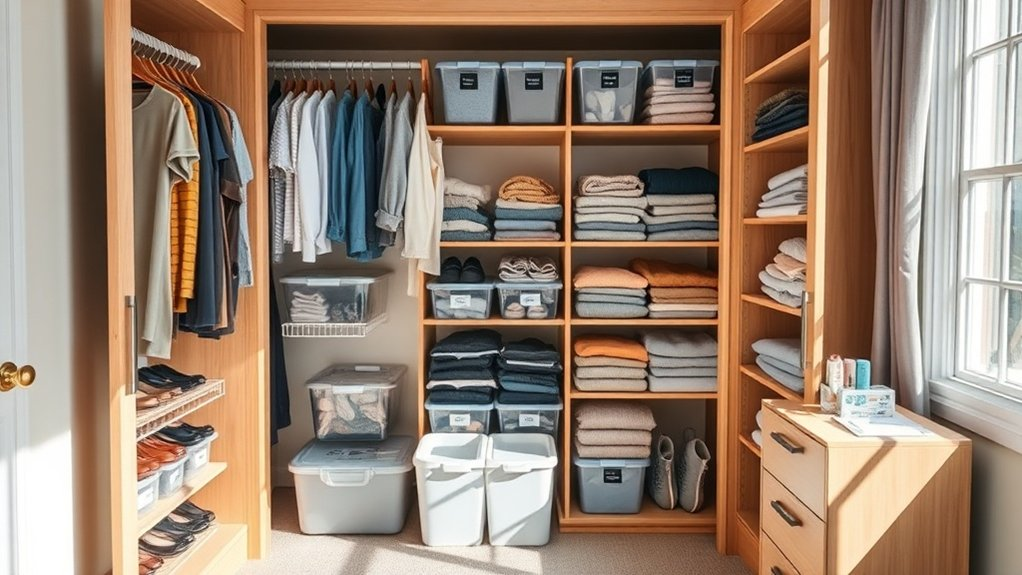
Start with one clear decision: keep what you love and use, and let the rest go.
You stand before your closet and sort items into four piles: keep, donate, repair, toss.
Ask yourself: does this make me feel good, fit well, or get worn often? If yes, keep it. If it’s gently worn but still useful, set it aside for donation.
Broken zippers or missing buttons? Repair might bring those pieces back to life. Consider using adjustable shelving to make repaired or seasonal items easier to store.
If something’s stained, torn beyond help, or never worn, let it go.
Move quickly, trusting your first reaction. Keep only what fits your life now.
You’ll feel lighter, more confident, and ready to organize.
Take breaks, celebrate small wins, and keep momentum going.
For long-term success, create a simple system to maintain order, like seasonal rotation and labeled storage for efficient closet organization. Consider using space-saving hangers to increase capacity without crowding.
Create a Simple Inventory So You Know What You Actually Own
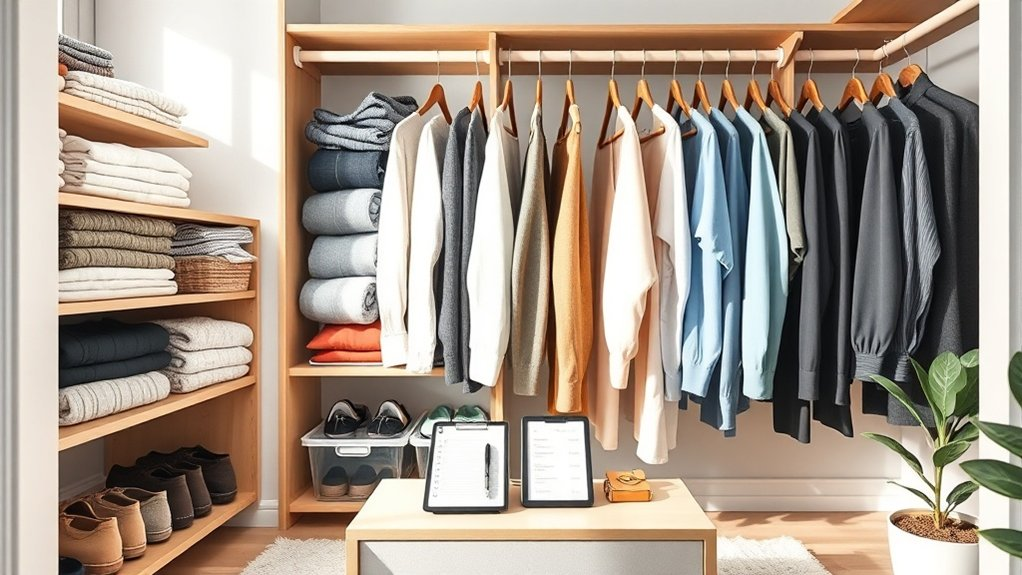
Grab a notebook or open a simple notes app and list what you actually own, so you can stop guessing and start organizing with confidence.
Start with broad categories: tops, bottoms, dresses, outerwear, shoes, accessories. Write down quantities and note anything special, like altered pieces or seasonal items stored elsewhere. Consider measuring available hanging and shelf space to choose multi-tiered organizers that maximize vertical storage.
Don’t overthink labels — shorthand works fine. Look at each shelf and drawer, jotting items as you see them, and check pockets for hidden things.
This quick inventory makes gaps and duplicates obvious, so you can plan storage and shopping smarter.
How would it feel to know exactly what’s in your closet? With this simple list, you’ll move forward calmly, make better choices, and actually enjoy getting dressed. Consider adding measurements of your closet dimensions to the list for better-fit organizers and space planning.
A basic closet audit can reveal surprising patterns that help you reduce clutter and optimize storage.
Sort Clothes by Routine: Frequency, Season, and Outfit Combos
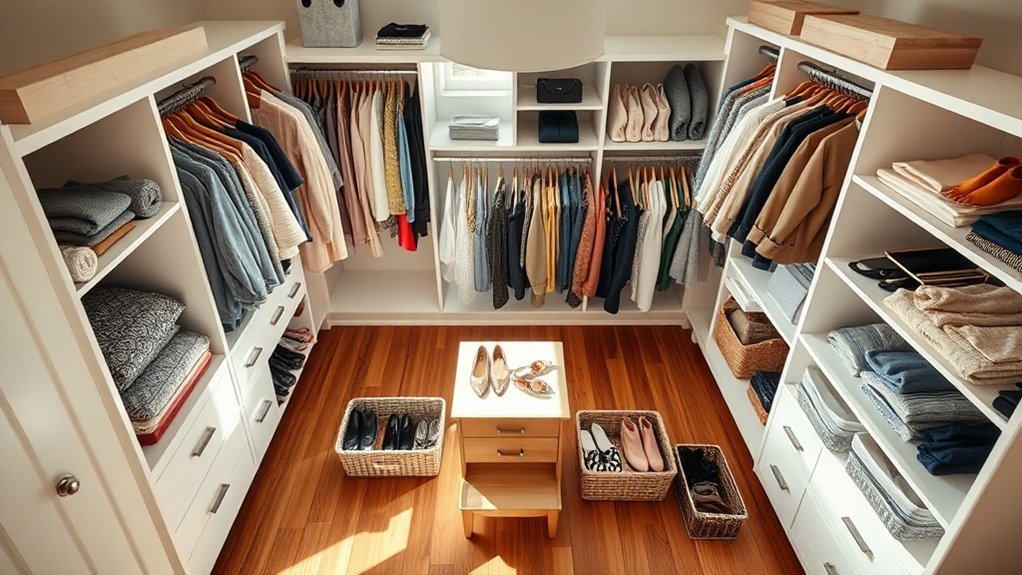
Now that you know exactly what’s in your closet, it’s time to organize those items by how you’ll actually use them so getting dressed becomes effortless.
Begin by sorting into daily, occasional, and special-event piles; place daily items front and center, occasional pieces nearby, and special pieces tucked safely.
Next, separate by season—group warm layers, light tops, and in-between pieces so shifts are smooth.
Then build outfit combos: pair tops, bottoms, and shoes into ready sets, hang or fold each combo together.
Ask yourself what you reach for most and why.
When you arrange by frequency, season, and pre-made outfits, mornings feel calmer and choices faster.
You’ll love the freedom this simple system gives you.
Consider using stackable or clear shoe storage to keep shoes visible and maximize space.
Add a simple labeling system to help maintain the setup and make items easy to find, like shelf labels on bins and drawers.
A consistent closet organization routine helps you keep the system working long-term.
Choose the Right Storage Pieces for Your Closet Type (Reach-In vs Walk-In)
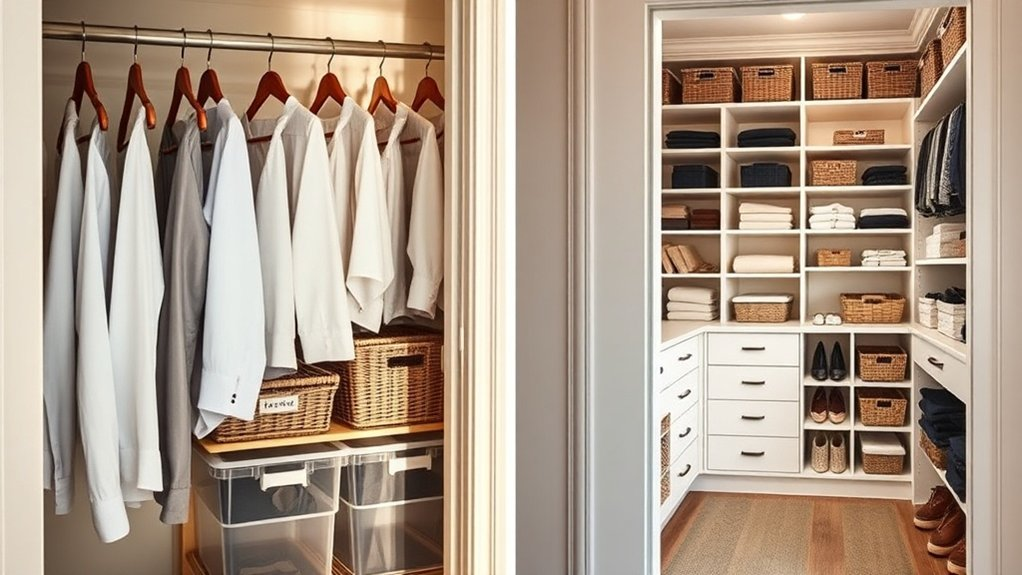
Because your closet’s shape changes how you use every inch, choosing the right storage pieces makes a huge difference in daily ease and long-term upkeep.
You’ll want solutions that fit your reach-in or walk-in layout and your routines. Reach-in closets need slim, vertical pieces and accessible bins so you don’t lose things at the back. Walk-ins can handle fuller shelving, a small dresser, or clear baskets that invite visibility. Many systems also offer modular designs for easy reconfiguration as your needs evolve, like modular designs that expand with your space. Consider stackable storage capacity to maximize vertical space and adapt as your needs change.
Think about what you touch every day and place those items within easy reach.
- Use shallow shelving and labeled bins for reach-ins to keep items visible and grab-and-go.
- Add freestanding drawers or cubbies in walk-ins for folded items and accessories.
- Choose adjustable pieces so your storage adapts as your needs change.
Consider also adding portable closet organizers with vertical shelves to maximize space and flexibility.
Maximize Hanging Space With Smart Placement and Double Rods
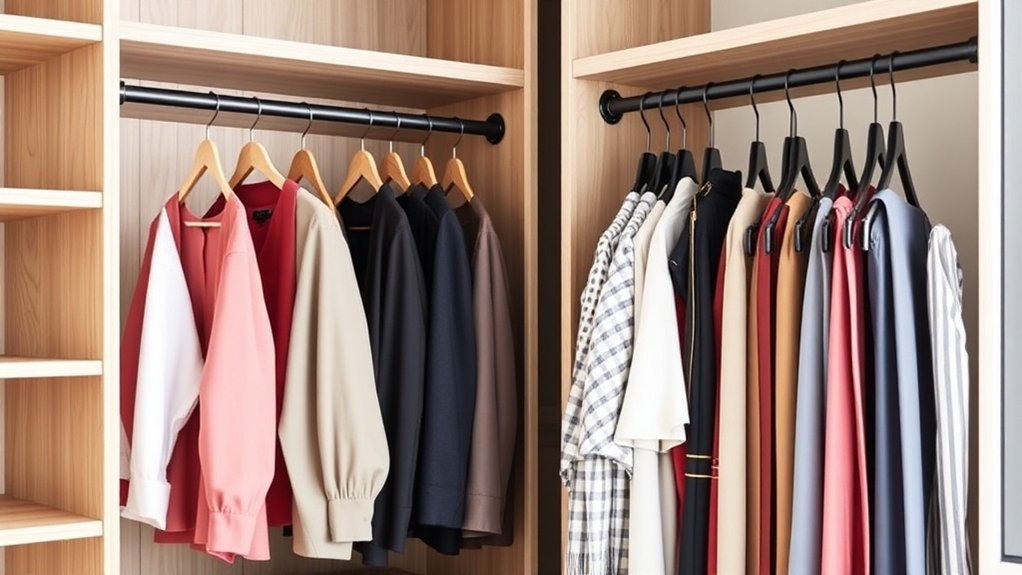
You can make the most of every inch by thinking up and down—use tall hanging sections for coats and long dresses, and shorter zones for shirts and skirts.
Try installing a double rod to instantly double your hanging capacity without cluttering the floor, and position the rods so you still have room to see and reach your clothes.
Ready to free up space and make getting dressed easier every day?
A freestanding rack with double rods can also help maximize vertical space and add adjustable shelving for shoes and accessories.
Consider grouping items by category to speed up outfit choices and keep your closet orderly.
Adding clear storage zones for shoes, accessories, and seasonal items makes maintenance faster and keeps everything visible.
Maximize Vertical Space
Think about how much unused room lives above and below your clothes—it’s often the easiest place to gain instant hanging space. You can make your closet feel taller and more ordered by thinking vertically.
Add shelves up high for seasonal items, use clear bins so you actually reach them, and hang longer garments together so short pieces can share lower space. Don’t forget the floor: slim shoe racks or baskets keep things tidy and visible.
Install adjustable upper shelves for bags and out-of-season clothes, labeled for quick finds. Consider choosing durable materials like stainless steel for shelving to ensure longevity in humid spaces.
Use slim, stackable clear bins to store accessories above eye level, so nothing gets lost.
Group long and short garments to free a lower rod area, then use hooks or narrow shelves there.
Consider modular organizers and multi-purpose designs to maximize capacity and flexibility, especially when combining hanging and shelf storage for a cohesive system like vertical storage. A helpful method is planning by vertical measurement to ensure each section fits your items and maximizes usable space.
Install Double Hanging
You’ve already opened up a lot of room by thinking vertically—now let’s double down on hanging capacity without crowding the closet.
Install a second rod about halfway down to create two levels: one for shirts and jackets, another for pants and skirts. You’ll free wall space and keep items easy to see. Consider adding stackable storage nearby to maximize vertical space for folded items.
Use matching hangers to make everything hang uniformly, and leave a few inches between rods so fabric breathes and you can reach hangers without struggle. Consider incorporating adjustable dividers in nearby shelving to further organize folded items.
If you have long coats, keep one section single-height. Adjustable rods or a removable system give flexibility as seasons change.
Ready to try it? Measure once, place thoughtfully, and enjoy a closet that feels bigger and works harder for you.
Consider using adjustable features so you can customize spacing as your wardrobe changes.
Use Shelves, Bins, and Clear Containers to Tame Folded Items
You can make folded clothes feel organized and easy to find by using tall shelves to stack items vertically and free up floor space.
Label clear bins so you see what’s inside at a glance, and use simple folding tricks—like rolling or file-folding—to keep everything visible and tidy.
Ready to try a shelf, a few bins, and a new folding method to transform your closet? Consider adding stackable storage to fully utilize vertical space.
Larger bins with stackable designs are ideal for bulky items and maximize vertical storage.
Consider choosing bins made from high-grade polypropylene for durability and easy cleaning.
Maximize Vertical Shelf Space
Three simple changes—adding taller shelves, stackable bins, and clear containers—can turn a messy pile of folded clothes into a calm, easy-to-use system.
You’ll reclaim space by thinking up instead of out: extend shelving to the ceiling for seldom-used items, and place seasonal things up high. Consider using durable, waterproof materials like hard PP plastic for bins to protect stored items and increase longevity material durability.
Stackable bins create tidy towers that keep shirts and sweaters visible and accessible. Clear containers let you spot what you need fast, saving time and stress. Many stackable solutions offer clear visibility that helps you maintain order.
- Install taller shelves to use vertical zones for daily, seasonal, and overflow items.
- Choose stackable bins that fit your shelf height, grouping by type and frequency of use.
- Use clear containers for quick visual access, keeping folded items neat and reachable.
Adding a simple plan for categorizing items into zones can help maintain order over time, especially when you group by type and frequency.
Label Clear Storage Bins
Labeling clear storage bins brings instant calm to a chaotic shelf, and it’s one of the simplest changes that makes your system actually work. You’ll see everything at a glance when bins are clear and labeled, so mornings get easier and stress melts away. Consider pairing clear bins with stackable organizers to maximize vertical space and keep items accessible. For very tight closets, consider adding a stackable drawer option to increase vertical storage without using more floor space.
Choose consistent labels—simple words, readable font, maybe a color for each category—and stick them where you’ll look first. Place frequently used items at eye level, seasonal or occasional pieces higher or lower.
Clear bins help you spot contents quickly, while labels stop guesswork and prevent overfilling. Want to maintain order? Revisit labels every few months and adjust as your needs change.
Small habits, like returning items to their labeled bin, keep the calm you created. Consider adding clear bins to your closet setup to maximize visibility and simplify retrieval of folded items.
Folding Techniques For Visibility
A tidy fold can change how you feel about your whole closet, and with a few simple techniques you’ll make every shelf and bin work harder for you.
You’ll notice small wins fast when you fold for visibility: stack clothes so the front edge faces out, file shirts vertically in drawers, and use uniform folds so patterns don’t hide beneath lumps.
Clear bins show what’s inside at a glance, while labeled shelves guide you back to order. Ready to try?
- Fold and file vertically so each item is seen without digging.
- Use standard-size stacks and clear containers to keep sightlines consistent.
- Reserve shallow bins for delicate or seasonal pieces you want easy access to.
Add Shoe and Accessory Systems That Save Floor and Time
Think about how much smoother your mornings could be if every pair of shoes and every accessory had a clear place—no more digging through piles or stepping around boxes.
You can save floor space and time by adding vertical shoe racks, clear stackable boxes, or over-the-door organizers that keep footwear visible and accessible.
Dedicate a drawer with divided trays for belts, scarves, and jewelry so small items don’t get lost. Use labeled bins for seasonal hats or sandals, and install hooks at different heights for bags and necklaces to prevent tangles.
Rotate items by season, donating what you no longer wear.
These simple systems cut clutter, speed decision-making, and give you a calm, efficient closet you’ll actually enjoy using every day.
Layout a Daily Outfit Station to Speed Up Mornings
You’ve already made mornings easier by corralling shoes and accessories—now let’s take that calm a step further by creating a dedicated daily outfit station.
You’ll pick a small, reachable spot in your closet or bedroom where everything for one outfit lives: top, bottom, shoes, and a go-to accessory. This makes choices faster and reduces stress before work or school.
What would it feel like to open your closet and know your outfit is ready?
- Lay out one complete outfit on a hook or shelf, including belt and necklace.
- Keep a small bin or tray for daily essentials—watch, hair tie, wallet.
- Rotate weekly: swap outfits for weather and plans, keeping the station fresh.
Set a Five-Minute Weekly and Seasonal Deep-Clean Routine
Set aside five minutes each week to scan your closet for wrinkles, stray hangers, or items that need spot-cleaning — it’s a tiny habit that keeps chaos from creeping back in.
Once each season, plan a deeper clean: remove everything, check for repairs or donations, and freshen shelves and fabric so your wardrobe feels like new.
Want to feel lighter and more ready every morning?
Five-Minute Weekly Check
Spend five minutes each week walking through your closet with purpose; those small, steady steps keep clutter from piling up and make deep cleans less intimidating. You’ll feel lighter when you touch only what you love and use. Set a timer, open the door, and move calmly—this is your mini-reset.
- Scan and sort: pull any stray items off shelves or hangers, decide keep, mend, or donate, and return things neatly.
- Quick tidy: straighten shoes, hang garments facing the same way, fold sweaters for visibility, and wipe obvious dust.
- Note and act: jot one small task for next week—repair a button, replace a missing hanger, or research a storage bin—and check it off.
These five minutes build momentum. You’ve got this.
Seasonal Deep-Clean Plan
Think of seasonal deep-cleans as a reset button you press four times a year to keep your closet fresh, useful, and joyful to open.
Start by pulling everything out, handling each item briefly: keep, donate, repair, or recycle. This is your chance to notice stains, stretched elastic, or missing buttons, and to say goodbye to pieces you haven’t loved in years.
Wipe shelves, vacuum corners, and air anything that’s musty. Swap seasonal clothes, rotate shoes, and place off-season items in labeled bins where you can’t forget them.
Set a timer for a focused two-hour session so you stay efficient and don’t get overwhelmed.
How would your mornings change if your closet started every season tidy and ready? Take that small, intentional step now.
Troubleshoot Common Problems: Overflow, Mismatched Hangers, and Decision Fatigue
When your closet starts to spill over its shelves and hangers, it can feel like a small daily battle—but you can get it back under control with a few focused moves.
Start by facing the main issues: overflow, mismatched hangers, and decision fatigue. You’ll feel lighter once you tackle each one with a clear plan.
- Sort fast: pull everything out, group like items, and make three piles—keep, donate, toss—so overflow becomes a solvable math problem.
- Match hangers: pick one style and swap in uniform hangers; your clothes will hang neater, you’ll spot gaps, and mornings get calmer.
- Beat fatigue: set a timer for 15 minutes and make simple yes/no decisions; momentum helps you finish.
Frequently Asked Questions
How Do I Store Sentimental Items Without Cluttering My Closet?
Store sentimental items in clear, labeled boxes or vacuum bags, and rotate keepsakes in a memory box. You’ll digitize photos, keep only meaningful pieces, and use under-bed or shelf bins to avoid closet clutter.
Can I Use Vacuum Bags Without Damaging Delicate Fabrics?
Yes — but you shouldn’t with very delicate fabrics like silk, lace, or embellished items; instead, you can gently use vacuum bags for sturdy cottons, knits, or synthetic outerwear, checking care labels and airing items occasionally.
How Do I Organize a Shared Closet Between Partners?
How do you divide space fairly? You’ll assign zones, use matching hangers, color-code or label sections, rotate seasonal items, add double rods and clear bins, communicate about shared items, and set a weekly tidy routine you’ll both follow.
What Lighting Options Improve Visibility in Small Closets?
Use LED strip lights, puck lights, motion-sensor bars, and battery-powered stick-on lights; you’ll want cool white or daylight color temperature, dimmable options, and glare-free diffusers so you can see colors and details clearly in tight spaces.
When Should I Replace Closet Hardware Like Rods and Shelves?
Replace closet rods and shelves when they sag, rust, creak, wobble, or fail to support your items; upgrade every 8–15 years for durability or sooner if you change storage needs, materials, or notice visible wear and instability.
Conclusion
You’ve got this—start small, feel the progress, and keep it simple. Did you know people spend about 2.5 minutes deciding what to wear each day, adding up to nearly 16 hours a year? Imagine reclaiming that time with an organized closet. Sort, store, and set up a daily outfit station, then maintain it with quick weekly check-ins. Take one step today, and enjoy calmer mornings, clearer choices, and a space that sparks joy.