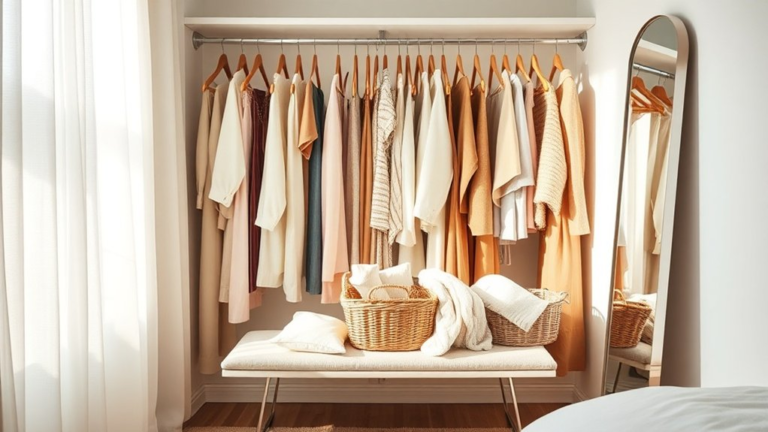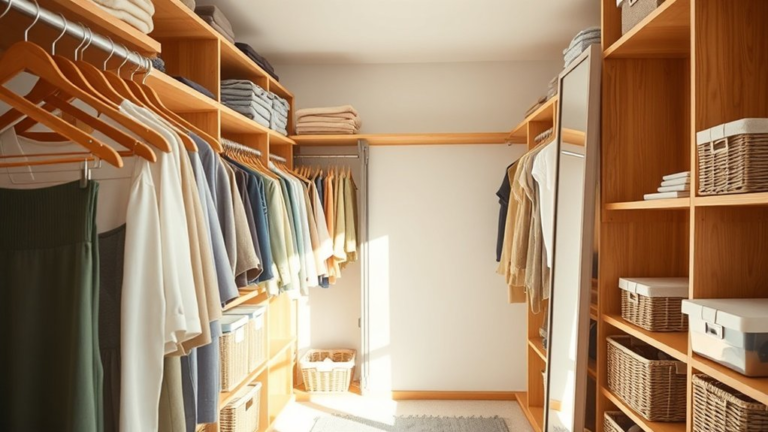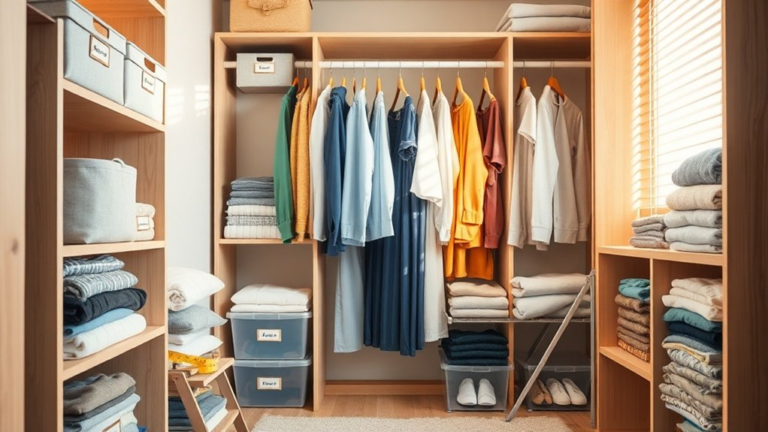
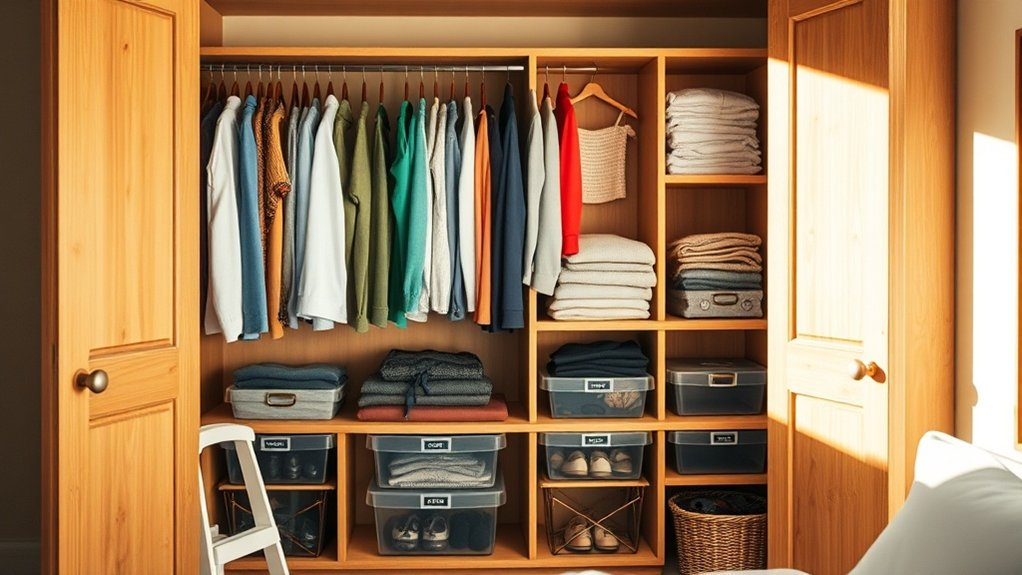
You can build lasting closet habits by setting simple routines: a 15-minute daily tidy, a weekly swap or wash, and a seasonal audit to donate or repair. Group clothes by use, keep everyday items at eye level, and use labels, slim hangers, and clear bins to make upkeep painless. Try a one-in, one-out rule and a donation box nearby. Want a calmer morning and less decision fatigue? Keep going to find practical steps and tools.
Closet Highlights
- Establish daily and weekly routines (five-minute nightly tidy, 15-minute weekly refresh) to make upkeep automatic.
- Zone your closet by outfit use (work, weekends, workouts) and keep frequently worn items at eye level.
- Use labeled, clear storage (bins, drawers, shelf dividers) and slim hangers to maximize visibility and space.
- Apply a simple declutter rule: one-in/one-out and donate items unworn for a year unless sentimental.
- Schedule periodic resets with time-limited storage (3–6 months) and clear action deadlines for unsold or unused items.
Decide Your Closet Routine: Daily, Weekly, and Seasonal Goals
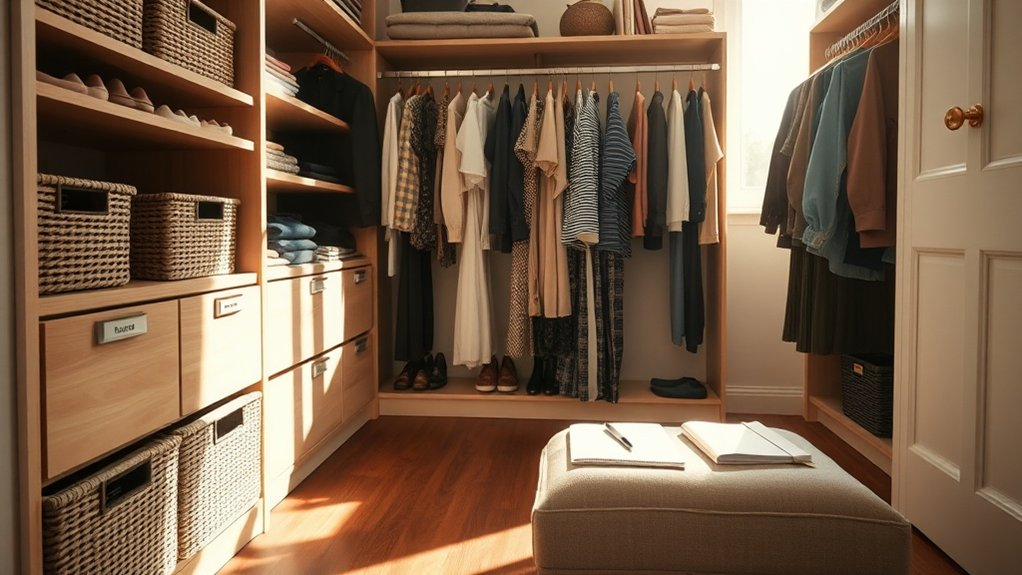
When you create a clear closet routine, getting dressed becomes easier and mornings feel calmer. You’ll set daily habits like returning items to their spot and airing worn pieces, keeping small messes from growing.
Weekly tasks might include swapping seasonal items, laundering delicates, and tidying shelves so outfits stay visible and ready. Consider incorporating modular or multi-purpose organizers to make weekly refreshes faster and more flexible. Add simple labeling and shelf dividers to speed up weekly upkeep and prevent items from shifting.
Seasonal goals ask bigger questions: what haven’t you worn this year, what needs repair, what can you donate? You’ll schedule deep cleans and re-evaluations each season, so your closet reflects your current life.
Will you commit to short daily checks, a focused weekly refresh, and a seasonal overhaul? Those simple choices build lasting order, reduce stress, and make your wardrobe feel like it was made for you. A regular routine also supports long-term organization by reinforcing habits that prevent clutter from returning.
Quick Declutter Method: 15-Minute Daily Tidy
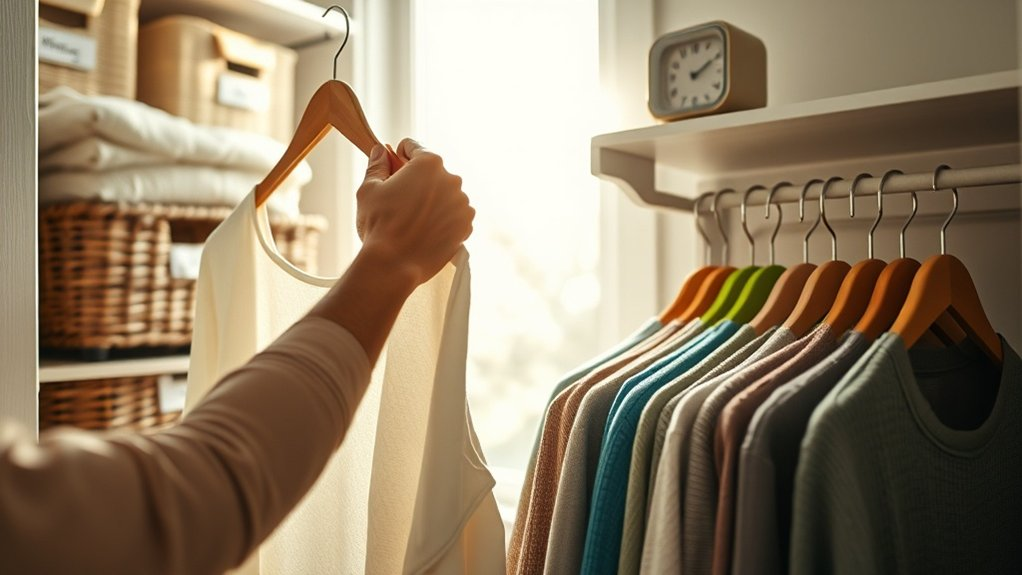
You’ve agreed to short daily checks and bigger seasonal overhauls, now let’s make a tiny habit that keeps everything humming: a 15-minute daily tidy.
You’ll set a timer, focus on one clear goal, and watch small wins add up. This habit prevents clutter from piling, saves time later, and feels really satisfying. Consider using vertical storage to make each 15-minute tidy more effective by keeping frequently used items easy to reach. Consider pairing this with an over-the-door organizer to maximize otherwise wasted door space.
Set a timer, pick one clear goal, and let small, daily wins prevent clutter and build calm.
- Clear a surface: pick a shelf or chair, remove out-of-place items, and return them where they belong.
- Quick edit: scan hanging clothes for anything you didn’t wear recently, set aside only obvious rejects.
- Touch-up: straighten hangers, fold a stack, wipe a small spot.
- Replace and reward: put items back, close the door, and enjoy the calm.
Could you do this every day? Transforming your closet into a functional sanctuary starts with tiny, consistent actions like these and builds long-term order with consistent daily habits.
How to Sort Clothes That Actually Stay Organized
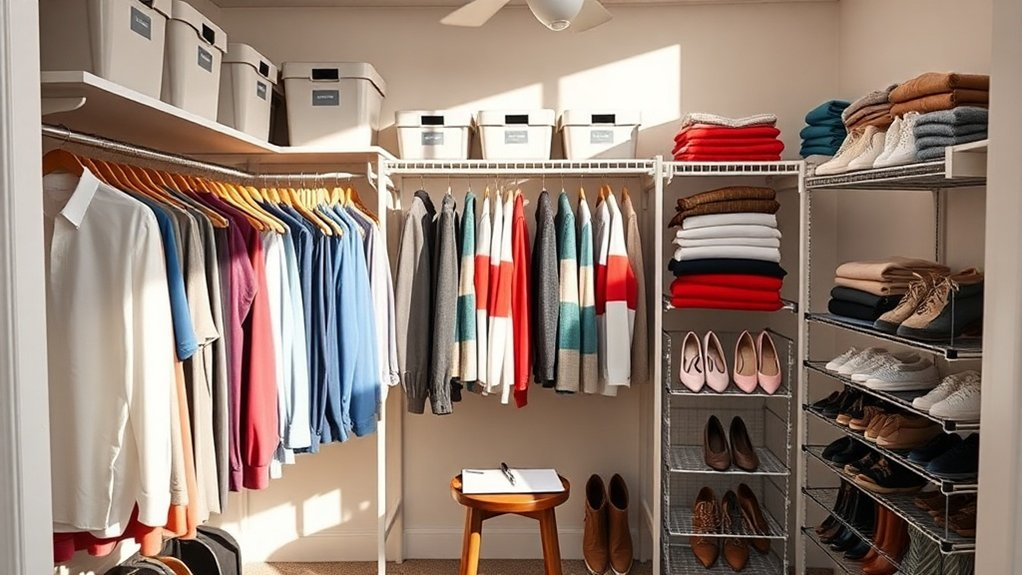
If you want a closet that actually stays organized, start by sorting with a purpose: think beyond “keep” and “donate” and decide how each item fits into your daily life.
Begin by grouping clothes by how you use them — work, weekends, workouts, special occasions — so you see what you reach for most. Consider using clear bins or labeled sections to reinforce zone-based storage.
Ask yourself, “When did I wear this last, and will I wear it again soon?” Be honest, but kind.
Create small, clear piles: everyday, seasonal, repair, and sentimental. Limit the sentimental pile; take photos of items you’ll store mentally.
Once sorted, put the most-used pieces at eye level and make getting dressed easier. Many professional organizers recommend keeping frequently used items within easy reach to promote daily use efficiency.
Commit to a quick re-sort every season, and enjoy the calm your choices create.
Remember that a well-balanced system includes dedicated zones and storage solutions that support long-term organization.
Smart Storage Choices for Small and Large Closets
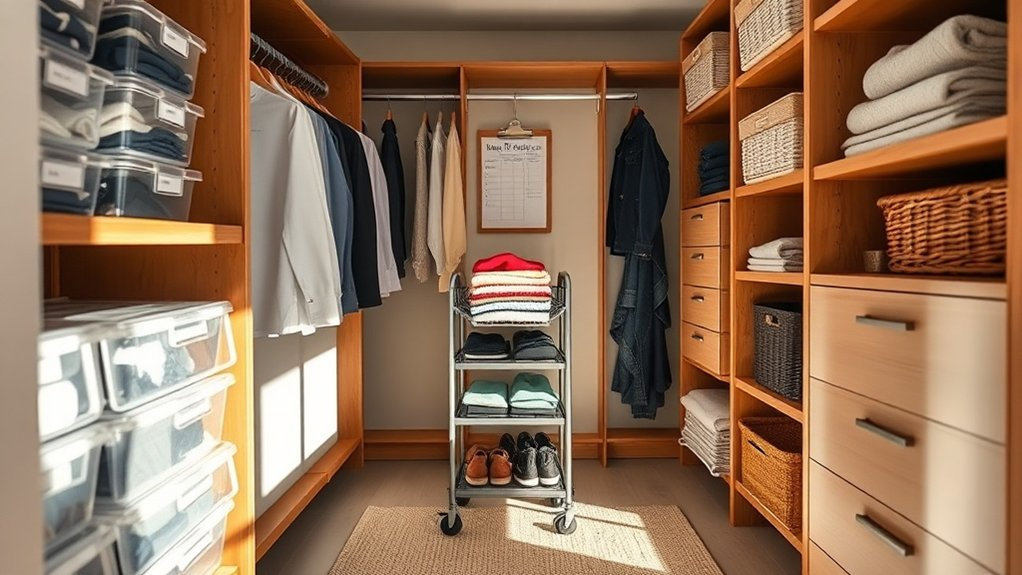
Because smart storage starts with knowing what you actually own and how you live, pick solutions that match your habits, not just your closet size.
Smart storage begins with knowing your wardrobe and habits—choose solutions that fit how you live, not just space.
You’ll feel calmer when every item has a purpose and a place, whether your space is tiny or generous.
Think vertical, clear, and flexible so you can adapt as your wardrobe changes. Which pieces do you reach for daily? Store those where they’re easy to grab. Adding vertical storage can free up floor space and keep essentials accessible.
- Use slim hangers and double rods in small closets to double hanging space without clutter.
- Add clear bins and labeled drawers for folded items, so you see contents at a glance.
- Install adjustable shelving in large closets to mix shoes, bags, and sweaters neatly.
- Pick hooks and baskets for accessories, keeping them visible and usable.
Consider adding modular components like a closet organizer tower to maximize vertical space and adapt as your needs change. Adding stackable organizers can further increase capacity while keeping items accessible and safe from tipping.
Make Getting Dressed Easier With Outfit Zones
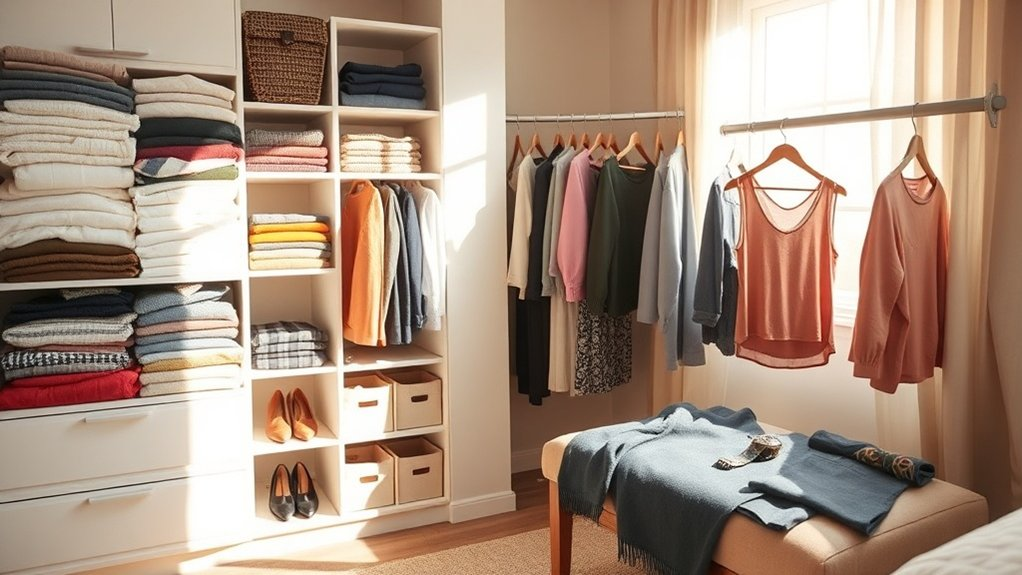
Imagine stepping into your closet each morning and knowing exactly where your go-to outfit lives, so you can grab it and head out with less fuss.
Create a Morning Outfit Zone for quick weekday looks, and set up Occasion-Based Sections for work, weekends, and special events so everything feels ready when you are.
Which zone would save you the most time tomorrow?
A simple system like Outfit Zones helps build consistent habits by reducing decision fatigue.
Morning Outfit Zones
A simple outfit zone can transform your mornings into a calm, confident routine you’ll actually look forward to. You’ll feel less rushed when a dedicated spot holds everything for your go-to weekday looks: top, bottoms, shoes, and one accessory. Consider using stackable bins nearby to keep seasonal items tidy and easy to swap. Stackable storage can also maximize vertical space when floor room is limited, making small closets more efficient with stackable baskets.
Set up zones near good light and a mirror so choices feel easy, not overwhelming. Will you save time and reduce decision fatigue? Yes.
- Pick one eye-level rail for ready-to-wear tops, rotate weekly.
- Reserve a lower shelf for pants or skirts you reach for most.
- Place shoes on a nearby rack, paired and ready.
- Keep a small tray for belts, jewelry, and daily essentials.
Start small, tweak as you learn, and enjoy smoother mornings. For more ideas on organizing your space, check out tips on closet organization.
Occasion-Based Sections
When you sort your closet by occasion, getting dressed stops feeling like guesswork and starts feeling like a choice you actually enjoy.
Create clear zones—work, casual, active, and special events—so you can grab an outfit that fits your plan and mood. Label shelves or hangers, group shoes and accessories nearby, and keep daily wear at eye level for speed.
You’ll save time, reduce decision fatigue, and feel more confident about what you wear. Want to make mornings easier or pack for a trip in minutes? This method helps.
Revisit zones each season, donate pieces that don’t match your life, and tweak labels as needed. Small changes lead to habits that stick, and dressing becomes simple, calm, and even joyful.
Transforming your closet into an organized space can make maintaining these zones much easier and more sustainable over time—see how organized spaces support lasting habits. You can also use simple storage solutions like clear bins and shelving to keep each zone tidy and visible space-saving. A well-planned layout with outfit zones reduces time spent choosing clothes and supports consistent routines.
Simple Maintenance Habits to Prevent Clutter Return
Although it only takes a few minutes each day, keeping clutter from creeping back into your closet becomes surprisingly easy once you build a few simple habits.
You’ll feel calmer when you touch your clothes, and small actions add up fast. Try these quick routines to keep things tidy without stress.
- Do a five-minute tidy each evening: return stray items, straighten hangers, and fold what’s out.
- Use a “one-in, one-out” rule for new purchases so you don’t add without removing.
- Keep a donation box in reach; when something hasn’t been worn in months, drop it in.
- Schedule a monthly reset: check seasonal items, repair what’s needed, and reorganize small piles. Consider pairing these habits with stackable designs to make the most of your vertical space.
These habits protect your progress and make clutter less likely to return. Consider pairing them with a maintenance plan to prevent clutter recurrence and track progress. Also consider integrating slide rails into your setup to improve access to items stored toward the back.
Letting Go Without Guilt: Rules to Donate, Sell, or Store
You can make letting go simple by setting clear donation criteria, like condition and usefulness, so decisions feel fair and kind.
If you’re selling items, price them realistically and quickly to keep momentum and avoid second-guessing.
For things you want to keep, try labeled storage with time limits—if you don’t use it by the deadline, it’s probably time to part with it.
Consider using a rotating system with weekly outfit organizers to test what you truly wear.
Adding consistent maintenance sessions, such as a monthly declutter check, helps reinforce lasting habits and keeps your closet organized over time.
Building on principles from Mastering the Art of Closet Organization, schedule a seasonal review to reassess needs and tweak systems for long-term success.
Set Clear Donation Criteria
Because letting go can feel heavy, setting clear donation criteria helps you decide fast and with less guilt. You’ll feel lighter when you have simple rules to follow, so you don’t second-guess or keep things “just in case.”
Think about what you actually wear, what fits, and what brings you joy. Be honest, kind, and practical with yourself.
- Donate items you’ve not worn in a year unless they hold clear seasonal or sentimental value.
- Let go of pieces that no longer fit your body or lifestyle, even if you like them.
- Pass along anything with stains, rips, or smells you wouldn’t want to receive.
- Share things that reflect your values—quality, usefulness, and a chance to brighten someone else’s day.
A helpful tip is to prioritize organizers made from high-quality materials to protect donated items and keep them in good condition.
Price Items To Sell
A good price can turn a tough goodbye into a smart choice, so take a moment to value the items you’ll sell with care and confidence.
Look at condition, brand, and demand, and be honest about wear. Ask yourself: would you buy this today? If yes, note a fair starting price that leaves room to negotiate.
Check similar listings online to set realistic expectations, and factor in platform fees or shipping. Consider comparing your items to clear storage bins listings to see how condition and presentation affect price. Consider how choosing the right stackable storage can improve presentation and perceived value.
Photograph items clearly, highlight flaws, and write concise descriptions that build trust.
Price emotionally tricky pieces a bit higher, then allow offers. If something doesn’t sell after a set time, reprice or move on.
Pricing thoughtfully helps you let go, earn back value, and feel good about the choice.
Consider storing unsold seasonal pieces in large storage bags to protect them while you wait to relist.
Store With Time Limits
If you’re not ready to part with something for good, try giving it a timed stay in storage so you can test how it fits into your life, not just your feelings.
You’ll create space and set clear rules, so decisions feel kinder and easier. Label a box, pick a date, and be honest about whether you’ll reach for that item. If it stays untouched, let it go. If it returns to regular use, you made a smart choice.
- Set a clear time limit, like 3 or 6 months, and mark the end date.
- Store items out of sight, not in easy reach, to avoid temptation.
- Keep a list of stored pieces to review and reflect on.
- Commit to action at the deadline: donate, sell, or reclaim.
This approach supports long-term habits and aligns with broader tips for organizing your closet, like those in our Transform Your Closet resources.
Tools and Labels That Reinforce New Habits
When you pair simple tools with clear labels, you’ll find it much easier to stick with new closet habits and enjoy the results every day.
Start with basics: matching hangers, shelf dividers, and clear bins that make items visible and tidy. Add labels that tell a quick story—season, frequency, or purpose—so you know where things go without thinking hard.
Use a consistent font and size, and place labels at eye level for fast decisions. Consider small tools like a shoe rack tray or tie organizer to prevent slipping back into clutter.
Want habits to last? Make the system obvious and effortless, so putting things away feels as natural as grabbing them in the morning. You’ll keep progress, not just hopes.
Troubleshoot Common Setbacks and Reset Your System
Because even the best systems can drift over time, it’s normal to hit a snag and need a quick reset—doesn’t mean you’ve failed.
You can gently assess what slipped, why it mattered, and how to bring things back without stress. Try small, confident steps that rebuild momentum and pleasure in your closet.
- Remove everything quickly, sort into keep, repair, donate, and unsure piles, then return only what belongs.
- Spot the pattern: are mornings rushed, or is storage confusing? Fix the root, not just the symptom.
- Refresh labels, hooks, or containers where things tend to fall out of place.
- Set a five-minute nightly tidy habit, and celebrate the consistency you create.
Ready to reset and keep the calm?
Frequently Asked Questions
How Do I Involve Family Members in Maintaining the Closet System?
Start by assigning simple roles and routines, and make it fun—label bins, set quick weekly check-ins, teach folding methods, celebrate progress, and rotate tasks so everyone shares responsibility; you’ll keep the system tidy and habits consistent together.
Can I Apply These Habits to Shared or Rented Closet Spaces?
Yes — you can. Even in shared or rented closets, you’ll set simple zones, label bins, and use nonpermanent hooks; your family or roommates will stroll in, see order, and keep habits because it’s easy, fair, and low-effort to maintain.
What Budget-Friendly Materials Work Best for Durable Storage?
You’ll want sturdy plastic bins, metal or bamboo shelving, clear stackable containers, fabric drawers with reinforced bottoms, adhesive hooks, and tension rods; these’re affordable, durable, and versatile for long-term storage without heavy tools or permanent installation.
How Long Before New Closet Habits Feel Automatic?
Usually about 21 to 66 days, but don’t rush—habit strength grows gradually. You’ll stick with new closet routines after consistent daily actions, small rewards, and tweaking systems until they fit your actual life and preferences.
Are There Apps or Digital Tools to Track My Closet Routine?
Yes — you can use apps like Todoist, Habitica, Streaks, and Google Keep to track closet routines; they’ll remind you, log progress, and motivate consistency so you’ll build lasting habits faster with small daily actions.
Conclusion
You can build lasting closet habits without spending hours or buying fancy tools. Start small, pick one daily and one seasonal rule, and use the simple sorting and storage tips you’ve learned. Worried you’ll slip back into old ways? That’s normal—set a short weekly check-in and forgive small setbacks. Keep your system visible, tweak as needed, and enjoy finding outfits faster. You’ll feel lighter, calmer, and more confident every day.