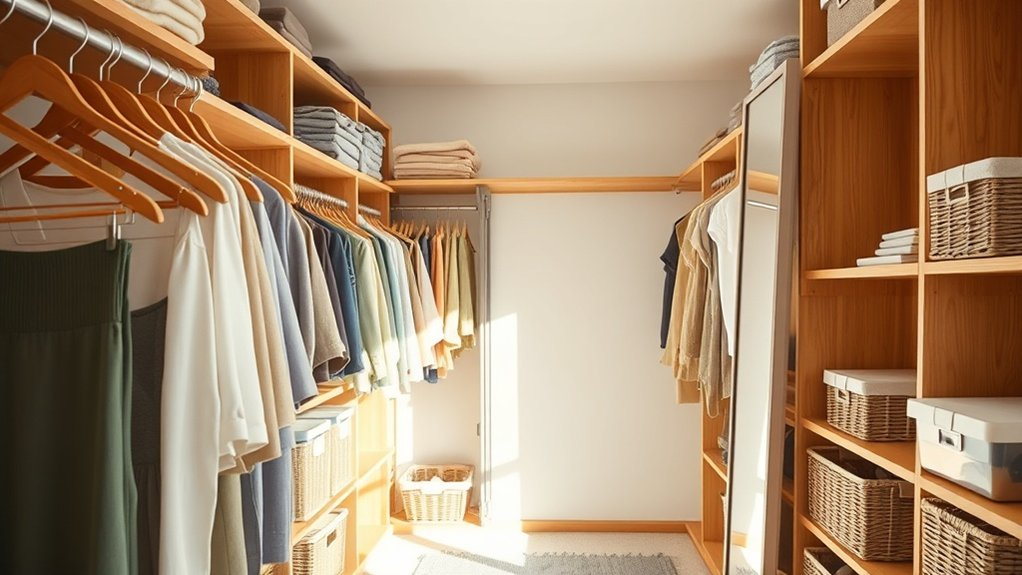
You can build a closet system that actually sticks by using quick sorting rules, two-minute daily habits, and clear zones that make choices easy. Start with a 15-minute assessment, sort fast into keep, donate, or toss, then set simple routines: a brief daily tidy and a weekly reset. Use labeled bins, eye-level storage for favorites, and seasonal rotation so clutter won’t creep back. Want a step-by-step plan to stay consistent?
Closet Highlights
- Build small daily habits (2 minutes) for immediate decluttering and return items to their designated spots.
- Zone your closet by function and place frequently worn items at eye level for effortless selection.
- Use clear, labeled bins and stackable storage to maintain visibility and maximize space.
- Implement a seasonal rotation and biannual swap days to keep the wardrobe current and manageable.
- Apply simple keep/donate/toss criteria and limit “maybe” items to a single review box.
How to Assess Your Closet in 15 Minutes
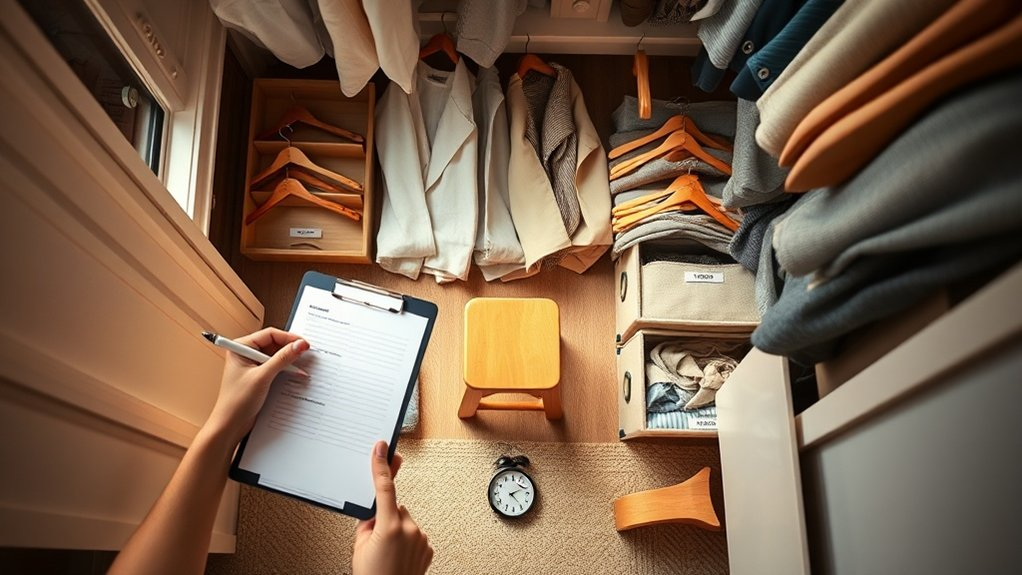
Give yourself 15 minutes and a clear plan—you’ll be surprised how much you can learn about your closet in such a short time.
Start by opening doors and looking with fresh eyes; notice what’s visible, what’s hidden, and what makes you pause. Touch hangers, pull out a few items, and ask: Does this fit my life now? Consider whether vertical storage could instantly free up space and make items easier to access.
Make quick notes—sections that feel cramped, empty, or chaotic. Check shelves, drawers, and the floor for duplicates, unworn things, or sentimental pieces that need special care.
Measure awkward spaces, like high shelves or narrow corners, so future solutions will fit. By the end, you’ll have a simple map and clear priorities.
You’ll feel lighter and ready to take the next step. Consider adopting transformative closet strategies to keep your space functional long-term. Use closet organization principles from Transform Your Closet to guide small, consistent improvements.
Quick Sorting Rules That Actually Stick
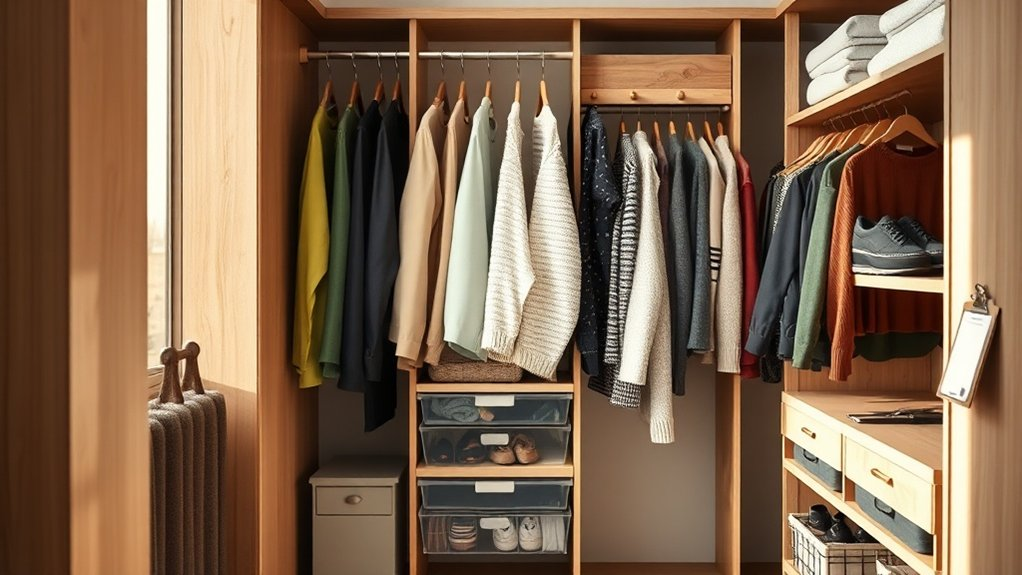
Start by sorting fast, not perfectly: set a 10-minute timer for each section and trust your instincts.
Stand in front of a pile, touch each item, and decide—keep, donate, or toss. Use simple rules: if you haven’t worn it in a year, let it go; if it doesn’t fit or make you feel good, remove it; if it’s stained beyond repair, recycle it.
Group like with like so you see what you own. Limit “maybe” items to a small box you revisit in one month. Label piles clearly to avoid second-guessing.
These quick rules help you move, feel confident, and finish faster. Ready to clear space and keep it that way? Start now and feel lighter. Consider incorporating vertical space solutions to maximize storage and maintain order. Add a modular system to adapt shelving and hanging space as your wardrobe changes. Try combining these methods with space-maximizing strategies to make the most of every inch.
Daily 2-Minute Habits to Prevent Mess
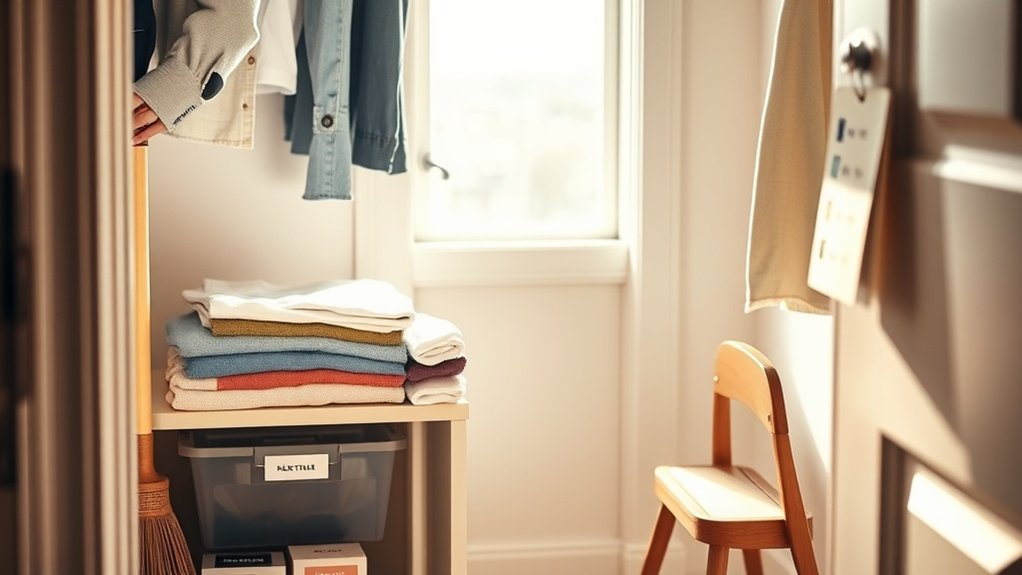
You can keep your closet feeling calm with just two minutes a day—try a quick daily declutter where you toss or set aside anything out of place.
Then do a fast spot-check for shoes, hangers, or stray items and rehang anything that’s slipped off.
Small, consistent steps like these make a big difference; aren’t a few minutes every day worth a tidier, happier space?
Many people find that pairing these habits with simple storage solutions helps maintain order long-term. Adding durable drawer organizers can make daily sorting faster and more reliable.
Adding a short weekly reset focused on shelf organization can reinforce those daily habits and prevent build-up over time.
Quick Daily Declutter
Two minutes a day can change how your closet feels and works, so why not make it a tiny habit that actually sticks?
You’ll feel lighter when you sweep through your space each morning or evening, removing items that don’t belong and smoothing out hangers. This small ritual keeps clutter from piling up, and you’ll notice your outfits look more inviting. Regular maintenance like this supports closet organization and makes larger projects easier. Consider scheduling short daily sessions to build consistency with habit stacking.
Ready to try it?
- Scan quickly: grab anything on the floor or chair and either hang it, fold it, or put it away.
- Cull visuals: remove one item that doesn’t spark joy or has been unused this week, and set it aside.
- Reset surfaces: straighten hangers, realign shoes, and close drawers so the space feels calm.
Consider adding stackable storage like stackable designs to maximize vertical space and keep frequently used items within easy reach.
Spot-Check & Rehang
If a quick daily sweep keeps things from piling up, a focused spot-check and rehang is the next small habit that makes your closet actually stay tidy.
Spend two minutes scanning for slipped hangers, crooked items, or clothes draped over shelves. Rehang anything off-kilter, group similar pieces back together, and straighten pant creases or scarf loops. You’ll be surprised how this tiny pause smooths your morning routine and lifts your mood. Use vertical storage like stackable organizers to make those two minutes even more effective. Consider adding space-saving hangers to maximize capacity and keep items orderly.
Want a simple rule? If it’s not on its proper hanger, put it there now. Make it a ritual—after dressing, glance in and fix what’s out of place.
That gentle consistency prevents overwhelm later, keeps your space welcoming, and makes good habits feel effortless. Transform your closet with ultimate organization tips to keep systems working long-term.
Weekly Maintenance Routines for Busy Lives
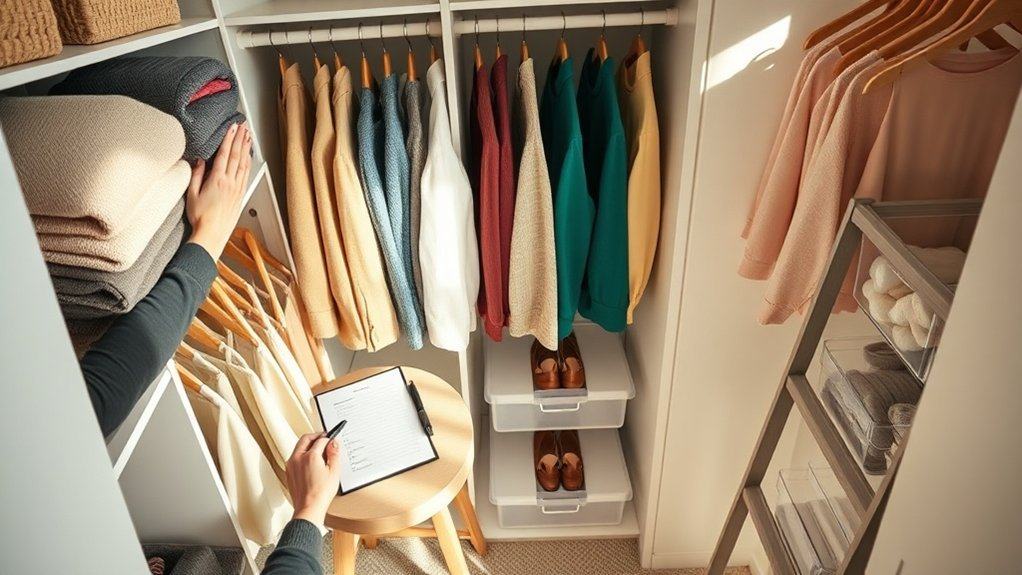
Because a little consistency goes a long way, carving out a short weekly routine can keep your closet feeling calm and useful, even when life gets hectic.
You’ll spend just a few focused minutes each week to prevent clutter from piling up, and that small habit saves time and stress later. Ask yourself what you used and what you didn’t — decisions get easier with a rhythm.
- Quick sweep (5 minutes): rehung items, straighten shoes, fold any stray pieces.
- Tidy edits (7 minutes): remove one item you haven’t worn, spot-clean anything stained, check for misplaced things.
- Prep for the week (8 minutes): plan outfits for busy days, set out accessories, and make sure seasonal swaps are manageable.
Stick to this short ritual, and your closet will reward you. For more ideas on effective methods, consider incorporating transformative closet tips into your routine. Consider starting with a simple decluttering method to make maintaining order faster and more effective. Adding small storage strategies like labeled bins and uniform hangers can make weekly upkeep even easier and promote efficient organization.
Zone Your Closet for Faster Decisions
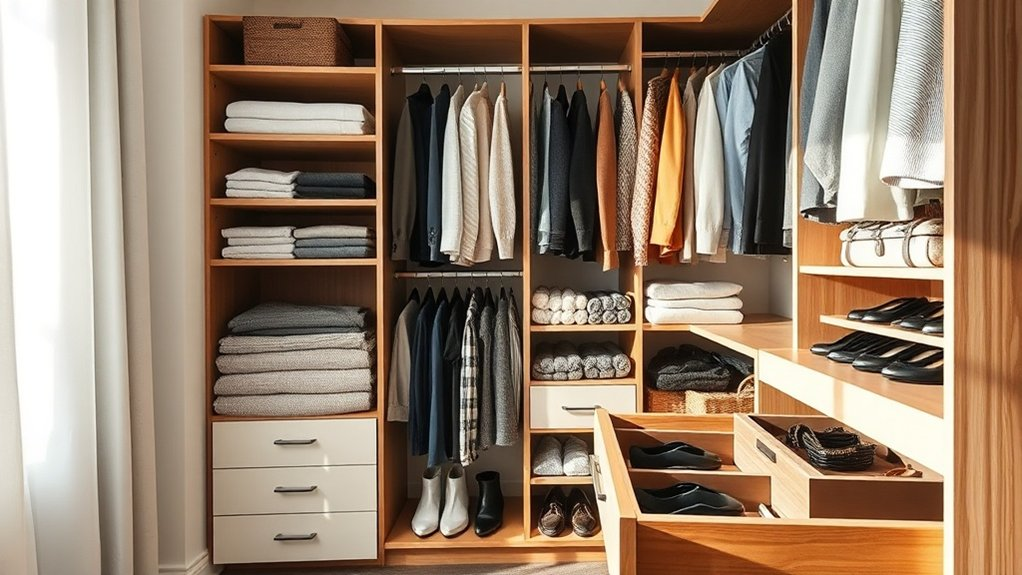
Start by picturing your closet as a small store where every item has its own shelf; when things live in clear zones, you’ll find outfits faster and stress less.
Zone by function: group workwear, casual pieces, active gear, and seasonal items so morning choices feel obvious.
Put frequently worn pieces at eye level, special items out of the way, and shoes together so you can scan options quickly.
Ask yourself, what do I reach for most? That tells you where things should live.
Use consistent rules—like hang all tops together, fold sweaters on one shelf—to keep decisions easy.
You’ll cut down on outfit anxiety and gain time.
Once you try zoning, getting dressed becomes calm and confident.
Organizing by function and frequency also helps maintain consistent organization over time.
Think of your closet like a retail space where clear storage zones make shopping — and dressing — quicker.
Consider adding vertical solutions like multi-tiered organizers to maximize space and keep similar items together.
Storage Solutions That Make Putting Things Away Easy
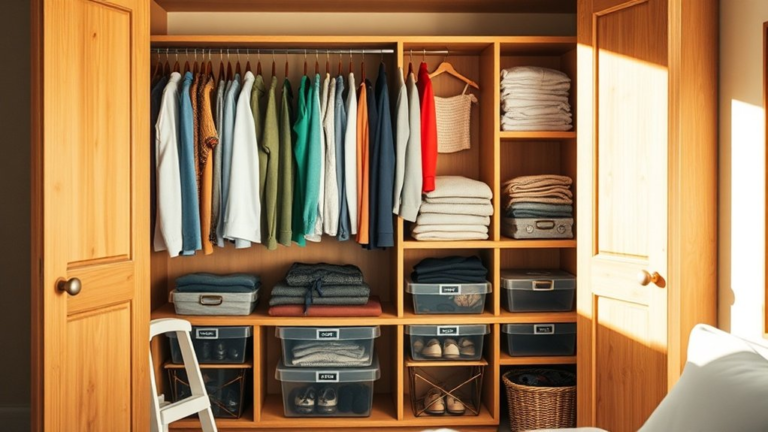
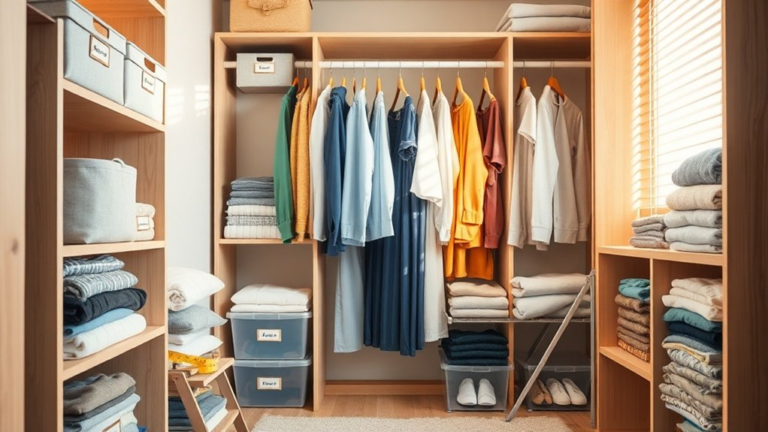
Imagine reaching for what you need and finding it instantly—clear, labeled bins make that possible by showing you contents at a glance and cutting guesswork. Durable materials like waterproof PP help bins stay clean and last longer.
Use accessible hanging storage for things you grab most, and try fold-and-stack systems to keep shelves neat so putting things away feels simple and satisfying. Consider adding stackable bins to maximize vertical space and keep items protected and visible.
Ready to make everyday tidying effortless?
Stackable options like clear plastic bins are especially helpful for maximizing vertical space and keeping items visible.
Clear, Labeled Bins
When you can see what’s inside at a glance, putting things away stops feeling like a chore and starts feeling like a quick, satisfying habit. Clear, labeled bins help you keep that momentum. You’ll find what you need fast, and you’ll be more likely to return items to their homes.
Labels remove guesswork, while transparency shows you what’s running low or overflowing.
- Use uniform bins so stacks look tidy and slide easily on shelves.
- Label front and top with simple words or icons, matching family language.
- Reserve shallow bins for small items and deeper ones for bulkier things.
Isn’t it nice when storage actually helps you stay organized? Try one area, and enjoy the calm it brings. Consider adding stackable storage to maximize vertical space and keep frequently used items within reach. Consider choosing durable, BPA-free materials for safer long-term storage. Add clear, transparent plastic bins to speed identification and keep contents protected.
Accessible Hanging Storage
Because you’ll use items more often if they’re easy to reach, accessible hanging storage turns clutter into calm and saves you time every day.
You’ll want hooks, hanging baskets, and multi-tier hangers placed at eye level so everyday pieces are obvious and simple to grab. Think scarves, belts, handbags, and frequently worn jackets—each gets its own spot, so you stop rifling through piles.
Use clear or consistent containers so your eyes find what you need fast. Install adjustable rods or cascading hooks to fit your height and routine; flexibility keeps the system useful as needs change. Consider adding stackable bins to maximize vertical space when shelf depth is limited.
Can you imagine the relief of always knowing where things belong? When hanging storage feels easy, putting things away becomes a habit you’ll actually keep.
Consider adding a hanging organizer with multiple compartments to maximize vertical space and keep items categorized.
A simple, repeatable system like consistent zones for types of items makes maintenance much easier.
Fold-and-Stack Systems
Fold-and-stack systems let you turn piles into tidy, reachable stacks that make putting things away almost automatic. You’ll appreciate how clear boundaries and simple folding rules reduce decision fatigue, so you actually keep things organized.
When you assign each shelf or bin a single category, maintenance becomes quick, even satisfying.
- Use uniform bins or shelf dividers to create neat stacks, so shirts and linens won’t topple when you pull one out.
- Fold items to consistent sizes, which makes visibility better and grabbing easier, saving time every morning.
- Label edges or front panels, guiding you and anyone else who shares the closet to return things to the right place.
Can you imagine opening a calm, orderly closet every day?
Clothes Rotation Systems for Seasonal Consistency
If you want your closet to feel calm and ready every season, a simple clothes rotation system will make that happen with less stress and more confidence.
Start by sorting garments into current season, next season, and off-season piles. Store off-season pieces in labeled bins or high shelves, and keep current items front and center so choosing an outfit is quick and joyful.
Schedule a twice-yearly swap day; mark it on your calendar and treat it like a small ritual. Rotate gently worn items to a donate pile, and re-evaluate pieces that never get worn.
Want to feel lighter each morning? A clear rotation system reduces decision fatigue, saves time, and helps you appreciate what you own.
Try it for one year and notice the difference.
Troubleshoot: What to Do When Clutter Creeps Back
When clutter starts creeping back, don’t take it as a failure—see it as a signal that your system needs a small tune-up rather than a total overhaul. You’re not alone; habits shift and life gets busy.
Pause, breathe, and gently inspect what slipped: a shelf that’s always full, a spot where donations pile up, or routines that faded. Small fixes keep momentum and reduce overwhelm.
- Reassess one hotspot, set a 10-minute daily reset, and stick to it until it feels natural.
- Reintroduce a simple habit—like returning items immediately—and reward yourself for a week of success.
- Adjust storage or labels so items have a clear home; clarity prevents guessing and clutter.
Simple Decluttering Criteria to Use Forever
Start with three simple rules you can actually stick to, and you’ll find decluttering feels less like a chore and more like a skill you use forever.
First, keep what fits your life: if you wore it, used it, or loved it in the last year, it stays.
If you’ve worn it, used it, or truly loved it in the past year, it belongs in your life.
Second, let go of what drains you: items that cause guilt, stress, or constant “maybe someday” thoughts are ready to go.
Third, choose one clear home for everything; if you can’t name that spot, it likely won’t survive.
Ask yourself: does this bring joy, function, or value? If not, thank it and release it.
Use these rules as your filter, practice them monthly, and watch your closet feel lighter, calmer, and truly yours.
Frequently Asked Questions
How Do I Organize a Shared Closet With a Partner or Roommate?
You split sections, set shared rules, and label zones so each person’s items stay distinct. You declutter together, agree on storage solutions, rotate seasonal items, and schedule quick weekly resets to keep the closet tidy and fair.
Can I Apply These Methods to a Kid’s or Baby’s Wardrobe?
Absolutely—you can apply them to kids’ and babies’ wardrobes; they’ll transform chaos into calm like magic. You’ll adapt sizes, safety, low shelves, labeled bins, and rotating systems to keep outfits accessible, tidy, and ready for fast changes.
What’s the Best Way to Store Sentimental or Rarely Worn Items?
Store sentimental or rarely worn items in labeled, breathable bins or acid-free boxes; you’ll keep them dry with silica packs, rotate occasionally, and store keepsakes where you can see or access them without disrupting daily wardrobe flow.
How Do I Maintain Organization in a Tiny Apartment Closet?
You’ll stay organized by decluttering regularly, using vertical space with slim shelving and hooks, rotating seasonal items, labeling bins, hanging slim velvet hangers, using clear boxes under shelves, and committing five minutes nightly—like winning a tiny war on chaos.
Which Tools or Apps Track Clothing Usage and Rotation?
You can use apps like Stylebook, Cladwell, or Smart Closet, plus general tools like Airtable or Google Sheets with photos; they’ll track outfits, log wear frequency, suggest rotations, and send reminders so you’ll wear everything evenly.
Conclusion
You’ve got the tools to keep your closet working for you, not against you. Start small, stick to the quick rules, and build two-minute habits that add up. Rotate seasonally, zone by function, and do a weekly check—consistency beats perfection. Remember, “a stitch in time saves nine.” What’s one tiny habit you’ll start tomorrow? Commit to it, and watch your space—and your peace—transform.