You’ll get simple, step-by-step guides that help you reset a closet in an hour, sort items into Keep, Donate, Sell, or Toss, and arrange zones for daily ease so dressing feels calm and fast. You’ll learn folding and shoe strategies, budget-friendly storage choices, and weekly or monthly habits to stop re-cluttering. It’s friendly, practical, and hands-on—ready to make your closet feel peaceful and useful. Keep going to see how to start.
Closet Highlights
- Start with a 60-minute focused reset: clear surfaces, pull everything out, and create empty workspace.
- Sort items into labeled bins: Keep, Donate, Sell, Toss, touching each piece once.
- Rehang and arrange by category and frequency: everyday items at eye level, seasonal up high.
- Use vertical and slim storage: multi-tier organizers, clear bins, slim hangers, and vertical shoe racks.
- Maintain with short routines: 10 minutes weekly straightening and a monthly wardrobe reassessment.
Quick 5-Step Closet Reset You Can Finish in One Hour

Ready to reclaim your closet in just an hour? You’ll tackle this quick 5-step reset with energy and purpose, and you’ll see real progress fast.
First, set a timer for 60 minutes so you stay focused, then clear the floor and visible surfaces to create breathing room. Consider using vertical storage like multi-tiered organizers to maximize space quickly.
Next, group like items together—jackets, shirts, shoes—so you can spot what’s missing or duplicated.
Use simple tools: a few baskets, one hanging organizer, and a shoe rack will change the feel immediately. Consider adding stackable bins that hold lightweight items to maximize vertical space.
Rehang everything neatly, facing the same way, and place everyday items within easy reach.
Finish by wiping shelves and sweeping the floor; enjoy the fresh look.
Isn’t it amazing what one hour can do?
For more ideas on keeping your space functional long-term, explore practical closet organization strategies you can maintain.
How to Sort and Purge: Keep, Donate, Sell, or Toss
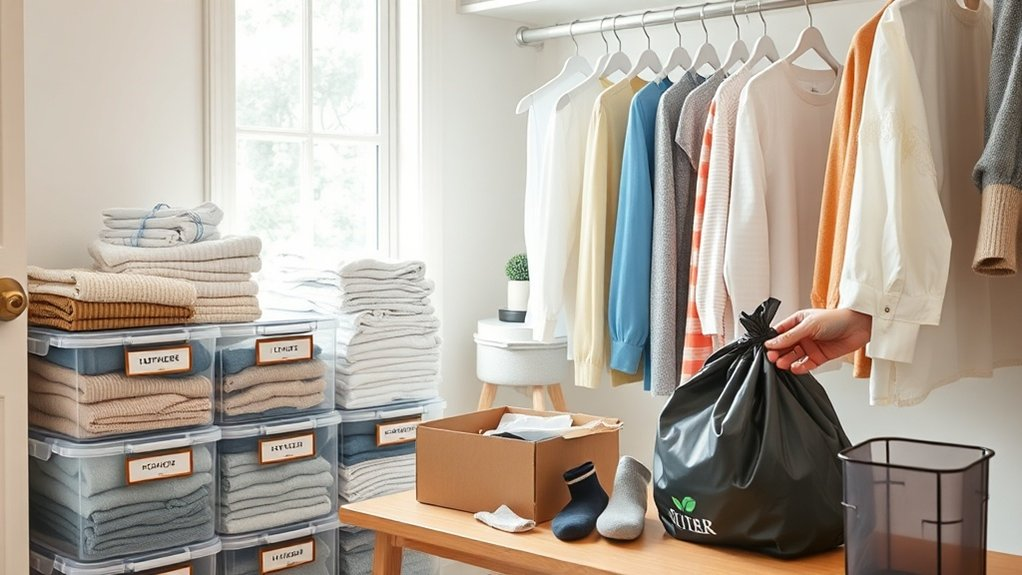
Decision time: sorting your clothes is where the magic happens. Stand with intention, pull everything out, and touch each item.
Ask: have I worn this in a year? Does it fit my life now? If yes, keep it. If unsure, try it on—trust how it makes you feel.
For donations, choose clean, wearable pieces that someone else will love; bag them and schedule a drop-off right away. Many local charities provide guidelines on accepted items and pickup options for donations. Consider verifying charity guidelines to ensure your items will be accepted and put to good use.
For selling, set aside higher-quality items, photograph them well, and list them with clear descriptions.
For tossing, be honest about stained, torn, or unsafe items.
Label four bins: Keep, Donate, Sell, Toss. Work in short bursts, celebrate small wins, and recycle responsibly.
You’ll feel lighter and more in control. Consider creating a maintenance plan to keep your closet tidy over time.
Arrange Clothes and Shoes for Daily Ease (Zones & Folding)

Because your mornings should feel calm, not chaotic, start by creating clear zones in your closet and shoe area that match how you live your day-to-day life.
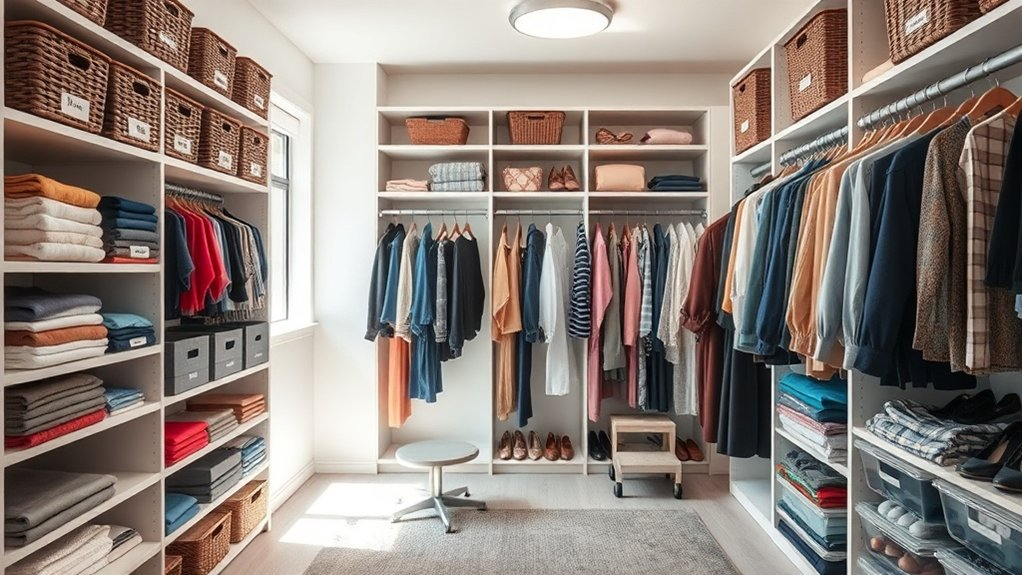
Put everyday outfits at eye level where you can grab them fast, reserve a lower shelf for shoes you wear most, and place formal or seasonal pieces up high.
Fold knits and tees neatly so they stay visible; use uniform stacks to prevent tumbling.
Hang pants and skirts together by type or color to speed decisions.
Think about a “grab-and-go” spot for gym wear or work essentials — what’ll save you minutes each morning?
Small labels or consistent hangers make the system feel intentional.
You’ll feel lighter, more confident, and ready to face the day.
Consider adding adjustable shelving and hanging solutions for storage flexibility and future changes, especially when optimizing limited space with modular systems.
Also consider vertical shelving and multi-tiered organizers to maximize every inch of space and reduce clutter.
For extra versatility, add stackable bins or fabric drawers to create layered storage that adapts as your needs change, especially when using durable stackable baskets.
Choose Affordable Storage Solutions That Actually Work
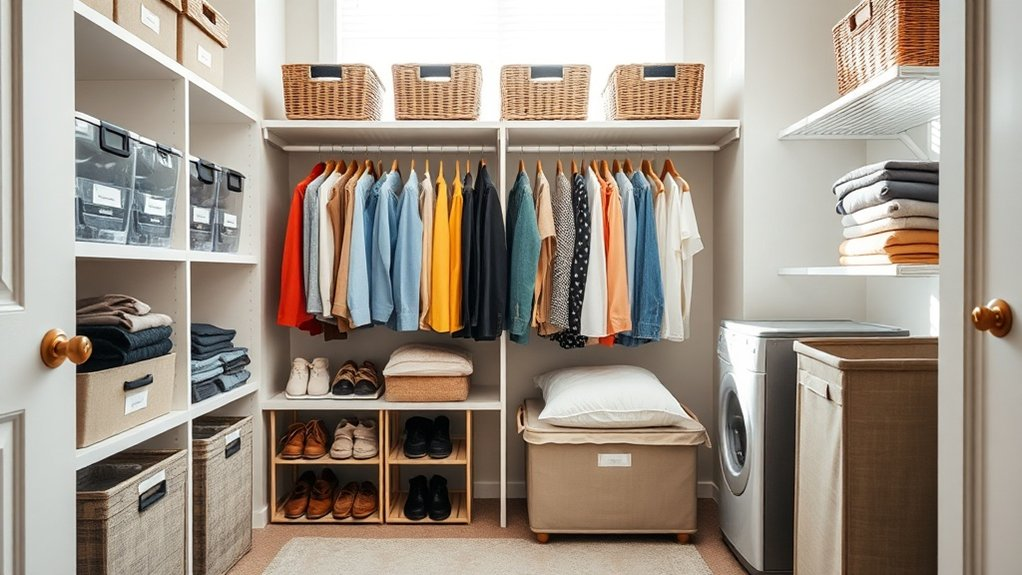
Now that you’ve set up zones and a grab-and-go spot, it’s time to pick storage solutions that actually work for your life and your wallet.
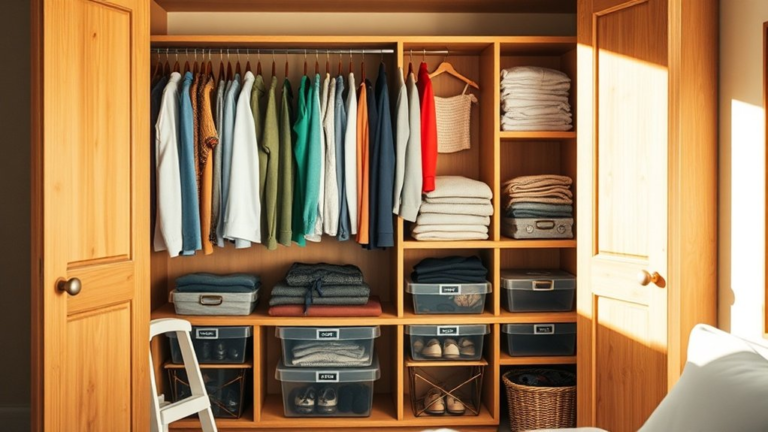
Start by measuring shelf height, hanging space, and floor area so you buy only what fits. Choose clear bins or labeled baskets for seasonal items, so you can see and find things fast. Consider using stackable bins to maximize vertical space without sacrificing stability. Measure your closet’s height, width, and depth first to ensure organizers will fit and make the most of vertical space with available space planning.
Measure shelves, hanging space, and floor area—then use clear bins or labeled baskets for easy seasonal access.
Use slim hangers to save space and a shoe rack that stacks vertically if you own lots of pairs. Don’t overlook multi-use pieces, like an ottoman with storage or a hanging shelf that holds accessories.
Can you repurpose containers you already have? Small tweaks add up—less clutter, more calm.
Buy smart, keep it simple, and enjoy the results. Consider stackable organizers like stackable closet storage to maximize vertical space without breaking the bank.
Maintain Order: 7‑Day and 30‑Day Habits to Prevent Re‑Cluttering
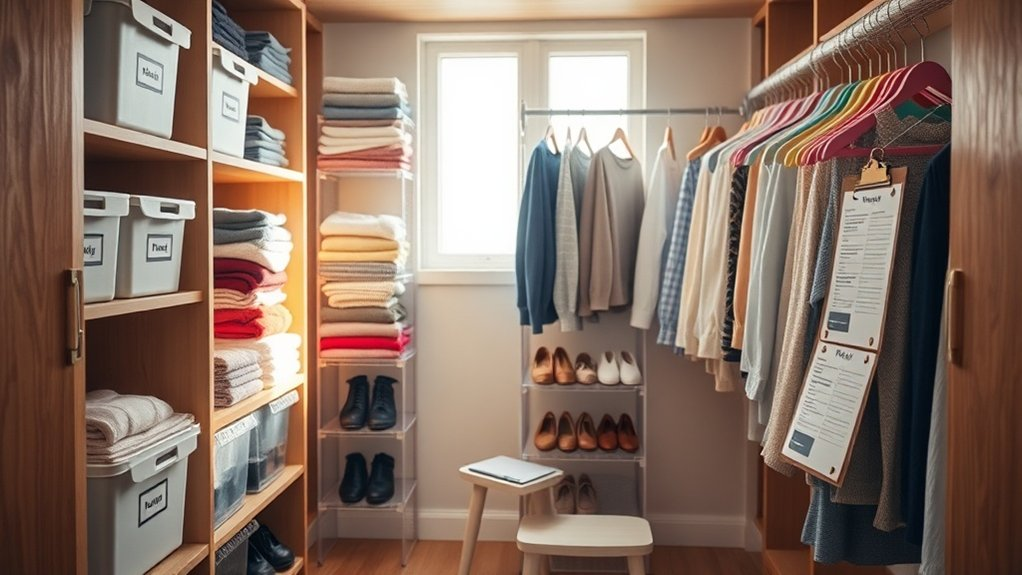
Set aside two simple routines—one weekly and one monthly—and you’ll keep your closet from sliding back into chaos.
Each Sunday, spend 10 minutes straightening hangers, refolding a couple of shelves, and returning stray items to their homes. You’ll feel immediate relief, and small, steady actions build confidence.
Once a month, do a 30‑minute check: remove anything you didn’t wear, spot‑clean what’s needed, and reassess seasonal storage. Ask yourself, does this spark ease when I dress? If not, let it go.
Celebrate the progress: a tidy closet makes mornings calmer and decisions quicker. Stick with these habits, and clutter won’t creep back in. They’re simple, doable, and they keep your space—and mood—fresh.
A little planning each week leads to better closet organization and long-term success. Adding simple upgrades like motion sensors can also improve usability and save energy.
Consider using storage zones to group items by type and frequency of use, which makes everything easier to find.
Frequently Asked Questions
How Do I Store Seasonal Items Long-Term Without Damaging Them?
Store seasonal items clean, dry, and packed in breathable containers; use acid-free tissue, cedar or lavender for pests, avoid plastic that traps moisture, label boxes, elevate off floors, and check periodically to catch issues early.
Can I Organize a Shared Closet for Two People Effectively?
You can—divide zones by function and ownership, compromise on shared space, label bins, rotate seasonal items, and set clear rules; it’ll take give-and-take, but once you’re on the same page, the system runs like clockwork.
What’s the Best Way to Protect Delicate Fabrics While Storing?
Use breathable garment bags, acid-free tissue between folds, and padded hangers; avoid plastic, sunlight, and damp areas. You’ll clean items before storing, rotate occasionally, and check for pests to keep delicates safe long-term.
How Do I Handle Sentimental Items I Can’T Let Go Of?
You keep sentimental items by curating a small, dedicated box or display, digitizing photos or notes, rotating keepsakes, setting preservation priorities, and accepting that some memories live in stories rather than things—so you honor feelings without drowning in stuff.
Are There Eco-Friendly Options for Closet Storage and Disposal?
Funny enough, yes — you can choose eco-friendly closet storage and disposal. You’ll prefer bamboo shelves, recycled fabric bins, biodegradable garment bags, and donate or compost textiles; you’ll also repurpose, sell, or recycle items responsibly to reduce waste.
Conclusion
You’ve got this—small steps make big change. Did you know the average person wears just 20% of their wardrobe most of the time? That means clearing clutter frees space and time, and helps you feel lighter each morning. Use the quick 5‑step reset, sort with purpose, zone your daily items, pick simple storage, and keep routines for 7 and 30 days. Start now, and enjoy a closet that serves you every day.