You can turn a chaotic closet into a calm, useful space with simple steps that don’t overwhelm. Start by emptying a section, sort into keep, donate, maybe, and set a 20-minute timer to avoid perfectionism. Ask if each item sparks joy, fits, or will be used in the next year. Add vertical shelves, double rods, or hidden-storage furniture to double space. Spend ten minutes weekly to maintain it, and keep a donation bag handy—stick with this plan and you’ll learn practical upgrades next.
Closet Highlights
- Set a 20-minute timer and declutter shelf by shelf to avoid perfectionism and speed decisions.
- Use a three-bin system (Keep, Donate, Maybe) and touch each item to assess current relevance.
- Apply simple decision rules: loved, worn, or used in the next year—if not, let it go.
- Maximize vertical space with tall shelving, slim hangers, and hooks to reduce cluttered floors.
- Maintain order with a weekly 10-minute scan and a permanent donation bag in the closet.
Quick Plan: How to Declutter Your Closet Without Stress
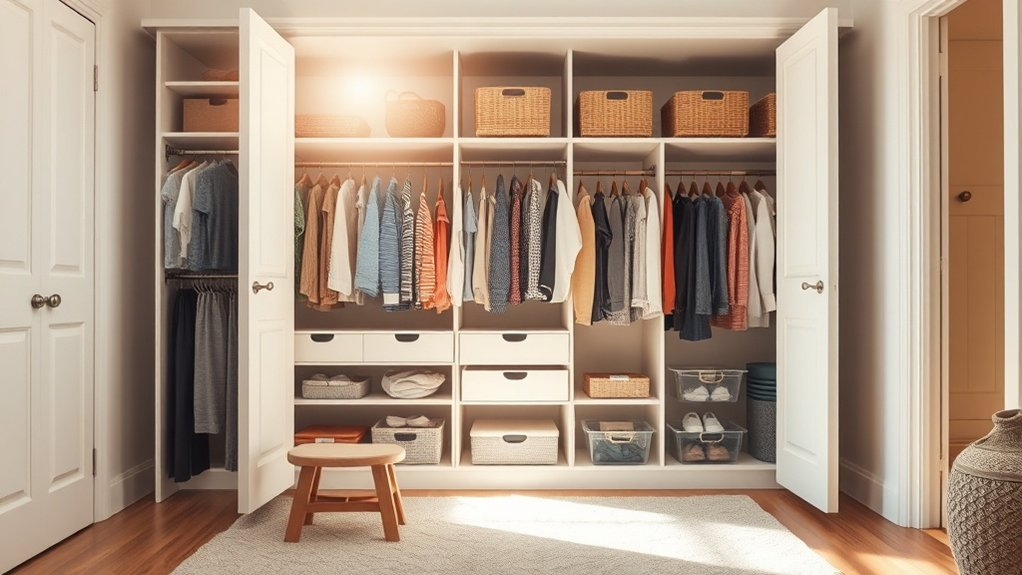
If you’re ready to free up space and calm your mornings, this quick plan will guide you step by step without overwhelm.
Start by setting a timer for 20 minutes so you don’t get stuck in perfection. Pull everything out only if you can, or work shelf by shelf; seeing items helps you decide faster. Incorporate a phased approach from a step-by-step method to keep the process manageable and emotionally supportive. Remember that effective closet systems often rely on zone-based organizing to maximize function and reduce decision fatigue.
Touch each piece and ask, Does this fit who I’m now? Keep what you wear, love, or need; box the rest for donation or storage.
Make three simple piles: keep, donate, maybe. Return items thoughtfully, grouping like with like and keeping daily wear at eye level.
Finish with a five-minute tidy—straighten hangers, fold new groupings—and celebrate the extra space. This approach follows closet organization principles to create a more functional and calming wardrobe.
Empty, Sort, Decide: A Simple 3-Bin Method for Every Closet

When you open your closet and really look, the 3-bin method makes sorting feel simple instead of scary, and you’ll be surprised how quickly a calm, useful space appears.
Start by emptying a section so you can see everything, then set out three bins or boxes labeled Keep, Donate, and Maybe.
Touch each item, hold it up, and ask: does this fit my life now? Put clear winners in Keep, useful but not loved pieces in Donate, and uncertain items in Maybe.
Work steadily, not frantically, and take short breaks if you need perspective.
When you finish a section, step back and feel the relief. The bins give structure, reduce guilt, and make decisions faster.
For longer-term success, consider scheduling regular clear-outs to maintain your organized space and prevent clutter from returning, which is a core idea from Transform Your Closet: Tips for a Fresh Start and its focus on closet organization. Scheduling seasonal reviews is an easy way to keep systems in place and avoid build-up of unwanted items regular maintenance.
Adding a simple inventory list can help you track what you own and avoid repeat purchases in the future wardrobe inventory.
Keep or Let Go? Practical Rules to Stop Second-Guessing
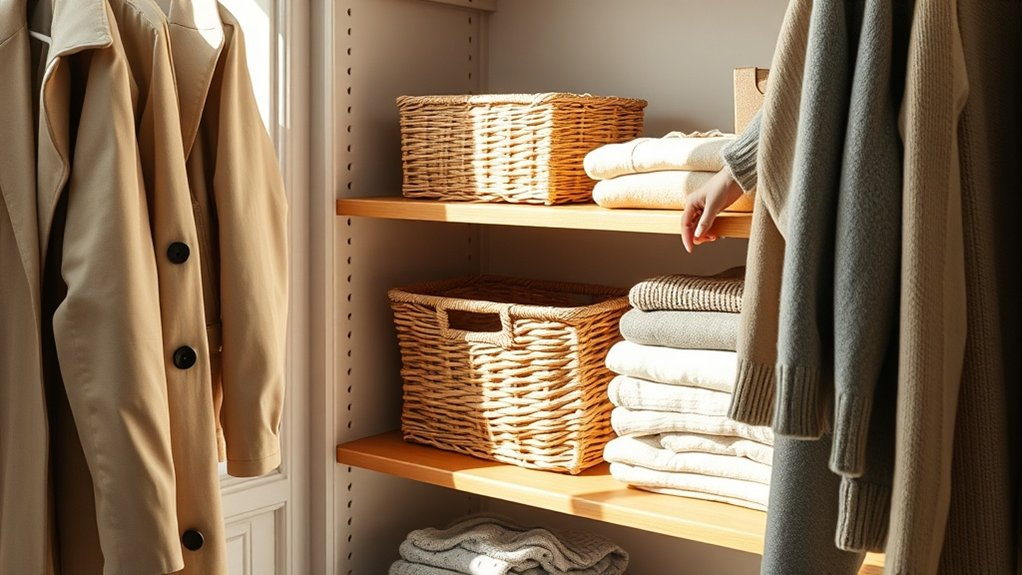
You’ll keep more of what truly fits your life when you make clear rules to guide you, not rely on guesswork.
Ask yourself: do you love it, wear it, or see a place for it in the next year?
Set simple toss-or-keep rules and trust them — they’ll save time and bring you a closet that feels like you.
Consider pairing your rules with space-saving hangers to maximize room and keep similar items grouped.
Many people find adding vertical storage elements like multi-tier hangers or rotating organizers makes these rules easier to follow and keeps everything accessible.
A well-designed closet system with organized zones helps you maintain those rules and find items faster.
Keep Items You Love
Some things in your closet spark a clear, warm feeling every time you see them, and those are the pieces you should keep without guilt. When an item makes you smile, fits your life, or feels like you, it earns a spot.
Hold it up, notice the texture, color, and how it makes your shoulders relax. Does it match your current style? Do you wear it often or imagine wearing it soon? Consider organizing these favorites using stackable designs to maximize space and visibility. Using durable, versatile sizing in organizers helps ensure those favorites stay neat and accessible.
Keep those that lift you, not the ones that weigh you down with doubt. Create a small, joyful section in your closet for these favorites so they’re easy to find.
This makes getting dressed simpler and your mornings brighter. Trust your feelings; love is a good rule. Transform your space using closet organization tips to make finding favorites effortless.
Let Go With Rules
Although letting go can feel hard, clear rules make it simple to decide what stays and what goes. You’ll feel lighter when you use a few easy guidelines: if you haven’t worn it in a year, let it go; if it doesn’t fit or flatter, donate it; if it’s damaged beyond repair, recycle or toss.
Ask yourself: does this spark joy or serve a purpose? Be honest. Set limits—three hangers per category, one box for sentimental items—and stick to them. Consider measuring your closet dimensions first to plan efficient layouts with vertical space in mind. Measure before you buy shelving to ensure everything fits and makes the most of your closet space.
Use a timer to keep momentum, twenty minutes at a time. Label piles: keep, donate, toss. Celebrate small wins, they add up.
These rules remove doubt, speed decisions, and protect your future closet from clutter returning. Transforming your closet can boost daily ease and reduce stress by creating a functional space for your clothes and accessories, a simple step toward ultimate organization.
Smart Storage Swaps That Double Your Space
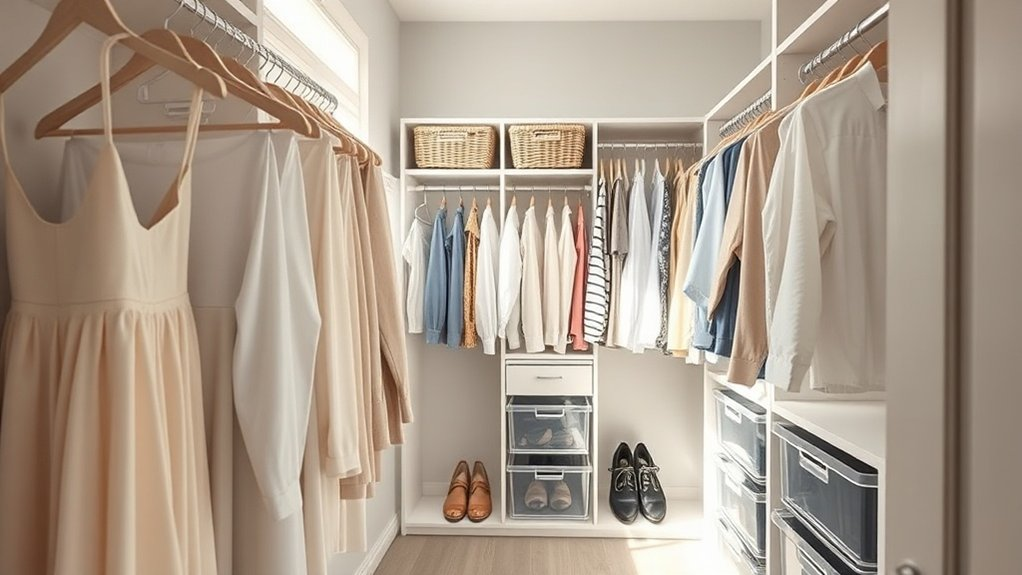
Want to make your closet feel twice as big without a major overhaul?
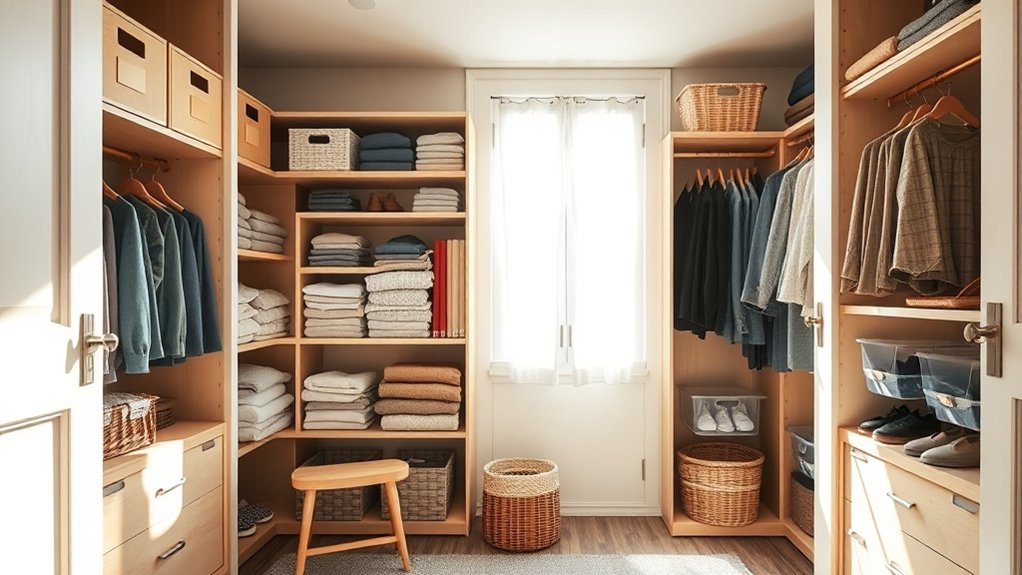
Start by thinking up: add vertical storage like tall shelving and hanging organizers to use the space above and below your clothes, and choose dual-use furniture—like a bench with drawers or a mirror that hides shelves—to keep things tidy and useful. Consider using stackable bins to maximize vertical capacity without compromising access. Install adjustable shelving systems with modular units to adapt as your storage needs change.
Which swap could you try this weekend to reclaim wasted space?
Consider adding stackable, collapsible storage bins with transparent panels to maximize visibility and space efficiency.
Vertical Storage Solutions
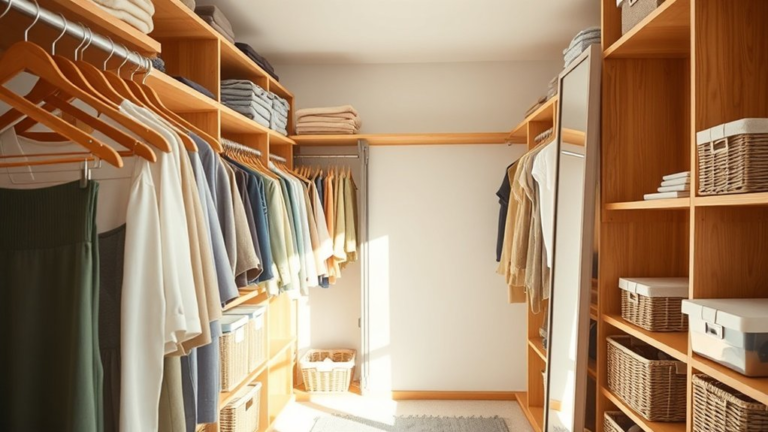
Try swapping just a few items and you’ll be amazed at how much vertical space opens up in your closet. You’ll feel lighter and more in control when you use walls and door backs for storage, freeing floor space and making everything easier to see.
Think tall shelves, hanging shoe organizers, and slim stacking bins that make use of height instead of crowding horizontally. You can also combine stackable organizers with clear bins to maximize visibility and stability so you don’t have to dig. Can you picture grabbing what you need without digging? That ease matters. Consider installing adjustable systems like multi-tier shelving to adapt as your storage needs change.
- Install a tall shelving unit that reaches the ceiling
- Hang an over-the-door organizer for shoes or accessories
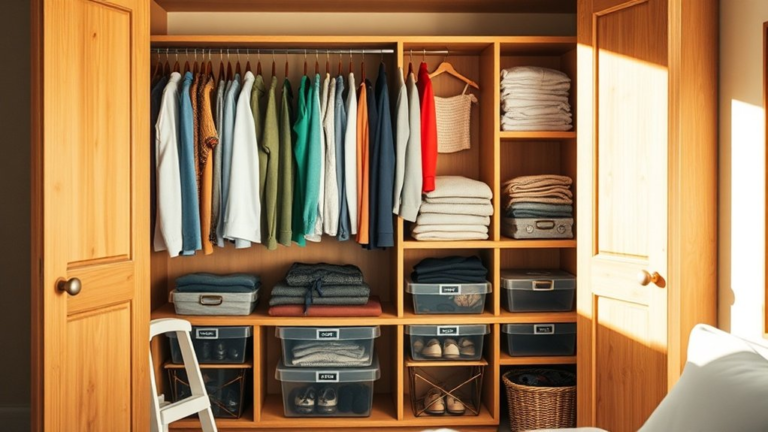
- Use stacked clear bins to see contents at a glance
- Add a slim hanging rod to create a second tier
- Mount hooks or pegboards for bags and scarves
These swaps spark calm, and they work fast. Adding adjustable shelving or modular components like the telescoping rods found in many custom closet kits can make future reconfiguration simple.
Dual-Use Furniture
When you swap single-purpose pieces for dual-use furniture, you’ll be surprised how much extra room and calm you gain without major renovation.
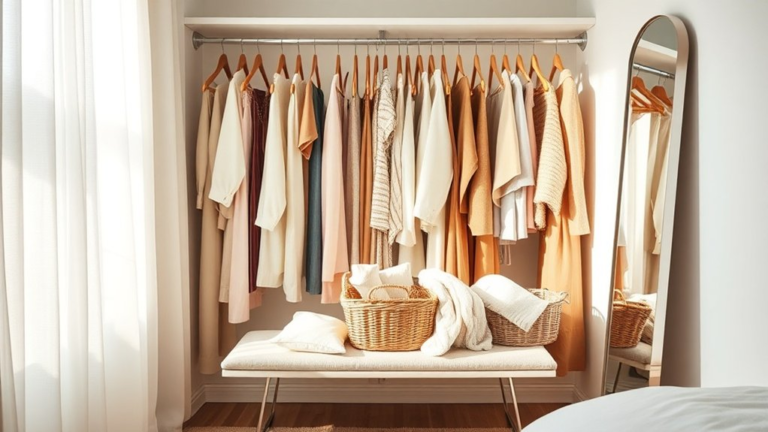
Think ottomans with hidden compartments, beds with drawers, or a bench that also stores shoes. You’ll free floor space and lower visual clutter, which makes it easier to keep things tidy and find what you need.
Choose pieces that match your style, and you’ll love the way your closet feels and functions. Opt for taller pieces or those with multiple shelves to maximize vertical space and storage efficiency.
Want a quick win? Add a narrow dresser that doubles as a folding surface.
Need more? Try a clothing rack with built-in shelves.
These small changes give big returns: more storage, less stress, and a home that supports the life you want. Consider pairing dual-use furniture with space-saving organizers to maximize efficiency across your closet and room.
For targeted small-space solutions, add an over-the-door organizer to free up shelf and floor room while keeping essentials accessible.
Tailoring the System: Tips for Small, Shared, and Seasonal Closets
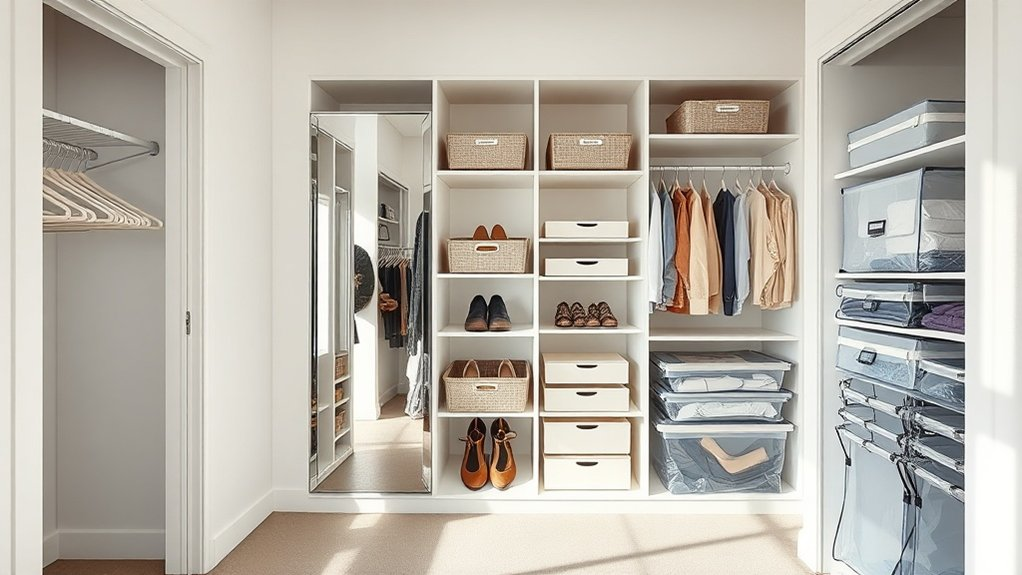
Because every closet has its own story and set of limits, you can tailor a system that fits your space and life without feeling overwhelmed.
Think about who uses the closet, what you need every day, and what can live elsewhere. For small closets, use vertical space and slim hangers to double capacity. Consider adding a rotatable organizer for compact access to frequently used items. Modular systems with vertical space utilization can further increase storage without expanding the footprint.
In shared closets, assign zones and label shelves so everyone finds things fast. For seasonal items, rotate what’s visible and store the rest in clear bins you can slide under beds or on high shelves.
Keep flexible solutions that can shift as your needs change, and pick a few habits that make the system stick.
- Use clear bins for easy visibility
- Install double rods for more hanging space
- Create labeled zones for each person
- Store off-season in stackable boxes
- Use hooks for accessories
Consider adding space-saving hangers to maximize garment capacity and keep everything accessible.
Maintain It in 10 Minutes a Week: Habits That Prevent Reclutter
A few minutes of care can keep your closet feeling calm and useful, and you’ll be surprised how fast small habits add up. Spend ten minutes once a week scanning your shelves and hanging rods: refold a stack, rehang a misaligned coat, and move any stray items back to their homes.
Set a friendly timer, play a song, and make it feel like a mini win.
Ask yourself: does this still fit, or spark joy? If not, file it for donation. Keep a donation bag in the closet so decisions are easy.
Wipe a shelf, straighten shoes, and return hangers to matching sides. These tiny actions stop clutter before it grows, and they make your closet a welcome place every day.
Frequently Asked Questions
How Do I Dispose of Damaged or Stained Clothes Responsibly?
You should sort damaged or stained clothes: recycle wearable pieces through donation or textile recycling, compost natural fibers, repurpose rags or crafts, and responsibly trash irreparable synthetics. Check local programs for drop-offs and manufacturer take-back options.
Can I Sell Designer Items Online Safely?
Yes — you can sell designer items online safely if you verify authenticity, use trusted platforms, ship insured, and keep clear photos plus receipts. Don’t assume buyers won’t check; they’ll scrutinize details, so protect yourself proactively.
What Should I Do With Sentimental Clothing I Can’t Part With?
Keep the pieces you truly love, but don’t let them overwhelm you; rotate favorites in a memory box, photograph items for digital keepsakes, repurpose fabric into quilts or accessories, and gift or donate less meaningful pieces thoughtfully.
How Do I Childproof Closet Organization for Toddlers?
You childproof closets by installing magnetic or keyed locks, using cordless window coverings, securing tall furniture to studs, keeping small or heavy items out of reach, labeling low bins for toys, and teaching boundaries consistently so they learn safe access.
Are Closet Organization Services Worth the Cost?
Yes — they can be worth it if you value time, expertise, and lasting systems; you’ll get tailored storage, efficient layouts, and hands-off installation, saving frustration and often increasing home value, though DIY can work if you’re budget-conscious.
Conclusion
You’ve cleared the clutter, felt the rush of empty hangers and neat stacks, and built a system that breathes. Picture opening your closet like unfolding calm—every piece has a place, each decision lighter than the last. Keep the three bins, respect the rules, tweak the swaps, and spend ten minutes a week tending this small garden. Ready to live with less stress and more ease? You’ve got this.