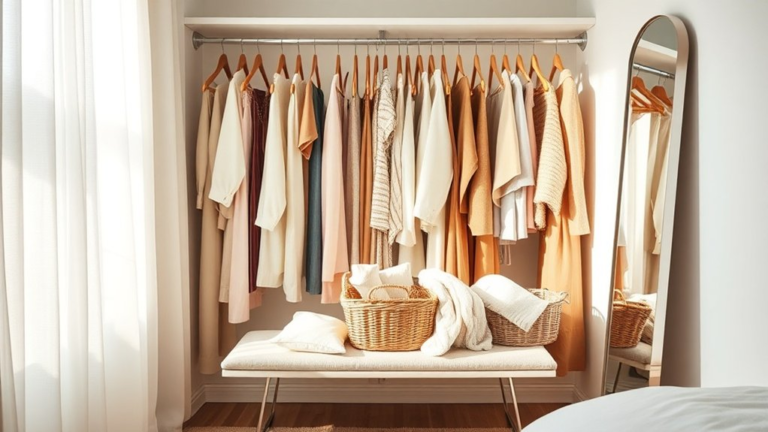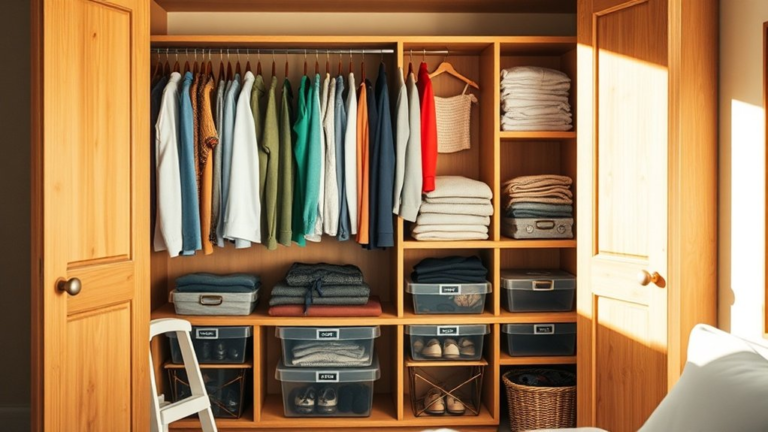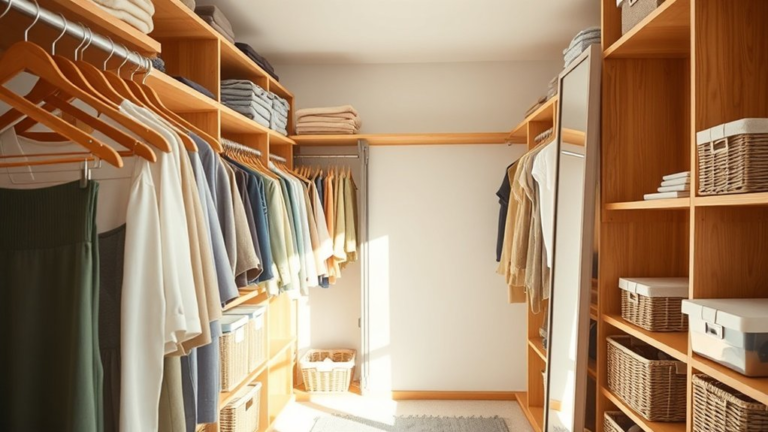
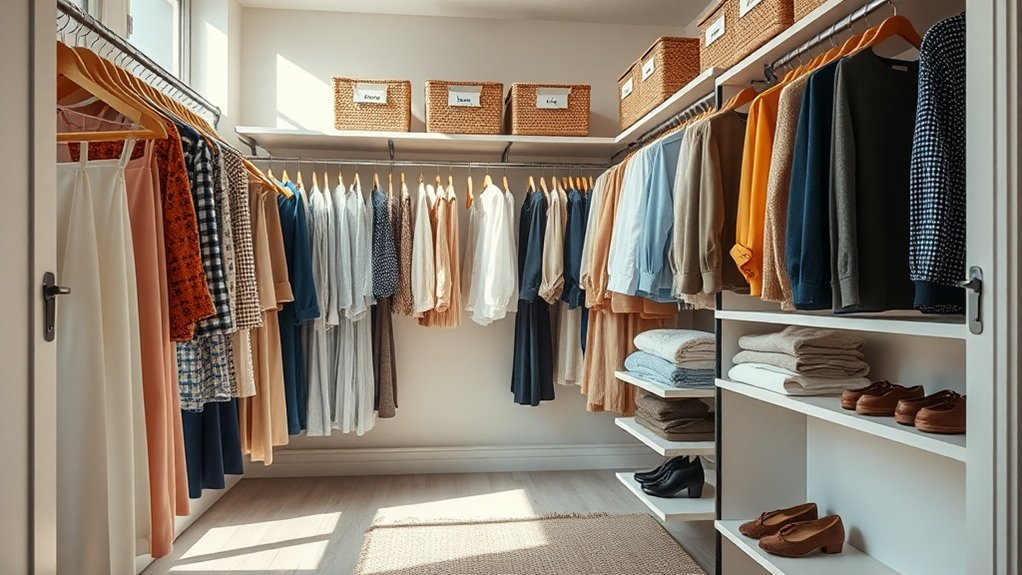
You can turn your closet into a calm, useful space with a simple plan: sort items into keep, donate, or toss piles, zone for daily, seasonal, and special outfits, and maximize hanging and shelf space with double rods and clear bins. Adopt quick daily resets and a ten-minute weekly tidy, rotate seasons, and label containers so things stay visible. Want a step-by-step approach and specific storage picks to make it stick?
Closet Highlights
- Sort items into keep, donate, and toss piles, then promptly remove donations to prevent clutter returning.
- Zone the closet by use: daily items at eye level, seasonal on top shelves, special-occasion in protected storage.
- Maximize vertical space with double-hang rods, adjustable shelving, and stackable bins.
- Maintain a daily quick reset and a ten-minute weekly purge to keep the system functioning.
- Troubleshoot monthly: remove problem items, test new storage solutions, and adjust layout as needed.
Quick Closet Audit: Decide What to Keep, Donate, or Toss
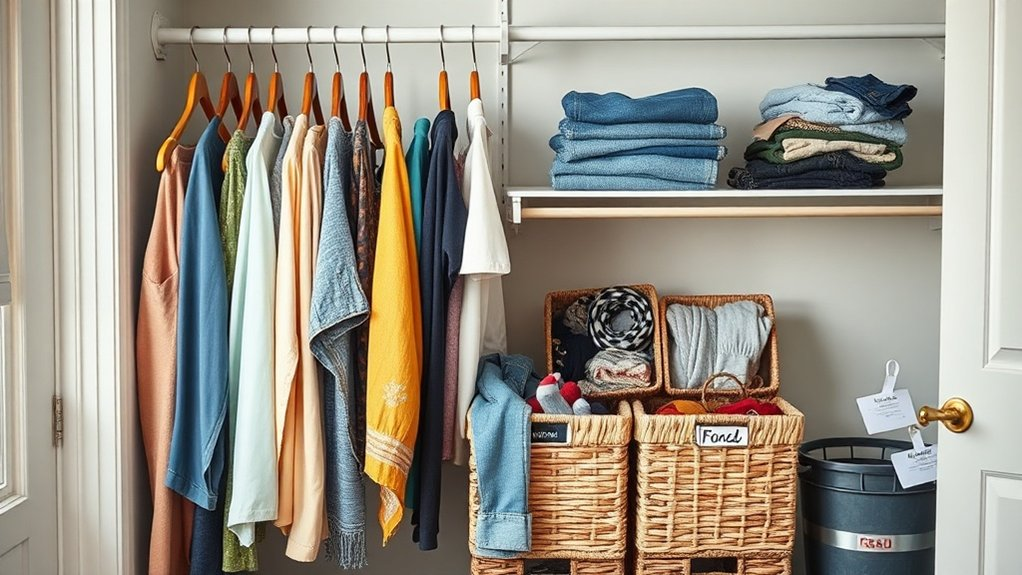
Grab a box and take a deep breath—you’re about to give your closet a fresh start.
Start by pulling everything out and sorting into three piles: keep, donate, toss.
Hold each item up and ask: does it fit, do you wear it, does it make you feel good? If you hesitated, set it aside for a trial week.
Hold each piece up: does it fit, do you wear it, does it make you feel good? Trial-week anything uncertain.
Be honest—keeping things “just in case” clutters your life.
Fold or hang the keepers neatly so you can see them.
Bag donations promptly and schedule a drop-off, so they don’t return to your shelves.
Toss anything stained or unsafe.
This quick audit clears space, reduces stress, and makes daily choices easier.
You’ll feel lighter, organized, and ready for the next step.
Consider creating a simple maintenance plan like a one in, one out rule to keep clutter from coming back.
Organizing by category and using consistent storage solutions improves visibility and efficiency, making it easier to maintain a tidy closet.
For long-term success, adopt consistent storage methods across sections of your closet to simplify upkeep.
Zone Your Space by Use: Daily, Seasonal, and Special-Occasion Areas
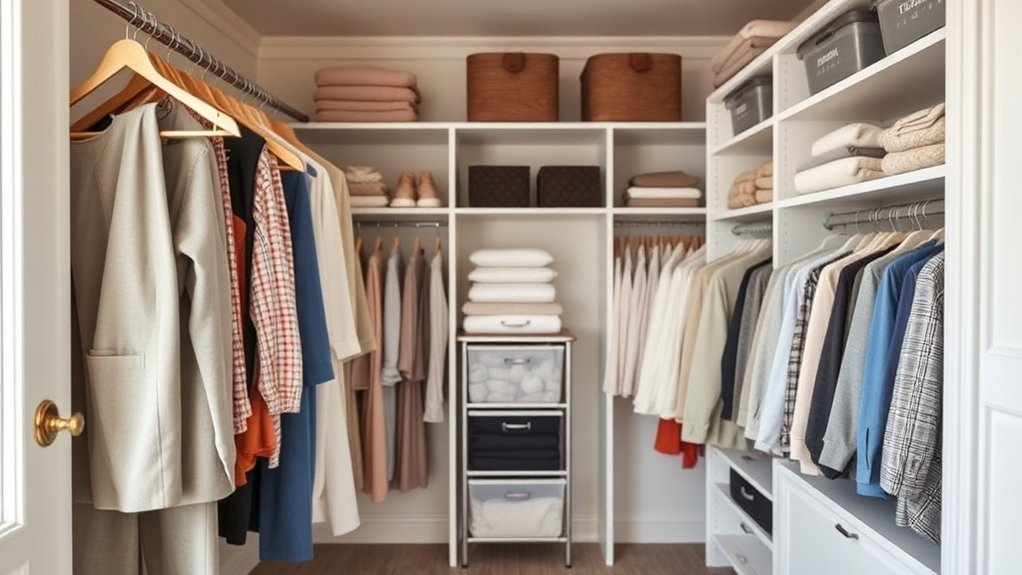
Now that you’ve sorted what stays and what goes, it’s time to give the items you kept a smart home that matches how you live.
Zone your closet by use so your daily routine flows, your seasonal pieces stay accessible, and special-occasion items remain protected. Consider using stackable bins to maximize vertical space while keeping items organized.
Put everyday clothes and shoes within easy reach, group seasonal swaps together, and reserve a tidy corner or box for formal wear and keepsakes. You’ll save time and reduce decision fatigue.
- Daily: everyday outfits and shoes near eye level for quick grabs
- Seasonal: labeled bins or a top shelf for off-season coats and sweaters
- Special-occasion: protective covers, a lower shelf, or a dedicated box to keep items pristine
Consider adding modular organizers or adjustable shelving to make your system adaptable and maximize storage efficiency. Many modern organizers use space-saving hangers or multi-tiered solutions to free up floor space and keep essentials accessible.
Which zone will you set up first?
Maximize Hanging and Shelving: Smart Layouts for Any Closet Size
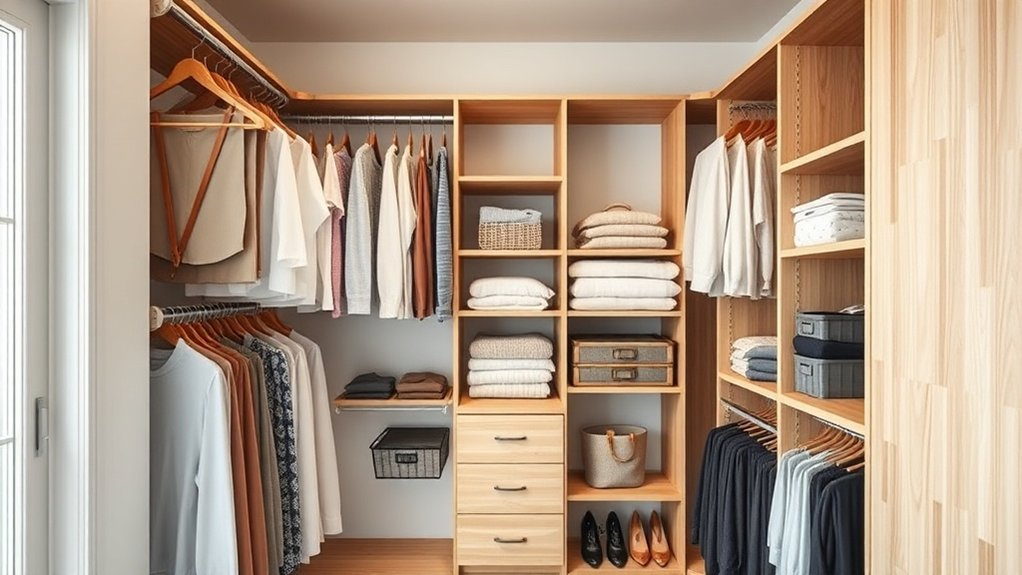
You can get so much more out of your closet by using a double-hang strategy for shirts and pants, freeing up vertical space for bins or shoes.
Mix in adjustable shelving that you can move as your wardrobe changes, so every inch works for you. Consider adding stackable storage bins to make the most of cleared vertical areas. Also consider using clear acrylic shelf dividers to maximize vertical space and visibility.
Ready to rework your layout and make your mornings easier? Increase storage efficiency by planning for vertical space to accommodate taller boots or bulkier shoes.
Double-Hang Strategy
Think of double-hang as the closet trick that gives you twice the usable space without major renovations. You’ll feel instant relief when you split a full-height rod into two levels: shirts and jackets up top, skirts and pants below. Adding slim, stackable storage bins underneath keeps folded items tidy and makes use of low space that would otherwise be wasted, especially when you choose stackable fabric bins for neatness and durability. Consider integrating versatile storage solutions like hanging organizers and reinforced shelves to adapt as needs change.
It’s practical, tidy, and makes every item easier to reach. You’ll also create visual order, so mornings go smoother and choices feel lighter.
Want to make it sing? Keep similar lengths together, use slim hangers, and reserve a section for seasonal swaps. How would your routine change with this simple shift?
- Maximize vertical space with two rods
- Group items by type and frequency
- Use matching, slim hangers for neatness
Stack items with stackable storage to make the most of every inch and keep things accessible.
Adjustable Shelving Layout
After you’ve split a rod and doubled your hanging space, adjustable shelving lets you tailor the rest of the closet to fit how you actually live.
You can move shelves to create cubbies for shoes, stacks for sweaters, or wide spaces for bags, so every item has a clear home. Think about what you reach for most and place those shelves at eye level.
Use taller gaps for boots, shallower shelves for folded tees, and a few deep bins for seasonal gear. Consider adding stackable baskets to make use of vertical space and keep smaller items contained.
Adjustable shelving grows with you, so you can rearrange without stress when needs change.
Want a neat, calm closet that works hard? Start by measuring, plan a few shelf heights, then shift and enjoy the order you made.
Consider choosing durable materials like vinyl-coated steel for adjustable shelving to ensure long-lasting support and stability. Also consider modular, no-drill systems like the adjustable rod extender to simplify installation and reconfiguration.
Choose Storage Solutions That Fit Your Needs and Budget
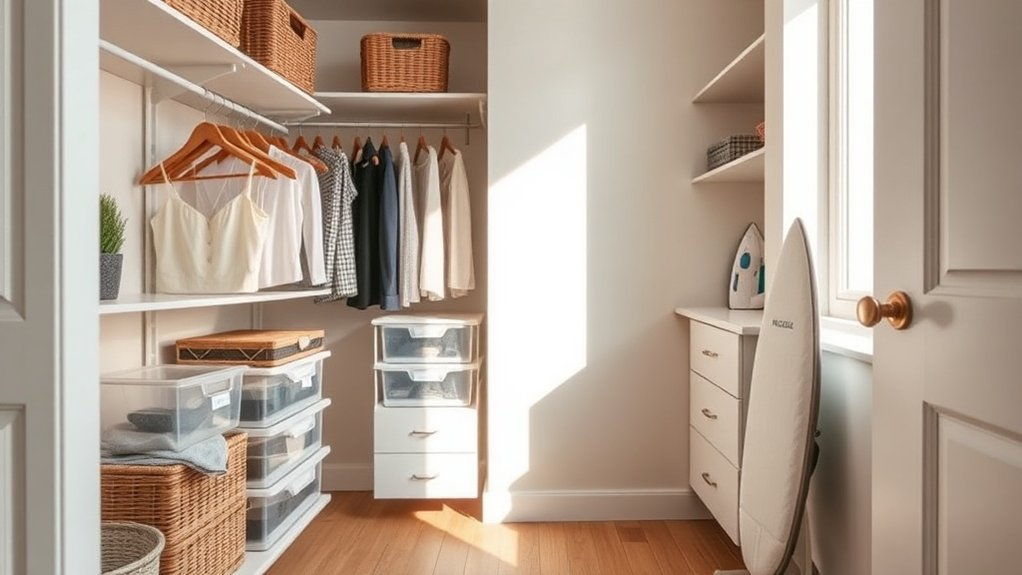
Looking for storage that actually works for your life and budget? You want solutions that feel helpful, not overwhelming.
Start by evaluating what you store most—shoes, seasonal gear, or daily outfits—and prioritize easy access to those items. Mix affordable basics with one or two investment pieces that save space long-term. Measure your closet, then pick sizes that fit rather than guessing. Consider using adjustable shelving to make the most of vertical space and accommodate different item heights. Also consider integrating space-saving hangers to maximize vertical storage and reduce clutter.
- Choose modular pieces that grow with you.
- Pick clear or labeled bins so you find things fast.
- Invest in a sturdy hanging rod or shelf where it counts.
You’ll feel lighter when every item has a home.
Take small steps: try one change, test it for a week, then expand. Your closet will thank you. Consider adding stackable organizers to maximize vertical space and reduce clutter.
Folding, Rolling, and Styling: Clothes Techniques to Save Space
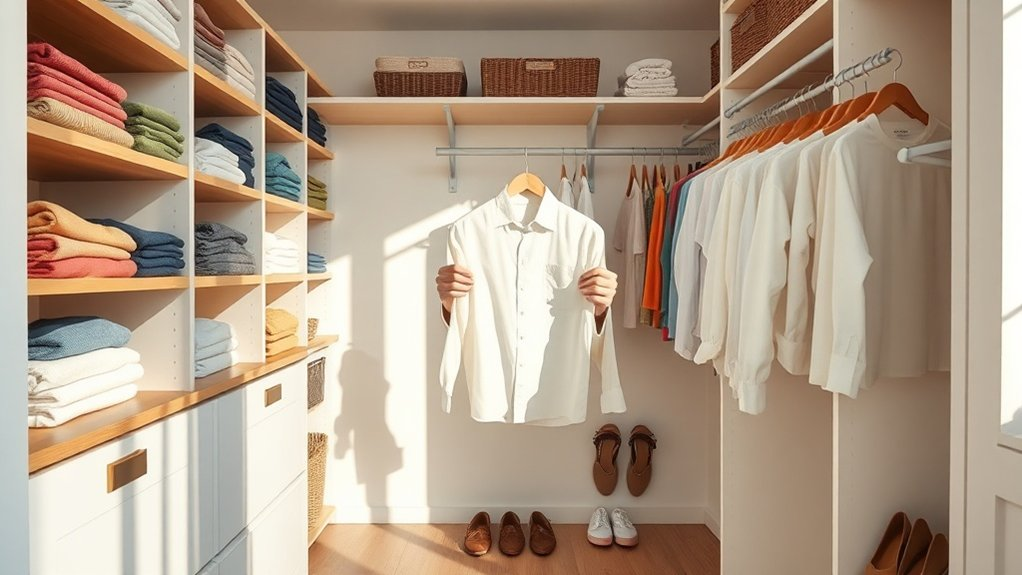
Start by choosing folding and rolling methods that match how you live, because small shifts in technique can open up big amounts of space and make your mornings calmer.
Test flat folding for shirts and sweaters to keep stacks neat, or roll tees and casual wear to fit into drawers and bins without creases.
Use the KonMari tuck for pants and shirts you grab often; you’ll see everything at a glance.
Layer by color or outfit to speed dressing, and reserve hangers for delicate pieces that need shape.
Use shelf dividers, small boxes, or clear bins to keep rolled items from toppling.
Want more room and less stress? Try one method for a month, adjust, and enjoy the extra breathing space in your closet.
Consider adding a hanging organizer with multiple compartments to maximize vertical space and keep items sorted.
For lightweight items like socks, tank tops, or seasonal accessories, consider using stackable bins to keep them neatly contained and easy to access.
You can also add modular vertical storage solutions to maximize space and adapt as your needs change.
Daily and Weekly Habits to Keep Your Closet Tidy
You can keep your closet feeling fresh with a quick daily reset—hang up anything you wore, tuck scarves back in their spots, and give the floor a fast sweep so mornings feel calm.
Once a week, spend ten minutes on a gentle purge: pull out items you didn’t wear, donate what you won’t miss, and re-fold anything that’s lost its shape. Consider using stackable organizers to maximize vertical space and make weekly maintenance easier.
Try planning your outfits for a few days ahead; it saves time, reduces decision stress, and helps you see what truly belongs in your space.
Transform your closet with simple strategies like decluttering regularly to create a more organized, functional space. Add seasonal swaps to rotate items and keep only current pieces accessible, which helps maintain a streamlined wardrobe and reduce clutter.
Quick Daily Reset
Even if your mornings are rushed, a quick daily reset can make your closet feel calm and ready for the week ahead. Spend two to five minutes straightening hangers, refolding one or two piles, and returning shoes to their spots. You’ll notice a small effort keeps clutter from growing, and you’ll feel calmer picking outfits.
Ask yourself: what would make getting dressed easier tomorrow?
- Put worn-but-clean items on a designated hook.
- Rehang any dropped items immediately.
- Fold one stack before you leave the room.
These tiny habits add up, saving time and stress. Commit to a short routine after dressing, and watch your closet stay organized without extra work. It’s simple, satisfying, and totally doable. Transform your closet with effortless organization techniques to make maintaining it even easier. Add a few smart storage solutions like labeled bins and adjustable shelving to support your routine and keep everything accessible closet organization. Also consider implementing daily habits to sustain the system and prevent clutter from returning.
Weekly Purge Session
Make time each week for a gentle purge session that keeps small messes from turning into a big overhaul, and you’ll find your closet stays easier to manage.
Spend 10–20 minutes scanning shelves, drawers, and the floor, removing items that don’t belong or haven’t been worn recently. Ask yourself: does this make me feel confident, or is it just taking up space?
Create three quick piles—keep, donate, repair—and act on them immediately so clutter doesn’t linger.
Fold or hang garments neatly, straighten shoe rows, and replace misfit hangers. Celebrate the progress; a calmer closet lifts your mood and saves time.
Stick with this weekly habit, and you’ll protect your neat system while keeping decisions simple.
Transform your space with simple closet organization tips from our website.
Consider adding a seasonal inventory check to track what you own and when you wear it, which helps maintain a tidy closet.
A brief walkthrough of basic storage principles each season can help you optimize shelf and hanger placement for efficiency.
Outfit Planning Routine
After your weekly purge keeps clutter at bay, planning outfits becomes a simple, satisfying habit that protects all that effort. You’ll feel calmer each morning when you set aside five minutes to choose tomorrow’s look: shoes, accessories, and a backup option.
Lay items together so you see colors and textures, and hang the full outfit or place it on a designated shelf. On Sunday, scan your week and pin outfits to appointments — work, workouts, and comfort days. When you plan, you avoid frantic decisions that mess up your tidy closet.
- Pick one outfit each evening to streamline mornings.
- Group complete looks for the week on hangers or trays.
- Reassess after three wears to keep only what serves you.
Troubleshooting Common Problems and When to Reorganize
When your carefully arranged closet starts to feel chaotic again, don’t worry—you’re not failing, you’re learning what needs to change.
Notice what trips you up: overflowing hangers, items you never wear, or seasonal pieces buried out of sight. Ask yourself: which habits cause the mess? Fix rules that don’t fit your routine, like rigid categories that slow you down.
Tackle one zone at a time, remove what’s worn or unused, and reassign storage for items that keep returning to the floor. Set simple checkpoints—monthly quick cleans, seasonal swaps—to prevent relapse.
If you feel stalled, experiment: move shelves, add baskets, or change hanger types. Reorganizing isn’t surrender; it’s smart tuning for a closet that truly works for you.
Frequently Asked Questions
How Do I Store Sentimental Items Without Cluttering My Closet?
You’ll store sentimental items by selecting a few treasures, using labeled keepsake boxes or clear bins, rotating displays, digitizing photos, and stashing rarely-used pieces in vacuum bags or a dedicated, organized under-bed or shelf space to avoid clutter.
Can I Use Vacuum Bags for All Clothing Types?
You can’t use vacuum bags for all clothes; delicate fabrics, leather, and structured garments can be damaged. Use them for bulky, washable items like down and sweaters, and air-sensitive storage for fragile or tailored pieces.
How Do I Prevent Moths and Pests Long-Term?
You’ll prevent moths and pests long-term by cleaning and vacuuming regularly, storing garments in sealed containers, using cedar or lavender, rotating items, inspecting fabrics, laundering before storage, and setting traps or professional treatment if infestations recur.
What’s the Best Way to Organize Shoes You Rarely Wear?
Store rarely worn shoes in clear, labeled boxes or breathable garment bags on high shelves or under bed; rotate seasonally, stuff with acid-free tissue to maintain shape, add cedar or silica packs, and inspect periodically for pests or damage.
How Often Should I Replace Hangers and Storage Bins?
Replace hangers every 1–2 years or when warped, snapped, or stretching clothes; swap storage bins every 3–5 years or sooner if cracked, moldy, or no longer fitting items. You’ll maintain freshness and functionality by checking regularly.
Conclusion
You can keep your closet tidy without a complete overhaul—start small, and you’ll see big change. Imagine your clothes grouped by use: daily, seasonal, special-occasion—so outfits pop out, not piles. If you worry you don’t have the time or money, try a 15-minute daily habit and affordable bins or DIY shelves. You’ll feel lighter, calmer, and more confident getting dressed. Ready to open the door to a simpler routine?