You can transform any wardrobe—reach-in, walk-in, or built-in—into a calm, useful space by zoning for daily wear, work outfits, shoes, and accessories, using slim matching hangers and clear bins, and placing everyday items at eye level. Clear, sort, and label: Keep, Donate, Repair. Rotate seasons into labeled bins and add hooks, vertical shelves, or a double rod to save space. Want simple layouts, tool picks, and habits that keep it tidy over time?
Closet Highlights
- Sort clothes by type and season, using Keep/Donate/Repair bins to remove unnecessary items.
- Use matching slim hangers, double rods, and vertical shelving to maximize reach-in closet space.
- Zone walk-ins with eye-level daily wear, lower shoes, and a dressing/mirror area for smooth flow.
- Store off-season items in labeled bins on high shelves and keep a transition rack for variable weather.
- Maintain order daily: return one item each morning, scan for misplacements, and clear the floor nightly.
Quick Checklist to Prep Any Wardrobe Closet
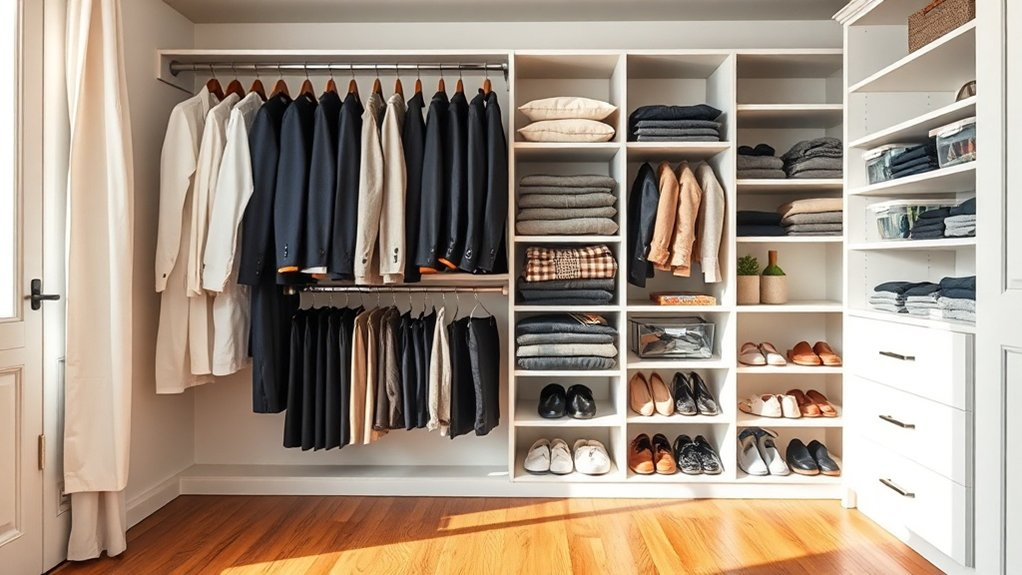
Start by clearing a small space in front of your closet so you can move freely and see everything at once.
Gather three bins or boxes labeled Keep, Donate, and Repair; you’ll move items quickly through each pile.
Three bins—Keep, Donate, Repair—make sorting swift and decisive, moving items through your closet in a snap
Pull out shoes, bags, and seasonal items so nothing hides behind a hanger.
Check lighting—bring a lamp or a bright bulb if the space feels dim.
Have lint rollers, a soft cloth, and a small vacuum or broom ready for quick cleaning.
Measure the hanging height and shelf depth with a tape measure, jotting numbers for later tweaks.
Keep a trash bag handy for worn-out textiles.
Pause and ask: which pieces make you feel confident?
Decide, then act.
Consider creating a simple phased plan to maintain progress and avoid overwhelm, like the step-by-step approach described in the guide.
A well-organized closet can reduce daily decision fatigue and improve outfit choices, supporting mental clarity and efficient routines.
Consider adding modular organizers like adjustable shelving to maximize vertical space and adapt as your wardrobe changes.
Organizing a Reach-In Closet for Maximum Visibility
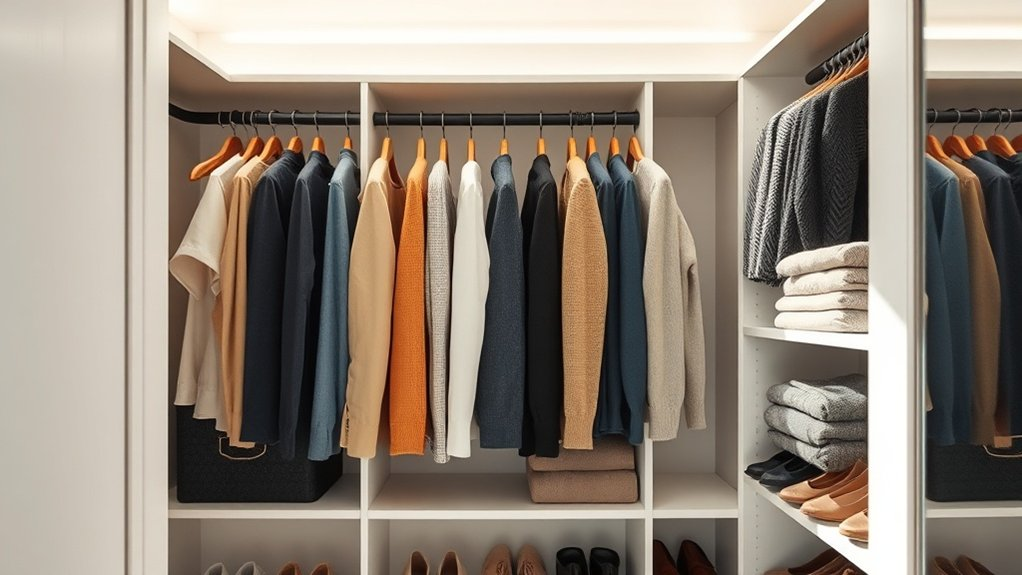
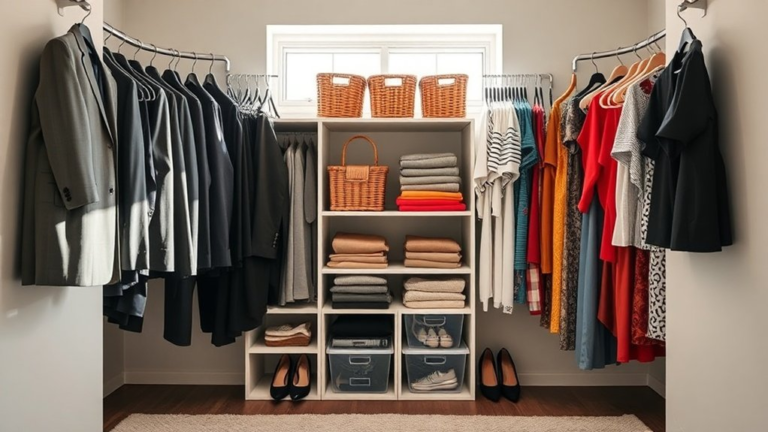
When you open a reach-in closet, you want every item to be easy to see and grab, not buried behind a tangle of hangers and boxes.
Start by clearing everything out, then sort like-with-like so you can assess what stays.
Use slim, matching hangers to save space and create a neat visual line, and add a second rod if height allows to double hanging capacity.
Put everyday pieces at eye level, seasonal or occasional items up high, and shoes on clear bins or a low rack so you can spot pairs instantly.
Label shelves and drawer fronts for quick decisions.
Can you commit five minutes each night to return items? Small habits keep the view uncluttered and your mornings calm.
Consider adding a consistent visual line with matching hangers to reinforce an organized look.
Consider installing adjustable shelves or a closet organizer tower to maximize vertical space and adapt as your wardrobe changes.
A simple system of bins, labels, and regular editing leads to a streamlined closet that’s easier to maintain and shop from.
Layout and Zones for an Efficient Walk-In Closet
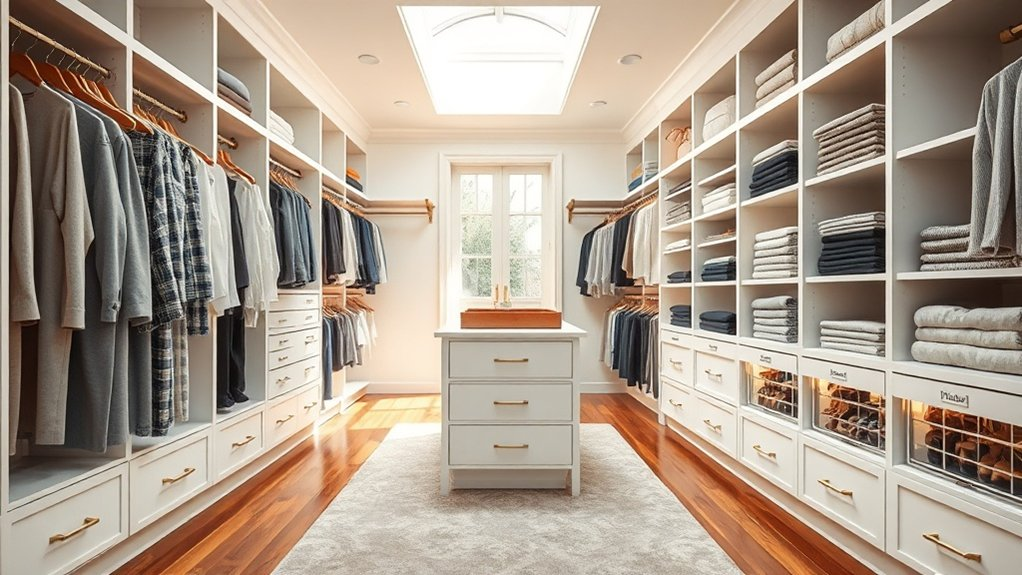
You’ve seen how small habits and smart shelving make a reach-in closet feel calm; a walk-in gives you room to plan an entire dressing experience.
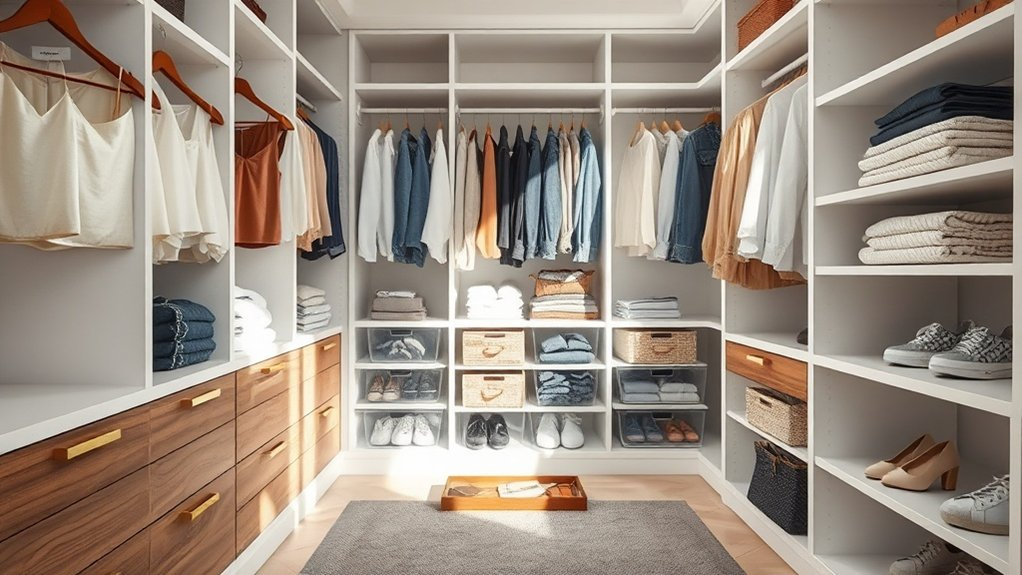
Start by mapping zones: daily wear, work outfits, special-occasion pieces, shoes, and accessories. Place daily items at eye level for quick grabs, reserve lower shelves for shoes and bins, and higher shelves for seasonal storage.
Map clear zones—daily wear at eye level, shoes and bins below, seasonal items high—for a grab-and-go closet.
Add a small dressing area with a mirror and good lighting so getting ready feels joyful, not rushed.
Think about flow—can you move between hanging, folding, and mirror without backtracking? Use consistent hangers and labeled baskets to keep zones clear.
When everything has a place, your walk-in becomes a calm, efficient ritual you’ll actually enjoy. Consider adding vertical storage to free up floor space and keep essentials accessible. Also consider installing custom shelving to maximize space and tailor storage to your needs. Research shows that zone planning improves daily outfit selection and reduces clutter.
Space-Saving Tricks for Reach-Through Closets
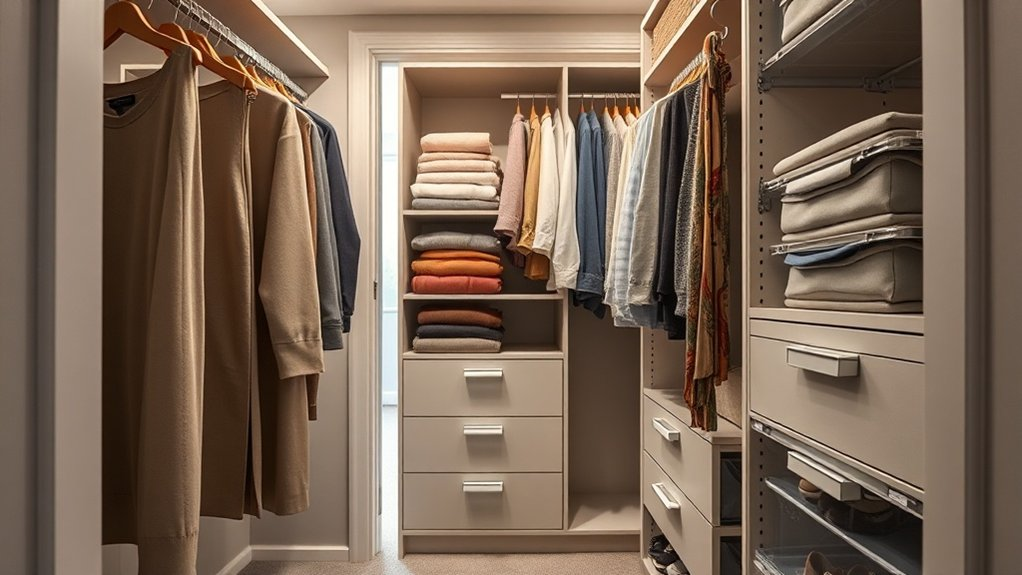
If your reach-through closet feels cramped but you still want it tidy and useful, think vertically and cleverly about every inch—shelves, walls, and doors all count.
You can add slim, adjustable shelves to stack sweaters and shoes without blocking the walkway. Use clear bins and labeled baskets so you see what’s there at a glance. Consider adding clear acrylic shelf dividers to maximize vertical space and visibility.
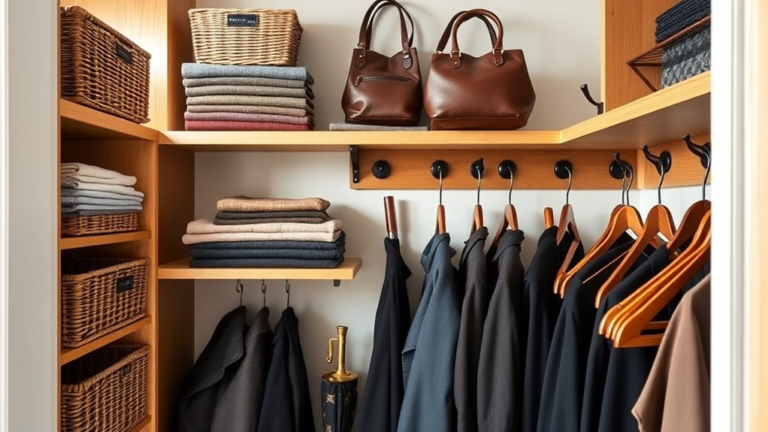
Mount hooks and slim pegboards on the side walls for bags, scarves, and belts, freeing floor space. Over-the-door organizers work wonders for shoes or small items.
Consider a tension rod for a second hanging level for shirts or skirts. Keep daily items at eye level and seasonal pieces higher up.
Small changes add up, and you’ll feel calmer every time you open the closet. Consider incorporating multi-tiered organizers to maximize vertical space and improve accessibility. Adding vertical storage like modular hangers and stacking shelves helps make the most of every inch.
Built-In Wardrobe Solutions That Feel Custom
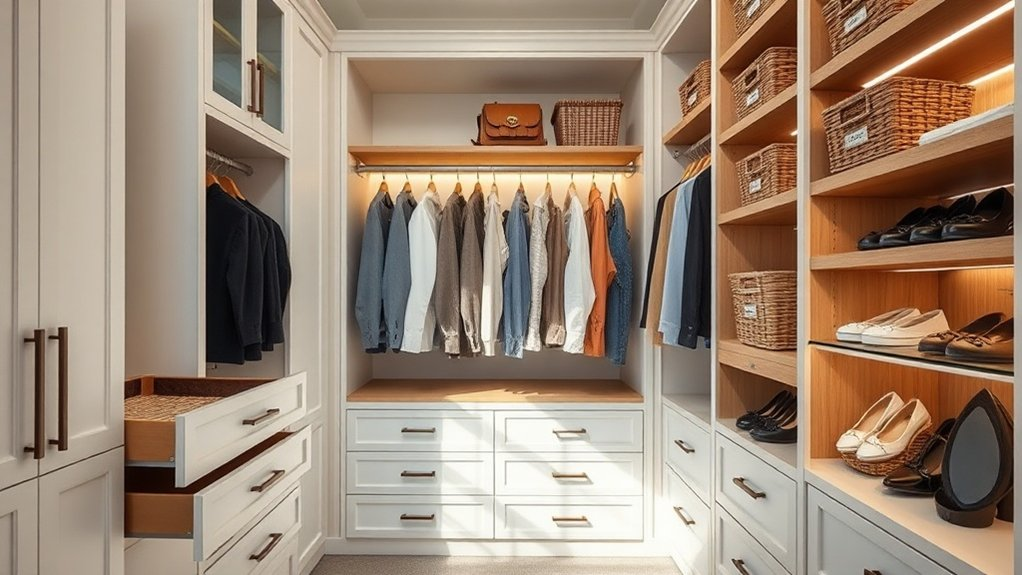
Think of three built-in wardrobe ideas that make your closet feel like it was tailor-made for your life.
First, imagine a floor-to-ceiling unit that frames your space, with varied heights for dresses, coats, and everyday tops so everything has a calm, clear home. Consider adding adjustable shelving and rods to accommodate changing storage needs and maximize flexibility with expandable systems.
Next, picture a recessed bench with hidden compartments beneath—a comfy spot for putting on shoes and a secret stash for seasonal items. Consider adding stackable storage bins for efficient use of vertical space and easy access to seasonal gear stackable designs.
Finally, consider a slim, vertical cabinet by the door for accessories and must-grab pieces, keeping your routine smooth and joyful.
These built-ins anchor the room, reduce visual clutter, and make daily dressing feel deliberate.
What would you reach for first in a closet that was designed around you?
Consider choosing waterproof, rust-resistant materials for built-ins to ensure long-term durability and load-bearing capacity.
Choosing Storage Tools by Closet Type (Shelves, Rods, Drawers)
Those built-ins you pictured set the mood for the rest of the closet, and now it’s time to pick the tools that’ll make every shelf, rod, and drawer work for your life.
Think about what you wear daily: long dresses need high rods, folded sweaters want deep shelves, and jewelry or socks deserve shallow drawers. Mix adjustable shelving for shoes and bags with double rods to double hanging space. Consider adding stackable organizers to maximize vertical space and adapt to changing storage needs. Also consider stackable bins to efficiently increase total storage capacity and adapt as needs change.
Choose smooth-glide drawers for delicate items, and open cubbies for quick grabs. Use clear bins or labeled baskets to keep small things visible.
Will you reach every shelf comfortably? If not, lower or add pull-down rods.
These choices should match your routine, so your closet feels calm and useful each morning. Consider adding space-saving hangers to maximize vertical capacity and reduce clutter.
Seasonal Rotation and Clothing Storage by Closet Style
When seasons shift and your wardrobe follows, rotating clothes by closet style makes getting dressed feel effortless and joyful. You’ll clear space, protect fabrics, and let favorite pieces shine.
Think about how each closet layout — reach-in, walk-in, or built-in — changes what you store where, and plan swaps that suit that shape. Consider using modular designs to reconfigure space as needed.
- Use labeled bins for off-season sweaters in deep shelves.
- Hang lighter items forward on a double-rod reach-in.
- Store bulky coats in a top shelf in walk-ins.
- Fold seasonal tees in drawer dividers for built-ins.
- Keep a small “transition” rack for unpredictable weather.
Which pieces do you miss most when hidden? Rotate with intention, and you’ll rediscover outfits, reduce clutter, and feel calmer every morning. Consider using clear storage options like clear garment bags to keep items visible and protected during rotation. A flexible system like the telescoping rods found in many modular kits can make seasonal swaps faster and easier.
Daily Habits and Maintenance Tailored to Each Closet Type
Even if your closet layout is different, small daily habits will keep it ready and calm, so you can grab what you need without stress.
Start each morning by returning one item to its spot—hang a jacket, fold a sweater, tuck socks away. Spend two minutes after getting dressed to scan for misplaced pieces; that quick check prevents clutter buildup. Consider using stackable bins to maximize vertical space and keep similar items together.
For walk-in closets, clear the floor each night so you wake to order. In reach-in or narrow closets, rotate garments forward after use so favorite pieces stay accessible. Consider adding stackable storage bins to make nightly clearing quicker and keep items off the floor.
Use consistent hangers and label baskets for scarves or belts, and put worn-but-not-dirty items on a hook to air out.
These tiny rituals save time, reduce decision fatigue, and keep your closet feeling joyful. Transform Your Closet with organizing tips to make these habits stick.
Troubleshooting Common Problems by Closet Type
You’ll learn practical fixes for the two most common closet headaches: making the most of a small space and keeping peace in a shared closet.
For a tiny closet, we’ll explore clever storage tricks, multi-use hangers, and ways to prioritize what you really need so everything feels reachable. Consider using stackable storage to maximize vertical space and keep smaller items visible and accessible. Add slide-out drawers to improve access to items stored at the back of shelves and lower areas.
If you share space, we’ll cover clear zones, simple rules, and communication tips that stop tension before it starts—what would make your mornings easier?
Consider adding cascading hangers to maximize vertical space and store multiple garments efficiently.
Small Closet Solutions
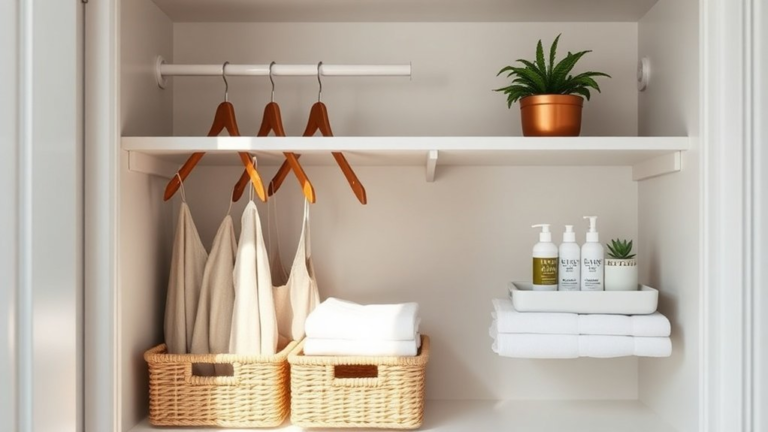
Although a small closet can feel cramped and chaotic, you can turn it into a smart, functional space that makes your mornings easier and your clothes last longer.
Start by clearing everything and choosing what you actually wear. Use vertical space and light to change how the room feels. Can a few simple swaps free up space and calm your routine? Consider adding a slim stackable organizer to maximize vertical storage and keep items accessible with minimal footprint, especially useful in very compact closets stackable organizers. Adding space-saving hangers can further increase capacity without sacrificing accessibility.
- Install a double hanging rod for shirts and pants
- Add clear bins for seasonal items and labeled shelves
- Use slim, matching hangers to save width
- Hang a shoe organizer on the door for easy access
- Place a slim LED light or motion sensor for visibility
With small changes, you’ll create a closet that’s neat, usable, and kind to your wardrobe. Consider adding stackable fabric storage bins to make the most of vertical space and keep items dust-free.
Shared Closet Conflicts
When two people share a closet, small differences in habits can quickly turn into daily friction, but with a few clear rules and thoughtful zones you can keep things calm and fair.
Start by mapping personal zones: designate shelves, hanging sections, and drawers so each person knows their space. Agree on shared-item rules — who handles cleaning, who replaces hangers, and where seasonal swaps live.
Use labels, color-coded hangers, or simple bins to reduce guesswork. Talk about routines: one quick tidy before bed prevents morning stress.
If conflicts pop up, pause and ask, “What outcome do we both want?” Compromise matters.
With consistent habits, honest communication, and shared responsibility, your closet becomes cooperation, not contention.
Frequently Asked Questions
How Do I Childproof a Wardrobe Closet Safely?
You childproof your wardrobe closet by installing secure locks, anchoring it to the wall, using soft-close hinges, keeping heavy items low, storing small objects out of reach, and regularly checking hardware for wear to guarantee ongoing safety.
Can I Store Shoes Long-Term Without Damaging Them?
Think of shoes like houseplants: you can store them long-term if you give airflow, support, and occasional “watering” — you’ll prevent damage by stuffing toe boxes, using breathable boxes, silica packs, and rotating them every few months.
What Humidity Level Protects Clothes in Closets?
Aim for 45–55% relative humidity to protect clothes in closets. You’ll avoid mold and mildew while preventing dryness that damages fibers. Use a hygrometer and adjust with a dehumidifier or humidifier as needed.
How to Prevent Clothes Moths in Vintage Wool Garments?
You should clean, store, and protect vintage wool: launder or dry-clean, vacuum and brush, use airtight containers or garment bags, add cedar or lavender, freeze infested items, inspect regularly, and avoid damp, dark storage to deter clothes moths.
Can I Convert a Closet Into a Mini Laundry Nook?
Absolutely—you can convert a closet into a mini laundry nook; with venting, proper hookups, space for a stacked washer-dryer, soundproofing, and storage, you’ll transform cramped chaos into efficient convenience like magic in minutes.
Conclusion
You’ve learned practical steps to tame any wardrobe closet, whether it’s a tiny reach-in or a roomy walk-in. Start small, pick one zone, and keep tools that match your space. Rotate seasons like a modern-day Marie Kondo with a pocket watch—just kidding, yet keep ritual. Try a tweak, notice what helps, and adjust. You’ll build habits that make dressing easier and mornings calmer. Ready to open that door?