Think of your closet as a tiny sanctuary, not just a storage spot. You can make it feel calm by matching its layout to how you live: put daily pieces where you reach naturally, stack with purpose, and hide the clutter that steals peace. Want to know how to map a walk-in versus a reach-in, or where lighting and mirrors will actually help? Keep going — there’s a simple plan that makes getting dressed feel restful.
Closet Highlights
- Create a calm layout by keeping frequently used items at eye level and maintaining clear sightlines.
- Use mixed open and closed storage—open shelves for favorites, closed bins for bulk—to reduce visual clutter.
- Maximize vertical space with double hanging, tall shelves, and stackable bins to keep floors clear and airy.
- Layer lighting (ambient, task, accent) and add a mirror to brighten the space and enhance a soothing atmosphere.
- Adopt simple styling: color-coordinate, limit visible items, and perform quick weekly edits to maintain tranquility.
Your Closet’s Purpose and Daily Routine
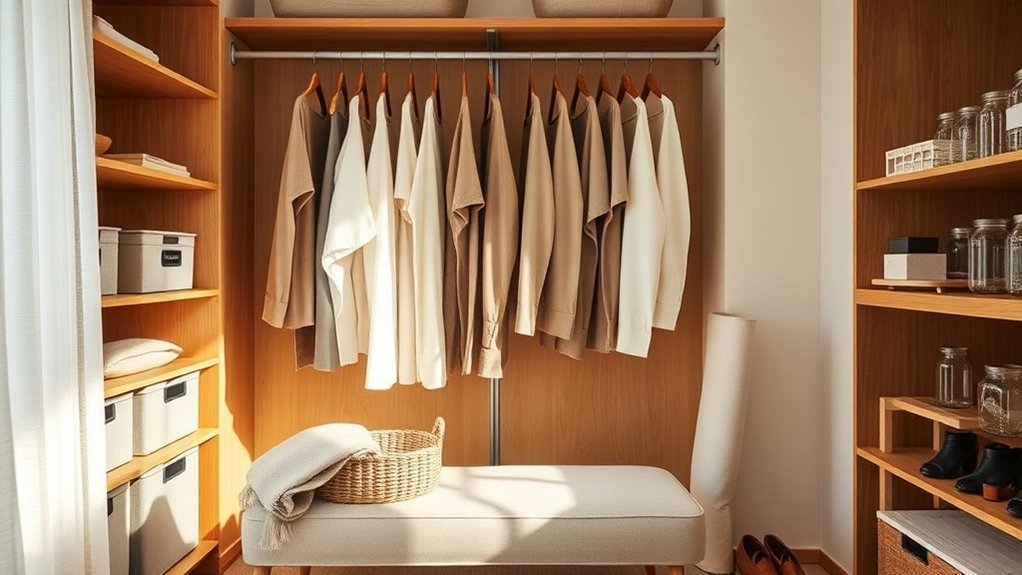
What do you want your closet to do for you each morning? You want it to greet you with calm, guide your choices, and make getting dressed feel simple.
Think about which functional essentials you use every day—shirts, shoes, a go-to bag—and place them where you can reach them without thinking. Consider adding a stackable storage solution to maximize vertical space and keep things orderly.
Consider how your daily rituals unfold: do you lay out outfits the night before, or decide in the moment? Arrange lighting, hooks, and a mirror to support those habits. Adding a deeper drawer around 8.3 inches can help store bulkier items without creating clutter.
When you tune the space to your routine, stress falls away and joy slips in.
Start small—one tidy shelf, a labeled basket—and build from there. Your closet can become a peaceful partner in how you begin each day. Add a stackable organizer to maximize vertical space for efficient storage and keep frequently used items within easy reach.
Map the Best Layout for Walk-Ins, Reach-Ins, and Nooks
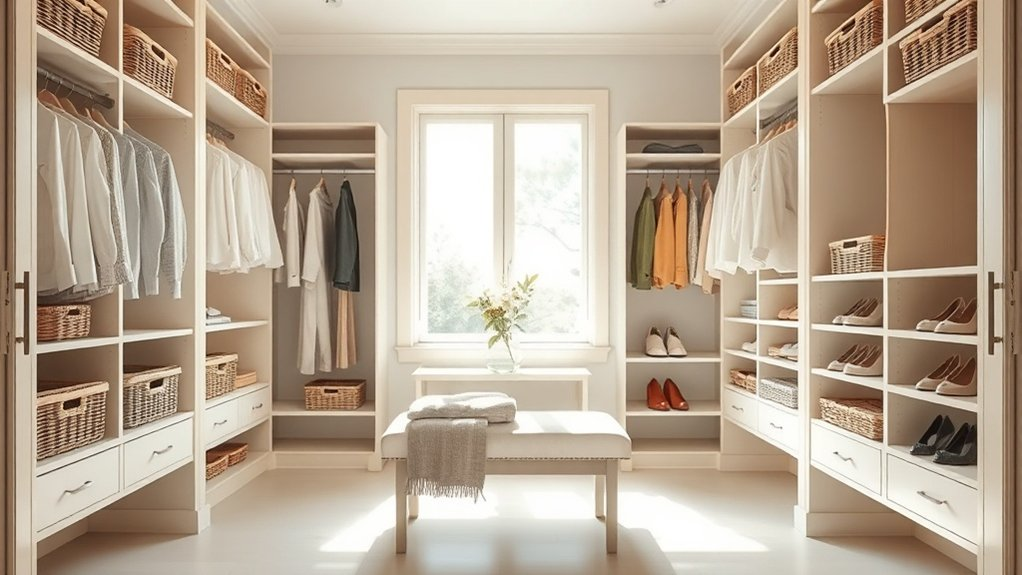
Start by thinking of your closet like a small room with a job: you want it to store, display, and hand you what you need with the least fuss. Consider adding an over-the-door organizer to maximize vertical space without sacrificing floor area. Modular shelving solutions can help you adapt as your wardrobe changes.
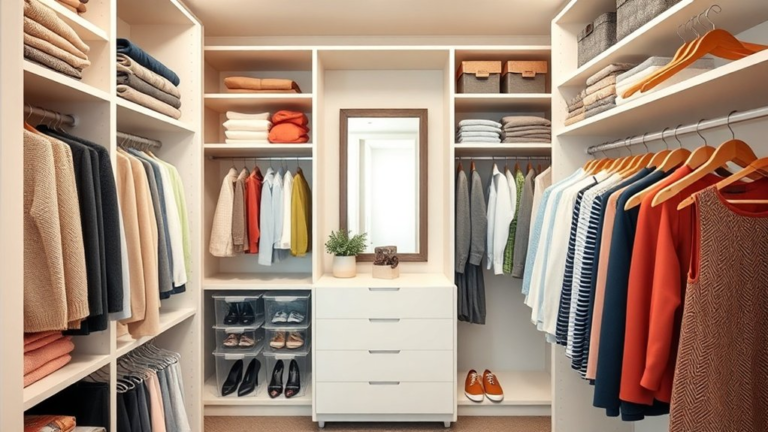
For walk-ins, map traffic flow first, then arrange rods, shelving, and a small bench so you can move, choose, and sit without bumping into doors. Don’t forget to evaluate weight capacity when planning where to place heavier items. Incorporating adjustable shelving and hanging options makes it easy to rearrange for new storage needs.
For reach-ins, prioritize easy access—use double hang and pull-out shelves so every item is within arm’s reach. Incorporate stackable baskets or pull-out solutions to make seasonal items easier to reach. Clear or transparent organizers improve visibility so you can spot items quickly.
Nooks and alcoves beg for custom solutions; measure carefully and tailor shelving or cubbies to odd shapes. Stackable or foldable storage can make awkward spaces far more useful. Consider modular designs to maximize utility in tight or irregular spaces.
Good space planning begins with accurate closet dimensions, a simple sketch, and decisions about what you use daily. Measure door widths and closet depth to ensure organizers fit without blocking access. Plan for future growth so your layout continues to work as your collection changes.
What would make grabbing your outfit effortless tomorrow? Take that idea and build the layout around it. Also plan for breathable materials and visibility so frequently used items stay fresh and easy to find.
Consider choosing durable materials like vinyl-coated steel when planning to ensure longevity and support for heavier items.
Balance Visible and Hidden Storage for Visual Calm
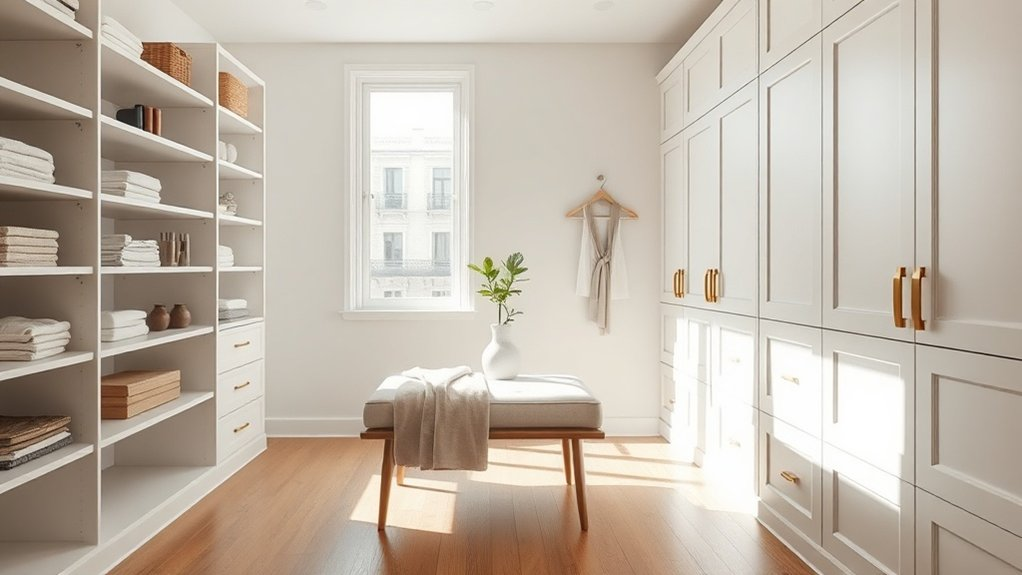
You can create a calm, inviting closet by mixing open shelves where you can see and grab everyday items, while hiding bulkier or messy things behind doors. Consider using glass-front cabinets to showcase favorite pieces without exposing every last item, and keep doors for things you don’t want on display. Which items do you want to enjoy at a glance, and which should stay tucked away? Many people find that combining visible storage with drawer organizers helps keep small items orderly and contributes to a serene closet environment. Consider adding modular vertical storage options to maximize space and maintain an uncluttered look. For long-lasting functionality, choose organizers made from durable materials that resist wear and support frequent use.
Mix Open Shelves Strategically
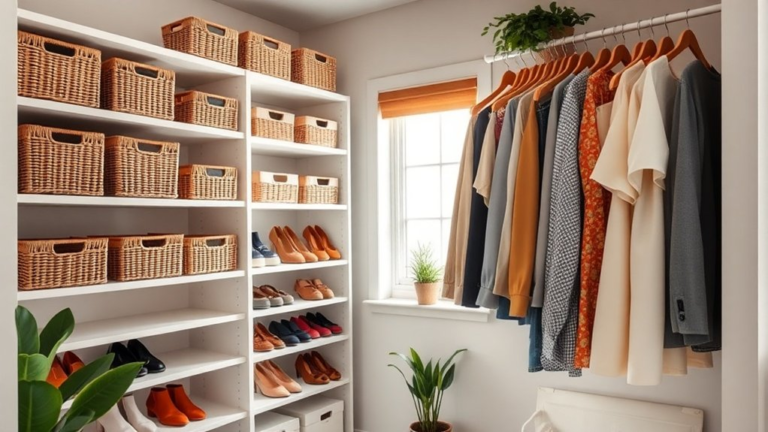
Because open shelving shows more of your things, mixing it with closed storage helps keep the closet feeling calm and intentional, not cluttered. You’ll enjoy open shelf benefits when you display folded sweaters, baskets, or a few favorite accessories that bring warmth.
Pair those visible spots with drawers or bins to hide overflow, so what you see feels curated. Use decorative storage—woven baskets, labeled boxes, or pretty trays—to add texture and tame visual noise.
Think in zones: display seasonal items, tuck away daily extras, and reserve one shelf for items that spark joy. Don’t overfill open shelves; leave breathing room.
Ready to arrange? Start small, edit often, and let the balance guide a peaceful, practical closet. Consider adding adjustable shelving to customize heights and maximize vertical space for different items. Also consider installing open shelving to increase visibility and make frequently used items more accessible. Add clear, stackable storage like stackable bins to make the most of vertical space and keep less-used items dust-free.
Conceal Clutter With Doors
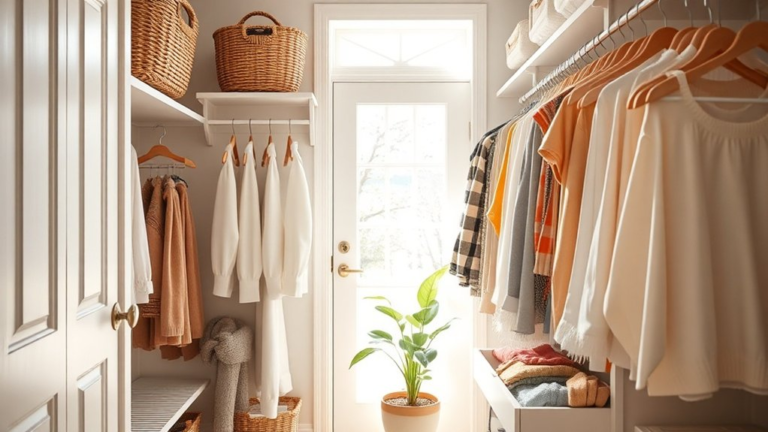
Want a closet that feels calm the moment you open the door? You can hide visual chaos by choosing thoughtful door styles—sliding, bi-fold, or simple shaker panels—and pairing them with smart organizational tools inside. Consider adding stackable clear bins to maximize vertical space and visibility for seasonal items clear storage bins. Stackable bins made from waterproof PP are especially durable for long-term use.
When everything that’s messy lives behind closed doors, your space reads as tidy and peaceful, even if there’s a lot stored away. Use pull-out bins, labeled baskets, and adjustable shelves so the hidden areas stay orderly without much fuss.
Keep frequently used items in easy-to-reach compartments, and tuck seasonal gear behind a full panel door. Doors also let you control texture and color, which softens the room’s look.
Ready to create calm? Start by deciding which clutter deserves to be seen, and which should be quietly concealed. Consider adding stackable clear bins for visibility and vertical organization, like Vtopmart’s stackable storage drawers with built-in sliding rails.
Showcase Favorites Behind Glass
How would it feel to open a closet and see a few treasured pieces neatly displayed behind glass? You’ll love the calm a glass display brings, letting you admire favorite items without visual clutter.
Arrange curated collections—seasonal accessories, vintage finds, or statement shoes—so each piece gets space to breathe. Use soft lighting and simple shelving to highlight textures and colors, and keep similar items together for coherence. Behind the glass, everything looks intentional, neat, and cherished.
Outside the glass, hide everyday clutter in drawers or behind doors, so your eye rests on beauty, not chaos.
Try swapping items seasonally; that small ritual keeps the space fresh and meaningful, inviting you to slow down and enjoy what you own.
Use Vertical Zones: Shelves, Hooks, and Hanging by Length
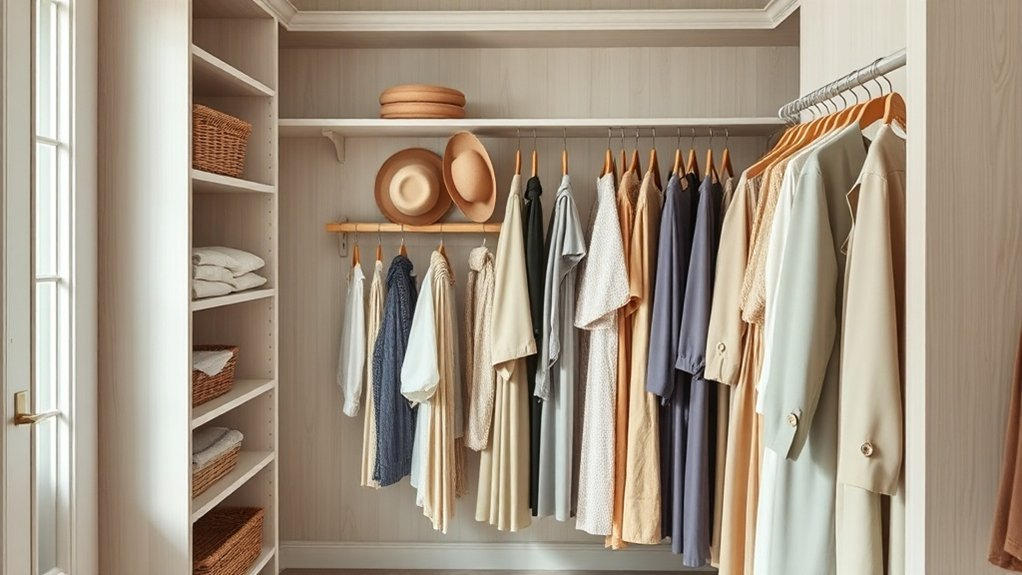
When you divide your closet into vertical zones—shelves, hooks, and hanging areas arranged by length—you’ll see how quickly things fall into place and stay organized.
You’ll feel calmer when each item has a clear spot: folded sweaters on adjusted shelves, scarves on well-placed hooks, long dresses hanging freely. A thoughtful plan that includes space planning helps you fit more in and use it better.
Think about shelf spacing, hook placement, and the flow from top to bottom. Ask yourself which items you reach for daily and put them at eye level.
Consider shelf spacing, hook placement, and vertical flow—keep daily items at eye level for easy reach and calm.
- Tall hanging for coats and dresses
- Short hanging for shirts and skirts
- Open shelves for sweaters and bins
- Hooks for bags, belts, and scarves
Create zones you’ll use every day.
Small changes make your closet peaceful and easy to love.
Consider designing around vertical zones to maximize accessibility and maintain order over time. A well-planned layout can also improve storage efficiency and make daily routines quicker.
Choose a Few Multiuse Organizers That Cut Clutter
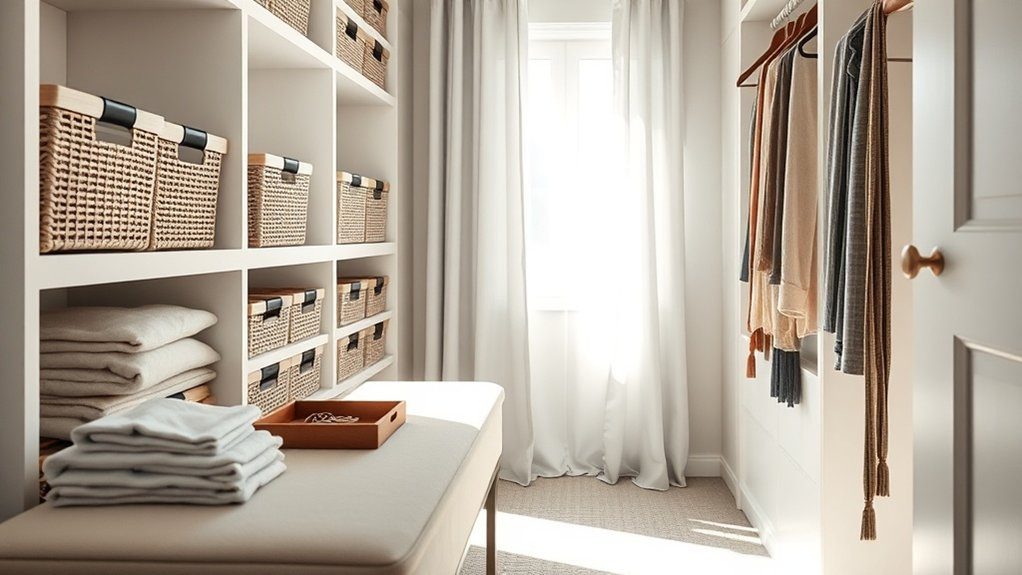
If you pick just a few smart, multiuse organizers, you’ll be amazed at how quickly clutter shrinks and your closet starts to feel calm.
Choose multiuse bins that stack or slide so sweaters, scarves, and off-season pieces stay neat and visible. Add a couple of hanging racks for shoes or purses, and you’ll free up shelf space while keeping things reachable. Consider adding space-saving hangers to maximize vertical storage and make better use of every inch. Stackable designs also help you utilize vertical space to increase capacity without expanding footprint.
Pick organizers that serve more than one purpose — baskets with lids, divided trays that double as laundry catchers, or slim hanging shelves that fold flat when not needed.
You’ll move faster when every item has a dedicated spot, and mornings will feel less frantic.
Ready to try just three multiuse pieces and see the change? Consider starting with durable stainless steel or high-quality plastic organizers to ensure longevity.
Optimize Flow: Lighting, Mirror Placement, and Clear Paths
Because a closet should feel like a calm, useful room, you want light, mirrors, and clear paths working together to make getting dressed easy and even a little enjoyable.
A closet should be calm and useful — well-lit, mirrored, and easy to move through for effortless dressing.
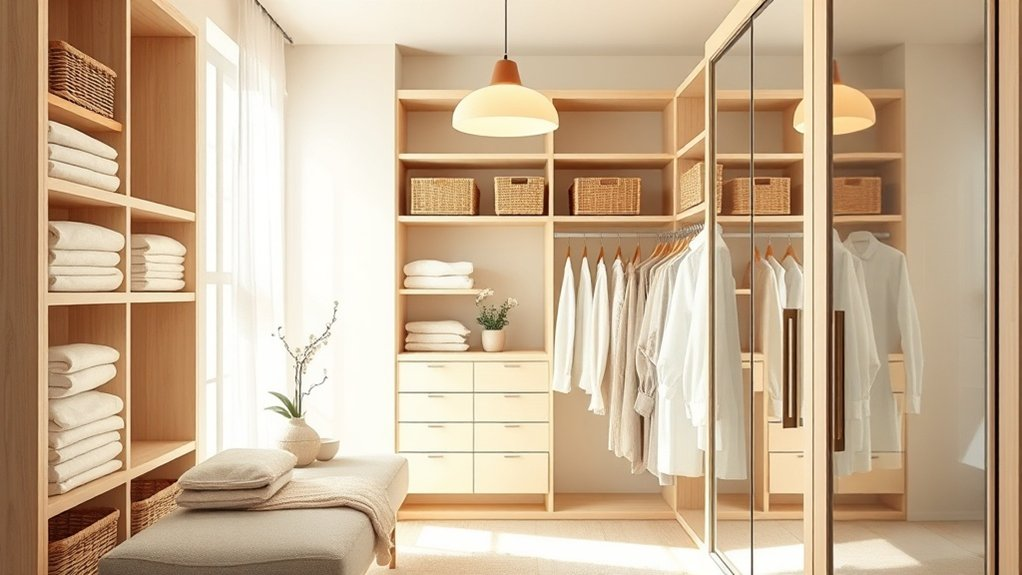
Think about which lighting types fit your space — warm LEDs for a cozy glow, task lights over shelves, and motion-activated strips for hands-free convenience. Consider installing adjustable no-drill rod extenders to maximize hanging space without tools. Add stackable organizers like stackable clear boxes to keep shoes tidy while preserving visibility and airflow.
Position a full-length mirror where natural or artificial light hits it, so colors read true and outfits come together faster.
Keep the center aisle clear, pick low-profile storage, and leave a small turning zone so you can move without fuss.
- Use layered lighting: ambient, task, and accent.
- Mount mirrors to reflect light and expand space.
- Keep walkways at least 24–30 inches wide.
- Choose mirror styles that suit scale and mood.
Consider adding motion-sensor LED fixtures like motion-activated strips to save energy and improve accessibility.
Quick Styling Rules to Keep the Closet Serene
A calm closet starts with simple styling habits you can actually keep up, so pick two or three rules and stick to them.
Choose a core approach—minimalist aesthetics, uniform hangers, or folded stacks—and let that guide daily choices. You’ll feel lighter when every item earns its spot.
Use color coordination to make finding outfits effortless; group shades from light to dark or by mood, and your eye will rest easier. Many professional organizers recommend starting with a core approach to create consistency across the whole space.
Edit regularly: if you haven’t worn something in a year, let it go.
Keep surfaces clear, and limit decorative objects to one or two meaningful pieces.
Want a closet that soothes instead of stresses? Commit to small rituals: tidy five minutes each evening, rotate seasonal pieces, and celebrate the calm you create.
A thoughtfully organized closet can transform your daily routine and create peaceful simplicity in your home. Also consider including storage zones to separate shoes, accessories, and clothing for easier upkeep.
Conclusion
You’ve planned purpose, pared down possessions, and polished placement—now preserve peace. Promise to plan periodic purges, prioritize practical pieces, and place prized items where you’ll plainly see them. Let layered light lift the mood, mirrors make space feel sweeter, and vertical zones keep clutter controlled. Small shifts bring steady serenity. Ready to replace rush with ritual? Start simple, stay steady, and savor a calm closet that supports your day.