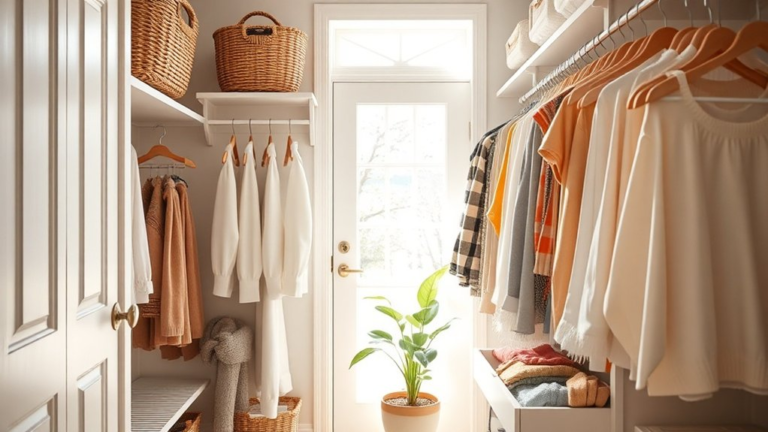
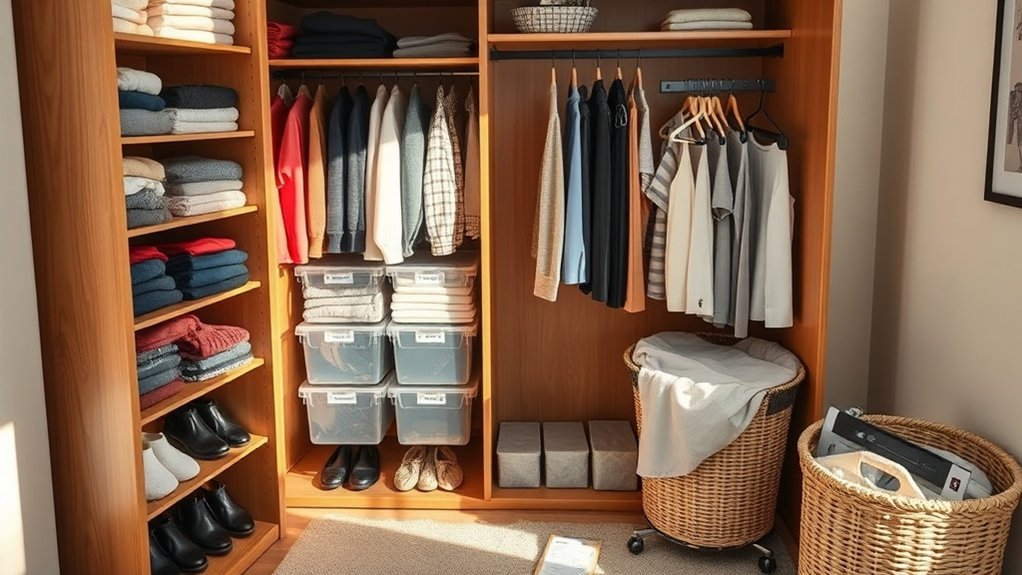
Like a fresh breeze through a crowded room, you can clear your closet in a single weekend and feel lighter instantly. You’ll start by stripping everything out, sort fast into Keep, Donate, Repair, and Toss, then attack one category at a time—shoes, pants, tops—so decisions don’t drag. Want a setup that actually works for your daily life? Stick with simple bins, clear visibility, and five small habits to keep it that way.
Closet Highlights
- Plan two focused days: day one for quick sorting by type, day two for organizing, rehanging, and final tidy.
- Set up labeled zones and boxes (Keep, Donate, Toss, Repair) to speed decision-making and prevent overthinking.
- Use a 60-second rule per garment and three criteria—fit, worn in last year, makes you feel good—to decide keep vs donate.
- Reorganize with space-saving hangers, clear bins, and access zones; rotate seasonal items for easy retrieval.
- Donate or sell quality items, recycle worn textiles, and schedule a weekly five-minute sweep to maintain progress.
Quick Weekend Plan: What to Finish in Two Days (Time Blocks and Outcome)

If you want to make a real dent in your closet without spending a whole weekend in sweatpants, you can follow a simple, two-day plan that breaks the job into focused time blocks and clear outcomes.
On day one, set two-hour sessions: sort clothes by type, try items on, and make quick yes/no choices. That time management keeps momentum, so you don’t get bogged down in nostalgia. Many professional organizers recommend starting with a consistency strategy to maintain progress across sessions.
Take a longer break, then tackle shoes and accessories with the same sprint approach. Consider adding modular components like a modular design to make reconfiguration easier later.
Day two, reserve half the day for organization: rehanging, grouping outfits, and creating a donate pile.
Finish with a thirty-minute sweep to label and tidy.
Want a closet that calms you every morning? This plan makes it possible.
For long-term success, incorporate regular maintenance into your monthly routine so clutter doesn’t creep back in.
Gather Supplies and Set Up Sorting Zones
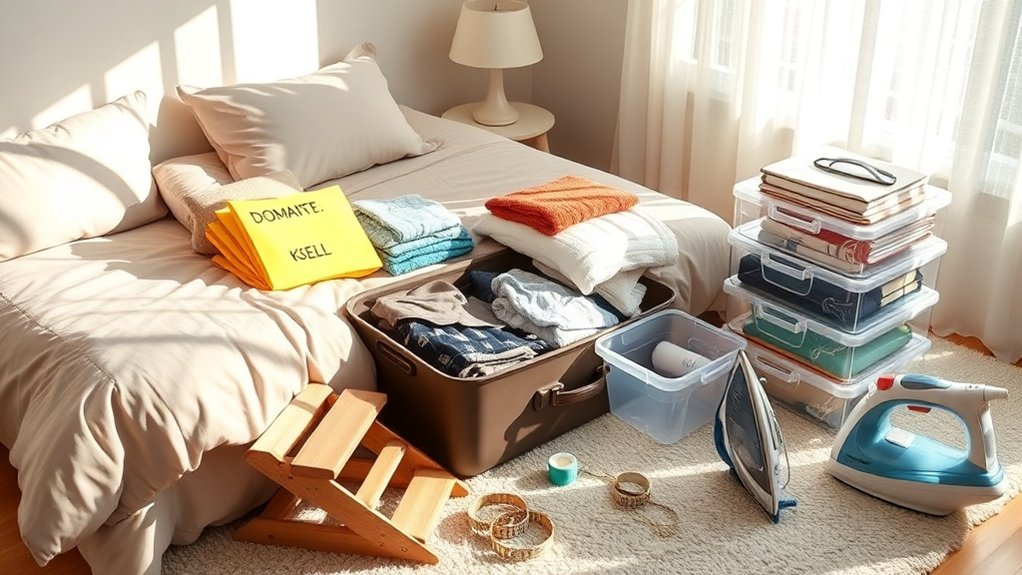
Start by gathering a few simple supplies—boxes or bins labeled Keep, Donate, Toss, and Repair, plus trash bags, a marker, and a lint roller—to make decisions quicker and cleaner. Consider using space-saving hangers to immediately reduce crowded sections and streamline what you keep.
Spread out clear sorting zones in or near your closet so you can move items from one pile to the next without backtracking.
Ready to see how much space and calm you can create by staying organized as you work? Consider adding modular organizers and clear bins to maximize vertical space and visibility, which helps maintain order long term with adjustable shelves. Add a small set of stackable baskets to take advantage of vertical space and keep frequently used items within easy reach.
Supplies To Gather
Think of this step as your toolkit moment: gather a few simple supplies and you’ll make the whole decluttering process smoother and faster.
Start with a clear supply checklist so you don’t waste time hunting for basics: sturdy trash bags, donation boxes, a laundry basket, labels and a marker, sticky notes, and a small box for keepsakes.
Include useful decluttering tools like a lint roller, a handheld vacuum, and a fabric steamer to refresh items you might keep. Consider adding durable acrylic organizers to your supplies to both protect garments and elevate your closet’s look.
Have wipes and a microfiber cloth ready for quick dusting. A timer helps you stay focused and upbeat.
When you see everything laid out, you’ll feel ready and motivated. Ready to sort? You’ve already won half the battle. Consider creating a personalized plan to match your pace and space, helping the process feel manageable and tailored to your needs. Also consider adding space-saving organizers to your supplies so you can immediately implement efficient storage solutions after sorting.
Sorting Zone Setup
Now that your supplies are ready and visible, set up clear sorting zones so you can move through your closet with purpose and ease.
Designate areas for Keep, Donate, Repair, and Toss, and label them so decisions feel simple. Use bins, baskets, and a folding table to give each pile its own space, and keep a donation bag near the door. Consider adding modular organizers or hangers to maximize vertical space and streamline each zone for quicker access space efficiency. Consider durable, odorless fabric organizers for drawers to extend longevity and safety drawer organizers.
Try time-based sorting strategies: quick three-minute checks for indecisive items, longer spots for sentimental pieces.
Mix decluttering methods like the KonMari test with a practical wear-frequency check to guide choices.
Will this system help you finish faster? Yes — it reduces backtracking, keeps momentum, and makes the process feel doable and even a little satisfying.
For an effective long-term system, consider incorporating regular maintenance into your routine so your closet stays organized after the weekend.
Zero-Decision Warm-Up: Remove Everything and Do a Fast Sweep (30–60 Minutes)

Start by pulling everything out so you can see what you actually own, and don’t worry about decisions yet — that comes later.
Quickly make simple sort piles for keep, donate, and trash, moving items into each without overthinking.
Once the space is empty, sweep and wipe it down so you’ll feel refreshed and ready to rebuild your closet.
Adding a simple storage plan like shelving and labeled bins can make maintaining order much easier for the long term and help prevent clutter from returning, especially when you include shelving and labeled bins as part of your setup.
Consider incorporating shelving systems to maximize vertical space and improve long-term organization.
Include a basic storage plan that maps where categories will live so you can put things back easily.
Empty Everything Out
Empty your closet out in one bold sweep—everything except the things you absolutely need for the next day or two goes on the bed or floor—so you can see what you really have. You’re making space to notice patterns, to plan closet maintenance, and to prepare for seasonal updates without overthinking. This reset also makes it easier to implement organization habits that keep your closet functional long-term.
This is a warm, quick reset that clears visual clutter and frees your mind. Consider also setting aside a small donation pile as you sort to speed decisions and reduce waste.
- Notice items you reach for first.
- Spot duplicates that surprise you.
- Find pieces that don’t fit your life anymore.
- See seasonal gaps and opportunities.
When everything’s out, you’ll feel lighter and more decisive. Take a breath, step back, and appreciate the fresh start—you’ve already done the hardest part. For more ideas on organizing and maintaining that fresh closet, explore tips on transform your closet to build lasting habits.
Quick Sort Piles
You’ve already done the hardest part by clearing everything out, so let’s take that momentum and make a fast, forgiving sweep: create four quick-sort piles—Keep, Donate, Repair, and Maybe—and move through your things with one simple rule, no overthinking, about 30–60 minutes total.
Start at one corner, touch each item, and decide quickly. Use simple sort strategies: if it sparks use or joy, it stays; if not, it moves. The declutter mindset here is speed and compassion, not perfection.
Pop Donate into a box, tuck Repair near tools, and stack Maybe separately for a second look later. You’ll feel lighter as choices shrink.
Ready to see real progress in an hour? Take that satisfying step.
For extra efficiency, adopt simple sort methods to keep momentum and reduce decision fatigue.
This approach follows Transform Your Closet principles to streamline the process and get measurable results quickly. Consider pairing this method with closet organization basics to maintain order after your weekend declutter.
Sweep And Wipe Down
While you’re still buzzing from the quick-sort momentum, take everything out of the closet and give the space a fast sweep and wipe-down—you’ll be amazed how rejuvenating it feels to see the empty shelves and floors.
Start with simple sweeping techniques: push debris toward the door, get corners with a handheld broom, and don’t forget baseboards.
Then choose gentle wiping solutions, like diluted dish soap or a multi-surface spray, to lift dust and scuffs.
- Clear the floor first, so you can move freely.
- Work top to bottom, so dust falls lower.
- Use a microfiber cloth for streak-free results.
- Let the space air out before returning items.
Can you feel the fresh start? It motivates the next steps.
Transform your closet into an organized haven with tips from Transform Your Closet to guide the rest of your weekend project.
A quick, thorough cleaning also helps preserve materials and prevent pests by reducing dust and crumbs, a simple step toward long-term closet maintenance.
Keep-or-Donate Checklist: Simple Criteria to Decide Quickly

Ready to make fast, confident decisions about what stays in your closet? Use simple decision making strategies: set three clear rules — fit, worn in the last year, and makes you feel good — then move items into keep or donate piles.
Name one small emotional attachments test: pause, touch the item, and ask if it sparks joy or guilt. If guilt wins, let it go.
Pause, touch the item, and ask: does it spark joy or guilt? If guilt wins, let it go.
Pair this with time saving tips: use a 60-second rule per garment and a donate bag you can tuck by the door.
Try visual decluttering methods, like lining keeps on the same hanger direction to spot rarely used pieces. You’ll be surprised how quickly choices become obvious, and how freeing a cleared closet feels.
Organizing consistently over time can prevent re-cluttering, so adopt a simple maintenance routine to keep your closet tidy.
A tiny habit like spending five minutes each day daily upkeep helps maintain order and prevents buildup. Consider using stackable bins to sort donate items quickly and keep the process efficient.
Tackle One Category at a Time: Shoes, Pants, Tops, Dresses (2–3 Hour Blocks)

After you’ve used the quick keep-or-donate rules, tackle one category at a time so decisions stay focused and momentum builds. Set 2–3 hour blocks and clear space to sort shoes, pants, tops, and dresses without distractions. You’ll do better when each pile has a purpose.
- Start with shoe organization: pair, assess wear, and decide what’s missing. Consider using vertical solutions like hanging organizers to maximize floor space. Try installing space-saving systems to keep shoes accessible and off the floor.
- Use pants strategies: fold, try on, note fit and comfort.
- Apply top rotation: group by style and season, keep favorites front.
- Plan dress storage and seasonal swaps: hang special pieces, box off-season items.
As you work, do a gentle style assessment: does each piece spark joy or serve your life?
You’ll leave the day with clarity, breathing room, and a wardrobe that feels like you, and consider choosing storage materials that offer material durability for long-lasting results.
Fix, Alter, or Retire: Quick Repairs and When to Send Items Out
Look through your closet with a fixer’s eye and decide which pieces you can revive, which need a tailor, and which should finally be let go.
You’ll spot items that need small fixes — loose buttons, tiny holes, missing hems — and you can handle many repair basics yourself with needle, thread, or fabric glue.
Some garments deserve more: altering styles for a better fit, taking in waists, shortening sleeves, or adjusting hems.
Some pieces need more than fixes—tailoring can reshape hems, take in waists, or shorten sleeves for a perfect fit.
Ask yourself, will this feel like new after a quick fix, or does it need professional attention?
If a piece drains joy or cost more to mend than it’s worth, consider retiring pieces compassionately.
Tackle fixing garments first, send complex alterations out, and enjoy a clearer, loved closet.
Many people find that following simple organizing capacity from a closet-focused website makes it easier to maintain the refreshed space.
Start your weekend declutter by blocking out time and following a step-by-step plan to see progress quickly, including prioritizing closet organization.
Smart Donation and Resale Options for Different Items
When you’re clearing out your closet, think about giving pieces new life by donating to local charities that can use gently worn clothing and household items.
You can also sell higher-quality or brand-name pieces through online marketplaces to make a little cash, or redirect worn-out textiles to recycling and specialty programs so they don’t end up in a landfill.
Which items would you rather pass along for good use, sell for some extra money, or recycle responsibly?
Donate To Local Charities
If you’re ready to clear space and give your items a second life, donating to local charities is a smart, satisfying step that helps your community and reduces waste.
You’ll feel good knowing your gently used clothes, shoes, and household items support neighbors in need. Check charity partnerships to find organizations that accept what you have, and learn the donation benefits like tax receipts and community impact.
Ask about drop-off times, pick-up services, and sorting rules so your items get used fast.
Consider these simple priorities:
- Clothes in good condition, seasonal and wearable.
- Clean shoes, paired and intact.
- Household linens and small appliances that work.
- Kids’ items and toys, safe and complete.
Who will your donations help?
Sell Through Online Marketplaces
Donating feels great, and sometimes your items can do even more good — and earn you cash — by being sold online. You can pick platforms that suit each item, from fashion apps for clothes to niche sites for collectibles.
Use clear photos, honest descriptions, and competitive pricing as part of your online selling strategies to attract buyers fast. Bundle similar items to move more stock and save on shipping.
Remember, timing matters: list seasonal pieces when demand rises. Clean items and note flaws upfront, so buyers trust you and leave good reviews.
Want to turn clutter into cash while helping others find value? With small effort and smart moves, you’ll be maximizing profits and freeing up space this weekend.
Recycle Or Specialty Programs
A smart recycling or specialty program can turn items you’d toss into real benefits for the planet and your community, and you’ll feel good about clearing space.
You don’t have to force everything into resale—some items heal waste and help others through recycling programs or specialty donations. Think shoes, worn T-shirts, broken jewelry, and tech parts; each has a right place.
- Shoes: drop at shoe-recycle bins for repurposing.
- Clothing: donate wearable pieces to shelters, recycle rags.
- Jewelry & accessories: specialty donations to craft groups or resale.
- Electronics: use e-waste collection for parts and safe disposal.
Which items in your closet would make the biggest impact if diverted today? Take one small step now.
Reorganize for Visibility: Layout, Hang vs. Fold, and Easy-Access Zones
Think about how your closet could feel like a little boutique where everything’s easy to see and grab—wouldn’t that make mornings calmer and more confident?
Use visibility techniques like grouping similar colors and keeping frequently worn items at eye level, then plan hang patterns so dresses, shirts, and jackets live where they belong.
Decide what to hang versus fold: structured items hang, soft knits fold to avoid stretching.
Create clear access zones —daily outfits front and center, workwear easy-reach, less-used pieces higher or lower.
Focus on layout optimization by lining items left-to-right by function, and plan seasonal rotation so you swap bulky winter pieces out when spring arrives.
You’ll move faster, feel lighter, and enjoy choosing clothes each day.
Small Storage Hacks That Create Big Space (No Expensive Organizers)
Now that your closet layout makes finding outfits a breeze, you can get creative with small, cheap hacks that free up surprising amounts of space.
Use vertical space by adding wall hooks and slim shelves, and tuck rarely used items into under bed storage for seasonal rotation.
Repurposed containers, like shoeboxes or jars, become multi purpose bins for scarves, belts, and jewelry.
Drawer dividers keep small things tidy, so you stop wasting time hunting.
- Install wall hooks for bags and hats.
- Stack multi purpose bins to clear shelves.
- Use under bed storage for off-season clothes.
- Repurpose containers for neat, labeled zones.
These budget friendly solutions feel empowering, simple, and instantly rewarding.
Ready to reclaim more room?
Weekend-to-Routine: Five Habits to Keep Your Closet Clutter-Free
Everyone can keep a tidy closet without turning it into a chore, and with five simple habits you’ll move from weekend blitzes to an easy daily routine.
Start each morning by choosing one outfit and returning any extras to their place—small consistency beats big bursts.
Do a weekly five-minute sweep: hang, fold, donate, repeat.
Use habit tracking to mark progress; seeing checks builds momentum.
Adopt a minimalist mindset for purchases: ask, “Do I love this?” before it enters your space.
Finally, schedule a monthly edit: remove items that didn’t get worn, and celebrate what remains.
These habits take little time, but they reshape how you live with your clothes, making calm and order the new normal.
Conclusion
You’ve turned chaos into calm in a single weekend, like uncovering a sunlit shelf behind clouded curtains. Keep the piles you love, donate what weighs you down, and set simple habits to keep it steady. Imagine opening your closet and finding choices that spark joy, not stress. Ready to keep this feeling? Make one small maintenance task part of your week, and watch the calm stay.