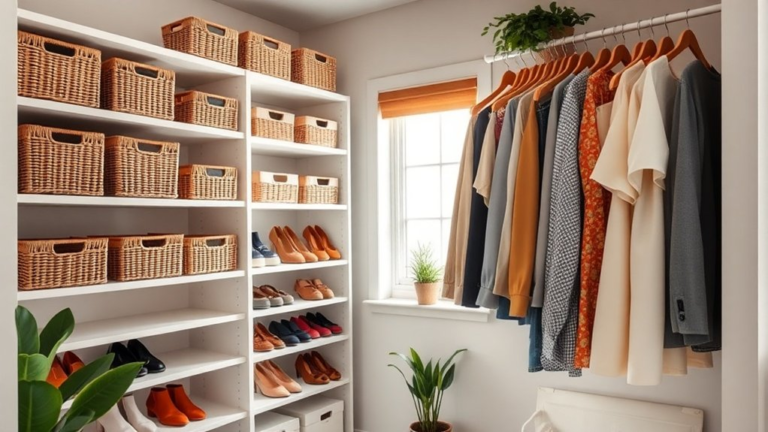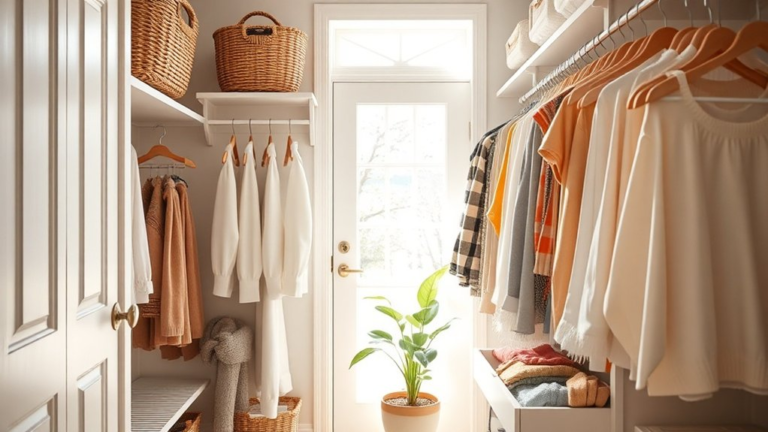
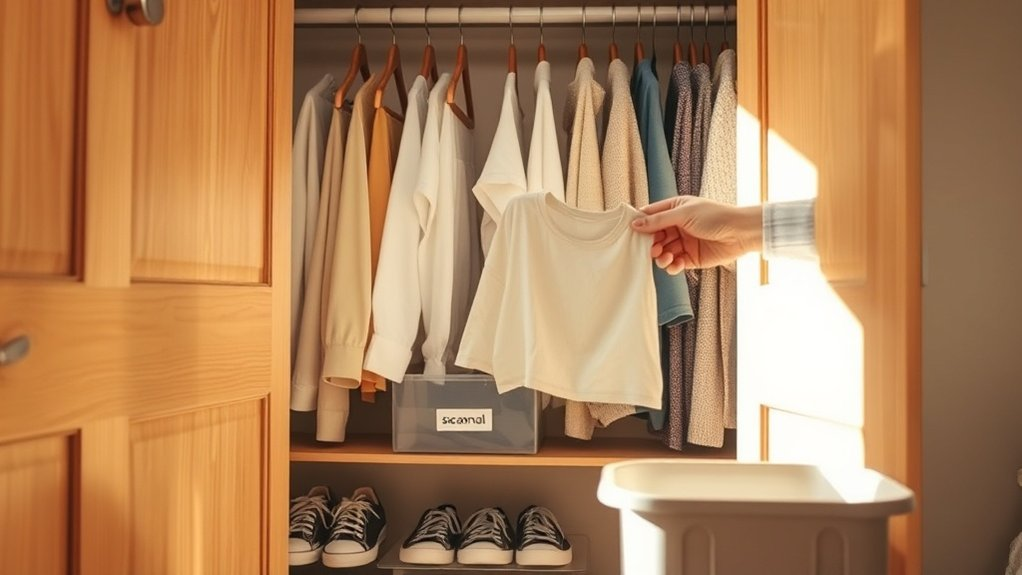
You can reclaim your closet by using the one-year rule: if you haven’t worn it in a year, it’s time to decide. Start calm, set a timer, and sort into keep, maybe, donate, and toss—quick wins build momentum. Think about seasonal needs, duplicates, and what’s truly you; some pieces may deserve storage, others a new home. Ready to make room for what matters and keep the clutter from creeping back?
Closet Highlights
- Use the one-year rule: remove clothing not worn in the past 12 months unless seasonally appropriate or sentimentally essential.
- Set a 30–90 minute timer and sort items into Keep, Maybe, Donate, and Toss piles for focused progress.
- Tag new items with dates or track wears in a simple spreadsheet or app to monitor usage over time.
- Box donations immediately and keep a donate bag in the closet to make regular purging effortless.
- Store true keepsakes in a small memory box and photograph or repurpose rarely worn pieces to save space.
Quick Declutter Plan: Apply the One-Year Rule in 30–90 Minutes
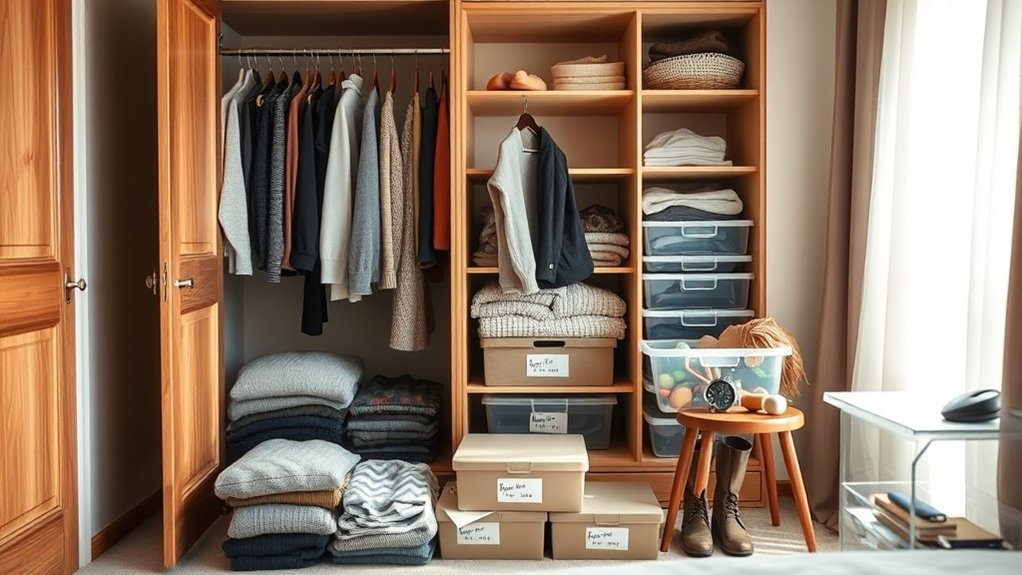
If you’ve been putting off a full closet overhaul, you can still make a big difference in just 30–90 minutes by using the one-year rule: if you haven’t worn it in a year, let it go.
Start by clearing a small working space and set a timer. You’ll sort quickly into keep, donate, and maybe piles, focusing first on wardrobe essentials you reach for daily.
Let your declutter mindset guide choices: ask, “Does this fit my life now?” Be honest, but gentle. Keep pieces that spark joy and serve purpose. Consider also the benefits of organizing systems to keep what you keep accessible and visible. A simple closet organization system can dramatically increase usable space and make daily routines faster.
Box donations immediately so they leave your space. When you finish, you’ll feel lighter, more ready to dress with ease, and proud of the progress you made. Consider incorporating vertical storage afterward to maintain your newly organized closet.
How to Set Up a One-Year Tracking System for Clothes
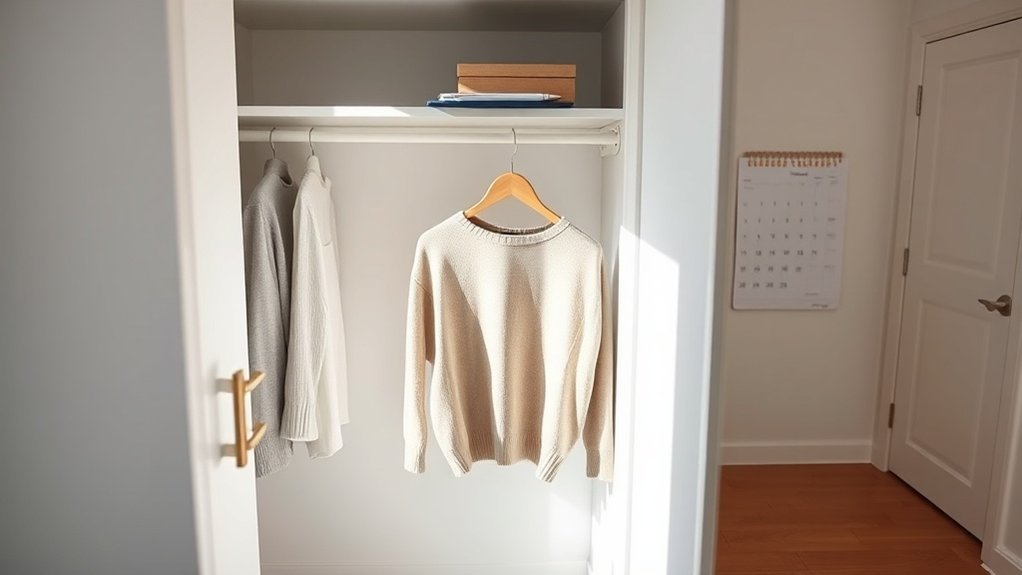
You’ve already made great progress using the one-year rule, and now you can keep that momentum by setting up a simple tracking system that tells you what actually gets worn over the next 12 months.
Begin by labeling items with a small tag or a dot on the hanger and note the date in a notebook or app. Choose easy tracking tools, like a phone spreadsheet, a habit app, or a paper calendar—whatever you’ll actually use.
Label items with a tiny tag and date them, then track wears in a simple app, spreadsheet, or notebook.
Set a gentle reminder system: weekly or monthly check-ins that ask, “Did I wear this?” Mark yes or no, and add quick notes about fit or occasion.
After a season, patterns will appear. You’ll feel clearer, more confident, and ready to let go of what doesn’t serve you.
Closet organization is a practical skill that makes daily routines easier, and learning basic closet organization principles helps you maintain order over time. A simple maintenance routine done monthly keeps your system working and prevents clutter from creeping back in.
Track your progress with a regular inventory check to see what’s truly used and what can be removed.
Fast Sorting Method: Keep, Maybe, Donate, Toss

Start by sorting everything into four quick piles so you can move through decisions without overthinking:
keep items that fit, feel good, and you’ve worn recently;
anything unsure goes into a labeled “maybe” box you’ll re-check in a month.
For donate, choose clean, wearable pieces that someone else could love, and for toss, let go of stained or irreparable items without guilt.
Ready to make space and feel lighter?
A maintenance plan like a regular check-in helps prevent clutter from returning. Add an annual review to your routine to reassess items and reinforce the one-year rule. To stay organized year-round, schedule seasonal reviews so you reassess clothing that may rotate with the weather.
Keep Pile Criteria
Because clearing out your closet feels more doable when you have simple rules to follow, this fast-sorting method uses four clear piles—Keep, Maybe, Donate, Toss—to help you decide quickly and confidently.
For the keep pile, use a short criteria checklist: wear it in the past year, fits well, feels comfortable, and matches your current style or needs. If an item passes most boxes, keep it. Consider pairing kept items with stackable organizers to maximize space and visibility.
Does it spark joy or serve a practical role? Keep. Is it a seasonal staple you rotate regularly? Keep.
Be honest about sentimental pieces—limit them to a small, meaningful group. Aim for quality over quantity, and avoid holding onto “just in case” clothes that never leave the back of your closet.
You’ll feel lighter fast. Consider incorporating minimalist designs to maintain a visually pleasing and functional closet.
An organized closet also improves daily routines by reducing time spent choosing outfits and streamlining your storage solutions.
Maybe Box Strategy
When an item doesn’t clearly meet your keep checklist, plop it into a Maybe box and give yourself permission to pause instead of panicking.
Use that box as a gentle holding space, not a shame pile. Label it, note the date, and set simple decision criteria: last worn, fit, emotional value, and whether it matches items you actually wear. Consider pairing it with stackable or foldable storage solutions like stackable organizers to keep your Maybe box system tidy and space-efficient.
Ask yourself, will this serve me in the next year? If you can’t answer, the Maybe box buys you time to notice how often you reach for it.
Revisit the box on a set date, with fresh eyes and honesty. This strategy keeps momentum, reduces guilt, and helps you practice clearer choices.
You’ll feel lighter and more confident.
A Maybe box is a simple part of many effective closet organization systems, helping you streamline decisions and transform your space. Consider pairing it with an over-the-door organizer to immediately free up visible space and keep daily items accessible.
Donate And Toss Rules
Pick four clear piles—Keep, Maybe, Donate, Toss—and move through your closet with purpose, not panic. You’ll feel lighter when you follow simple donation criteria: items should be clean, functional, and something you’d happily pass on.
If it’s stained, torn beyond repair, or hasn’t fit your life for years, set it aside. For the Donate pile, check local guidelines and label bags so drop-off is easy.
Tossing guidelines help too: recycle textiles when possible, cut up worn items for rags, and trash what’s unsafe or unsalvageable.
Ask yourself, will this serve someone else? If not, release it. You’ll create space, honor your choices, and make future decisions faster.
Small steps, big reward. Transform your closet with organizing your closet tips for a fresh start.
How to Handle Seasonal Items and Specialty Garments

Even if you only wear your heavy coat a few months a year, treating seasonal and specialty pieces with a little thought makes your whole closet feel calmer and easier to use.
Treat seasonal and specialty pieces with care to keep your closet calmer and easier to use.
You’ll want clear seasonal storage: labeled bins, vacuum bags, or a top-shelf shelf. Rotate items so current-season clothes live within easy reach, and pack sweaters or swimwear away clean and dry. Consider stacking items in stackable organizers to maximize vertical space and keep off-season garments accessible yet out of the way. Using stackable baskets can further increase organization by making better use of vertical storage.
For delicate items, follow specialty care instructions—hand wash, dry clean, or store flat—to keep them beautiful. Consider a simple inventory list so you know what’s tucked away.
Need room for holiday or formal garments? Assign a small, protected zone so those pieces stay ready when you need them. Little systems save time and stress.
Consider using clear garment bags for visibility and protection, such as clear garment bags that keep items dust-free while allowing quick identification.
What to Do With Sentimental or “Just in Case” Pieces

Because sentimental or “just in case” pieces carry meaning beyond their fabric, you’ll want to treat them with intention so they don’t quietly take over your space.
Start by asking why you keep each item: does sentimental attachment give it daily value, or is it keeping you stuck? Hold pieces, remember the moment, then decide. Consider also using modular organizers to maximize vertical space so you can store keepsakes without sacrificing accessibility.
For true keepers, create a small memory box or display that honors the story without crowding your wardrobe.
For items you rarely wear but can’t bear to toss, consider practical alternatives like photographing them, repurposing fabric into a pillow, or setting a one-year revisit date.
These steps respect your feelings and free up space, so your closet reflects who you’re now.
Also consider using organizers designed for visibility and rotation, such as a rotatable hanger for belts and scarves rotatable organizer, to keep sentimental pieces accessible without clutter.
Smart Donation, Resale, and Recycling Options for Unwanted Clothes
If you’re ready to clear space but want your clothes to do good, donating, reselling, or recycling can turn clutter into value—both for you and others.
Start by sorting into three piles: donate, sell, recycle. Ask yourself which items are still in good shape and fit the needs of local charities or shelters; you’ll support ethical fashion by choosing organizations that prioritize fair distribution. Consider also donating to organizations that accept items by room size to better match local needs. Many community groups also run seasonal drives that target specific clothing needs in your area.
Sort into donate, sell, recycle—choose items that serve local needs and support ethical, fair distribution.
For higher-quality pieces, try resale apps, consignment shops, or community marketplaces to earn extra cash and extend a garment’s life.
For stained or worn items, locate textile drop-off points or municipal programs that offer responsible recycling.
Label bags clearly, wash items when needed, and schedule pickups or drop-offs.
Small choices add up—are you ready to make yours count?
Also, consider incorporating a seasonal rotation system to keep your closet organized and reduce impulse purchases by focusing on a curated, capsule wardrobe approach.
Space-Saving Storage Hacks to Keep Decluttering Results
Now that you’ve sorted, donated, and recycled, it’s time to keep that clarity by using clever storage hacks that actually fit your life. You can maximize every inch with space efficient solutions like slim velvet hangers, vertical shelf dividers, and under-bed bins that slide out easily. Consider using under-bed bins sized to fit snugly so you get maximum storage without wasted space. Group like items so you grab what you need fast, and use clear boxes or labels for seasonal pieces. Can a tension rod create a second tier for shirts? Yes — and it doubles hanging capacity. Rotate shoes on risers, hang scarves on a skirt hanger, and store seldom-used items high up in labeled containers. These closet organization moves keep your space tidy, save time each morning, and make maintenance feel doable, even joyful. Consider investing in velvet hangers to save space and keep garments secure. Many small closets benefit from adding a rolling clothes rack to increase hanging and shelf flexibility.
Troubleshooting Common Roadblocks and Staying Clutter-Free
You’ll face moments when deciding what to keep feels exhausting, so try simple Decision Fatigue Fixes like a quick timer or a “wear it once” rule to make choices easier.
Build Routine Maintenance Tricks into your week—five-minute tidy-ups, a monthly purge day, or a donation box by the door—to keep clutter from coming back. Consider using modular systems so your maintenance routine adapts as your wardrobe changes. Add space-saving tools like tiered organizers to free floor space and make monthly purges quicker.
What small habit can you start today that will make your closet calm tomorrow?
Transform your closet with effortless organization techniques that focus on function and simplicity.
Decision Fatigue Fixes
Feeling stuck picking what to keep and what to let go of? You’re not alone. Decision fatigue makes small choices feel heavy, and that drains mental clarity and slows decision making.
Start by setting a short timer—ten minutes per category—and commit to honest, quick choices. Use the one-year rule as your guide: if you haven’t worn it in twelve months, it’s okay to release it.
Keep a “maybe” box for items that need a second look, then seal it with a review date.
Drink water, take a breath, and step away for five minutes when you feel overwhelmed.
Celebrate small wins—cleared shelves, lighter hangers—and let that momentum carry you forward. You’ve got this. Consider using stackable organizers like stackable storage to maximize vertical space while you sort and store items. Add a simple inventory list to track what you keep and avoid repurchasing duplicates, making your closet more efficient and aligned with organizing your closet.
Routine Maintenance Tricks
You’ve built momentum by beating decision fatigue, so keep that energy going with simple maintenance habits that stop clutter from creeping back in.
Set a gentle decluttering schedule: ten minutes each morning to put things back, and a weekly ten-minute tidy for items that collect over days. When you notice a pile growing, ask yourself, “Do I use this now or have I missed it all year?” That quick question saves hours later.
Label bins, hang a donate bag on the closet door, and make seasonal swaps a ritual.
When obstacles appear—time, doubt, or attachment—return to your one-year rule and your small, steady routines. You’ll protect your progress, feel lighter, and keep your closet calm.
Conclusion
You’ve learned simple steps to use the one-year rule and keep a lighter, more useful closet—now try it. Did you know the average person wears only 20% of their wardrobe regularly? That makes this method powerful. Start with a 30–90 minute session, sort into keep, maybe, donate, and toss, then track seasonal pieces. You’ll feel calmer, save time each morning, and actually wear what you love. Ready to start?