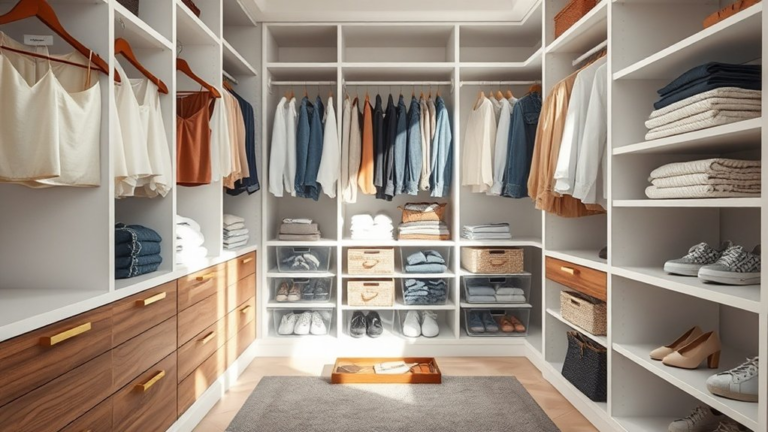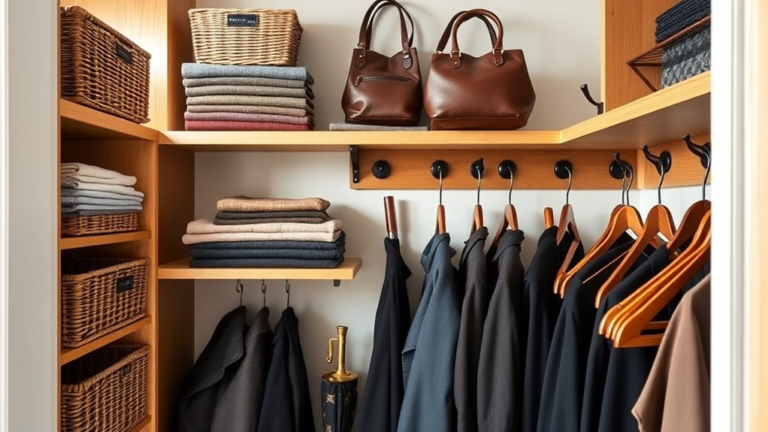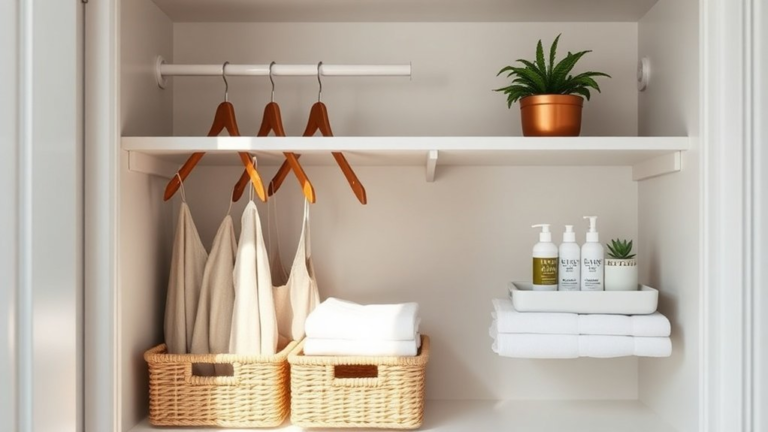
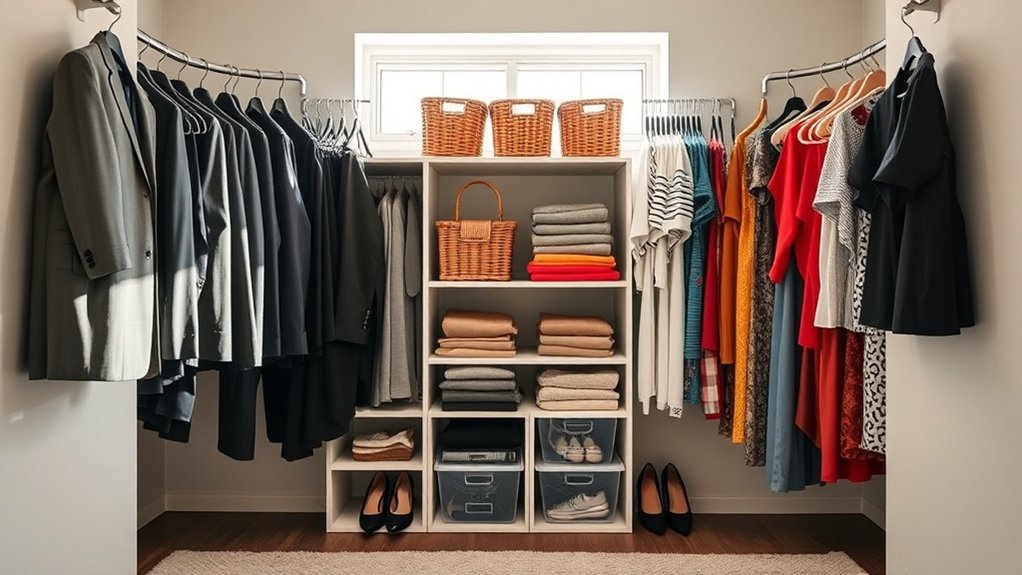
You can organize a shared closet by type so everyone knows where things belong and friction drops. Start by agreeing goals—daily wear, work, seasonal items—and measure space for hanging, folding, and shoes. Create clear zones for tops, bottoms, outerwear, dresses, shoes, and accessories, use simple return rules, and pick storage that fits each item. Rotate maintenance and hold short check-ins to tweak things. Want a step‑by‑step plan to make this stick?
Closet Highlights
- Agree on shared goals and non-negotiables (daily wear, sentimental items, shoe limits) before organizing zones.
- Measure and map hanging, shelf, and shoe space to allocate individual and shared zones by clothing type.
- Use clear storage, labels, and return rules (rehang/refold) so everyone knows where items belong.
- Rotate maintenance tasks and schedule weekly tidies plus quarterly purges to prevent clutter and resentment.
- Resolve conflicts with specific examples, “I” statements, short check-ins, and trial periods for new rules.
Decide Your Shared Closet Goals and Non-Negotiables
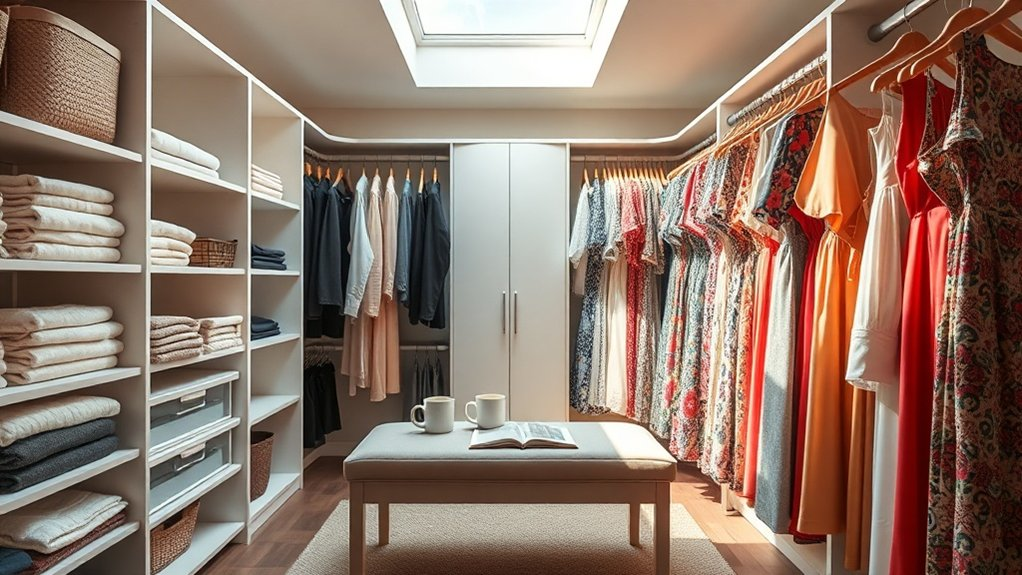
Before you start moving hangers and bins, take a moment to agree on what you both want from the shared closet, because clear goals will save time and headaches later.
You’ll talk about daily needs—work clothes, casual wear, seasonal items—and you’ll decide what’s essential versus nice-to-have. Will one of you need more hanging space for dresses while the other needs drawer space for tees?
Discuss daily needs—work, casual, seasonal—and decide essentials versus nice-to-haves, like dresses needing hangers, tees needing drawers.
Pick non-negotiables: items you must keep accessible, sentimental pieces, or a shoe count limit.
Agree on maintenance: who’ll tidy weekly, how you’ll handle new purchases. Setting these rules now keeps small annoyances from becoming big fights.
Ready to commit? You’ll feel calmer, and your closet will finally serve both of you. Adding a simple modular design to organizing can help you implement and maintain the plan effectively. Consider incorporating closet organization principles from Transform Your Closet to make the system efficient and sustainable.
Measure and Map the Closet by Function (Hang, Fold, Shoe, Accessory)
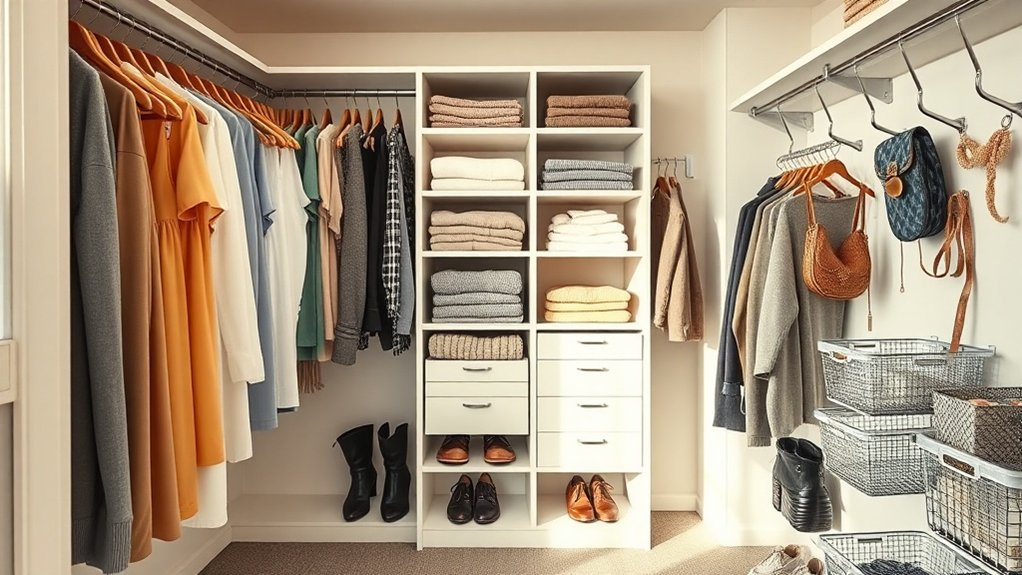
Start by measuring how much hanging space you actually need so you can assign clear bars for dresses, shirts, and jackets.
Then map out folded zones on shelves or in drawers for sweaters, tees, and linens, and mark a dedicated area for shoes and accessories so nothing gets lost. Consider using stackable storage baskets to maximize space and keep items organized vertically. Consider allocating space for multiple hanging rods to separate long garments from shorter items and make hanging more efficient.
What sections will make daily routines easier for both of you?
Also consider adding stackable storage to maximize vertical space and keep items visible and accessible.
Measure Hanging Space
Measure the hanging space with intention, imagining how each rod will serve your daily routines and shared needs. Start by measuring rod length, height from the floor, and distance between rods, then note what each person wears most.
Will one of you need long space for dresses and coats, while the other needs double rods for shirts and pants? Sketch a simple diagram and label zones by owner or type.
Think about clearance for hangers and garment fullness so items don’t get crushed. Consider seasonal shifts—can you swap a rod’s purpose when wardrobes change?
Measure twice, plan once. When you’re precise, you’ll avoid constant reshuffling and create a calm, efficient shared system that respects both wardrobes and makes mornings smoother. Also consider using taller organizers to maximize vertical space and adapt to changing needs with adjustable features. Additionally, choose durable, rust-resistant materials like rust-resistant metal for rods and supports to ensure long-term reliability.
You can further improve organization by adding clear storage bins for folded items on shelves to maintain visibility and accessibility, especially for shared linens and accessories, using clear stackable bins to maximize vertical space.
Map Folded Zones
Pick three clear zones—folded, hanging, and shoes—and imagine how each person will reach for items in a morning rush.
Now measure the shelf depths and drawer heights for folded clothes, then sketch a simple map on paper or your phone.
Place everyday items within easy reach: tees and underwear at waist to chest height, sweaters slightly higher to avoid crushing, seasonal items up top. Consider using transparent storage like clear acrylic dividers to keep folds visible and stable.
Match shelf width to garment stacks so folds stay neat, and plan dividers where stacks might tumble.
Leave a small landing space for outfits you grab on the way out.
Label or color-code sections so partners see their zones at a glance.
Will this make mornings calmer? Yes — because clear maps create habits and cut decision fatigue.
Consider adding over-the-door or hanging organizers to maximize small spaces and keep accessories visible and accessible, especially when sharing a closet with limited room space maximization.
A simple closet zoning plan based on these areas helps partners maintain order and reduces morning stress.
Allocate Shoe & Accessories
When you carve out shoe and accessory zones, you make room for quick decisions and less morning scrambling. So think about who reaches for what and when.
Measure shelves and floor space, then map a low shelf for everyday shoes and a higher one for seasonal pairs. Use clear bins or labeled boxes for scarves, belts, and hats so you can spot what you need fast.
Consider a small wall rack or over-the-door shoe organizer for frequently worn sneakers. Don’t forget a tray or drawer divider for jewelry and watches, and keep delicate items cushioned. Adding stackable organizers can further maximize vertical space and keep items neatly separated.
How will these choices change your routine? When you assign specific spots, you reduce clutter, respect shared space, and start each day with calm confidence. Also consider using multi-layer hangers to maximize vertical hanging capacity for shared wardrobe items. Try incorporating adjustable shelving to adapt storage as your needs evolve and to fit different closet widths.
Choose Zones by Clothing Type: Tops, Bottoms, Outerwear, and Dresses
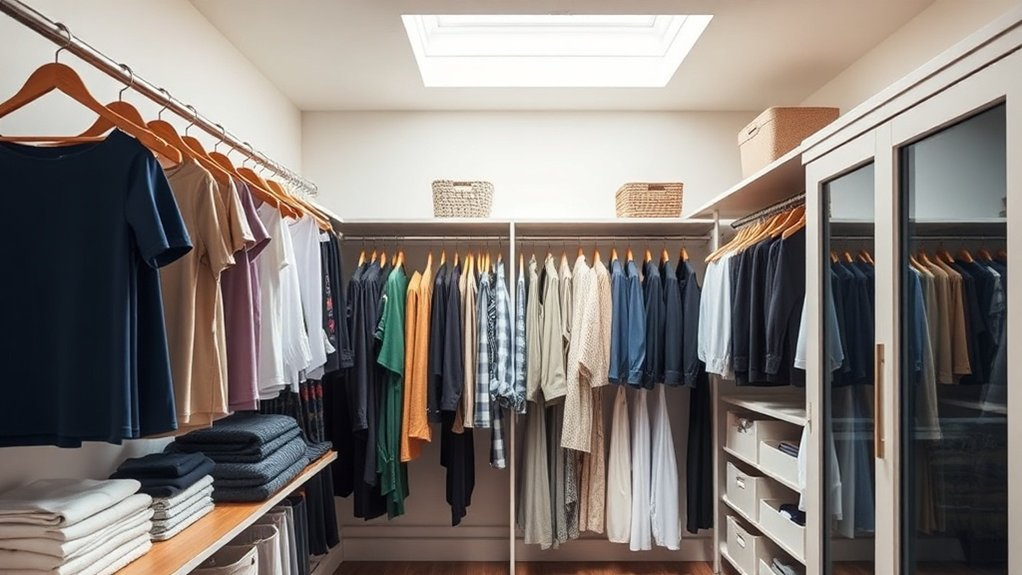
Start by dividing your closet into four clear zones—tops, bottoms, outerwear, and dresses—so you can see everything at a glance and grab what you need without the fuss. You’ll feel calmer when each item has a home.
Place daily tees, blouses, and sweaters together so mornings move faster. Hang pants, skirts, and jeans grouped by length and fabric, making mix-and-match easy. Reserve a taller section for coats and jackets, near the door if you can, so layering’s effortless. Consider adding multi-tiered options to maximize vertical space and keep floors clear.
Dedicate a wrinkle-free area for dresses, organized by occasion or color, so special pieces stay ready. Will this simple layout save time and reduce morning stress? Try it, adjust as needed, and enjoy a closet that works for both of you. Consider adding space-saving hangers to maximize vertical capacity and fit more garments efficiently. You can also create visual zones to help both partners find their items quickly.
Allocate Space for Shoes, Bags, and Accessories Without Personal Labels
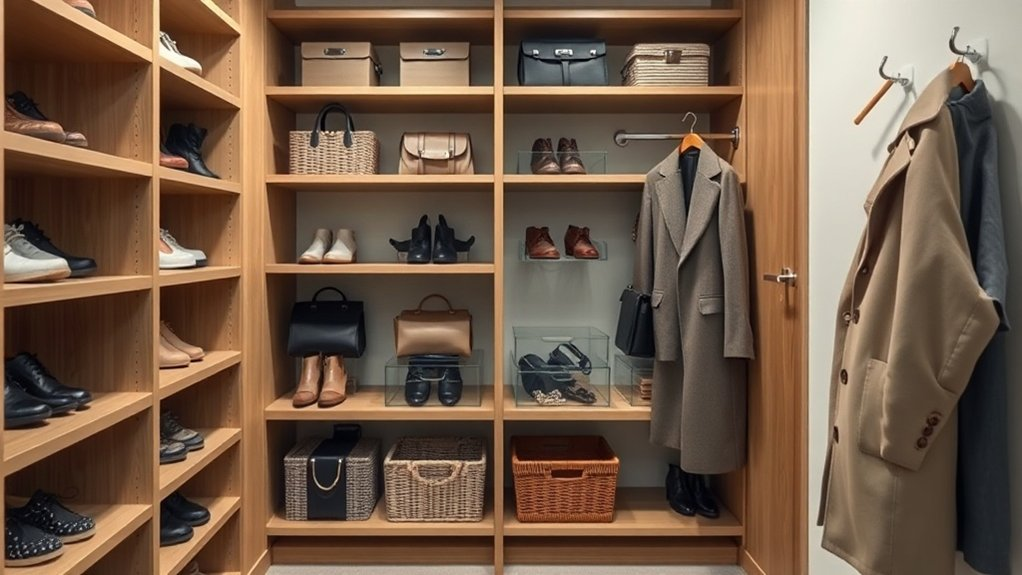
A few smart solutions let you keep shoes, bags, and accessories tidy without assigning them to a person, so both of you can find what you need fast and fair.
Start by grouping items by function and frequency: everyday shoes together, special-occasion pairs in another spot, daily bags within easy reach, and seasonal pieces higher up.
Use clear containers, open trays, or see-through bins so you can spot things quickly, and label zones by item type rather than by owner.
Use clear containers, open trays, or see-through bins so you can spot items quickly—label zones by type, not by owner.
Rotate seasonal items together to keep the main area uncluttered.
Keep a small catchall for loose accessories like scarves, belts, and sunglasses so they don’t get lost.
Agree on the system, try it for a month, then tweak what doesn’t work.
Consider adding stackable, waterproof storage bins to protect items and make the most of vertical space.
Pick Storage Solutions That Match Each Item Type (Rods, Drawers, Hooks, Baskets)
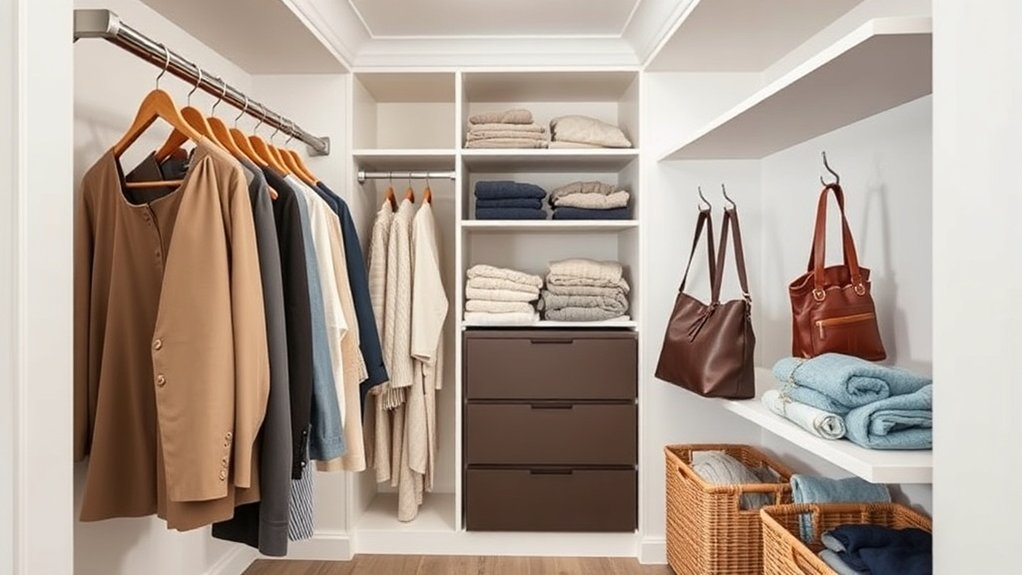
Because each item needs its own kind of home, choose rods, drawers, hooks, and baskets that suit what you wear and use most, not just what looks nice.
Start by grouping clothes by type: long coats on a higher rod, shirts on a mid-level rod, and folded sweaters in shallow drawers to prevent stretching. Consider adding stackable clear bins to maximize vertical space and keep smaller items visible in the closet stackable clear bins. Many modular organizers also allow stacking or splitting to fit unique closet dimensions and expand storage capacity modular designs.
Use hooks for everyday bags, belts, and scarves where you can grab them fast.
Baskets work great for linens, casual hats, or workout gear—pull-out styles keep things tidy.
Choose clear or open-front solutions so everyone sees what belongs where.
Match shelf depth and drawer height to the item size, and pick sturdy hardware for heavier pieces.
What would make your daily routine smoother?
Consider adding stackable storage to maximize vertical space and create customizable cubbies for different items.
Create Simple Labeling and Return Rules That Everyone Agrees To
You can make the closet feel calm and fair by creating clear label categories like “Coats,” “Shoes,” and “Weekend Extras” so everyone knows exactly where things belong.
Agree on simple return rules—hold items only for a set time, rehang or refold before leaving, and tell the group if something’s borrowed for longer.
Ready to try a quick labeling session together and set one rule you’ll all follow?
Consider starting with a shared system that uses clear bins to boost visibility and make retrieval easier. Using stackable baskets can also maximize vertical space and keep items organized without taking up extra floor area. Add durable organizers made from thick non-woven fabric for long-lasting, low-maintenance storage solutions.
Clear Label Categories
When everyone agrees on clear label categories, the shared closet stops being a mystery and becomes a helpful system you can actually use; think of labels as small promises that keep things tidy and easy to find.
Choose categories that match how you live: daily wear, seasonal items, outerwear, accessories, and spare linens, for example. Keep labels short and specific, using words everyone recognizes. Use matching tags or a consistent color code so eyes can scan quickly.
Put labels at a readable height, and consider icons for kids or guests. Invite household members to suggest categories, then test them for a week. Did anything feel unclear? Adjust and agree again.
Clear categories cut stress, save time, and make the closet a team victory.
Agreed Return Rules
Start with three simple rules everyone can follow, then watch how much smoother the shared closet becomes. You’ll agree on clear return steps: hang items on the right hanger, fold sweaters on their shelf, and place shoes in designated cubbies. Consider adding adjustable storage like modular rods or kits to adapt as needs change. Label spots with friendly signs so no one has to guess. Decide how long someone can borrow an item, and stick to a gentle reminder system—text first, then a note. If something’s damaged or missing, report it immediately so you can fix it together. Review the rules every few months, and tweak what’s not working. When everyone takes the same small actions, you’ll reduce friction, save time, and keep the closet feeling fair and calm. Consider adding color-coded labels to help everyone find and return items quickly. Also consider using erasable markers on durable label materials so you can update labels easily as needs change.
Build a Rotation and Maintenance Routine to Keep Type-Based Zones Working
Although it takes a little planning, building a simple rotation and maintenance routine will keep your type-based zones feeling tidy and useful without turning organization into a chore. You’ll feel calmer when each category has a regular refresh, and everyone knows what to do.
Start small, pick days that work for your household, and make tasks clear and easy to follow. Want less stress and more free time?
- Schedule: choose a weekly spot for everyday items, monthly for seasonal pieces.
- Assign: rotate responsibility so each person cares for different zones.
- Reset: return misfiled items to their category during one quick weekly sweep.
- Declutter: quarterly purges keep zones relevant and manageable.
Stick to the routine, adjust as needed, and enjoy the harmony. Consider creating type-based zones to make finding and returning items effortless. Adding stackable or modular storage cubes can maximize vertical space and keep categories separate.
Troubleshoot Common Conflicts and Adjust the System Over Time
Because shared closets involve different habits and tastes, you’ll run into bumps—so plan to handle them with kindness and clarity.
Start by spotting recurring issues: misplaced items, uneven space use, or tension over shared shelves. Talk about problems soon, using “I” statements and specific examples, and set a short check-in to reset expectations.
Adjust zones if one person’s needs change; swap shelf height, reassign hooks, or create a small overflow basket. Track what works for a month, then tweak. Celebrate small wins to keep motivation high.
If friction stays, bring in a neutral rule—like first in, first out—or rotate priority days. Can you commit to trying changes for a trial period?
Frequently Asked Questions
How Do We Handle Seasonal Items That Don’T Fit Current Zones?
Store seasonal items in clearly labeled bins or vacuum bags you tuck into higher shelves, under beds, or a shared storage area. You’ll rotate them seasonally, keep duplicates minimal, and communicate placement with your roommate.
What About Mixed-Item Garments (E.G., Dressy Jumpsuits)?
You’ll categorize mixed garments by primary use and fabric; if dressy dominates, hang with formal wear, otherwise place with casual pieces. You’ll tag items and create a small “hybrid” zone for versatile pieces everyone can access.
Can Kids’ Clothing Be Included in the Same System?
Yes — you can include kids’ clothing in the same system; you’ll group by type, size, and accessibility, use lower rods or bins for small items, color-code or label sections, and rotate seasonal pieces for space and simplicity.
How Do We Divide Shared Wardrobe Costs Fairly?
Split costs by usage and need: you’ll track who wears items most, set percentage shares, agree on essentials versus wants, rotate contributions for kids, and use a shared fund or app to settle uneven spending transparently and regularly.
What if One Person Buys Drastically Different Quantities?
Ironically, you won’t cause armageddon: if one person buys much more, you split shared essentials but track personal purchases, set spending caps or reimbursement rules, and revisit agreements regularly so fairness stays practical, not punitive.
Conclusion
You’ve turned closet chaos into a calm, shared wardrobe that actually breathes—no fast-forward needed. Picture everything hanging, folded, and stashed in its own neat neighborhood, so finding shoes feels like strolling down a tidy street. You’ll check measurements, agree on zones, and commit to the simple rules that keep it working. Ready to try it tonight? Start small, stick to the plan, and watch daily dressing become joyful, not a tug-of-war.