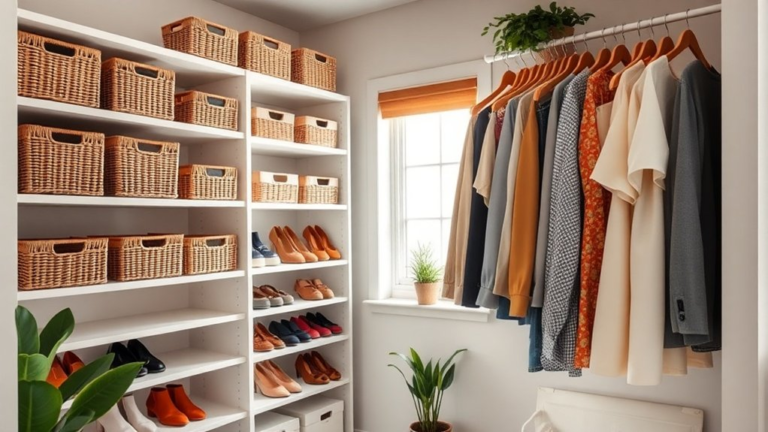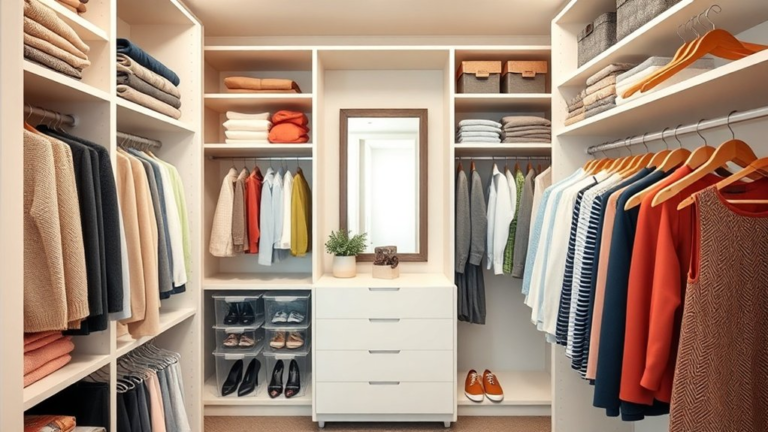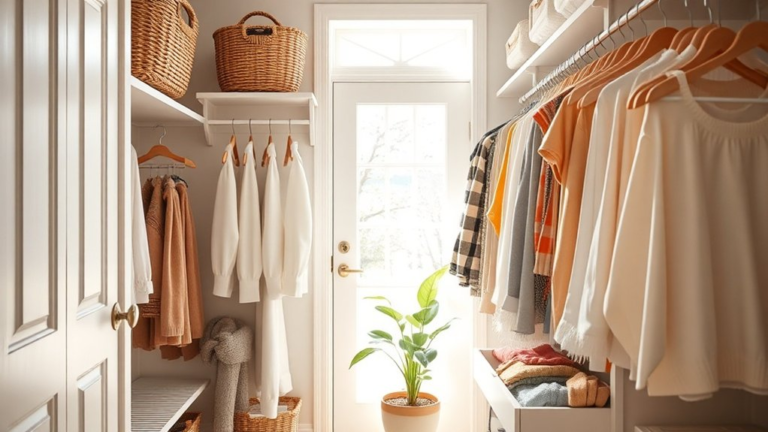
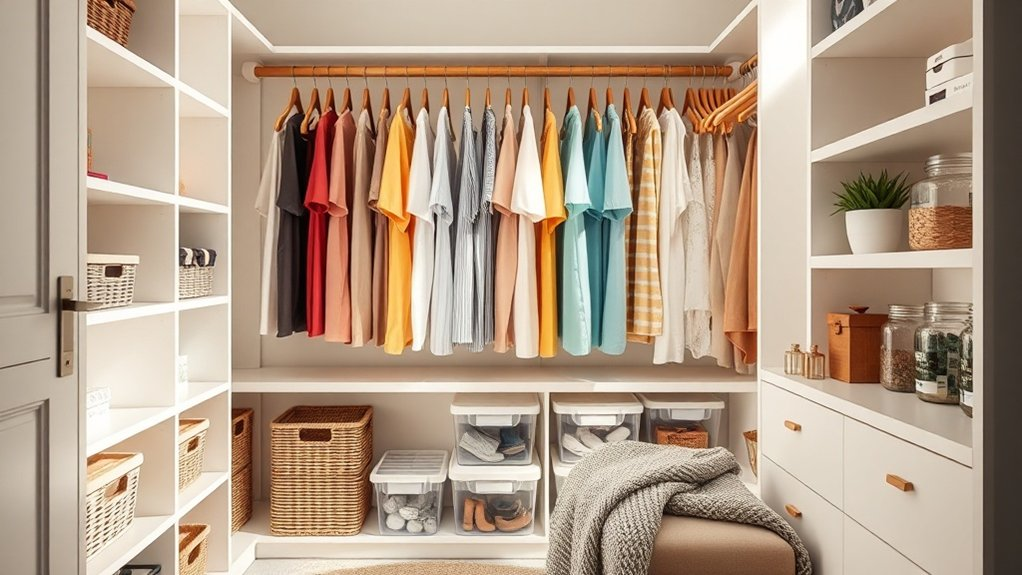
Funny coincidence—you just found the free bag of mismatched hangers and now you’re ready to tackle your closet, but where do you start? You can set a $100 cap, sort fast into keep/donate/repair/toss, and use vertical space, repurposed bins, and simple DIYs to stretch every dollar. Want quick projects under $25 and a few store picks that actually work? Keep going to get practical steps and easy routines that stick.
Closet Highlights
- Start with a quick audit: sort into keep, donate, repair, toss, and measure shelves before buying organizers.
- Maximize vertical space using over-the-door racks, wall hooks, and a second hanging rod for more storage.
- Build cheap DIY bins and shoe cubbies from repurposed boxes, canvas, or contact paper under $25.
- Use slim matching hangers, labeled breathable bins, and stackable shelf organizers to save inches and stay tidy.
- Maintain with daily hang-back habits, weekly five-minute resets, and a visible donation box to prevent recluttering.
Quick Closet Audit to Spot Clutter and Set a $100 Target
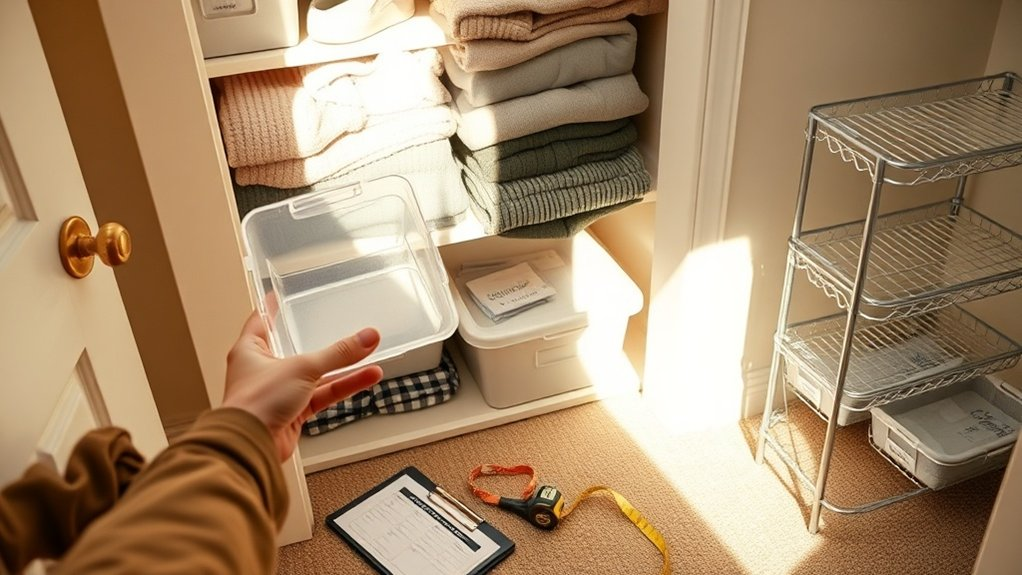
You can get a lot done in just one afternoon when you do a quick closet audit, and setting a $100 target keeps the project focused and stress-free.
Start by pulling everything out and doing a clutter assessment: sort items into keep, donate, repair, and toss piles. Ask yourself which pieces spark joy or fill a real need; be honest.
Jot down budget goals for replacements or small upgrades, so you won’t overspend later. Measure shelves and note weak spots that need simple fixes, like a new hanger set or shelf liner, but don’t buy yet. Consider adding clear, stackable storage bins to make the most of vertical space.
You’ll leave with a clear plan, a lighter closet, and the confidence to shop thoughtfully within your $100 limit. Consider adding a modular cube organizer for flexible storage 12 Cube Organizer to maximize vertical space without breaking the bank. Also consider durable options like waterproof PP bins for long-lasting, low-maintenance storage.
Low-Cost Decluttering Hacks That Save Space and Money
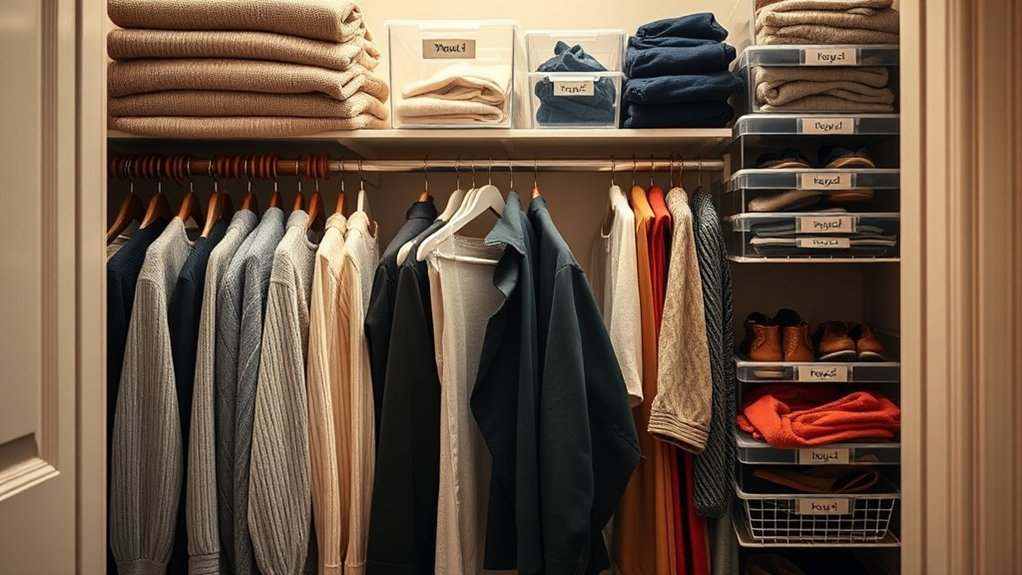
Start by sorting everything into keep, donate, and toss piles so you can see what really belongs in your closet.
Use vertical space with hooks and hanging shelves to free up floor room, and repurpose shoeboxes, jars, or baskets you already have to corral smaller items. Consider adding taller organizers or adjustable shelving to maximize vertical space.
What could you let go of today to create a calmer, more useful space that costs almost nothing?
Consider adding space-saving hangers to your setup to maximize vertical capacity and declutter efficiently with space-saving hangers.
Organizing items by category can simplify finding things and prevent future clutter buildup, especially when you use storage zones to keep similar items together.
Sort By Keep, Donate
Although letting go can feel hard, sorting your closet into “keep” and “donate” piles makes the whole process simple and surprisingly freeing.
Start by grouping items into clear clothing categories—tops, bottoms, outerwear, shoes—so you see duplicates and gaps fast.
Try a quick three-month test: if you haven’t worn it, move it to donate. Think seasonally, too; a seasonal rotation helps you decide what truly fits your life now. Consider adding vertical organizers to make seasonal swaps easier and save floor space.
Hold each piece and ask, “Does this make me feel good, fit well, or get regular use?” Be honest.
Label boxes, schedule a drop-off, and thank yourself afterward. You’ll create space, save time, and help others — all without spending much, if anything.
Consider using vertical storage options like hanging organizers to maximize space and visibility.
Many readers find that a simple decluttering checklist speeds the process and prevents decision fatigue.
Use Vertical Space
Once you’ve pared down your wardrobe, look up — vertical space is one of the easiest ways to multiply your storage without spending much. You can add shelf brackets to create higher shelving for seasonal items, or install extra hanging rods to double your usable hanging area.
Have you considered over the door solutions for shoes or accessories? Wall mounted hooks and a pegboard system keep jewelry, belts, and scarves visible and tidy. Consider installing 6-shelf hanging organizers to maximize hanging space and simplify outfit planning.
Use vertical bins and stackable bins on higher shelves to group items and pull them down when needed. Ladder shelves lean nicely in unused corners, giving you open display space and easy access.
These small changes feel empowering, save floor space, and cost far less than a closet makeover. Consider using stackable baskets to make the most of every inch while keeping items accessible. You can also combine modular storage pieces to create customizable configurations that grow with your needs.
Repurpose Household Containers
Think of that mismatched Tupperware or empty cereal box as hidden storage waiting to be useful again; you can turn everyday containers into smart, budget-friendly organizers that cut clutter and brighten your closet.
When you repurpose jars for small items like buttons, hair ties, or jewelry, labels make everything easy to find, and clear glass shows contents at a glance. Consider grouping similar items in stackable bins to make the most of shelf height and simplify retrieval.
Upcycle boxes by covering them with fabric or paper to create uniform bins for socks, scarves, or craft supplies. Stackable containers save shelf space, while small baskets corral loose items on a hanging shelf. Many small-room solutions use vertical shelving and side pockets to maximize space, so consider adding vertical organizers to take advantage of height.
Want a quick project that feels good and saves money? Try transforming a shoebox into a divided tray for belts and ties.
These simple steps make your closet calmer and more inviting. Consider adding adjustable shelves to maximize vertical space and adapt as your storage needs change.
DIY Organizers Under $25 You Can Make in an Afternoon
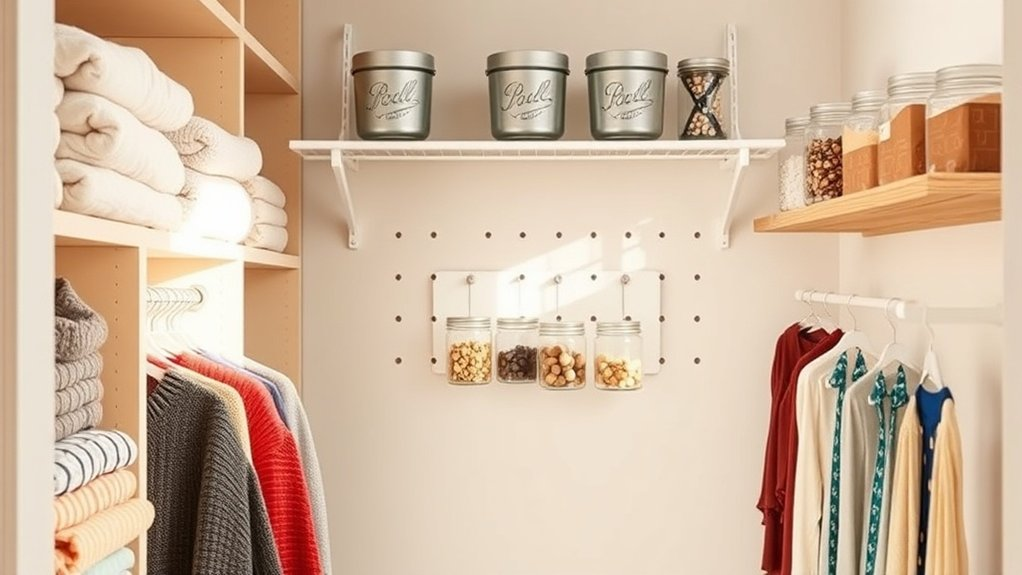
Grab some simple supplies and you can transform clutter into calm in an afternoon without spending more than $25.
You’ll love making fabric storage bins from inexpensive canvas, batting, and a bit of trim; they fold flat, slide on shelves, and give instant color and order. Choose durable materials like acrylic or sturdy canvas so your bins last through frequent use.
Try pegboard ideas for accessories: paint a small board, add hooks and baskets, and hang scarves, belts, or jewelry where you can see them.
Paint a small pegboard, add hooks and baskets, and display scarves, belts, and jewelry for easy access and style
Make a shoe cubby from cardboard reinforced with packing tape and covered in pretty contact paper.
Create a hanging pouch organizer from an old towel and some stitching.
These projects are quick, functional, and satisfying.
Consider using reinforced plastic or metal hooks on your DIY pieces for added durability and weight capacity.
Also, add stackable storage solutions like clear drawers to maximize vertical space with stackable storage.
Which one will you start this weekend to reclaim your closet space?
Best Cheap Store-Bought Organizers Under $100 (Shelves, Bins, Hooks)
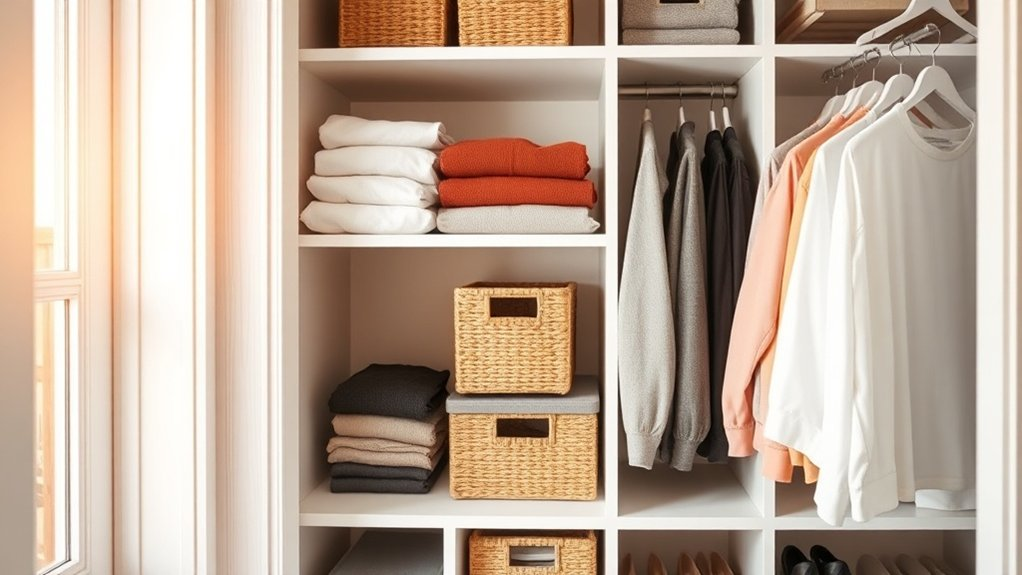
A few smart purchases can change your closet from chaotic to calm without breaking the bank, and you don’t need to be a DIY pro to do it. You can pick ready-made pieces that slide in and make an immediate difference.
Look for sturdy shelf bins to corral sweaters and accessories, slim shoe cubbies to free floor space, and versatile hook racks for bags and scarves. They’re affordable, easy to install, and offer instant satisfaction. Consider stackable organizers like clear shoe boxes or foldable bins to maximize vertical space and visibility.
- Choose breathable shelf bins for folded items.
- Add a hook rack near the door for daily grab-and-go items.
- Use stackable bins to double vertical storage.
Which small upgrade will you try first? Small changes add up, and you’ll feel the difference fast. Consider adding hanging organizers with adjustable shelves to maximize vertical space and adapt as your wardrobe changes. A good option is to select stackable bins to optimize vertical space and visibility.
Layout Tweaks and Hanging Tricks to Maximize Every Inch
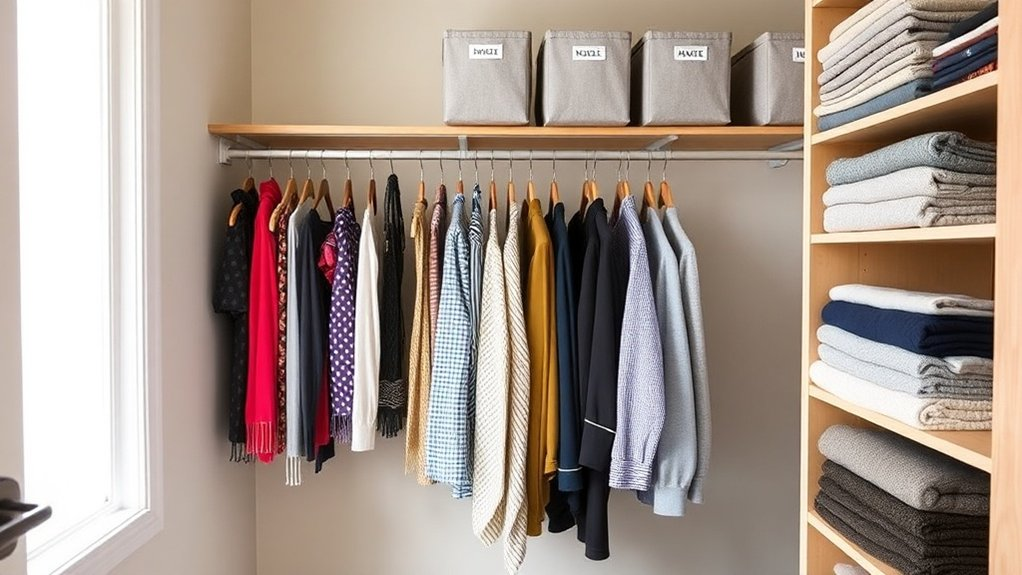
When you rethink how things hang and where you place shelves, your closet can feel twice as big without major work.
You can add a second tier of hanging rods to double usable hanging space for shirts and pants, or install a short lower rod for kids’ clothes.
Move seasonal items higher, keep daily wear at eye level, and use shelf dividers to prevent piles from toppling.
Try staggered rod heights so long dresses have their own zone, while shorter pieces share space efficiently.
Use slim, matching hangers to save inches and make the view calming.
Want easier mornings? Group outfits by color or purpose.
Small layout tweaks give big payoff, and you’ll enjoy a neater, more joyful closet.
Consider consulting closet organization tips to make the most of your space.
Adding inexpensive solutions like clear bins or labeled boxes can make sorting and finding items faster and reinforce space-saving methods.
An easy, low-cost upgrade is adding adjustable shelving to better fit folded items and accessories.
Simple Maintenance Routines to Keep Your Closet Organized
Even if life gets busy, a few simple habits can keep your closet tidy and make mornings calmer. You’ll want maintenance tips that feel doable, not like another chore.
Start with small daily routines: hang items back immediately, place shoes in a bin, and scan for anything you didn’t wear.
Hang things back, toss shoes in a bin, and quickly scan for items you didn’t wear—small daily wins.
Weekly, do a quick five-minute reset: straighten hangers, refold shelves, and toss stray items into a donation box.
Monthly, reassess and pull anything you haven’t used in 30 days.
- Keep a donation box visible by the door.
- Use matching hangers for a cleaner look.
- Set a phone reminder for weekly resets.
Can you commit to minutes a day? Those minutes add up, and your closet will thank you. A well-organized closet can transform your daily routine and boost efficiency by reducing time spent searching for items, so consider adopting simple maintenance as part of your habit. A tidy closet also supports space-saving strategies that make small rooms feel larger. Additionally, following a step-by-step approach can make decluttering less overwhelming and more sustainable.
Conclusion
You’ve spent under $100 and somehow created a calmer closet — who knew restraint could feel so luxurious? You’ll keep what sparks joy and toss what doesn’t, use clever DIY fixes, and grab a few cheap bins to stretch space. Now, the trick is simple: maintain it. Can you commit five minutes a week? Do it, and your closet will stay tidy, practical, and oddly satisfying — just like you planned.