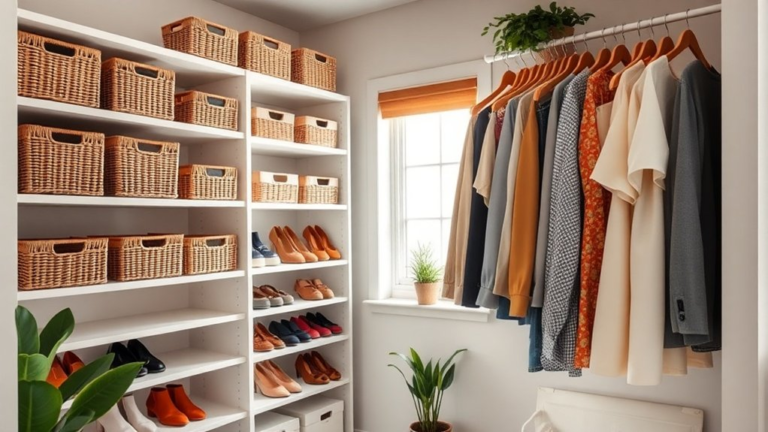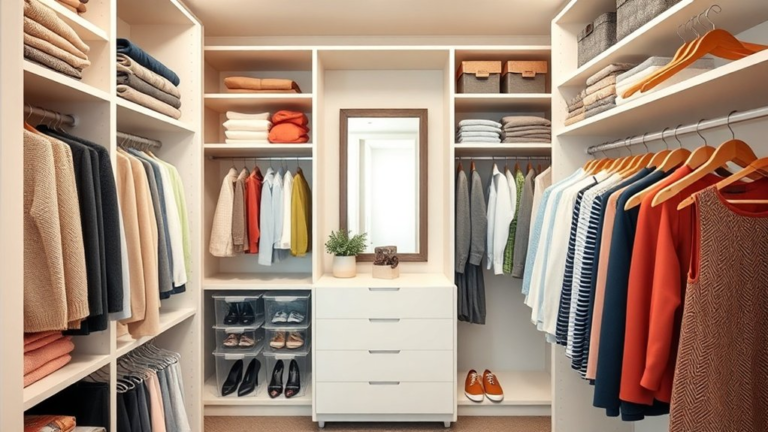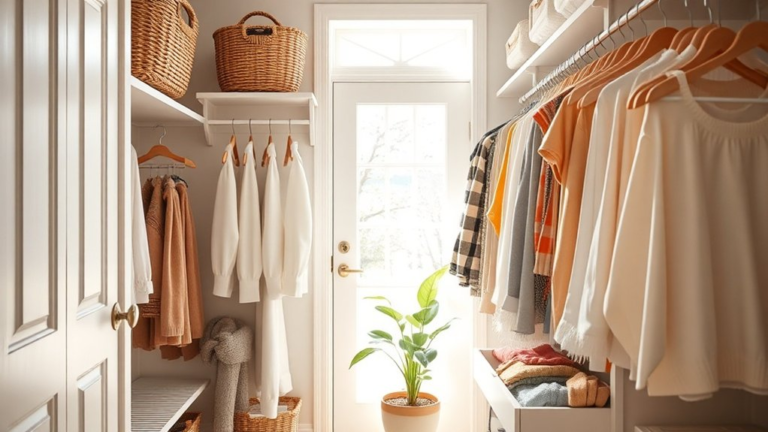
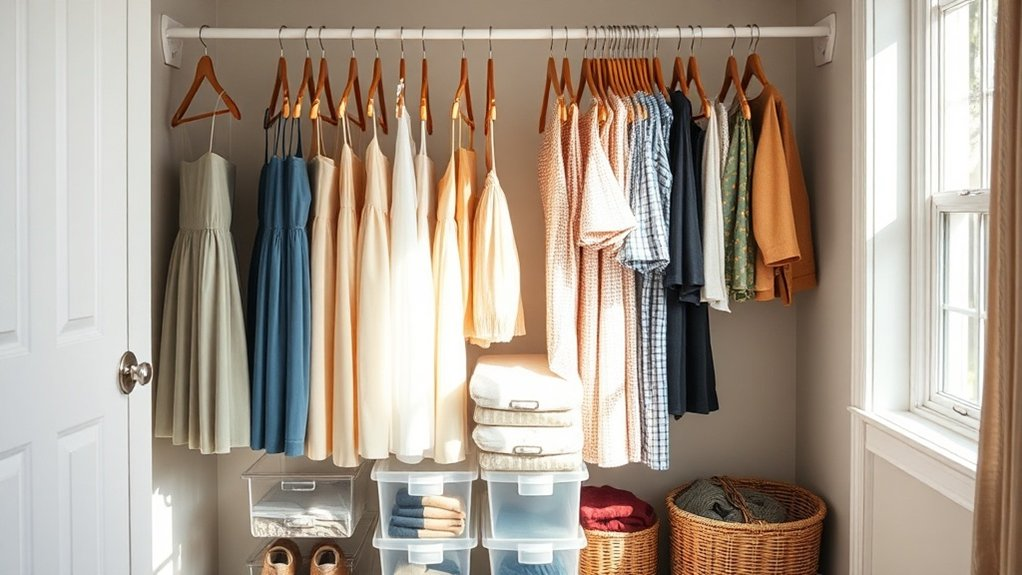
You’re ready to turn a messy closet into a calm, useful space without spending much, and you don’t need a designer to do it. Start by sorting what you wear, donate, or toss, then plan zones for tops, bottoms, shoes, and accessories so everything has a home. Swap bulky bins for clear, stackable containers, try slim velvet hangers, and build simple shelves or dividers on a weekend. Want a quick, actionable checklist to get going?
Closet Highlights
- Declutter first: sort into Keep, Donate, Toss using the one-touch rule and ask if you wore it in the past year.
- Zone your closet by frequency: eye-level for everyday items, top/bottom for seasonal storage.
- Swap hangers and add vertical hangers or slim velvet hangers to instantly increase hanging space.
- Use clear/labeled stackable bins and thrifted baskets for seasonal pieces and visible storage.
- Schedule 20 minutes weekly plus a monthly seasonal check to maintain organization and prevent re-clutter.
Quick Closet Audit: What to Keep, Donate, or Toss
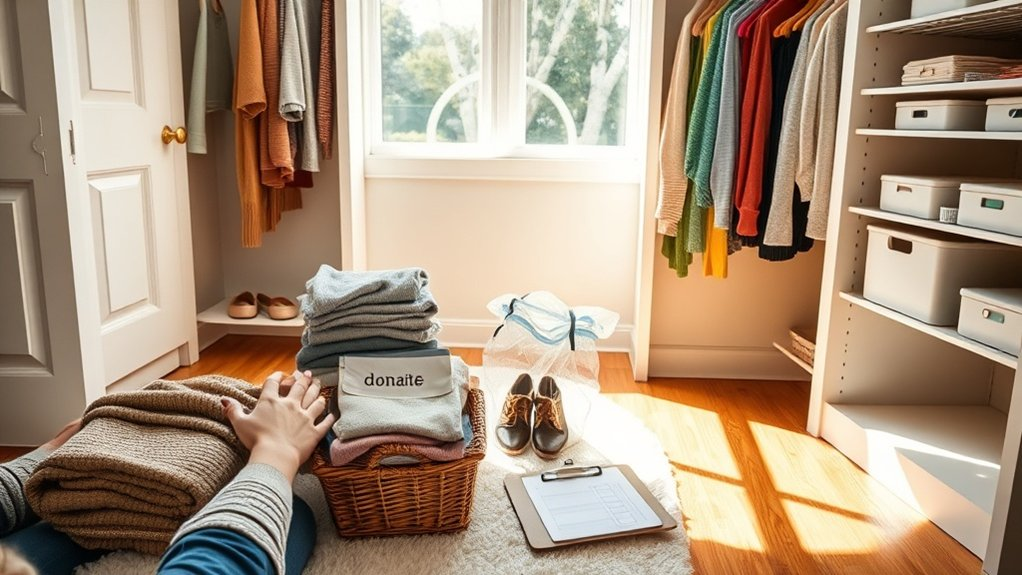
Ready for a fresh start? You’ll begin by opening every drawer and hanging up each item, looking for wear, fit, and how often you reach for it.
Hold pieces up: if they don’t flatter or fit, set them aside. Keep clear wardrobe essentials that suit your lifestyle—favorites that make you feel confident and get regular use.
Hold each piece up — if it doesn’t flatter or fit, set it aside. Keep only confident, regularly worn essentials.
Create three piles: keep, donate, toss. Be honest. Ask yourself, when did you last wear this? If it’s been a year and it’s unloved, let it go.
Planning a neighborhood donation drive can make parting easier and meaningful. Toss stained or unsafe items.
You’ll feel lighter, more in control, and excited to build a closet that actually serves you. Consider creating measurable milestones to track progress and stay motivated. Consider setting simple decluttering goals to make steady progress toward an organized closet.
Many women find success by establishing a closet audit routine to repeat seasonally.
Plan Layout by Zone: Tops, Bottoms, Shoes, and Accessories
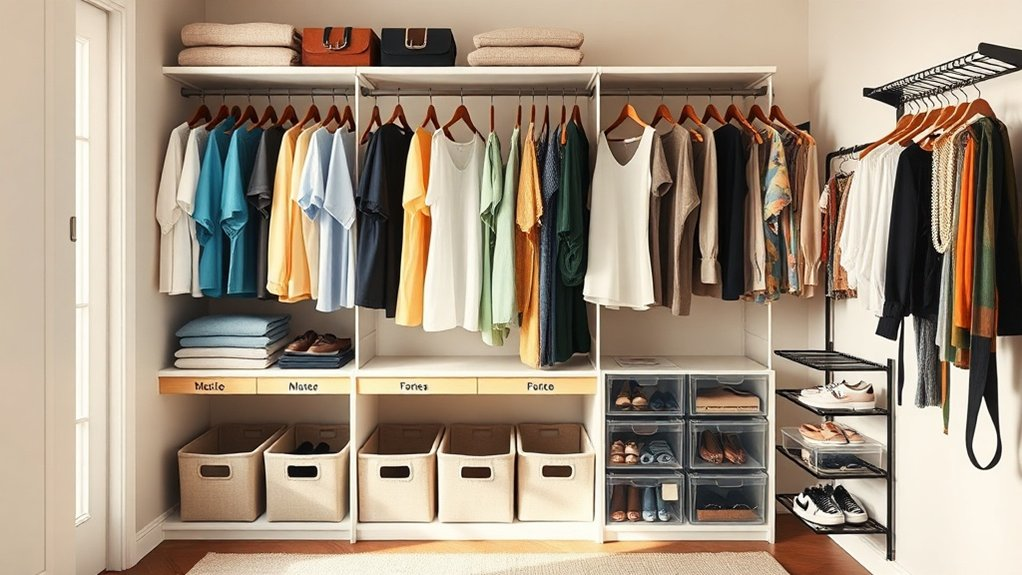
Think of your closet as a small shop where everything has its spot—tops, bottoms, shoes, and accessories each get a dedicated zone so you can see and grab what you need in seconds.
Start by mapping zones at eye level for everyday pieces and lower or higher for seasonal items. Use zone specific storage to group similar items, keeping hangers for tops, folded shelves for jeans, and a clear area for shoes. Consider adding stackable storage to maximize vertical space and free up floor area. Many space-saving solutions like multi-layer and cascading hangers can increase capacity substantially when you need more room.
Reserve a small, visible section for accessories so scarves, belts, and jewelry don’t get lost. This layout supports quick outfit planning, reduces decision fatigue, and makes getting dressed feel joyful instead of stressful.
Want to save time each morning? Zone your closet and enjoy the calm it brings. Consider creating a zone map of your closet to visualize where each category will live before you start organizing.
Affordable Storage Swaps That Maximize Space
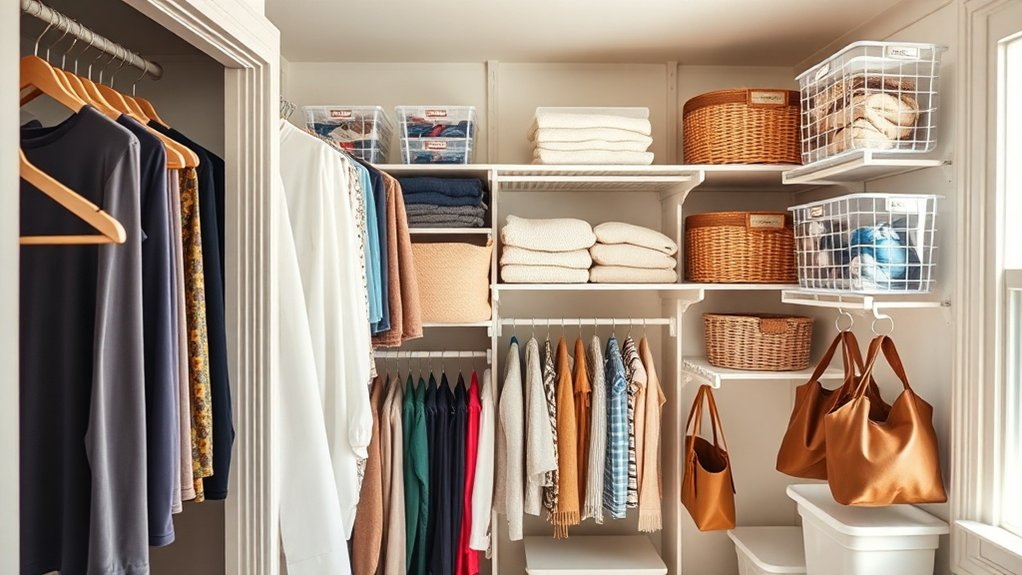
One simple swap can free up surprising amounts of space and make your closet feel like it was redesigned overnight.
One simple swap can instantly transform your closet, freeing space and making it feel newly redesigned.
You’ll love replacing bulky single boxes with stackable bins that turn messy piles into neat, accessible towers. Use clear or labeled bins for seasonal items, scarves, and workout gear so you can see what’s inside without digging. Consider adding stackable fabric bins to improve durability and dust protection.
Swap standard hangers for vertical hangers to double hanging capacity, and hang skirts or pants vertically to free shelf space. Don’t forget slim velvet hangers to keep shirts compact and prevent slipping.
Small changes add up fast. Ready to try one swap this weekend? You’ll be amazed how a few smart swaps create calm, usable space and make dressing easier every day. Consider using stackable baskets to maximize vertical storage without sacrificing accessibility. Add a clear-front stackable storage drawer so you can spot contents at a glance.
Low-Cost DIY Projects for Custom Shelving and Dividers
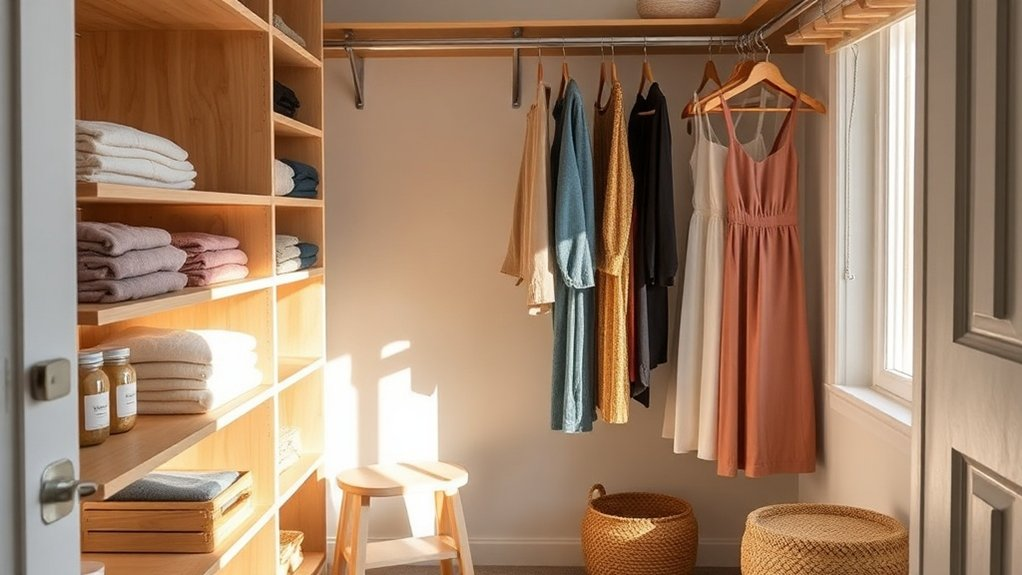
If you’ve ever stared at a jumble of sweaters, shoes, or purses and wished your closet knew how to behave, DIY shelving and dividers can change everything without costing a fortune.
You can build custom shelves from inexpensive shelf materials like plywood, crates, or repurposed boards, trimming them to fit awkward spaces. Consider using reinforced plastic for drawer liners or small bins to add durability to budget builds.
Try simple divider designs using thin plywood, foam board, or tension rods to keep stacks upright and handbags accessible. Adding stackable storage options can help maximize vertical space in narrow closets.
Paint or contact paper freshens the look, and basic brackets or L-brackets add sturdiness.
You’ll measure, cut, and assemble with minimal tools, gaining pride and control over your space.
Ready to tackle a weekend project and watch your closet transform? Small efforts make big differences.
Consider adding clear acrylic shelf dividers for visibility and stability, as they maximize vertical space and help keep items neatly separated.
Smart Hanger and Folding Tricks to Protect Clothes
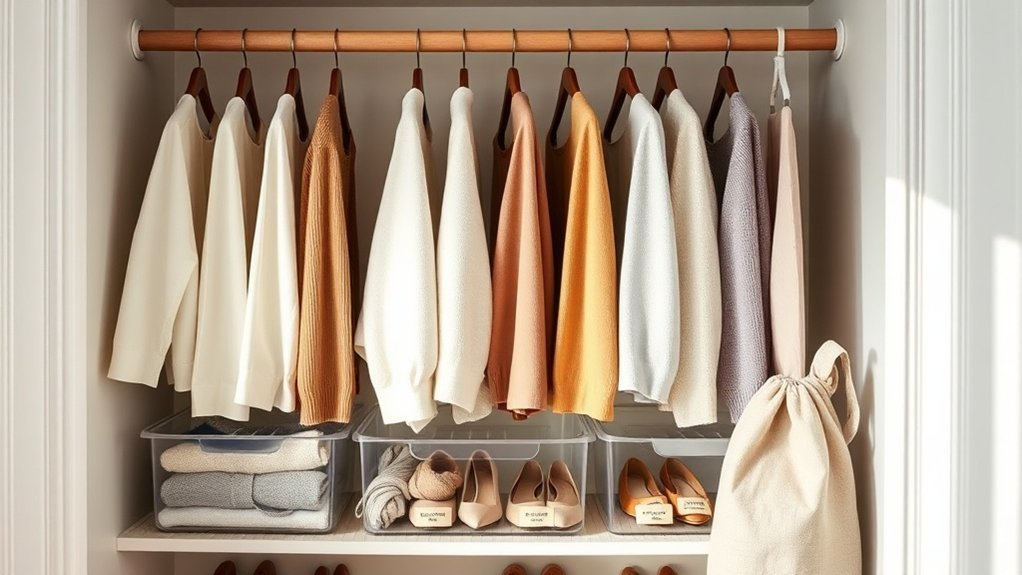
You’ve just finished fitting new shelves and dividers, and now it’s time to protect the clothes those shelves will hold—smart hangers and folding tricks will keep everything looking fresh and make your closet feel like it cares for you.
Start by swapping mismatched hangers for slim, non-slip versions to save space and prevent shoulder bumps, a simple space saving techniques move that instantly tidies visual clutter. Consider adding a few telescoping rods to create extra hanging tiers and better utilize vertical space. Consider the closet’s available space before adding tiers to ensure proper clearances and avoid overcrowding.
Fold sweaters with breathable tissue between layers to avoid creases, and roll tees for drawers to maximize room and spot items quickly.
Use velvet or padded hangers for delicate pieces, and clip skirts on hangers that grip without leaving marks.
Want to keep colors true and fabrics soft? Store similar fibers together; that’s basic fabric care that protects your wardrobe.
Consider adding multi-tier or space-saving hangers to maximize vertical storage and keep pants and skirts organized.
Monthly Maintenance Routine to Keep Clutter Away
Set aside a small block of time each week to do a quick declutter—you’ll be amazed how much easier it’s to keep your closet tidy when you catch small messes early. Consider using space-saving hangers to maximize hanging room and reduce bulk in your closet.
Each month, make that weekly habit a little more intentional by checking for items that no longer fit, are damaged, or haven’t been worn in months. Use stackable bins to optimize vertical space when sorting and storing seasonal pieces.
And every season, do a deeper wardrobe check to rotate clothes, clean forgotten pieces, and make space for what truly sparks joy.
Transform your closet into a functional sanctuary by prioritizing smart storage solutions that maximize space and accessibility.
Weekly Quick Declutter
A simple 20-minute habit each week can keep your closet feeling fresh and easy to use, and it’s easier than you think. Set a timer, grab three bins labeled Keep, Donate, and Maybe, and move through your clothes quickly.
Use decluttering strategies like the one-touch rule—decide once—and sort by category to stay focused. Time saving tips, such as doing tops one week and accessories the next, make the process manageable.
You’ll feel lighter after each session, and small choices add up fast. Ask yourself: did I wear this in the last year? If not, let it go.
Celebrate progress with a tidy shelf or a freed hanger. Stick with it, and clutter won’t come back. Consider investing in vertical space solutions like stackable hangers to maximize capacity in small closets. Also consider modular systems with adjustable shelves and rods for vertical space optimization to make the most of limited closet height. Adding simple shelving and organizers can transform tight closets into efficient storage with space-saving strategies.
Seasonal Wardrobe Check
When the weather shifts and you reach for different pieces, make a monthly Seasonal Wardrobe Check part of your routine so your closet always feels ready and calm.
Each month, scan for items that match seasonal trends and pull them forward, while tucking away those that won’t work until next season. Ask yourself: have you worn this in the past year? If not, consider donating or storing it.
Keep a small pile of wardrobe essentials—a neutral tee, versatile cardigan, reliable jeans—so mornings are simple.
Rotate shoes and accessories, wipe shelves, and rehang things neatly. This monthly habit prevents clutter from piling up, saves you money, and helps you enjoy a closet that reflects your life, not just random stuff.
Transforming your space can be simple with closet organization principles that focus on decluttering and efficient use of space. Try using space-saving techniques to maximize storage and maintain an orderly closet.
As you maintain this routine, consider adopting decluttering methods to make decisions faster and keep your closet functional.
Conclusion
You can turn your chaotic closet into a calm, stylish space without spending a fortune — seriously, it’ll feel like a mini makeover. Start small: declutter, zone outfits, swap in slim hangers and clear bins, and try one easy DIY shelf. Keep a five-minute weekly habit, and you’ll avoid overwhelm. Ready to open your closet and smile every time? You’ve got this — practical changes, big joy.