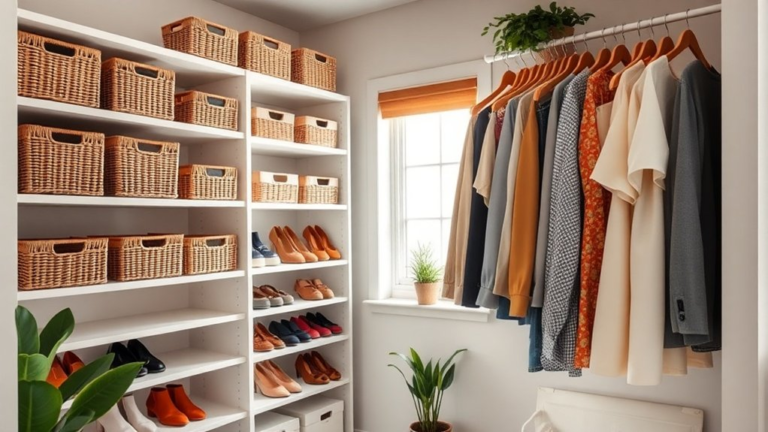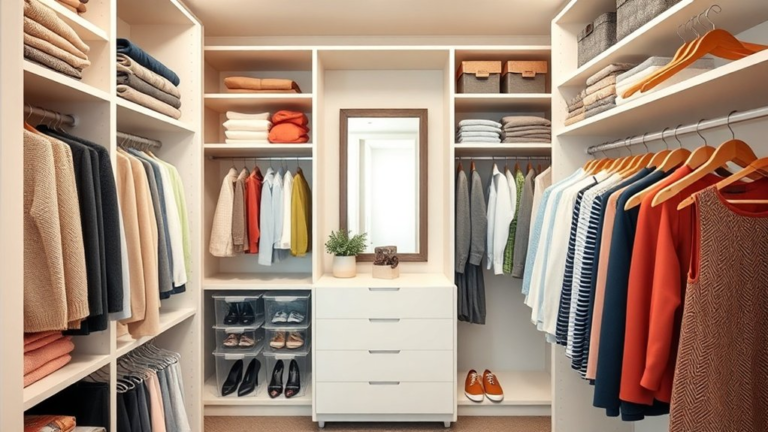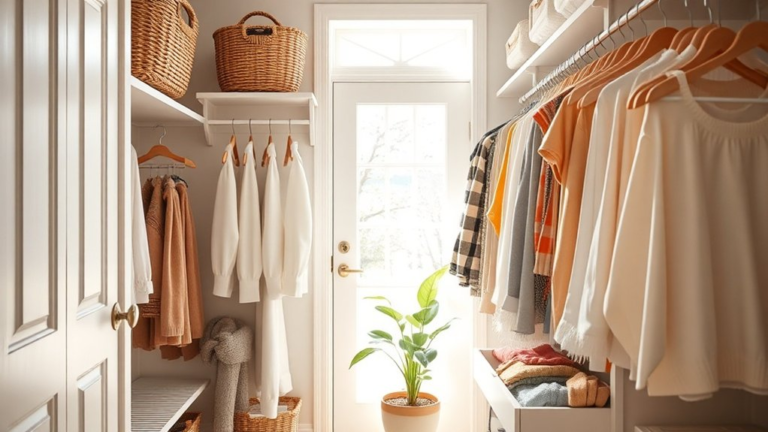
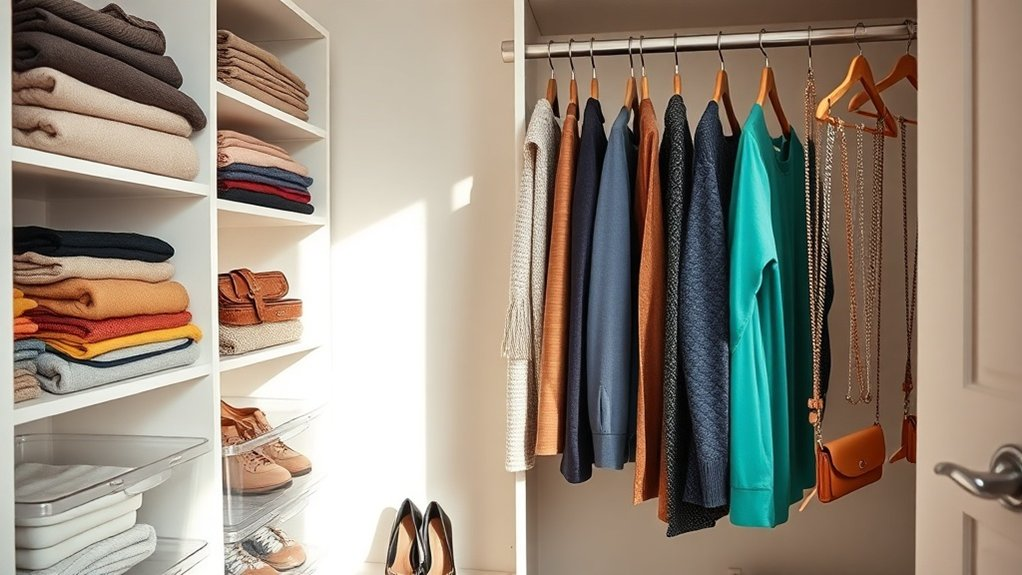
Did you know people spend about 12 minutes a day just searching for things in cluttered closets? You can cut that time and feel calmer by creating a simple, budget-friendly system for clothes, shoes, and accessories. Start by picturing your ideal setup, then declutter, measure, and repurpose items you already own—tension rods, bins, and over-the-door pockets go a long way. Ready to map your space and save money while making mornings easier?
Closet Highlights
- Zone the closet for daily wear, shoes, and accessories to keep items accessible and reduce decision time.
- Use over-the-door organizers, tension rods, and stackable bins to maximize vertical space affordably.
- Declutter with keep, donate, and toss piles, rotating seasonal items to reduce crowding.
- Repurpose household items (shoeboxes, mason jars, muffin tins) as inexpensive dividers and small-item storage.
- Shop thrift stores and big-box sales for sturdy hangers, baskets, and clear stackable containers that last.
Quick Plan: How to Organize a Closet on a Tight Budget
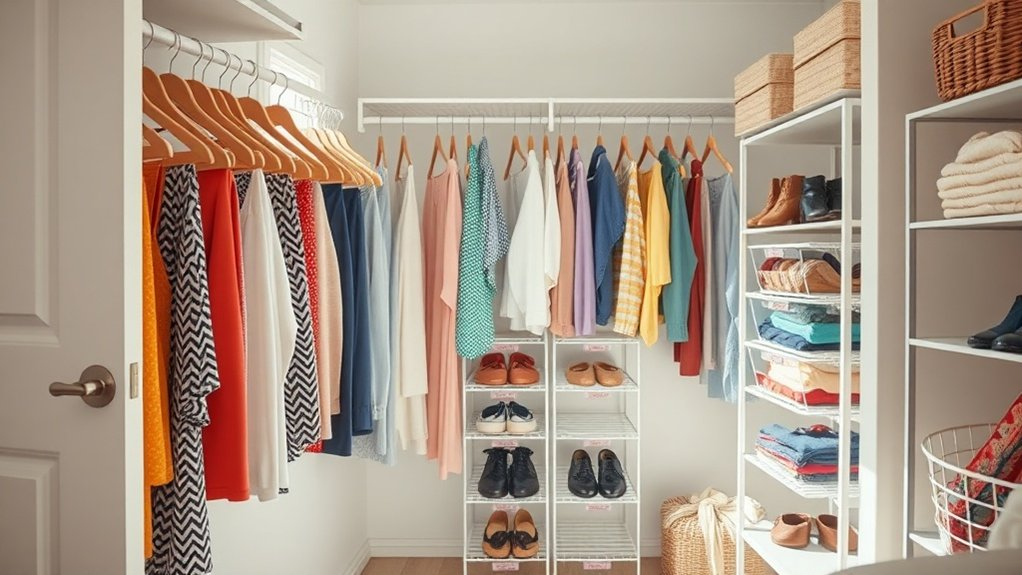
Start by picturing the closet you want—tidy, easy to use, and affordable to create—and then take one small step today to make it real.
You can start with a quick plan that boosts space efficiency without spending much. Look at how you use the space, then decide zones for daily wear, shoes, and accessories. Consider adding an over-the-door organizer for extra pockets and visibility with minimal installation time over-the-door organizer. Many budget solutions like foldable bins or tension rods can be waterproof or reinforced for longer use durable bins.
Use simple tools: hooks, thrifted bins, and a tension rod to double hanging space. Think storage creativity—shelves turned sideways, clear boxes, and label tags make things visible and calm.
Set a timer for 20 minutes, tackle one shelf, and feel the momentum. Small wins add up fast.
Ready to try that first 20-minute transformation? Consider adding stackable storage bins for vertical space savings and easy access.
Declutter Smart: What to Keep, Donate, and Toss
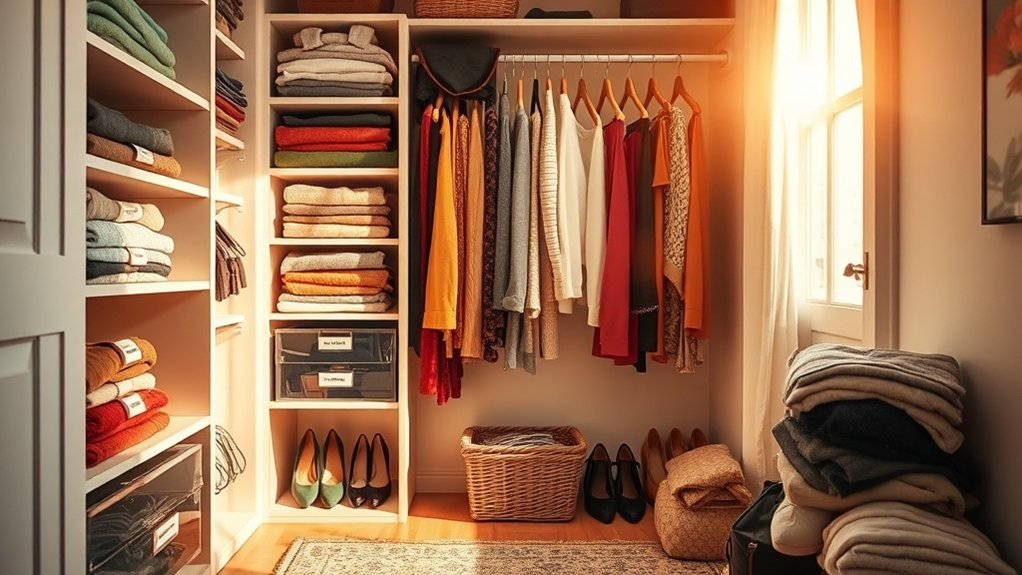
Give yourself permission to be picky: keeping only what fits your life makes the whole closet calmer and more useful.
Begin by trying on pieces, asking: does this make me feel confident, does it fit, have I worn it in a year?
Try pieces on and ask: does it fit, make you feel confident, and have you worn it in a year?
Adopt a minimalist mindset to guide choices—fewer items you love beat many you tolerate.
Create three piles: keep, donate, toss.
Be realistic about damage and wear; toss stained or unsafe items, recycle textiles when possible.
For keeps, plan seasonal rotations so winter coats and summer dresses aren’t vying for space, and store off-season items in labeled bins.
Donating usable clothes helps others and clears your space.
Finish with a quick sweep: if an item doesn’t spark joy or function, let it go.
Transform your closet with simple strategies and clear zones to make clothes, shoes, and accessories easy to find and maintain.
Consider grouping items by type or frequency of use to create visual order and make daily choices faster.
Start by assessing your available storage and layout to create an efficient closet system that supports those decisions.
Measure and Map Your Space Before Buying Anything
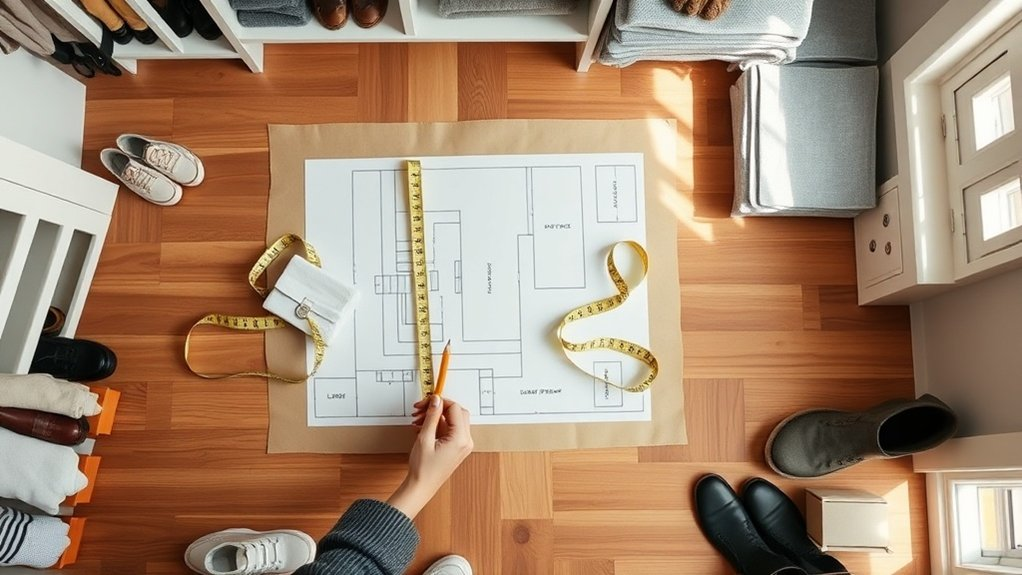
Once you’ve cleared out what you won’t keep, take a moment to measure and map your closet so every decision you make after this actually fits and works for you.
Use a tape measure to note height, width, and depth, and write down space dimensions for shelves, hanging rods, and floor areas.
Sketch a simple layout planning map on paper or your phone, marking doors, light switches, and any obstructions. Consider where adjustable shelving could give you flexibility as needs change.
Think about how you use the space: long coats need taller sections, shoes need low shelves, accessories need reachable bins.
This step saves money and frustration, so take your time.
With clear measurements and a sketched plan, you’ll buy only what fits, avoid returns, and create a calm, useful closet you love.
Consider choosing durable materials like acrylic organizers to ensure longevity and a polished look.
Also consider selecting storage with space-saving hangers to maximize capacity and keep items orderly.
Repurpose Household Items for Clothes and Accessories Storage
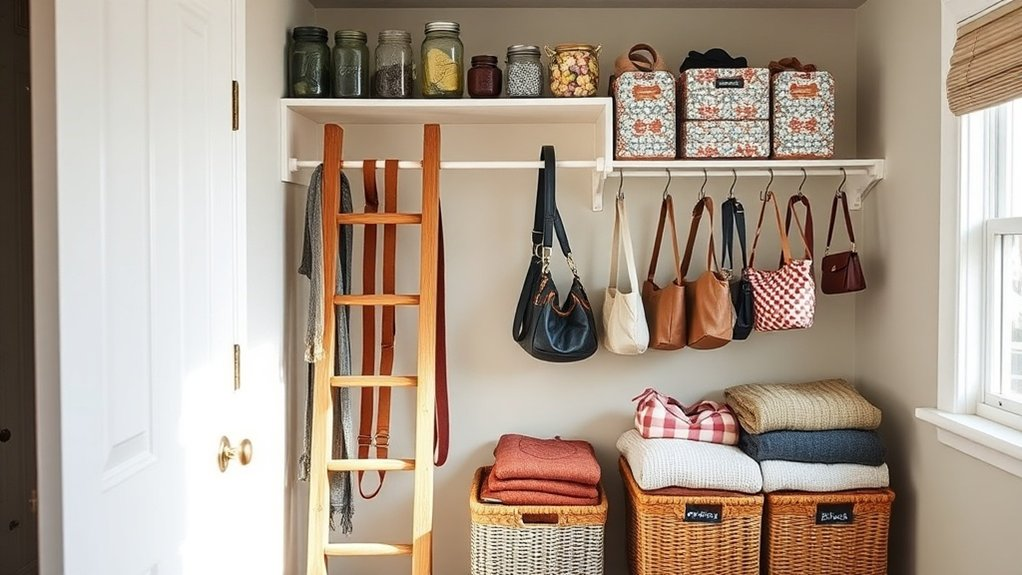
Although you don’t need fancy organizers to make your closet sing, everyday items around the house can transform clutter into calm with very little cost, and you’ll feel proud of what you’ve created. You can use repurposed containers like shoeboxes, mason jars, and small baskets to corral scarves, belts, and jewelry, labeling each so things stay easy to find. Egg cartons become perfect dividers for sunglasses and small accessories, while tension rods and magazine holders serve as creative dividers for folded scarves or purses. Look around: could a wine rack hold rolled tees, or a muffin tin tame socks? These simple swaps let you act now, save money, and enjoy a neater closet that reflects your style. Consider adding space-saving hangers to triple your hanging capacity when dealing with limited rod space. Measure your space first to choose organizers that fit available space. Also consider maximizing vertical storage with stackable baskets to make the most of every inch.
Low-Cost Shoe Storage Solutions That Save Floor Space
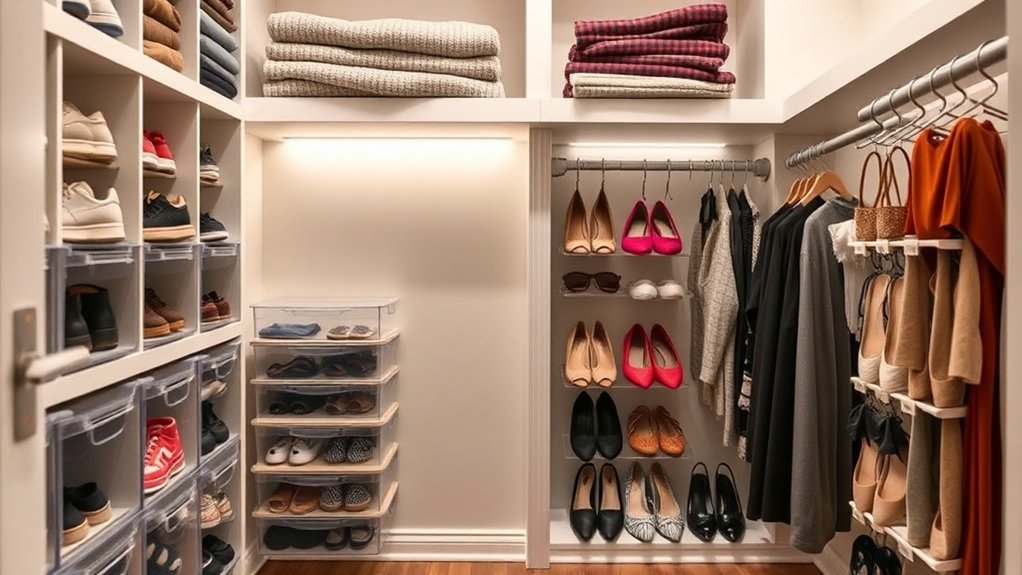
Why not reclaim that floor space and make your shoes easy to find? You can transform your closet without spending much, using vertical storage and smart layouts that feel calm and cheerful.
Try door mounted solutions to free walkways, or hanging organizers for quick visibility. Under bed options work for seasonal shoes, while stackable containers and clear boxes keep pairs dust-free and obvious. Closet bins hold sandals and flats, grouping things so mornings are smoother. Consider using stackable storage units to expand upward without increasing footprint. You can also add narrow tiered shoe racks to maximize vertical shoe storage in small closets.
- Use slim shoe racks near the door to grab what you need.
- Hang fabric pockets for flats and kids’ shoes.
- Slide under bed bins for boots and sneakers.
- Stack clear boxes for heels, labeled for speed.
Start small, enjoy the change, keep it simple. Consider adding stackable storage to maximize vertical space in small closets.
Inexpensive Shelving, Rods, and Hardware Upgrades That Anyone Can Do
When you swap a sagging shelf or a flimsy rod for simple, sturdy pieces, your closet feels like new again and you’ll actually enjoy getting dressed each morning.
You can choose affordable shelving alternatives like floating boards, wire units, or repurposed bookcases, cutting costs while boosting style. Consider adding stackable organizers to maximize vertical storage and keep small items tidy.
Install DIY rods from closet-grade tension poles, copper pipe, or reclaimed wood for a custom look that’s sturdy and inexpensive.
Add heavy-duty brackets, better screws, and simple wall anchors to make everything last.
Small upgrades change how your space works and how you feel about it.
Small upgrades transform both your closet’s function and the way you feel using it every day.
Ready to tackle one shelf or the whole closet?
With basic tools and a plan, you’ll create neat, accessible storage that makes daily routines smoother and more joyful.
Many small-space solutions use vertical space with shelves and side pockets to maximize storage in tight rooms.
Consider measuring height, width, and depth first so organizers fit properly and maximize available space.
Maintain Order: Simple Daily and Weekly Habits That Prevent Clutter
If you spend just a few minutes each day putting things back where they belong, your closet will stay orderly and stress-free without much effort. You’ll feel lighter when clothes, shoes, and accessories have a place, and daily routines make that possible.
Start small: hang one item, fold a sweater, return shoes to their shelf. Those tiny wins add up fast.
Create a simple weekly check-ins habit to spot problems before they grow, like a cluttered floor or overflowing hanger space. Ask yourself: what’s out of place, what can go, what needs washing? Keep it positive—this is care, not punishment.
- Tidy for five minutes every evening.
- Do a quick purge each Sunday.
- Reassign problematic items promptly.
- Celebrate progress, not perfection.
Closet organization websites often recommend using space-saving techniques to maximize storage and keep everything accessible. Many of these sites offer practical tips on closet organization you can apply without spending much. One inexpensive strategy to consider is adding shelf dividers to keep folded items neat and prevent toppling.
Budget Shopping: Where to Find Cheap Organizers and What to Skip
You can score great storage at big-box stores for basics like bins and hanging shelves. Look for stackable options to maximize vertical space and create customizable cubbies.
Thrift or consignment shops often hide sturdy baskets and wooden boxes that add character without costing much.
Skip flimsy plastic drawers that warp and break—they’ll cost you more in the long run and add clutter.
Ready to hunt for smart, lasting pieces that fit your budget and style? A smart option is to choose stackable clear bins like stackable clear bins that maximize vertical space and visibility. Consider also adding adjustable shelving to customize height and capacity as your needs change.
Big-Box Store Finds
Three smart finds at big-box stores can transform a messy closet without breaking the bank, and you’ll be surprised how much style and function you can get for under $20.
You’ll find sturdy storage bins that fit shelves and clear boxes that make seasonal rotation simple, so you’ll grab winter coats in seconds. Look for slim hangers to double rod space and inexpensive shelf dividers to keep stacks from toppling. Many stores carry stackable bins made from waterproof PP plastic that are durable and easy to clean. Consider choosing clear plastic bins for quick visibility and impact-resistant durability.
Avoid flimsy drawer organizers that fall apart after a season.
- Clear stackable bins: see contents, protect items, save space
- Slim velvet hangers: prevent slipping, free up rod space
- Shelf dividers: keep piles tidy, encourage neat folding
- Under-bed boxes: store shoes or off-season clothes
Also consider heavy-duty clear bins made from waterproof PP plastic for durability and visibility.
Thrift And Consignment
After scoring useful basics at a big-box store, you’ll find thrift shops and consignment stores offer a different kind of treasure hunt for closet organizers that won’t drain your budget.
You can spot sturdy wooden hangers, vintage hat boxes, woven baskets, and metal racks among items with character. Thrift store finds often include durable pieces you won’t see in mass-market aisles, and with patience you’ll layer personality into your closet affordably.
Consignment treasures sometimes bring near-new shelving or decorative bins at a fraction of retail. Ask staff about recent arrivals, shop on weekdays, and inspect hardware for stability. Consider adding collapsible baskets to your finds to save space when not in use.
Could a reclaimed tray or an old suitcase become your next accessory organizer? Try small, purposeful buys that elevate function and style without overspending. Consider incorporating stackable storage when selecting pieces to maximize vertical space and accessibility.
Also look for sturdy materials like high-quality PP plastic or wood when assessing thrifted organizers to ensure durability and longevity.
Avoid Cheap Plastic Drawers
While cheap plastic drawers might seem like an easy fix when you’re tightening a budget, they often create more problems than they solve. You’ll find warped sides, sticky runners, and a limp look that drags your whole closet down.
Instead, look for quality alternatives that last longer and feel nicer to use. You don’t have to spend much; simple wooden boxes, fabric bins with reinforced bottoms, or secondhand dresser drawers work beautifully. Consider modular or adjustable systems like adjustable no-drill closet rod extenders to maximize hanging space without permanent installation.
Also consider eco friendly options, like reclaimed wood or recycled-fabric organizers, to cut waste while upgrading your space. Ready to trade frustration for calm? Think durability, style, and sustainability.
- Choose durable materials over trendy plastic
- Measure before you buy, then buy smart
- Mix new pieces with thrifted finds
- Prioritize repairable, eco friendly options
For bulky seasonal items, consider large foldable organizers with a clear window for easy visibility like the 90L storage bags clear window to simplify identification and access.
Conclusion
You’ve got this—small changes make a big difference. Did you know the average person wears just 20% of their wardrobe regularly? Clear out what you don’t use, measure your space, and repurpose items to stretch your budget. Use simple daily habits to keep order, and hunt thrift stores for affordable finds. Start with one shelf or one drawer today, and enjoy a neater, calmer closet tomorrow.