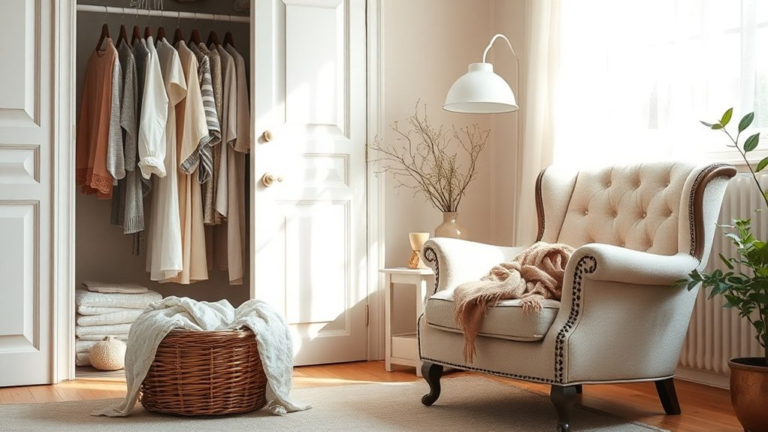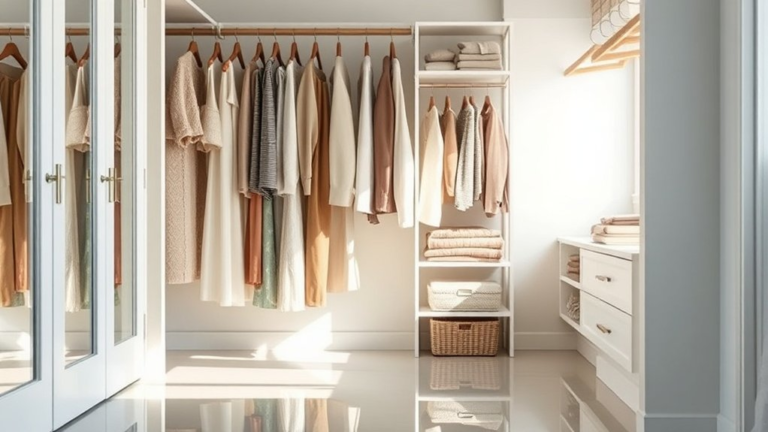
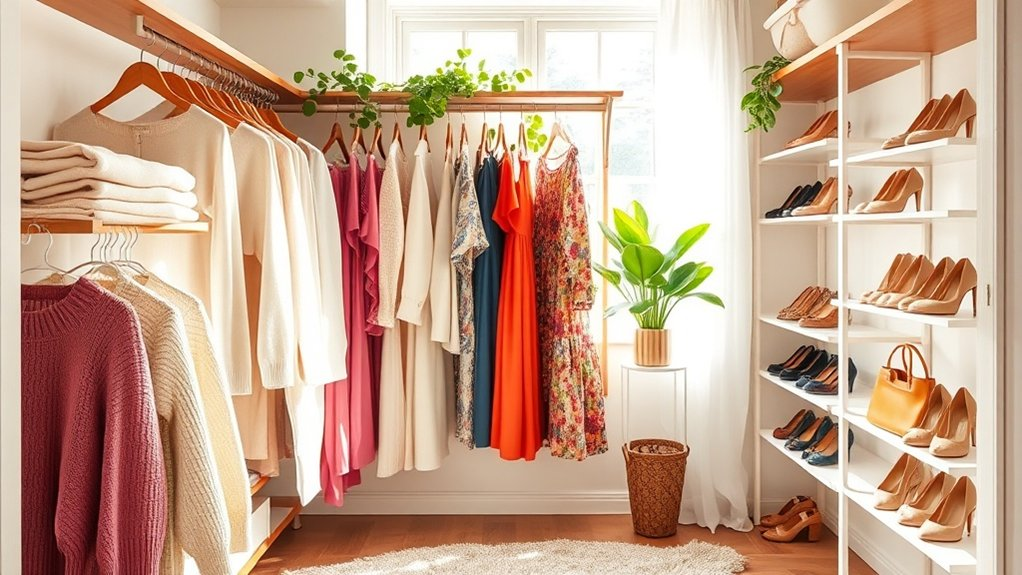
Ready to declutter your closet and still love what you wear? Start by evaluating your current clothes—keep what sparks joy and confidence, and let go of items you haven’t worn in ages. Define your personal style; think about what makes you feel good. Organize your space with smart techniques like grouping similar items. Embrace seasonal changes and focus on quality over quantity. It’s about simplifying while celebrating your unique style, and there’s so much more to explore!
Closet Highlights
- Assess your personal style by evaluating your wardrobe and identifying pieces that spark joy and confidence.
- Organize your closet by grouping similar items and using space-saving solutions for efficient storage.
- Rotate seasonal clothing regularly and utilize storage bins to keep off-season items organized.
- Focus on quality over quantity by investing in timeless, high-quality pieces that align with your style.
- Conduct regular wardrobe reviews and implement donation strategies to maintain an organized space.
Assess Your Current Wardrobe: What to Keep and What to Let Go?
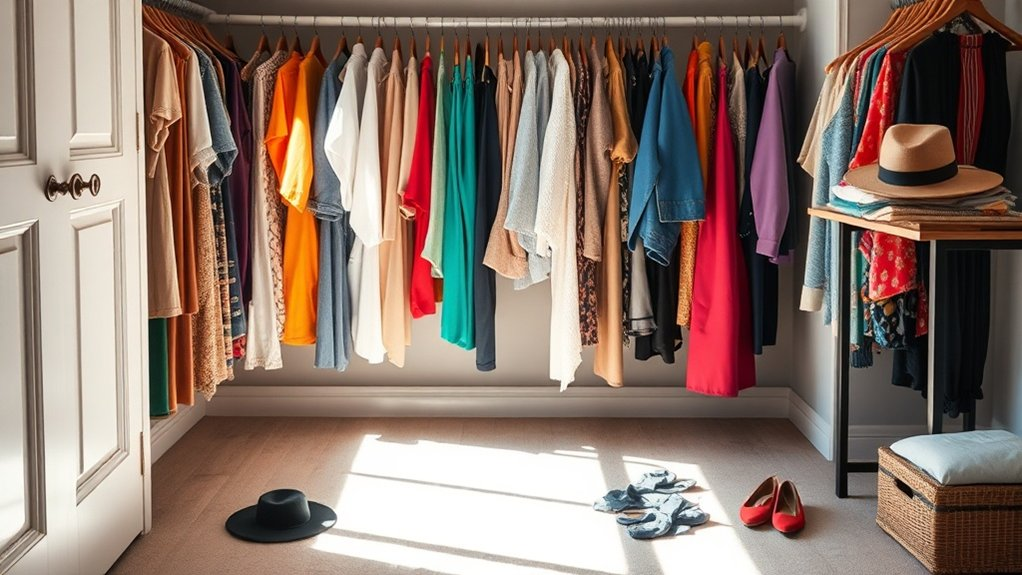
When you plunge into evaluating your current wardrobe, you’re not just sorting clothes—you’re opening the door to a fresh start.
Begin with item categorization: group similar pieces together, like tops, bottoms, and accessories. This approach helps you see what you truly have. Ask yourself, “When was the last time I wore this?” If it’s been ages, it might be time to let go.
During your wardrobe evaluation, keep an eye out for items that spark joy or make you feel confident. Those are the pieces you should cherish.
Organizing your closet into clear sections can transform how you use your space and make daily dressing easier, so consider creating dedicated zones for tops, bottoms, and accessories to maintain order. A well-organized closet often follows clear sections that make finding outfits faster and reduce decision fatigue.
Define Your Personal Style: What Makes You Feel Good?
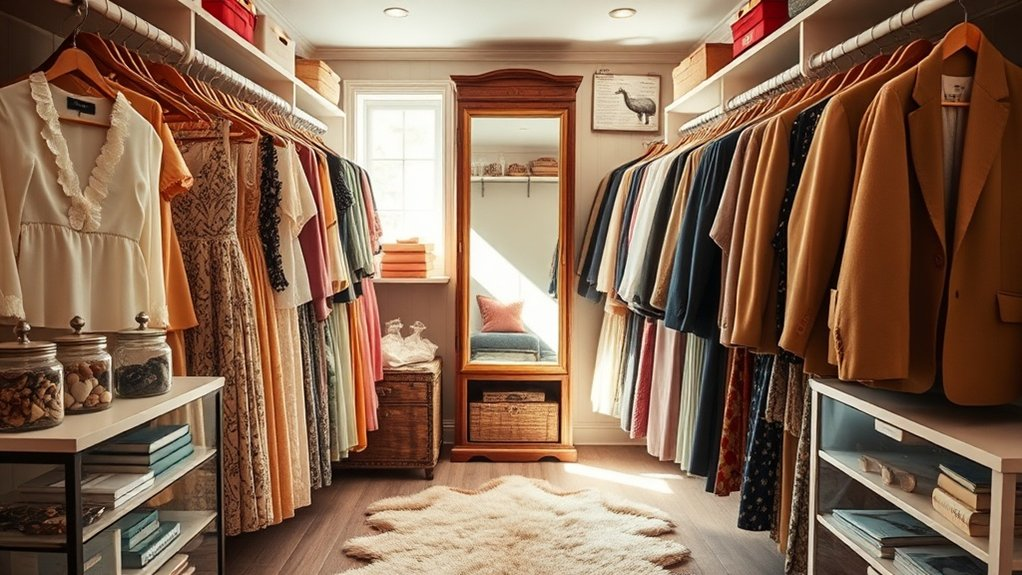
How can you truly define your personal style? Start by exploring what makes you feel good.
Think about your style inspiration—what do you admire in others? Look for patterns in your favorite outfits, colors, and textures. Do you gravitate towards cozy knits or sleek silhouettes? Consider adding space-saving hangers to keep those favored pieces organized and visible.
Next, identify your wardrobe essentials. These are the pieces that make you feel confident and comfortable, regardless of the occasion. Consider organizing your closet with vertical storage to make those essentials more accessible.
Organizing Techniques: Creating a Functional Closet Space
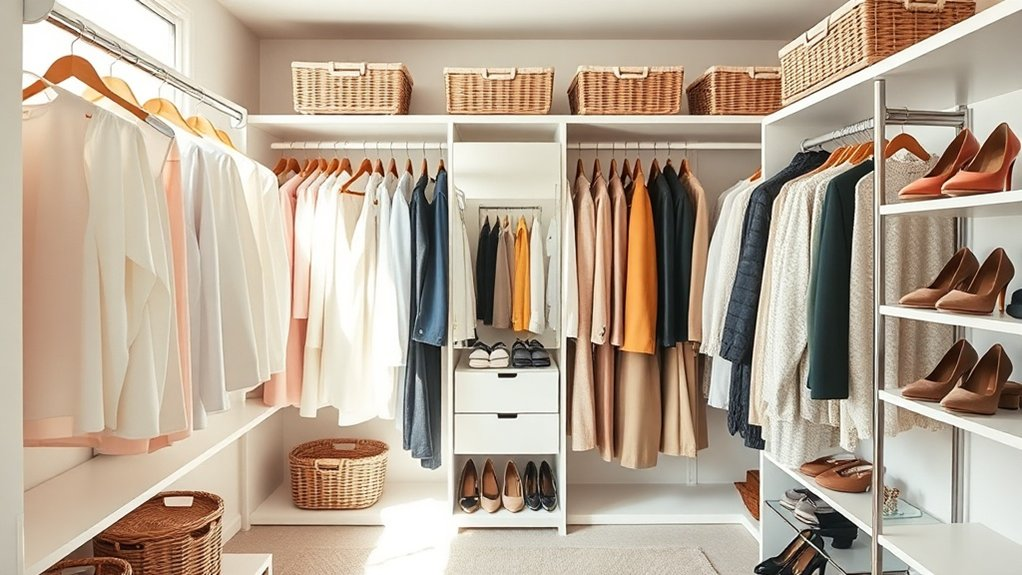
Transform your closet into a space that sparks joy and makes getting dressed a breeze!
Start with shelf organization—group similar items together. Use hanging strategies for your favorite clothes and maximize space with multifunctional storage solutions. Consider adding multi-tiered organizers to better utilize vertical space and prevent clutter from accumulating.
Consider drawer systems for accessories; they’ll keep everything neat and visible. Color coding your wardrobe not only looks pretty but helps you find outfits faster.
Incorporate seasonal bins for clothes you won’t wear for a while—out of sight, out of mind! Accessibility tips, like placing everyday items at eye level, make a huge difference.
Remember, a well-organized closet isn’t just about looks; it’s about creating a functional space that inspires you to express your style every day.
Ready to jump in? Add durable, space-saving organizers like space-saving hangers to maximize vertical storage and protect your garments.
Seasonal Rotation: How to Manage Your Wardrobe Throughout the Year?
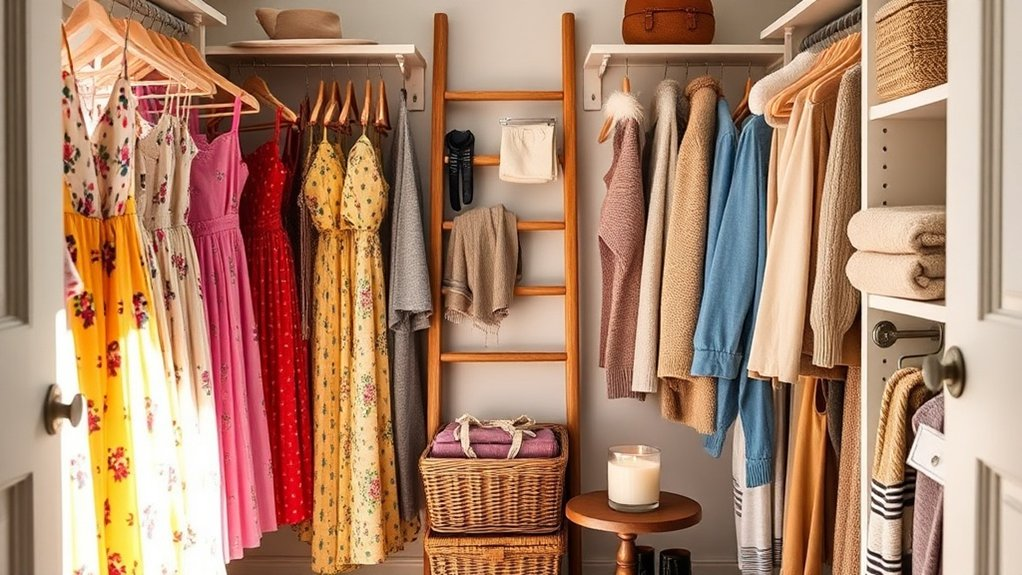
As the seasons change, so should your wardrobe!
You can assess your seasonal needs, organize outfits by occasion, and store off-season items to keep things fresh and functional. Consider using modular or adjustable systems like an adjustable rod to maximize space and adapt as your needs change.
Ready to create a closet that works for you year-round? A great option is to use vacuum storage bags to reduce bulk and protect items when they’re not in use.
Assess Seasonal Needs
When the seasons change, it’s the perfect time to reassess your closet and make sure your wardrobe reflects your current needs.
Look at those seasonal trends—are they still your style? It’s a great chance to embrace wardrobe versatility by swapping out items that no longer fit the season or your lifestyle.
Take a moment to evaluate what you truly love and wear. Are there pieces you can mix and match for fresh looks?
By focusing on what you actually need, you can create a wardrobe that excites you, rather than overwhelms you. Consider implementing simple organizing strategies to make seasonal rotations easier.
Remember, it’s about keeping items that bring you joy and confidence.
Consider using under-bed storage to store off-season pieces and protect them from dust and moisture.
Organize By Occasion
After you’ve assessed your seasonal needs, it’s time to take a closer look at how you organize your closet by occasion.
Start by sorting your clothes into event-specific outfits, occasion essentials, and casual staples. This way, you can easily find what you need for formal attire or a relaxed weekend.
Don’t forget about travel-friendly pieces that add wardrobe versatility! Use color coordination to create cohesive looks, and employ layering techniques for those unpredictable days.
Think about accessory pairings that elevate your outfits, making them feel fresh and exciting.
With a bit of outfit planning, you’ll discover that each piece has its purpose, ensuring you love your wardrobe all year round.
Ready to get started? Let’s jump in!
Consider incorporating 8-Tier stackable organizers to maximize space and keep seasonal items accessible. Also consider adding space-saving organizers to increase storage efficiency and maintain order in small closets.
Store Off-Season Items
Storing off-season items can make a world of difference in how you manage your closet. Using smart storage solutions like off-season bins helps keep your space organized.
Think about climate considerations—store winter coats in a cool, dry place to guarantee garment preservation. Label organization is key for easy access during seasonal swapping.
As you pack, consider size adjustments; if you’ve outgrown something, explore donation options. Remember, your wardrobe reflects your style evolution, so don’t hesitate to part with items that no longer spark joy.
Also, prioritize fabric care when storing delicate pieces. By taking these steps, you’ll create a serene closet that showcases your favorite styles, making it easier to embrace each new season with enthusiasm!
Choose stackable, appropriately sized boxes to maximize space and protect bulky items like comforters and winter gear with stackable designs that preserve shape and accessibility. Additionally, consider using clear storage bins so you can quickly identify contents without unstacking boxes.
Mindset Shift: Embracing Minimalism Without Losing Your Identity
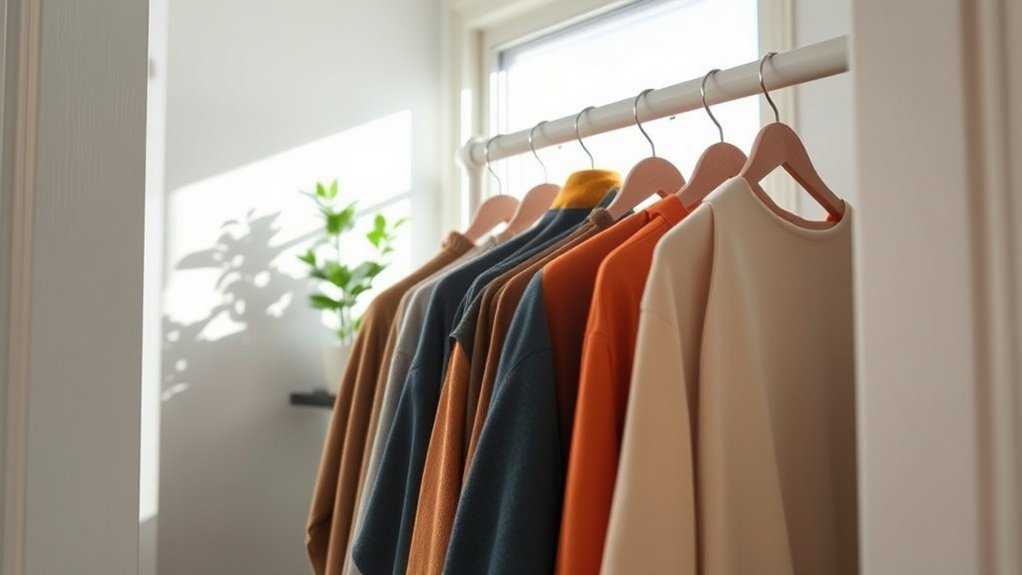
As you think about embracing minimalism, remember that it doesn’t mean losing your unique style.
Instead, it’s a chance to redefine what truly matters to you, focusing on quality pieces that reflect your personality. Consider investing in space-saving hangers to maximize vertical storage and reduce clutter.
Are you ready to let go of those emotional attachments and create a closet that inspires you every day?
Consider maximizing vertical space with stackable organizers to make every inch of your closet work harder.
Redefining Personal Style
When you think about redefining your personal style, it’s easy to feel overwhelmed by the idea of minimalism. But remember, it’s about personal expression and embracing your unique style evolution.
Start by identifying your favorite color palette and fabric choices that resonate with you. This will help create wardrobe versatility, allowing for effortless outfit planning.
As you adapt to trends, focus on what aligns with your lifestyle, boosting your fashion confidence. Reflect on your self-image—what makes you feel great?
Minimalism doesn’t mean losing your identity; it’s about curating pieces that truly reflect who you are. Embrace this journey, and let each choice celebrate your individuality while simplifying your daily routine.
You can do this!
Organizing your closet with clear zones and storage solutions also makes it easier to maintain a curated collection and find items quickly, especially when you establish wardrobe versatility. Additionally, creating storage zones tailored to your needs ensures long-term organization and ease of use.
Quality Over Quantity
Embracing quality over quantity transforms your closet into a curated collection that reflects who you really are.
When you focus on wardrobe essentials, you’ll find those timeless pieces that offer style longevity. Think of investment garments crafted from high-quality fabrics, providing clothing durability that lasts.
By selecting versatile outfits in a cohesive color palette, you create capsule collections that mix and match effortlessly. This mindful approach not only enhances your style but also champions fashion sustainability. Consider incorporating durable storage solutions like adjustable shelving to protect and organize your investment pieces.
Imagine wearing pieces that resonate with your identity while feeling confident and chic. Are you ready to elevate your wardrobe?
Let go of excess and embrace the beauty of fewer, better items. Your closet—and your spirit—will thank you!
Creating a capsule wardrobe is a practical step toward long-term organization and wardrobe sustainability, helping you maintain a streamlined closet.
Emotional Attachment Awareness
Recognizing that emotional attachments often tie you to items in your closet can be the first step toward a more minimalist approach without losing your sense of self.
Understand your attachment levels and how they relate to your identity connections. Ask yourself if these pieces spark joy or simply evoke nostalgia factors.
Here are some feelings to reflect on:
- Emotional triggers: Does this item bring back strong memories?
- Sentimental value: Is it a gift or a reminder of a special moment?
- Fear of loss: Are you holding on out of worry?
- Wardrobe memories: Does this represent a past style evolution?
- Attachment levels: How deeply do you connect with this piece?
Embrace change and let go of what no longer serves you!
Maintenance Tips: Keeping Your Closet Clutter-Free Long-Term
To keep your closet clutter-free long-term, it’s essential to develop a few simple habits that make a big difference. Start with regular reviews of your wardrobe—ask yourself if each piece aligns with your closet goals.
Implement preventative measures like space management; keep only what you love and wear often. Forming habits is key—try a quick emergency declutter every few months to tackle any buildup.
When you find items you no longer want, use donation strategies or drop them off at a thrift store. Remember, a little upkeep goes a long way! Transform Your Closet offers practical advice and resources for sustained organization, including tips on space management for better results. Consider scheduling seasonal reviews to stay on top of wardrobe changes and prevent future clutter.
Conclusion
You’ve taken the steps to simplify your closet, so celebrate your stylish success! By evaluating, organizing, and embracing your unique vibe, you’ve created a wardrobe that truly reflects who you are. Remember, a clutter-free closet cultivates confidence and clarity. Keep it fresh and functional with seasonal swaps and mindful maintenance. Are you ready to strut your stuff, feeling fabulous every day? So, let’s keep the clutter away and let your personal style shine brightly!