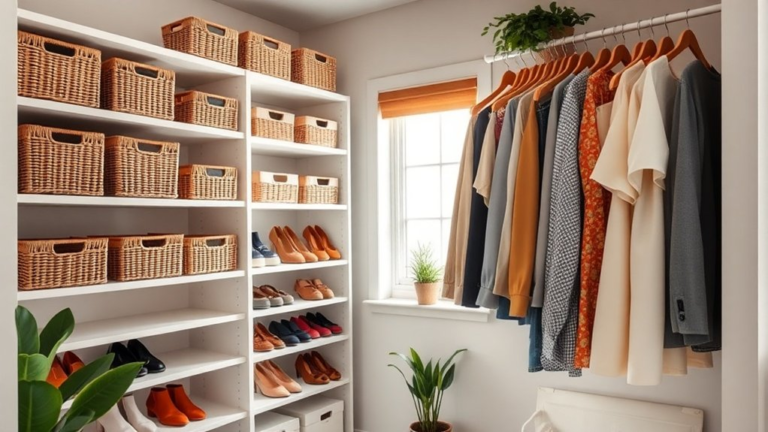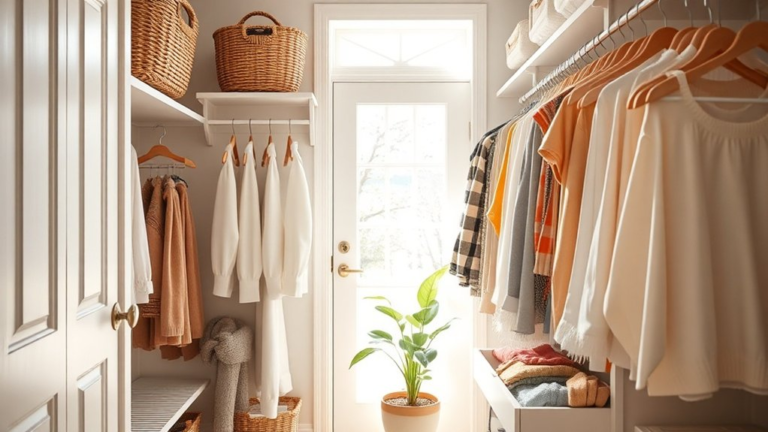

Is it really true that a closet can stay neat for years if it’s set up around how you actually live? You can—by mapping zones for work, casual wear, and accessories, using vertical space, and making simple routines that fit your habits. Imagine opening a door and finding exactly what you need, not just once but every day. Want to learn the easy steps to get there and keep it that way?
Closet Highlights
- Tailor the system to daily habits by zoning clothing and accessories by function and frequency of use.
- Use adjustable shelving, vertical storage, and thin non-slip hangers to maximize space and adaptability.
- Implement seasonal rotation and twice-yearly reviews with labeled bins for off-season visibility.
- Establish simple daily and weekly maintenance routines, plus quarterly purge sessions to prevent clutter buildup.
- Choose durable, multifunctional components and affordable organizers to sustain long-term use and ease.
Define Your Closet Needs and Daily Habits
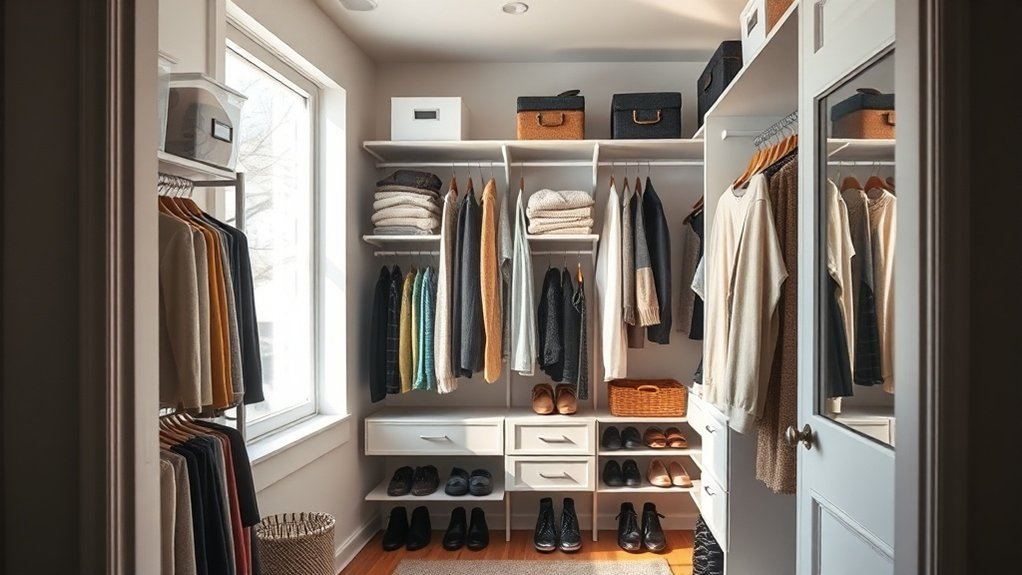
How do you actually use your closet every day? Think about your closet styles and personal preferences, and be honest about what you reach for most.
Note item frequency, space constraints, and seasonal needs so you arrange things where they’re easiest to grab. You’ll pick organization techniques that match your lifestyle changes, whether you’re dressing for work, workouts, or weekends.
Try simple color coding and smart decluttering methods to keep decision fatigue low. Time management matters: plan a quick weekly tidy and a deeper seasonal swap.
This approach feels doable, and it invites lasting habits. You’ll feel calmer each morning, confident that your closet reflects who you’re and supports the life you want to live. Add a functional closet systems strategy to ensure organization solutions are tailored to your space and routines. You can also consider closet organization principles from Transform Your Closet: Tips for a Fresh Start to guide layout and storage choices. Learn basic organization principles to pick systems that fit your space and routines.
Map Zones by Function: Work, Casual, Seasonal, Accessories
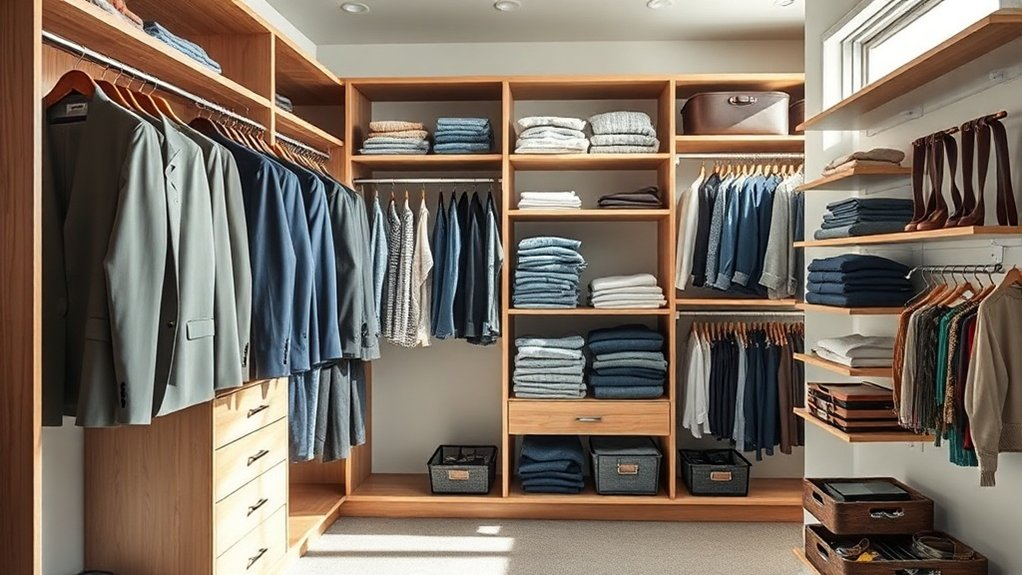
Think about carving out a clear work zone where your go-to outfits, shoe options, and any uniform pieces are easy to see and grab, so mornings feel calm instead of chaotic. Prioritize durable materials like non-woven fabrics in areas that hold frequently handled items to prevent odors and extend longevity. Consider adding a small set of adjustable shelving to these high-use areas to keep daily items within easy reach.
Set up a seasonal rotation strategy that keeps heavy coats and summer dresses out of the way until you need them, and label or store what you don’t wear now to save space and time. How would your routine change if everything for work and every season had its own tidy spot?
Consider adding modular shelving and adjustable hanging solutions to keep each zone adaptable to changing needs and garment types, especially when optimizing vertical storage.
Work Zone Essentials
A well-marked work zone makes getting dressed for the day feel effortless and confident, so start by mapping a clear space just for your professional clothes. You’ll boost workspace organization and time management when you separate suits, blazers, and blouses from casual wear. Consider adding labeled compartments to streamline outfit choices and reduce morning decision fatigue. You can maximize space and visibility by incorporating clear bins for seasonal rotation and easy retrieval.
Use closet accessories and productivity tools like labeled hangers, shelf dividers, and a small ironing station to save minutes each morning. Focus on efficient layouts and space optimization to keep essential supplies reachable, while color coordination highlights your personal style.
Want to feel calm and ready at the door?
- Dedicated hanging rods for workwear
- Labeled shelves and drawer organizers
- Shoe rack for weekday rotation
- Small caddy for ties, belts, jewelry
- Quick-access ironing and lint tools
Follow simple maintenance tips daily. Durable materials like velvet organizers protect delicate scarves and help maintain their shape and longevity.
Seasonal Rotation Strategy
You’ve set up a clear work zone, and now it’s time to give the rest of your closet the same thoughtful layout by mapping zones for casual wear, seasonal pieces, and accessories.
Start by designating a seasonal clothing area where items you’ll swap in and out live together, so you don’t hunt for winter coats in July. Use swap strategies like a twice-yearly review: pull, assess, and rotate.
Invest in storage solutions—under-bed bins, vacuum bags, clear boxes—so things stay visible and protected. Consider modular systems like the Rubbermaid Configurations for flexible reconfiguration as needs change. For items you access infrequently, choose stackable containers to maximize vertical space and protect belongings.
Add organization tools such as labeled shelves, hanging organizers, and slim hangers to speed changes.
This approach improves wardrobe management, saves time, and boosts space optimization.
Ready to rotate with confidence? Consider adding clear-window under-bed storage to protect items while keeping them visible.
Measure Smart: What to Measure and How to Record It

Start by measuring key clothing dimensions like sleeve length, shoulder width, and garment length so you know what needs to fit on hangers and shelves.
Then record your storage unit sizes — shelf depths, hanging rod heights, and drawer widths — in a simple chart or notes app so you can match pieces to spaces. Consider using drawer organizers to visualize compartment sizes and optimize sorting. Consider also noting typical load limits for common closet materials to match storage to weight capacity needs.
Ready to see how everything will fit together?
Consider noting the weight capacity of shelves and rods to ensure safety and longevity when loaded with clothes and accessories, especially when using metal organizers.
Measure Key Clothing Dimensions
Five simple measurements can change the way you shop, store, and style your clothes—if you measure smart and record them clearly.
Start by noting chest, waist, hip, sleeve, and length so you’ll respect clothing proportions and match fabric types to hang or fold. You’ll save space, avoid surprises, and feel more confident getting dressed.
- Chest/bust: measure around the fullest part
- Waist: measure at natural waistline
- Hips: measure around the widest point
- Sleeve: measure from shoulder to wrist
- Length: measure from shoulder to hem
Write each measurement on a tag or in a digital note, add garment style and fabric type, and update when things change.
Want fewer returns and more joy in your closet? This simple habit delivers. A well-chosen organizer made from high-quality materials can protect fabrics and extend the life of your clothes. Consider pairing measurements with multi-tiered organizers to maximize vertical space and keep items visible.
Also consider using stackable organizers to make the most of vertical closet space.
Record Storage Unit Sizes
Measuring each storage unit—shelves, bins, drawers, and hanging sections—lets you make smarter choices about what to keep, where it goes, and how it fits, so you won’t wrestle with awkward piles or wasted space.
Start by noting unit width, depth, and height, then add clear notes about adjustable shelves or fixed dividers. Record types of items that belong in each spot — sweaters, shoes, accessories — so you’ll place things where they’re easiest to reach. Consider installing organizers like hanging shelves to group similar items and save space.
Include storage materials, like wire, wood, or fabric, since material affects weight limits and appearance. Measure weight limits and keep measurements and notes in a simple chart or app you check before shopping.
Want a closet that works for you? This small step changes everything. Also note weight limits for containers (many hold up to 6.6 lbs) so you store items safely and avoid damage.
Choose Versatile Components That Grow With You
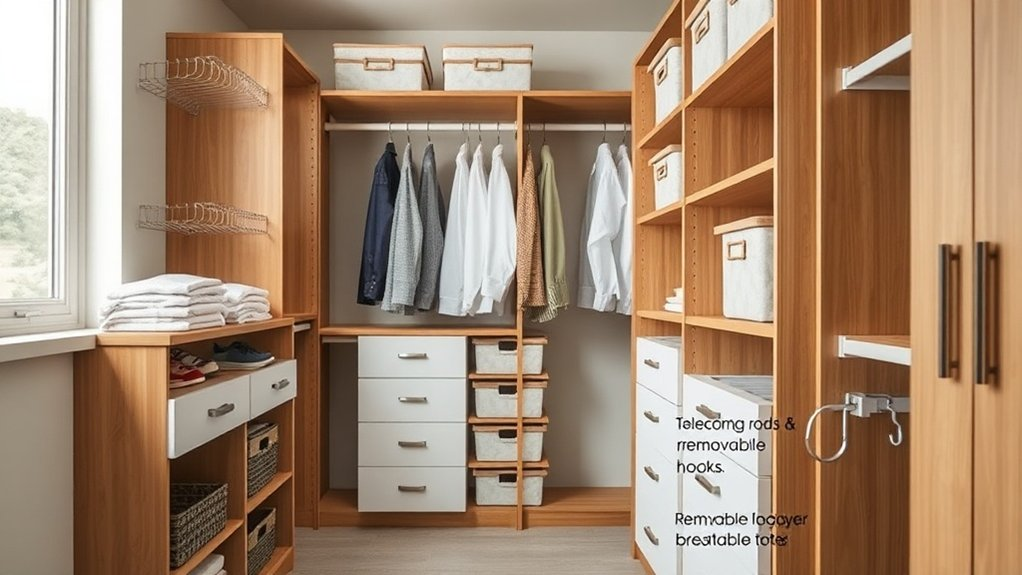
Because your needs will change over time, choose closet components that can change with you so your system stays useful and beautiful, season after season.
Pick closet components that adapt with you, keeping your space useful, beautiful, and ready for every season.
You want pieces that adapt, save space, and make daily routines easier. Think about items that move with you through life stages, hobbies, and wardrobe shifts. Consider selecting systems with adjustable shelving that fit different closet widths and heights.
- flexible shelving that repositions for boots or boxes
- adjustable rods to switch between long dresses and shirts
- multifunctional bins and stackable containers for shoes and gear
- modular drawers with customizable dividers for socks, jewelry, papers
- expandable organizers and hybrid hangers that handle scarves and suits
Can you see how small swaps keep things fresh?
Choose smart, mix-and-match parts now, and your closet will reward you for years. A good option to consider is stackable, waterproof storage bins that optimize vertical space and are easy to clean. Additionally, consider using transparent containers so you can quickly identify contents without opening every box.
Prioritize Vertical and Hidden Storage for Small Spaces
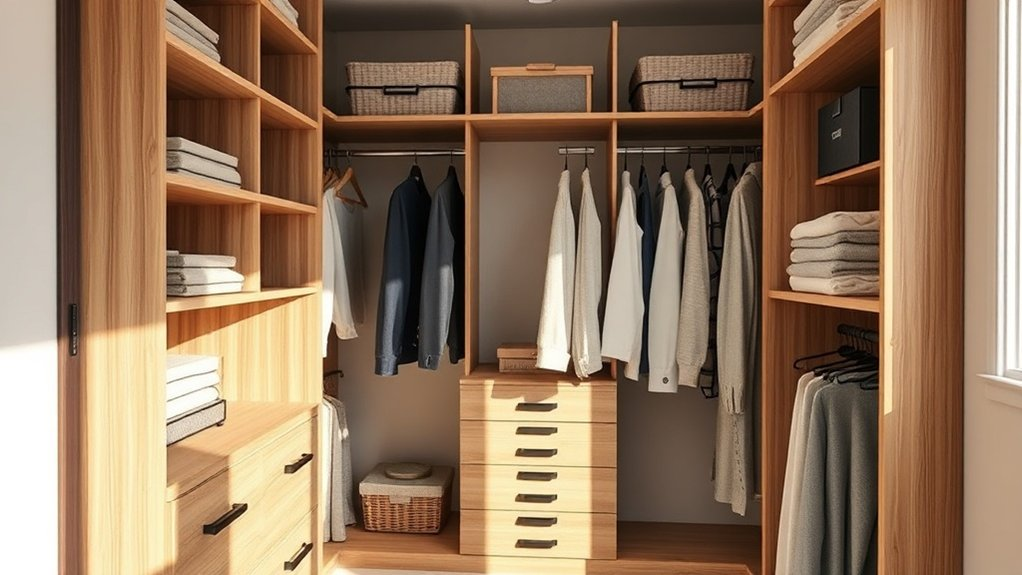
You’ve picked pieces that flex with your life, now think up and up—vertical and hidden storage will make small closets feel roomy and organized.
Use vertical shelving to extend storage to the ceiling, add overhead storage for seasonal items, and tuck away less-used things in hidden compartments so surfaces stay calm. Tall racks and modular units help maximize vertical capacity and keep items accessible vertical designs. Consider adding heavy-duty shelving for bulky seasonal storage to ensure durability and safety heavy-duty metal.
Combine storage bins and drawer dividers for small items, and choose closet organizers that stack or hang to maximize every inch.
Think multifunctional furniture, like a bench with internal storage or a hanging rod with built-in shelves.
Install sliding racks and wall hooks for easy access to bags and belts.
Want to keep things tidy daily? These space saving solutions make it simple, efficient, and actually enjoyable to maintain. Consider stackable organizers like stackable bins to customize height and prevent tipping.
Build One Daily and One Weekly Closet Routine
Rituals make upkeep effortless, so start by building one small daily routine and one slightly longer weekly check-in for your closet. You’ll keep things tidy with tiny, consistent daily habits and clear weekly goals that prevent mess from piling up.
Try a short, pleasant set of actions you can actually do every day.
- Hang worn items back immediately.
- Return shoes to their spots before bed.
- Spot-check one shelf for stray items.
- Re-fold one pile that looks messy.
- Note anything to repair or donate for weekly review.
Your weekly check-in is a calm, focused 10–15 minute moment to tidy, reassess outfit plans, and clear anything stubborn. Including simple tracking tools like a checklist template can help you measure progress and stay motivated.
What small habit will you start today to protect your peace tomorrow? Consider creating a simple closet system that groups items by type and frequency of use to maintain order long-term. A well-planned storage strategy helps you use space efficiently and makes daily routines easier to keep.
Maintain Order: Quarterly Purge and Seasonal Swaps
Set aside four small blocks of time each year to refresh your closet, and you’ll keep order without feeling overwhelmed.
Start each session with a simple quarterly checklist: sort, try on, repair, donate, and store. Use seasonal reminders in your calendar so swaps don’t sneak up on you.
Pull out off-season items, clean them if needed, and tuck them into labeled bins or high shelves. Try pieces on to confirm fit and joy—if it doesn’t make you feel good, let it go.
Keep a small repair kit handy for quick fixes, and note items that need replacement.
These focused, gentle actions prevent clutter from piling up, help you see what you love, and make dressing each day a calmer, happier ritual. Add a functional closet systems review as part of each session to reinforce long-term organization.
Including a brief check of storage solutions during each quarterly refresh helps you identify gaps and improve efficiency.
Troubleshoot Common Problems and Easy Fixes
Even if your closet feels chaotic sometimes, you can fix most problems quickly with a few simple steps that make a big difference. You’ll get calmer fast by using clutter management and efficient sorting, then adding the right organization tools.
Ask yourself: what habit formation will keep this working? Small changes, big results.
What tiny habit will keep your closet working? Small shifts, steady wins.
- Audit items weekly to spot messes and use decluttering strategies.
- Group like items, apply visual labeling, and try space optimization tricks.
- Use storage solutions that match your routine, for time saving techniques.
- Set short maintenance routines; five minutes daily prevents overwhelm.
- Swap tools or bins when something isn’t working; adjust until it feels easy.
You’ll feel proud when your closet truly supports you.
Budget-Friendly Upgrades That Make the Biggest Difference
You can make a big impact on your closet without spending much—small, smart upgrades often change how you use the whole space.
Start by swapping mismatched hangers for thin, non-slip ones; they instantly create uniformity and save hanger space.
Add affordable organizers like drawer dividers, shoe cubbies, and clear bins so you can see and reach items quickly.
Use over-the-door racks and adhesive hooks for bags, belts, and scarves—no tools required.
Try creative storage: baskets on high shelves, tension rods for scarves, or labeled shelf bins for seasonal swaps.
Want to feel calmer each morning? A neat, functional closet does that.
Make one small change this weekend, and you’ll notice the ripple effect in your routine.
Conclusion
You’ve mapped zones, measured like a pro (kind of), and set routines that actually stick—congrats, you’re officially less chaotic. Imagine opening your closet and finding only what you need, not yesterday’s mystery sweater. You’ll still purge, swap seasons, and fix hiccups, but now it’s quick, not dramatic. So take a deep breath, try one small change today, and enjoy the smug satisfaction of a closet that finally behaves.