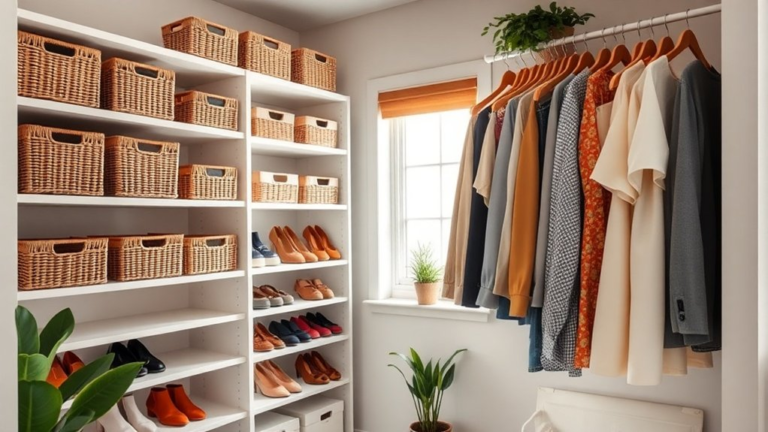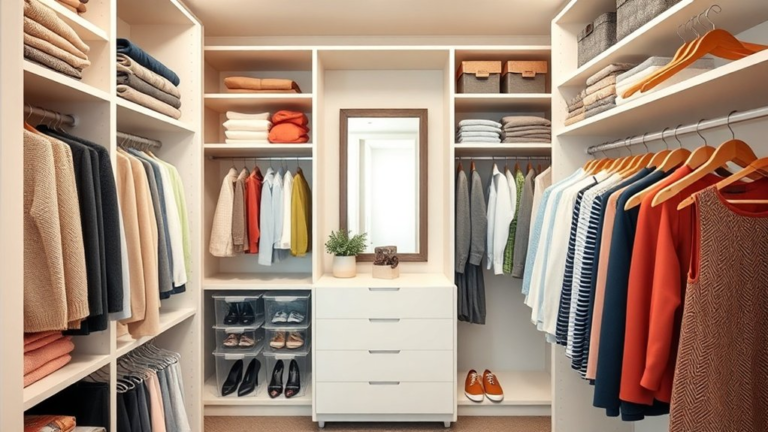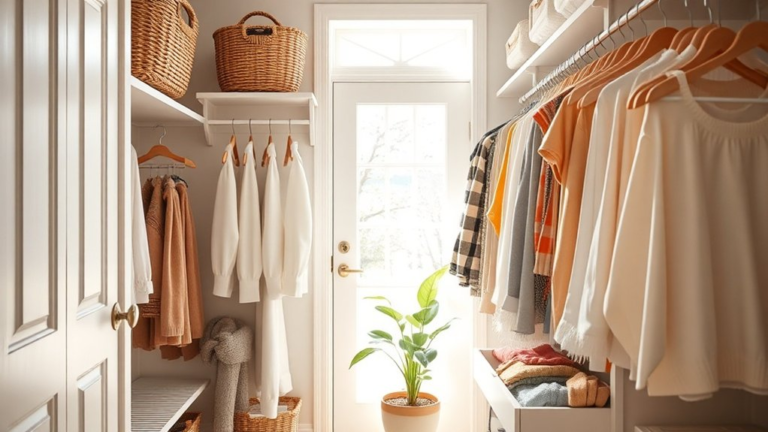
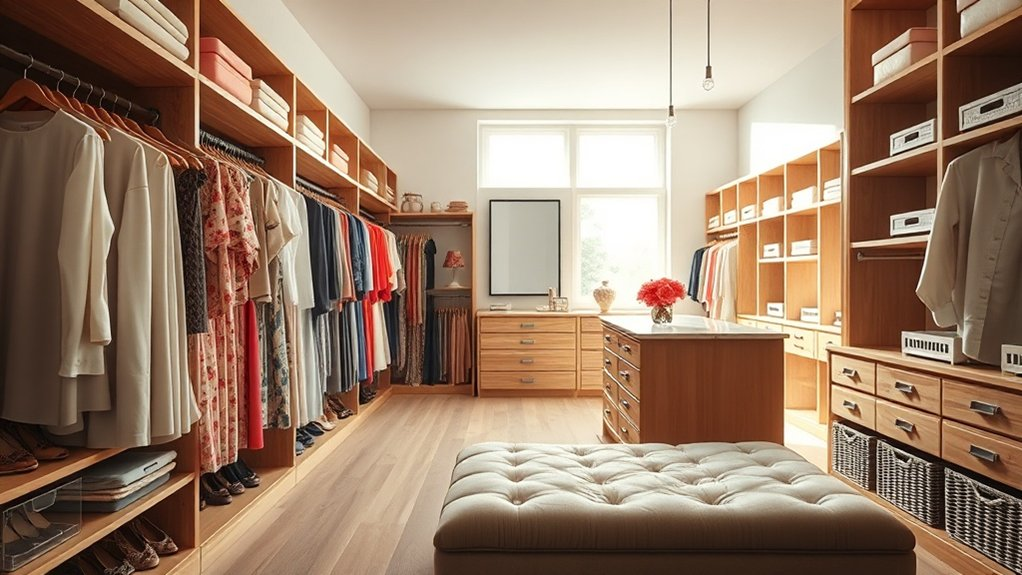
You might start with Maria, who turned three overflowing racks into a calm, color-coded system with double rods and clear bins—now she finds outfits in minutes. You can do the same: sort by type and season, use vertical space, and stage a few ready-to-wear looks for busy mornings. Which closet corner will you tackle first, and what quick change would make your mornings easier?
Closet Highlights
- Declutter first using keep/maybe/donate bins and a timer for sentimental items to reduce volume before redesigning layout.
- Maximize vertical space with double hanging rods, multi-tiered organizers, and slim hangers to double storage capacity.
- Reserve eye-level space for current-season and most-worn items; store off-season in labeled clear bins on high shelves.
- Create zones by outfit type (work, casual, evening) and color to speed selection and simplify outfit matching.
- Add versatile accessories—cubbies, shelf dividers, cascading hangers, and under-bed storage—for flexible, stackable organization.
Quick Closet Triage: How to Decide What Stays and What Goes

How do you decide what to keep when your closet feels like a time capsule? Start by sorting into clear clothing categories: tops, bottoms, dresses, outerwear, and accessories.
Hold each item up and ask, does this fit, flatter, or serve a current purpose? Notice any emotional attachment—memories can make you keep things you never wear. Consider adding vertical storage like adjustable shelves or hanging organizers to make seasonal rotations easier.
Let sentiment have one shelf, but set a timer: if you haven’t worn it in a year, it’s probably ready to go.
Try the three-bin method: keep, maybe, donate. Be honest, gentle, decisive. If something sparks joy and you’ll actually use it, keep it.
If it’s guilt or nostalgia, photograph it and release the item. Small steps, consistent choices, and a clearer closet await. Consider adding organizers and hooks to maximize space and maintain order with smart storage. Add shelving and drawer systems to create defined zones and improve accessibility for faster daily dressing with closet layout.
Layout Wins for Small Reach-In Closets With Overflow
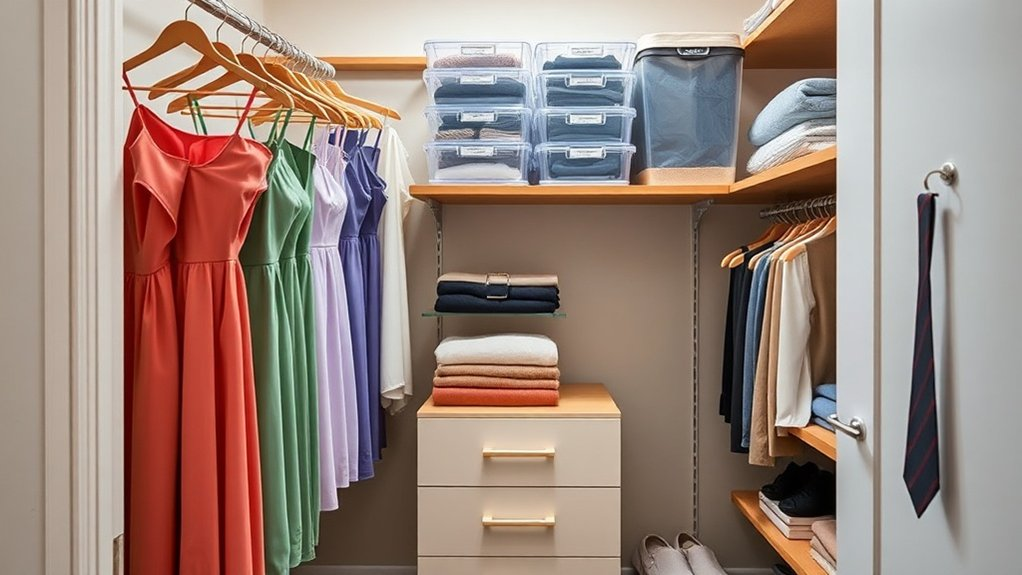
Even if your reach-in closet feels cramped, you can make it work beautifully by thinking vertically and embracing smart overflow solutions. You can add a second hanging rod for shirts and skirts, stack clear bins on higher shelves for seasonal pieces, and use slim, cascading hangers to multiply space. Consider adding vertical storage like tiered organizers and stackable bins to free up floor space and keep essentials visible. Using a 6-tier organizer can greatly increase accessible shelf space without widening the closet.
Overflow strategies like under-bed storage, rolling garment racks, or a pretty armoire can keep extras accessible without cluttering your daily zone. Choose closet accessories—shelf dividers, slim hooks, and labeled baskets—that simplify grabbing outfits.
Want daily joy from getting dressed? Rotate what’s visible each week, keep frequently worn items at eye level, and tuck rarely used pieces up high. Small changes add up, so start with one shelf and build momentum. Consider adding stackable fabric or plastic storage bins to maximize vertical space and visibility with transparent bases.
Walk-In Closet Layouts That Show Everything at a Glance
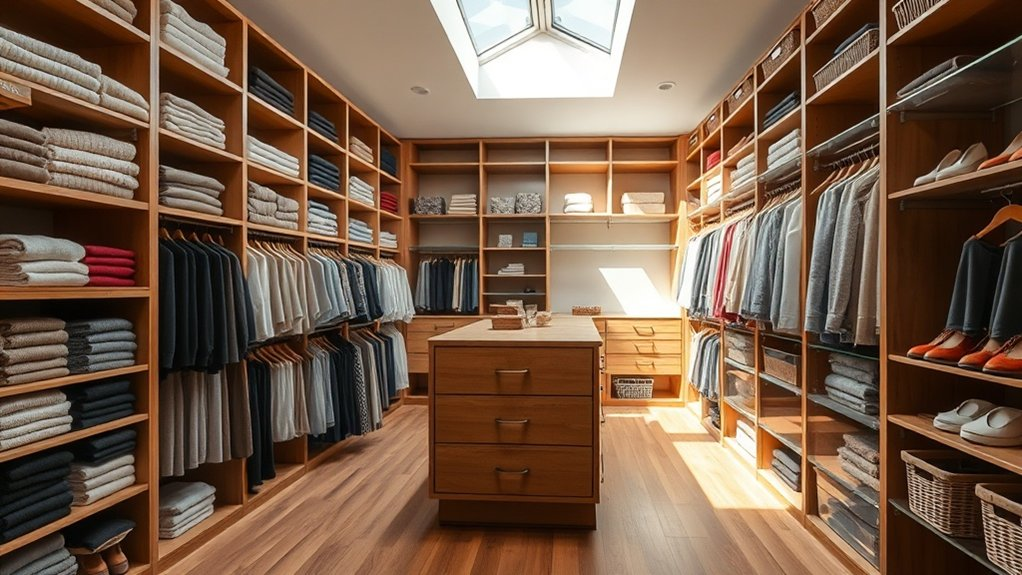
Imagine stepping into a walk-in closet where outfits are grouped by type—workwear, weekend looks, and evening pieces—so you can grab what you need without thinking. Consider adding multi-tiered organizers to make the most of vertical space and keep seasonal pieces accessible. Try incorporating stackable bins to separate accessories and light items for quick access.
Use open-front displays like shelves, cubbies, and low racks to keep everything visible and tidy, so colors and textures pop at a glance.
What would it feel like to open your door and see your whole wardrobe ready to wear?
Consider adding stackable organizers like stackable baskets to maximize vertical space and keep smaller items neatly contained.
Zone By Outfit Type
Think of your walk-in as a little boutique where each outfit has a perfect spot, so you can see everything at a glance and get dressed without the hunt.
Zone by outfit type: group workwear, casual, evening, and active pieces in their own areas so choices feel easy. Use color coordination within each zone to make outfits pop and speed outfit matching. Consider using adjustable dividers to keep stacks neat and adaptable as your wardrobe changes.
Keep a nearby shelf or drawer for accessories tied to that zone — belts, jewelry, shoes — so an outfit truly lives together.
Plan seasonal rotation spots for off-season items, keeping current looks front and center. Many closet systems recommend modular organizers to create flexible storage that adapts as your wardrobe changes.
Can you picture grabbing a full outfit in seconds? You’ll save time, reduce stress, and enjoy getting dressed every day.
Consider modular organizers with vertical storage to maximize space and make each zone more accessible.
Open-Front Display
If you’re already grouping outfits by type, an open-front display takes that idea a step further by putting everything on clear view so you can grab a whole look in seconds.
You’ll feel energized when you step into a walk-in that uses open shelving, hanging rails, and visible shoe racks to showcase outfits, accessories, and colors. This layout makes clothing organization simple and intuitive, so mornings are less frantic and more joyful.
Can you imagine picking a head-to-toe outfit without digging? Try arranging pieces by theme or occasion, with daily staples at eye level and special items above.
Keep a few baskets for small extras, rotate seasonally, and label shelf zones. The result: a calm, inspiring space that invites you to dress confidently every day. Consider adding stackable bins to maximize vertical space and keep frequently used items within easy reach. Adding a zone plan helps you allocate storage by item type and frequency of use. Incorporating closet layout ideas from a dedicated organizing site can give you fresh, practical ways to optimize your space.
Mix-and-Match Storage Solutions to Protect Delicate and Seasonal Pieces
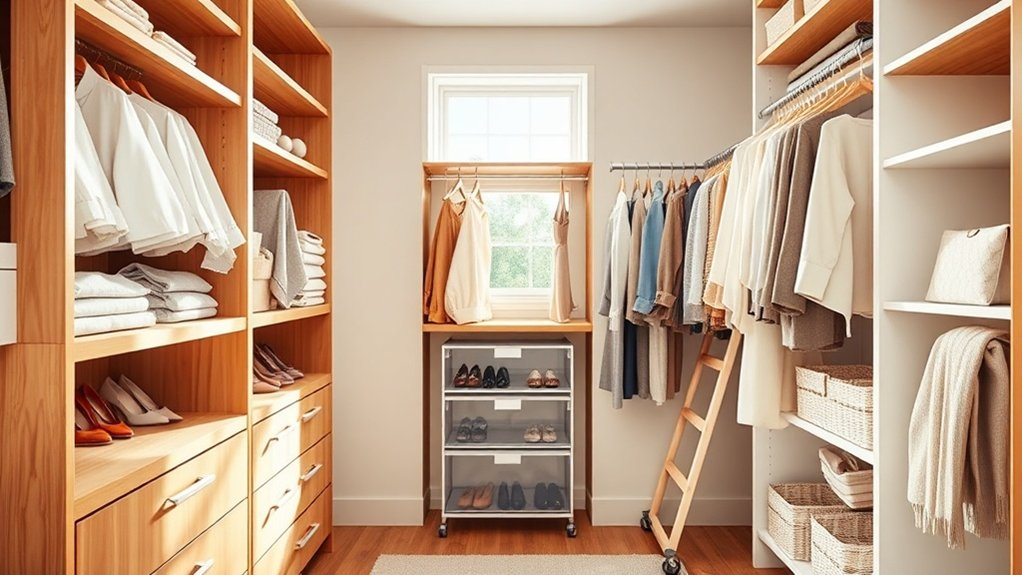
Because your delicate blouses and seasonal coats deserve more than a jumble on a single rod, smart mix-and-match storage lets you protect pieces while keeping them ready to wear.
You’ll use clear bins with acid-free tissue for delicate fabric storage, so silks and lace breathe and stay crease-free. Add padded hangers and a low-humidity section for sweaters that distort easily. Choose heavy-duty clear bins when you need visibility and protection for stored garments. Consider selecting containers with waterproof PP surfaces for durability and easy cleaning.
For seasonal accessory organization, install cubbies and labeled drawers for scarves, hats, and gloves, rotating them with the seasons.
Combine hanging rails at different heights with stackable boxes to fit both long coats and short jackets.
Want easier access? Keep current-season items at eye level and off-season in labeled bins above.
It’s tidy, practical, and calming—your clothes will thank you.
Consider adding stackable storage to maximize vertical space in small closets.
Outfit-Staging Zones to Speed Morning Decisions
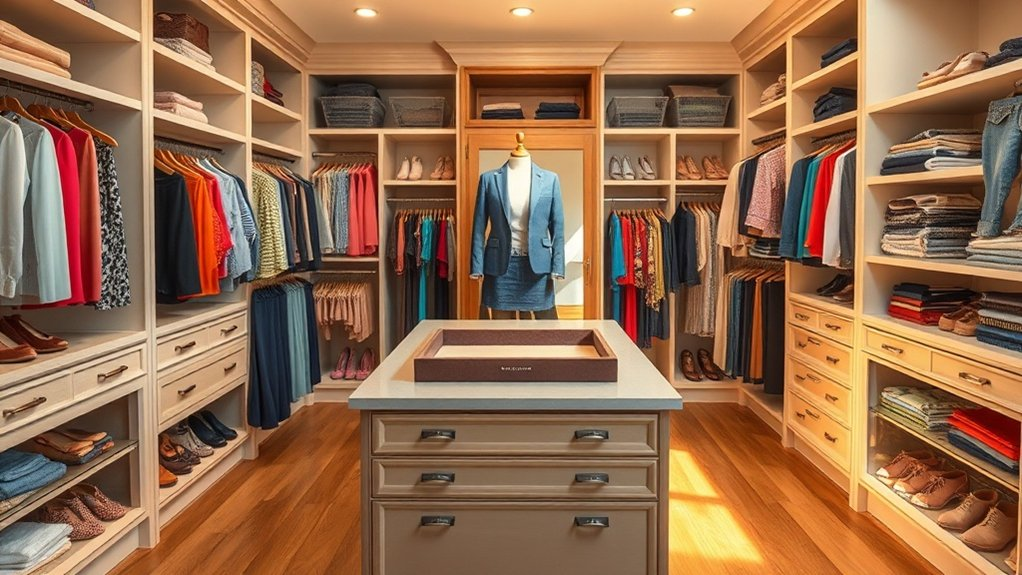
When mornings feel rushed and your closet looks like a decision minefield, creating an outfit-staging zone can turn chaos into calm and save you precious minutes.
Set aside a small, visible spot—an empty shelf, a dedicated hanging rod, or the back of a door—where you lay out complete looks the night before. Use labeled bins or trays for accessories, shoes, and jewelry so everything is ready when you dress.
Designate a visible spot to lay out full outfits nightly; use labeled bins for accessories so mornings flow smoothly.
This simple habit makes outfit planning feel like play, not work, and streamlines your morning routine. Want to feel confident without the scramble?
Rotate a few go-to ensembles each week, note favorites, and tweak combinations for weather or mood. Over time, you’ll waste less time and enjoy dressing more. Consider adding a kids-style color-coding system to help you quickly sort outfits by function or day. Add a small, well-lit staging spot near your mirror to make final checks easier and speed the process closet organization. Add a dedicated storage zone to keep seasonal pieces and overflow neatly contained.
Budget-Friendly Swaps and DIY Tweaks to Gain Instant Space
Although your closet might look fixed, small swaps and simple DIY tweaks can instantly carve out more room and make every item easier to find.
Start by swapping bulky hangers for slim velvet ones, and you’ll free several inches per row—imagine adding space without losing clothes.
Add shelf dividers to keep stacks tidy and prevent toppling; they’re cheap and you can make your own from thin plywood or sturdy cardboard.
Hang clear hanging organizers for shoes, bags, or folded sweaters to use vertical space smartly. Consider adding 4-tier stackable shelves to create additional levels for folded items and maximize vertical capacity.
Try a tension rod for scarves or tank tops under a shelf.
Label bins, rotate seasonal items, and donate before you buy.
Want more room tomorrow? Do one small change today, and enjoy the calm that follows.
Consider adding multi-layer or cascading hangers like the space-saving hangers to multiply your vertical storage capacity without a major overhaul.
Measure your available depth and height to choose the right organizers and avoid wasted space with standard closet dimensions.
Conclusion
Think of your closet like a garden: when you prune, group, and plan, everything blooms. You’ll feel lighter once you decide what stays, add a double rod or clear bin, and set a staging spot for mornings. One reader cleared three overflowing boxes in an afternoon and now finds outfits in minutes—proof that small changes grow big returns. Ready to tend yours? Start with one shelf today and watch the order take root.