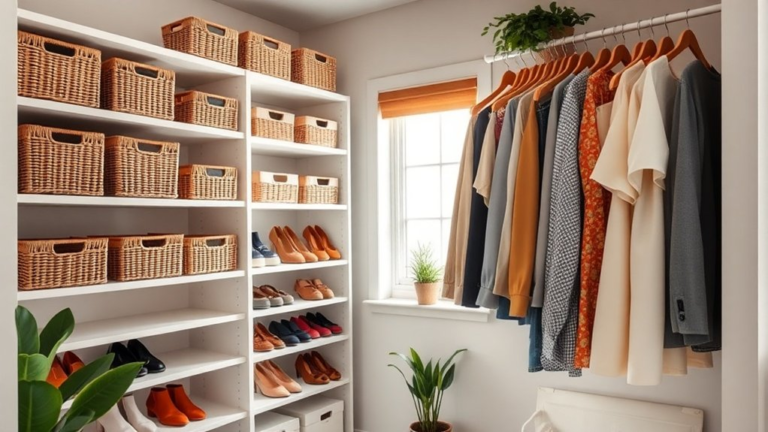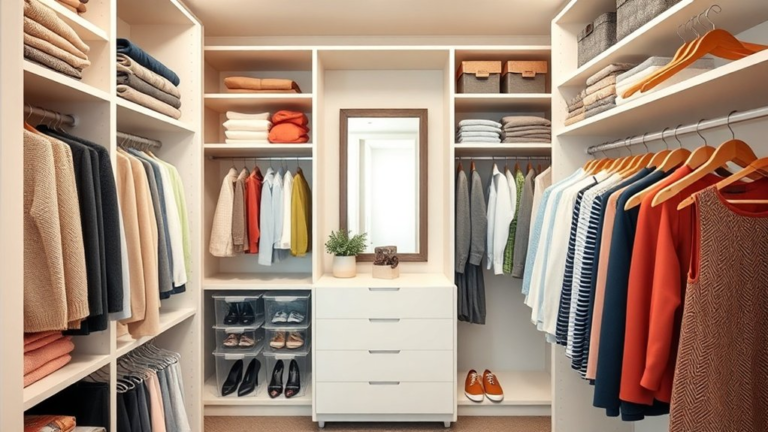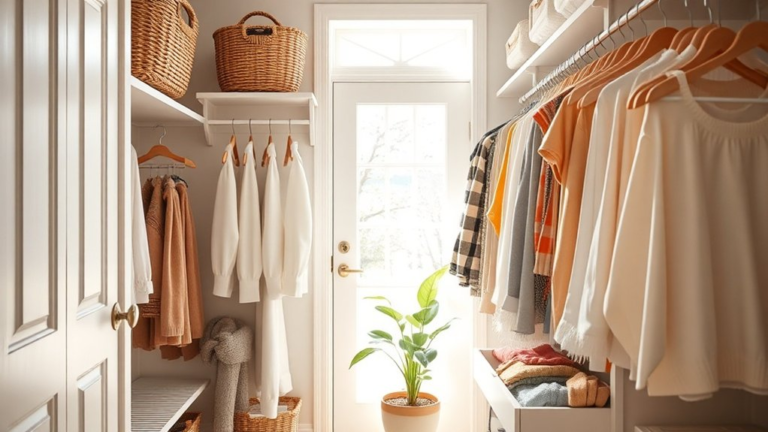
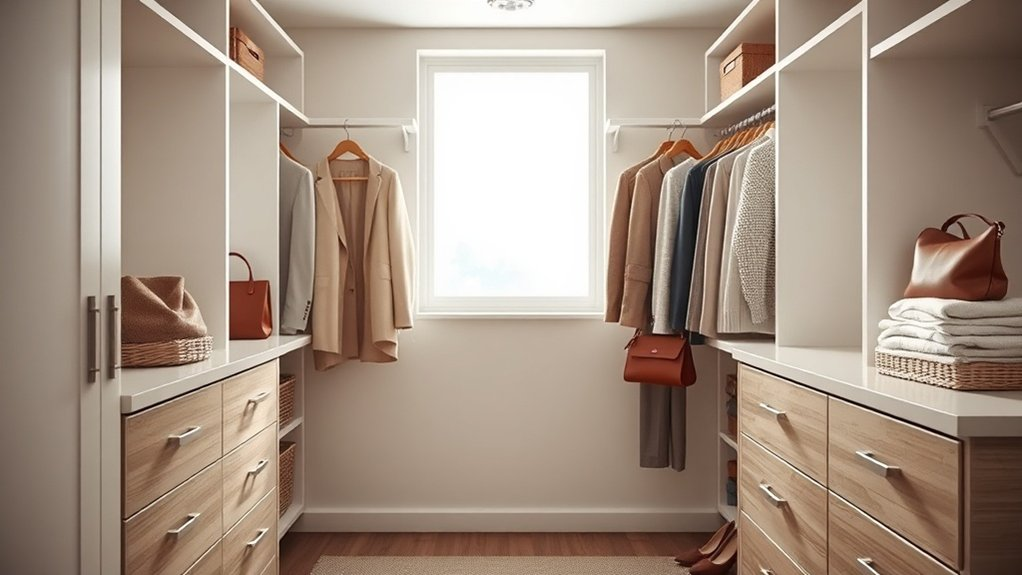
You can make a small wardrobe feel effortless by arranging items by type and how often you wear them, so mornings are calm and choices are clear. Start with hanging zones for work, casual, and special outfits, add visible shelves and clear bins for folded essentials, and create smart spots for shoes and accessories. Think vertical, keep a simple color story, and leave space to tweak—what would your ideal daily outfit look like?
Closet Highlights
- Designate clear zones (everyday, work, active, special) with frequent items at eye level for quick capsule selection.
- Maximize vertical space with double rods, hanging organizers, and stackable bins to store seasonal rotations efficiently.
- Group garments by type and cohesive color story to simplify mixing, matching, and outfit planning.
- Use open shelves, clear boxes, and drawer dividers for visible folded essentials, shoes, and small accessories.
- Regularly edit and relabel zones, swapping hangers or lowering rods to keep the capsule functional and joyful.
Choose the Closet Layout That Fits Your Capsule Wardrobe
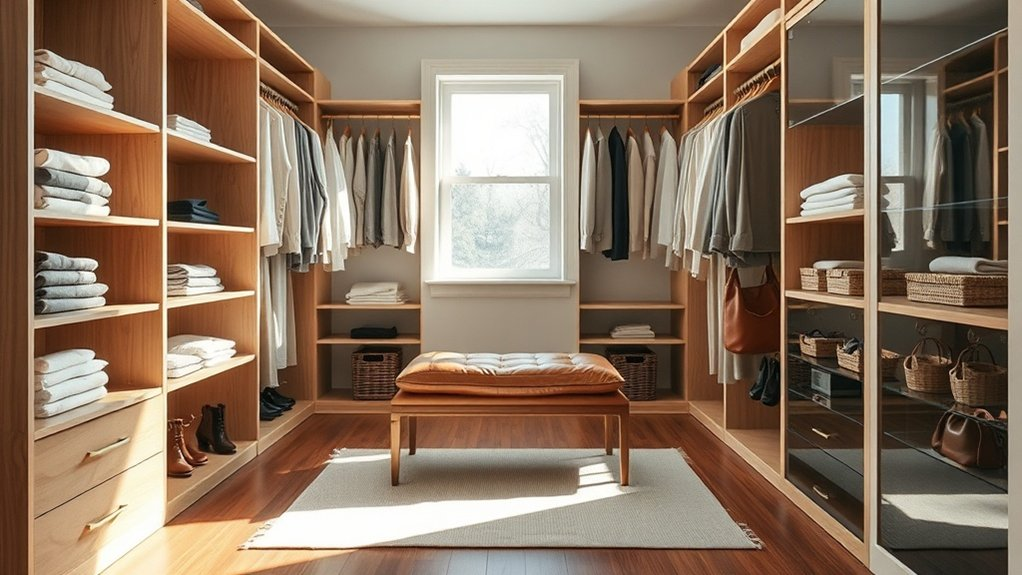
When you’re building a capsule wardrobe, choose a closet layout that makes getting dressed feel simple and joyful, not like a chore. You’ll want a plan that supports seasonal rotations, keeping out only what you’ll wear now and storing the rest neatly.
Think about how you move through mornings: can you see outfits at a glance? Use color coordination to group pieces so mixing and matching becomes easy, not stressful. Consider maximizing vertical space with stackable organizers to keep items accessible and neatly stored.
Don’t overcomplicate zones; aim for clear spots for tops, bottoms, and layering pieces you reach for often. Ask yourself what items spark confidence, and make those most visible.
With a layout that reflects your rhythm, you’ll enjoy getting dressed every day, and your wardrobe will finally work for you. Consider incorporating clear storage bins to improve visibility and streamline seasonal swaps. Try adding an over-the-door organizer to increase usable space without permanent installation.
Set Up Hanging Zones by Outfit Type and Frequency
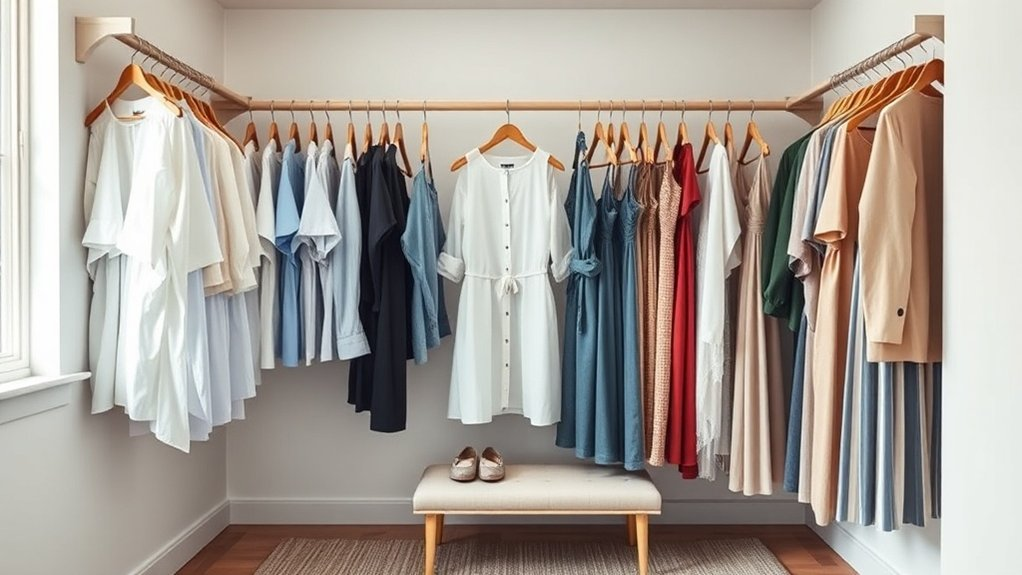
Think about grouping your clothes into clear outfit-type zones—workwear, casual, active, and special occasions—so you can spot what you need at a glance.
Place the pieces you wear most often at eye level and close to the door, while less-used items can live higher or lower; this frequency-based layout saves time and keeps mornings calm. Consider incorporating hanging organizers like a five-tier design to add vertical storage for seasonal or bulkier items.
For those in-between looks, create a changeover row for layered outfits or weekend options, and ask yourself which spots would make getting dressed easier each day.
Transforming your closet with zone-based organization helps maintain order and makes it easier to stick to a capsule wardrobe. A well-planned layout also complements an organized home by creating efficient storage and reducing clutter.
Outfit Type Zones
Because your closet should help you get dressed, set up hanging zones by outfit type and how often you wear things, and you’ll save time and stress every morning.
Start by grouping pieces with clear outfit categorization: workwear, casual, active, and dressy. Place similar silhouettes together so you can scan options faster. Consider using shelf dividers to keep stacks tidy and prevent slippage on shelves.
Use a small section for layering pieces like light jackets and cardigans, and a dedicated spot for finishing touches such as blazers or statement coats.
Keep seasonal rotation in mind, swapping heavier items out when warm weather arrives.
Will you reach for what you need without digging? Label zones subtly, keep hangers uniform, and teach yourself to return items to their zone—habit makes the system work.
Consider adding stackable organizers to optimize vertical space and keep frequently used items within easy reach.
Consider incorporating visual zoning to make outfit categories instantly recognizable and simplify daily dressing.
Frequency-Based Placement
You’ve already grouped pieces by outfit type, now match those zones to how often you actually wear them so your closet works with your life.
Start with a quick frequency analysis: note daily staples, weekly wear, and special pieces. Place your everyday shirts and trousers front and center, where they’re easy to grab during busy mornings.
Reserve a middle row for items you wear weekly, like smart-casual layers, and a higher or lower zone for seldom-used garments. This setup supports a healthy wardrobe rotation, so nothing gets lost or forgotten.
Want fewer decision moments? Make the most-used zone visually obvious. You’ll feel calmer, dress faster, and enjoy a closet that truly reflects what you live in.
Transition Outfit Rows
When you set up shift outfit rows, arrange hanging zones so they guide you from casual to formal at a glance and match how often you wear each look.
Start with daily pieces—tees, denim, easy dresses—so mornings feel effortless.
Next, reserve a middle row for intermediary layers like light jackets, cardigans, and blazers that link casual to dressier outfits.
Place less-used, formal items toward the end, where suits and special-occasion dresses live.
Group by outfit versatility, keeping adaptable pieces where they can pair with many looks.
Use consistent hangers and small labels to speed choices.
Want fewer decision moments? Curate each row with one color story or repeatable combo.
This setup saves time, reduces stress, and makes getting dressed a joyful, confident act.
Transform your closet with clear zones and smart storage for a streamlined daily routine and better space use, especially when planning a capsule wardrobe. Additionally, consider adding a door organizer to utilize vertical space and improve accessibility.
Consider installing adjustable shelving or modular systems for flexible storage that grows with your wardrobe and fits varied items like shoes or folded knitwear adjustable shelving.
Use Shelving and Drawers to Keep Folded Essentials Visible
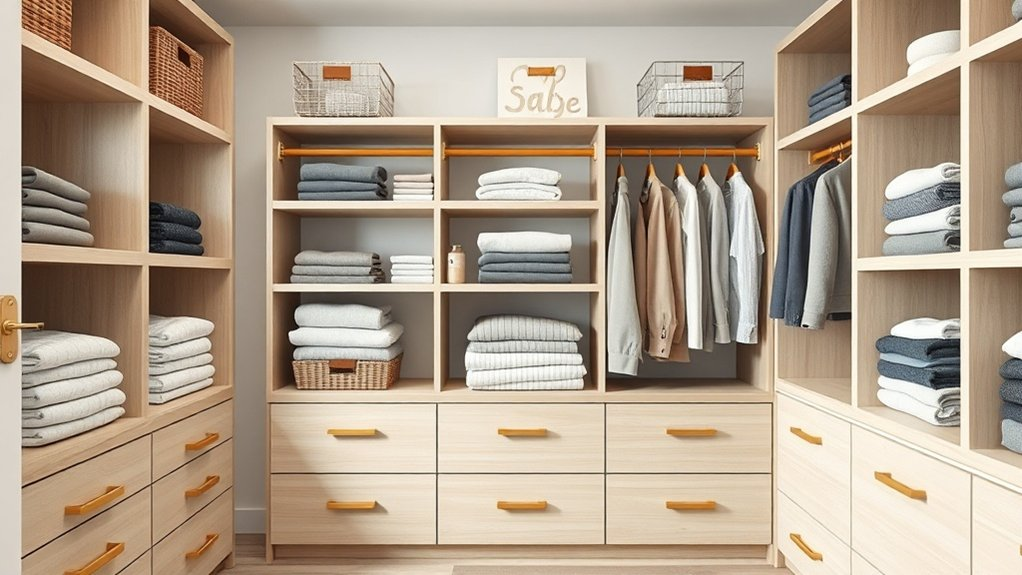
Make your folded essentials easy to see by arranging them in neat, visible stacks on open shelves so you can grab what you need without fuss. Consider using slim-profile open shelving to maximize space while keeping items accessible and visible with vertical storage. Try grouping garments by type and color to streamline outfit selection and maintain order with shelf organizers.
Use drawer dividers to keep small items like tees, underwear, and scarves separated and tidy, so every piece has its own place.
Want to feel more relaxed and in control every morning?
Consider adding hanging organizers with reinforced shelves for maximized vertical storage to make the most of your closet space.
Visible Folded Stacks
A neat row of visible folded stacks can turn your closet into a calm, easy-to-navigate space that actually invites you to get dressed. When you place garments on open shelving or shallow drawers with clear fronts, visible organization guides your eye and speeds decisions. Keep similar items together, and mind stack height so piles don’t topple or hide what you need. Short stacks let you see labels, textures, and colors at a glance; taller stacks save space but demand more discipline. Rotate seasonal pieces to the back, and use shallow shelves for daily basics. You’ll feel lighter each morning when everything is tidy and reachable. Ready to arrange your stacks so dressing becomes simple, joyful, and efficient? Consider using waterproof PP plastic storage bins for durable, low-maintenance visible storage. Use consistent shelving spacing to make every item easy to find and maintain order. Many people supplement visible stacks with stackable storage solutions to maximize vertical space in smaller closets.
Drawer Divider Organization
Start with one or two drawer dividers and you’ll feel the difference immediately: they turn a jumble of tees and socks into a calm, clear system that invites you to get dressed.
You’ll love how drawer organization saves time and keeps your capsule wardrobe visible, so choices feel simple and intentional. Modular organizers can also maximize vertical and horizontal space in your drawers for better use of every inch. Consider adding stackable baskets to increase capacity without sacrificing accessibility.
Pick divider materials—bamboo, fabric, acrylic—that match your style and budget, then arrange by category and color.
Fold items tightly, place heavier pieces at the back, and leave space to see everything at a glance.
Small changes make mornings easier and your clothes last longer.
- Use narrow dividers for socks and underwear
- Reserve wide sections for tees and knits
- Label edges for quick grabs
- Stack by color or frequency
- Swap divider materials to refresh the look
Consider adding stackable organizers to maximize vertical space and prevent tipping with anti-tip features.
Design Smart Shoe and Accessory Storage for Quick Outfit Building
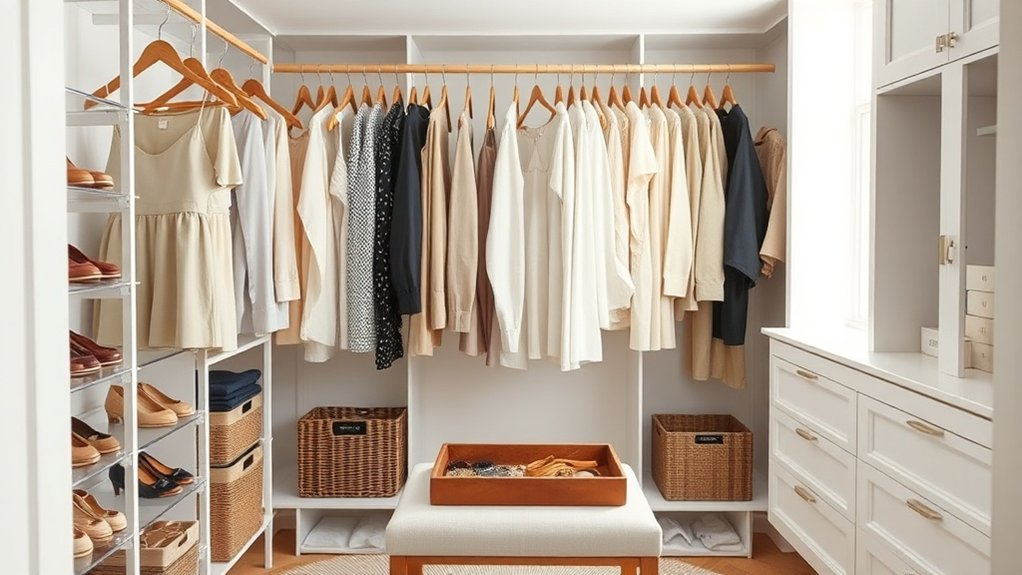
Think about your shoes and accessories as the finishing touches that make each outfit sing, and design their storage so you can build looks quickly and joyfully.
You’ll want shoe storage that gives quick access and keeps pairs visible—open shelves, cubbies, or clear boxes work well.
Combine accessory organization with hooks, trays, and small drawers so jewelry, belts, and scarves don’t tangle.
Choose versatile solutions that balance space efficiency and aesthetic appeal, like stackable bins or slim racks. Consider adding collapsible baskets for flexible storage and easy seasonal swaps.
Plan for seasonal rotation so boots and sandals swap out easily, and keep a minimalism approach to avoid overflow.
Use functional design and declutter strategies: edit regularly, store extras out of sight, and keep daily items upfront for faster outfit decisions.
Consider adding under-shelf baskets like the Whitmor White Wire Shelf to reclaim wasted shelf space for smaller accessories and keep things visible.
For maximizing vertical space, pair these ideas with space-saving hangers to dramatically increase usable closet capacity.
Optimize Small and Shared Closets for Two People
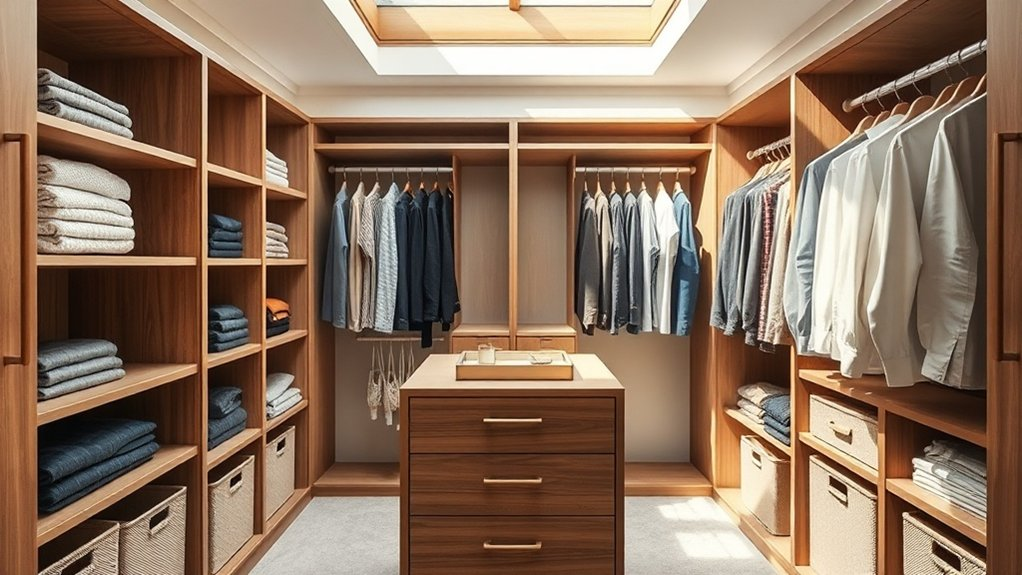
When two people share a small closet, smart planning turns a cramped space into a calm, efficient zone where both of you can find what you need fast.
You’ll want clear zones, labeled shelves, and a plan that balances dual functionality with shared ownership. Decide who uses top shelves, who gets drawers, and rotate seasonal items.
Keep daily pieces at eye level, store less-used items high, and use slim hangers to save space. Can you agree on a color or label system? That simple step reduces morning friction and builds harmony.
- Divide hanging space by item type, not person
- Use double rods for shirts and pants
- Add stackable drawers for folded essentials
- Install hooks for bags and belts
- Keep a shared shoe tray at the base
Maintain and Adapt Your Layout as Your Capsule Evolves
As your capsule wardrobe changes, so should your closet layout, because a system that fit last season may feel cramped or wasted now.
You’ll want to check in every few months and during capsule evolution moments—new job, season swap, or a shift in hobbies.
Start by removing items that no longer serve you, then reassign space for pieces you wear most.
Make minimalist adjustments: lower a rod, add a slim shelf, or swap bulky hangers for sleek ones.
Ask yourself, does this layout encourage getting dressed joyfully each day? If not, tweak it.
Small changes keep your closet useful and inspiring.
Stay curious, stay flexible, and let your closet reflect who you’re now.
A good closet plan often begins with assessing storage zones to organize items by function and frequency of use. Consider incorporating space-saving hangers to increase capacity without overcrowding rods.
Consider using decluttering routines to keep your capsule streamlined and maintain the effectiveness of your layout.
Conclusion
Think of your closet as a calm harbor where every hanger and box is a friendly lighthouse guiding your choices. By zoning outfits, stacking visibly, and keeping favorites within reach, you’ll sail through mornings with less friction and more joy. You’ll build outfits faster, feel steadier about your style, and delight in daily simplicity. Ready to tweak a shelf or swap a bin? Small changes can brighten your routine and keep your capsule feeling truly yours.