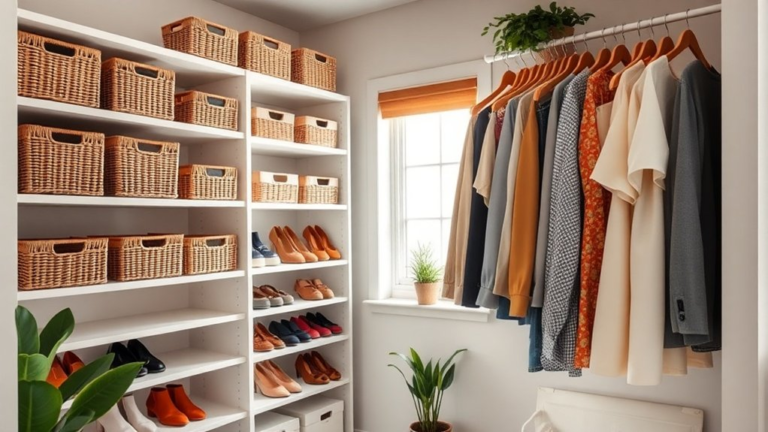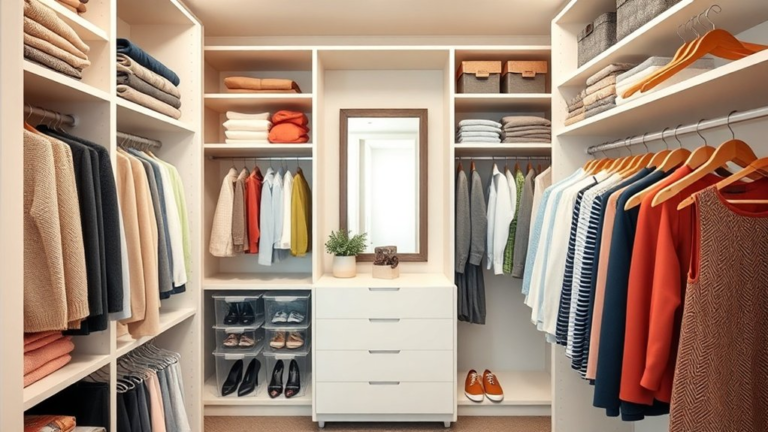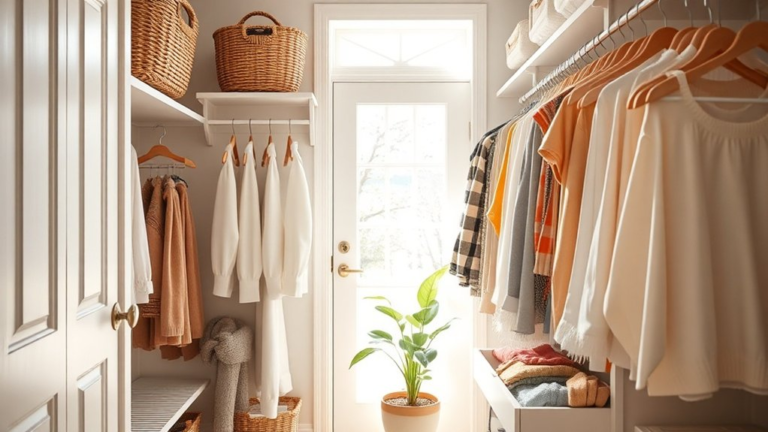
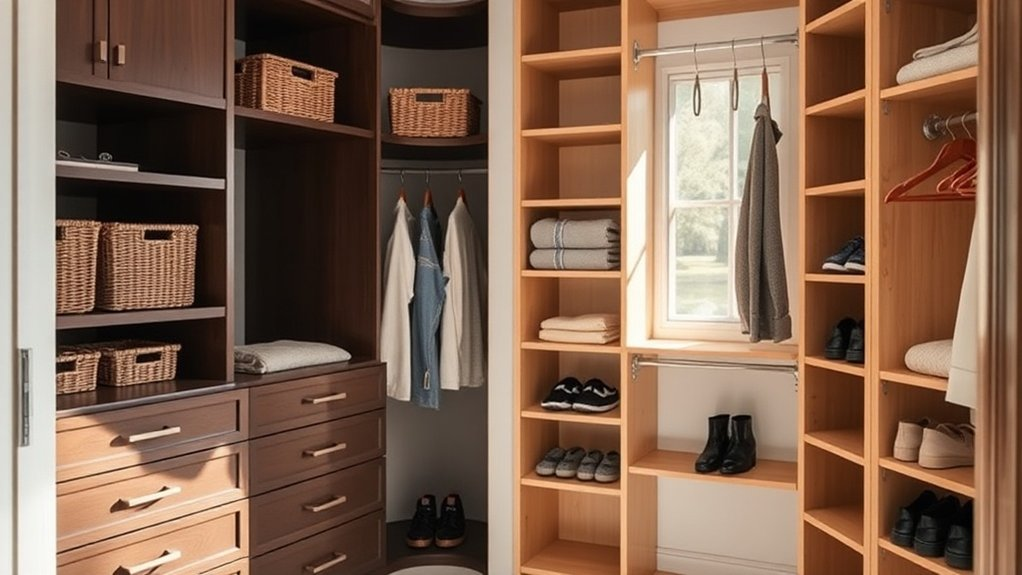
You can make a shared closet feel fair, tidy, and easy to use without a big overhaul. Start by measuring the space, marking owner-specific and shared zones, and adding adjustable shelves and dual hanging rods so everything has a place. Use labeled bins and pull-outs for quick access, agree on simple daily habits, and tweak solutions for kids or roommates. Ready to map your space and end the “whose is this?” moments?
Closet Highlights
- Design clearly defined zones for each user (hanging, shelving, drawers) to prevent overlap and streamline access.
- Use adjustable shelving and modular systems to adapt heights and storage as needs change seasonally or personally.
- Implement color coding, labels, and neutral dividers to mark ownership while keeping a cohesive aesthetic.
- Maximize vertical space with stackable organizers, over-the-door solutions, and multi-tier hangers for shared items.
- Establish daily tidy habits, scheduled check-ins, and rotation rules to maintain fairness and prevent clutter buildup.
Design a Shared Closet Plan That Fits Both Users
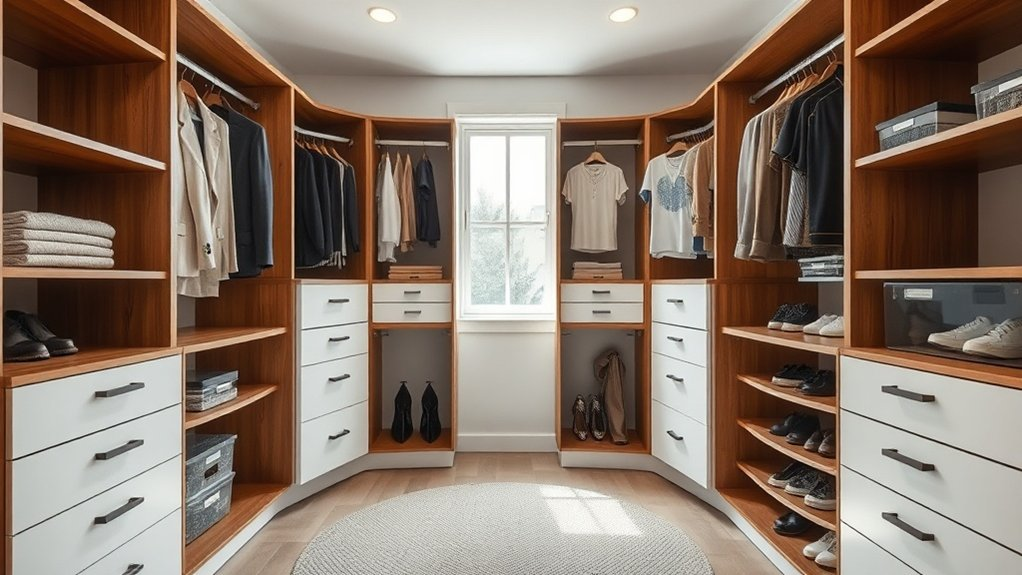
Anyone can create a shared closet that feels fair, functional, and a little bit fun.
You’ll start by talking through daily routines and favorite pieces, then map responsibilities so both of you feel seen.
Pick zones for each person, but leave room for shared items like coats or formalwear. Consider including adjustable shelving or telescoping rods to better accommodate varying garment lengths and changing needs, especially in walk-in closets.
Use color coordination to make finding outfits faster and to blend styles without sacrificing individuality.
Plan a seasonal rotation so bulky sweaters and sandals swap places smoothly, keeping the space tidy and current.
Add matching labels and a simple shelving tweak for shoes.
Want a system that lasts? Agree on upkeep and revisit the plan each season.
Small, regular changes keep harmony, and you’ll both enjoy getting dressed.
Also, prioritize maximizing vertical space with stackable organizers to make the most of every inch.
Consider the closet’s dimensions and clearances when choosing components to ensure available space is used efficiently.
Measure and Map the Space for Divided Zones
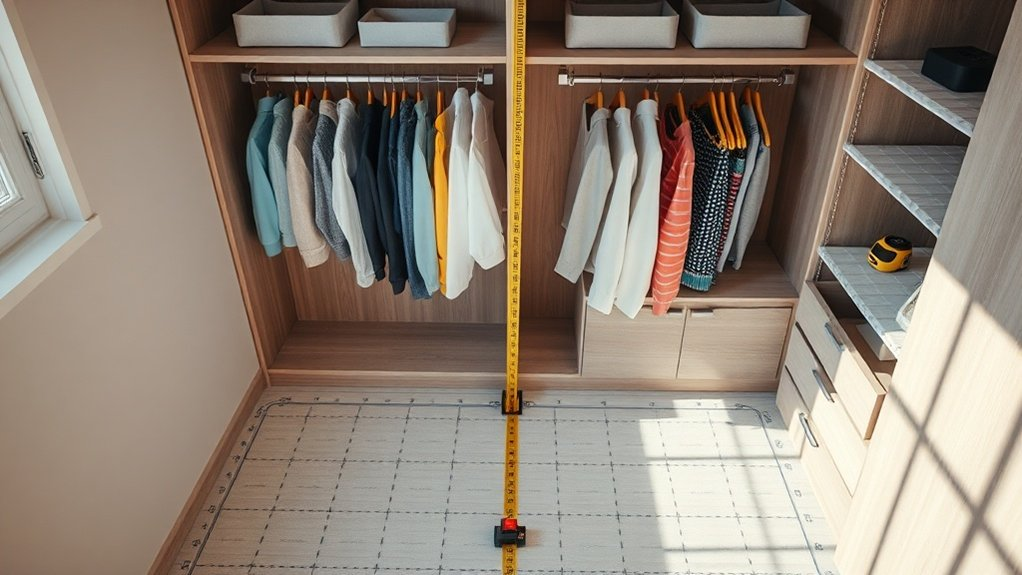
Start by measuring the full length and height of your closet, including any alcoves, pipes, or sloped ceilings that could affect storage.
Then sketch the space on graph paper or a simple grid, blocking out zones for hanging, shelving, and drawers so you can see how everything will fit. Consider using stackable designs to maximize vertical space and adapt to changing storage needs.
What parts of the closet feel most chaotic now, and how could clear, measured zones change the way you use the space?
Consider incorporating modular systems to allow adjustable shelving and hanging solutions that adapt as your storage needs change. Use adjustable dividers to create customizable cubbies and optimize organization.
Measure Lengths And Heights
Measure each wall, nook, and ceiling height carefully so you can map the space into useful zones that match how you live. You’ll start by taking length measurements along every wall, noting doorways and windows, then record height considerations like sloped ceilings or bulkheads.
These numbers tell you where tall shelves, hanging rods, or cubbies will fit best. Think about who uses each zone and what they need within reach. Does one person need long hanging space and another more shelves? Measure twice, trust the tape, and keep a simple list so decisions feel easy.
- Mark full wall lengths first
- Note ceiling highs and lows
- Measure alcoves and door clearances
- Record window and vent positions
- Compare needs per user
Also consider using adjustable shelves and modular systems for vertical space optimization to keep the layout flexible as needs change. Adding appropriately sized stackable bins can maximize storage in shallow or narrow spaces without sacrificing access. Durable materials like stainless steel can help ensure long-term functionality in shared closets.
Sketch Zones On Grid
Now that you’ve got your measurements, lay a simple grid on paper or a digital app and block out zones that match how you live—sleepwear, daily outfits, shoes, accessories, and overflow.
You’ll sketch a clear zone layout, thinking about grid design and space allocation so everything feels reachable and calm. Invite your partner to mark style preferences and storage efficiency choices, using color coding to show who uses which shelf or rod. This makes user collaboration easy and fair.
Aim for functional aesthetics: pretty bins, consistent hooks, neat labels. Ask yourself: does this map help mornings flow? If not, tweak the grid, swap zones, or shrink one area to expand another until it feels just right and ready to use. Consider adding stackable organizers to maximize vertical space without remodeling.
Good shared closet layouts often start with a clear zone map to reduce daily decision time. Consider incorporating drawer organizers to optimize small compartments and keep frequently used items accessible.
Create Fair-Access Zones: Owner-Specific vs. Shared Storage
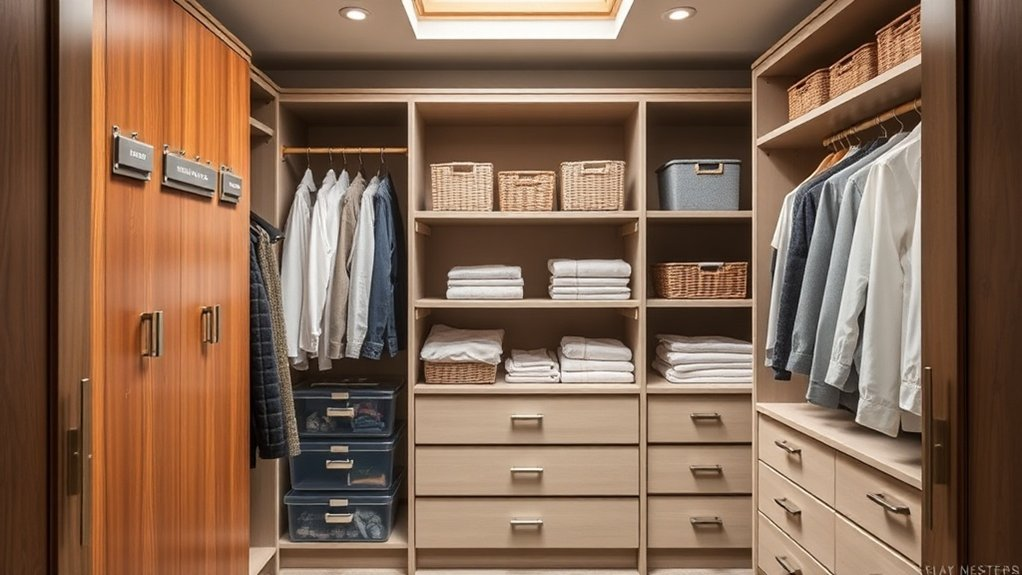
You’ll want to mark clear owner boundaries so everyone knows which shelves and bins belong to them, and you’ll feel the immediate calm that comes with defined spaces.
For shared items, set up a rotation system or central bin so things like tools, seasonal gear, or cleaning supplies get equal use and less conflict. Consider labeling the central bin with clear acrylic tags to improve visibility and reduce disputes. Consider placing the central bin on a modular shelf so it can be reconfigured as needs change.
Try adjustable access controls—hooks that slide, labeled drawers, or movable dividers—so the system can change as needs do, keeping fairness simple and practical.
Consider adding over-the-door organizers like the JARLINK Over The Door to maximize vertical space and keep shared areas tidy.
Clear Owner Boundaries
When people share a closet, clear owner boundaries make daily life smoother and reduce small frustrations before they start. So take a moment to decide who keeps what where. You’ll feel calmer when you agree on owner preferences, boundary clarity, and space etiquette up front.
Use simple storage solutions that show ownership and support personal organization, and pick communication strategies for tweaks later.
- Label shelves or bins to mark owner-specific areas
- Set shared rules for common items and access times
- Schedule brief check-ins for dispute resolution and adjustments
- Choose neutral divider tools to keep styles separate yet cohesive
- Agree on tidy-up habits to maintain mutual respect
Want a system that fits both of you? Start small, stay kind, and adjust together. Consider using stackable bins to keep shared items organized and accessible. A consistent organization routine makes it easier to maintain shared spaces and reduces recurring conflicts. Consider adding clear bins to improve visibility and make shared ownership easier to manage.
Shared Item Rotation
After you’ve agreed on owner boundaries, set up shared item rotation to keep access fair and stress low; it’s a simple system that helps both of you grab what you need without stepping on each other’s toes.
Start by picking a visible shelf or bin for truly shared pieces, then decide how often you’ll rotate items—weekly, monthly, or by season. Use labels or color tags to mark current rotation slots, and keep a short list so you both know what’s coming next.
Seasonal swapping works great for seldom-used gear, while frequent pieces benefit from quicker cycles. Will you try a two-week test?
You’ll notice less clutter, fewer arguments, and a calmer routine when everyone gets predictable, balanced access through clear item rotation.
Adjustable Access Controls
Think of dividing your closet into three clear zones—your private space, their private space, and a shared area—so everyone has room to store what matters most without surprise or stress.
You’ll use adjustable shelving to make each zone flexible, so seasonal swaps or growth spurts don’t cause fights. Clear labels and gentle rules help with access management, so nobody feels shut out.
You’ll agree on shared-item placement, and set simple boundaries that respect privacy and convenience. Consider these practical steps to get started:
- Label shelves and bins by owner and purpose.
- Reserve top shelves for long-term or rarely used items.
- Keep daily items at eye level for both people.
- Use locks or baskets for truly private goods.
- Schedule regular resets to stay fair and tidy.
Consider adding a durable, no-drill adjustable rod extender for extra hanging capacity adjustable rod to maximize usable space without tools or drilling.
Install Adjustable Shelving and Dual Hanging Rods
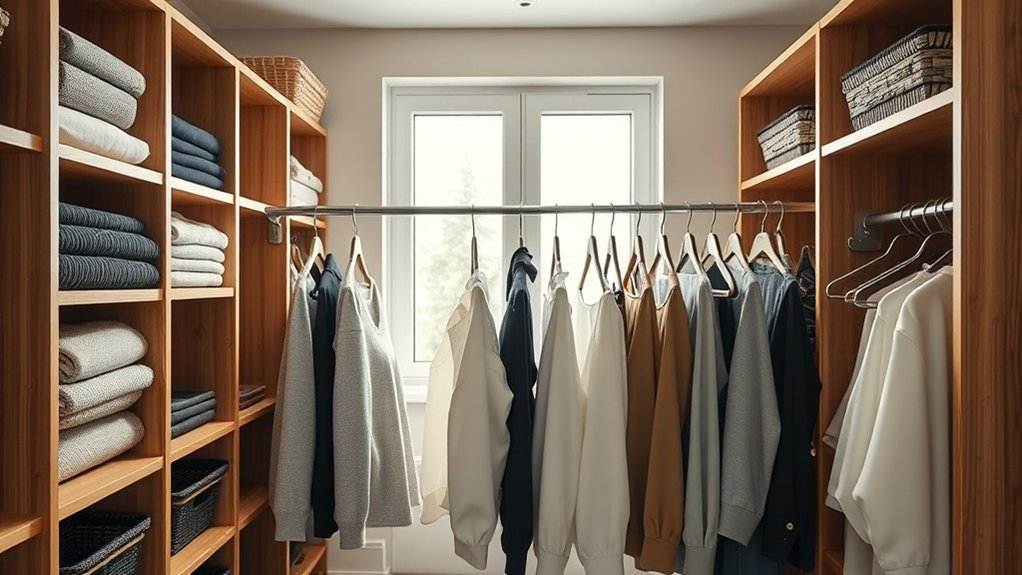
A simple upgrade like adjustable shelving and dual hanging rods can transform your closet from chaotic to calm, giving you room to breathe and space that actually works for your life.
You’ll find adjustable shelving materials that fit boxes, baskets, or folded sweaters, and you can move shelves up or down as needs change. These shelves work well with stackable bins to keep items visible and organized. Consider using collapsible storage to save space when seasonal items are not in use.
Dual hanging rods double hanging capacity, letting you separate workwear from casual pieces without mixing seasons.
Think about rod placement so both people reach things easily, and set lower rods for shorter garments and higher rods for long coats.
Small adjustments make mornings smoother and reduce wardrobe stress.
Ready to try it? Measure first, plan together, and enjoy a closet that finally serves both of you. Consider adding a portable unit with vertical shelves to maximize space in tight rooms.
Choose Space-Saving Hardware: Pull-Outs, Hooks, and Shoe Solutions
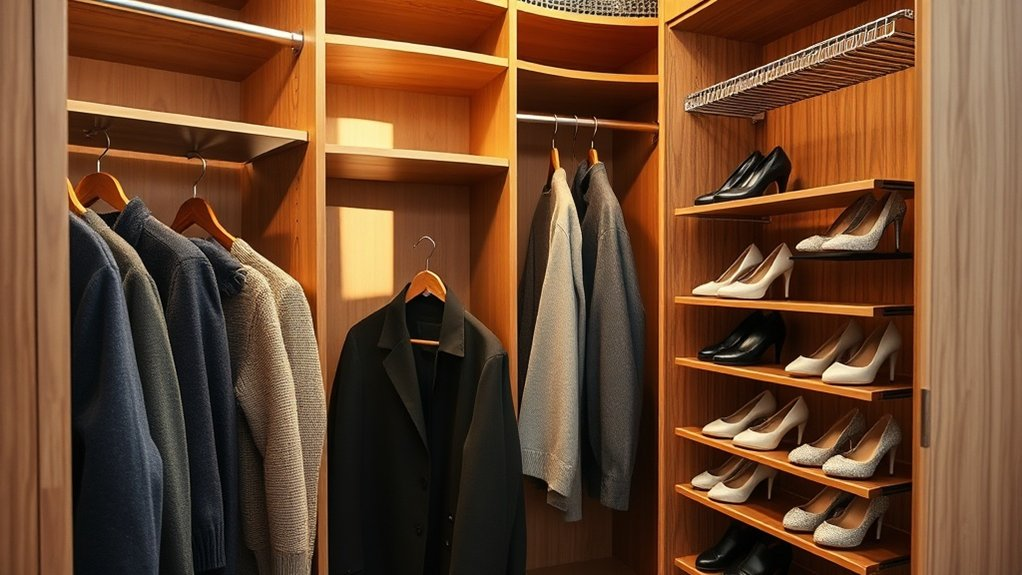
Once you’ve set up adjustable shelves and twin hanging rods, add thoughtful hardware to squeeze even more function from the same space.
You’ll love how small additions transform a shared closet into a calm, efficient zone. Think about mixing pull out racks and shoe organizers to keep items visible and tidy, or adding hanging hooks for everyday bags and scarves. Consider adding stackable clear bins to maximize vertical space while keeping items dust-free and visible.
Choose modular systems that let you change layouts as needs shift. Consider drawer dividers for tidy accessories and dual purpose furniture that adds seating plus hidden storage.
Vertical storage maximizes unused height, freeing floor space.
- Pull out racks for belts and ties
- Shoe organizers that stack or hang
- Hanging hooks for quick-access items
- Drawer dividers for small pieces
- Dual purpose furniture with hidden storage
Also consider stackable baskets and fabric organizers to make the most of vertical space and keep small items accessible with stackable organizers. A well-chosen set of space-saving hangers can further increase capacity and organization without major renovations.
Use Labeled Bins, Baskets, and Clear Containers for Quick Access
Because labeled bins, baskets, and clear containers make everything easier to find, you’ll spend less time digging and more time enjoying your space.
Use labeled storage for socks, scarves, and seasonal items so everyone knows where things belong. Clear containers boost visual clarity, letting you spot what you need at a glance. Consider adding stackable storage to maximize vertical space and keep frequently used items within reach. Stackable options are especially helpful in small shared closets because they maximize vertical space without increasing your closet footprint.
Choose organized bins that stack neatly for efficient sorting and easy retrieval, and mix baskets for soft items that don’t need rigid boxes. This functional design keeps surfaces tidy and supports clutter control without being strict.
Wouldn’t you love opening the closet and finding calm instead of chaos? Start small: label one shelf, test a bin, and feel the relief as order spreads through your shared closet. A smart choice is to pick stackable, durable bins made from tear-resistant fabric to protect belongings and maximize vertical space.
Set Shared Rules and Daily Habits to Prevent Clutter
If you and your household agree on a few simple rules, your closet can stay tidy without constant effort. You’ll feel calmer when everyone follows small habits that support clutter prevention and daily organization.
Start with clear expectations, and keep them friendly.
- Agree on where items go after use.
- Do a two-minute tidy each evening.
- Limit “in-progress” piles to one bin.
- Return seasonal items after switching.
- Ask before adding new shared storage.
These steps make upkeep easy, and they build trust.
Will you try a one-week challenge to see the difference? Celebrate progress, not perfection, and adjust rules together.
When you keep routines short and consistent, your shared closet stays useful, welcoming, and much less stressful. Consider implementing functional closet systems to maximize space and ease of use.
Tailor Solutions for Different Wardrobes: Kids, Partners, Roommates
Think about three simple changes you can make to match your closet to the people who actually use it.
First, map zones by height and habit: low hooks or open bins for kids, labeled shelves for roommates, and a dedicated section for your partner’s workwear. You’ll improve wardrobe organization and reduce morning stress. Consider adding vertical organizers to make better use of high spaces and keep items visible.
Second, honor personal preferences by choosing colors, hangers, and baskets each person likes; small choices boost respect and care.
Third, set flexible storage: adjustable rods, removable hooks, and a few clear containers for seasonal swaps.
Which small change will you try this week? Take one action now, and celebrate the calm that follows. You’ll find shared closets can feel private and pleasant for everyone.
Transform your space with simple strategies like zone mapping to create a more functional shared closet.
Troubleshoot Common Conflicts and Small-Space Compromises
When shared closets start feeling like battlegrounds, a few thoughtful fixes can restore calm and make the most of tight space.
You’ll use clear communication strategies and simple conflict resolution to keep feelings intact while improving space efficiency. Set priority setting rules: who uses top shelves, who gets hanging space, and what’s shared versus personal.
Schedule short maintenance schedules to prevent clutter fights, and embrace storage solutions that respect different styles. How do you balance style compromises without losing identity?
- Agree on zones and labels
- Use slim hangers and shelf dividers
- Rotate seasonal items regularly
- Allocate a small “wildcard” shelf
- Keep a weekly tidy check
These organization tips help you stay fair, tidy, and calm. Consider adding a kids clothes organizer with color-coded labels to make daily outfit choices easier and reduce morning stress.
Conclusion
You can create a shared closet that feels fair, calm, and useful for both of you. Did you know organized systems can cut morning decision time by up to 30%? That’s more sleep and less stress. Measure, map zones, label bins, and pick adjustable shelves so items stay visible and easy to reach. Agree on simple daily habits, check in often, and tweak the plan together—small changes add up to big, lasting harmony.