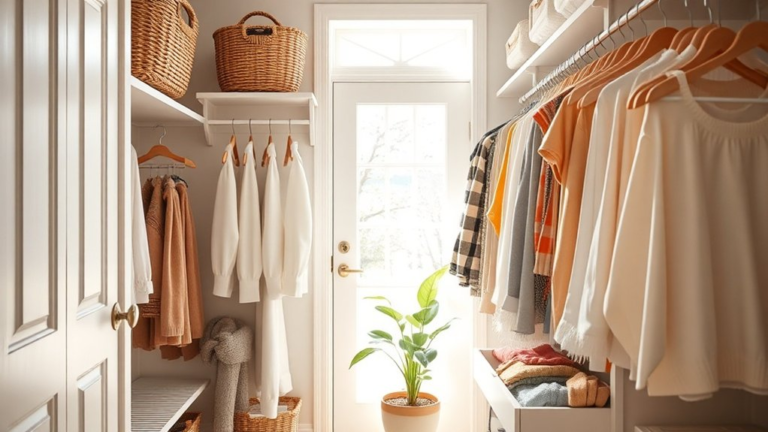
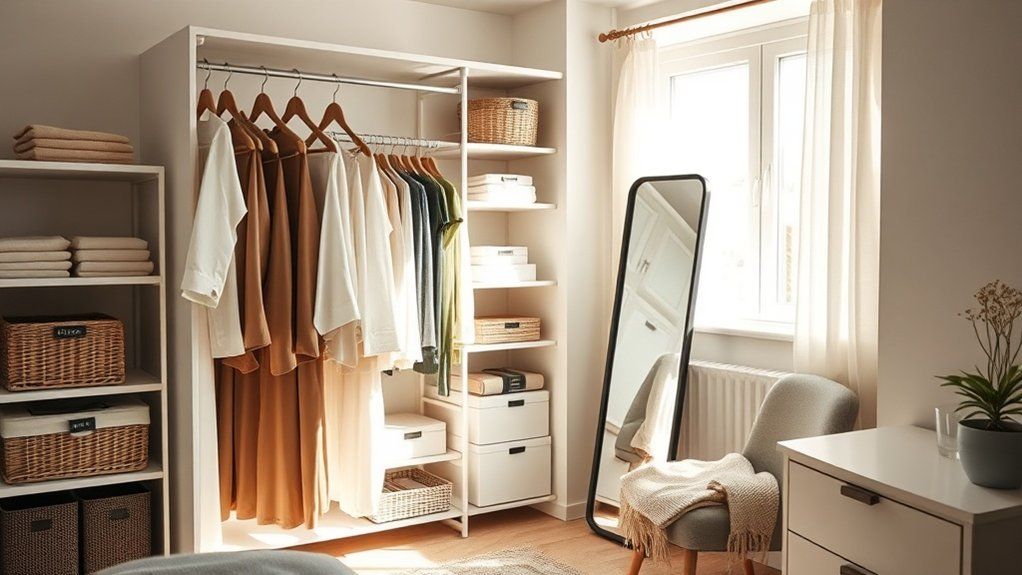
You can cut closet stress without drama by using quick rules, simple decisions, and a few smart storage swaps that make everything visible and grab‑and‑go. Imagine getting dressed in minutes, with less guilt about what to keep and a calm space that supports your day. Ready to try a 15‑minute clearout, build a small capsule wardrobe, and finally stop decision paralysis so mornings feel easier and calmer?
Closet Highlights
- Use the Three-Touch Rule (keep, donate, toss) and a 10-second limit per item to speed decisions and reduce overwhelm.
- Start with a small section or 15-minute clearout to build momentum and prevent decision fatigue.
- Create a capsule wardrobe of versatile, color-coordinated pieces for easy outfit choices and fewer purchases.
- Manage sentimental items by photographing them, limiting quantity, and using a gratitude ritual before letting go.
- Maintain order with monthly 10–15 minute resets, labeled storage bins, and outfit-based organization for quicker mornings.
Quick Declutter Rules to Stop Decision Paralysis

If you’ve ever stood in front of a closet full of clothes and felt frozen, you’re not alone, and there’s a simple way out: set quick rules that take the thinking out of decisions.
You can use easy decision making strategies like the three-touch rule — keep it, donate it, or toss it — and give yourself a 10-second limit per item.
Adopt a simplicity mindset: ask if an item sparks joy, fits your life, or serves a clear purpose. If the answer’s no, let it go.
Adopt a simplicity mindset: keep only what sparks joy, fits your life, or serves a clear purpose.
Create category rules too: keep only five casual tops, three dressy pieces, two versatile jackets. Those boundaries protect your time and calm your mind.
Ready to try one rule today? Try starting with a small section like a single shelf or drawer to build momentum and avoid overwhelm by focusing on one area.
Adding small, consistent steps like sorting by category and using clear limits helps maintain an organized closet and supports long-term closet organization success.
A helpful tip from Transform Your Closet is to establish a regular maintenance habit like a monthly 10-minute tidy to keep progress steady.
How to Do a 15‑Minute Closet Clearout
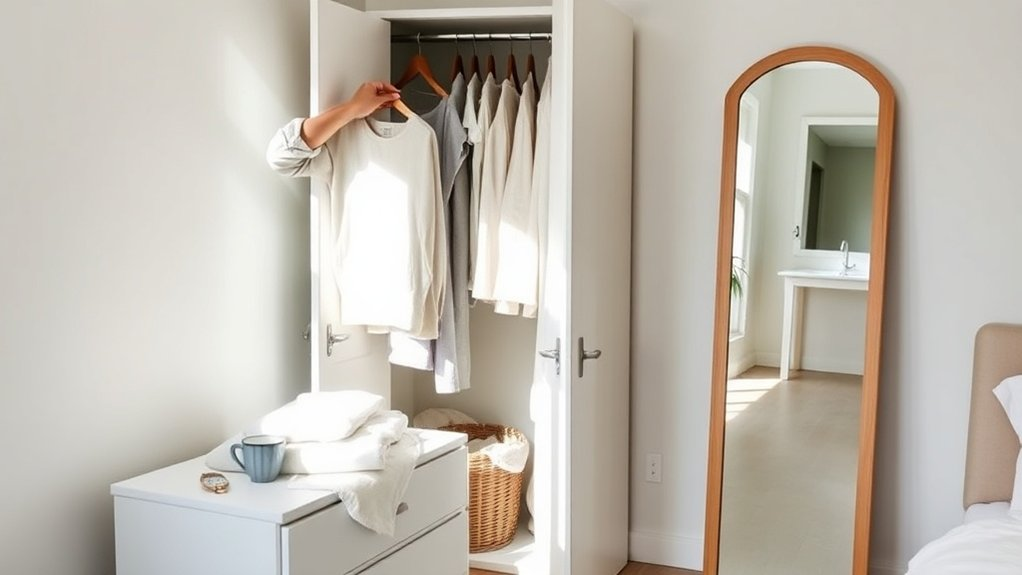
Set a timer for 15 minutes and get ready to feel lighter—fast. You’ll move with purpose: choose one shelf, one rail, or one drawer.
Use time saving techniques like working in short bursts, handling each item only once, and keeping a bag nearby for immediate removal.
Ask yourself quick, kind questions: Does this make me feel confident? Have I worn it in a year? If not, let it go.
Embrace a minimalist mindset—focus on what you love, not what you tolerate. Stay gentle but decisive; fast clearing doesn’t mean harsh choices, it means clarity.
When the timer dings, step back and celebrate. Notice the space you made and the calm it brings—then carry that momentum forward.
Use the “Wear, Donate, Repair, Toss” Decision Method
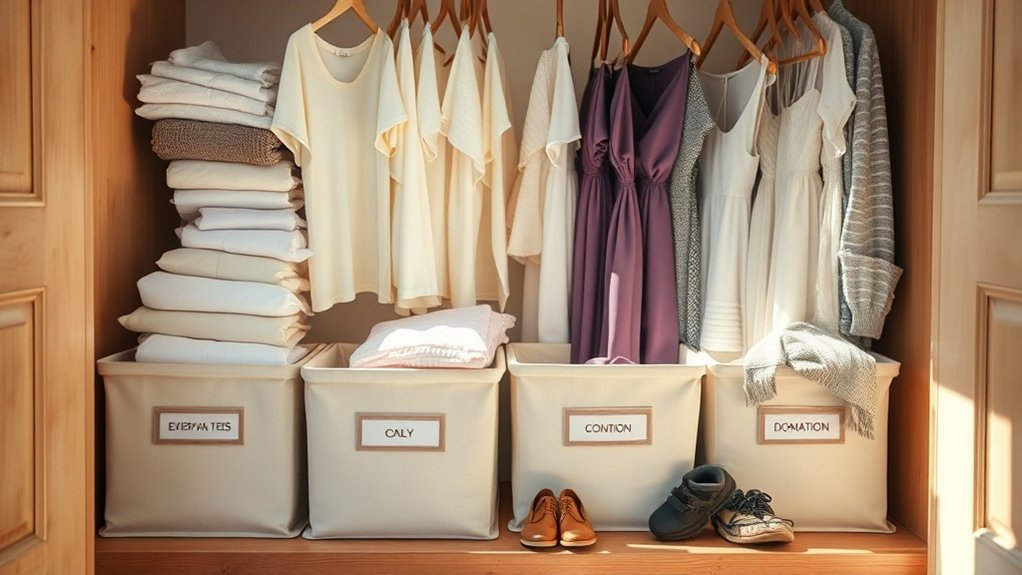
Now that you’ve felt the lift from a quick clearout, keep that momentum with a simple sorting rule: Wear, Donate, Repair, Toss. You’ll move faster when you use clear wear criteria, so ask: have I worn this in a year, does it fit, does it spark joy?
Follow gentle donate guidelines — choose clean, useful items a charity will accept. Use quick repair tips for things you love: loose button, small hem, sewing fixes that take minutes. Consider storing seasonal shoes in stackable clear boxes to keep them protected and visible.
And be firm with toss triggers: stains, irreparable damage, or safety hazards.
- Hold each piece and decide by feel.
- Set a donate bag and label it.
- Keep a tiny repair kit nearby.
- Toss confidently when fabric is ruined.
- Celebrate the empty space you create.
Consider pairing this method with stackable storage to keep sorted items accessible and maintain your progress. A regularly maintained closet also improves daily outfit choices and reduces decision fatigue by promoting organized storage.
Build a Small, Stress‑Free Capsule Wardrobe

When you narrow your closet to a small, stress-free capsule wardrobe, you give yourself back time, money, and peace of mind; imagine opening a wardrobe where every piece works with the rest and getting dressed feels easy instead of stressful.
Start by choosing minimalist essentials and a handful of versatile pieces that reflect your personal style. Focus on color coordination so mixing and matching feels natural, and prioritize fabric quality for comfort and longevity. Consider storing off-season items in clear stackable drawers to keep seasonal swaps simple and visible. Use foldable storage to save space when you don’t need seasonal items immediately accessible.
Think about outfit versatility: can one top become three looks?
Check lifestyle alignment — your capsule should fit work, weekends, and special events you actually attend. Plan for seasonal adaptability with a few swap-out items.
Ready to try it? You’ll love how simple decisions free mental space.
Consider adding heavy-duty hangers to support seasonal garments and protect their shape.
Storage Swaps That Make Items Visible and Easy

If you want to grab outfits quickly and stop digging through piles every morning, swapping hidden storage for visible solutions will change how you use your closet.
Visible storage turns choices into easy access, so you’ll feel calmer and more confident when you dress. Start by replacing opaque bins and stuffed drawers with options that show what’s inside. You’ll save time and keep favorites front and center. Consider using clear shoe boxes to keep pairs visible and dust-free.
- Clear shoe boxes for quick pairing
- Open baskets for scarves and hats
- Hanging shelves for folded sweaters
- Shelf dividers to display bags upright
- Labeled clear bins for seasonal swaps
Which swap will you try first? Small changes add up, and soon your closet will welcome you every morning. Consider adding clear acrylic dividers to keep stacks neat and visible. Add stackable storage like stackable bins to maximize vertical space and adapt your layout as needs change.
How to Let Go of Clothes Without Guilt
You don’t have to keep every piece because it holds a memory; try reframing attachment by seeing clothes as tools that served you, not as anchors you must carry forever.
Set simple let-go rules—like if you haven’t worn it in a year or it no longer fits your life, set it aside for donation or sale—and stick to them. Consider labeling sections with modular systems to keep items organized as you sort.
How would it feel to open a calmer, more joyful closet once you practice this kind of gentle, steady decision-making?
Consider using organization tools like hanging organizers to keep donated or seasonal items neatly separated while you decide. You can track progress and stay motivated with a maintenance plan tailored to your habits.
Reframe Emotional Attachment
Because clothes often hold memories, letting them go can feel like saying goodbye to parts of your story, but you don’t have to toss that story out with the hanger.
You can reframe emotional attachment by practicing attachment awareness and naming emotional triggers as they come up. That simple pause gives you choice. Ask which memory you want to keep, not which item. You stay in control, and the garment becomes a memory, not a weight.
- Notice the feeling before you act.
- Say the memory out loud, then set the item aside.
- Photograph pieces that matter, keep the photo.
- Thank the item for its role, then donate or recycle.
- Reward yourself after deciding, small celebration.
You’ll feel lighter and more deliberate. Consider pairing this practice with proven closet organization strategies to make the change lasting. Learn basic organization principles to build systems that stick. Also consider starting with a simple system to maintain progress and reduce decision fatigue.
Set Clear Let-Go Rules
Now that you’ve practiced naming emotions and honoring memories, it’s easier to set clear rules that guide what stays and what goes, so decisions feel fair instead of fraught.
Create a let go mindset by choosing simple, kind clear criteria: fit, comfort, frequency of wear, and joy. Ask yourself: have I worn this in a year? Does it flatter me now? Is it comfortable or just hopeful?
Write your rules on a sticky note and keep them visible while you sort. Use categories—keep, mend, donate, recycle—to speed choices and remove guilt.
When an item fails two criteria, let it go. You’ll find freedom in predictable rules, and your closet will start reflecting who you’re today.
Trust the process and keep going. Transform your closet with practical organization tips to make maintenance easy and sustainable. Additionally, a well-organized closet often improves daily routines and reduces decision fatigue by creating clear systems that are simple to follow. Consider applying space-saving strategies to maximize storage and visibility.
Organize by Outfit Routines, Not Categories
If you tend to pull pieces from different spots and still end up staring at your closet each morning, try organizing by outfit routines instead of by item type; it makes getting dressed feel like solving one small, satisfying puzzle.
You’ll build outfit cohesion and enjoy routine simplification when you group looks by purpose—work, errands, date night, workouts—so decisions get easier and stress drops. Imagine reaching in and grabbing a ready combo instead of hunting.
- Create a “go-to” work outfit stack
- Hang casual weekend ensembles together
- Reserve a quick-access date night set
- Keep workout kits in one visible spot
- Assemble travel-ready outfits for trips
Doesn’t that sound calmer? Try it for a week and notice the difference. Consider using stackable storage like clear bins or stackable baskets to keep each outfit set together and visible. Try pairing those with 6-cube modular shelves for flexible, durable storage solutions. Adding simple decluttering tips from the Transform Your Closet approach can make maintaining this system easier over time.
Troubleshoot Common Decluttering Roadblocks
You’ll hit snags like decision paralysis, but simple rules can get you unstuck so you can keep moving.
Try a quick timer, a yes/no/fmaybe sorting system, or set a small goal for each session to avoid overwhelm.
And when sentimental pieces slow you down, honor the memory with a photo or a keepsake box, then choose what really fits your life now.
Create a routine for maintenance by scheduling short, regular sessions to preserve your organized closet and prevent backsliding into clutter (try a weekly tidy habit). Also consider using storage zones to group items by function so everything has a designated place. For long-term success, establish clear organization rules you can follow each season to keep your closet manageable.
Decision Paralysis Fixes
Because clutter decisions can feel like tiny moral trials, it’s easy to freeze up and stare at a closet full of “maybe” items—so let’s break that gridlock together.
You can use simple decision making strategies and prioritization techniques to move forward without guilt. Start small, set a timer, and treat each item as a mini-task. Ask practical questions: have you worn it this year? does it fit your life now? that clarity frees you.
- Set a 10-minute rule: decide fast, move on.
- Use a keep/donate/trial box to reduce overthinking.
- Limit categories: shoes, tops, dresses—one at a time.
- Ask a friend for a quick second opinion.
- Reward progress: a little treat after a clear shelf.
Consider adding simple modular storage like an adjustable no-drill closet rod extender to instantly increase usable hanging space and reduce clutter by creating accessible zones for your items; this is especially handy if your closet needs adjustable storage.
A small refresh can make your wardrobe feel new again, and simple organizing systems from a closet-focused website can give immediate, practical guidance for implementation transform your closet. A quick plan for zones and hooks can dramatically improve daily use and visibility of items, helping maintain order with less effort closet zones.
Sentimental Item Strategies
Everyone has those pieces that tug at your heart—the dress from a first date, a sweater your grandmother knit, a ticket stub you can’t bear to toss—and they can turn decluttering into an emotional maze.
You’ll face memory triggers that stop progress, so set a gentle rule: keep a fixed number of sentimental items, like one box per year, and honor that limit.
Photograph bulky or fragile things, then let the image hold the feeling. Ask yourself, does this spark joy or only nostalgia?
That nostalgia balance helps you keep what truly matters and release the rest without guilt.
Create a ritual for letting go—say thank you, take a picture, store it thoughtfully—and you’ll feel lighter and more focused.
Consider using stackable storage bins to keep saved items organized and accessible. A small, regular sorting session each season can prevent overwhelm and maintain a fresh closet.
Maintain a Calmer Closet With Seasonal Reset Habits
When the seasons shift, your closet can, too—so take this moment to create a calm, useful space that matches your life right now.
Seasonal changes are perfect checkpoints to sort, donate, and store, and mindful maintenance keeps clutter from creeping back. You’ll feel lighter and more confident when you act with intention.
- Empty a section and decide what you wore last season, what you’ll keep, and what can go.
- Rotate items into easy reach, storing off-season pieces neatly out of sight.
- Fold or hang by category to make mornings simpler and choices clearer.
- Use clear bins or labels so nothing gets forgotten in the back.
- Schedule a short reset each month to sustain order and calm.
Isn’t a peaceful closet worth the small effort?
Conclusion
You can test the theory that less stuff means less stress by trying one simple change today: pick a small zone, set a timer, and decide fast. You’ll prove it works when mornings feel calmer and outfits come together quicker. Let go of what doesn’t serve you, keep pieces that fit your life, and build tiny habits that stick. It’s freeing, practical, and kinder to your time. Ready to start?