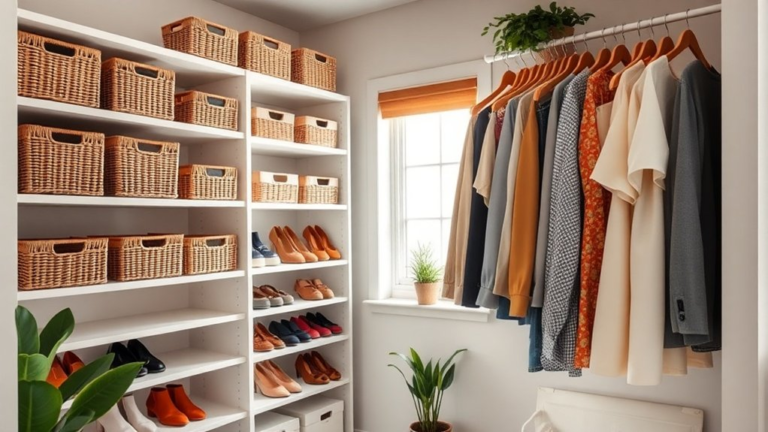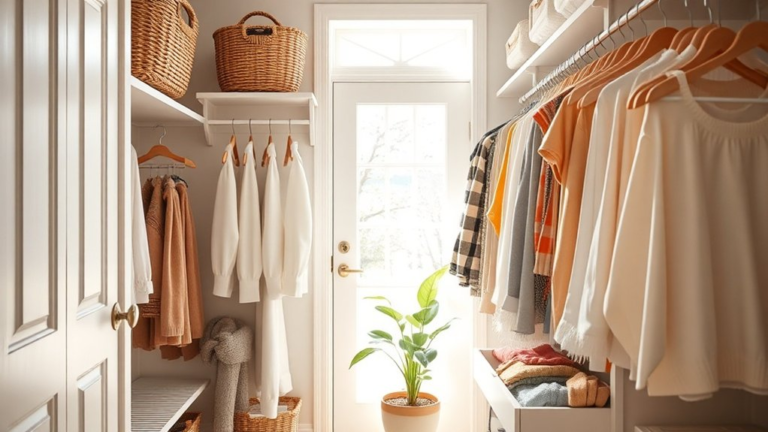
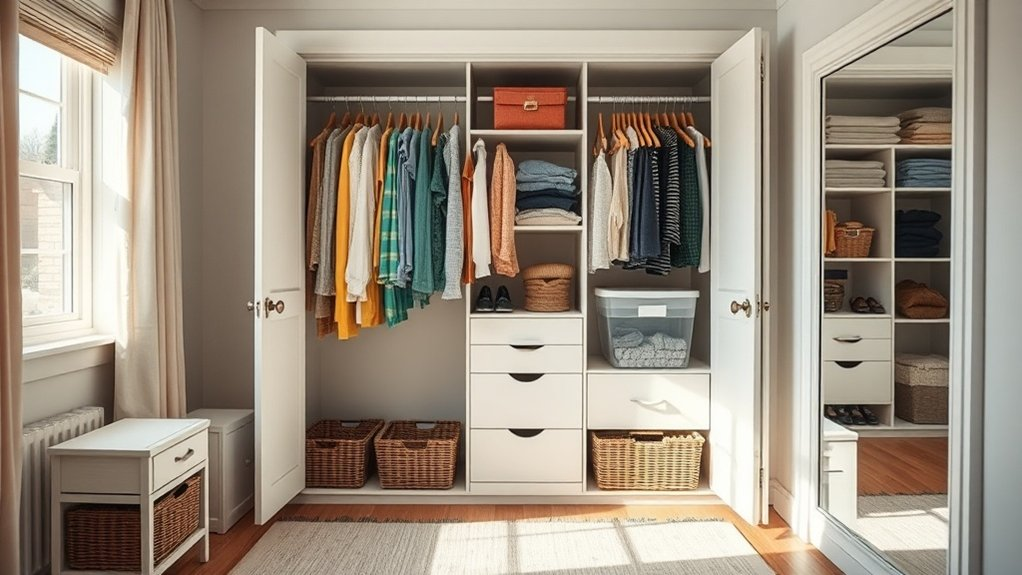
Like clearing the last scene of a busy play, you can transform your closet into a calm, useful space that actually makes life easier. You’ll feel lighter when you set a simple plan, sort by what you use most, and swap in storage that boosts visibility and access. Want steps that take an hour, clever small-space tricks, and a routine to keep things tidy? Keep going — it gets simpler and more satisfying than you might expect.
Closet Highlights
- Set one-hour declutter sessions, touching items once and using labeled donation/trash bins to build quick momentum and decision flow.
- Group clothing by usage and activity, keeping daily wear at eye level and seasonal items in labeled, clear storage bins.
- Limit sentimental items with a single labeled memory box, photograph bulky keepsakes, and reassess the box annually.
- Standardize hangers, add drawer dividers, and use stackable or adjustable clear containers to maximize vertical space and visibility.
- Build daily maintenance habits—return items, evening tidy, and schedule weekly quick sorts and seasonal wardrobe reviews for lasting order.
Quick Declutter Plan You Can Finish in One Hour
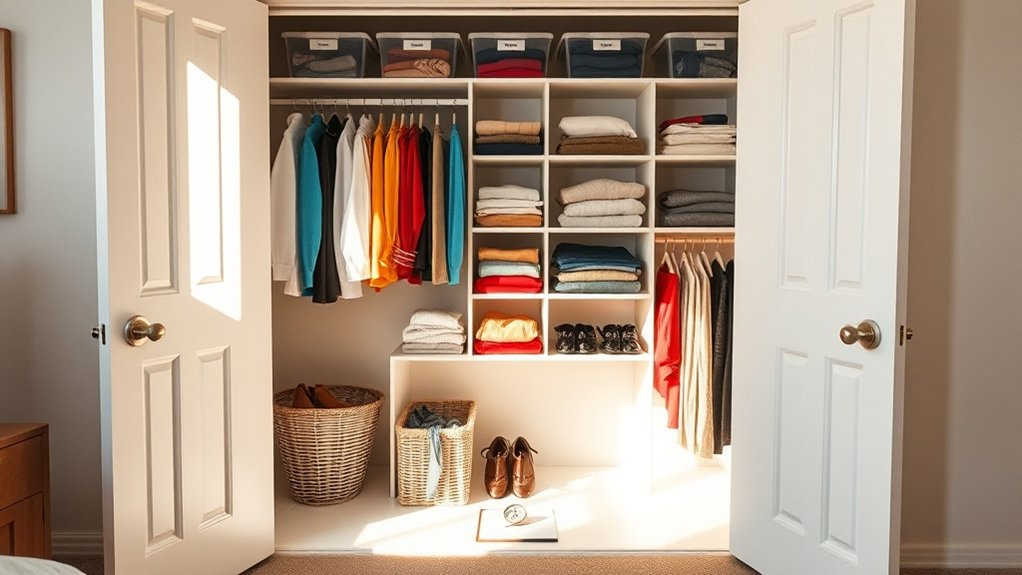
Set a timer for one hour and watch how much you can change; you’ll be surprised at what a single focused burst can do. You’ll feel energized as you clear surface clutter, sort quickly, and decide what stays in visible spots. Consider assessing vertical space for shelves or rods to maximize storage potential with vertical space when you plan your layout. Simple storage systems like labeled bins and uniform hangers create visual order and make maintenance easier — learn more about storage systems.
Use time saving tips like working in zones, pairing tasks, and setting mini-deadlines so momentum builds. Keep essential tools nearby — a laundry basket for donations, a trash bag, sticky notes, and a phone for quick photos — so you don’t waste steps.
Move briskly, touch each item only once, and trust your instincts. Can you imagine opening a neat, calm closet after just sixty minutes? You’ll be proud, motivated, and ready for the next organizing step. Transform your closet with simple techniques that emphasize ultimate organization and lasting habits.
Decide What to Keep: A Simple Decision Checklist
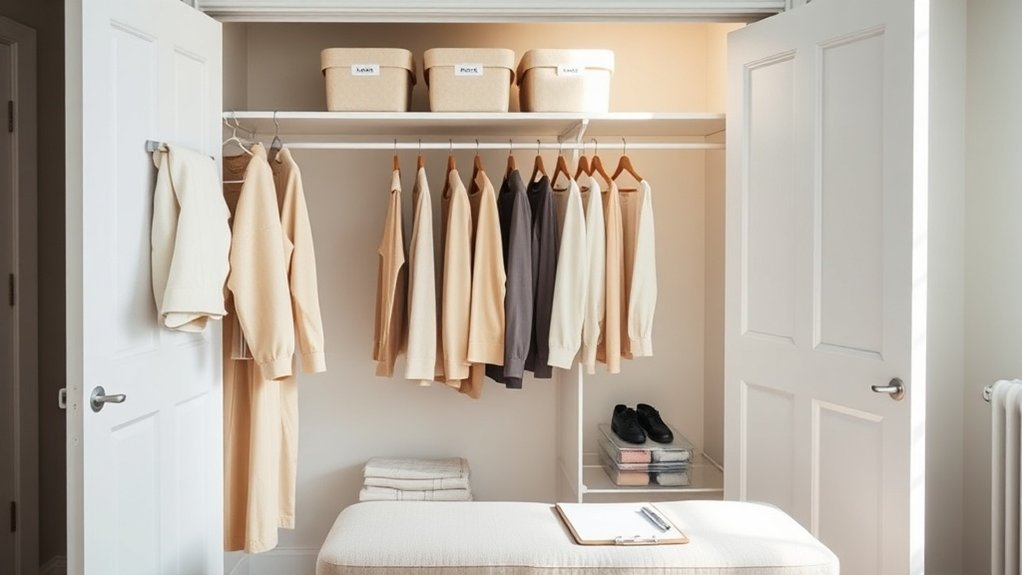
You’ve just seen how much you can change in an hour, so now let’s make the choices that keep that momentum going.
Use a simple keep or toss checklist: does it fit, feel good, and match your wardrobe essentials?
Ask yourself about emotional attachment—does nostalgia outweigh usefulness?
Consider seasonal trends but don’t let fleeting styles clutter your space.
Mind the seasons, but don’t let short-lived trends overrun your closet—keep pieces that truly endure.
Think about style evolution: will this item suit who you’re becoming?
Evaluate repair versus replace for broken favorites.
Look at outfit versatility and color preferences—will it pair easily with pieces you love?
Match decisions to your fashion goals.
If you decide to part with items, choose donation options that give them new life.
Quick, honest answers make lasting organization possible.
Consider creating a maintenance plan to keep your closet clutter-free over time.
Transforming your closet can be quick, practical, and satisfying when you follow basic organization principles and stick to a routine. Apply simple closet organization steps from trusted sources to keep results longer.
Sort by Use and Frequency, Not Color or Season

When you rethink how things are grouped, you’ll find your closet works for your life instead of against it. Shift from color or season to frequency prioritization and usage analysis. Sort by how often you grab items, not by what looks neat. That way, your daily pieces live front and center, and special items stay put without cluttering your routine. Consider integrating vertical storage to free up floor space and keep essentials accessible. Vertical solutions like shelving and hanging organizers make the most of small spaces and improve access to items with space-saving strategies.
- Keep daily wear at eye level for fast choices.
- Reserve lower shelves for occasional or seasonal pieces.
- Group by activity—work, exercise, weekends—so outfits assemble quickly.
- Label zones after a quick usage analysis to reinforce habits.
This approach makes getting dressed calm and joyful. Ready to wear what you love, every day? Consider adding modular storage like a 12 cube organizer to customize zones and maximize small-space efficiency.
Storage Swaps That Boost Visibility and Access

Swap opaque boxes for clear, front-facing storage so you can spot what you need in seconds and skip rummaging through piles.
Rotate seasonal items to prime spots when the weather changes, keeping off-season pieces tucked away but still easy to pull out. Consider using stackable organizers to maximize vertical space and customize configurations for different items. Use 30 lb capacity baskets on lower shelves for heavier items to prevent sagging and keep everything supported.
Ready to make your closet feel lighter and work harder for you?
Consider adding stackable, transparent shoe boxes to maximize visibility and vertical space while keeping footwear protected and accessible, especially for clear storage.
Clear Front-Facing Storage
Clear, front-facing storage makes finding what you need fast and feels instantly uplifting—imagine seeing every pair of shoes, bin, or folded sweater at a glance.
You’ll love how clear bins and transparent containers give you a visual inventory, making decision moments easier. Use open shelving and stackable organizers for easy access, and add drawer dividers for small items. Consider choosing organizers with adjustable shelving to fit varying closet heights and maximize capacity. Add stackable designs to make the most of vertical space and prevent shelf overcrowding.
Smart labeling and label systems, even color coded storage, keep maintenance simple and satisfying.
- Swap opaque boxes for clear bins to see contents immediately.
- Place stackable organizers on shelves for vertical order.
- Use drawer dividers and transparent containers for socks and accessories.
- Implement smart labeling and color coded storage for quick scanning.
Isn’t this a game changer? Consider adding stackable clear bins to maximize vertical space and keep items visible and accessible.
Rotate Seasonal Visibility
A simple seasonal switch can make your closet feel like a fresh, neat room every few months, and you’ll love how much easier it’s to find what you actually need.
Rotate seasonal visibility by moving out-of-season clothes to higher shelves or clear bins, and bring current items forward where you see them first. Use labeled boxes, slim vacuum bags, or under-bed storage so seasonal swaps are quick, not a chore. Consider adding stackable storage bins to maximize vertical space for those higher shelves and make swaps simpler stackable storage.
Try color-coding hangers or grouping outfits by activity—work, weekend, and special events—to sharpen visibility strategies. Choosing bins or shelves with 15.75-inch openings can make accessing items on deep shelves much easier.
How would your mornings change if everything useful was within reach?
Make a small schedule: swap twice a year, purge while you go, and celebrate the clarity. It feels great to open a tidy, intentional closet.
Also consider installing an over-the-door organizer with breathable fabric and multiple pockets to increase accessible storage for daily items like keys and scarves over-the-door organizer.
Small-Space Tricks for Tiny Reach-Ins and Closets
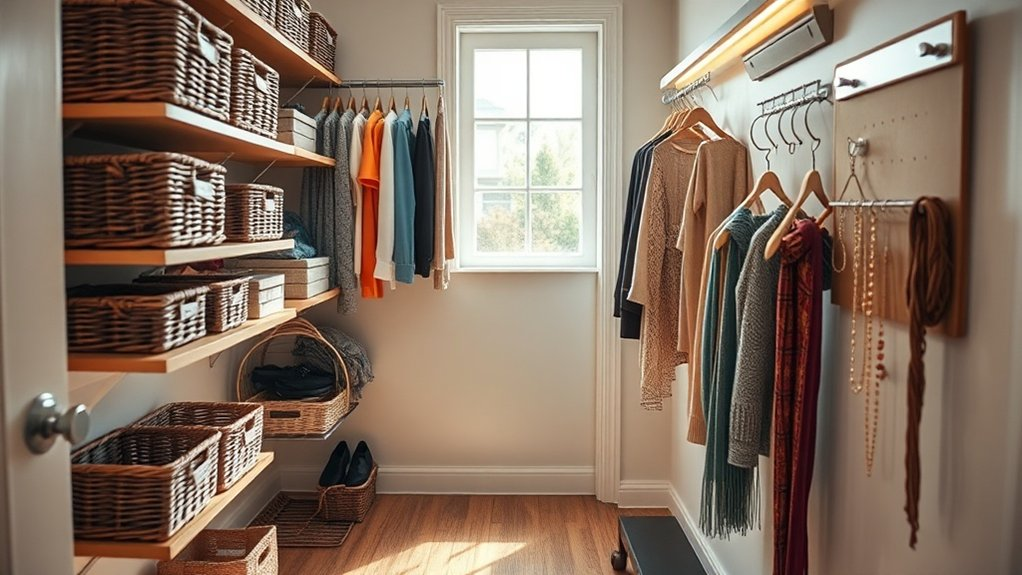
You can make a tiny reach-in feel roomy by thinking up — not out: stack shelves and add high hooks to use every inch of vertical space.
Swap in slim, uniform hangers so clothes sit neatly and you can see what you own at a glance. Consider adding a compact rolling rack if you need movable hanging and shelf space.
Ready to try it and feel the calm a small change can give?
Consider adding modular storage with detachable bins to customize vertical or horizontal configurations for optimal space use.
Consider modular designs with vertical storage to maximize capacity and accessibility.
Maximize Vertical Space
Even in the tiniest reach-in closet, thinking upward can instantly change how much you can store and how easy it’s to find things.
You’ll gain room and calm by using shelf expansion and vertical organizers, adding wall mounted storage and ceiling racks for seasonal items.
Hanging baskets and pegboard solutions keep accessories visible, while ladder shelves create tiers that don’t crowd the floor.
Space saving hooks and over the door storage capture stray bags and scarves, and stackable bins make use of every vertical inch.
Ready to rethink height? Start small, add one solution, and feel the relief as clutter shrinks and access improves.
- Install ceiling racks for seldom-used bins.
- Add pegboard solutions for small items.
- Hang baskets for easy reach.
- Stackable bins save stacked space.
Consider adding stackable storage baskets to maximize vertical space without losing accessibility. Add a set of stackable bins to really maximize vertical storage and keep items visible and dust-free.
Adding a clear stackable storage drawer lets you see contents at a glance while preserving vertical space.
Use Slim, Uniform Hangers
Something as simple as swapping mismatched hangers for slim, uniform ones can instantly transform a cramped reach-in into an orderly, calming space.
You’ll notice how hanger types and hangers materials change everything: thin velvet, bamboo, or molded plastic each offer different fabric care and weight capacity, so pick what fits your wardrobe. Slim profiles boost space efficiency, letting shirts breathe and preventing creases.
Choose a single color for better color coordination and to improve outfit visibility—your eyes will find what you need faster. Hanger organization becomes effortless when design aesthetics match the rest of the closet, and sustainable options give you pride in the choice.
Want a small, satisfying win that keeps paying off? Try a set today and enjoy the tidy result. Many multi-tier and space-saving hangers from the latest designs can double or triple your hanging capacity without sacrificing accessibility. Add a set of slim velvet hangers to maximize space and prevent slippage with non-slip velvet. Consider measuring your closet depth to ensure hangers clear doors and shelves for available space.
Smart Hangers, Shelving, and Drawer Combos That Last
Think about how a single smart hanger or a well-placed shelf can change your morning routine and lift the whole feel of your closet. You want smart storage that lasts, so choose hangers with durable finishes, shelves that mount securely, and drawer combos built to glide smoothly. Consider pairing items that maximize vertical space with adjustable shelves for seasonal flexibility.
Efficient organizing means pairing pieces: a slim hanger row above drawers, open shelving for shoes, and a few deep drawers for folded knits. That mix saves time, protects garments, and keeps things visible. Adding stackable baskets can help maximize vertical space while keeping lightweight items tidy and accessible.
Pair a slim hanger row over drawers, add open shoe shelving and deep drawers for folded knits to save time and protect garments.
- Match materials for cohesion and lasting strength.
- Use adjustable shelves to adapt to seasons.
- Pick drawers with dividers for small items.
- Keep frequently worn pieces at eye level.
Isn’t it nice when every item has a purposeful place? Consider adding stackable bins made from waterproof PP plastic for easy cleaning and vertical space optimization stackable bins.
Build a Wearable Wardrobe: Rotate to Reduce Clutter
Think about a seasonal rotation plan that keeps only the clothes you’ll actually wear within arm’s reach, so your closet feels calm and usable.
Start with capsule wardrobe essentials—versatile tops, one or two go-to bottoms, and a few layering pieces—and you’ll find getting dressed becomes faster and more joyful. Consider adding a few durable pieces made from high-quality materials to extend longevity and reduce waste.
Want to track outfits easily? Try a simple checklist or photos on your phone to spot gaps and keep clutter from creeping back.
Consider using space-saving hangers and foldable organizers to maximize room and keep rotated items accessible.
Seasonal Rotation Plan
When the seasons change, you can make your closet feel fresh again by creating a simple seasonal rotation plan that keeps only what you wear within easy reach.
Start with a gentle wardrobe assessment during seasonal shifts, asking what you loved, what fit, and what never left the hanger. Then make a plan you’ll follow.
- Sort: pull out the season’s items, try them on, and decide what truly works.
- Store: pack off-season pieces in labeled bins, keeping fragile items safe.
- Refresh: mend, launder, or donate anything you won’t keep.
- Maintain: set calendar reminders to repeat this cycle every season.
You’ll feel lighter, save time, and enjoy a closet that serves your life.
Capsule Wardrobe Essentials
A small, well-chosen capsule wardrobe can change how you get dressed every morning, cutting decision fatigue and the clutter that steals your closet’s calm.
Start by choosing capsule essentials: a neutral coat, two versatile tops, a classic pair of trousers, jeans you love, a simple dress, and shoes that fit most occasions.
Focus on quality, fit, and pieces that mix easily. Adopt a minimalist mindset to guide choices — keep items that spark confidence, let go of what you never reach for.
Ask yourself, does this match my life and existing pieces? Rotate intentionally, repair when needed, and donate what no longer serves you.
The result: a calmer closet, clearer mornings, and more joy getting dressed.
Easy Outfit Tracking
You’ve built a capsule wardrobe filled with pieces that fit and flatter — now make those pieces earn their keep by tracking what you actually wear. You can use outfit journaling or digital tracking to notice patterns, stop repeats, and bring back neglected favorites.
Start simple, stay curious, and let data guide rotation.
- Note daily outfits in a notebook or app, including mood and weather, to spot what you reach for.
- Photograph looks weekly and tag items, so you can search outfits by piece or occasion.
- Use simple digital tracking spreadsheets to tally wears, then donate items underused three times a season.
- Schedule monthly review sessions to rotate seasonal pieces and plan intentional purchases.
Which pieces will you rediscover first?
Daily and Weekly Habits to Stop Clutter From Returning
Even though clutter can creep back in, small daily and weekly habits will keep your closet tidy without feeling like a chore. Start with habit tracking: note quick wins like returning items after use and a five-minute evening tidy.
Those daily routines build an organizing mindset that beats chaotic dumps. Once a week, do a quick sort to remove anything worn out or unworn, using simple decluttering strategies you enjoy.
Daily routines create an organizing mindset that beats dumps; weekly quick-sorts remove worn or unworn items with enjoyable decluttering.
Embrace a minimalist approach where pieces earn space, and practice mindful consumption before buying. Consistent maintenance prevents overwhelm and keeps decisions easy.
Can you commit to tiny tasks that add up? When you treat upkeep as part of life, clutter prevention becomes natural, freeing your closet and your mind.
How to Handle Sentimental Items Without Hoarding
When an item pulls at your heart, it’s easy to keep everything and tell yourself you’ll sort it later, but that’s how closets turn into memory vaults you can’t use—so let’s make a kinder, clearer plan.
You can honor keepsakes without letting them take over. Start by asking why an item matters, then decide if its presence sparks joy or just guilt. Use a labeled memory box for true treasures, and limit its size so each piece earns its spot. You’ll feel lighter when you choose meaning over accumulation.
- Photograph bulky items, keep the image, release the object.
- Set a one-box rule to curb excess.
- Share stories with loved ones, pass things on.
- Revisit boxes yearly, reassess emotional attachment.
Seasonal Refresh Routine and a 30‑Minute Reset Plan
Now that you’ve made room for meaningful keepsakes, it’s time to keep that clarity going all year with a seasonal refresh routine and a simple 30-minute reset plan.
Pick a day each change of season for seasonal inspiration: swap heavy coats for lighter layers, rotate shoes, and reassess what you wore last season.
Use a refresh checklist to guide you—three piles: keep, donate, repair. Set a timer for 30 minutes and tackle one shelf or section at a time.
You’ll be surprised how much you can sort, fold, and rehang in half an hour. Finish by wiping surfaces and resetting hangers evenly.
Want a closet that feels calm every season? Small, steady rituals make it last, and you’ll enjoy opening the door.
Conclusion
You’ve got this—your closet can feel like a calm, welcoming room instead of a stressful jungle. Use the quick plan, the simple checklist, and the rotation tips to keep only what you love and use. Swap in clear storage, uniform hangers, and tiny tricks for small spaces. Ask yourself what fits your life now. Start small, repeat weekly, and watch clutter disappear like magic—one thoughtful choice at a time.