You can reset your closet this weekend by pulling everything out, trying pieces on, and sorting into keep, mend, donate, or store piles so you only keep what fits and sparks joy. Pick a small, versatile color palette, build a compact capsule with comfy layers, and create three business and casual outfit formulas for easy mornings. Pack summer items cleanly, label boxes, and set a quick weekly tidy habit. Want simple steps to build seven core fall outfits?
Closet Highlights
- Pull everything out, try items on, and sort into keep, repair, donate, or store piles for a clear starting point.
- Build a compact capsule of versatile pieces in a 3–5 color palette for easy mixing and quick outfit formulas.
- Prioritize layering staples—light sweaters, tailored blazers, and coats—to transition between warm days and cool evenings.
- Clean, mend, and store summer items in labeled breathable containers; rotate off-season clothes to free space.
- Schedule weekly five-minute tidies and a midseason review to adjust fits, replace worn pieces, and curb clutter.
Decide What You Actually Wear This Year
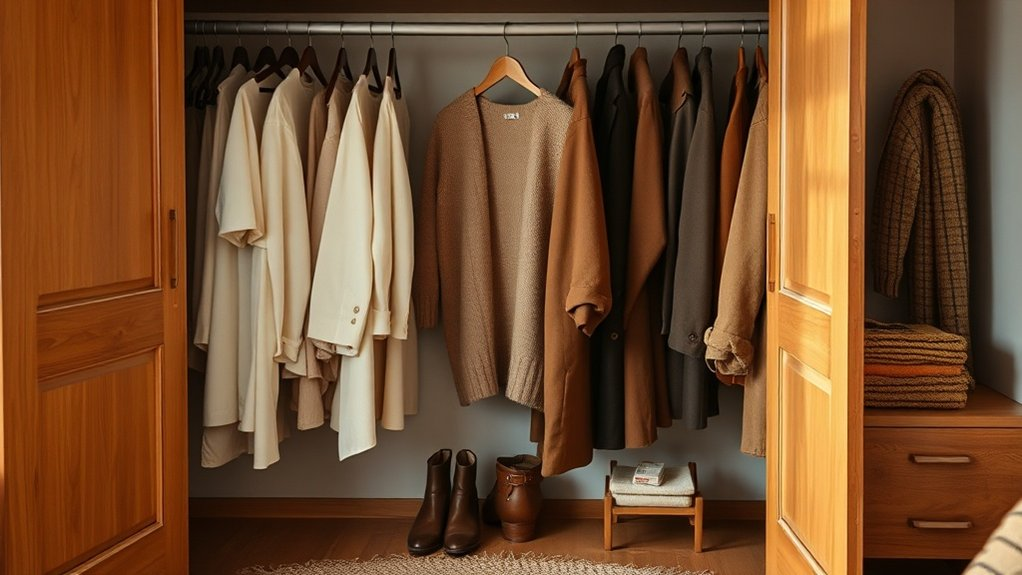
Wondering which pieces actually made it through your year of real life? You’ll start by pulling everything out and laying it where you can see it.
Try on items you haven’t worn in months and ask, does this fit my daily rhythm, bring me joy, or solve a real need? Keep the things you reach for first, the reliable favorites that feel effortless.
Be honest about what’s been relegated to the back—don’t hold onto “someday” clothes. Snap quick photos of outfits that worked, so you’ll remember combinations you love.
Sort into keep, repair, donate, and store piles. When you handle each piece, decide based on how it serves your life now, not on what it used to be.
Consider creating a maintenance plan to prevent clutter from creeping back in. Add a simple seasonal schedule to your routine so transitions stay manageable each year. Also consider tracking closet inventory to make future edits faster.
Create Fall Outfit Goals (Capsule, Business, Casual)
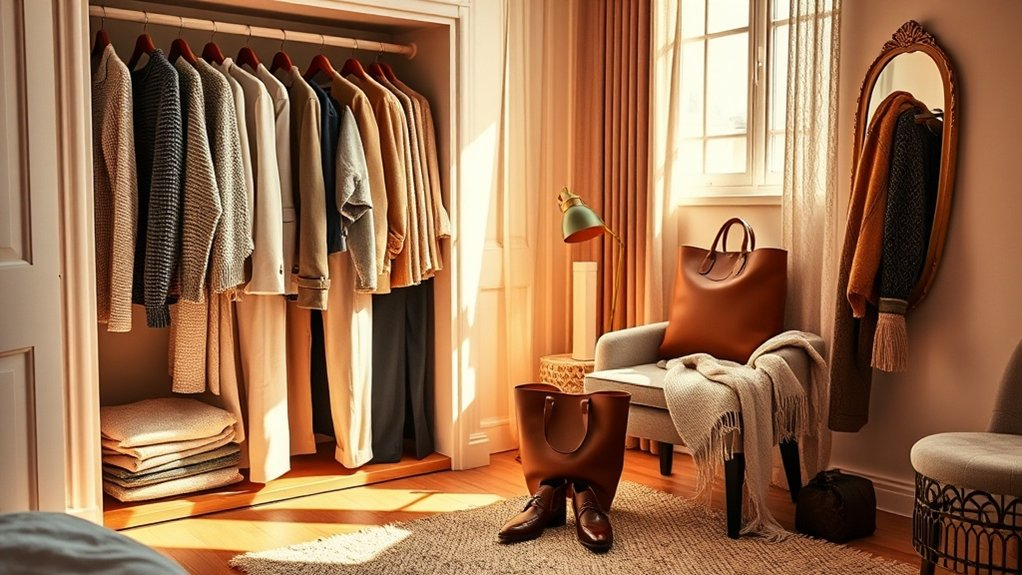
Think about what you want your fall wardrobe to do for you, and start by curating a capsule of versatile pieces that mix and match easily. Consider adding stackable organizers to keep seasonal items tidy and maximize vertical closet space. Choose durable, waterproof materials like hard PP plastic for organizers so your stored items stay protected and the units last longer.
Then sketch simple business outfit formulas—like a go-to blazer, blouse, and tailored trouser—that make weekday dressing quick and confident.
Finally, plan a handful of casual weekend looks that feel comfortable and true to you, so you’ll have outfits ready for every plan. Consider incorporating vertical storage solutions to maximize closet space and keep your curated pieces accessible.
Curate A Capsule Wardrobe
As the air cools and leaves shift color, you can create a capsule wardrobe that makes getting dressed feel effortless and joyful.
Start by choosing a limited palette of three to five colors that complement your skin tone and lifestyle, then pick versatile pieces that mix and match: a neutral coat, a cozy knit, a tailored pair of pants, a skirt, and layered tops. Consider adding stackable storage to keep seasonal pieces accessible and tidy. Many people find that using stackable bins helps keep off-season items organized and easy to rotate.
Think about fabrics that adapt—light wool, ponte, and soft cotton—and prioritize comfort and fit.
Include two pairs of shoes that cover your daily needs and one standout accessory to lift simple looks.
How will these choices simplify your mornings and reflect your personal style?
Try the capsule for two weeks, then tweak it until it sings.
Consider adding space-saving hangers like Kalimdor Space Saving Pants Hangers to maximize closet capacity and keep your capsule organized.
Define Business Outfit Formulas
Pick three dependable business outfit formulas you can repeat all season, and you’ll cut decision fatigue while looking polished every day.
First, choose a tailored blazer plus silk blouse and straight trousers—classic, confidence-boosting, and easy to tweak with color.
Second, pick a knit dress layered with a structured coat and ankle boots for warmth and effortless grace.
Third, go with a crisp button-down, fitted skirt, and loafers for meetings that need sharp focus.
Set a neutral palette with two accent pieces to keep mixing simple.
Ask yourself which silhouettes flatter you most, then buy fewer pieces that work harder.
When you commit to formulas, mornings get calmer, and you step out feeling ready, composed, and intentional.
Consider adding modular storage like stackable baskets to keep your seasonal pieces accessible and well-organized.
You can further streamline by choosing storage that is stackable and clear so you can see contents at a glance.
For bulky seasonal items, consider large 90L storage solutions to maximize closet capacity.
Build Casual Weekend Looks
When weekend plans call for comfort and style, you can build casual looks that feel effortless and intentional so you actually want to wear them.
Start with a reliable base: well-fitting jeans, tailored joggers, or a favorite skirt. Layer with cozy knits, a lightweight jacket, or a flannel shirt to adapt to breezy fall mornings. Consider using clear, stackable storage solutions like clear bins to keep layers organized and visible. For tight closet spaces, choose compact stackable bins to maximize vertical storage without clutter.
Pick three go-to tops in neutral and one pop color to mix and match. Add shoes that match your pace — sneakers for errands, ankle boots for brunch.
Accessorize simply: a crossbody bag, scarf, and understated jewelry.
Think about activities, then plan outfits that suit them. Want easy outfits every weekend? Create a small capsule of pieces you love and rotate them. Consider incorporating modular storage like a 12 Cube Organizer to keep seasonal pieces accessible and neatly separated.
Sort Clothes Fast: Keep, Mend, Donate, Store
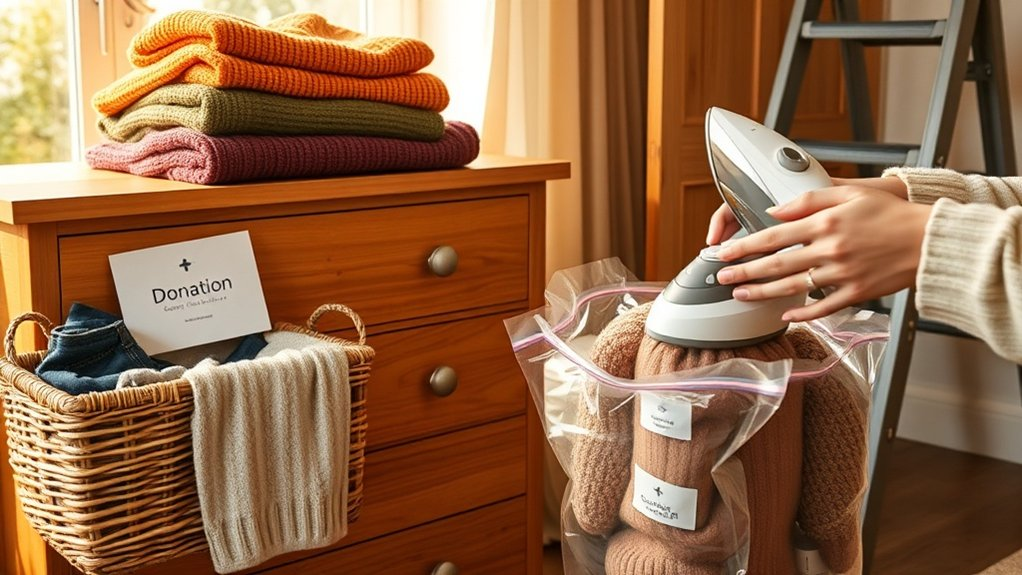
If you want to clear your closet quickly and still feel good about every decision, set a simple four-box system: Keep, Mend, Donate, Store.
Start by touching each item—does it fit, flatter, and spark confidence? If yes, it goes in Keep. If it’s loved but worn, place it in Mend and schedule a quick repair or hem. Consider using stackable designs to keep repaired items organized and accessible while you complete mending.
Handle every piece—if it fits, flatters, and sparks confidence, keep it; if loved but tired, mend it promptly.
Items that haven’t been worn in a year, or don’t suit your current life, go to Donate; someone else will enjoy them. Many closets benefit from space-saving techniques that make donated items easier to sort and transport.
Seasonal pieces that you’ll wear next year, like summer sundresses or heavy winter coats, belong in Store, labeled and protected.
Move steadily, avoid overthinking, and reward yourself when boxes are done.
Consider adding a labeling system to improve visibility and speed during future seasonal transitions.
Assess Gaps: What to Buy vs. What to Borrow
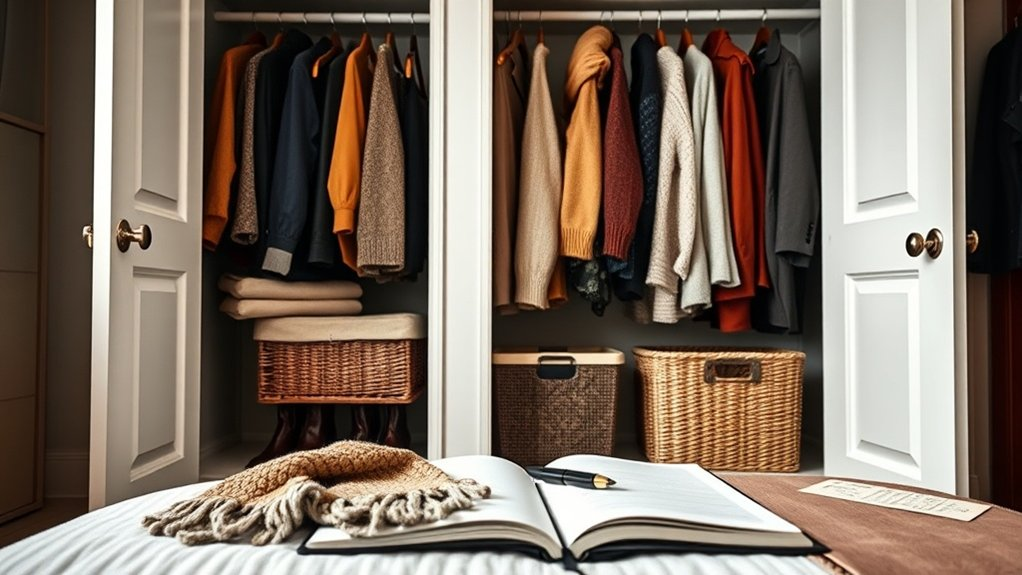
How do you know whether to buy a new piece or borrow one from a friend or rental service? Start by listing outfits you actually wear, then spot what’s missing: a warm coat, versatile boots, or a special-event dress.
If the item fits many looks and you’ll wear it often, buy it — quality and fit matter. If it’s for one event, a bold trend, or an expensive piece you rarely need, borrow or rent. Consider using space-saving hangers for bulky seasonal items to keep them protected and organized when not in use.
Consider cost, storage, and emotional value: will it make you feel confident repeatedly, or just once? Also assess material quality and versatility to ensure pieces hold up across seasons and uses, like choosing durable materials for frequent wear.
Also weigh maintenance — repairs and dry cleaning add up. Make choices that feel sustainable and joyful. You’ll end up with less clutter and more pieces you love. Consider doing a full seasonal reset each year to keep your wardrobe aligned with your needs and avoid accumulating unworn items, focusing on closet organization as you decide.
Pack and Store Summer Pieces Efficiently
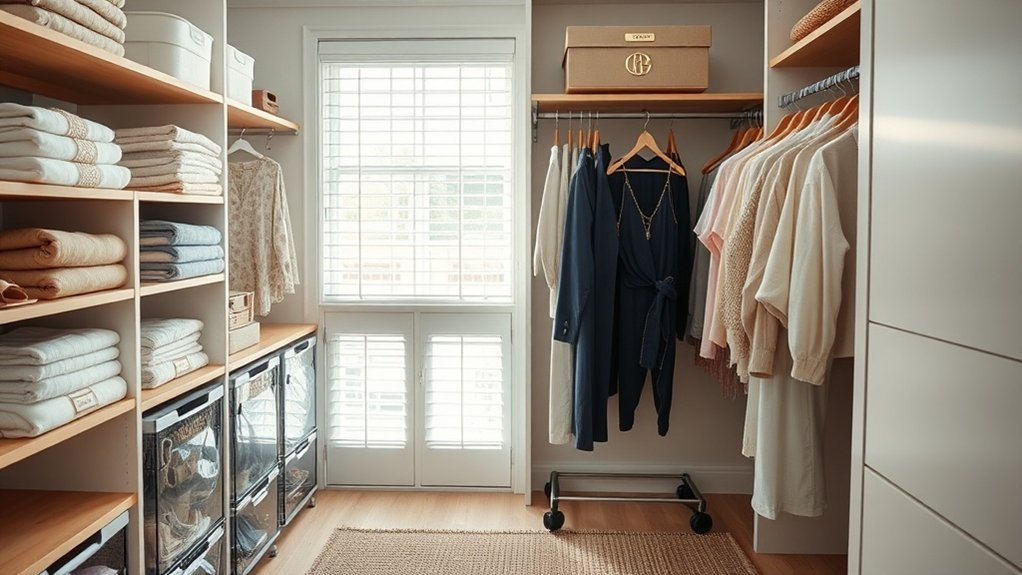
Now that you’ve decided what to keep, buy, or borrow, it’s time to give your summer pieces a smart send-off until next year.
Pack items that deserve care, like swimwear, linen dresses, and lightweight tees, in breathable containers to prevent mildew and fading. Wash and fully dry everything, mend small tears, and use acid-free tissue between delicate layers. Label boxes clearly so you won’t guess next season. Don’t forget a small sachet of lavender or cedar for a fresh, pest-free scent. Consider stacking items in stackable storage to maximize vertical space and keep boxes organized.
- Fold knits loosely to avoid creases and store flat.
- Use vacuum bags for bulky cushions, not fragile fabrics.
- Keep a running inventory sheet inside each box.
- Store boxes off the floor in a cool, dry spot.
Ready to tuck summer away? Consider using under-bed storage for low-profile items to maximize closet space. Also consider breathable storage bags to protect fabrics while allowing air circulation.
Organize Your Closet for Layering and Visibility
When you rearrange your closet with layering and visibility in mind, getting dressed becomes faster and more fun because everything you need is easy to see and reach.
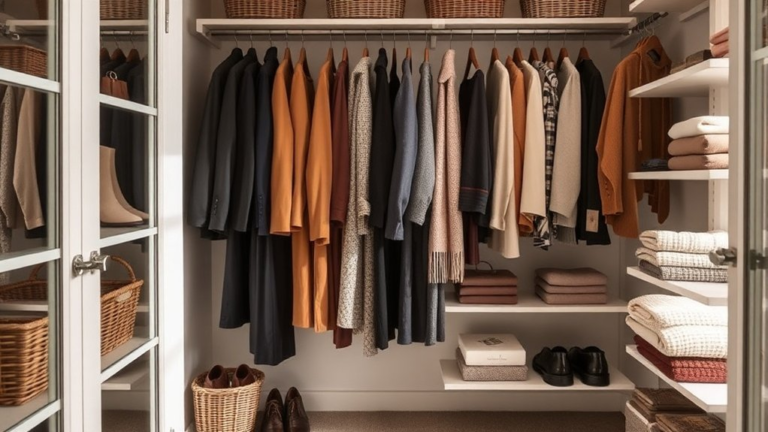
Start by grouping pieces by type and weight—light tees, midweight sweaters, and heavier coats—so you can grab what fits the morning temperature. Use slim, matching hangers to save space, and place frequently worn layers at eye level.
Add clear bins for scarves and hats, labeled so you don’t hunt. Arrange outfits by color family to spark combinations, but keep delicate knits folded to protect them.
Can you feel the relief of a tidy, purposeful closet? You’ll enjoy morning routines more, experiment with looks, and actually wear the pieces you love.
Consider following general closet organization principles from expert resources to create a lasting system that works for your routine. To further streamline seasonal transitions, plan your storage and rotation using space-saving strategies that match your closet size and needs. Also consider incorporating stackable organizers to maximize vertical space and keep items accessible.
Build 7 Core Fall Outfits From Basics
Start by pulling together core neutral pieces—think a cozy camel coat, a crisp white tee, dark jeans, and a versatile blazer—you’ll be surprised how far they go. Consider choosing pieces that layer well and are made from durable, easy-care fabrics like non-woven fabric to keep them looking fresh season after season. Add a small selection of stackable storage so you can rotate and protect off‑season items without clutter.
Then play with layering and texture, mixing knits, leather, and soft scarves to make seven distinct outfits that feel polished and comfy.
Ready to see how a few basics can stretch into a week’s worth of looks? Consider adding versatile storage like stackable organizers to keep seasonal pieces accessible and neatly rotated.
Core Neutral Pieces
Think of your closet as a toolkit: with a handful of core neutral pieces, you can build a season’s worth of outfits that feel polished, comfortable, and effortlessly refreshed.
Start by choosing reliable classics that mix and match easily, so you’ll reach for them daily without thinking. Neutral colors act like quiet teammates; they support bolder accents and make dressing simple.
Which pieces will you pick to simplify mornings and boost confidence?
- A well-fitting white or cream tee that layers or stands alone.
- Slim dark jeans that go casual or dressy in seconds.
- A tailored blazer in gray, navy, or camel for instant polish.
- Comfortable ankle boots in black or brown to finish looks.
Collect pieces you love; they’ll reward you all season.
Layering And Texture
Although you’ve already locked down your core neutrals, layering and texture are where the fun begins, because they turn simple pieces into outfits that feel rich and ready for anything.
Start with a lightweight tee, add a soft cashmere or cotton sweater, then top with a structured jacket; the contrast makes each layer pop.
Mix textures—denim, leather, knit, and suede—to create visual interest without extra colors.
Don’t forget scarves and hats; they add warmth and personality.
Try varying lengths: a long vest over a cropped jacket changes proportions and adds movement.
How does each layer feel against your skin? Choose pieces that work together and stand alone.
With thoughtful layering, your basics become a versatile fall wardrobe you’ll love.
Maintain the Reset: Weekly Habits and Seasonal Review
Now that you’ve reset your closet for fall, keeping it that way comes down to simple weekly habits and a quick seasonal check-in, and you’ll find the effort pays off in less stress and more joy when you get dressed.
Each week, spend five minutes straightening shoes, refolding bulky knits, and returning stray pieces to their homes. Ask yourself what you actually wore and why — that insight helps you tweak choices and avoid closet clutter.
Spend five minutes weekly: tidy shoes, refold knits, return stray pieces — notice what you wore and why.
Keep a small donation bag handy for items you didn’t reach for. At the season’s midpoint, do a brief review: repair, swap, or store based on wear and weather.
- Tidy for 5 minutes each week
- Note what you wore and what you skipped
- Reassess comfort and fit monthly
- Rotate and donate seasonally
Frequently Asked Questions
How Do I Transition a Wardrobe on a Tight Budget Without Buying New Items?
You’ll layer cleverly, swap accessories, sew simple repairs, repurpose summer pieces with tights and cardigans, deep-clean and tailor favorites, rotate shoes, mix textures, and organize outfits so you’ll stretch your wardrobe’s versatility without buying new items.
Can I Store Shoes Long-Term Without Damaging Them?
By all means — you can store shoes long-term without damage. Keep them clean, dry, stuffed with acid-free tissue, in breathable boxes or cloth bags, avoid plastic, rotate occasionally, and use cedar or silica packs to prevent mold.
How Should I Care for Wool and Cashmere Between Seasons?
You should clean, air, and lightly brush wool and cashmere, spot-treat stains, use gentle detergent for occasional hand washes, reshape damp pieces, dry flat away from heat, and store folded with cedar or lavender to deter moths.
What Are Sustainable Disposal Options Beyond Donating?
You can upcycle garments into household items, sell them through resale apps, trade at clothing swaps, recycle textiles at specialized facilities, or arrange fiber reclamation for insulation or stuffing—these options keep textiles circulating and reduce landfill waste.
How Do I Adjust Outfits for Unpredictable Fall Weather?
About 72% of people layer to adapt; you’ll start with breathable base layers, add insulating mid-layers, and keep a waterproof shell handy, choosing versatile pieces you can mix, match, and shed as temperatures shift throughout the day.
Conclusion
You’ve done the hard work—now enjoy a closet that makes mornings simpler and outfits that feel like you. Did you know people wear just 20% of their wardrobe 80% of the time? That shows the power of thoughtful editing. Keep a weekly habit of reassessing, mend what you love, and donate what doesn’t spark joy. Want to try building seven go-to fall looks this week? Start small, stay curious, and celebrate each intentional choice.