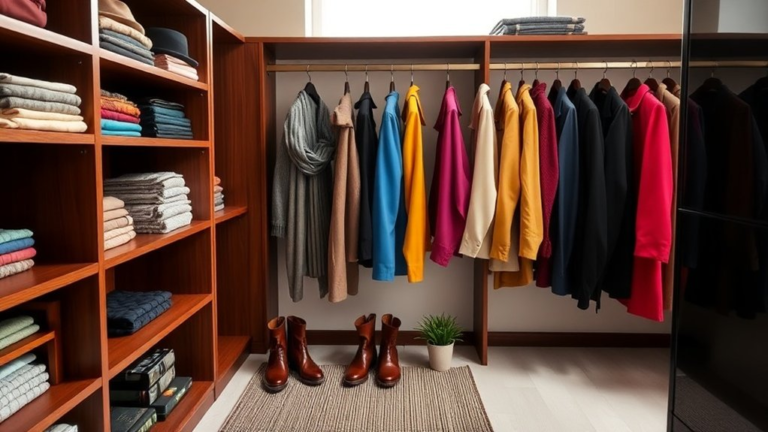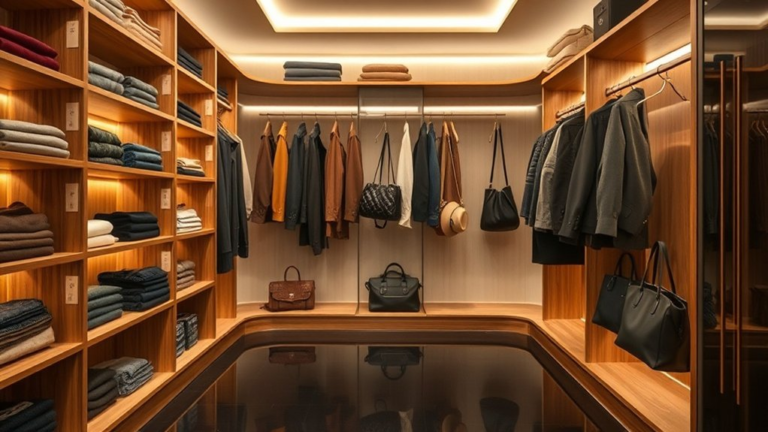
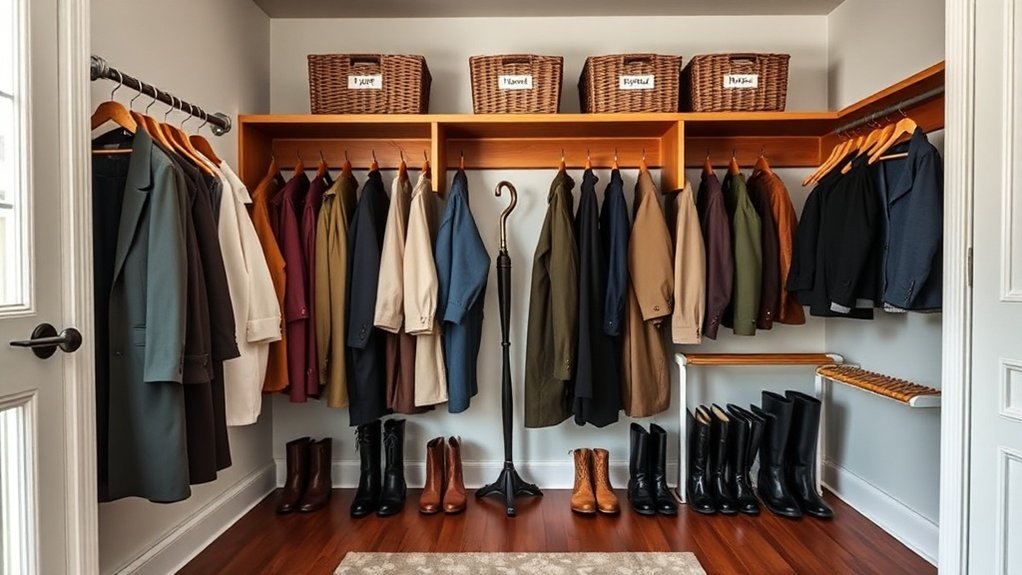
You can turn any coat closet into an easy, calm landing spot by first checking size, users, and items you store, then tailoring solutions: hooks and slim hangers for shallow entries, pull-out baskets and LED strips for deep halls, divided zones and double rods for reach-ins, clear sight lines for narrow walk-ins, and soft hangers plus breathable bags for armoires. Keep clear bins, labeled baskets, and a weekly five-minute tidy habit. Want practical layouts and product picks to finish the job?
Closet Highlights
- Assess closet dimensions, users, and frequent items to determine needed hanging length, shelving, and shoe storage.
- Use slim, uniform hangers and double-hang rods to maximize hanging capacity and separate coat lengths.
- Install wall hooks, vertical organizers, or slim shoe racks for quick-access items and to keep floors clear.
- Add pull-out baskets, clear labeled bins, and stick-on lights to improve visibility and prevent lost items.
- Maintain order with weekly tidies, a donation box at the front, and seasonal rotation in breathable storage.
Quick Checklist to Assess Your Coat Closet Type and Needs
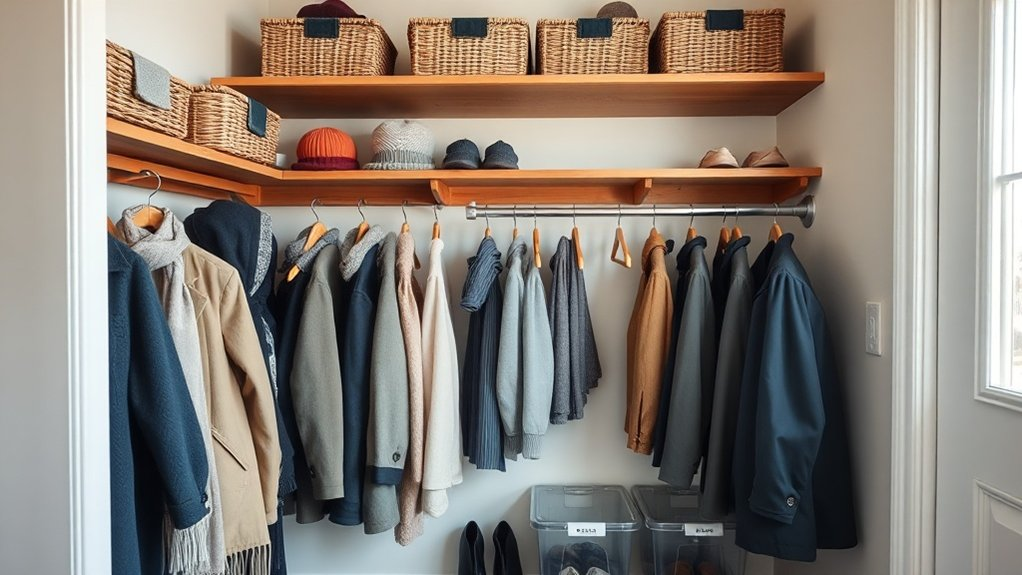
Before you plunge into bins and hooks, take a moment to look at what your coat closet really is and what you need it to do. Ask yourself: who uses it, and how often?
Note the closet’s depth, width, and lighting. Check whether you need space for long coats, umbrellas, shoes, or kids’ backpacks. Count hangers and shelving, and decide if seasonal storage will live there.
Think about traffic flow—do coats get tossed in or neatly hung? Jot down the problems you face: poor visibility, cluttered floor, or missing hooks.
Prioritize needs into must-haves and nice-to-haves. This quick checklist helps you plan smart, so when you organize, the results fit your life and feel satisfying. Consider adding stackable storage to maximize vertical space and keep seasonal items accessible. Adding space-saving hanger hooks can instantly multiply hanging capacity without major installs.
Organizing a Shallow Entryway Closet (Hooks, Slim Hangers, and Vertical Storage)
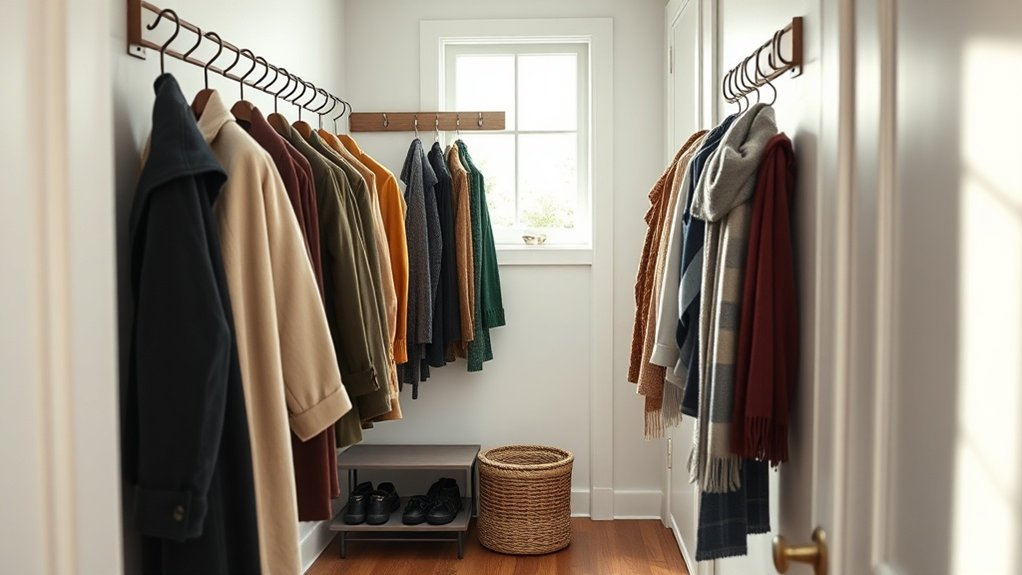
If your entryway is shallow, you can still create a tidy, welcoming space by mapping out a smart wall hook layout that keeps coats and bags off the floor.
Try slim, non-bulky hangers to save depth and fit more items neatly, and consider vertical solutions like stacked hooks or slim shelving to use the full height.
Ready to rethink that narrow closet so it feels organized and effortless every time you walk in?
Consider adding a slim tall shoe rack to maximize vertical storage for footwear and free up floor space, such as a 10-Tier Shoe Rack that fits narrow closets. Additionally, choosing no-drill installation options can make setup quick and damage-free.
You can further improve durability and moisture resistance by choosing storage bins made from waterproof PP plastic for items stored on slim shelving.
Maximize Wall Hook Layout
A few smart hooks can turn a cramped entryway into a welcoming command center that greets you instead of groans at you.
Place a row at eye level for coats and jackets, then add a lower staggered row for kids’ items and bags. Use a narrow vertical strip near the door for quick-grab keys and leashes. Consider adding space-saving hangers to increase garment capacity without widening the closet.
Mix single pegs and double hooks so bulky items don’t crowd smaller ones. Measure before you mount; spacing matters more than you think. You can also install an adjustable shelf or organizer to maximize vertical space.
Leave a few empty hooks — breathing room keeps things tidy. Choose sturdy hardware that can take daily use, and mount into studs or use heavy-duty anchors.
Isn’t it nice to open the door and find everything exactly where you expect? Consider adding vertical storage to free up floor space and keep essentials accessible.
Choose Slim Hanger Solutions
Three slim hangers can change how you use a shallow entryway closet, giving you more room without sacrificing order.
Swap bulky plastic or wooden hangers for velvet or thin metal ones, and you’ll instantly free width for extra coats, scarves, or a tote. You’ll notice garments sit neater, don’t slip, and create a cleaner visual line that calms the space. Choose durable materials like rust-resistant metal or hard PP plastic when possible to ensure longevity and protect your wardrobe.
Want to fit a family’s jackets in a tight spot? Use slim hangers, group by person or season, and hang light items in front, heavy ones behind.
Add a slim cascading hook for layered storage, and you’re maximizing vertical real estate. Small changes like these make entry routines smoother, so you feel ready and welcoming every time you walk out. Consider adding multi-tier hangers to further increase capacity without expanding footprint. A simple measure like swapping to slim hanger solutions can significantly increase hanging capacity in shallow closets.
Organizing a Deep Hall Closet (Make the Back Usable and Prevent Lost Items)
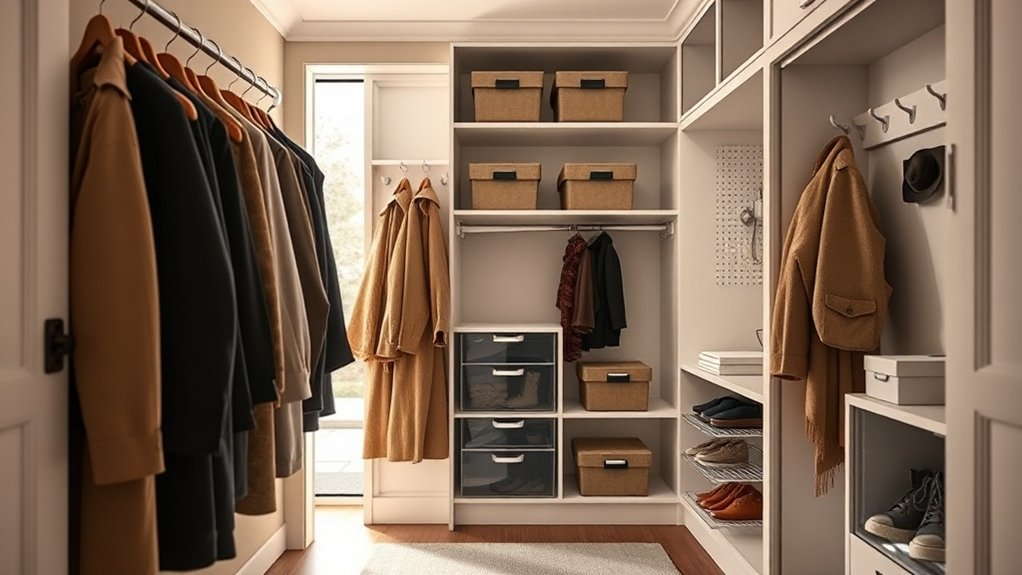
Your deep hall closet can become a super helpful space, not a black hole where scarves and gloves disappear.
Start by adding pull-out baskets, sliding shelves, or a shallow lower rod so you can reach the back without crawling in. Consider using stackable storage bins to maximize vertical space and keep items visible. Install reinforced shelves to prevent sagging and support heavier items over time.
How would it feel to always find what you need at a glance, with everything easy to grab and nothing lost?
Consider using stackable storage baskets or cubes to maximize vertical space and keep items visible.
Maximize Backspace Accessibility
Once you clear away the clutter, you’ll see how much untapped space lives at the back of a deep hall closet, and you’ll want to put it to work right away.
Start by adding a slim shelf or two at eye level to hold out-of-season hats or labeled bins, so items stay visible and reachable. Consider using clear acrylic dividers or bins to keep stacks tidy and easy to scan.
Install a shallow pull-out drawer or sliding basket for scarves and gloves; you’ll avoid digging and frustration.
Mount a low-profile LED strip so the back isn’t a dark mystery.
Use uniform, thin hangers and push longer coats forward, creating a clear path to the rear.
Can you imagine grabbing what you need without a struggle? Small changes make that cozy, efficient backspace truly useful.
Consider adding labeled storage bins or slim shelving designed for closets to keep everything orderly and accessible, since closet organization principles help maximize usable space. Add a compact, vertical unit like a portable closet to increase hanging and shelf capacity without taking up much floor space.
Prevent Items Getting Lost
How do you stop favorite scarves, hats, or that umbrella from vanishing into the back of the closet? You make the back useful and easy to see.
Add clear bins or shallow baskets labeled by type, so you can pull one out and find what you need without digging.
Mount a slim shelf or two at the back for shoes, seasonal items, or overflow. Use a tension rod or hooks low at the rear to hang bags and umbrellas upright.
Consider a rolling shoe rack or a sliding tray if you want glide-out access. Keep a donation box near the front to prevent clutter from migrating.
When you commit five minutes weekly to straighten things, lost items stay found, and your hall closet feels calm and welcoming.
A simple plan and consistent habits, like using clear bins and designated spots for each item, make maintaining an organized closet far easier. Adding stackable organizers can further maximize vertical space and keep items accessible without cluttering the floor. Also consider foldable storage for flexible, space-saving options that tuck away when not needed.
Organizing a Double-Door Reach-In Closet (Maximize Shelves and Hanging Zones)
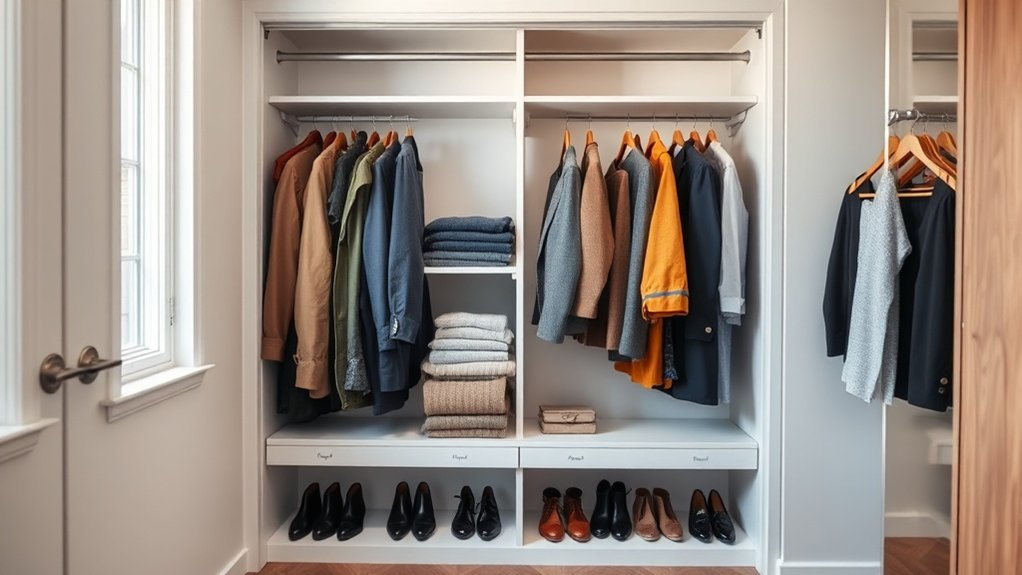
Although a reach-in closet might seem small, you can turn a double-door setup into a highly organized, easy-to-use space that makes getting dressed faster and more joyful.
Start by dividing the back wall into clear zones: a top shelf for seasonal bins, a middle row of hanging for daily coats, and a lower shelf or cubbies for shoes and bags. Use slim, uniform hangers to save width and add a short double-hang rod on one side for lighter jackets. Consider adding a hanging shelf unit or collapsible cubes for extra folded storage collapsible storage bins.
Brighten the interior with a stick-on light and labels so everything has a home. Want easy access every morning? Try these focused steps:
- Maximize vertical shelves for bins and folded items.
- Create distinct hanging zones by length and use.
- Reserve lower space for shoes and grab-and-go items.
Consider adding a rotating or multi-hook organizer for accessories to improve visibility and save space, especially for items like belts and scarves rotatable belt hanger.
A clear plan for zones and consistent storage solutions helps you maintain order long-term and makes the closet easier to use closet organization.
Organizing a Narrow Walk-In Closet (Flow, Zones, and Sight Lines)
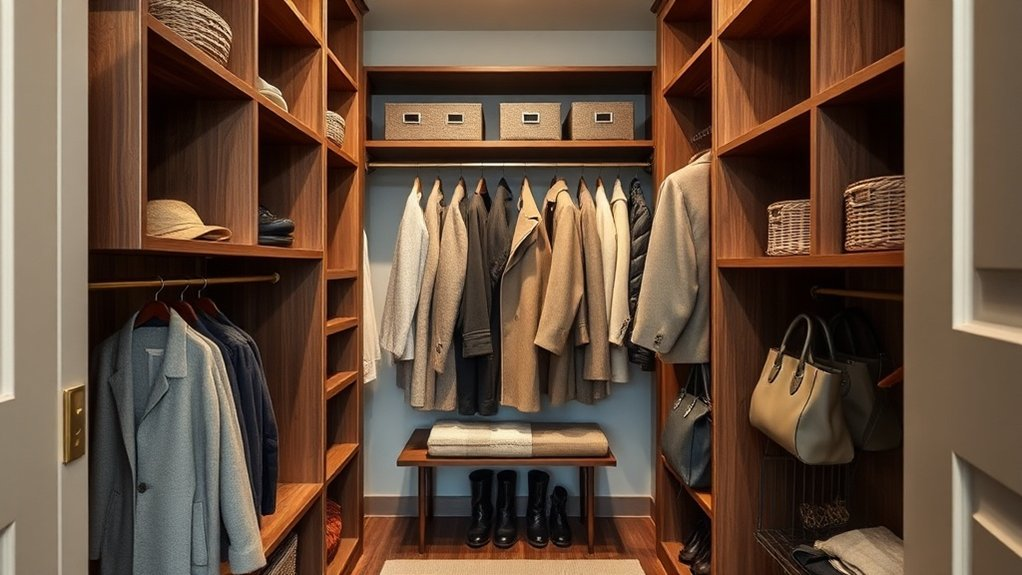
A narrow walk-in closet can feel like a secret dressing room when you plan for flow, clear zones, and sight lines that guide your eye and your morning routine.
Start by mapping a path from the door to the deepest shelf; keep that path clear so you move easily. Consider installing adjustable shelves to adapt as your storage needs change and maximize usable space adjustable shelves. Adding vertical space solutions like cascading hangers or multi-layer organizers can dramatically increase capacity without widening the footprint.
Map a clear path from the door to the deepest shelf so you move easily every morning.
Create zones: daily coats and scarves near the entrance, seasonal items deeper in, and a small shoe area on one side.
Use low shelves and open hooks to keep sight lines uninterrupted, so you can spot what you need at a glance.
Add a slim bench or fold-down seat for putting on shoes, and a mirror to lengthen the space visually.
What small change will make your mornings smoother?
Consider adding vertical organizers like multi-tiered or stackable bins to maximize storage without crowding the pathway.
Organizing Built-In Armoires and Furniture Closets (Protect Delicate Outerwear)
If you want your delicate coats and special pieces to last, start by treating your built-in armoire or furniture closet like a gentle guardian for those items you wear least but love most.
You’ll want soft-touch hangers, breathable garment bags, and a calm layout so each piece can rest without being squashed. Think of the space as a mini museum for your outerwear; label sections by fabric or season, and leave breathing room between items so air circulates. Consider adding a stackable closet organizer to maximize vertical space while keeping stored boxes and accessories stable.
- Use padded or wooden hangers to maintain shape.
- Store silk, cashmere, and embellished pieces in breathable covers.
- Rotate seasonal items and inspect monthly for moths or spots.
Isn’t caring for these pieces a small act of love? Make use of vertical space with stackable shelves to keep boxes and lesser-used items organized and accessible. Adding customizable layouts can help you maximize storage while preserving delicate garments.
Storage Products and Maintenance Habits That Work for Every Closet Type
You’ve given special care to those treasured coats, so now let’s make sure every closet in your home gets the same thoughtful treatment with products and habits that actually work.
Start with sturdy hangers, clear bins for seasonal items, and labeled baskets for scarves, gloves, and hats.
Add a slim shoe rack, a tension rod for extra hanging space, and a few scented sachets to keep things fresh.
Schedule a quick weekly sweep to return stray items and a monthly purge to donate pieces you no longer wear.
Rotate seasonal clothing to the front, zip delicate items into breathable garment bags, and wipe shelves when needed.
Little routines and the right tools keep every closet tidy, usable, and joyful.
Consider installing a closet door organizer to utilize vertical space and enhance accessibility.
Frequently Asked Questions
How Do I Store Seasonal Coats Long-Term Without Moths or Mildew?
Store seasonal coats clean, fully dry, and brush wool before packing; use breathable garment bags or acid-free boxes with cedar blocks or lavender sachets, add silica gel packs, avoid plastic, and check periodically to prevent moths or mildew.
Can I Safely Clean Down Coats at Home?
Can you safely clean down coats at home? Yes, you can—most down coats tolerate gentle home washing with mild detergent, cold cycle, and extra rinses; tumble dry low with clean tennis balls to restore loft and prevent clumping.
What’s the Best Way to Transport Multiple Coats for Travel?
You should pack coats in compressible garment bags or vacuum bags, rolling lighter ones and layering heavier coats; use padded hangers or a suitcase divider, and carry delicate coats on a foldable travel hanger to prevent creasing.
How Do I Childproof Coat Closet Doors and Hangers?
You should install childproof door latches, secure closet doors with top-mounted locks, replace sharp hooks with rounded hangers, use soft garment clips, keep heavy items low, and anchor shelving so curious kids can’t pull things down.
Are There Insurance Considerations for High-Value Outerwear?
Yes — you should. You’ll want to document high-value outerwear with photos, receipts, and appraisals, check your homeowners or renters policy for limits, add endorsements or scheduled personal property coverage if needed for full protection.
Conclusion
Think of your coat closet as a welcoming porch: tidy, ready, and honest about what it can hold. You’ll keep favorite coats easy to reach, stray scarves visible, and muddy boots contained, so mornings flow without fuss. Small tweaks—hooks, slim hangers, labeled bins—are like lighting a path. Will you try one change this week? Start simple, keep what you love, and let your closet quietly make your day easier.