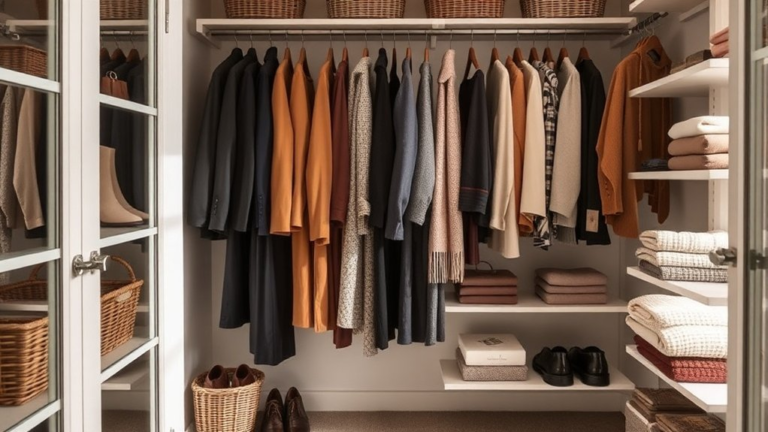

Tackle a seasonal closet reset by clearing a space, sorting items into keep, store, donate, and repair piles, and noting sizes and gaps. Keep things you wear twice a month, store specialty gear, and zone everyday clothes by hot, cool, and wet weather for easy mornings. Use clear bins, vacuum bags, labeled lids, and a simple inventory to swap fast. Do quick repairs, rotate weeklies, and set a two-hour swap day—want a step-by-step plan next?
Closet Highlights
- Declutter by sorting items into keep, store, donate, and repair piles using fit, frequency, and joy as guides.
- Zone your closet by weather—hot, cool, and wet—with labeled areas and eye-level placement for frequently worn pieces.
- Pack off-season items in clear, labeled stackable bins or vacuum-seal bags, storing them in a cool, dry place.
- Maintain a simple inventory with season, contents, and care notes; add QR codes or color-coded labels for quick swaps.
- Establish a biweekly or seasonal swap routine with a two-hour reset, quick repairs, and a grab-shelf for the current week.
Prep Your Closet: Quick Declutter and Inventory
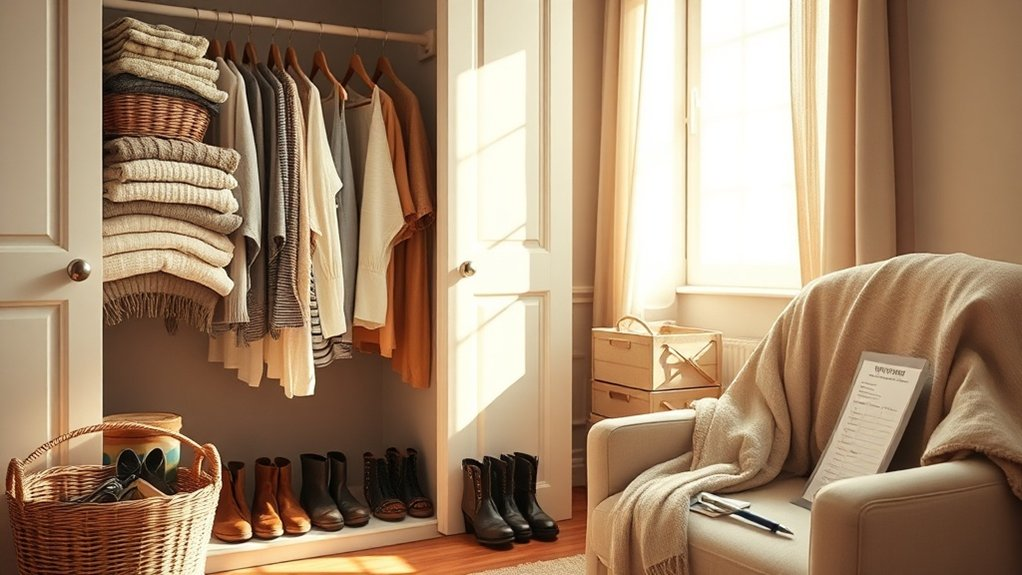
Start by clearing a small, defined space where you can sort without feeling overwhelmed—your bed or a clean section of floor works well.
Clear a small, defined space—your bed or a clean patch of floor—to sort without feeling overwhelmed.
Lay out a bin or bag for donations, one for repairs, and a notebook for a quick inventory. You’ll touch each item, feel its weight, and ask: does this fit, flatter, or bring joy? Consider using vertical storage solutions later to keep frequently used items accessible. Many modular organizers maximize space by making the most of vertical space in your closet.
Keep things you wear often and that match your current lifestyle; set aside pieces that need mending or seasonal storage.
As you work, jot sizes, colors, and any gaps you notice—more sweaters or lighter tops? This simple inventory will save time later and calm decision-making.
When you finish, you’ll have a clearer closet and a plan that actually feels doable. Consider organizing by category and season to make rotating clothes by weather easier.
Decide What Stays vs. Stores: Simple Seasonal Criteria
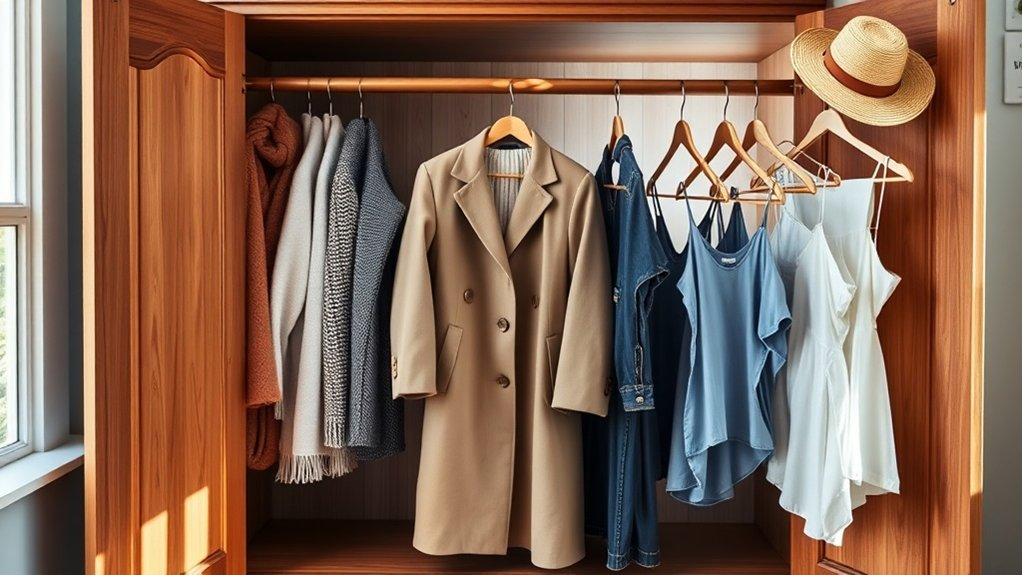
Now that you’ve cleared a sorting space and made a quick inventory, it’s time to decide what stays in your everyday closet and what gets tucked away for the season.
Think about what you reach for regularly, and picture your week—are you mostly in sweaters and boots, or tees and sandals?
Keep items you wear at least twice a month, those that fit well, and pieces that match several other garments.
Store specialty items: holiday outfits, extreme-weather gear, or anything you only wear once a season. Consider using stackable organizers to maximize vertical space when storing seasonal items. For compact storage that still allows visibility, consider clear or transparent bins like Sterilite 6 Quart to easily spot what you need.
Consider comfort, condition, and sentimental value, but be honest—if something hasn’t seen light in a year, it likely belongs in storage or donation.
Make choices that simplify mornings and spark joy when you open your closet.
A clear plan and regular check-ins help maintain your progress and reinforce maintenance strategies for long-term success.
Pack Smart: Best Storage Options and Labeling Tricks

You’ll save space and protect seasonal pieces by using vacuum-seal bags for bulky items like winter coats and spare blankets, which keeps them clean and compact.
Choose clear bins when you can, and use consistent labels that name the item and the season so you can grab what you need without opening every box.
Ready to make your storage simple and stress-free?
Stackable designs maximize vertical storage space and help fit boxes into tight spots, making closets more efficient and accessible with stackable designs.
Consider using clear, stackable plastic totes like the Sterilite 66 Quart box for easy visibility and secure, dust-free storage. Also consider clear shoe organizers for shoes and small items to keep them visible and protected.
Vacuum-Seal Seasonal Items
Seal away the season’s bulk and reclaim your closet space with vacuum bags that keep items clean, compact, and ready for next year. Consider combining vacuum-sealed bundles with stackable storage solutions to maximize vertical space and accessibility.
You’ll love how bulky coats, sweaters, and comforters shrink down, freeing shelves and creating breathing room. Choose heavy-duty, re-sealable bags and check seals before storing; you want airtight protection from dust, bugs, and moisture.
Fold garments loosely to avoid crushing fabrics, and avoid leather or items that need airflow. Use a vacuum or pump to remove air, watch the volume drop, and feel satisfaction as space returns.
Store bags in a cool, dry spot, flat or upright to save room. Ready to rotate seasons faster and with less hassle? Vacuum sealing makes it simple. Consider pairing vacuum bags with waterproof PP plastic bins for added protection and organization.
For added durability and visibility, consider placing vacuum-sealed bundles inside clear heavy-duty storage bins to protect them from dust while still seeing contents at a glance.
Clear, Consistent Labeling
A clear, consistent labeling system makes seasonal swaps faster and less stressful, and it’s one of the easiest upgrades you can make to your closet routine.
Use simple labels that tell you what’s inside, for which season, and any care notes you’ll need later. Color-code for quick visual cues: blue for winter, yellow for spring, green for summer, orange for fall.
Write legibly or print tags so you won’t squint when you pull boxes from a shelf. Don’t forget garment bags and drawer dividers—labels help those, too.
Want to save time next year? Add a small inventory list on the box lid or a QR code linking to photos.
You’ll love how calm and confident your closet feels when everything’s clearly marked. Consider also noting the container capacity (e.g., 60L capacity) on the label so you can match items to appropriately sized storage.
Also consider using stackable bins to maximize vertical space and keep seasonal boxes stable and accessible. You can also choose containers with transparent panels to make contents easy to identify without opening them.
Organize In-Place: Arrange Your Active Wardrobe for Weather

Think about zoning your closet by weather so rainy-day gear, sunny workout pieces, and chilly-layer options each have their own spot — it makes grabbing the right outfit feel effortless.
Rotate weekly essentials to the front or on easy-reach hangers, so what you need most is always visible and ready.
Ready to try a simple swap this week and see how much time it saves you each morning?
Seasonal organization often benefits from simple strategies like transforming your closet to create clear zones and reduce decision fatigue. Consider adding vertical storage options to free up floor space and keep frequently used items accessible.
A quick audit of what you wear most can reveal high-use categories to prioritize when zoning and rotating.
Zone By Weather
When the weather shifts, organize your everyday clothes so you can grab what you need without digging through the whole closet; arranging your active wardrobe by weather makes getting dressed feel easy and intentional.
Create clear zones for hot, cool, and wet days so each section answers a specific need. Use labeled shelves or hanging loops to mark zones, and put frequently worn items at eye level. Consider adding stackable baskets to maximize vertical space and keep each zone clearly separated.
Keep adaptable pieces between zones for unpredictable days. Group accessories—hats, scarves, umbrellas—near their matching zone so you won’t search when time is tight.
Step back and ask: does this layout reflect how you actually dress? Try it for a week, tweak placement, and enjoy a closet that supports your day, not slows it down. Consider designing your system to reflect your overall organizing philosophy so it’s easy to maintain. Also consider maximizing vertical storage with stackable organizers to make the most of limited space.
Rotate Weekly Essentials
Now that your closet has weather-based zones, rotate weekly essentials to keep your go-to outfits fresh and ready without overhauling the whole space.
Each Sunday, scan the week’s forecast and pull a small, visible set of pieces—tops, bottoms, outerwear, shoes—that match expected conditions. Place them at eye level or in a dedicated “grab” shelf so mornings feel effortless. Consider adding stackable storage to maximize vertical space and keep rotated items organized.
Ask yourself which items you reach for most, then rotate one or two lesser-used favorites in to prevent wear patterns and boredom. Use lightweight 6-shelf organizers for seasonal rotation to increase capacity without sacrificing accessibility.
Use light labels or colored hangers to mark the current week’s rotation, and move them back when weather shifts.
This simple habit keeps your wardrobe active, reduces decision stress, and helps the clothes you love stay loved longer. Consider adding stackable organizers or anti-tip features to keep rotated items secure and maximize vertical space.
Swap Routine: A Fast Seasonal Rotation Checklist

Because a smooth swap keeps your mornings calm and your closet tidy, you’ll love this fast seasonal rotation checklist that gets you out the door with confidence.
Start by choosing a single weekend day, set a timer for two hours, and gather bins for keep, store, and out-of-season donations.
Pull everything for the new season into one area, try on pieces for fit and comfort, and set aside items that need minor fixes to address later.
Label storage containers and place frequently used items at eye level.
Slide seasonal footwear to the front, swap coat hooks, and refresh hangers for uniformity.
Finish by wiping shelves and snapping a quick photo of the organized result.
Include clearly labeled, moisture-proof storage bins to protect items during the off-season seasonal item protection.
A well-planned rotation keeps your closet efficient and supports long-term closet organization goals, and using modular storage can help you customize layouts as needs change.
Refresh What You Keep: Repair, Tailor, Donate, and Rotate Finds
Set aside a cozy hour to refresh what you’re keeping, and treat it like a mini makeover for your closet: inspect each item for snags, missing buttons, loosened seams, or fit issues, and decide if it needs a quick fix, a tailor’s touch, or a fresh purpose elsewhere.
Start with repairs you can do now—sew a button, mend a hem, remove a snag—so garments feel loved and wearable. For pieces that almost fit, consider a tailor; small adjustments can make you reach for them more.
Ask yourself, will this spark joy this season? If not, box it for donation or swap.
Finally, rotate seasonal favorites to the front so your closet looks new, inviting, and ready for whatever weather comes next.
A seasonal reset also helps you implement smart closet organization choices that keep items accessible and easy to rotate.
Keeping a simple inventory list during your reset makes it easier to track what you have and plan future rotations, especially for seasonal wardrobe planning.
Make note of the number of core pieces you own so you can build a balanced capsule collection each season, like tracking tops, bottoms, outerwear, and shoes as part of a wardrobe audit.
Frequently Asked Questions
How Do I Store Shoes Long-Term Without Damaging Them?
You should clean and dry shoes, stuff them to keep shape, use breathable boxes or cloth bags, avoid plastic, store upright in a cool, dry place away from sunlight, and check periodically, rotating or reconditioning as needed.
Can I Use Vacuum Bags for Delicate Fabrics?
They’ll often harm delicates—vacuum bags can crush fibers, remove loft, and stress seams—so you shouldn’t use them; instead, use breathable storage, acid-free tissue, or padded hangers to protect delicate fabrics long-term.
What About Seasonal Accessories Like Hats and Scarves?
You should store hats and scarves by material: wool and cashmere in breathable boxes with acid-free tissue, silk in hanging or padded containers, and bulky knitters folded; don’t use vacuum bags for delicate items.
How Do I Prevent Pests in Stored Clothing?
Store cleaned, fully dry clothing in airtight containers or sealed garment bags, and use cedar blocks or lavender sachets for natural repellents. You’ll check periodically, vacuum storage areas, and freeze delicate items before long-term storage.
When Should I Replace Winter Coats Entirely?
Replace winter coats when they’re so worn they’d embarrass a polar bear—typically every 5–10 years depending on wear, insulation loss, fit change, irreparable damage, or persistent odor you can’t freshen with cleaning.
Conclusion
You’ve done the work: decluttered, decided, packed, and organized. Now imagine opening your closet next season and finding only pieces that fit, flatter, and feel right—no scrambling, no second-guessing. Can you feel that relief? Keep a simple swap checklist, mend what matters, and donate what doesn’t. Each little habit saves time and sharpens your style. Ready to turn this into your new routine and enjoy every season, effortlessly?