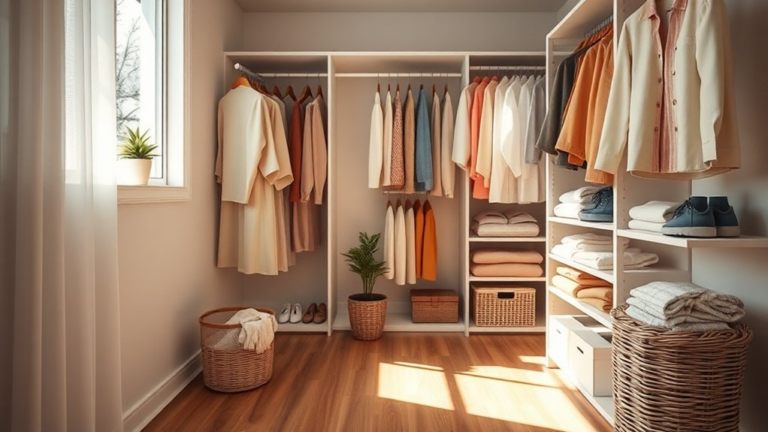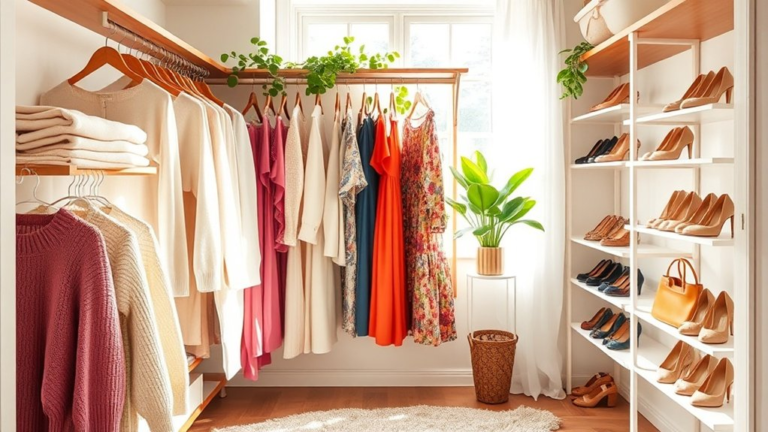
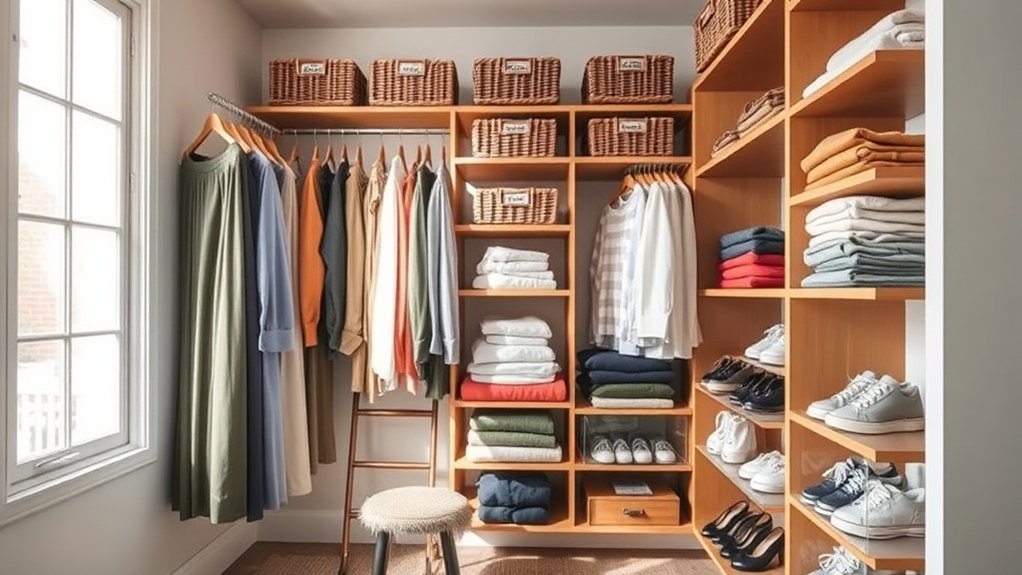
Set aside an afternoon, clear a small workspace, and grab boxes, labels, a lint roller, and matching hangers—you’ll feel energized as categories form. Use a 15‑minute timer to sort into keep, donate, toss, then group what remains by work, casual, and season for easy mornings. Repurpose bins, add shelf risers or slim hangers, and label everything for a tidy look. Ready to reclaim space and calm—keep going to learn practical steps and quick hacks.
Closet Highlights
- Set aside one afternoon, clear a nearby workspace, and gather boxes, labels, lint roller, and sturdy hangers before starting.
- Use a 15–45 minute quick-purge method: sort into keep, donate, toss, and a small “maybe” pile.
- Group remaining items by zone (work, casual, exercise) and then by color or length for easy selection.
- Maximize vertical space with stackable clear bins, slim hangers, risers, and shelf dividers for visible storage.
- Maintain order with weekly quick resets, immediate returns after use, and seasonal rotation of higher-shelf items.
Plan Your One‑Afternoon Closet Refresh (What to Expect and What to Grab)
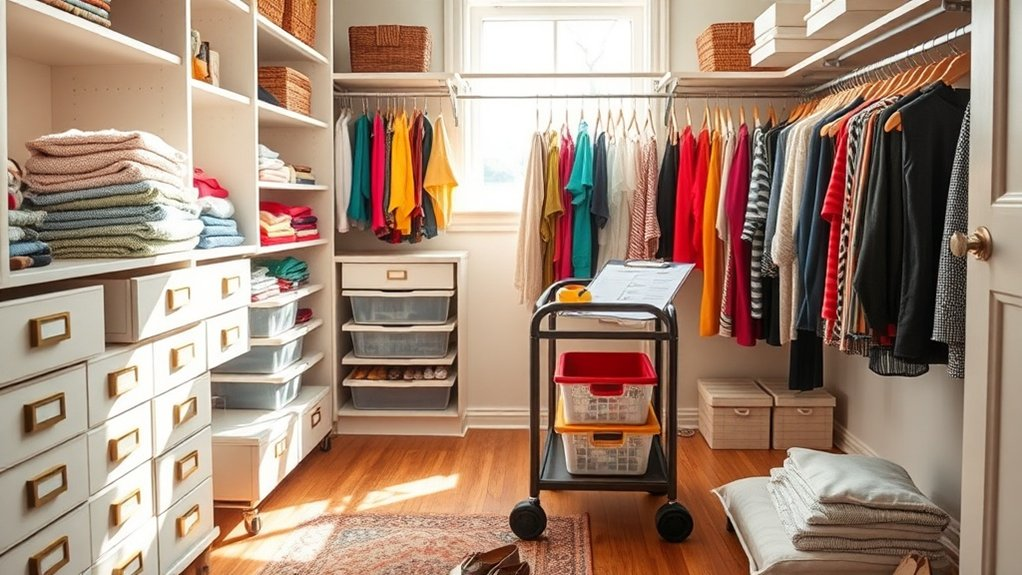
Set aside one afternoon and watch your closet transform—you’ll be surprised how much you can do with a clear plan and the right tools.
You’ll start by clearing a small workspace nearby, gathering boxes or bags for sorting, labels, a pen, sticky notes, a lint roller, and a few sturdy hangers. Consider adding a multi-purpose organizer to make the most of vertical space. Consider stacking 24-liter bins for lightweight items to maximize vertical storage without remodeling.
Expect to move items onto the bed or floor, feel a little emotional about keepsakes, and get energized when categories begin to form.
Move items to the bed, feel nostalgic over keepsakes, then get energized as clear categories emerge
You’ll measure shelf heights if you plan to add organizers, note any lighting or hardware needs, and decide where seasonal items will live.
Ready? Pace yourself, take short breaks, and celebrate small wins as your space shifts from cluttered to calm.
Consider adding a rotatable belt hanger to improve visibility and access for accessories.
Quick Purge Method: Decide Keep, Donate, or Toss in 30–45 Minutes
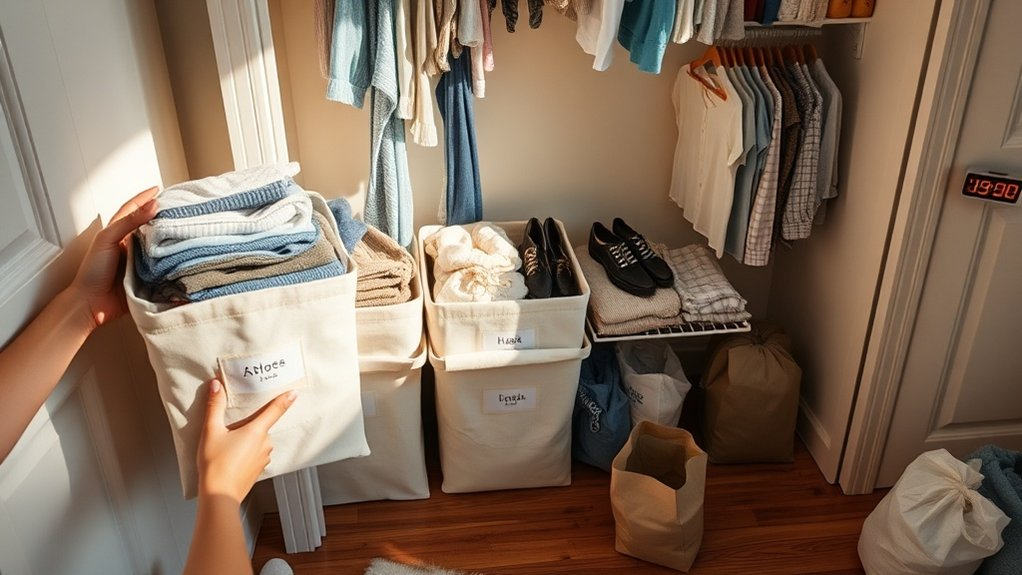
Now that your space is cleared and you’ve gathered boxes, labels, and a game plan, let’s tackle the quick purge: in 30–45 minutes you’ll make fast, confident decisions about what to keep, donate, or toss.
Begin at one section, set a timer for 15 minutes, and move quickly. Hold each item up and ask: have I worn this in a year? Does it fit my life now? Is it damaged beyond repair? Trust your first reaction. Consider using vertical storage ideas afterward to keep remaining items organized. Transforming your closet can create a more functional daily routine by reducing decision fatigue and improving visibility of what you own, so try prioritizing decluttering benefits as you work.
Use three piles—keep, donate, toss—and don’t overthink sentimental pieces; set a small limit for those.
- Keep: items you love and reach for regularly.
- Donate: good-condition pieces that someone else will use.
- Toss: stained, ripped, or unsafe items.
Finish with gratitude, then seal the donation box. Transform your closet with these simple steps for a fresh start and a more organized space by following organizing your closet principles.
Sort and Categorize Clothes Fast So Mornings Get Easier
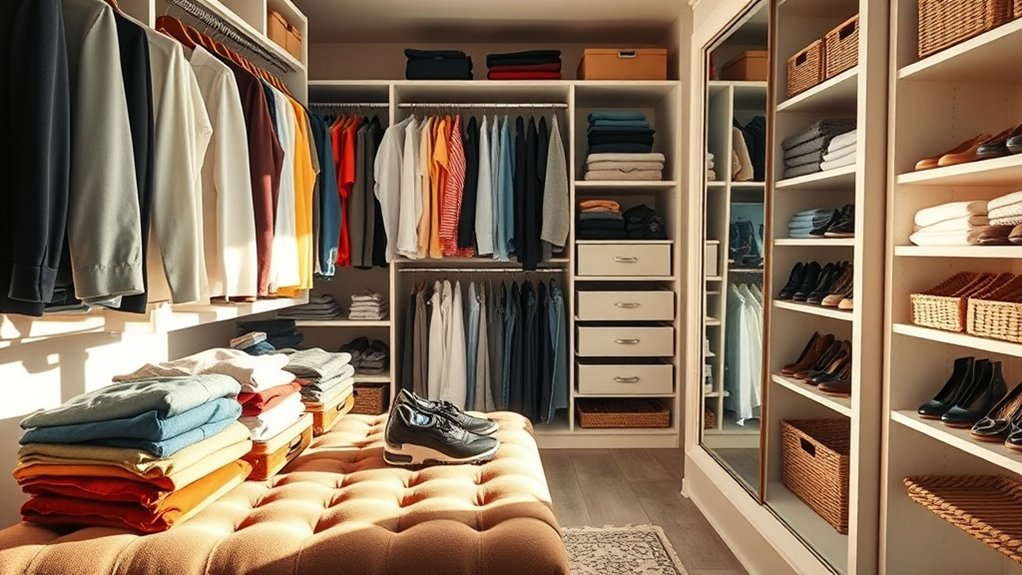
Once you’ve pared down your wardrobe, grouping what’s left makes mornings feel effortless and even a little joyful. Start by creating clear categories that match how you actually live—work, casual, exercise, and special occasions.
Lay items out quickly and deal with one category at a time, so decisions stay simple and focused. Ask yourself, what do I reach for most? Keep those front and center.
Within each category, sort by color or function to spot outfits fast, and fold or hang consistently so pieces stay visible. Consider adding modular solutions like a closet organizer tower to maximize vertical space and adapt as your wardrobe changes.
Create a small “maybe” pile for uncertain items, revisit it in a week, then decide. You’ll save time, reduce stress, and feel more confident choosing outfits each morning. Consider checking a closet organization resource for practical tips and layout ideas. Also consider implementing storage zones to keep similar items together and streamline retrieval.
Use What You Have: Clever Hacks With Hangers, Bins, and Shelves
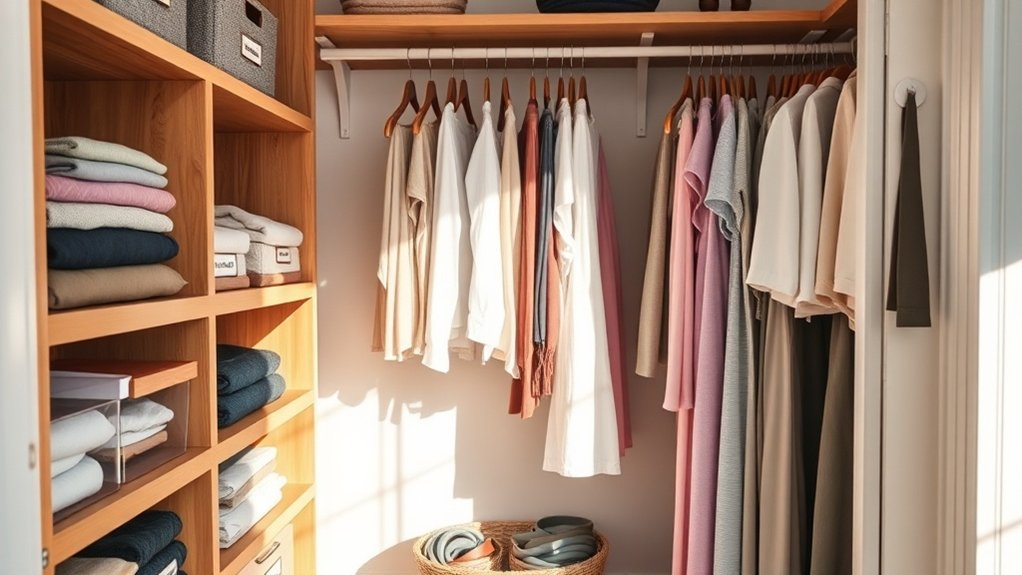
You probably already own everything you need to make your closet work harder, so start by looking at hangers, bins, and shelves with fresh eyes and a little creativity.
You can repurpose mismatched hangers by grouping similar garments together, flip one every month to see what you actually wear, and free up space by cascading hangers for layered outfits. Consider using space-saving hangers to triple hanging capacity when vertical space is available. Many multi-layer and cascading designs can increase capacity by up to five items per hanger for maximum efficiency.
Clear bins turn unknown piles into visible categories, and labels help you keep them tidy without thinking twice.
Shelves gain function when you use risers, baskets, or folded zones for shoes, sweaters, and accessories.
- Hang items by outfit or season to simplify mornings.
- Use clear or labeled bins for small or seasonal items.
- Add simple shelf dividers or baskets to define zones.
Consider adding stackable clear storage boxes for easy visibility and vertical space use, especially if you need to fit many items into a small closet stackable.
Small Reach‑In Solutions That Transform Tight Spaces
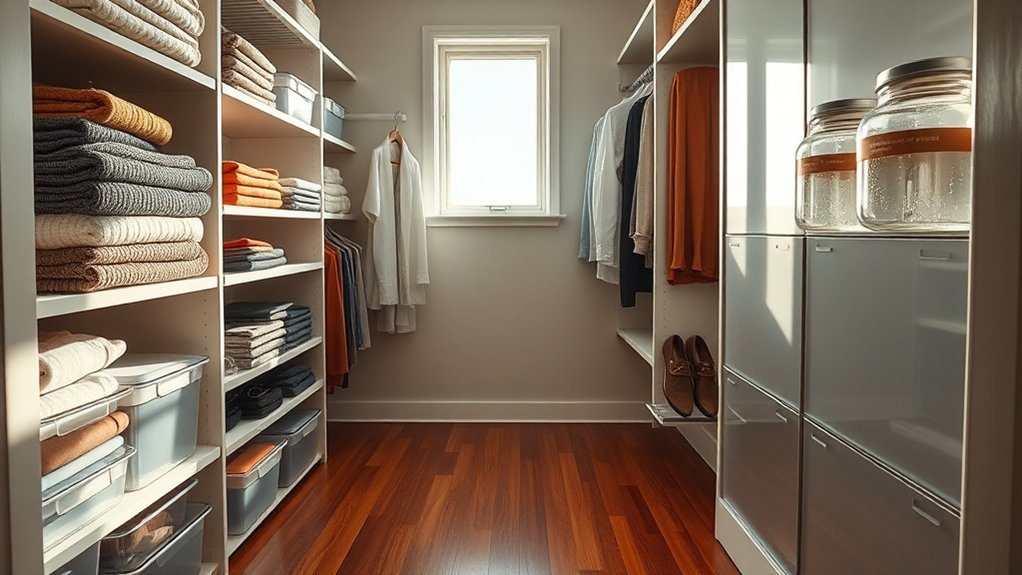
If your reach‑in closet feels like a never‑ending game of Tetris, small changes can make it feel spacious and calm, not cramped and chaotic.
You can add narrow shelving for shoes and folded sweaters, or slide in slim, stackable bins to keep scarves and belts visible. Consider adding a compact rolling rack with wheels for temporary overflow or seasonal rotation portable rolling rack. Adding adjustable shelving can help you change the space as your wardrobe shifts over time adjustable shelving.
Swap bulky hangers for slim ones, and use cascading hooks to double hanging space without crowding.
Mount a shallow shelf above the rod for seasonal items you rarely touch.
Install a tension rod lower down for shirts or a hanging organizer for accessories.
Want easier mornings? Group outfits by color or purpose so you grab the whole look fast.
These simple swaps take little time but give big relief, making tight spaces work for you.
Stackable solutions like clear drawers maximize vertical space and visibility for small items and accessories, making retrieval faster and storage more efficient with clear stackable drawers.
Walk‑In Shortcuts: Zoning, Visual Order, and Easy Access
When you step into a walk‑in closet that’s zoned and ordered, finding what you need feels almost effortless, and your mornings get a little brighter.
You’ll want clear zones for workwear, casual pieces, and accessories, so you reach for the right items quickly.
Use visual order—group by color, length, or function—to reduce decision fatigue and keep things calm.
Make frequently worn pieces the easiest to access; reserve higher shelves for seasonal items.
Labels and matching hangers make the space feel intentional, and a small bench or tray gives a landing spot for keys and jewelry.
Ready to simplify your routine and enjoy the closet more?
- Zone by use: work, casual, accessories
- Visual grouping: color, length, function
- Easy access: everyday items front and center
A website about organizing your closet can offer practical closet organization tips and product recommendations to help you implement these strategies.
Add simple shelving or drawer inserts to separate items and maximize space, especially when following zoning principles for different wardrobe categories.
A website like Mastering the Art of Closet Organization can provide step‑by‑step guides and product lists to help you get started with closet systems.
Budget Upgrades That Save Space Without a Toolkit
Although you don’t need a toolbox to make a big difference, small, smart changes can free up surprising amounts of space and calm your closet, too.
Start by swapping bulky hangers for slim, non-slip versions; you’ll fit more items on the same rod, and outfits look neater.
Add a hanging shoe organizer to a back-of-door hook for sneakers and flats.
Use clear, labeled bins on shelves so you can quickly spot scarves, belts, or seasonal items without rummaging. Consider using transparent windows on bins so you can identify contents at a glance.
Try tension rods to create low-cost skirt or shoe dividers—no drilling, just measure and pop them in. Consider adding stackable bins to maximize vertical space and store shoes or toys efficiently.
Can a few cheap baskets and shelf risers really change your morning? Yes—these little upgrades make your closet work harder, with almost no effort.
Consider adding an over-the-door organizer with mesh pockets to maximize vertical storage without drilling.
Common Problems and How to Fix Them During Your Afternoon Session
You’re in the middle of an afternoon session and notice shelves bulging with clothes and toys, and hangers that don’t match — frustrating, but totally fixable.
Start by pulling everything off one shelf, sorting into keep, donate, and relocate piles. Then swap mismatched hangers for a uniform set to instantly tidy the look.
How would it feel to open your closet tomorrow and find everything easy to see and grab? Consider adding shelf dividers to keep items separated and prevent future bulging. Also, set a maintenance plan to schedule regular check-ins so clutter doesn’t creep back in.
Measure your shelf spaces first and plan for adjustable shelving to maximize storage and fit items neatly.
Overstuffed Shelves
Start by setting aside an afternoon and a clear goal: tame those overstuffed shelves so your things feel easy to find and calm to look at.
You’ll pull everything out, sort into keep, donate, and relocate piles, and be honest about what you actually use. Group like items together, stack folded pieces neatly, and leave some breathing room so the shelf doesn’t scream “crammed.” Consider using stackable bins to maximize vertical space and keep items organized. Choose options with stackable designs to make the most of vertical space and adapt as your storage needs change.
Simple containers or bins can corral small things and make the shelf look intentional. Ask yourself: does this spark usefulness or just take up space? If it’s not helpful, let it go.
- Use clear bins for small or seasonal items.
- Fold clothes to uniform sizes for tidy stacks.
- Label shelves so everything has a home.
Consider adding waterproof PP plastic bins to protect items from moisture and ensure durability.
Mismatched Hangers
When your hangers don’t match, your closet can feel chaotic even if everything else is neat. So take a few moments during your afternoon session to fix that small but powerful detail.
Start by pulling everything off the rod and sorting hangers into piles: slim, wooden, padded, and broken. Ask yourself which style feels calm and useful—do you prefer uniformity or a mix that serves different garments?
Toss warped or slippery hangers, and collect duplicates you can donate or recycle. Replace with a single type for most items, keeping specialty hangers for coats or delicates. Consider also measuring your closet’s available space to determine how many hangers will comfortably fit. If you’re tight on room, try switching to multi-tier hangers to significantly increase capacity.
Line things up same way, facing the hooks in one direction. That tiny change makes outfits easier to find, saves time, and gives your closet a quietly satisfying look.
Consider choosing hangers made from durable materials to prevent warping and extend their lifespan.
Simple Daily and Weekly Habits to Keep Your Closet Tidy
Keep a few quick habits and your closet will feel calmer almost every day. You’ll notice a difference when you treat tidying like tiny acts of care, not chores.
Each morning, scan for items out of place; each evening, return worn pieces to their spot. Once a week, do a short reset: sweep floors, refold shelves, and donate anything you didn’t wear.
Scan each morning, return worn pieces nightly, and do a weekly reset: sweep, refold, donate what you didn’t wear.
- Put things back immediately after use to stop clutter from growing.
- Do a weekly five- to ten-minute refresh to catch small messes before they become big.
- Rotate seasonal items monthly so you only see what’s relevant.
Could you try one habit this week? Small routines build momentum, and soon your closet will feel peaceful and ready.
Frequently Asked Questions
How Do I Store Sentimental Items I Can’t Decide to Keep or Discard?
Decide by feeling: you’ll set a short trial period, box items you’re unsure about, label and date the box, store it out of sight, revisit later—if you haven’t missed them, you’ll donate or discard with less guilt.
Can I Organize Shoes Without Buying New Racks or Shelves?
Yes — you can organize shoes without buying racks or shelves. Use clear bins, over-the-door hooks, under-bed boxes, shoe caddies from hangers, and rotate seasonally; you’ll maximize space, protect pairs, and keep frequently worn shoes accessible.
What Closet Solutions Work for Nonstandard Ceilings or Sloped Walls?
You can use adjustable tension rods, floating shelves, custom-cut cubbies, freestanding wardrobes, and hanging rail systems that adapt to angles; you’ll cut plywood to fit slopes, use modular units, and employ flexible hooks for odd angles.
How Do I Prevent Color Fading and Fabric Damage in My Closet?
You’ll drastically protect colors and fibers by storing clothes away from sunlight, using breathable garment bags, rotating items, cleaning before storage, keeping humidity around 40–50%, using cedar or acid-free tissue, and avoiding plastic that traps moisture.
Can I Maintain Organization With Family Members Who Won’T Follow the System?
Yes — you can maintain organization even if they won’t follow rules. Set simple, forgiving systems, assign clear zones, use labeled bins, model habits, offer quick daily resets, and make noncompliance inconvenient but nonjudgmental to keep peace.
Conclusion
You’ve got this—remember, “a stitch in time saves nine.” In one afternoon, you can clear the clutter, sort with purpose, and make mornings calmer. Start small, stay decisive, and use what you already own to stretch space and style. Imagine opening your closet and smiling. Will you keep the habit going? Little daily steps and a weekly five‑minute tidy will make this change stick, so enjoy the ease you’ve created.