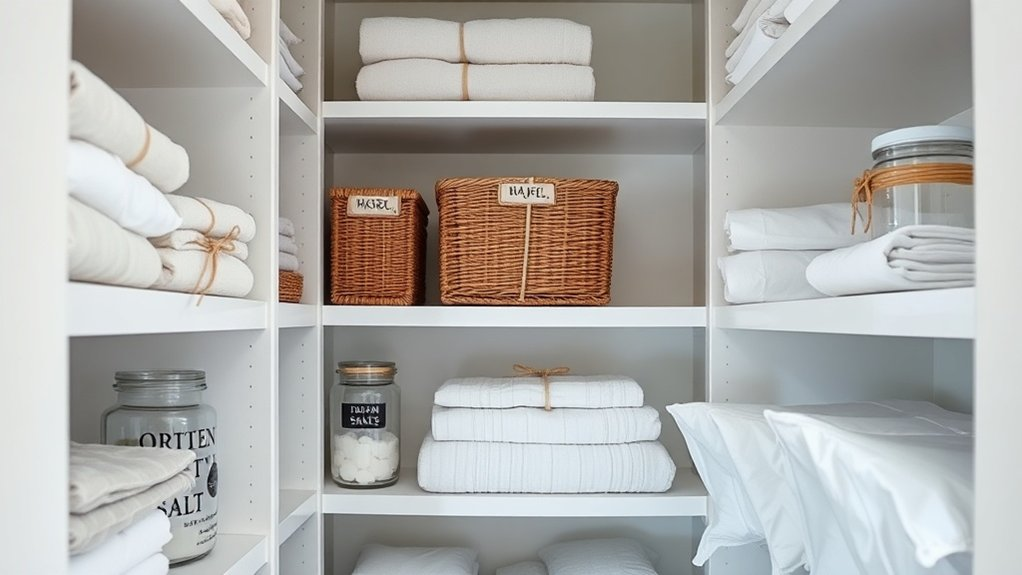
You can turn a messy linen closet into a calm, useful space by sorting items by type—towels, sheets, pillowcases, blankets, and toiletries—and measuring shelves so everything fits. Fold uniformly, roll small towels, and stack heavy items low. Use clear bins, vacuum bags for bulky or seasonal bedding, and label shelves for quick grabs. Keep daily sets at eye level and set aside worn pieces for repair or donation. Want easy, step-by-step tips to finish the job?
Closet Highlights
- Empty the closet, sort linens into categories, and discard or set aside worn items for repair or donation.
- Measure shelves, use uniform stackable bins, and label each bin for consistent, space-efficient storage.
- Fold linens uniformly; stack sets together and roll smaller towels for visibility and easy access.
- Store bulky or seasonal bedding in vacuum-seal bags or clear bins, keeping frequently used items at eye level.
- Arrange heavier items on lower shelves, keep daily essentials in shallow baskets, and maintain an inventory note.
Assess Your Linen Closet and Sort by Type
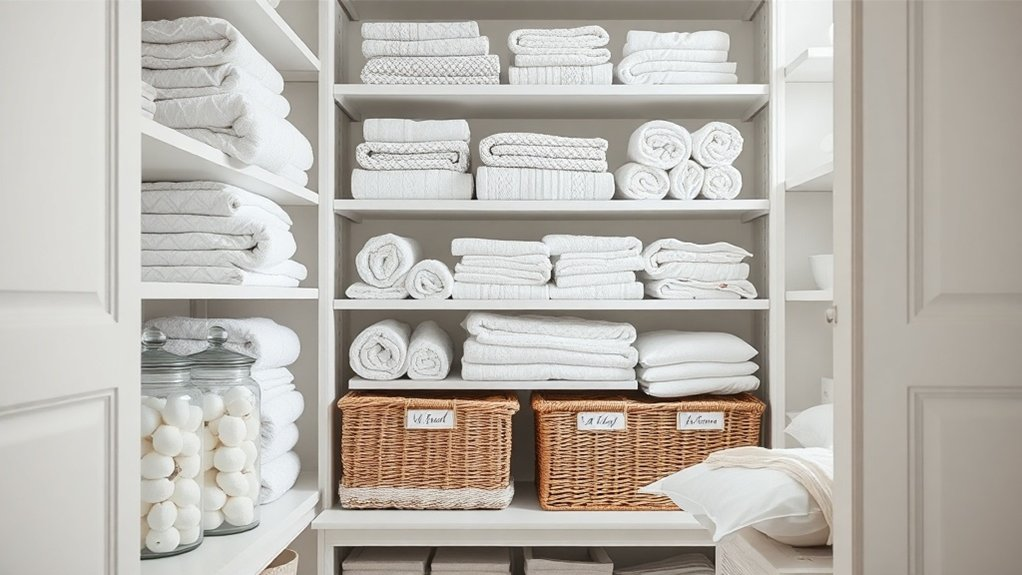
Before you plunge into folding and stacking, take a moment to really look at what’s in your linen closet and picture how you want it to function.
Start by emptying shelves and giving everything a quick look. Sort items into groups: towels, sheets, pillowcases, blankets, table linens, and extra toiletries. Consider using stackable bins to maximize vertical space and keep similar items together. Stackable organizers can be especially useful in narrow closets where vertical space is the key to adding storage capacity.
Ask yourself which items you use daily, weekly, or only seasonally. Set aside worn or stained pieces for repair or donation.
Measure shelf heights and note any awkward spaces that could use bins or baskets. Label piles so you can see quantities and gaps.
This step helps you keep what matters, toss what doesn’t, and plan smart storage that feels calm and easy to maintain. Consider adding stackable bins or foldable options to maximize vertical space and adapt to changing storage needs.
Fold and Stack Linens for Maximum Shelf Efficiency
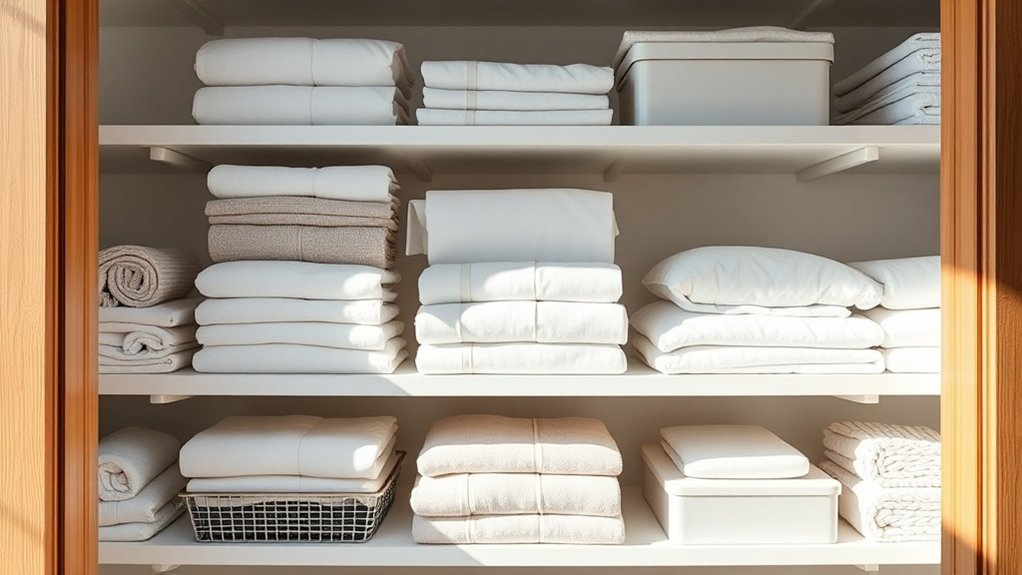
Once you’ve sorted and measured, folding and stacking the right way will turn a cluttered shelf into a calm, efficient space you actually enjoy using.
Start by folding each item into a uniform rectangle so stacks stay neat and predictable. For towels and washcloths, roll smaller pieces and stack larger towels flat; rolled items let you grab one without toppling the pile. Consider incorporating adjustable shelves to make the most of your vertical space and accommodate different stack heights.
Fold everything into uniform rectangles; roll small towels, stack large ones flat—rolled pieces let you grab without toppling.
Fold blankets and throws into thirds, then in half, to create compact, stable rectangles. Always place heavier items on lower shelves and lighter ones higher to prevent sagging. Consider using stackable storage to maximize vertical space and keep stacks from leaning.
Leave a little breathing room between stacks so you can see labels or colors at a glance. Simple labels or color-coded corners help you maintain the system.
Ready to try it? You’ll love the result.
Choose durable, waterproof materials like stainless steel or high-quality plastics for bins and organizers to keep linens hygienic and long-lasting.
Store Sheets, Towels, and Pillowcases by Set and Size
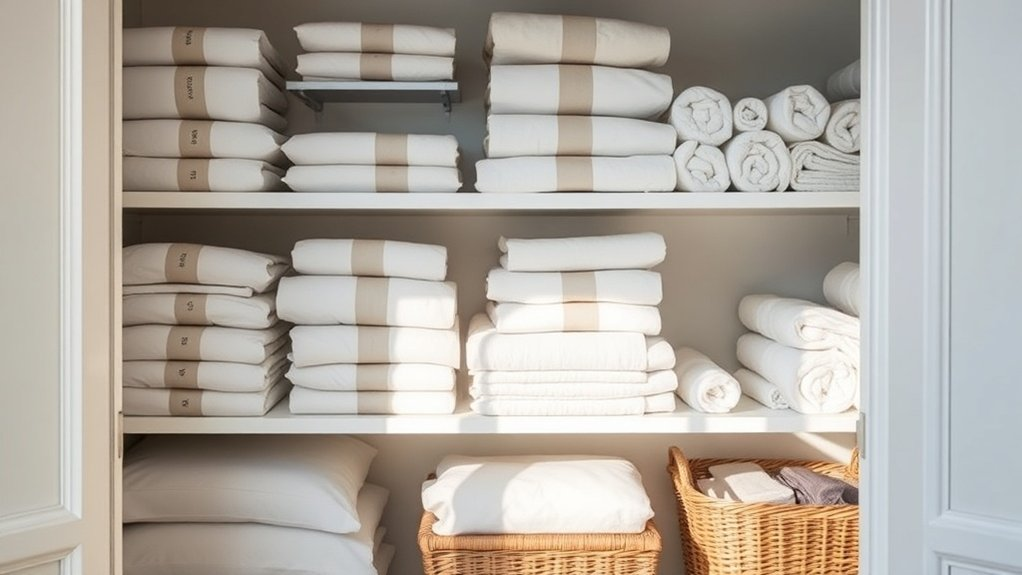
Think of grouping sheets, towels, and pillowcases by set and size as a simple way to cut your laundry anxiety in half and make every morning smoother.
Start by matching fitted and flat sheets with their pillowcases, then tuck each set into its matching pillowcase so you can grab everything at once. Consider storing seasonal or bulky linens in 90L storage bags to keep them fresh and out of the way. Use stackable organizers to maximize vertical space and keep sets neatly separated.
Separate towels by size—washcloths, hand towels, bath towels—and stack them in their own sections; it saves time and keeps visual clutter away.
Label shelves or use small tags so guests and family know where to find what.
Keep everyday sets at eye level, and reserve higher shelves for backups.
When everything has a home, you’ll feel lighter, more organized, and ready for any unexpected guest or busy morning.
Consider using stackable bins to keep smaller items tidy and maximize shelf space.
Tame Bulky Bedding and Seasonal Linens Without Wasting Space
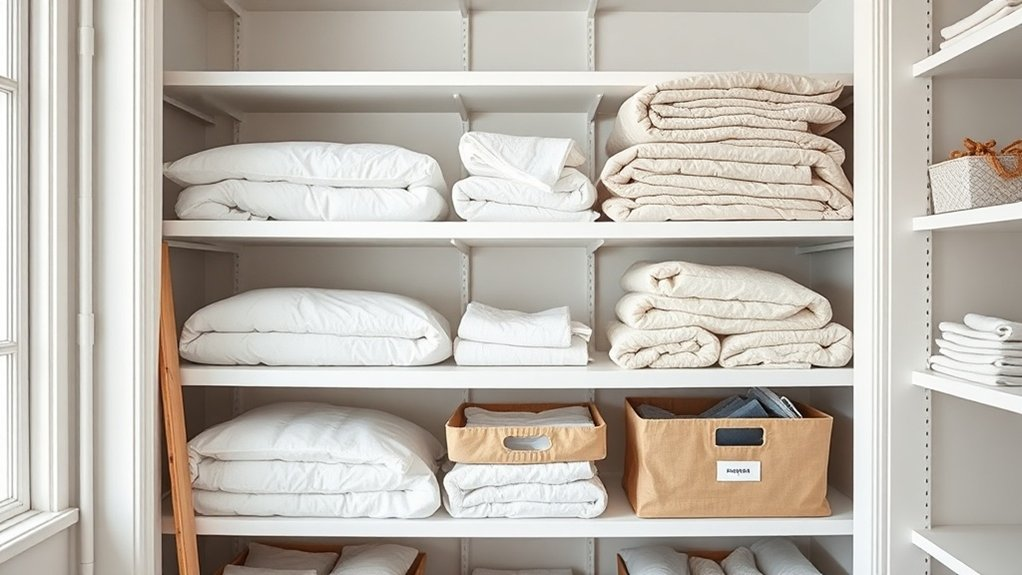
If you want your bulky comforters and seasonal blankets to stop taking over the closet, start by giving each item a smart, space-saving home that still keeps it easy to reach.
Fold bulky items into thirds, roll them tightly, or try the burrito fold to shrink their footprint, then stash them on top shelves or deep cubbies. Consider using stackable solutions to double storage capacity in deep cubbies and make better use of vertical space.
Use vacuum-seal bags for out-of-season quilts you won’t need for months, but avoid crushing delicate fibers.
Keep frequently used extra blankets in a lightweight hamper or open shelf so you can grab one without rummaging.
Rotate seasonally: move current-season pieces to eye level and tuck away others.
Isn’t it nice to open the closet and actually find what you want? You’ll feel lighter and organized.
Consider using clear, stackable bins rated for lightweight storage to keep items visible and protected, especially for delicate linens that shouldn’t be over-compressed, and label them for easy access to seasonal pieces like quilts and throws (stackable bins). Also consider modular cube systems like the 12-cube organizer for flexible shelving and customizable layouts.
Labeling, Bins, and Quick-Access Hacks for Everyday Use
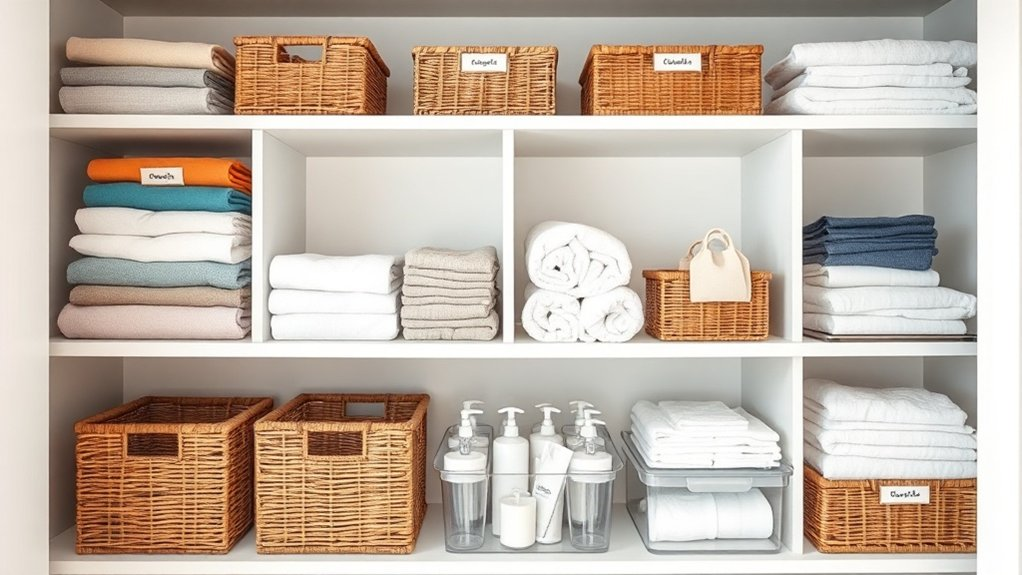
Want to find what you need in seconds, not minutes? Label shelves and bins so everything has a clear home, and you’ll save time and calm your space.
Use simple, readable labels—fabric tags for soft items, waterproof stickers for humid areas. Choose uniform bins to tidy visual clutter, mix clear and opaque containers to balance looks and function, and group like items: towels, pillowcases, first-aid, extras. Consider stackable clear bins to make the most of vertical space and keep items visible. Opt for bins with a 30-liter capacity when you need versatile storage that holds multiple items without sagging.
Keep daily essentials at eye level in shallow baskets for grab-and-go convenience. Reserve a top shelf for overflow and seasonal swaps.
Add a small clipboard or command pocket on the inside door for inventory notes or donation reminders. These small systems make your linen closet feel welcoming, efficient, and ready for whatever the day brings. Consider adding clear acrylic shelf dividers to maximize vertical space and keep stacks from toppling shelf dividers for a tidier, more stable arrangement.
Frequently Asked Questions
How Do I Prevent Musty Smells in a Linen Closet?
You prevent musty smells by keeping linens clean, dry, and rotated; you’ll add moisture absorbers, allow airflow with vents or open doors occasionally, use natural deodorizers like baking soda or cedar, and avoid overstuffing the closet.
Can I Store Cleaning Supplies With Linens Safely?
Yes—you can, but separate them. Picture a bleach bottle next to crisp sheets; you’ll store cleaners in sealed bins on a lower shelf, label everything, keep vents open, and avoid spills to protect linens and safety.
What’s the Best Way to Protect Linens From Pests?
Use airtight containers, cedar blocks or sachets, and wash linens before storing; you’ll clean and vacuum the closet regularly, fix any moisture sources, and rotate items so pests don’t get settled or find nesting material.
How Often Should I Wash Rarely Used Bedding?
Surprisingly, you shouldn’t wait forever — wash rarely used bedding every three to six months, or after any spill, pet snuggle, or illness. You’ll keep fabrics fresh, deter pests, and avoid musty odors with occasional laundering.
Can I Use Vacuum Bags for Long-Term Linen Storage?
Yes, you can use vacuum bags for long-term linen storage, but don’t: they can crush fibers, trap moisture, and prevent airflow. Use them sparingly for synthetics, add silica packs, and air linens periodically to preserve freshness.
Conclusion
You’ve turned chaos into calm, like finding a quiet cove in a busy sea. When you sort, fold, and label with care, your linens become easy friends that welcome you home. Will you keep the flow by returning things where they belong? Small habits protect your order and free your time. Start today, enjoy the simplicity, and let your closet quietly support everyday comfort and unexpected moments of peace.