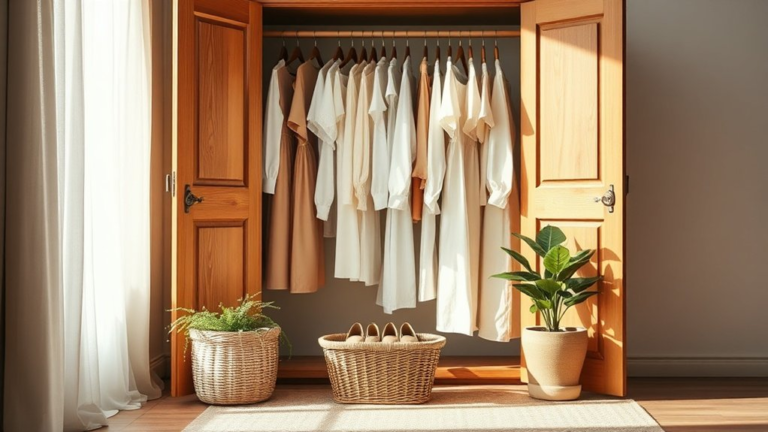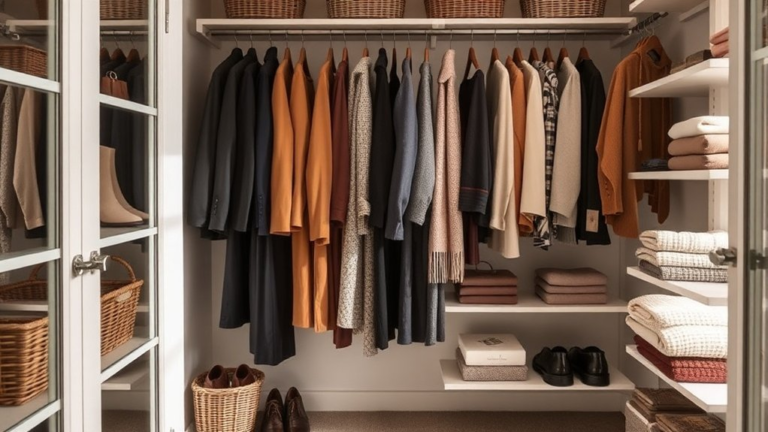

You’re ready to swap seasons, so start by emptying your closet, sorting into keep, try-on, repair, donate, and seasonal bins, and labeling everything for clarity. Clean and mend favorites, wash items before packing, and use breathable storage with acid-free tissue for knits. Switch slim non-slip hangers and group pieces by type for easy mornings. Donate or recycle what you don’t wear, then set simple weekly habits to stay organized. Keep going to pick up smart packing and styling tips.
Closet Highlights
- Empty your closet, sort items into keep, donate, seasonal storage, repairs, and try-on zones for clear decision-making.
- Clean garments and repair small damage before storing to prevent stains, pests, and damaged pieces.
- Use breathable, labeled bins and slim non-slip hangers to maximize space and maintain garment shape.
- Rotate seasonal favorites forward, fold knitwear with tissue, and store off-season clothes in breathable bags.
- Schedule regular reset checkpoints, track progress with measurable tasks, and donate or recycle unloved items.
Quick Start: What You Need Before the Closet Swap

Before you swing open the closet doors, gather a few simple supplies to make the swap smooth and satisfying. You’ll want sturdy boxes or bins for items you’re keeping, donating, and storing; clear labels or masking tape and a marker to mark them; and a soft cloth or microfiber towel to wipe shelves and hangers. Consider adding modular organizers to maximize space and adapt to different storage needs. Large collapsible bins are especially helpful for seasonal items and bulky bedding.
Have a laundry basket ready for dirty items and a small trash bag for worn-out pieces. If you like, set a timer to keep momentum—thirty minutes can work wonders.
Play upbeat music, pour a cup of tea, and wear something comfy.
Ready check: bins, labels, cleaning cloth, laundry basket, trash bag, timer.
Feeling prepared makes the whole process easier and even a little joyful. Consider using clear acrylic dividers to maximize vertical shelf space and keep folded items tidy.
Empty and Zone: Create Workable Sections for Sorting
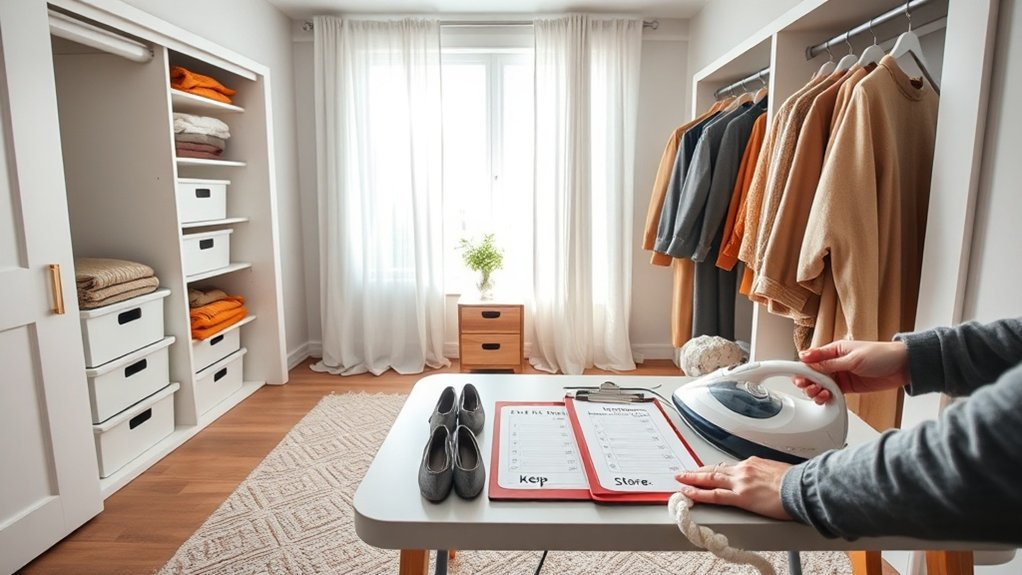
Now that your supplies are ready and the mood’s set, open the closet and take everything out—yes, everything—so you can see what you actually own and create room to work.
Spread items on your bed or floor and make clear zones: keep nearby, try-on, seasonal storage, repairs, and items to sort later. Label each zone with sticky notes or simple signs so your hands know where to go.
Spread everything out and create clear zones—keep, try on, seasonal, repairs, and sort‑later—label them to guide your hands.
Work zone by zone, not item by item, so decisions feel manageable and momentum builds. Pause between zones to assess how much space you need, and adjust boundaries if one pile gets too big.
How do you want your refreshed closet to function? Creating clean, intentional zones helps you move toward that vision, step by step. Consider incorporating vertical space solutions like multi-tiered or stackable organizers to maximize capacity and keep zones orderly. Add a quick decluttering checklist to guide each zone so you make consistent decisions and finish faster. Also consider durable space-saving hangers to boost capacity and protect garments without overcrowding.
Keep, Store, Donate: Clear Rules to Decide Fast
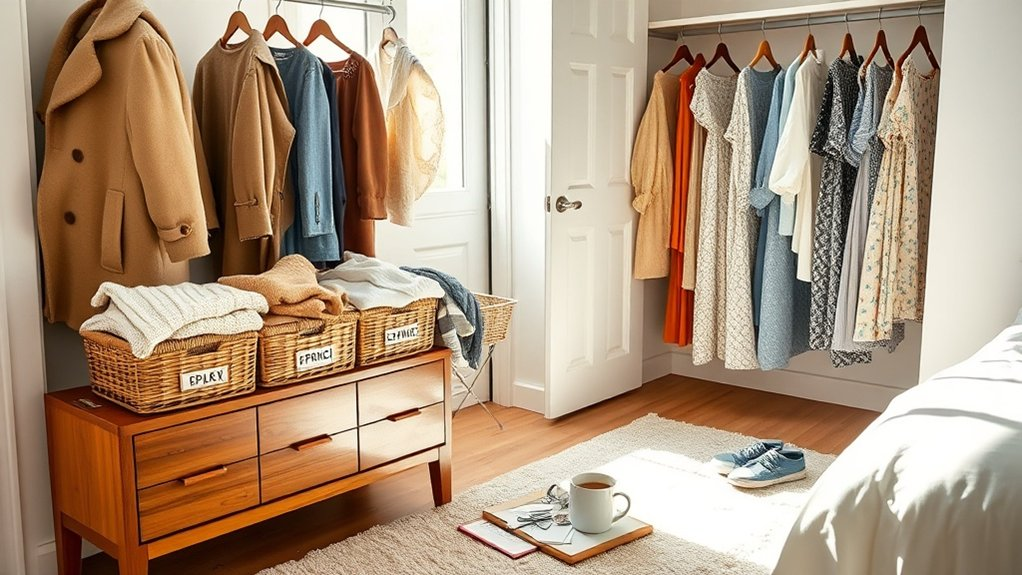
You’ll know what to keep when you reach for items you wear often and actually feel good in.
If something hasn’t sparked joy or seen daylight in months, ask yourself: does it belong in storage or would someone else love it more?
Let’s make quick, kind choices so your closet reflects what you really wear and love.
Consider scheduling a seasonal reset each year to rotate garments and maintain an organized wardrobe. Try using clear bins for stored items so you can easily see what’s inside. Consider investing in stackable storage bins to maximize vertical space and keep seasonal items tidy.
Keep If Worn Regularly
If you wear something regularly and it still fits and sparks a little joy, keep it—it’s a reliable piece of your daily wardrobe that saves time and stress.
Treat these favorites with care: mend small tears, replace missing buttons, and wash or dry-clean them so they’re always ready. Consider using breathable storage solutions to prevent odors and extend garment life, especially for off-season items stored away in boxes or bins breathable fabric. Use clear, stackable bins or slide-rail baskets to make stored items easy to access and visible at a glance slide rails.
Group them where you can reach them first, maybe on a dedicated rod or top shelf of your everyday section.
Rotate seasonally worn favorites into easy view before the weather changes, so you’ll grab them without thinking.
Ask yourself: does this make getting dressed easier, or do you avoid it? If it earns a yes, it stays.
Keeping what you use most makes mornings calmer and your closet feel purposeful.
Invest in durable materials like acrylic or polished metal for hangers and organizers to keep these pieces protected and accessible, emphasizing vertical space to maximize storage.
Donate If Unloved
Because your closet should make getting dressed easy, donate pieces you don’t love or reach for anymore. When you hold an item and it feels like a maybe, ask: does this spark joy or fit my life now? If the answer’s no, let it go.
Donating clears space and gives clothes a chance to be useful to someone else. Fold or hang donations neatly into a box labeled “donate” so you don’t second-guess later. Choose a local charity or shelter that accepts gently used items, or schedule a pick-up for convenience. Consider following a simple seasonal checklist to streamline the swap and avoid keeping items you won’t wear.
You’ll feel lighter, more confident, and more focused on what you actually wear. Ready to free up your closet and make someone’s day? Take that box to the door. Transform your space with closet organization tips that make maintaining order simple. Add a quick step to track items donated with a donation log to make future swaps easier.
Repair, Refresh, Replace: Quick Fixes for Clothes to Keep
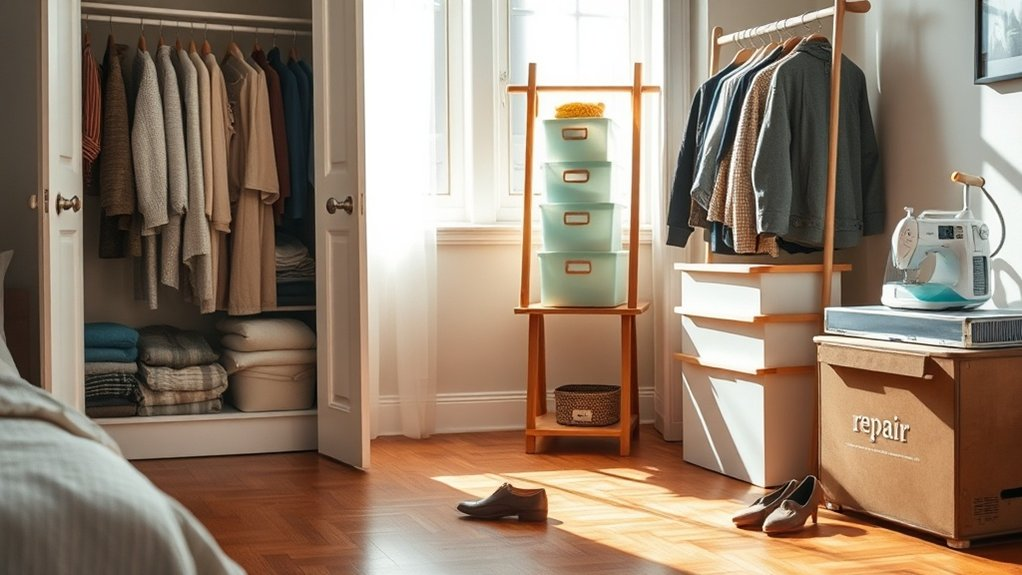
You can bring worn favorites back to life with a few quick patch hacks, like sewing on a button or mending a small tear in minutes.
Give stubborn pieces new energy with deep clean tips—think spot-treating stains, steaming wrinkles, or a gentle soak that revives fabric and color. Consider using stackable storage to keep cleaned items organized and wrinkle-free while they rest. For longer-term organization, add waterproof PP storage bins to protect fabrics from moisture while in storage.
And when something’s beyond saving, make smart replacement choices that match your style and budget so your closet stays useful and joyful.
Consider creating a personalized plan with measurable milestones to track progress and stay motivated.
Quick Patch Hacks
1 quick fix can save a favorite sweater from the donation pile and keep your wardrobe feeling fresh, so let’s walk through simple patch hacks that really work.
You’ll feel proud stitching on a colorful patch or gluing a tiny fabric heart over a snag, and those small fixes make clothes wearable longer.
Keep a mini kit: needle, thread, fabric glue, and tiny patches.
Try matching thread for an invisible repair or pick a contrasting patch to make a statement.
Ready to give a garment new life?
- Iron-on patch over a hole, pressed with a cloth for a smooth finish.
- Hand-sewn patch with whipstitch, visible and charming.
- Fabric glue for quick mends on non-stretch items.
- Consider using over-the-door organizers to store your repair supplies neatly and save space in small closets. Also consider optimizing your closet layout with adjustable no-drill solutions to keep repair kits accessible and maximize workspace. Additionally, choose foldable bins to maximize vertical storage and keep small repair items organized.
Deep Clean Tips
A fresh deep clean can bring tired clothes back to life, so let’s immerse ourselves in simple, effective steps that repair, refresh, and replace what you need.
Start by sorting garments by fabric and stain type, then pretreat spots with gentle stain remover or a paste of baking soda and water. Consider using stackable bins to keep sorted items organized as you work. For bulky seasonal items, pack them into clear bins to save space and easily spot contents later.
Use a short, cool wash for delicates and a longer, warm cycle for sturdier items, adding a cup of white vinegar to soften fibers and remove lingering odors.
Hand-wash sweaters flat to avoid stretching, and reshape damp pieces before drying.
Steam or iron items to lift wrinkles and brighten colors.
Check seams, buttons, and zippers while everything’s fresh — small repairs now save outfits later.
For items you intend to store, choose breathable containers and consider stackable bins that hold up to 6.6 lbs to protect fabrics and maximize space.
Ready to make your favorites feel new?
Smart Replacement Choices
When small flaws pop up—like a loose button, a stubborn stain, or a tiny tear, you’ve got choices that can save your favorites and your wallet, so let’s make smart ones.
You can often repair instead of replacing: stitch seams, swap buttons, or use fabric glue to extend a trusted piece. Consider storing frequently used fixes in stackable fabric bins to keep repairs organized and easy to find.
Revitalizing brings life back quickly—spot-treat stains, steam out wrinkles, or add a trim to modernize a worn hem. Consider grouping refreshed pieces by season to simplify future swaps and maintain order with seasonal organization.
And sometimes, replacement is the right, intentional move when fit or function’s lost.
Which route feels best for each item? Picture these simple fixes to help decide:
- Tighten a loose button with a matching thread and a tiny knot.
- Steam and treat a set-in stain to brighten faded fabric.
- Patch a tear from inside for an invisible mend.
- Consider storing repaired or refreshed items in clear bins for easy visibility and access, like stackable storage.
Seasonal Storage Tips: How to Pack and Protect Out-of-Season Items
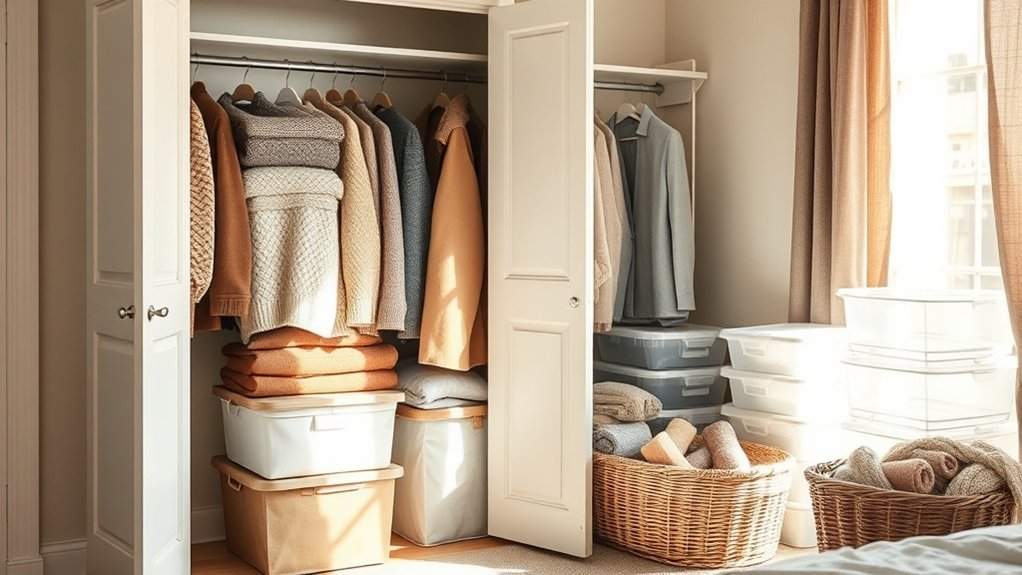
Since swapping seasons gives you a fresh start, now’s the perfect time to pack away the pieces you won’t wear for months and protect them so they’ll look great next year.
Start by cleaning garments—launder or dry-clean stains and oils that attract pests.
Fold knitwear with acid-free tissue to prevent creasing, and button shirts to keep shape.
Use breathable storage bins or cotton garment bags to avoid trapped moisture; cedar blocks or lavender sachets will gently repel moths without chemicals.
For shoes, stuff toes with tissue and store in boxes to hold form.
Label containers clearly so you can find favorites fast.
Want to skip surprises next season? Check stored items mid-winter for pests or damp, and refresh sachets as needed.
Consider using breathable fabric bins with clear windows and reinforced handles to maximize protection and visibility when storing bulky items.
Also consider stackable designs to maximize vertical space and adapt your storage layout as needs change.
For larger items, choose storage solutions with 100L capacity to ensure ample room and easy organization.
Smart Organizing: Layouts and Hangers That Save Time
Whether you’re aiming to shave minutes off your morning routine or just want to enjoy a calm, tidy closet, the right layout and hangers can make all the difference.
You’ll feel lighter when everything has a place: group tops by sleeve length, hang jackets where you can reach them, and reserve lower shelves for shoes you wear most.
Choose slim, non-slip hangers to save space and keep shapes intact. Swap bulky plastic for velvet or wooden hangers where structure matters.
Slim, non-slip hangers save space and preserve shape — trade bulky plastic for velvet or wooden options.
Want a quick visual?
- A neat row of slim hangers, color-coded by type.
- Jackets and coats on a strong rod at eye level.
- Folded sweaters stacked on open shelves below.
These small changes speed your routine and make mornings kinder.
Maintain the Reset: Weekly Habits to Prevent Re-Cluttering
Because a little consistency goes a long way, keeping your closet feeling fresh only takes a few focused habits each week.
Set a 10-minute tidy time after laundry day: refold, rehang, and return stray items so everything has a place.
Rotate seasonal pieces forward as weather shifts, so you see what you actually wear.
Do a quick pocket check and lint roll to keep garments ready.
Scan for anything stained or damaged and note it for repair—fixing small issues prevents piles later.
Limit new purchases by practicing a one-in, one-out rule for non-essentials; it keeps clutter from creeping back.
How will you fit these tiny rituals into your week? Try one at a time and celebrate the calm they bring.
Donate, Sell, or Recycle: Best Places and Timing for Unwanted Pieces
When will those pieces you no longer love find a new life? You can act now: donate wearable items to local shelters or charity shops when seasonal drives peak, sell high-quality pieces online before trend cycles fade, and recycle stained or damaged textiles at fabric drop-offs anytime.
Timing matters — donate before holidays, sell in spring or fall, recycle year-round.
- Picture a cozy donation bin outside a community center at holiday time, scarves and coats ready to comfort someone.
- Imagine crisp photos of your best jacket posted online at the start of fall, bids growing as leaves change.
- See worn tees turned into rags or insulation through a textile recycling program, closing the loop on their story.
Frequently Asked Questions
Can a Capsule Wardrobe Simplify Future Seasonal Swaps?
Yes — a capsule wardrobe simplifies future seasonal exchanges by narrowing choices, highlighting versatile pieces, and reducing clutter. You’ll streamline shifts, save time, and feel confident mixing essentials, so swapping seasons becomes effortless and intentional every year.
How Do I Involve Family Members Without Nagging?
You’ll charm them in—start fun, quick sessions with snacks and music (it’s more exciting than a blockbuster). Give clear roles, praise choices, offer swap incentives, and respect limits so cooperation feels easy, not nagged.
What’s the Best Way to Store Sentimental Clothing?
Store sentimental clothing in acid-free boxes or breathable garment bags, label items, and add tissue to prevent creasing; you’ll avoid plastic, keep items dry with silica packs, and periodically check, refold, and enjoy revisiting memories.
Can I Protect Garments From Pests Long-Term?
Like a fortress for memories, you can protect garments long-term: clean and fully dry items, use airtight containers or vacuum bags, add cedar or lavender, monitor regularly, rotate and inspect, and avoid moth-attracting fabrics and damp storage.
Are There Eco-Friendly Alternatives to Plastic Storage Bins?
Yes — you can use eco-friendly alternatives like breathable cotton storage bags, recycled cardboard boxes, bamboo crates, and metal trunks; you’ll also find upcycled fabrics, wool felt bins, and garment racks that reduce plastic and last longer.
Conclusion
You’ve given your closet a fresh heartbeat, and now it breathes easier, ready for the season ahead. Imagine each hanger as a promise: clothes you love, easy to find, and cared for. Keep up quick habits, and the calm will stick. What small step will you take today to keep this fresh rhythm? Start now—one clear shelf, one thoughtful donation—and enjoy a wardrobe that works for you.