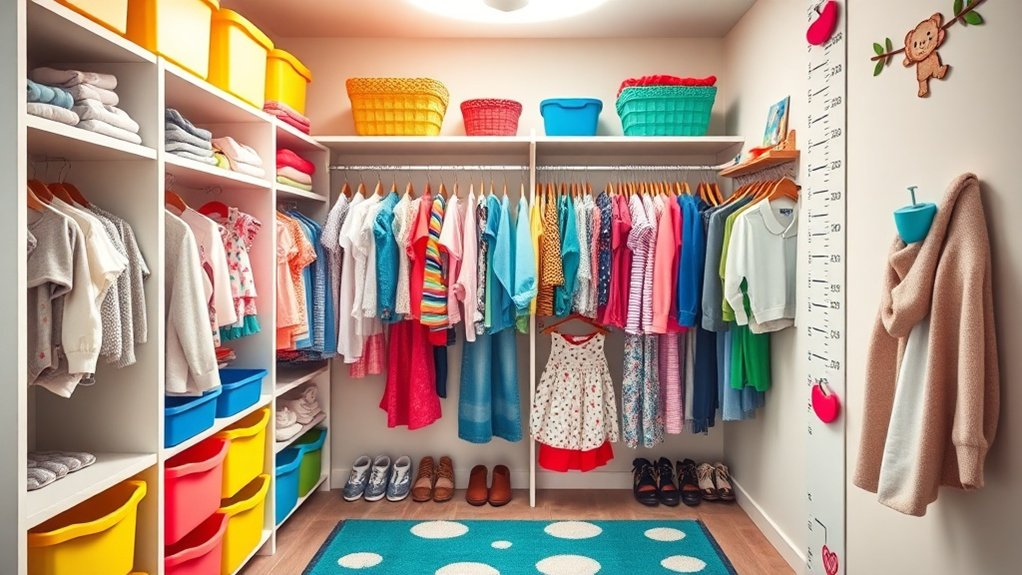
Organizing your child’s closet to adapt as they grow can be a game-changer! Start by understanding their growth stages and rotate their clothes to match. Use flexible storage solutions like adjustable bins and modular shelving, making it easy for them to find what they need. Encourage your child to get involved in upkeep; it builds pride and independence! By creating a space that reflects their personality, you’ll not only keep order but spark joy. Discover more tips for an adaptable closet system!
Closet Highlights
- Use modular shelving and adjustable rods to easily reconfigure closet space as your child’s needs change over time.
- Implement color-coded bins and labels to sort clothing by size, making it easier for kids to dress independently.
- Rotate toys and clothing seasonally to maintain interest and ensure items fit, encouraging kids to participate in organization.
- Select multi-functional furniture that maximizes space while providing flexible storage solutions adaptable to your child’s growth.
- Establish a regular closet maintenance schedule that incorporates fun activities, fostering ownership and pride in their organized space.
Understanding Your Child’s Growth Stages
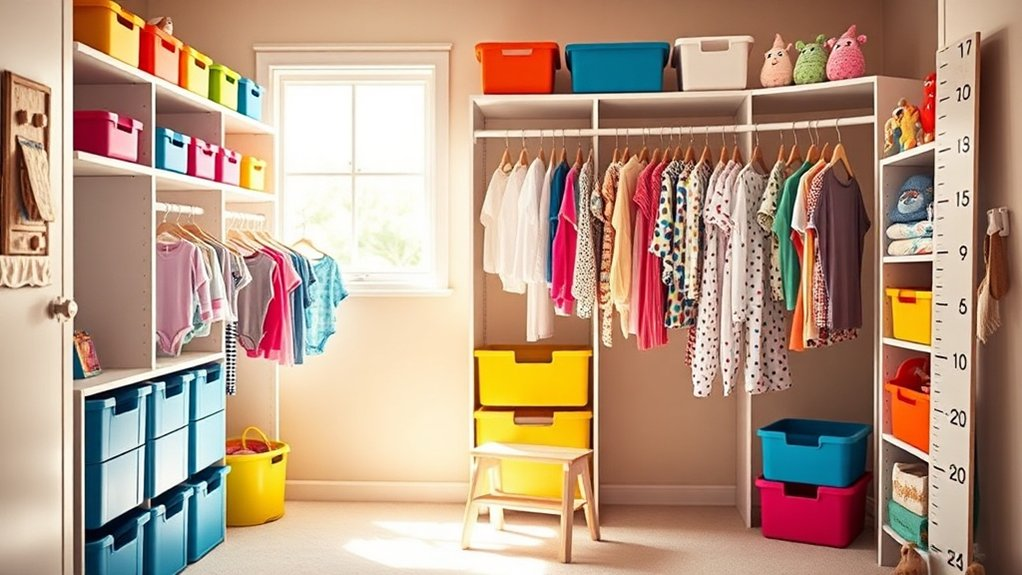
Understanding your child’s growth stages is essential to creating an organized closet that meets their ever-changing needs. As they hit various growth milestones, their developmental needs shift dramatically.
You’ll notice they might suddenly outgrow clothes or develop preferences for styles that reflect their personality. Keeping this in mind, consider rotating out items regularly to accommodate these changes.
As your child grows, their fashion preferences evolve—regularly update their wardrobe to celebrate their unique style!
Think about how a toddler’s play clothes differ from a preteen’s wardrobe. By staying attuned to these stages, you can maintain a closet that not only fits their current size but also encourages independence as they learn to dress themselves.
Isn’t it exciting to watch them grow? Embrace the journey, and you’ll find joy in curating a space that truly reflects who they are! Consider incorporating adjustable shelving so the closet system can be quickly reconfigured as their needs evolve. Also consider adding stackable bins for easy reconfiguration as storage needs change.
Choosing Flexible Storage Solutions for Kids’ Clothes
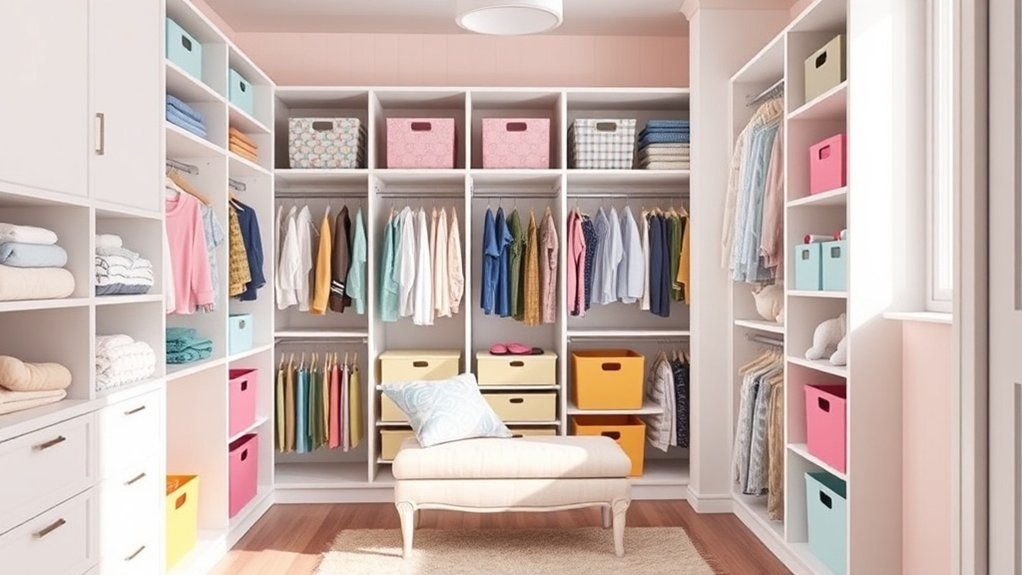
When you think about your child’s ever-changing wardrobe, it’s clear that choosing the right storage solutions can make a world of difference.
Flexible options help you adapt as your little one grows. Consider these ideas:
- Modular shelving: Customize the height and layout as your child’s needs evolve.
- Adjustable bins: Perfect for sorting clothes by size or season, making it easy to switch things out. Many stackable fabric bins are collapsible to save space when not in use.
- Multi-functional furniture: Look for pieces that double as seating or storage, maximizing space.
Choose organizers with color-coded labels to simplify outfit selection and teach days of the week.
Organizing Toys: Creating a Playful System
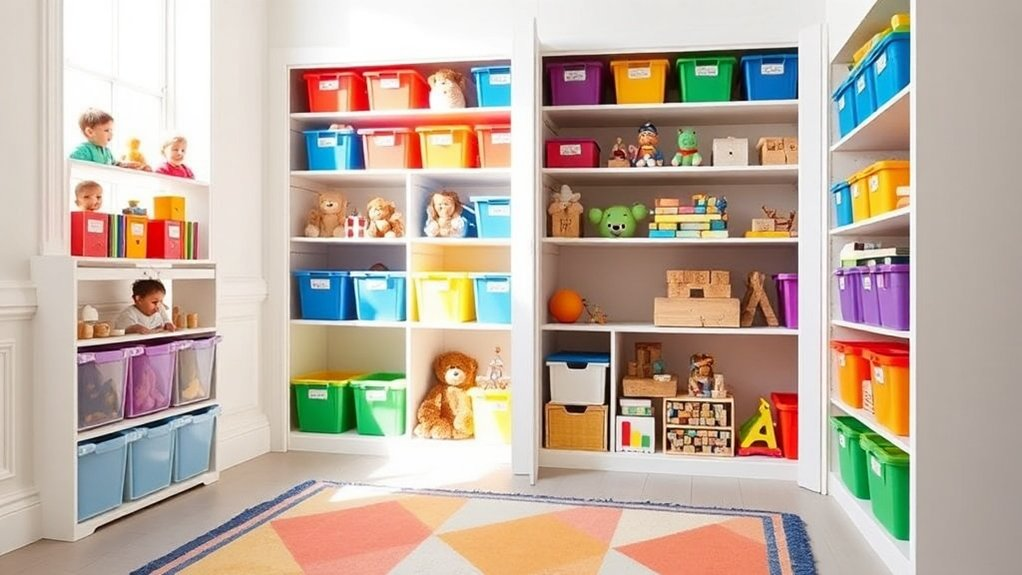
To create a playful system for organizing toys, you’ll want to think about how your child interacts with their favorite items. Start by implementing toy rotation; this keeps playtime fresh and exciting. Choose a selection of toys to display, while storing others away. You can switch them out regularly, sparking new interest and creativity!
Next, use creative labeling for storage bins. Let your child help decorate labels with their drawings or stickers. This makes it personal and engaging, encouraging them to participate in cleanup. Consider using stackable storage to keep smaller toys organized and visible.
Organizing toys doesn’t have to be a chore; it can be a fun adventure! By creating a playful system, you’re fostering a love for order while celebrating your child’s imagination. Isn’t that a win-win? Consider using vertical storage solutions to maximize space and keep frequently used toys accessible.
Teaching Kids to Maintain Their Closet?
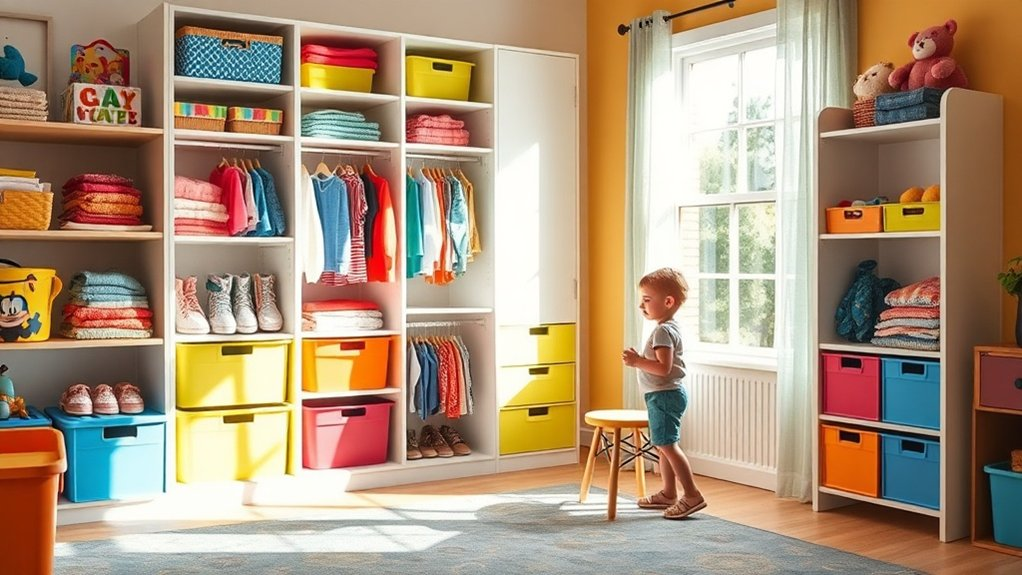
Kids can easily learn to maintain their closet with just a few simple strategies! By instilling good closet habits early, you’re helping them develop important responsibility skills that last a lifetime.
Here are some tips to get started:
- Set a Regular Schedule: Encourage them to check their closet weekly.
- Make It Fun: Turn organizing into a game, like a fashion show with their favorite outfits.
- Use Visuals: Label bins or shelves to help them know where everything belongs.
With these strategies, your kids can take ownership of their space and feel proud of their organized closet. Consider adding modular organizers to provide flexible storage that adapts as their needs change.
Plus, it’s a great way for them to learn valuable skills they’ll use as they grow. Why not start today?
Consider using over-the-door organizers to maximize space in small closets.
Adapting the Closet System for Future Needs
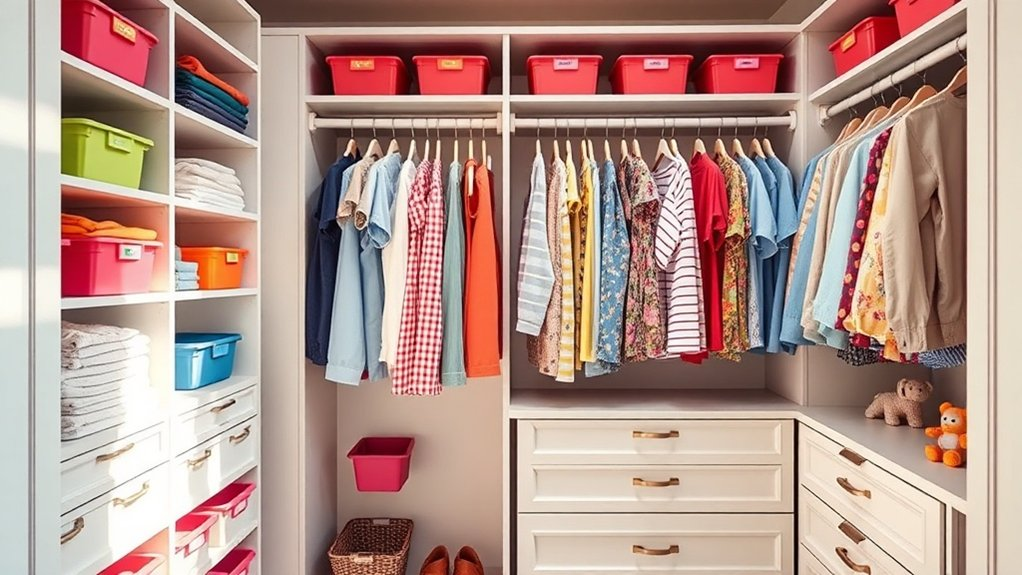
As your child grows, their needs and interests will change, making it essential to adapt their closet system accordingly.
Consider investing in custom shelving that can be reconfigured as their hobbies evolve. For instance, when they shift from toys to sports gear, adjustable rods allow you to modify hanging space for different sizes of clothes. This flexibility also makes it easier to use vertical space more efficiently when storage needs change.
This flexibility means you won’t have to overhaul the entire system every few years. Instead, you can easily make small adjustments that reflect their current passions.
Think about how empowering it’s for your child to have a closet that grows with them! Keep an eye on their interests, and you’ll create a space that’s not just functional, but also inspiring and uniquely theirs.
Modular cube organizers like the AWTATOS 12 Cube Organizer provide customizable arrangements that make reconfiguring storage simple.
Conclusion
By embracing flexible storage solutions, organizing toys creatively, and teaching your kids to maintain their space, you’re not just managing a closet—you’re nurturing independence and responsibility. As your child grows, their needs will change, and so can your organization system. So, ask yourself: how can you adapt today for tomorrow’s adventures? With a little thought and effort, you can create a joyful, functional space that grows alongside your child, making every moment count.